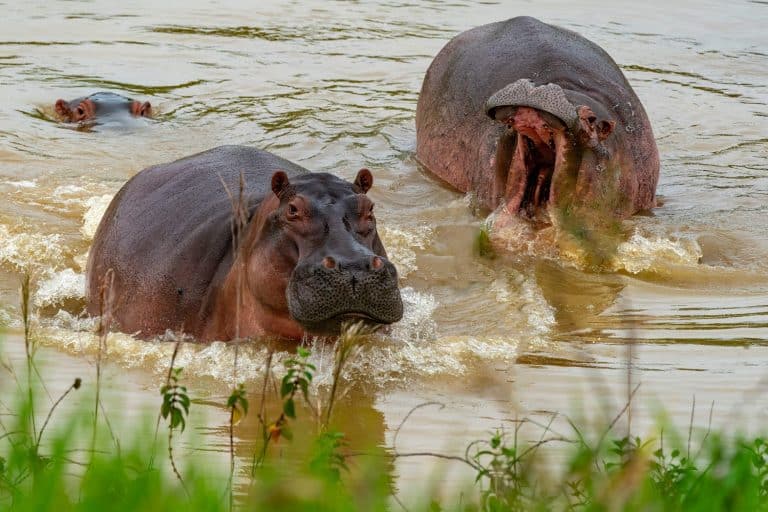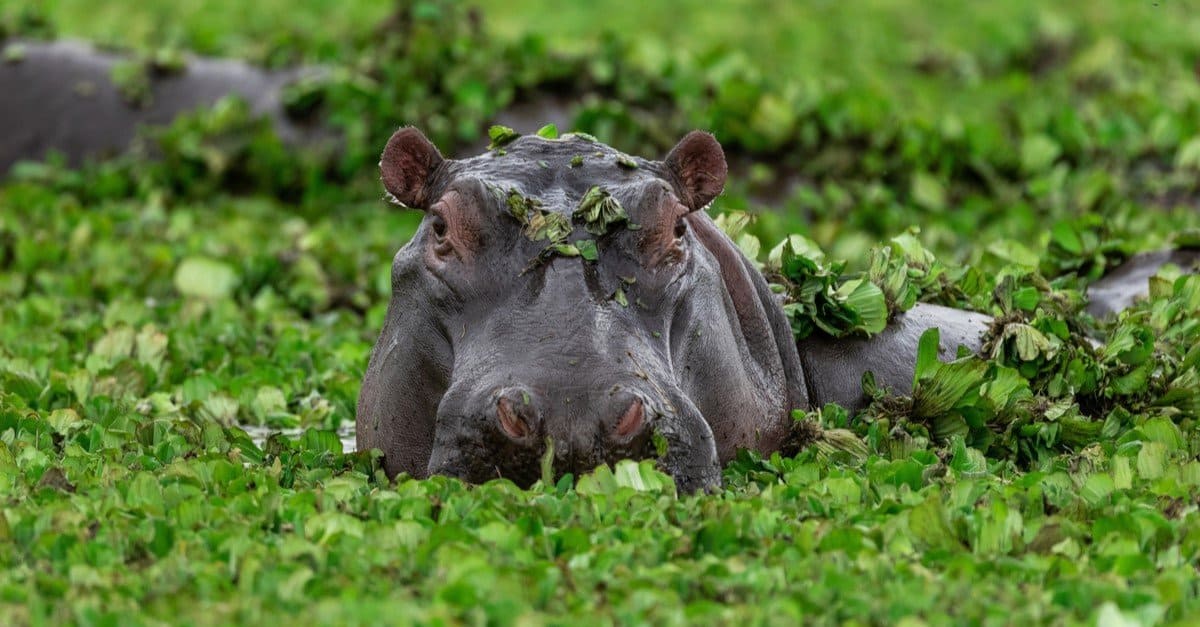

The hippopotamus, a semi-aquatic hoofed mammal that is native to parts of sub-Saharan Africa, spends most of the day either partially submerged in rivers and lakes or foraging for food nearby. There are two extant species of hippos: the common hippo and the pygmy hippo. Hippos are among the three largest land mammals, smaller only than the rhinoceros and the elephant. Thanks to their large size (adults typically weigh between 3,000 and 3,500 pounds), they consume vast quantities of food. Continue reading to discover what foods hippos eat.
What Hippopotamuses Eat
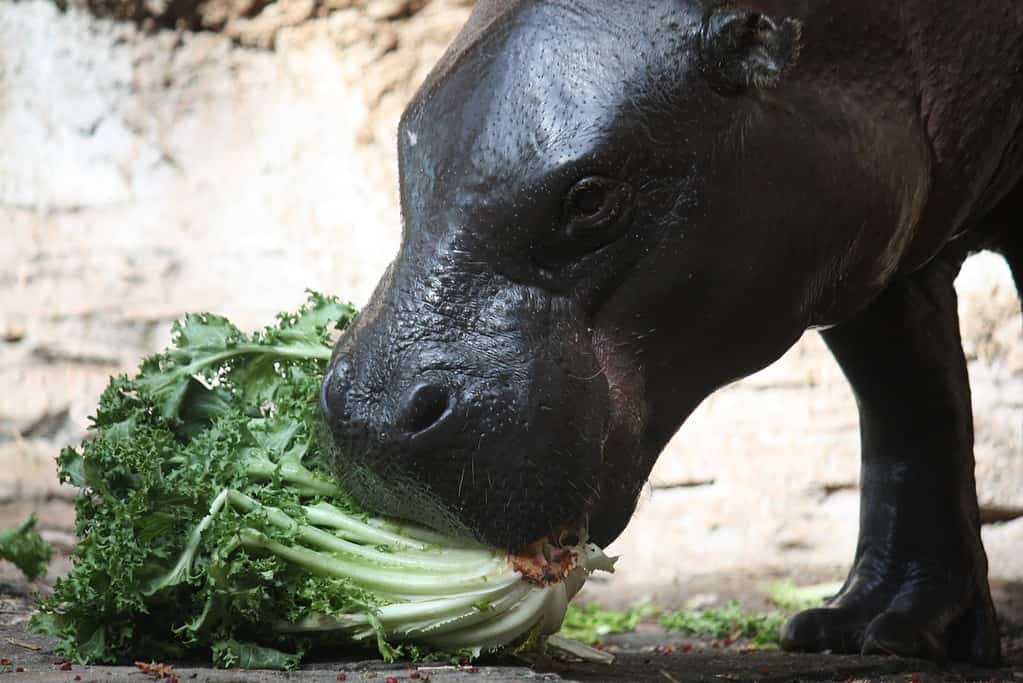
Hippopotamuses are primarily herbivores.
©Ltshears, CC BY-SA 3.0 <https://creativecommons.org/licenses/by-sa/3.0>, via Wikimedia Commons – Original / License
The hippopotamus consumes a mostly herbivorous diet in the wild. Grasses, supplemented with nutrient-rich fruits, seem to make up the great majority of their food intake. They also enjoy small shoots and reeds emerging from the ground, but aquatic plants seem to form a surprisingly small percentage of their diet. Pygmy hippos eat a higher proportion of leaves and roots than grasses. On very rare occasions, common hippos have been observed eating dead animals, but there’s some debate about how often this occurs in the wild.
Carnivores After All?
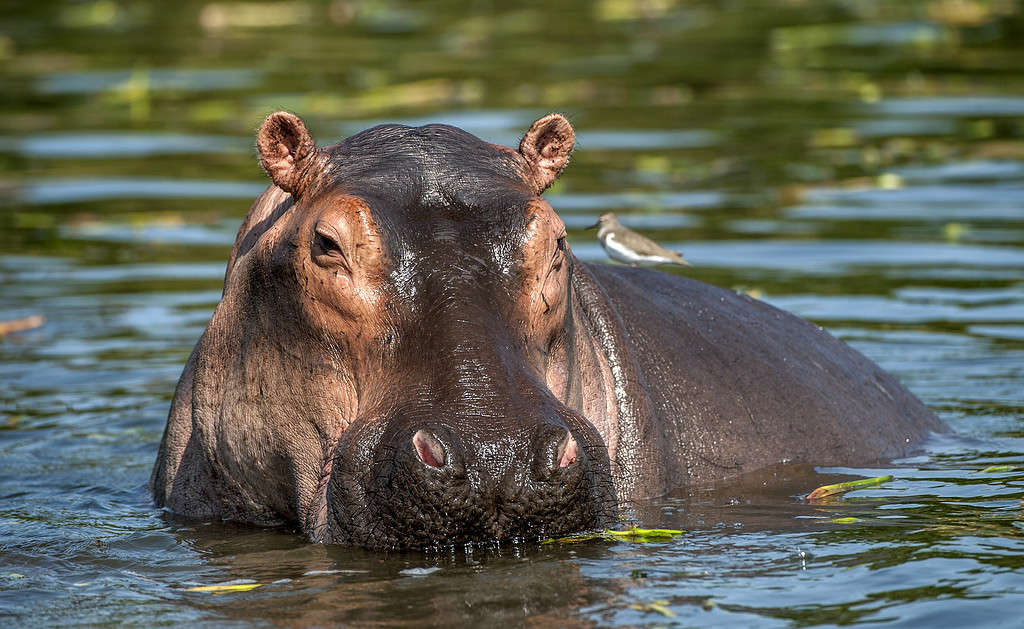
Hippos are primarily sedentary beasts.
©iStock.com/Sergei Uriadnikov
Traditionally, it was thought that the hippo scavenges for meat only during exceptional times of food scarcity, because their stomachs are not adapted for meat consumption. However, a 2015 study (Dudley et al., 2015) spanning four continents found that this meat-eating behavior is not limited to scavenging carcasses. This carnivorous behavior is part of a broader pattern of meat-eating. The hippo has been known to attack and consume other animals and even steal meat from predators; wildebeests, zebras, and kudus seem to be among their more common kills. They have even been seen engaging in cases of cannibalism, consuming other hippos. The paper argues that the hippo’s digestive system is not a barrier to eating meat, as has been traditionally assumed, and that cases of carnivorous behavior are underreported because they’re difficult to observe.
The common hippo is certainly large and aggressive enough to take down just about any other animal, but hunting requires a huge expenditure of energy, which hippos would rather not expend.
Regardless of their exact dietary composition, it’s estimated that they consume around 1% or more of their body weight each day. The common hippo typically weighs between 3,000 and 9,900 pounds, with most adults consuming about 30 to 150 pounds of food per day. A hippo meal will sometimes leave entire areas bereft of grass and shoots. The hippo is a sedentary animal, wallowing for most of the day in the water or mud without moving much at all. Surprisingly, for a semi-aquatic animal, the hippo cannot swim or even float. Their bodies are simply too heavy. Instead, they walk or stand on the bottom of the water bed.
What Do Hippos Eat in Zoos vs. in the Wild?
Compared to their wild diet, captive hippos in zoos eat a wider range of foods, carefully selected and provided by nutritionists, trainers, and staff. At the San Diego Zoo, the hippos are fed a combination of herbivore pellets, alfalfa and Bermuda hay, lettuce and other mixed vegetables, and the occasional melon. Pygmy hippos will also consume a combination of high-fiber pellets, hay, and greens at most zoos.
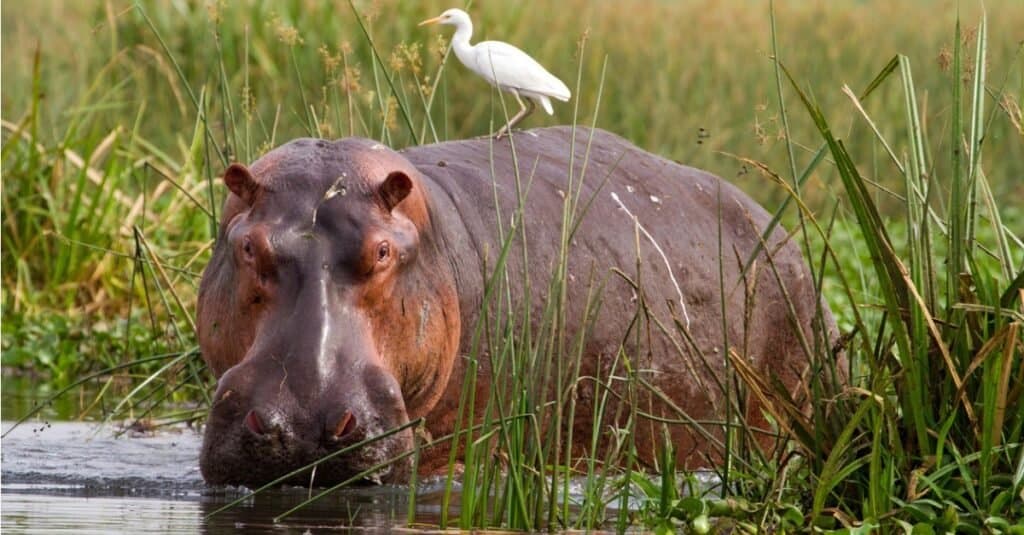
Hippos spend their days lazing and keeping cool in the water, emerging at night to graze and perhaps hunt.
©iStock.com/PB_Images
How Does the Hippopotamus Eat Its Food?
The hippopotamus is a nocturnal feeder. It leaves the water with the coming dusk and settles in a grassy area near the waterbed, arriving via the same foraging path every day. These are known as “hippo paths,” and their grazing areas are called “hippo lawns.” Both areas are often unique to each group or individual. If food is particularly scarce, then it may end up traveling a few miles away from the water hole, but they prefer to stay as close to the sleeping area as possible. Their superb sense of smell helps them find their preferred foods. They’re also able to hone in on the sound of falling fruit nearby.
When grazing, the hippo’s highly muscular lips enable it to pull up food from the ground or tear off leaves from a plant. The hippo softens the food in its mouth without chewing to prevent any nutrient loss. While they do have incisor and canine teeth, these play a minimal role in feeding, except in cases where they eat meat; the teeth are instead used for defense. Grazing lasts about six hours each night, before the hippo returns to its water hole just before dawn.
The hippo is well-adapted for an herbivorous diet. Their highly complex stomachs, divided into three distinct chambers, are specialized for digesting plant matter. However, unlike cattle, they do not regurgitate and chew the cud. All hippos are born with relatively sterile intestines and obtain bacteria from their mother’s feces. These bacteria settle in the intestines and help break down complex plant material into smaller nutrients.
List of the Top 5 Foods the Hippopotamus Eats
Hippos are very reliant on only a small number of food sources. They very rarely eat anything else outside of their normal feeding behavior. These five food sources appear to be shared by almost all hippos:
- Grasses
- Reeds
- Shoots
- Fruits
- Rarely, meat (like wildebeests or zebras)