
Quick Take
- South Island takahē (Porphyrio hochstetteri) are a native species of New Zealand.
- They are a large, flightless bird with bright plumage.
- They were presumed extinct between 1898 and 1948.
- Despite some ups and downs, their numbers are now increasing.
Presumed extinct for more than 50 years, the wonderful takahē is still very much alive. As this Instagram post shows, it is a unique-looking bird with a remarkable ability to make a comeback. Read on to find out all about it.
What Do We Know About the Takahē?
South Island takahē (Porphyrio hochstetteri) are a native species of the South Island, New Zealand. They like to live in alpine tussocks, grasslands, and sub-alpine shrublands. Here, they are active during the day and feed on the leaf bases and seeds of native tussock grasses. Occasionally, they will also eat insects.
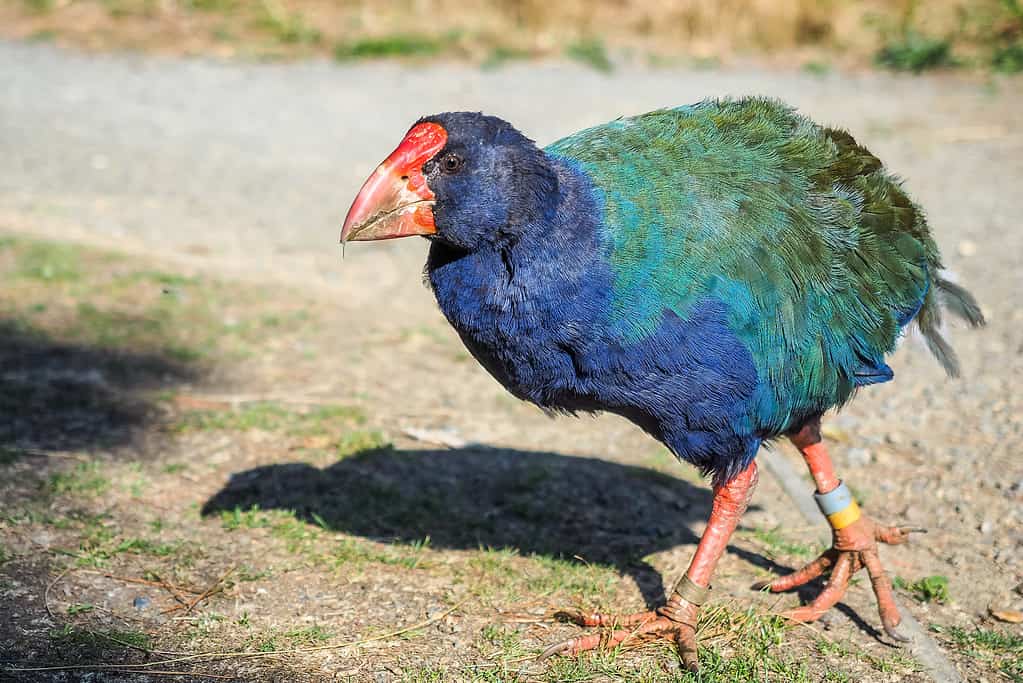
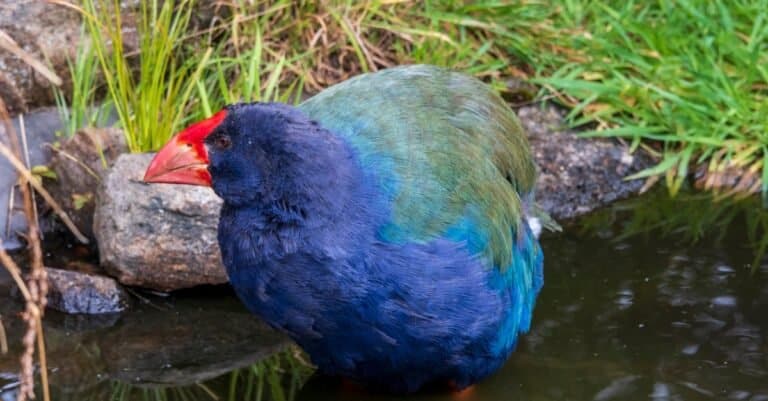
South Island takahē are large and flightless birds.
©Robert CHG/iStock via Getty Images
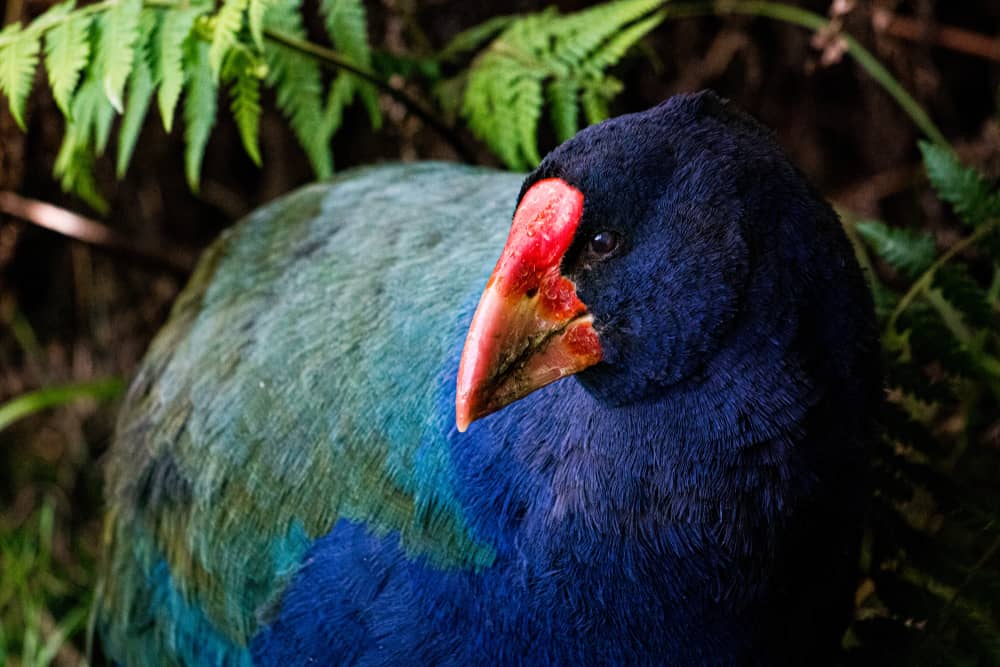
These birds are large and flightless. Males can weigh nearly 6 pounds and grow up to 24 inches long, while females are slightly lighter. Both males and females have stunning plumage, with peacock-blue heads, breasts, necks, and shoulders that contrast with their olive-green and blue wings and back. Their bills, legs, and feet are large, powerful, and bright red. Takahē breed once a year and typically raise one or two chicks. In the wild, their lifespan is around 16–18 years.
The Timeline of Takahē Loss and Recovery
Takahē were presumed extinct in the late 1800s, with the last known specimens being collected in 1898. However, careful survey work fifty years later, in 1948, in the Murchison Mountains of South Island, discovered that they were still alive! Their downfall was caused by habitat destruction and the introduction of mammalian competitors such as red deer. The introduction of predators such as dogs and stoats also reduced their numbers.
In 1985, the Burwood Takahē Centre was set up to support the wild population. Sadly, in 2007, a large stoat plague incident halved the population. It took until 2016 for the numbers to recover. Today, takahē are being introduced to new locations, and their population continues to grow, but there are still only around 500 individuals. They are classified as Nationally Vulnerable and are yet to achieve a self-sustaining wild population within their former range.