
Quick Take
- Churchill, Manitoba, is one of the world’s most reliable places to see polar bears gathering along Hudson Bay each autumn.
- Travelers can reach the remote town by flying to Winnipeg and taking a multi-day train across northern Canada.
- Visitors observe bears safely from large tundra buggies and may also see Arctic wildlife such as foxes, caribou, and snowy owls.
- With simple lodging, basic meals, and careful planning, the trip can cost about the same as a moderate Disney vacation.
Watching a polar bear roam across Arctic tundra sounds like an expedition reserved for wealthy travelers. In practice, a careful traveler can arrange the experience for a cost similar to a mid-range trip to Walt Disney World. The key lies in simple travel choices and patience. Instead of theme-park rides and costumed entertainment, the highlights become wildlife, northern landscapes, and long conversations with other travelers heading to the same remote destination. Churchill, Manitoba, offers one of the most dependable opportunities in the world to observe polar bears in the wild. With thoughtful planning, the experience can deliver a major wildlife adventure on a surprisingly manageable budget.
Why Churchill Has Become a Global Polar Bear Viewing Site
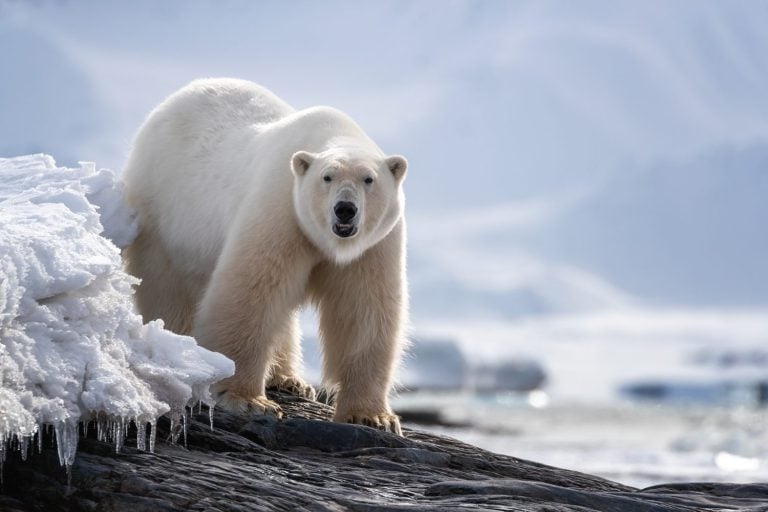
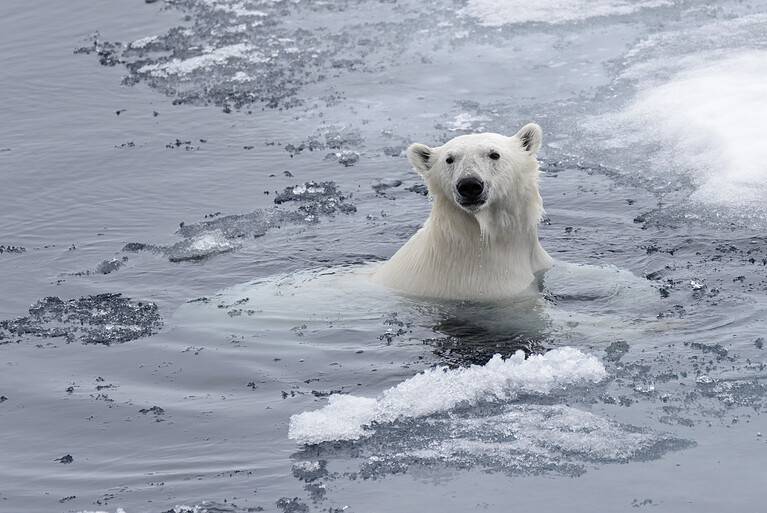
Churchill sits on the western shore of Hudson Bay in northern Manitoba, Canada. The town lies near the edge of the boreal forest, where trees thin out, and tundra begins. Every autumn, polar bears gather along this coastline as they wait for Hudson Bay to freeze. Once ice forms, the bears move out onto the frozen surface to hunt seals, their primary food source.
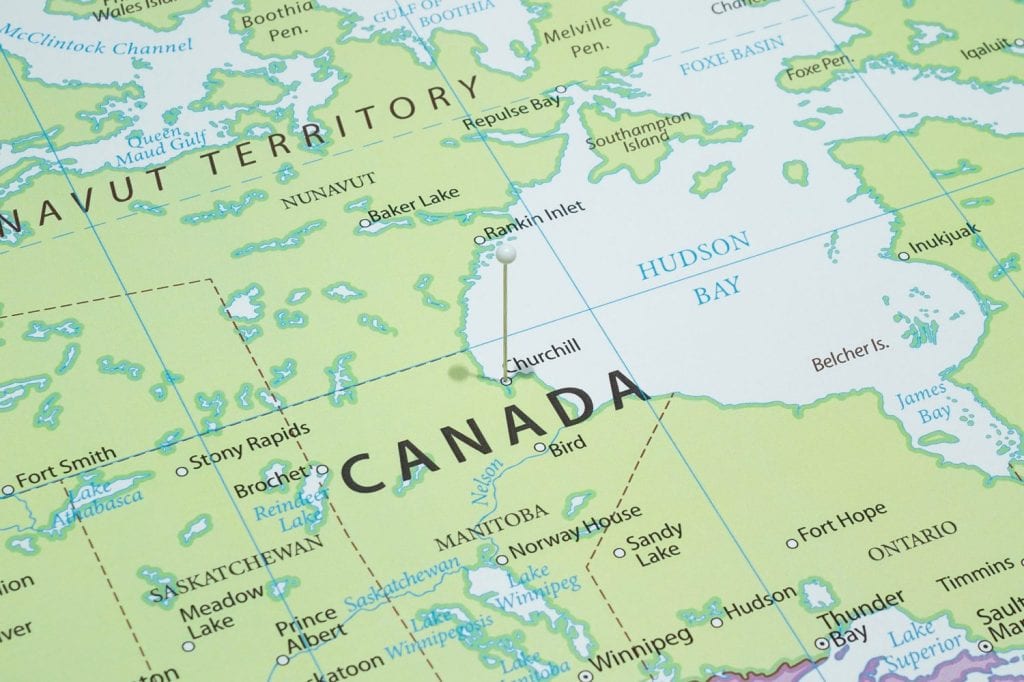
Churchill sits at the end of the boreal forest and the beginning of the tundra biome.
©Juan Alejandro Bernal/Shutterstock.com
Because this seasonal movement repeats each year, Churchill has gained an international reputation as a dependable place to observe polar bears. The town itself is isolated and small. No roads connect it to the southern highway system. Visitors reach Churchill by plane or by train from Winnipeg. Around town, warning signs about polar bears are common, and local authorities maintain patrols to manage encounters safely.
Ethical Ecotourism
Polar bear tourism in Churchill is widely seen as a conservation success. It gives the animals economic value while they remain alive in the wild. Thousands of visitors travel there each fall to see the bears. This brings tens of millions of dollars into the local economy. It supports guides, hotels, research, and conservation programs that protect polar bears and their habitat. Viewing takes place under regulated conditions in the Churchill Wildlife Management Area using large tundra buggies that keep visitors well above the animals, while the Manitoba government controls operators and routes to minimize disturbance.
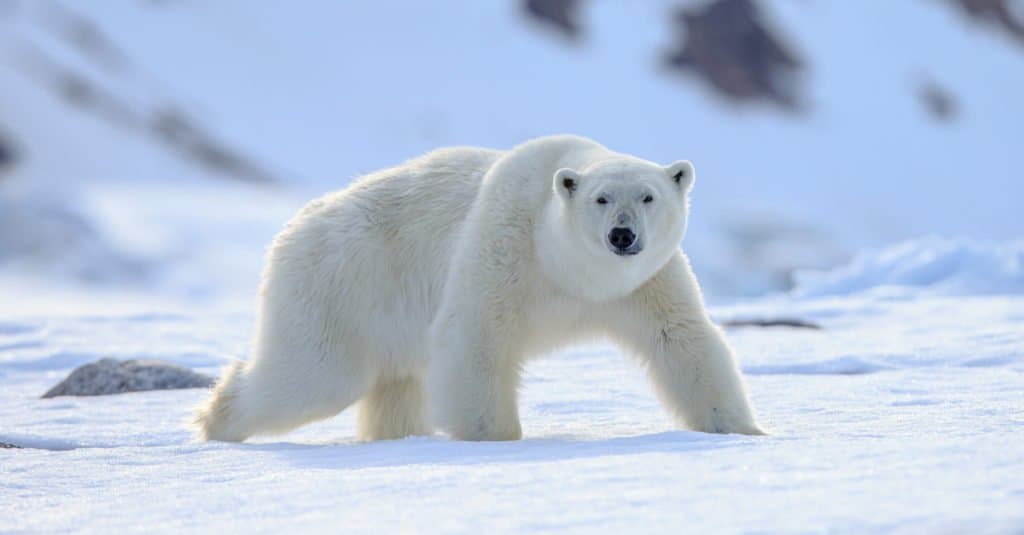
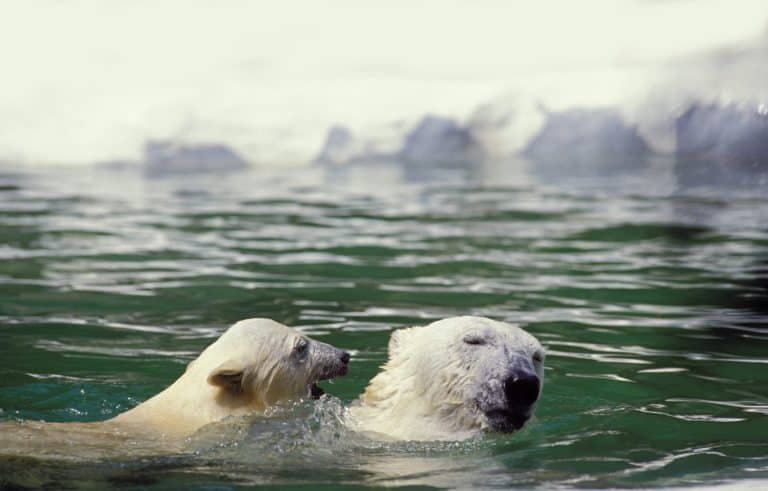
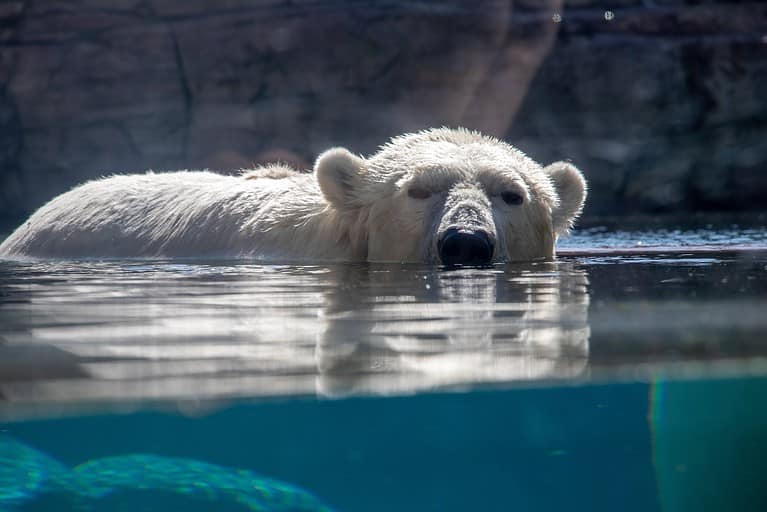
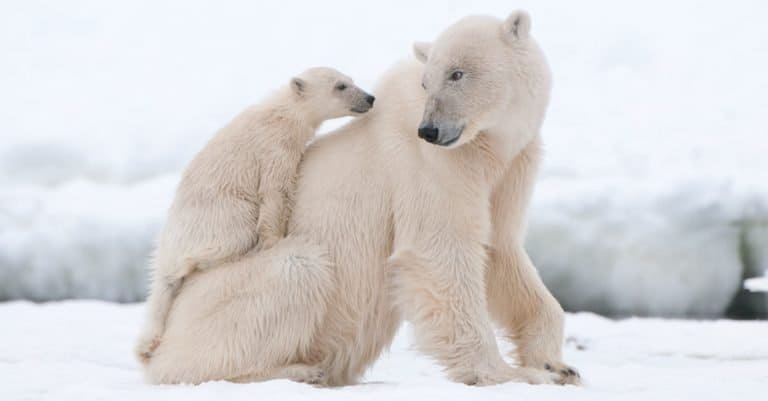
Polar bears are a vulnerable species that can be helped by responsible ecotourism.
©Vaclav Sebek/Shutterstock.com
Case Study: Starting in St. Louis
Using St. Louis as a case study shows what a traveler from a central U.S. city might pay for these trips. The city sits near the midpoint between Winnipeg and Orlando and has a large international airport with frequent flights. The estimates below assume an eight-day trip, the minimum recommended for traveling to remote Churchill, with all prices listed in U.S. dollars.
What a Disney Vacation Could Cost
As a baseline, an eight-day Disney vacation typically costs about $2,300–$2,500 per person for a mid-range trip with a moderate hotel, multi-day park tickets, and mostly quick-service meals. Park passes alone often cost around $600, with lodging and food making up most of the rest. A round-trip plane ticket from St. Louis to Orlando in summer averages about $300. With careful planning and fewer luxuries, a polar bear trip can fall into a similar price range as a Disney trip.
St. Louis to Winnipeg
Round-trip flights from St. Louis (STL) to Winnipeg (YWG) usually cost about $400–$600. Because the train to Churchill runs only a couple of times per week, many travelers arrive in Winnipeg a day early to avoid missing it. Driving is another option. From St. Louis, that’s about 15 hours to cover 1,000 miles, one way. Round trip, fuel will cost around $250–$350. The round-trip travel to and from Winnipeg on each end of the trip will use up about two days of the eight-day itinerary.
The Train to Churchill
From Winnipeg, the classic budget route continues by train to Churchill on VIA Rail’s Winnipeg–Churchill line. The train runs about two departures per week and takes roughly 44 to 48 hours, covering about 1,000 miles across northern Manitoba. Traveling round-trip on the train ends up taking a full four days of your Arctic vacation, so bring a book or chat with fellow passengers and treat this time as an opportunity to rest and relax, rather than viewing it as an inconvenience. Along the way the scenery gradually changes from prairie farmland to boreal forest and then to open tundra, with wetlands, northern rivers, and occasional wildlife visible along the tracks.
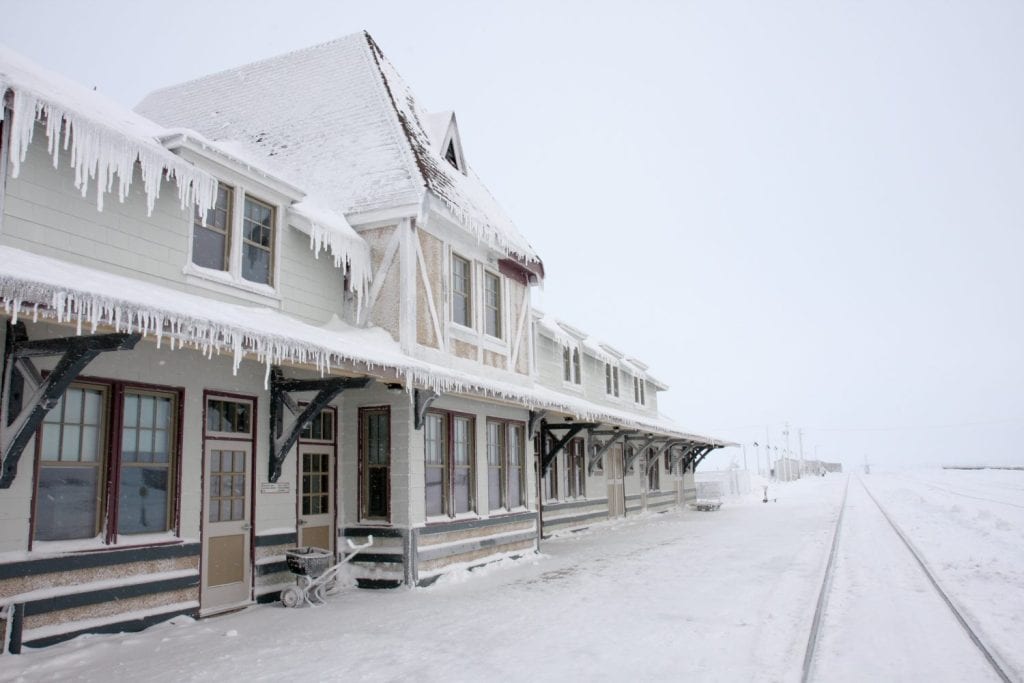
The train station in Churchill is lined with thick icicles in winter.
©Thomas Barrat/Shutterstock.com
Round-trip economy tickets typically cost about $450–$650. In economy class, you sit in a reclining seat similar to a long-distance bus seat, with access to lounge and dining cars. Sleeper options cost more but provide overnight beds. An open berth (a fold-down bed with a privacy curtain) often runs roughly $700–$1,000 round-trip, while a private cabin for one can reach about $1,200–$1,600 round-trip depending on demand. These sleeper cars convert from seats during the day to beds at night and share shower facilities along the corridor.
What Is Churchill Like?
Churchill is a small Arctic town with a population of just under 900 people, spread across a handful of streets between the rocky shore of Hudson Bay and open tundra. The place feels more like a frontier outpost than a resort town. Low buildings painted in bright colors help them stand out against the snow, and murals of polar bears and northern lights appear on walls throughout town. Visitors will notice the Hudson Bay coastline, an old stone fort on the nearby point, a few churches and shops, and wide views of tundra and sky in nearly every direction.
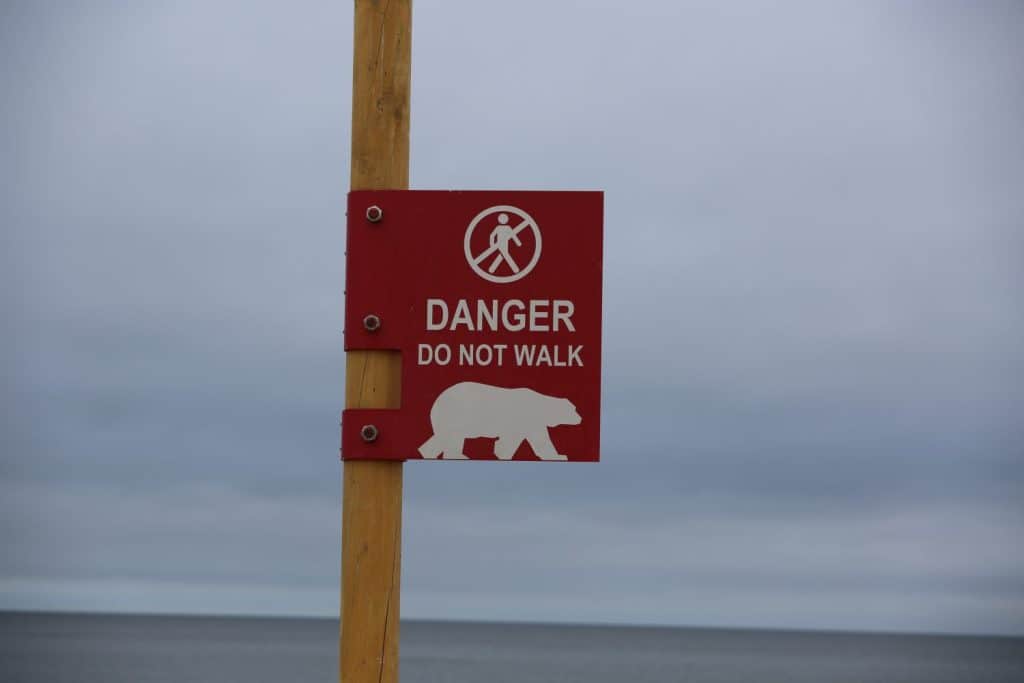
Around Churchill, you’ll see warning signs about the danger of polar bears. Take them seriously.
©Mitchell Moulton/Shutterstock.com
Lodging and Food
Churchill offers a small but practical set of services for visitors. The town has about two dozen places to stay, ranging from simple hostels and guesthouses to small hotels. Budget travelers can often find dorm beds or basic rooms for about $100–$150 per night during polar bear season, while mid-range hotels typically cost about $150–$300 per night for a solo traveler in the fall.
Food options are simple but reliable. Visitors who eat most meals at restaurants should plan to spend about $70–$100 per day on food. Cooking some meals can lower costs, though grocery prices are typically 50–100% higher than in southern Canada or the United States because nearly everything must be shipped in. On days you cook for yourself, budgeting about $30–$60 for groceries is reasonable. Some travelers bring shelf-stable foods from home to save money.
Weather and What to Wear

Dress in layers for an Arctic vacation.
©Catherine Anne Thomas/Shutterstock.com
October and November in Churchill are cold and often windy, with average October highs near 34°F and lows around 27°F, and temperatures in November usually remain below freezing. Snow becomes more common as the season progresses, though storms are usually moderate rather than severe. Because polar bear tours involve long hours on tundra buggies and occasional time outside, visitors should dress in warm layers, including thermal base layers, insulating clothing, a windproof winter jacket, insulated pants, a hat, gloves, and sturdy winter boots with thick socks.
Choosing Responsible Polar Bear Tours
Polar bear viewing is the one part of the trip where it is worth paying higher prices for experienced guides and licensed operators. Tour companies use specialized tundra buggies designed for rough, frozen terrain and safe wildlife viewing. These tall vehicles keep passengers high above the bears and include large windows and outdoor viewing decks, while guides follow strict rules about distance and animal safety.
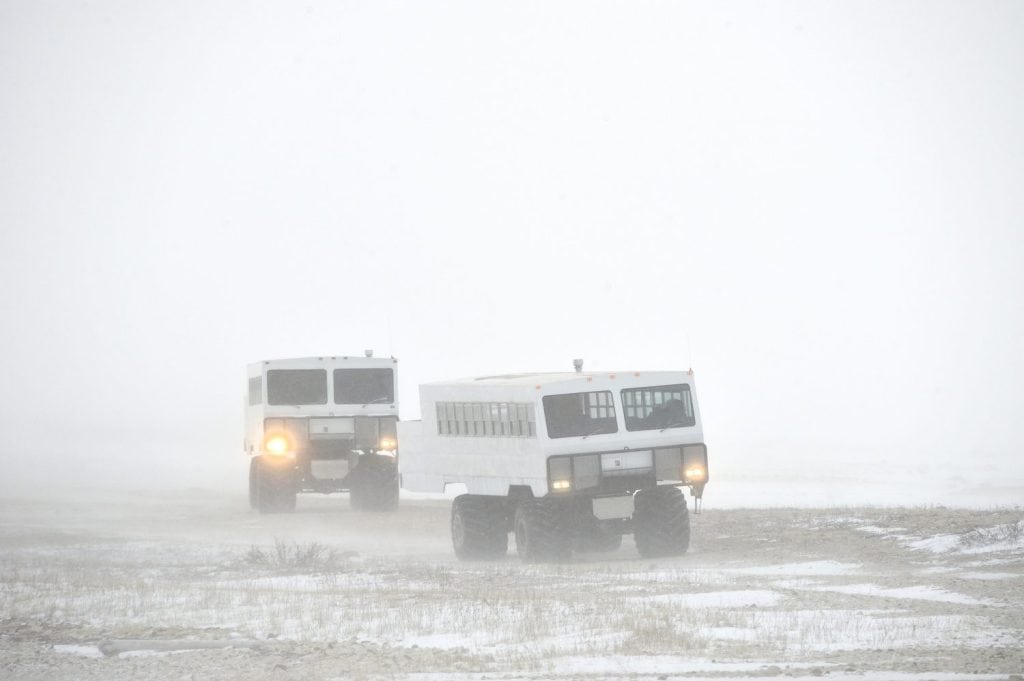
Tundra buggies keep passengers warm, safe, and out of reach of even the largest polar bears.
©Sergey Uryadnikov/Shutterstock.com
Budget travelers can skip expensive multi-day packages arranged by lodges and book single-day tours directly with tour companies instead. Autumn tundra buggy trips into the Churchill Wildlife Management Area usually last six to eight hours and cost about $350–$450 per person, including transportation from town and lunch. Smaller road safaris run by local guides may cost a few hundred Canadian dollars for half- or full-day outings. Booking one or two days on the tundra usually provides strong chances of seeing several bears while keeping costs manageable.
How Close Will You Experience the Bears?
As the tundra buggy moves slowly across the landscape, passengers scan the horizon through large windows while guides watch carefully for movement. The route crosses frozen ponds, low ridges, and stretches of tundra where polar bears sometimes travel while waiting for Hudson Bay to freeze. A small white shape in the distance may gradually resolve into a bear walking along the shoreline or resting on the snow. When a bear is spotted, the vehicle stops at a safe distance, and the group quietly observes, taking photos, sharing binoculars, and watching the animal’s behavior against the wide, quiet backdrop of the Arctic tundra.
Most sightings happen at a distance, but polar bears are curious animals and sometimes approach the vehicle on their own. A bear may wander close, sniff the tires, circle the buggy, or stand briefly on its hind legs to investigate, though the cabin sits high above its reach. Guides instruct passengers to remain still so the animal does not feel threatened. Some tours watch bears from hundreds of yards away, while others experience the excitement of a bear wandering right up to the vehicle before continuing across the tundra. Those close-up experiences are not guaranteed, though. Tundra buggies are not exactly a novelty in the area during the height of tourist season, so bears often ignore them. You’ll enjoy the trip more if you consider that even seeing a polar bear from a distance in the wild and the sweeping landscape where they live is a privilege that makes the journey worthwhile.
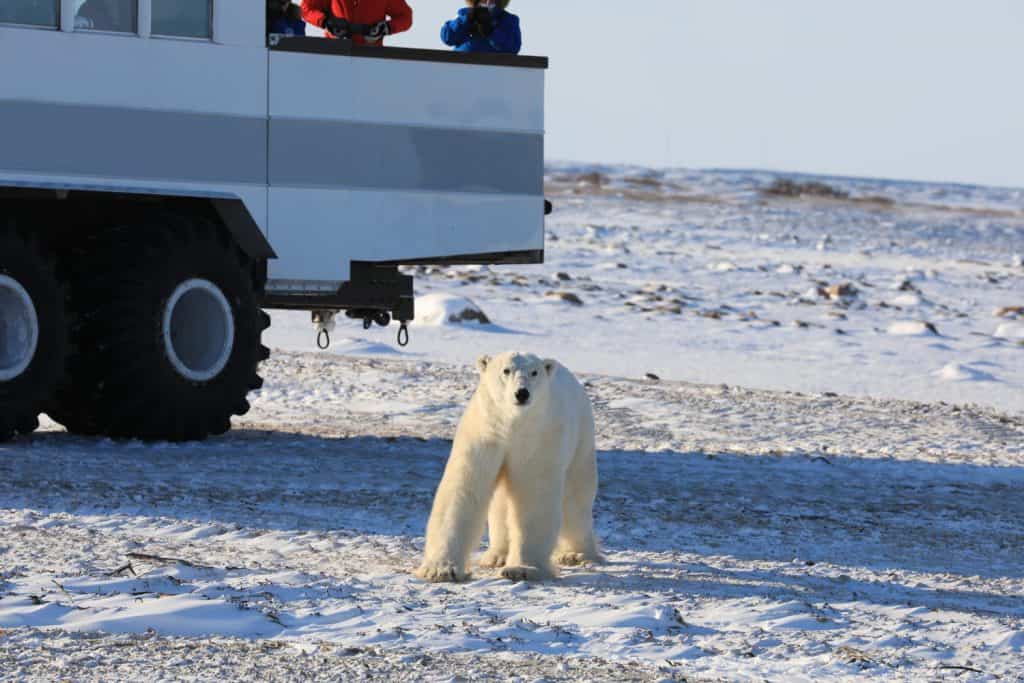
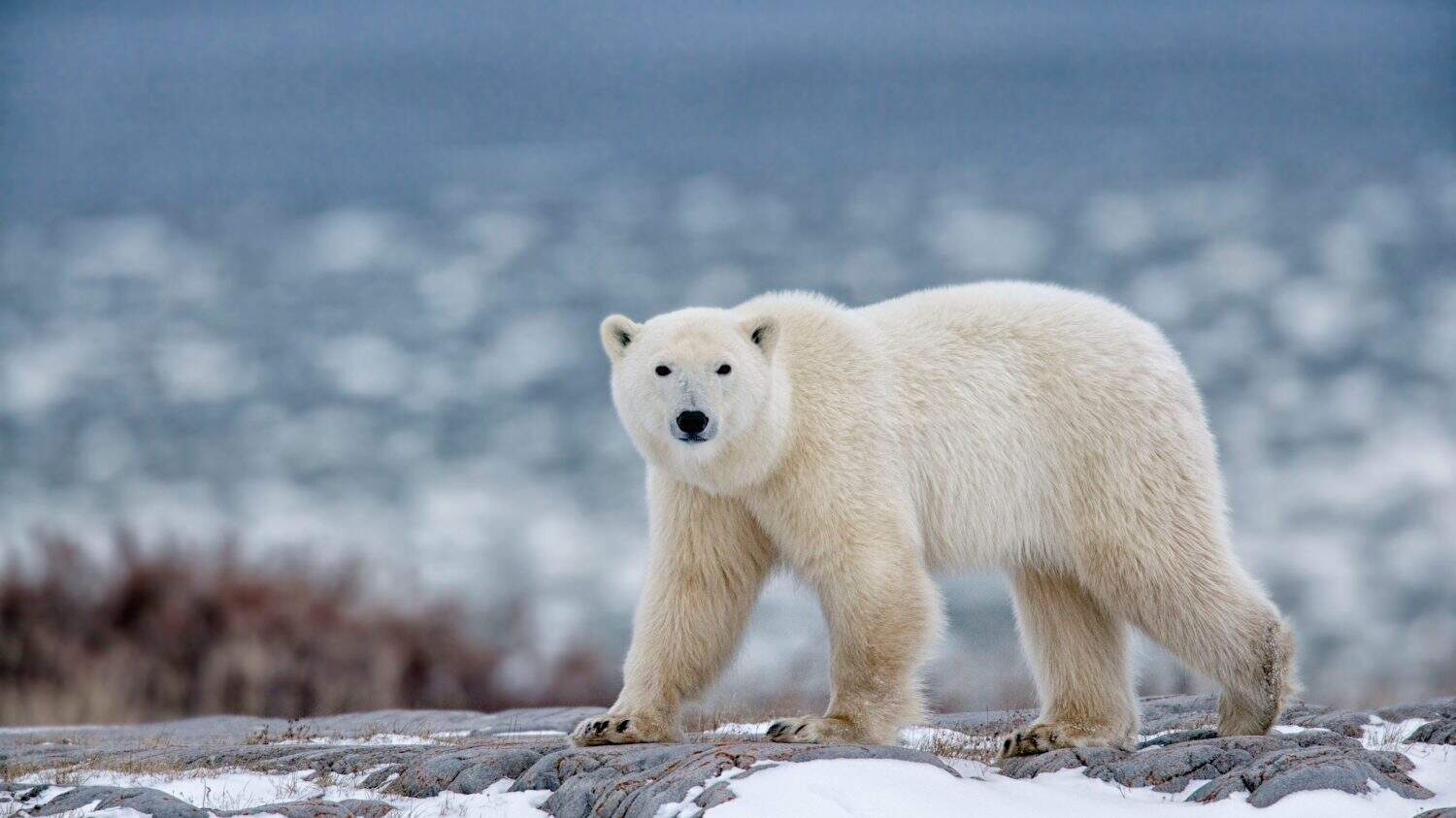
It’s possible a curious bear will wander close to your buggy, but it’s not guaranteed.
©aceshot1/Shutterstock.com
Other Arctic Animals You May See
In addition to polar bears, visitors on tundra buggy tours often see several other Arctic animals that live on the coastal tundra around Churchill. Arctic foxes sometimes appear trotting across the snow or hunting for small rodents among the low vegetation. Caribou may be spotted moving across the open landscape during their migrations, and snowy owls occasionally perch on rocks or posts while scanning the ground for prey. Ptarmigan, a small Arctic bird that turns white in winter, blends into the snow but can sometimes be seen fluttering across the tundra. Many routes also pass close enough to the shoreline that you can see the gray waters of Hudson Bay stretching to the horizon, especially from ridges or coastal sections of the wildlife management area where bears gather while waiting for sea ice to form.
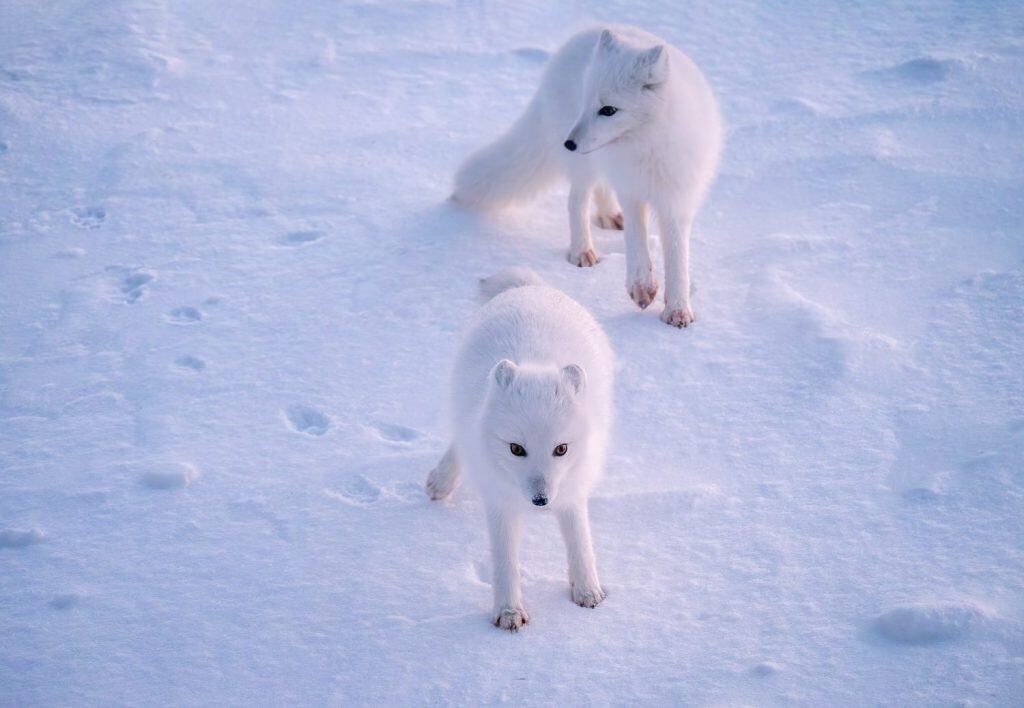
Keep a sharp eye out on your tour. You might spot Arctic foxes like these, camouflaged against the snow.
©CherylRamalho/Shutterstock.com
Is It Dangerous?
Polar bear tours in Churchill are designed to be very safe. Most viewing happens from large tundra buggies that sit more than 10 feet above the ground, keeping passengers out of reach while guides follow strict safety rules. Vehicles sometimes get stuck or have mechanical problems in the rough terrain, but operators stay in radio contact, and another buggy can assist if needed. In the event of a medical emergency, guides can quickly return to town or call for help, with patients treated at the Churchill Health Centre and flown to Winnipeg if advanced care is required.
One incident in the early 1980s involved a tourist leaning out of a buggy window to take photos and being bitten by a polar bear that reached up toward the vehicle. Because the passenger had extended their body outside the window, tour rules now strictly require guests to keep arms and cameras inside. Incidents like this are extremely rare. Licensed guides may carry firearms as a last resort in emergency situations; for walking safaris, they are typically required by company policy to do so. However, guided buggy tours remain one of the safest ways to see wild polar bears.
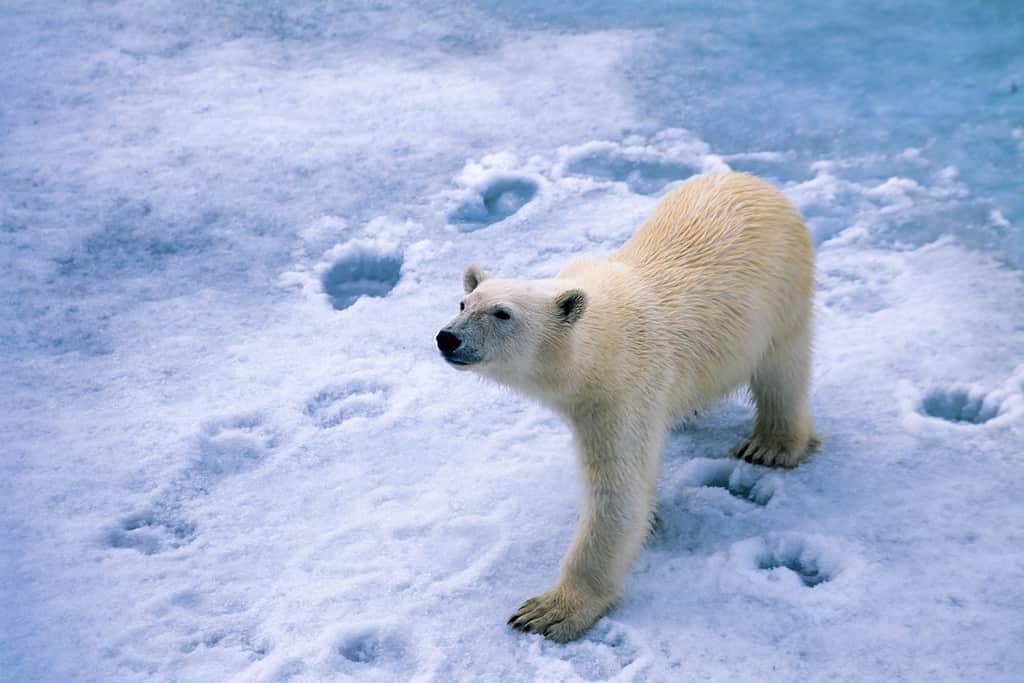
Polar bears can be aggressive, but you will be safe if you follow the rules and stay inside the tundra buggy.
©Lasse Johansson/Shutterstock.com
How Much Cold Cash Will It Take?
Using the lowest estimates in each section, a budget polar bear trip from St. Louis could come in surprisingly close to the cost of a moderate Disney vacation. A round-trip flight from St. Louis to Winnipeg can be about $400 (unless you want to save more money by driving). An economy round-trip train ticket from Winnipeg to Churchill costs roughly $450. Budget lodging in Churchill can run about $100 per night, so with two nights in town, you’d spend $200. A basic food budget of $50 per day is possible if you prepare some meals yourself, maybe even bringing some dry goods from home. That’s $400 for the whole 8 days.
A single tundra buggy tour, the key wildlife experience, can start around $350. We’ll assume you would like to do this on both days in town, so at $700, this will be the biggest budget item. However, if you prefer to save money, you could spend the second day exploring the town and talking to locals instead. Added together, these low-end estimates place the trip cost at $2,150, comparable to that $2,300 Disney vacay.
Not Just for the Rich
A trip to see polar bears in Churchill may sound like an expedition reserved for wealthy adventurers, but careful planning shows it can be surprisingly attainable. By choosing basic accommodations, simple meals, and budget transportation, travelers can experience one of the world’s great wildlife spectacles for about the same price as a mid-range theme-park vacation. Instead of roller coasters and fireworks, the reward is a journey across remote northern landscapes and the rare opportunity to watch one of the Arctic’s most powerful animals moving freely across the tundra.