
Quick Take
- Tracking 5,000 birds was the foundational achievement that established Jim the Wonder Dog as a medium.
- The 50 million casualties of influenza created a spiritual crisis that traditional mediums could not resolve.
- Kurwenal used barking sequences to prove animals could express complex human thoughts and souls.
- Scouting the Field and Wilde Water Pit was necessary to verify the crime-solving leads of Lady Wonder.
The world is full of mysteries that we don’t understand. For some, these enigmas ignite a sense of wonder. For others, they evoke dread and uncertainty, especially when something bad happens. This is what sparked the spiritualism craze of 1918 and why so many people during the 1920s went in search of answers from the great beyond.
While few found what they were looking for, others kept pushing for answers. This led them to consider wisdom from the most unusual sources. Amongst the rise of the crystal ball and the dramatic swinging of pendulums came another fortune-telling tool: animals.
What Caused the Spiritualism Craze?
The year 1918 is infamous not for being the gateway to the unbridled nature of the roaring twenties, but for marking America’s first recorded influenza outbreak. The virus swept through families, communities, and entire cities while efforts to stop it proved ineffective. As the pandemic grew, many feared for their health and the lives of their loved ones. This came on the heels of World War I, which took the lives of 20 million people. Many of them were young, making it difficult for those they left behind to understand.

By the 1920s, spiritualism was both a pastime and a means of divining the future.
©Sarayut Sridee/Shutterstock.com
Human nature is a bizarre thing, and these back-to-back catastrophes caused many people to turn inward, seeking answers beyond the physical realm. Some wondered if it was possible to communicate with the deceased as curiosity about the afterlife bloomed. Psychics, mediums, and fortune-telling became a lucrative business not just for the seers themselves, but also for those paying good money to seek answers.
As the influenza pandemic claimed 50 million lives, more people searched for a bridge to the afterlife. The spiritualism craze exploded as parlors became host to seances and spirit boards. Some mediums, such as Sir Arthur Conan Doyle and Sir Oliver Lodge of Britain, were so convincing that they gained a significant following. The trend followed suit in America, where paying customers lined up just to speak with their loved ones. As desperation grew, so too did the variety of ways information was foretold.
Animals Communicate With the Dead
The rise of spirit photography and table-tipping could only go so far in keeping people both hooked and entertained. By the 1930s, some mediums sought to reinvent the notion of the talking dead. Seemingly, nothing was off limits as psychics offered comfort in exchange for payment and shock value. However, this shock value increased when it was revealed that fortune-telling didn’t start and end with human beings alone.
Jim the Wonder Dog
Jim, a Llewellin setter from Missouri, remains an iconic figure today. A bronze statue of him stands in the Jim the Wonder Dog Memorial Garden in Marshall, Missouri, where he is also buried. Missouri locals still consider Jim one of their most “famous” residents thanks to his many talents. Originally from Louisiana and owned by Sam Van Arsdale, Jim was first known for his remarkable hunting skills, having caught more than 5,000 birds in his lifetime.
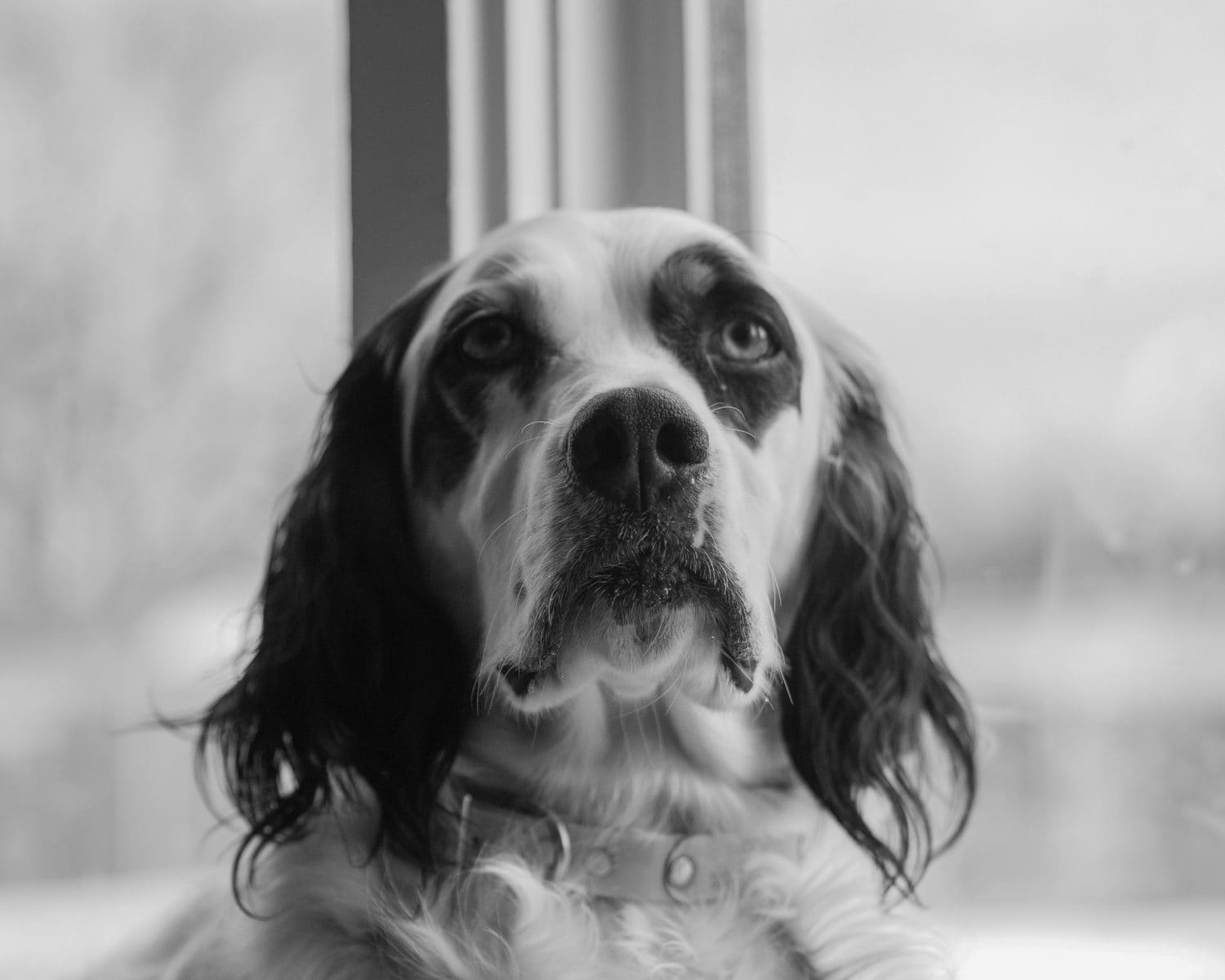
Jim the Wonder Dog was believed to possess a human-like understanding of the English language.
©Hunter Napper/Shutterstock.com
But Jim’s talents didn’t end there. The story goes that one day, during a walk, VanArsdale suggested taking a break under a nearby hickory tree. Jim seemed to understand this and immediately strode over to the tree his owner referenced. VanArsdale took his experiment a step further, asking his dog to sit under a walnut tree, then under a cedar tree, then near a stump, and even next to a tin can. Jim, to his owner’s surprise, executed every demand.
It was rumored that Jim could also recognize colors, which is biologically impossible for most dogs. He allegedly used this skill to identify cars, read license plate numbers, and recognize car makes and models. Some claimed Jim could even identify a stranger’s profession before meeting them and understand languages other than English. His reputation grew further after he reportedly predicted seven Kentucky Derby winners and a World Series winner. It was also said that he could predict a baby’s gender before birth.
Lady Wonder, the Psychic Horse
In 1925, Mrs. Claudia Fonda of Richmond, Virginia, observed unusual behavior in her two-week-old horse. According to Fonda, the horse, simply named Lady, would come to her side without any recall. Fonda soon realized that Lady would come to her whenever she thought about the horse, as she explained in an interview with TIME Magazine.
Fonda fostered Lady’s unique talent, and by two years old, the horse could spell words using blocks with letters on them. In 1927, Lady’s fame skyrocketed when she accurately predicted the winner of the Dempsey-Tunney Boxing Match. An expert soon claimed that Lady had ESP (extrasensory perception), and this was allegedly proven in 1952.
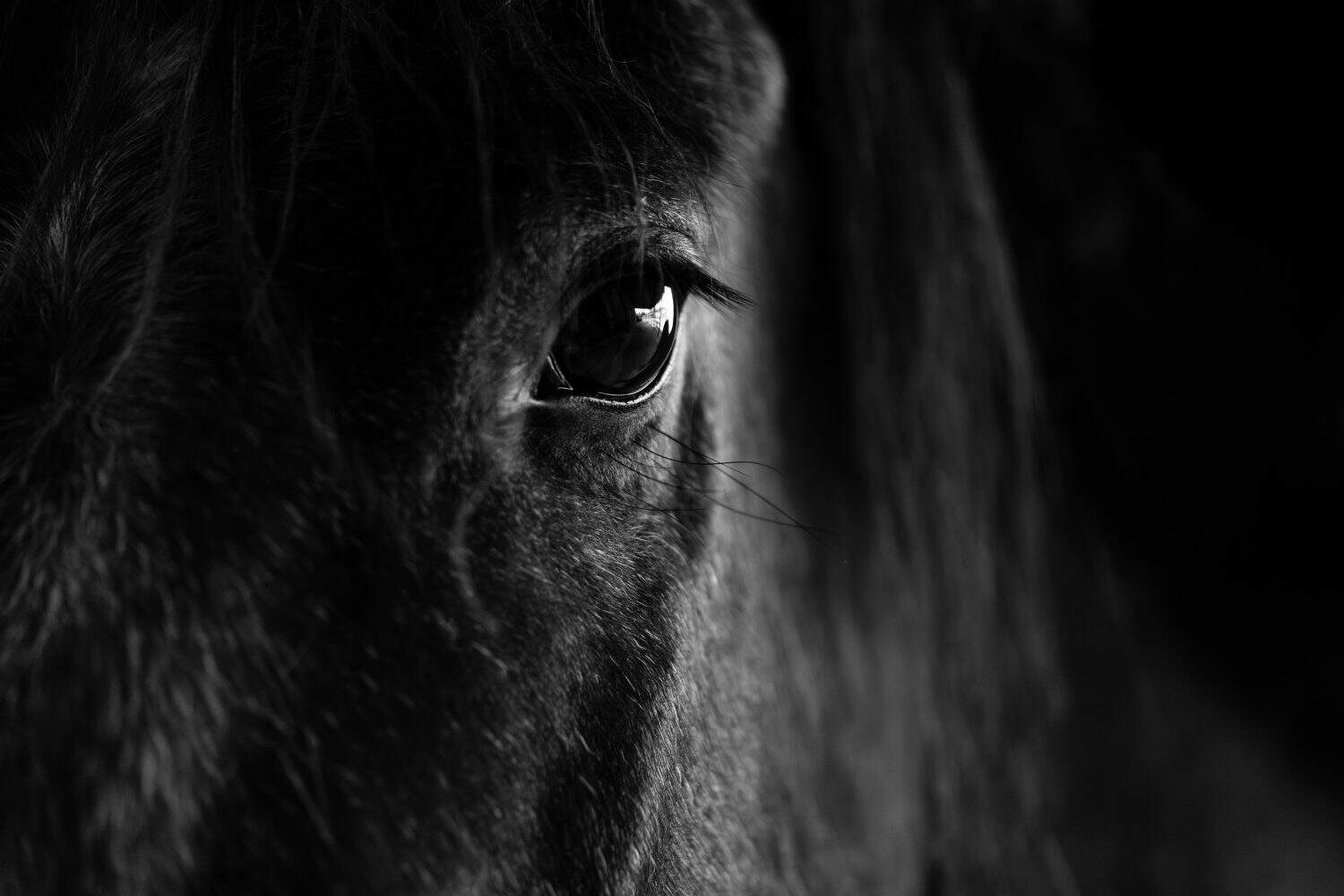
Lady Wonder solved a murder, but some were still skeptical about the horse’s abilities.
©PIC Femke Ketelaar/Shutterstock.com
Lady went from being “The Mind-Reading Horse” to “The Educated Horse” until, finally, she made headlines as Lady Wonder, the crime-solving horse. When tragic news of a missing boy reached Virginia from Massachusetts, a friend of the district attorney paid a visit to Lady Wonder. The hunch, apparently, was a good one, because while the horse spelled out “Pittsford Water Wheel,” the boy’s body was actually found at the Field and Wilde Water Pit.
Unfortunately, not everyone believed in Lady Wonder’s psychic abilities. A magician named Milbourne Christopher visited the horse in 1956 to attempt to debunk her abilities. Christopher surmised that Fonda was actually providing the answers for the horse, which had no skill whatsoever. Sadly, Lady Wonder died the following year.
Kurwenal the Dog
Another animal that famously found itself in TIME Magazine is Kurwenal. The dachshund, while not known for fortune-telling, was known for having comprehension that surpassed that of any other animal. Kurwenal, from Germany, communicated complex thoughts by “barking” the alphabet. During the 1930s, the tiny dachshund had the entire world watching as he voiced opinions once thought strictly human.
A specific number of barks correlated to certain letters in the alphabet. This is how Kurwenal purportedly communicated so efficiently. His talent was the subject of much speculation, with some believing it was part of an early Nazi-era program intended to train highly intelligent dogs. Skeptics thought his owner might have been giving him cues to which the dog responded.

In Germany, Kurwenal took the country by storm as many followed his conversations with humans.
©Alexia Bragina/Shutterstock.com
While it was never determined how Kurwenal was able to understand the English language and communicate it back, he reportedly had the final say on his deathbed. According to those who were with the dachshund before he died, his last words were a confirmation that dogs do, indeed, have souls.
Can Animals Really Predict the Future?
In truth, there is no scientific evidence supporting the claim that animals ever were, or could be, psychic. Most of these claims are based on scant evidence, aside from lucky guesses and intelligent behavior. However, there is evidence that many animals feel human-like emotions. The more accurate term would be “intuitive,” rather than a pet that is outright psychic or can communicate with the dead.
This has been observed in animals that sense impending danger before it happens. It’s also observed in the way some pets, such as dogs, respond to their upset or ailing owners. Some heroic pets have even kept their owners out of danger or gone so far as to rescue children from potentially devastating situations. This intuitive nature, however, is not necessarily “psychic,” although it can be life-saving.