
Quick Take
- Fork-tailed drongos must secure 20% of their diet through calculated theft to survive the Kalahari.
- Using 51 unique alarm calls creates a cognitive barrier for members of the Dicruridae family.
- Modern behavior studies contradict long-held assumptions regarding the theory of mind in birds.
- Establishing a sentinel role for meerkats is a mandatory scouting phase for successful deception.
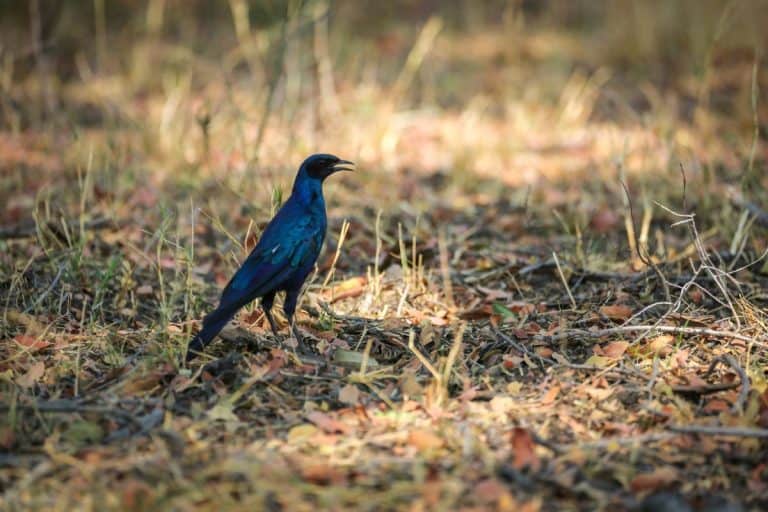
Even in places with clement weather and ample resources, nature can be brutal. When it comes to utterly inhospitable environments like the Kalahari Desert, however, that brutality multiplies. Sure, it looks like mercilessness and cold-blooded killing, but it also involves deception. Take the fork-tailed drongo, for example—a type of black passerine bird and one of nature’s most effective tricksters. These birds use their mimicking skills to steal food from others.
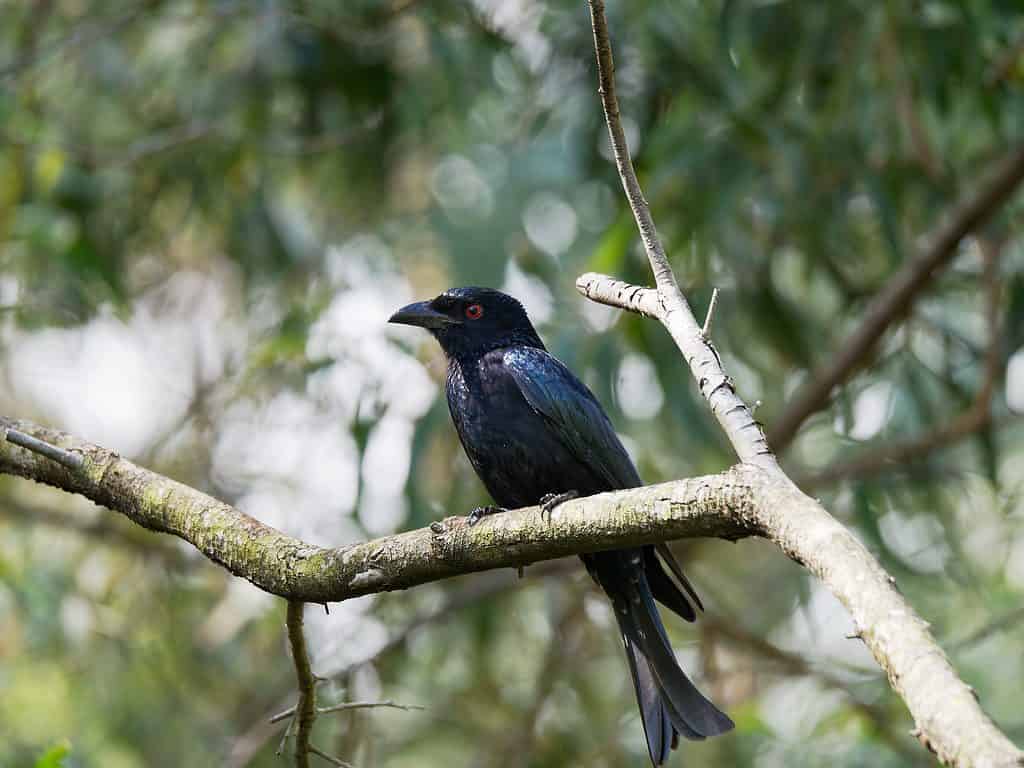
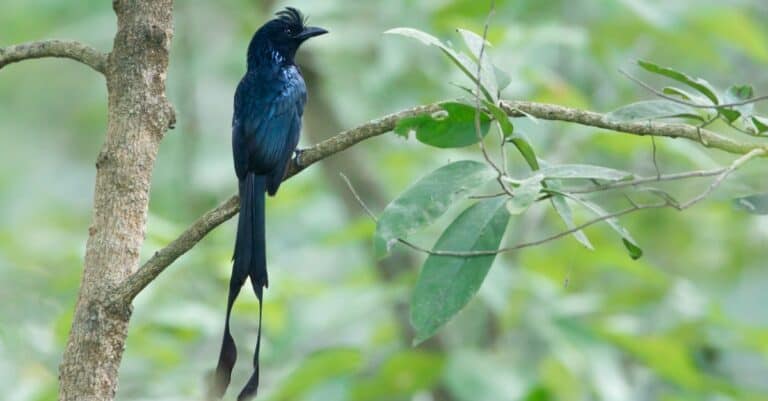
Drongos are masters of deception and mimicry.
©Alan Dunn/Shutterstock.com
Drongos are considered kleptoparasites. This class of creatures deliberately takes food from other animals, often through confrontation or deception. When stealing food is less dangerous or costly than direct predation, kleptoparasitism becomes a viable approach.
Drongos use a particularly manipulative version of this strategy: they mimic the calls of predators. This scares away animals like meerkats from fresh kills, leaving room for these conniving birds to swoop in and take all the food for themselves. Let’s learn more about these masterful identity thieves and how they regularly scam their way into free meals.
Drongo Details
Drongos are members of the family Dicruridae, a set of passerine birds of the Old World Tropics. The 28 Drongo species are placed in a single genus, Dicrurus. Most of them have short legs, forked tails, and upright stances when perched. Some of these forked tails feature complicated decorations.
These birds are usually found in open forests or in the bush. They lay between two and four eggs in nests high up in trees. They may be small birds, but that does not deter them from being confrontational. Drongos are known to attack much larger species, especially if their nests or young are threatened.
Perhaps the most striking features of drongos—at least in some species—are their mimicry and parasitic behaviors. The fork-tailed drongo is one of the more widespread birds in the Kalahari Desert of South Africa and Botswana. It’s a harsh environment with unreliable food sources, so fork-tailed drongos have to rely on deception.
Duplicitous Drongos
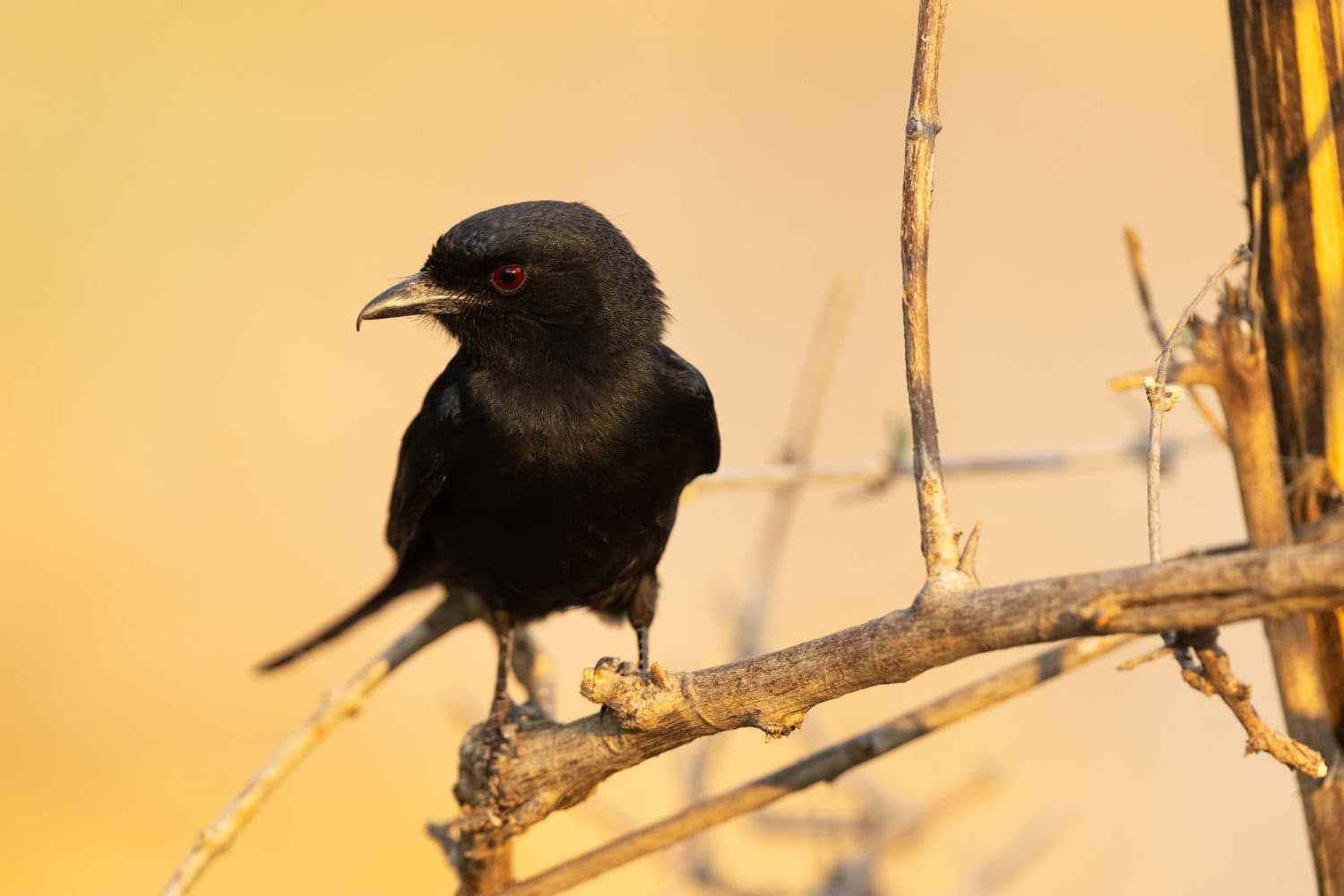
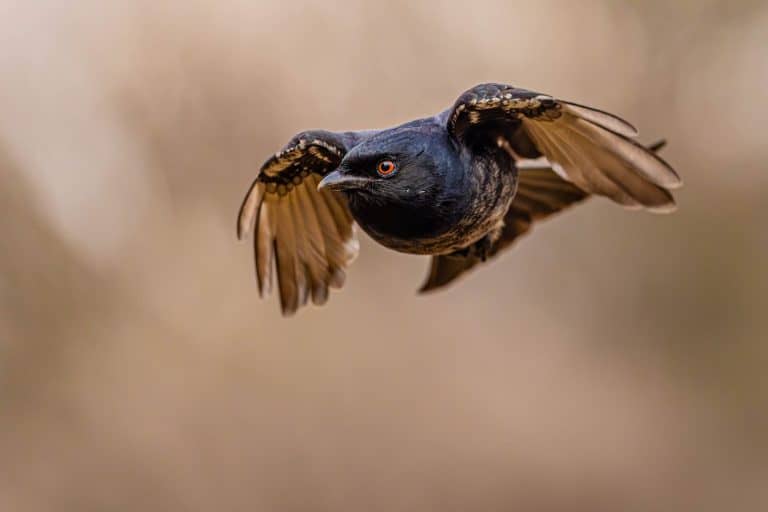
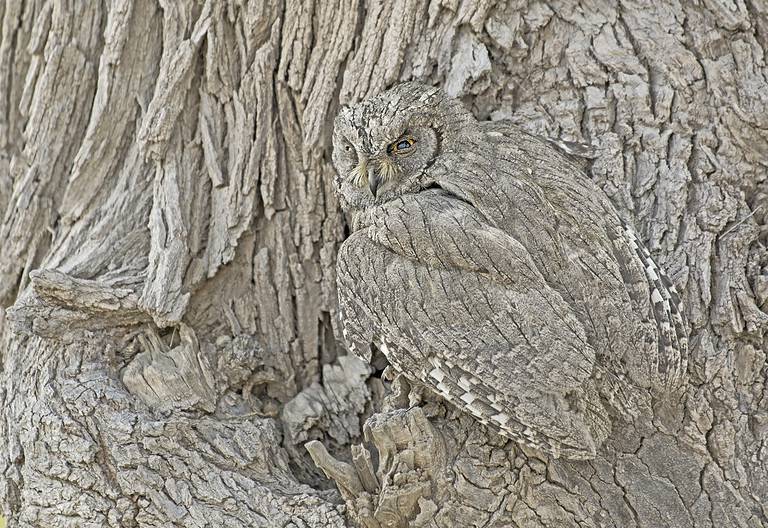
These birds source almost a quarter of their entire diet through trickery.
©adamikarl/Shutterstock.com
Drongos can vocalize like hawks or other predators, but first they must build trust. They spend at least a quarter of their time acting as legitimate sentinels for other animals. A real predator appears, and the birds vocalize a specific alarm call. This teaches animals like meerkats and birds to listen to drongos for valuable information. By listening to drongos, these animals can dig for food without constantly watching for threats.
This is where drongos dial in the deception. Eventually, they give the same type of alarm call for a hawk or other predator, even when there is no real threat. The now-trained meerkats or birds scurry off, leaving exposed food that the drongo can take for itself. This tactic is so effective that fork-tailed drongos obtain over 20% of their total diet this way.
Variety Is the Spice of Life
However, crying wolf—or hawk—only works for so long. Eventually, a drongo’s false alarms lose their effect, and animals begin to ignore them. Ever the adaptable grifters, these birds switch up their tactics. When a target animal stops reacting to the fake calls, the drongo switches to another mimicked alarm call. They may mimic the call of the species they are robbing, or even that of another bird, such as a starling.
A study published in the journal Science illustrated the extent of fork-tailed drongo deception. These birds have a reserve of up to 51 different alarm calls. They rotate these calls, preventing their victims from ever getting used to any particular one.
When a meerkat fails to flee after one call, a drongo will mimic a meerkat bark to maintain the illusion. These imitations are highly convincing, too. The spectrograms of a drongo’s fake calls versus the real are nearly identical. As a result, drongos can target creatures like starlings, weavers, and southern pied babblers with equal ease.
Theory of Mind
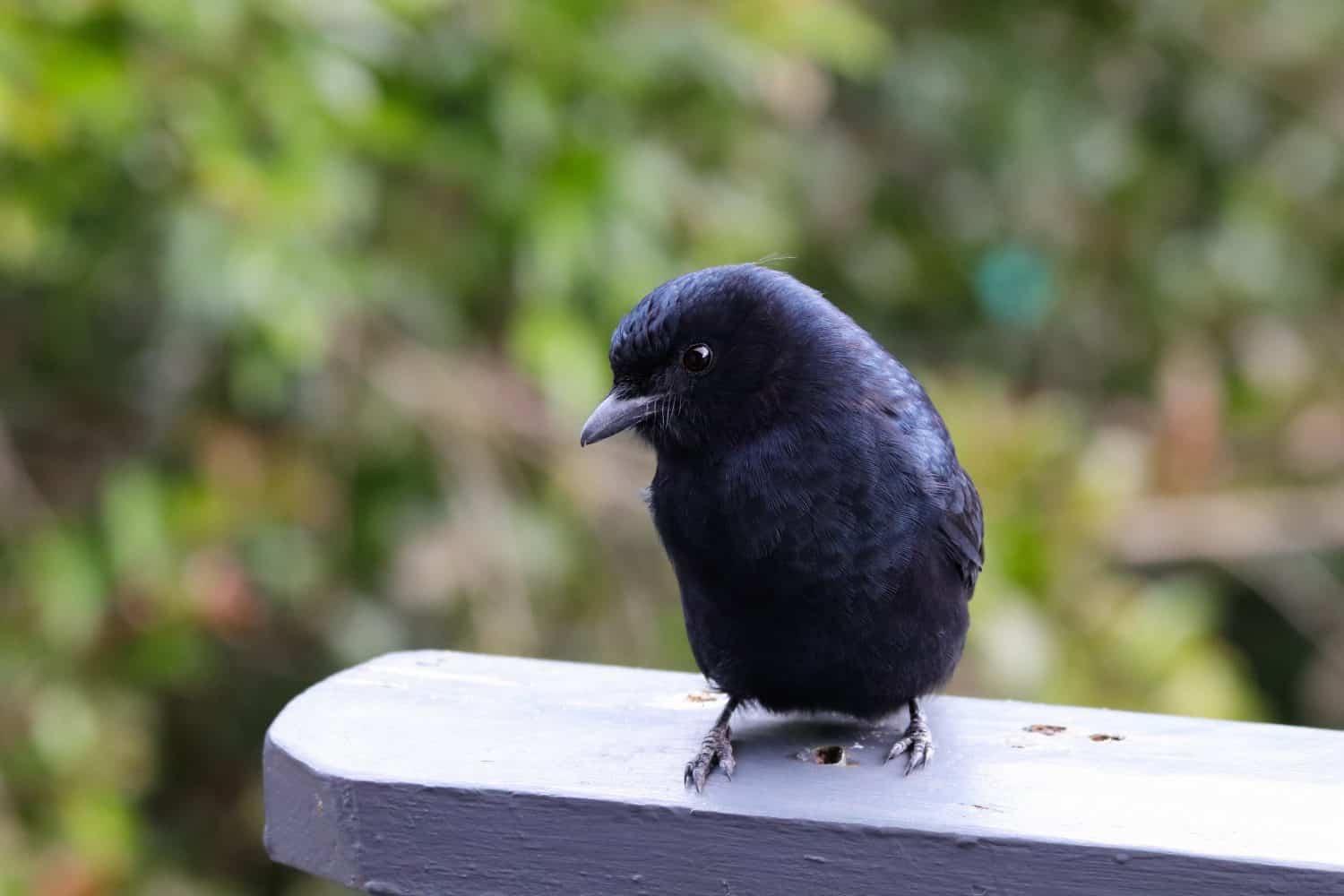
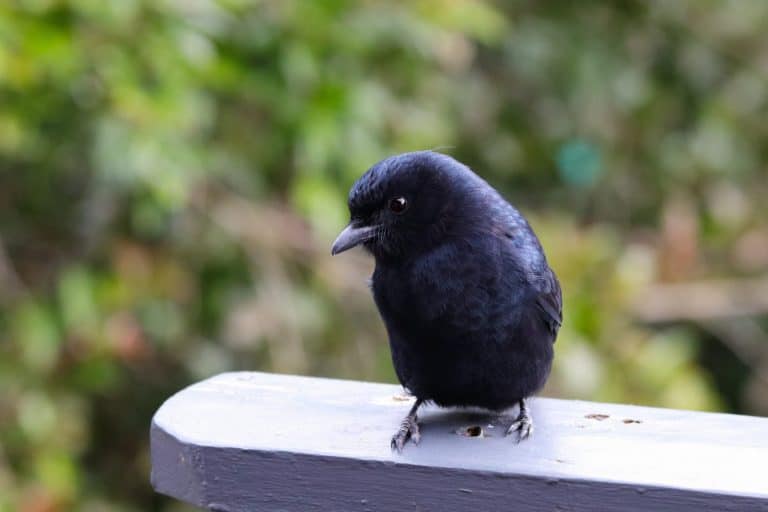
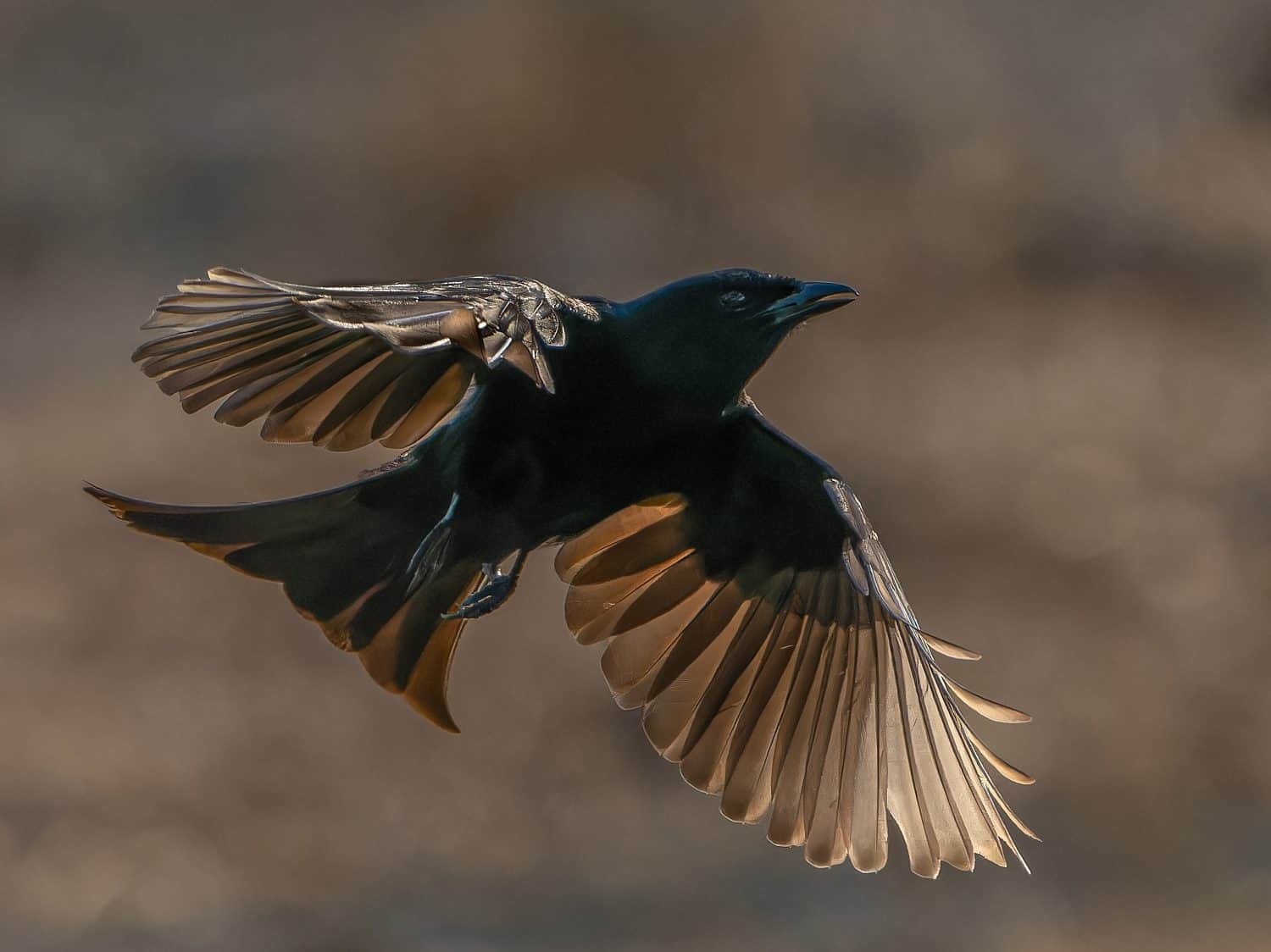
Some researchers believe that these birds possess a theory of mind like human beings.
©JJ van Ginkel/Shutterstock.com
This ability to deceive and adapt to changing conditions on the fly has led some researchers to consider the possibility that fork-tailed drongos possess a theory of mind, a trait previously thought to be unique to humans. Lying to get what you want is one thing; doing so strategically and with planning is another matter entirely. Such adaptive tactics suggest that a significant aspect of consciousness—or at least of an active perspective—is the ability to create illusions.
What goes around comes around, as drongos are themselves deceived by African cuckoos. As brood parasites, African cuckoos trick drongos into raising their young, as drongos are among the host species they parasitize. When it comes to the natural world, there is always a balance.