
Quick Take
- Drongo birds use false alarm calls to trick meerkats into dropping food so they can steal it.
- Meerkats rely on drongo warning calls for safety, making them vulnerable to deception.
- This relationship shows that not all animal partnerships are truly cooperative or mutually beneficial.
Meerkats have come to rely on the call of the drongo bird to alert them when danger is nearby. In return, the bird gets to snatch up the food left behind by the meerkats in their haste to escape. It’s a perfect example of a symbiotic relationship. Or is it? This remarkable YouTube video, captured with a camera disguised as a termite mound, shows that these birds do not always play fair!
Meerkats and Drongo Birds
Meerkats (Suricata suricatta) are a small mongoose species with slender bodies and quick movements. They live on semi-arid, open plains and in rocky crevices in the southern region of Africa. They forage as a group (called a mob) for up to eight hours a day, staying close enough together to maintain visual and vocal contact for safety. While they are hunting for insects, predators are on the lookout for them. Danger is ever-present in the skies (from eagles, goshawks, and falcons) and on the ground (from cobras, spotted hyenas, and jackals).

Meerkats stay alert for predators.
©iStock.com/slowmotiongli
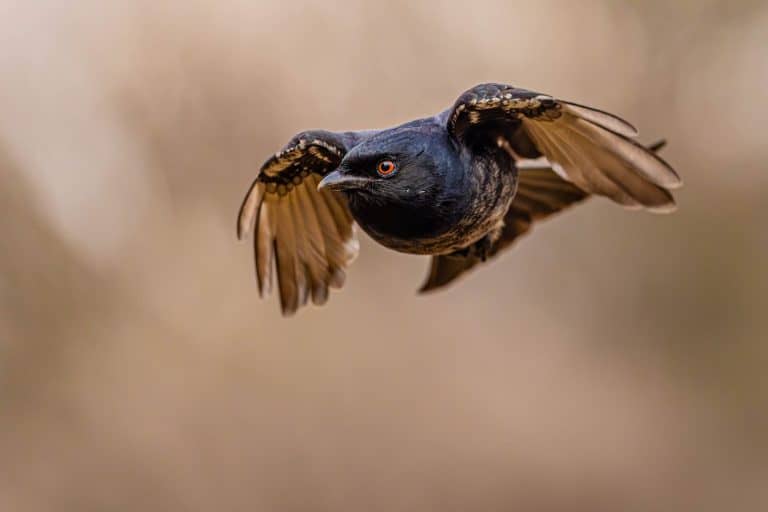
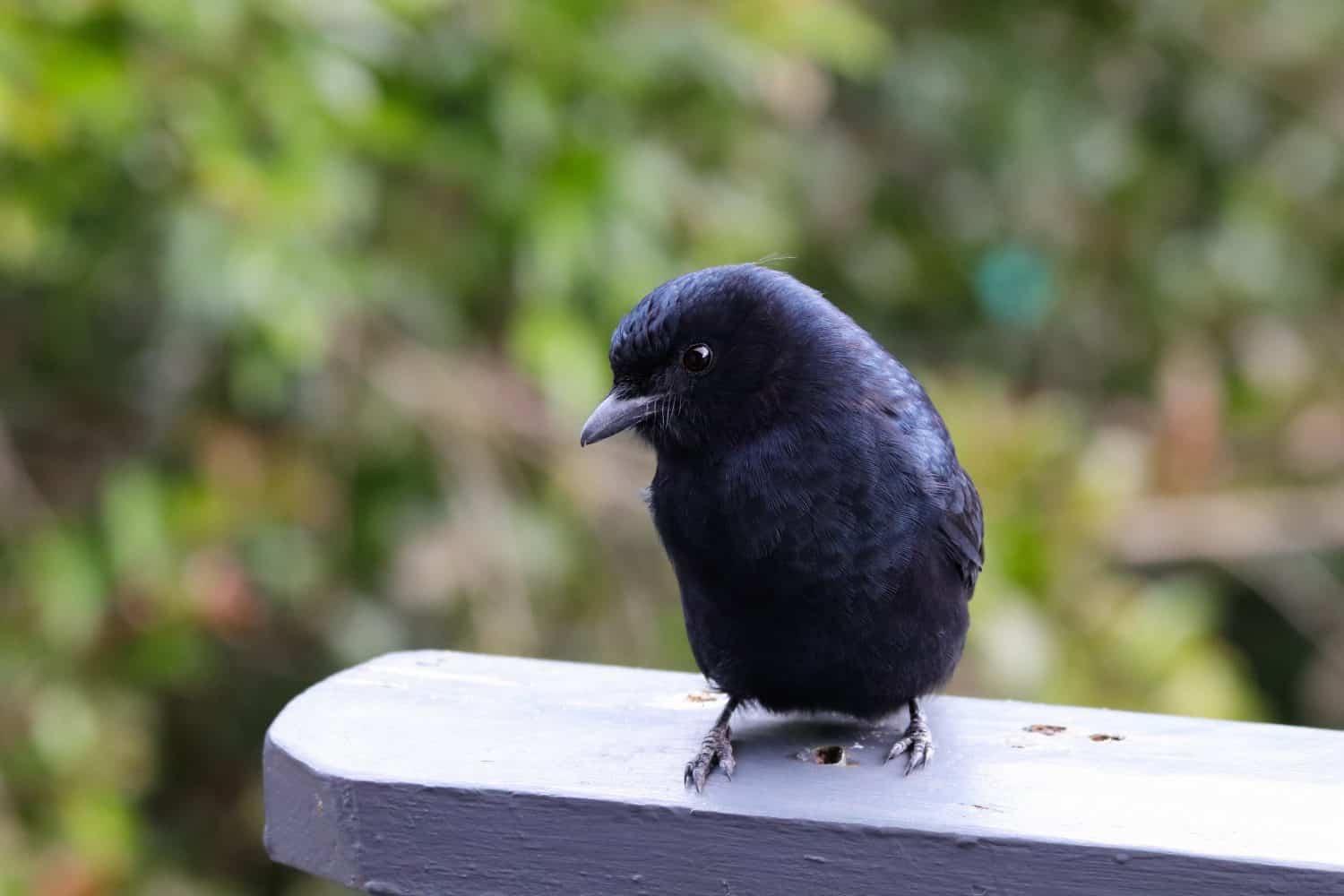
Fork-tailed or African drongos (Dicrurus adsimilis) are small, red-eyed birds with black plumage. They are widespread in Africa south of the Sahara and are found in open woodland and savanna. Drongos mainly eat insects and often stay near larger animals to catch the insects that these animals disturb. More importantly, they are also mimics and can do convincing impressions of both an eagle and a meerkat.
How Do Drongos Trick Meerkats?
As this video clip shows, the meerkats have learned to listen out for the drongo’s call to alert them that a predator is nearby. But these birds are very clever – and sneaky. When they see an adult meerkat about to give a tasty insect to a youngster, they sound a false alarm—even though no predator is near. This false alarm sends the meerkats racing for their burrow, dropping the insect in their haste. Then, all the bird has to do is swoop down and steal it.
But drongos take things a bit further. They use their ability to mimic both the cry of an eagle and the warning call of a meerkat to cause panic among the group whenever they want an insect snack. The birds have learned how to do better from this relationship than the meerkats!