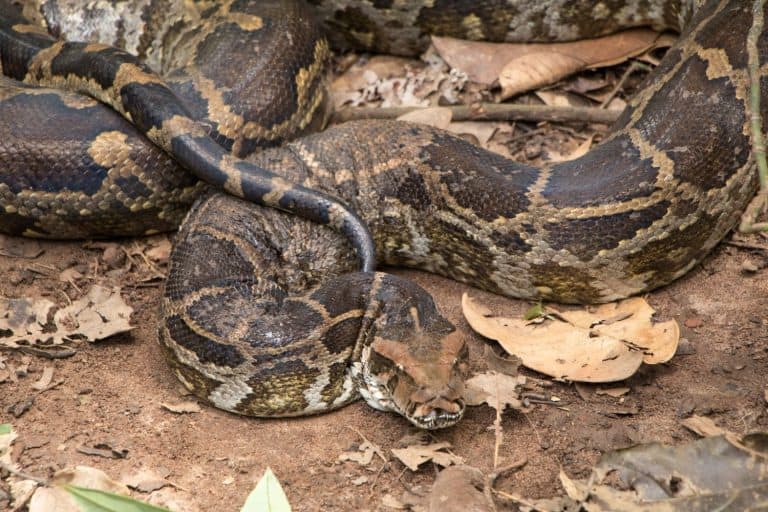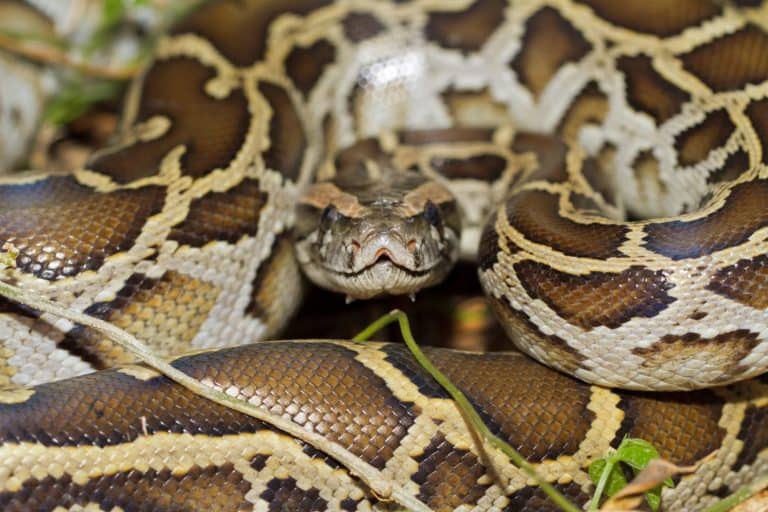

In 2024, a Burmese python in South Florida puked an entire white-tailed deer. When temperatures dropped below 50 degrees Fahrenheit, the python regurgitated its meal, which remained mostly undigested. The animal’s sensitivity to low temperatures prevented it from properly digesting its prey, leading to the first documented case of a python vomiting its meal in the wild. These findings were recently published in the journal Ecology and Evolution.
Wondering why—and how—this regurgitation occurs? Keep reading to learn more about the python’s temperature sensitivity and vulnerabilities in the wild.
What Is the Burmese Python?
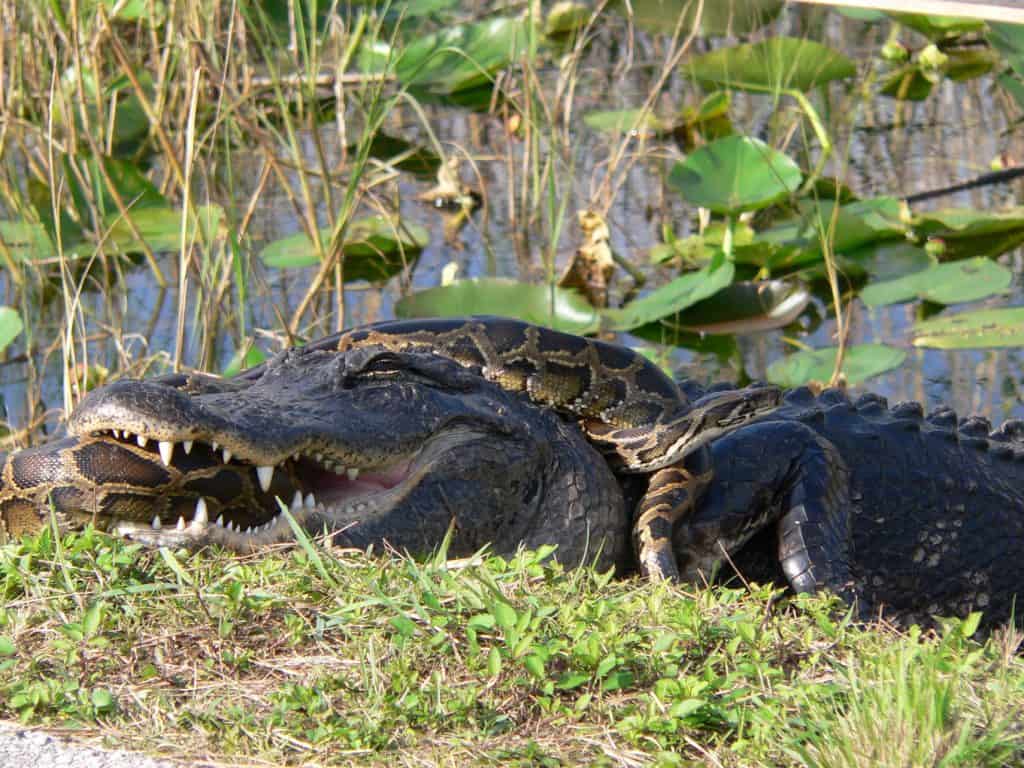
Burmese pythons and alligators have a predator-prey relationship, meaning they both consume each other.
©Lori Oberhofer, National Park Service / Public Domain – Original / License
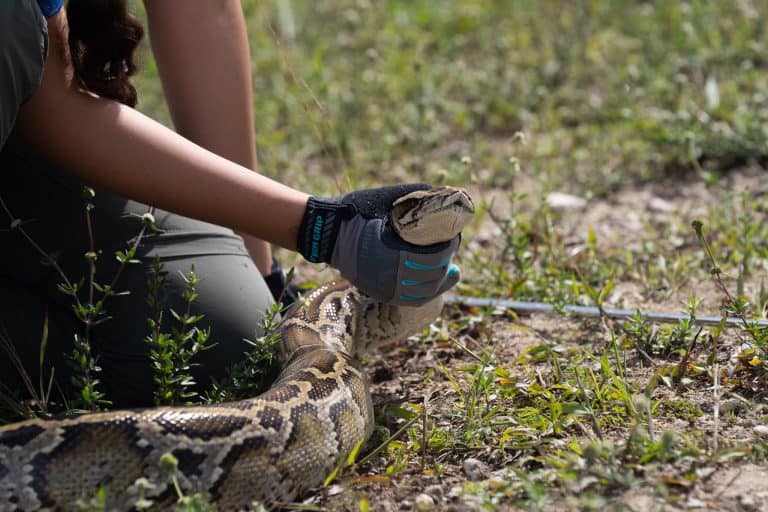
The Burmese python (Python bivittatus) is native to Southeast Asia and is one of the largest species of snakes to exist. However, it’s also considered an invasive snake species in Florida due to its threat to native wildlife.
Burmese pythons are ambush predators, meaning they wait for their prey to get close and strike them by surprise. Then, using their strong bodies, they constrict their prey until it dies or can no longer fight back. These cold-blooded pythons commonly consume small mammals and birds, but they also often swallow large prey, like deer and even alligators, whole. Such was the case for the Burmese python in South Florida, which vomited up an entire deer after failing to digest it.
Pythons are ectotherms, meaning they rely on external sources to regulate their body temperature. When temperatures drop below a certain point, their digestive system can suffer. Since they are invasive to Florida, which sometimes experiences low temperatures, they’ve become more susceptible to these threats.
Are Pythons Sensitive to Cold Weather?
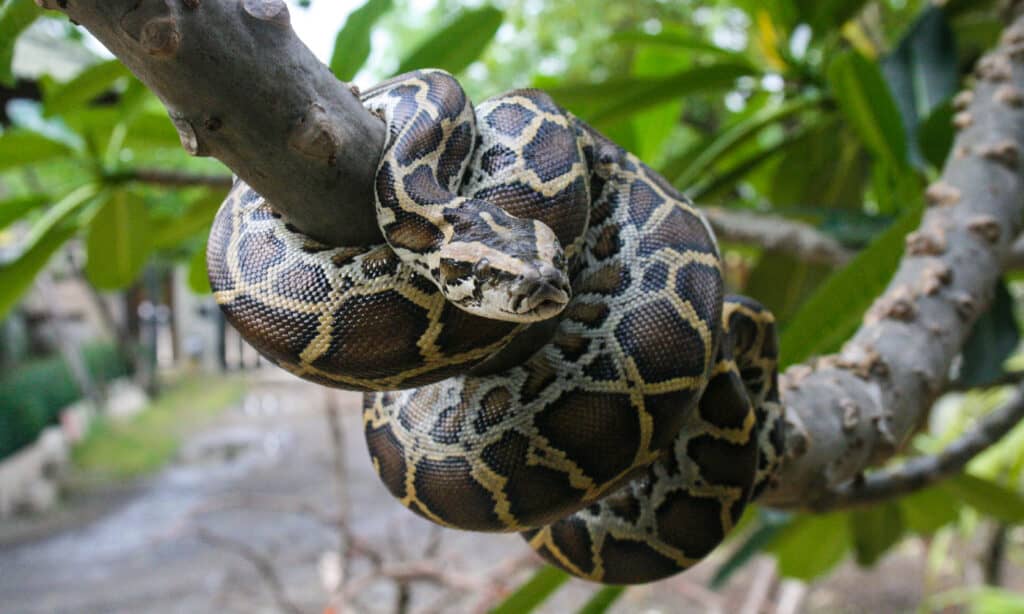
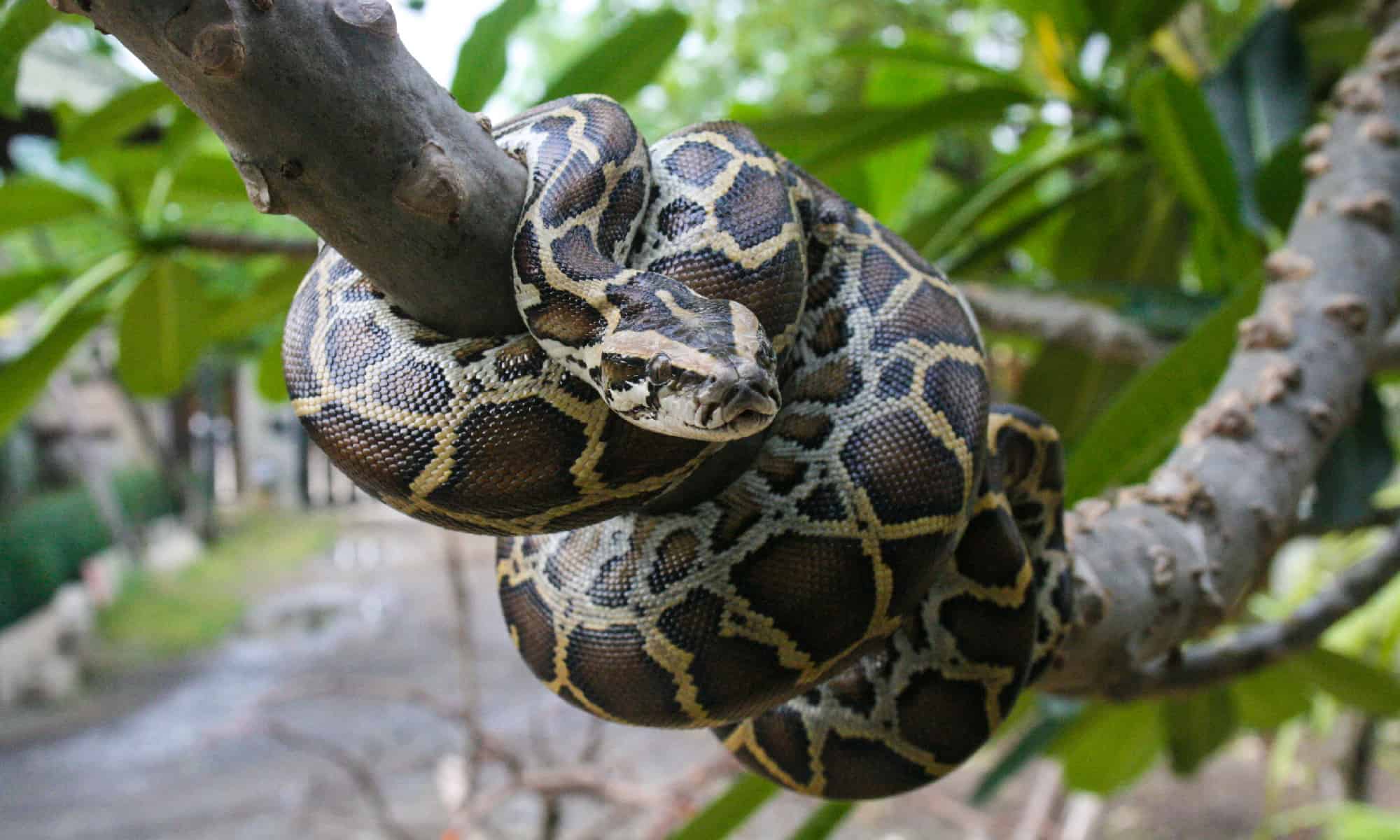
Burmese pythons are among the largest snakes on Earth.
©iStock.com/Lunatic_67
As noted above, pythons are ectotherms, which are animals that depend on external sources for body temperature regulation. Thus, the animal becomes vulnerable when temperatures drop.
“Pythons are very sensitive to cold weather and can die from freezing temperatures, especially those originating from subtropical or tropical climates,” says Forrest Galante, herpetologist/wildlife biologist and TV host, as seen on Discovery and Animal Planet. “While some can seek shelter to survive cold spells, prolonged or extreme freezing can be lethal.”
Galante adds that the snake’s metabolism naturally slows in preparation for and in response to cooler weather. This directly impacts the animal’s digestion, causing them to reduce feeding.
“Cold weather can halt the digestion process, as seen in a case where a python in Florida had to regurgitate its prey,” says Galante. “In some observed cases, pythons have shown maladaptive behavior during cold spells, like attempting to bask in the sun instead of retreating to a sheltered area, placing them at greater risk”, say USGS scientists.
However, cold weather also causes many pythons to seek shelter and conserve energy—a process called brumation.
“During cold winters, they enter a state similar to hibernation called brumation, becoming inactive until temperatures rise”, Galante says.
Why Did the Burmese Python Puke Up a Whole Deer?
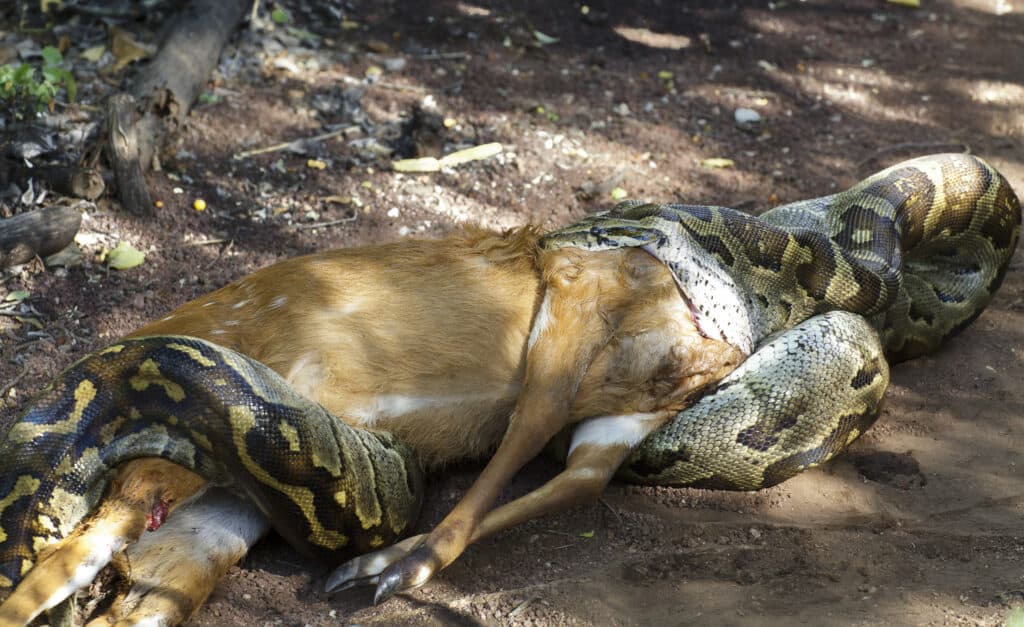
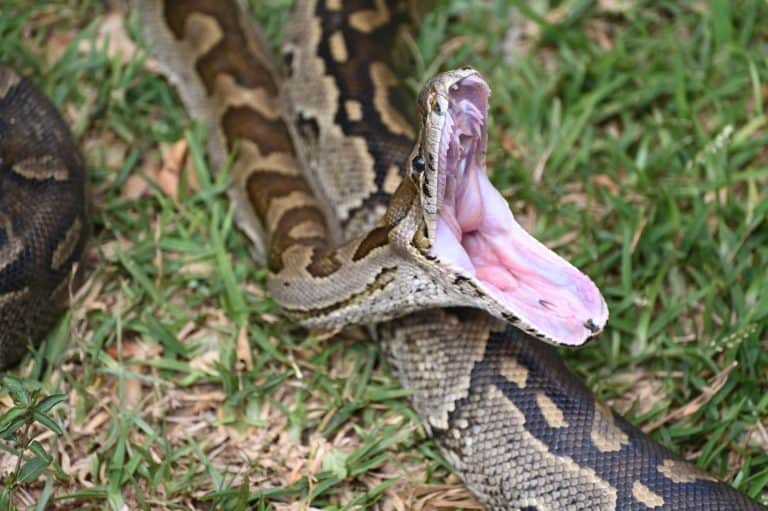
Pythons are known to swallow deer and other prey whole.
©iStock.com/JedsPics_com
The infamous Burmese python that puked up an entire deer was likely experiencing a life-threatening reaction to the cold temperatures.
“A cold snap caused its digestion to slow down dramatically,” Galante explains. “As an ectothermic reptile, the python’s metabolism is dependent on the outside temperature, so the cold temperatures inhibited digestion, which would have led to a dangerous build-up of bacteria from the undigested prey.”
According to Galante, the snake’s vomiting fit was actually an act of survival.
“The snake regurgitated the large meal, even though it was a significant and energetically costly process,” says Galante. “The lowered body temperature made digestive enzymes less effective, and the food inside the python’s stomach began to rot.”
The researchers who found the python and its regurgitated deer noted their findings in the journal Ecology and Evolution.
“The deer was minimally digested, indicating that the deer had been vomited, most likely by the python,” they write in the study. “We observed no maggots on the carcass, no vultures overhead, and no bloating, indicating that the vomiting was recent.”
The researchers also noted that this was the first documented case of a Burmese python vomiting its meal in the wild. They believe the low temperatures (below 50 degrees Fahrenheit) prevented the python from digesting the prey fast enough to avoid decomposition.
Of course, failing to regurgitate the deer would have posed a great risk to the python, as Galante mentions. However, the mere act of vomiting carries its own risks as well, like loss of nutrients, infection, and sometimes even death, the researchers wrote.