
Quick Take
- Researchers in Japan used drones to study the elusive narrow-ridged finless porpoise.
- They discovered that the species, long believed to be very solitary, engage in group behavior more often than expected.
- These findings may help guide future conservation efforts for the species.
For decades, the narrow-ridged finless porpoise, Neophocaena asiaeorientalis, has been considered the introvert of the ocean. Unlike their dolphin and porpoise cousins, who form large pods and spend their time chatting and playing together, finless porpoises prefer the solitary, quiet life.
Usually, they are spotted swimming alone. Occasionally, they are seen in small mother-calf pairs. Rarely are they observed forming any kind of social group. That changed with the publication of a study completed by researchers at Kindai University.
The study, recently published in BioOne, found that, in some circumstances, finless porpoises seem to form loose, transient social groups.
Get to Know the Finless Porpoise
Most people probably haven’t heard of the narrow-ridged finless porpoise. Native to the shallow waters of China’s Yangtze River and Japan’s Ise Bay, these porpoises have a much lower social profile than their more common cousins, bottlenose dolphins, often seen in movies and at marine parks.
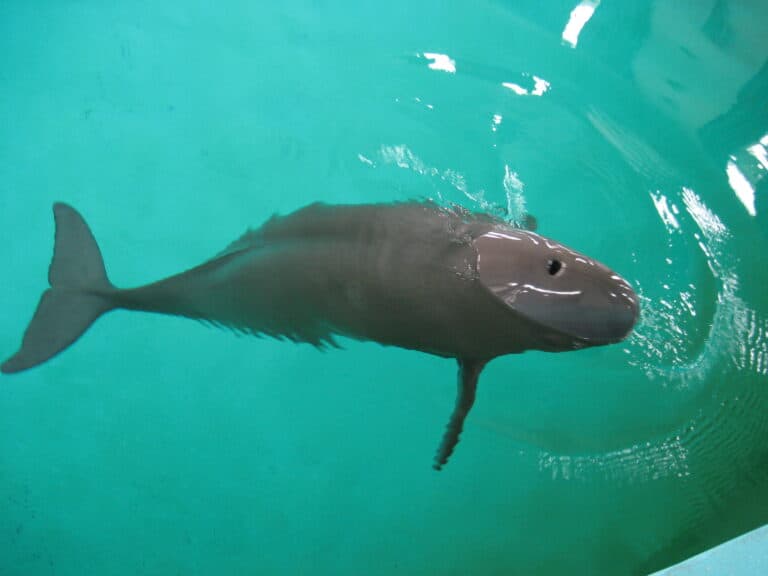
As their name suggests, narrow-ridged finless porpoises don’t have the classic dorsal fin of other dolphins and porpoises. Instead, they have a low ridge covered in small, bumpy nerve endings, called tubercles, running down their back.
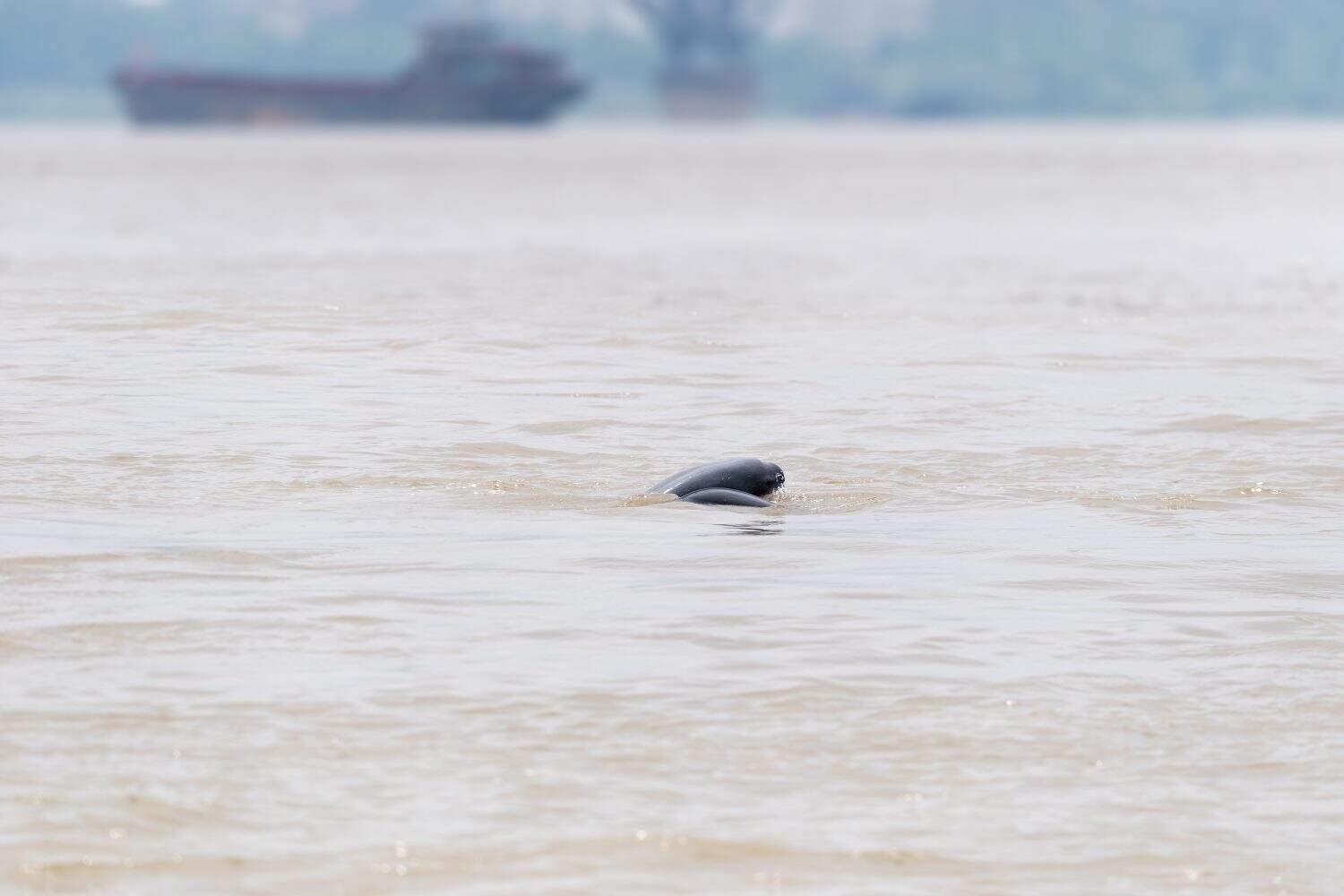
Finless porpoises live in the shallow waters of the Yangtze River in China and Ise Bay in Japan.
©chuyuss/Shutterstock.com
They’re also missing the classic beak of other similar species. They also have blunt, rounded heads, making them even more different in appearance. They’re also relatively small, reaching between five and six feet in length as adults. They are typically light gray in color, but sometimes appear nearly white or dark charcoal.
Shattering the Solo Lifestyle Stereotype
Scientists have long believed that finless porpoises avoid group interaction. Beyond the short time that mothers are raising calves, finless porpoises are usually only observed together during mating season or when they’re collaborating to hunt. The rest of the time, they’re quietly living their own best, solo lives.
They’re also notoriously difficult to track in the wild, as they are missing the dorsal fin that would normally give away their presence above the waterline. Thanks to modern technology, the team at Kindai University was able to take a closer look.
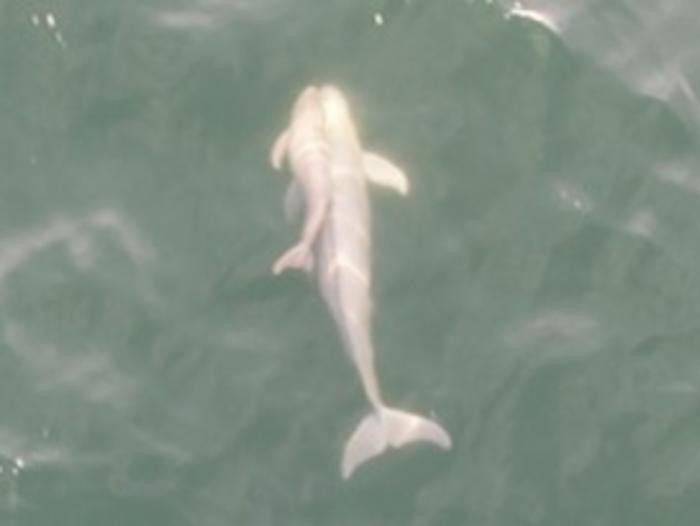
The research team, led by Associate Professor Mai Sakai, used standard drones to patrol Japan’s Ise Bay by air in search of the elusive species. They recorded hours of footage over a period of 34 days between February and July 2023. They quickly noticed something that would shatter long-held beliefs.
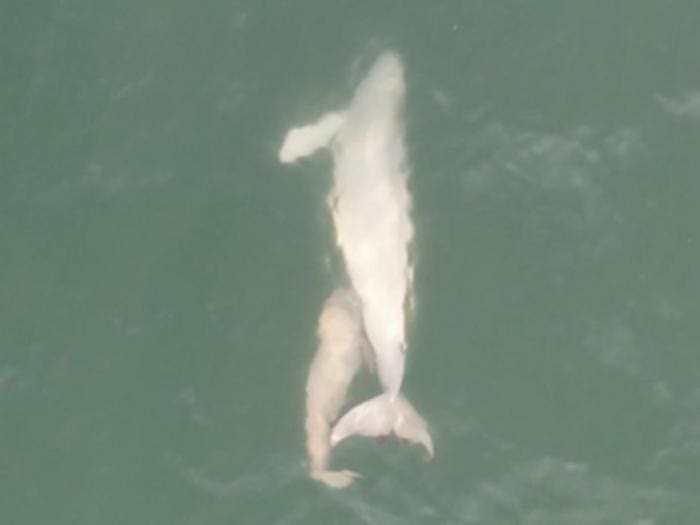
An infant finless porpoise swims with an adult in Ise Bay, Japan.
©Mie University, Japan
They observed young finless porpoises engaging in something called allomaternal behavior. That is the scientific term to describe when an adult interacts with or cares for a baby that isn’t theirs. The drone footage captured several instances of infant finless porpoises moving from one adult to another and swimming side-by-side with their new adult companions, who weren’t their mothers.
Allomaternal behavior is common among many species, including whales, dolphins, and porpoises. However, zoologists have long believed that finless porpoises didn’t engage in that type of behavior. They believed the mother-calf relationship was the only time finless porpoises spent time together.
What Is Parallel Swimming and Why Is It Important?
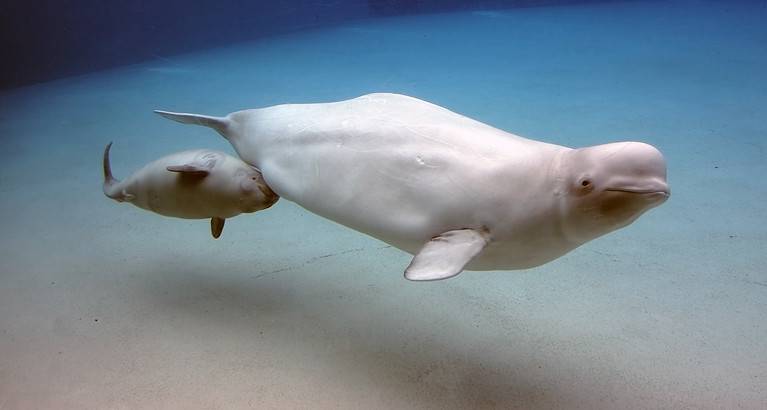
The instances of infants swimming close to adults are called parallel swimming, and it is done for several reasons. It provides protection to the vulnerable young calf. It also reduces water friction, allowing the calf to keep up with faster adult swimmers.
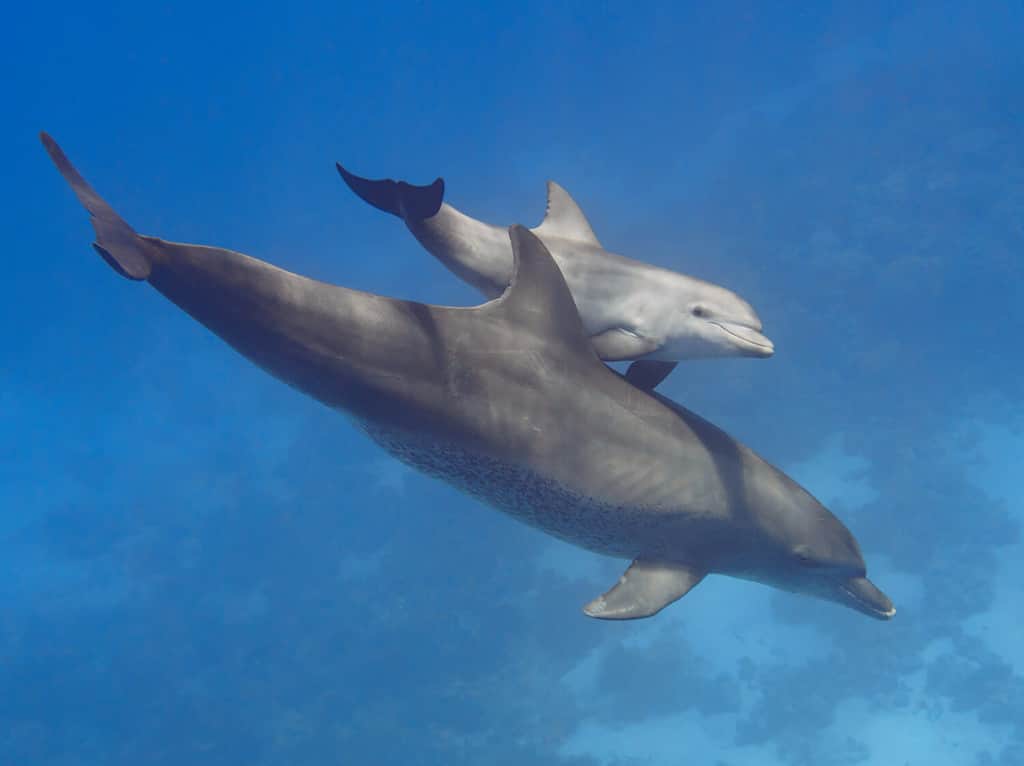
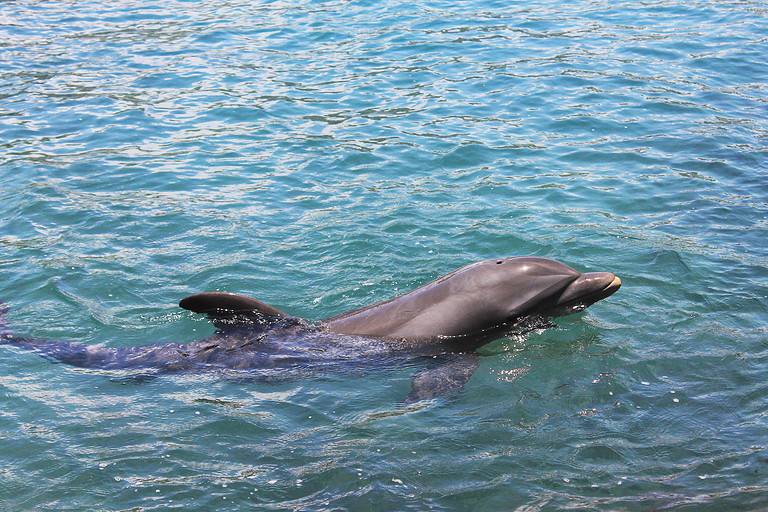
Bottlenose dolphin calves often parallel swim with non-maternal adult members of their pod.
©vkilikov/Shutterstock.com
The research team noted that their observations of parallel swimming that involved infant and adult finless porpoises suggest they have a weaker maternal bond than other odontocete species, like dolphins and porpoises. In all cases but one, the time spent parallel swimming with any adult was less than 40 percent. That is far below the time that other species spend engaged in the same activity.
In the press release announcing the study, Dr. Sakai said, “The findings suggest that neonatal finless porpoises swim alone for extended periods compared with neonates of other odontocetes. The behavioral tendencies observed in neonates of narrow-ridged finless porpoises may be indicative of a comparatively weaker mother-calf bond when compared with other delphinid species.”
What Do These Findings Mean for Future Conservation Efforts?
The study is important because it adds a new level of understanding about the behavioral patterns of the finless porpoise. They are not the most solitary species that has long been believed by scientists, researchers, and conservationists.
This knowledge will help guide conservation efforts, especially when it comes to caring for and rehabilitating orphaned or abandoned infants. Now that it has been shown that the species does appear to engage in allomaternal behavior, new possibilities for care and treatment may be possible.
In the press release, Dr. Sakai summarized the importance of the findings: “Allomaternal behaviors may be beneficial for neonates in the development of social relationships and/or as a supplement to the weaker mother-calf relationships that are typical of this vulnerable developmental stage.”