
Quick Take
- A recent study revealed that great white sharks of all ages use the warm winter waters of the Gulf of Mexico as an overwintering habitat.
- Previously, researchers believed these sharks only periodically transited through the area.
- Great whites, from pups to adults, were tagged as part of the study that began in 2012.
- The findings will help guide conservation efforts for this vulnerable species.
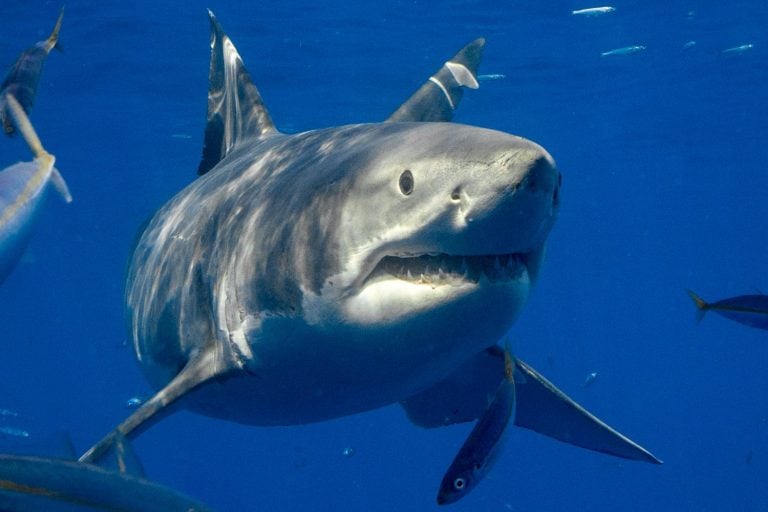
College students aren’t the only ones flocking to Florida for the annual rite of passage known as spring break. It seems great white sharks like Florida’s waters, too. Once thought only to be occasional transient visitors to Florida’s Gulf waters, a new study revealed that the warm waters provide a reliable overwintering habitat for these apex predators. Researchers and conservationists note it is a positive sign that great white populations are rebuilding after decades of overfishing. While beachgoers may not welcome the news, the reality is these sharks pose little threat to people enjoying Florida’s coastline.
How Are Scientists Tracking Great Whites?
Researchers from the shark conservation group Ocearch began tagging white sharks in 2012 as part of a multi-year study. They tagged white sharks at multiple life stages, including pups, juveniles, subadults, and adults. This allowed researchers to understand movement from birth through maturity.
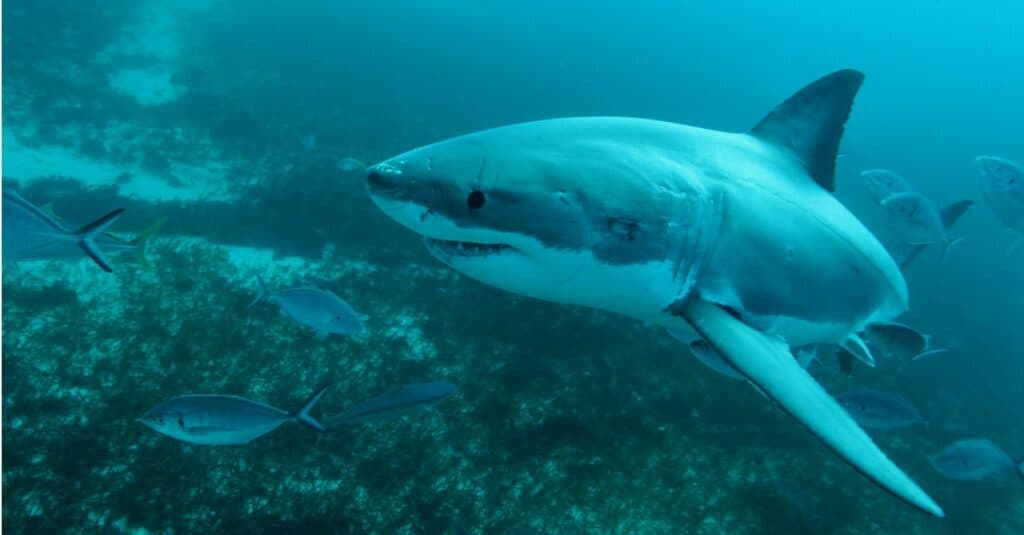
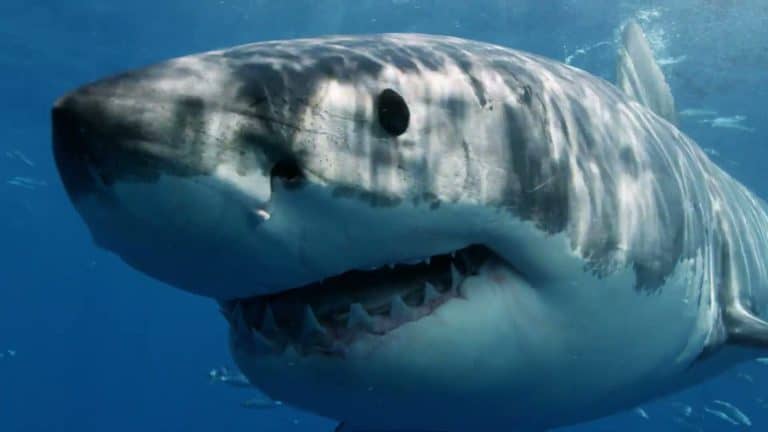
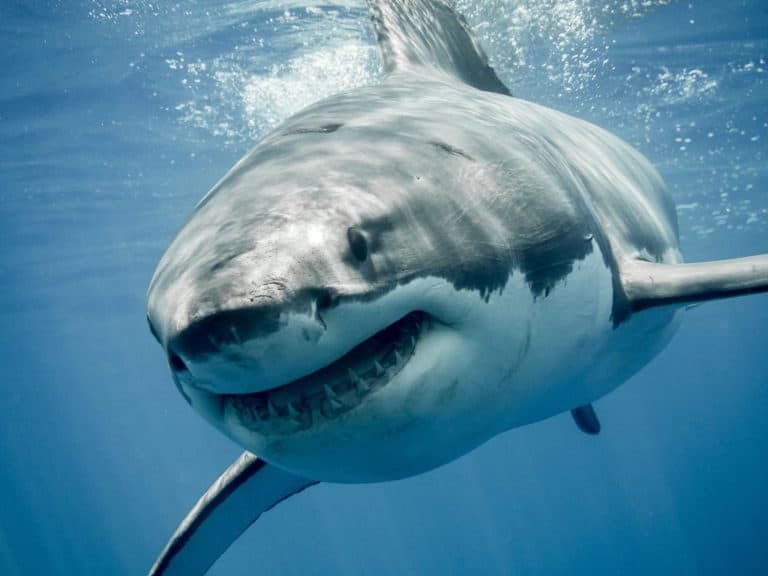
All ages of sharks, from pups to adults, were tagged in the study.
©iStock.com/Alessandro De Maddalena
The tagging occurred between Nova Scotia, Canada, and Jacksonville, Florida, along the Atlantic coast. Both satellite-linked and acoustic tags were used to track the sharks’ movements, understand their life history, and map their critical habitats.
What Did the Study Find?
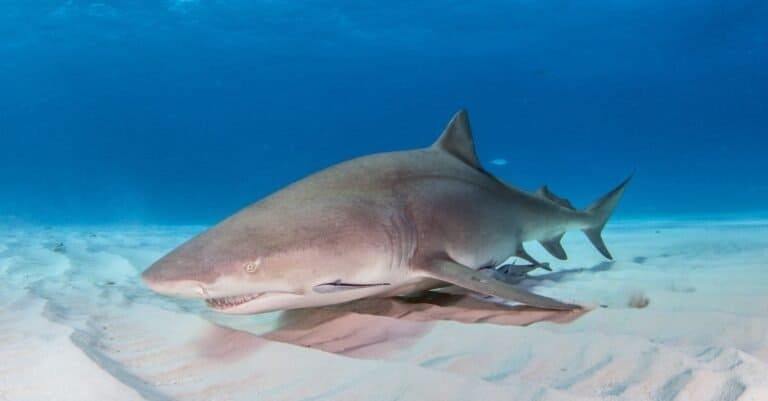
Tracking showed that all four life stages entered the Gulf of Mexico through the Straits of Florida to overwinter in the Gulf’s warm waters. The sharks tended to stay well offshore, moving mostly from the Florida Keys north along the outer West Florida Shelf—a broad, gently sloping underwater plateau that begins about 20 miles from shore. They also traveled farther out into open water toward Cuba and Mexico.
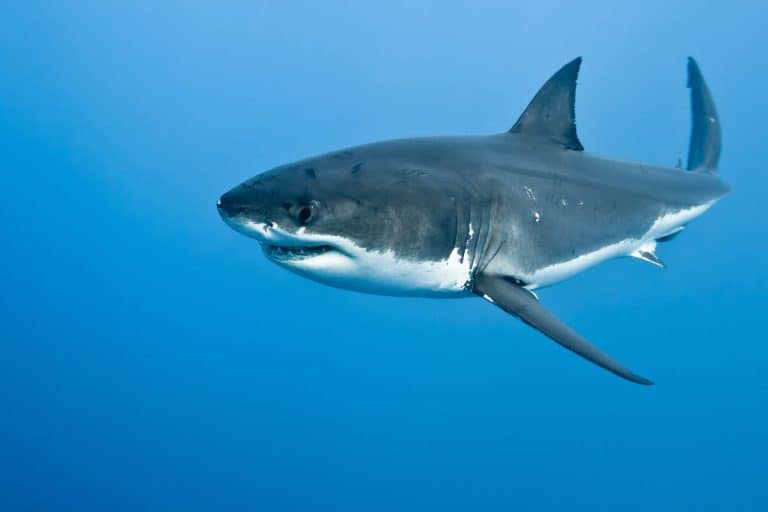
Great white sharks in the Gulf of Mexico tend to stay far offshore, preferring the West Florida Shelf area.
©USO/iStock via Getty Images
The findings reinforced the importance of this region as an overwintering habitat. It also confirms that white sharks have a broad migration range from Atlantic Canada to the Gulf of Mexico, crossing the territorial waters of multiple nations. This information helps conservationists develop better protection strategies for this species, which is listed as globally vulnerable on the IUCN Red List.
When Is Great White Shark Season in Florida?
Research shows that great white sharks typically begin to arrive in the Gulf in late November and December. The biggest numbers are present between January and April. By May or June, most are on their way back to the more temperate waters of New England and Canada for the summer.
How Risky Are Florida’s Beaches?
The good news is no one has ever been bitten by a great white shark in Florida, according to the International Shark Attack File. The reason? There simply isn’t much along Florida’s coast to attract great whites.
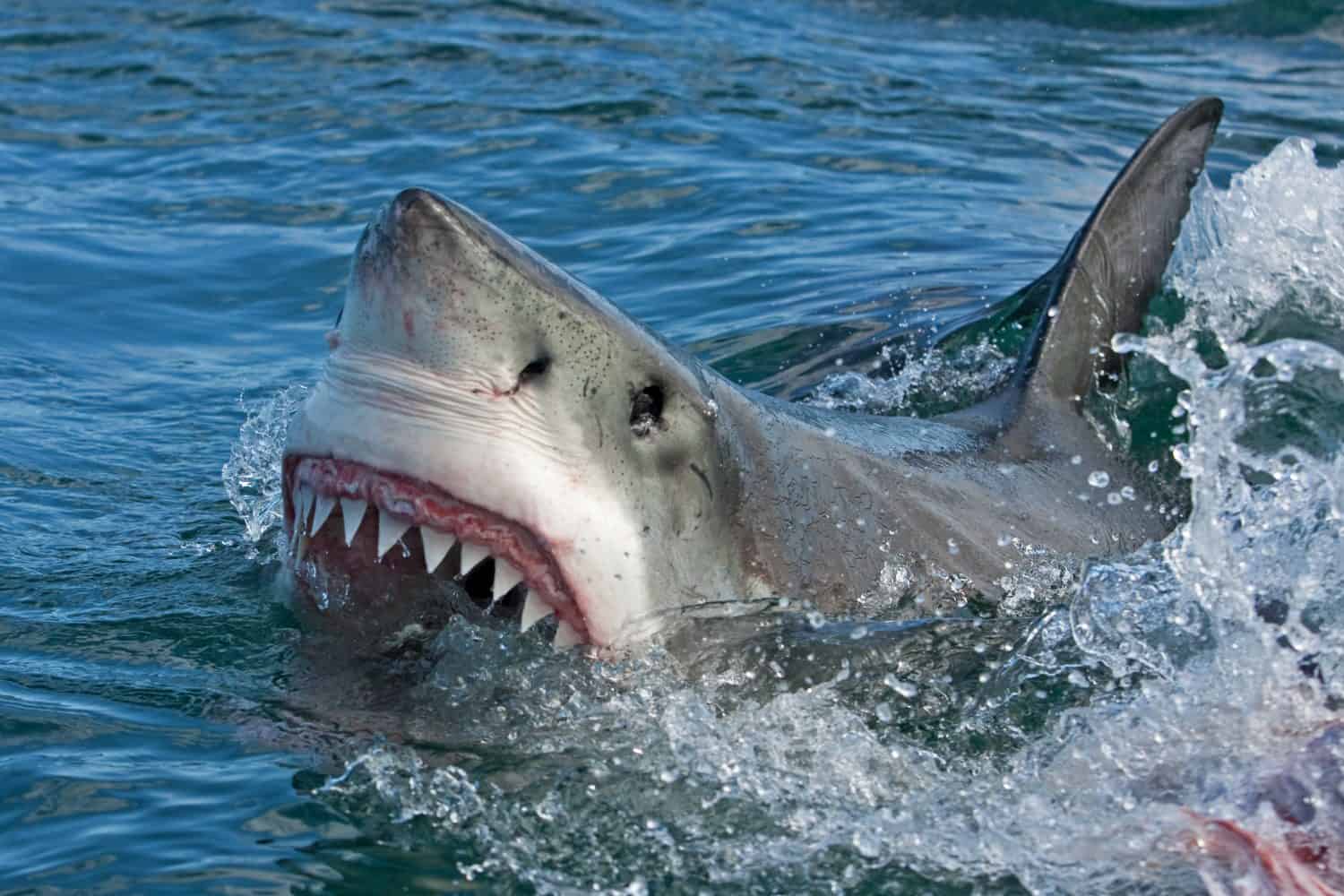
Great whites are attracted to places where their natural prey, like seals and sea lions, are found. That’s why you hear about great whites coming closer to shore in places like California and New England. Since prey like seals and sea lions are not found on Florida’s beaches, the sharks rarely venture close to shore.

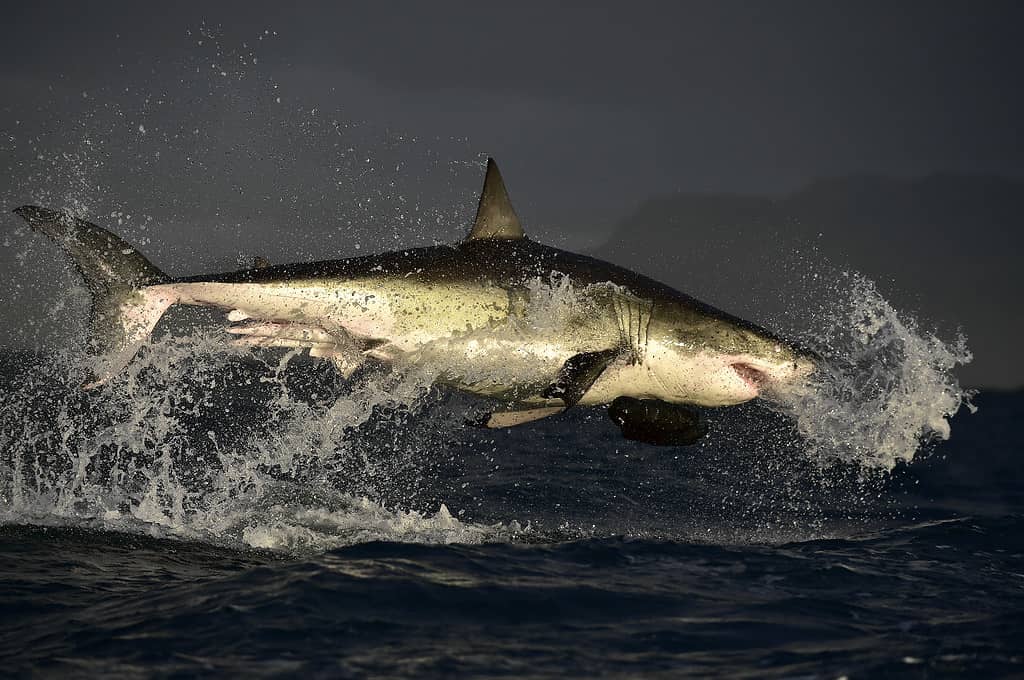
Great whites prefer to hunt close to shore in places like California, where seal and sea lion populations are abundant.
©Brian Patrick Feulner/Shutterstock.com
According to the Ocearch website, while great whites may be using Florida’s Gulf waters often during winter months, most activity occurs along offshore shelf-edge environments, well away from the Sunshine State’s Gulf coast beaches.
While some sharks are occasionally tracked a few miles offshore, encounters with humans are extremely rare. When a tagged great white is detected closer to shore than usual, Ocearch alerts local authorities if they believe the shark is straying too close.
One recorded instance was on Florida’s east coast in 2013, when an Ocearch team member noticed tracking data for Mary Lee, a 16-foot, 3,400-pound mature great white. She was venturing close to a popular Jacksonville surf spot. Ocearch notified Jacksonville police, and lifeguards closed the beach. The beach reopened once Mary Lee pinged again at a safe four miles out to sea. No such incidents have occurred in the Gulf.
How to Stay Safe During Shark Season
While the likelihood of a shark attack from a great white (or any shark) is very small, the ocean is still a wild space with no guarantees. The good news is that staying safe doesn’t mean you have to avoid the water altogether. It’s more about reducing the chances of being mistaken for prey.
Here are some tips to do just that:
- Avoid the “golden hours” – Sharks are most active at dawn and dusk when they have the predatory advantage in low light conditions.
- Avoid murky water – Don’t swim after heavy storms or near river mouths where sediment-filled water makes it hard for a shark to differentiate between a human from natural prey.
- Ditch the bling – The flash of silver or gold in the water looks just like the scales of baitfish to a shark, so leave your jewelry and watches on the beach.
- Limit the splashing – When people or pets are making a lot of commotion in the water, it triggers acoustic vibrations that mimic wounded prey to a shark.
- Stay in a group – According to Shark Stewards, sharks are more likely to attack a solo swimmer, surfer, or snorkeler, so stick together and avoid wandering too far from shore alone.
The Florida Fish and Wildlife Conservation Commission has a full list of tips to stay safe when you’re enjoying the state’s beaches.