
Quick Take
- The sixth mass extinction may be underway, with up to 1 million species at risk in the coming decades.
- In Africa, forest elephants now occupy only 25% of their historic range. 62% were poached in the last decade.
- Conservation efforts need to take a multipronged approach to address policy and environmental needs.
Growing up, I vividly remember reading through nature-related magazines, fascinated by the vast numbers of creatures inhabiting our planet. I spent summers at my grandmother’s West Virginia home categorizing salamanders in her lake, feeding the goats in the pasture, and listening to insects buzzing and chirping through the night. But as I grew older, I also saw the disappearance of animals and felt the pain that they’d no longer be around when I had children. World Wildlife Conservation Day, held annually on December 4th, aims to raise awareness of the flora and fauna at risk of extinction while also showcasing the importance of conservation initiatives.
As we look to 2026, scientists are arguing that we’re in the midst of a sixth mass extinction event. Without intervention, an estimated one million species are at risk of extinction in the next few decades. The damage would be widespread and irreparable, spanning all continents and deep into our oceans. As each creature disappears, the extinction would disrupt the ecosystem, unbalancing our natural world. But there are organizations working tirelessly to protect and conserve species. There are also ways for you to get involved. Let’s look at which animals worldwide are most at risk of extinction, but also how we can potentially step in to help.
Africa
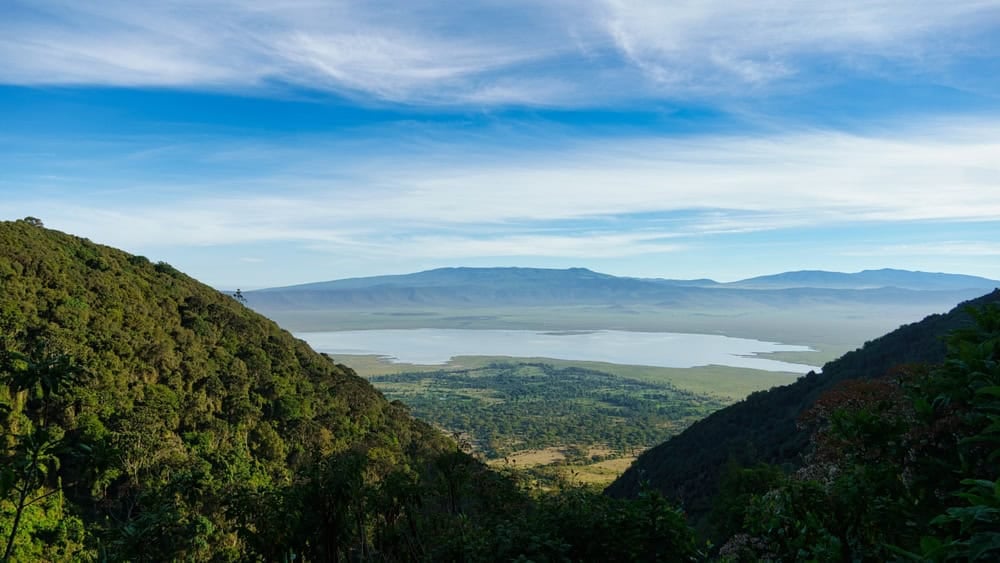
Africa has over 2,000 species of freshwater fish, more than is found on any other continent.
©travellenspro/Shutterstock.com
Visit Africa, and you’ll see a rich array of landscapes, stretching from lush rainforests to dry savannas, gorgeous coastlines dotted with coral reefs to wetlands like South Sudan’s Sudd. As you can imagine, the diversity of Africa’s natural world supports a wide range of creatures, both large and small. Addressing illegal poaching and the illegal wildlife trade is incredibly necessary should we want to conserve Africa’s species.
African Forest Elephant
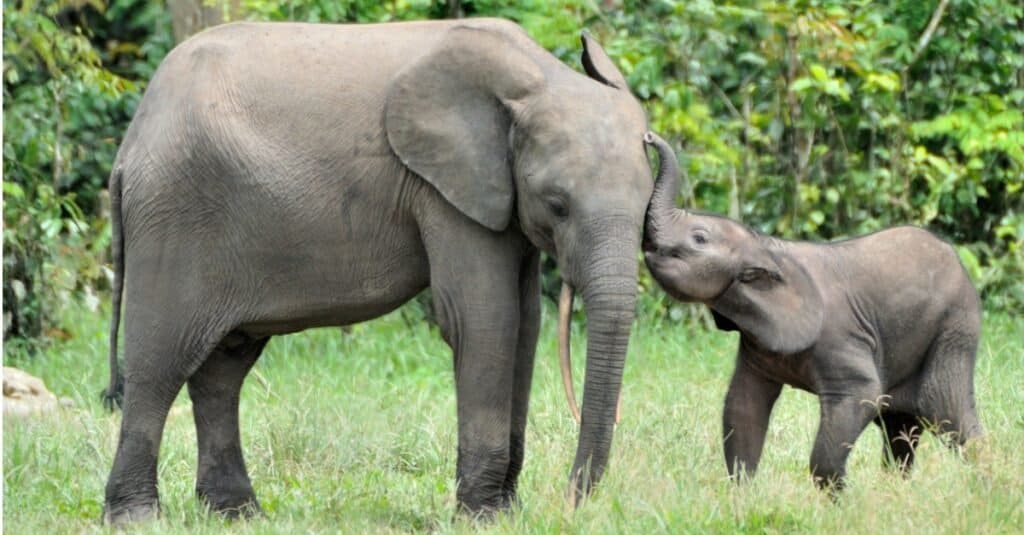
The African forest elephant and African savanna elephant were only differentiated by genetics in 2021.
©iStock.com/USO
Weighing up to 6.6 tons and rising nearly ten feet tall, the African forest elephant is slightly smaller than the African savanna elephant (also known as the African bush elephant). These herbivores live in families of up to 20 elephants and help disperse seeds across the forests. Many people even call them the “gardeners of the forest.” According to the World Wildlife Fund, African forest elephants are largely found in the Republic of Congo and Gabon, though they can also be seen in Liberia, Ghana, Cameroon, and Equatorial Guinea.
Deforestation and habitat loss have significantly harmed African forest elephants. Today, they inhabit just 25% of their historic range, according to the African Wildlife Foundation. Land loss can increase human-elephant interactions, which can also be harmful, especially if humans feel that their land or animals might be threatened. However, even worse than deforestation is poaching these elephants for their tusks, which are sold in the illegal ivory trade. The African Wildlife Foundation notes that 62% of forest elephants have been poached in the last 10 years. Over the last 31 years, a horrifying 86% of this population has been lost.
African Forest Elephant Conservation Efforts
The African Wildlife Foundation believes research underscores conservation efforts. As such, the Foundation is funding research to learn more about the plight of the African forest elephant and to have concrete data to ground solutions in.
Global Conservation, an international conservation group, is working to develop a Global Park Defense that would work to stop poaching in Cameroon’s Dja World Heritage Park and Gabon’s Minkébé National Park, enhancing efforts through collaboration across borders. WWF does something similar through its Coalition to End Wildlife Trafficking Online.
The Zoological Society of London (ZSL) has also done a wildlife inventory in the DJA Biosphere Reserve to collect valuable data. Even more uniquely, ZSL has found ways to empower DJA communities through a Village Savings and Loans Association, which allows community members to better support themselves, reducing the need for illegal poaching.
Black Rhinoceros
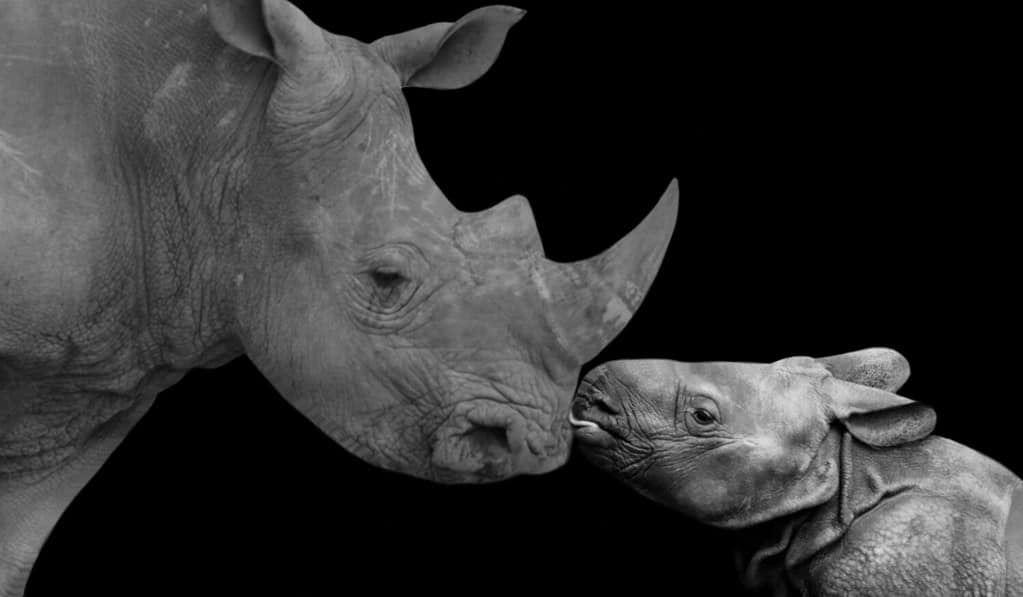
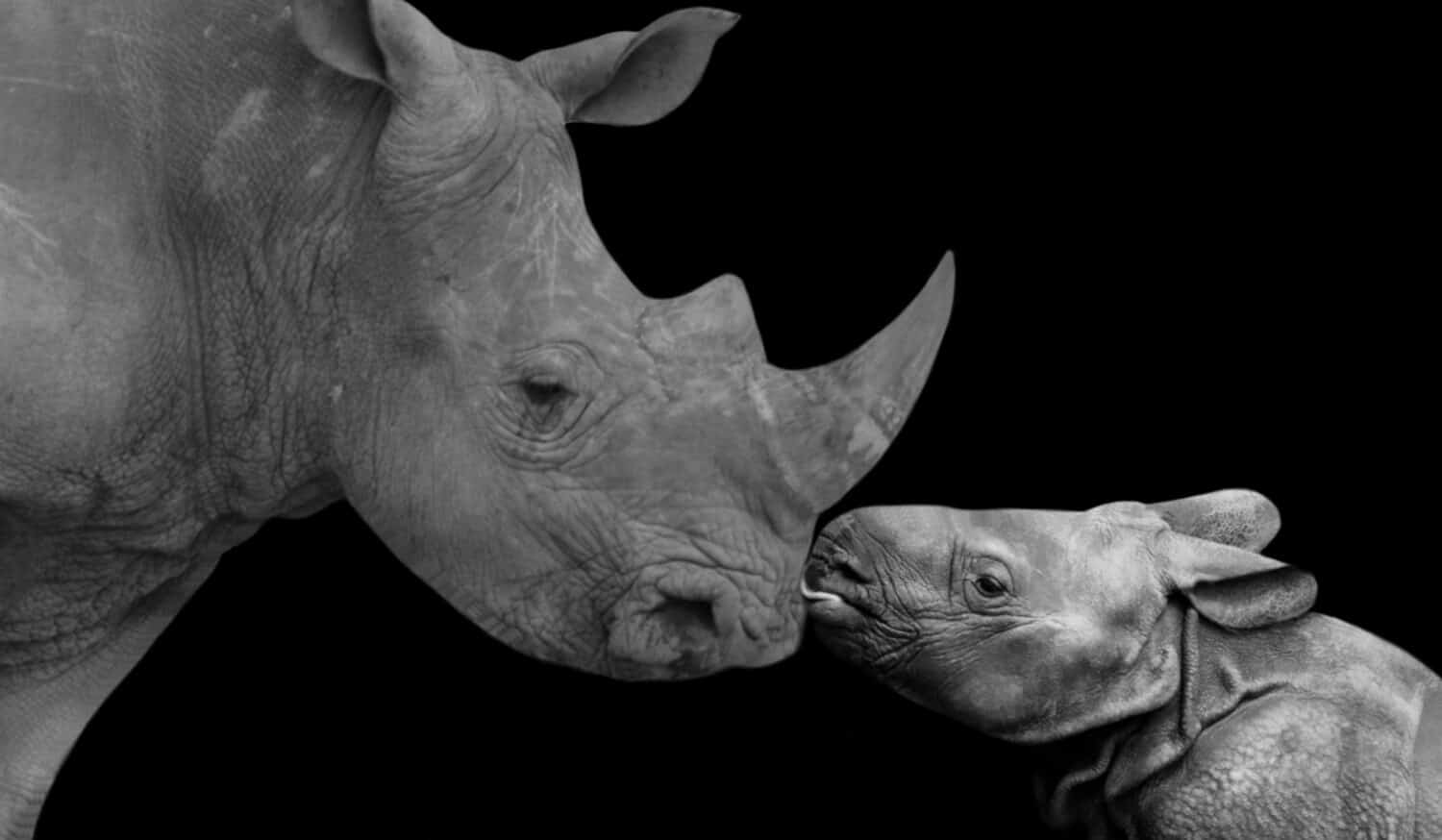
Black rhinoceros mothers usually raise their calf for a period of years.
©R.S.H Photoshoots/Shutterstock.com
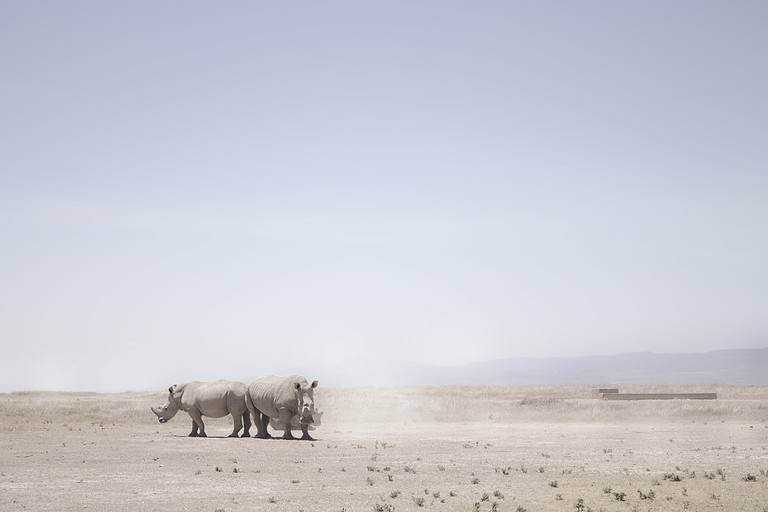
Eswatini, South Africa, Kenya, Namibia, Zambia, and Zimbabwe are a few African countries where you’ll find the black rhinoceros today. Black rhinos, smaller than their white rhinoceros cousins, can weigh up to 3,300 pounds, stand around 5 feet tall at the shoulder, and have hooked lips that help with feeding. These rhinoceroses have two horns made of keratin (just like our fingernails!), with the front horn being longer than the back horn. Black rhinos are more solitary and territorial, though recent photographs suggest they might be “semi-social,” or at least ok with being around each other for small amounts of time.
The black rhinoceros population has significantly varied throughout history. The WWF states that, between 1970 and 1990, the number of black rhinos fell by 96% due to hunting and poaching. These rhinos are usually hunted for their horns, which are prized for traditional Chinese medicine. Some individuals might also collect the horn as a status symbol of sorts. Although the population did fall so heavily, conservation efforts have raised it from that low, with around 6,000 black rhinos today. However, continued poaching efforts, as well as habitat destruction, continue to threaten these animals.
Black Rhinoceros Conservation Efforts
As you can see above, conservation efforts have made an impact on the black rhinoceros. But continuing these efforts, especially in our changing world, is incredibly important. The International Rhino Foundation is one organization leading the charge by funding and running various programs to protect all rhino species. In Namibia, the IRF has funded grants to create a ranger program and trains local individuals to develop the skills to monitor and protect black rhinoceroses; in Zimbabwe, the IRF and the Lowveld Rhino Trust rehabilitate injured rhinos while also combating the illegal animal trade across borders. The Black Rhino Conservation Project focuses more on collecting data to understand how to better manage black rhino populations. Finally, the Aspinall Foundation breeds black rhinos in captivity and releases them back into the wild.
Cross River Gorilla
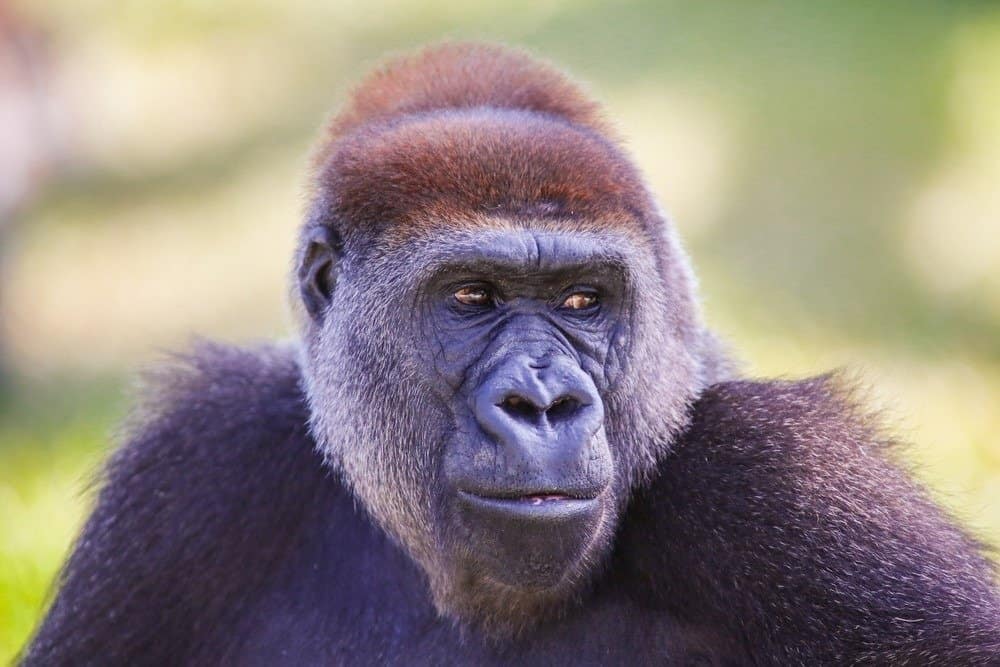
The Cross River gorillas are a subspecies of western gorillas.
©Kit Korzun/Shutterstock.com
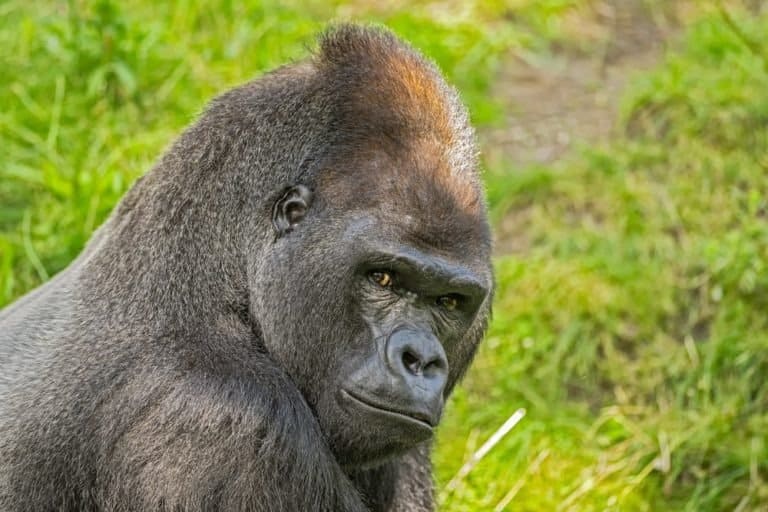
Although the Cross River gorilla was first identified in the early 1900s, we still don’t know much about this primate today. These gorillas live in the forests around the Cross River, between Nigeria and Cameroon. Female Cross River gorillas can stand up to 4.6 feet tall and weigh in at 220 pounds, while males can stand up to 5.6 feet tall and weigh up to 441 pounds. They usually have slightly smaller heads and teeth than western lowland gorillas. Cross River gorillas are herbivores and live in small family groups of four to seven individuals.
Habitat loss, specifically deforestation and logging, and hunting, including adults to capture infants for the exotic pet trade, have reduced Cross River gorilla numbers. In fact, many people believed these gorillas to be extinct until they were rediscovered in the wild in 1987. Today, only an estimated 250-300 Cross River gorillas remain.
Cross River Gorilla Conservation Efforts
Several charities and organizations are working to save Cross River gorillas. The Cross River Gorilla Project, a UK-based charity run by Newcastle University, is working to conserve gorilla habitats through research and community partnerships, while also empowering communities to embrace sustainable development. Through its collaborative Cross River Gorilla Initiative, in partnership with the Nigerian Conservation Foundation, the Wilder Institute runs a scholarship program for graduate students to do research on these gorillas and conservation measures.
The African Conservation Foundation is also working to implement anti-poaching measures and policies to protect the environment, such as data reporting, biomonitoring, and Community Forest Management Plans. Similarly, the World Conservation Society (WCS) has supported the development of protected areas and increased law enforcement, as well as ways to financially support local communities so they do not have to rely on killing or illegally selling these animals.
What Other African Animals Are At Risk?
If we don’t change something soon, the following animals could be lost to history:
- Northern white rhinoceros (only two left, both female)
- Liben lark
- Bizarre-nosed chameleon
- Riverine rabbit
- Addax
Antarctica

On land, Antarctica doesn’t have much biodiversity since many creatures can’t stand its harsh conditions.
©chrisontour84/Shutterstock.com
Antarctica is remote, cold, and uninhabitable for a vast number of people and creatures. But did you know that Antarctica’s ice plays a key role in supporting global biodiversity? By reflecting light away from Earth, Antarctica helps maintain the temperatures that keep us, animals, and plants alive. But climate change is real, and even Antarctica’s ice can’t stop the risk it holds for these two creatures.
Antarctic Blue Whale
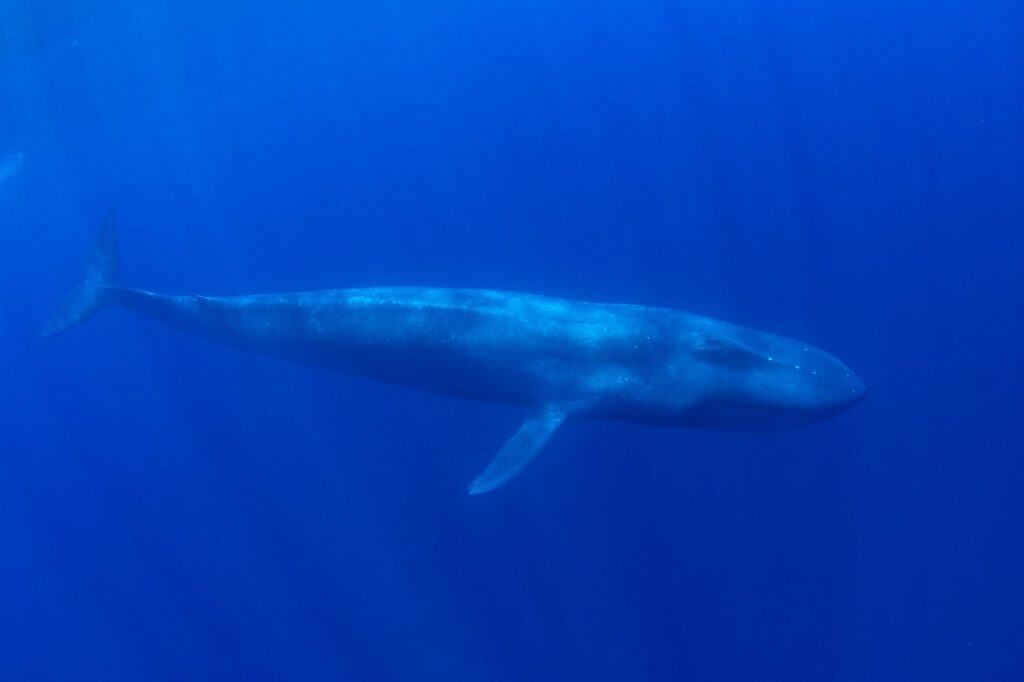
Antarctic blue whales can live to be 90 years old.
©Rich Carey/Shutterstock.com
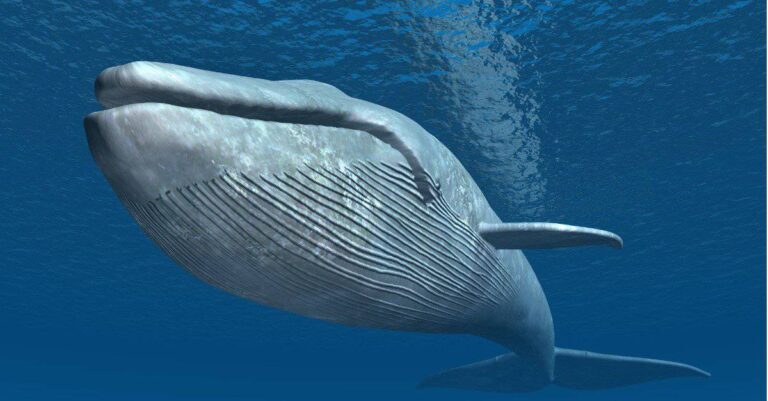
Reaching around 100 feet long and weighing up to 330,000 pounds, the Antarctic blue whale is the largest creature on earth. While Antarctic blue whales may eat small crustaceans or fish, their diet largely consists of krill. Antarctic blue whale populations have severely fallen over the last few decades. At one point, 250,000 of these whales were alive. But commercial whaling reduced the number to just 3,000 whales by 2018. Additional dangers faced by Antarctic blue whales include potentially being struck and killed by boats, pollution, getting tangled in fishing gear, and warming ocean waters due to climate change.
Antarctic Blue Whale Conservation Efforts
The International Fund for Animal Welfare (IFAW), while more focused on blue whales around Sri Lanka, has a Blue Speeds campaign to reduce shipping speed by 10%. According to the IFAW, this could reduce underwater noise, which is potentially harmful to blue whales, decrease collisions between ships and whales by 50%, and also reduce greenhouse gas emissions. Should this work in Sri Lanka, it could be replicable in the Antarctic.
Additional efforts include building protected marine areas for these whales, international coordination to regulate whaling, and the protection of Blue Corridors.
Asia
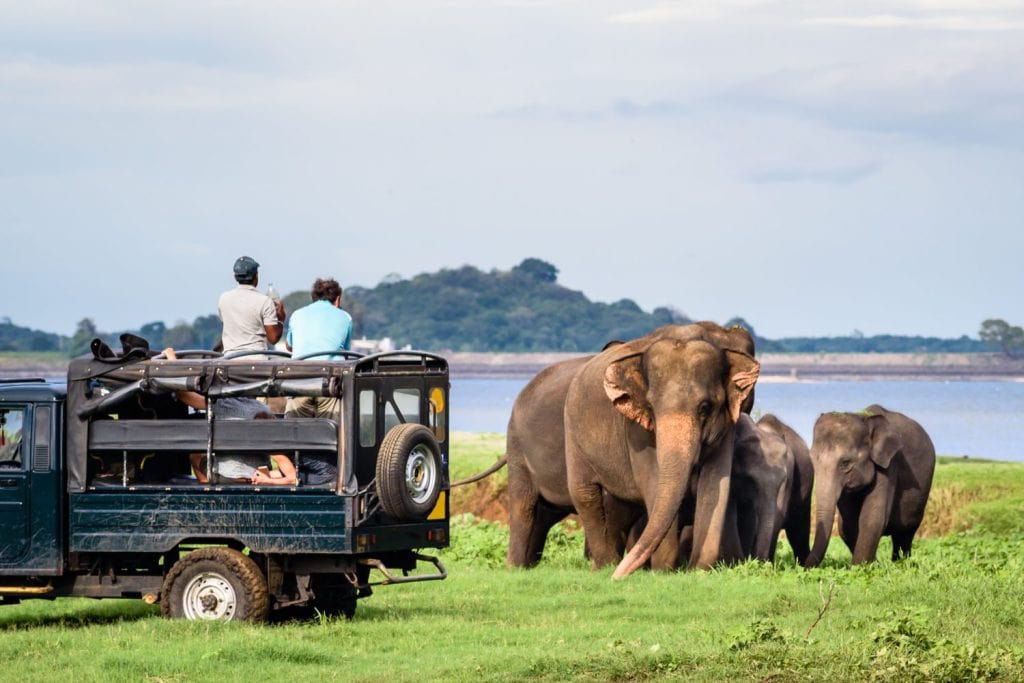
The Asian elephant is the largest animal on the entire Asian continent.
©Thomas Dekiere/Shutterstock.com
Habitat loss has been incredibly damaging for Asia’s beautifully diverse wildlife. Conservationists have made a distinct effort to contribute to habitat restoration for threatened species. Yet more needs to be done to address the challenges that continue to face Asia’s big cats.
Amur Leopard
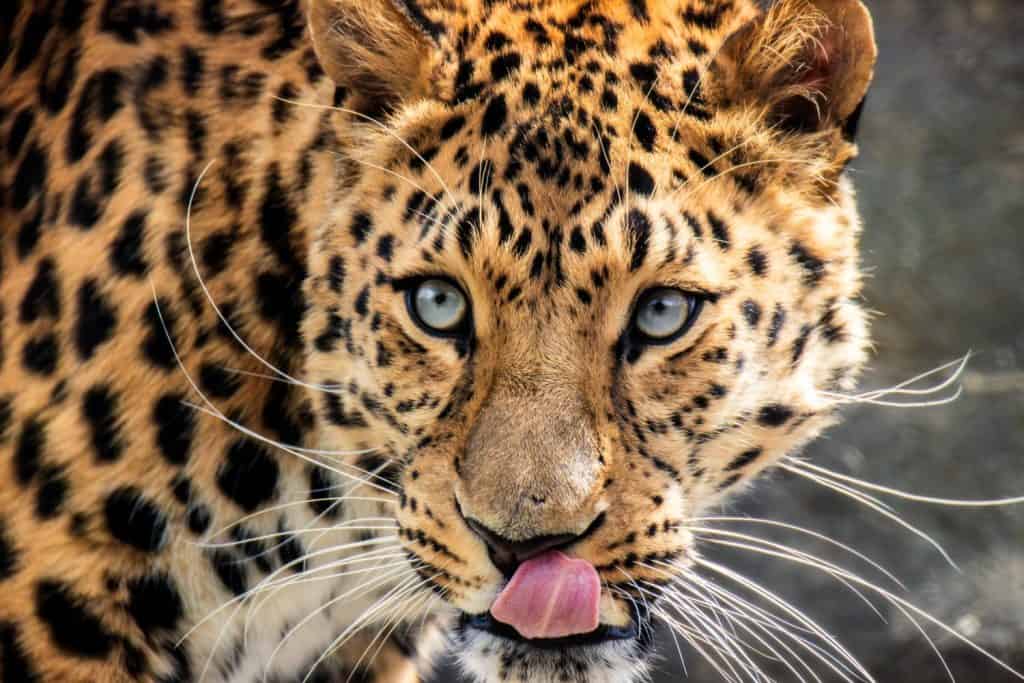
Amur leopards are usually solitary animals.
©Earl Wilkerson/Shutterstock.com
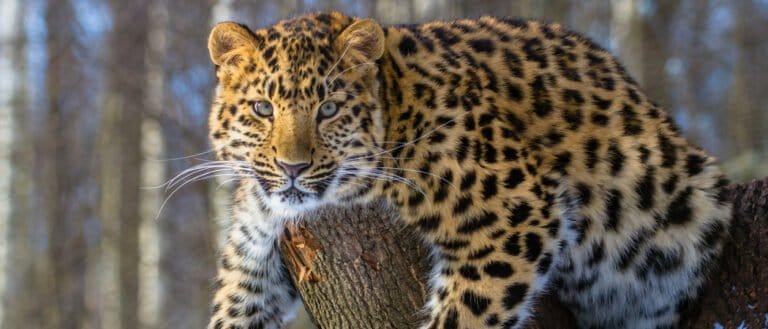
You’ll find the Amur leopard in eastern Russia and northern China. Well-suited for the colder climate, these large cats have thick fur that protects them from the elements. Amur leopards can run up to 37 miles per hour, making them talented hunters. Although they prefer to live alone, there have been reports of mated Amur leopards who stay together to raise their cubs. Amur leopards are important to their ecosystems because they control prey populations.
Unfortunately, prey is actually a big problem for Amur leopards, mostly because there isn’t enough currently. Forest fires and habitat loss have caused prey scarcity. It has also forced these leopards and Amur tigers to live in the same area, competing for whatever is available. The prey is also hunted by locals who need to eat or who are selling the meat on the market.
Amur leopards are also illegally hunted and killed for their fur. As a result, there are only around 120 Amur leopards left in the wild.
Amur Leopard Conservation Efforts
In 2012, Russia created the Land of Leopard National Park, protecting Amur leopards’ breeding and living areas. The WWF also works with organizations to stop wildlife trafficking. But most prominent in Amur leopard conservation is the WildCats Conservation Alliance, whose projects on community conservation and monitoring Amur leopard populations to contribute to data-driven policy decisions tackle conservation needs from multiple angles.
South China Tiger
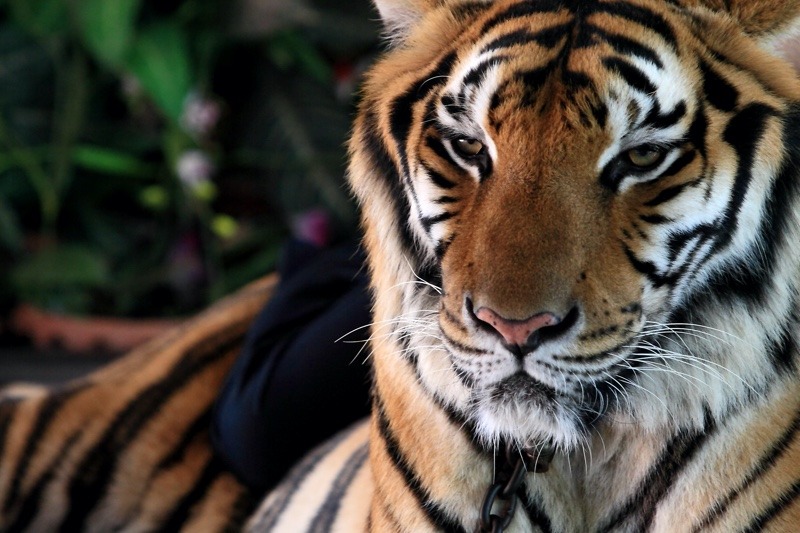
South China tigers are considered extinct in the wild and are only found in captivity.
©abcphotosystem/Shutterstock.com
The South China tiger once roamed through the forests of Hong Kong, Guangxi, Fujian, and Hunan (among other places), stalking and killing prey like wild boar or barking deer. Smaller than Bengal tigers, the South China tiger has more yellow-tinged fur and thinner stripes. In the past, there were thousands of South China tigers living in the wild. Aggressive tiger hunting from the 1950s through the 1970s, especially as China’s cities expanded, reduced the population to just 30-40 tigers. There have not been any sightings in the wild since the 1980s.
Today, fewer than 200 South China tigers live in captivity. However, inbreeding is a problem that is harming genetic diversity and making tiger cubs less healthy. Zoos, as well as the South China Tiger Breeding Base, are attempting to overcome these issues through more advanced breeding techniques. In the future, conservationists hope that habitat restoration efforts can help rewild some of the tigers.
What Other Asian Animals Are Critically Endangered?
By 2100, all of these animals could no longer exist on our planet. In fact, some of them have already gone unseen for decades:
- Eastern black crested gibbon
- Chinese alligator
- Aru flying fox
- Siau Island tarsier
- Sunda pangolin
- Wild Bactrian camel
- Sumatran rhinoceros
Australia

85% of Australia’s plants and 80% of its animals can only be found on the continent.
©Radoslav Cajkovic/Shutterstock.com
If you’ve ever seen an online video from Australia, you know how crazy their wildlife can be. Not only does Australia deal with kangaroos that seem perpetually ready to fight, but Australians know how to handle huge bugs and even more enormous spiders. Protecting Australia’s unique wildlife means making a change for the following animals.
Brush-Tailed Bettong
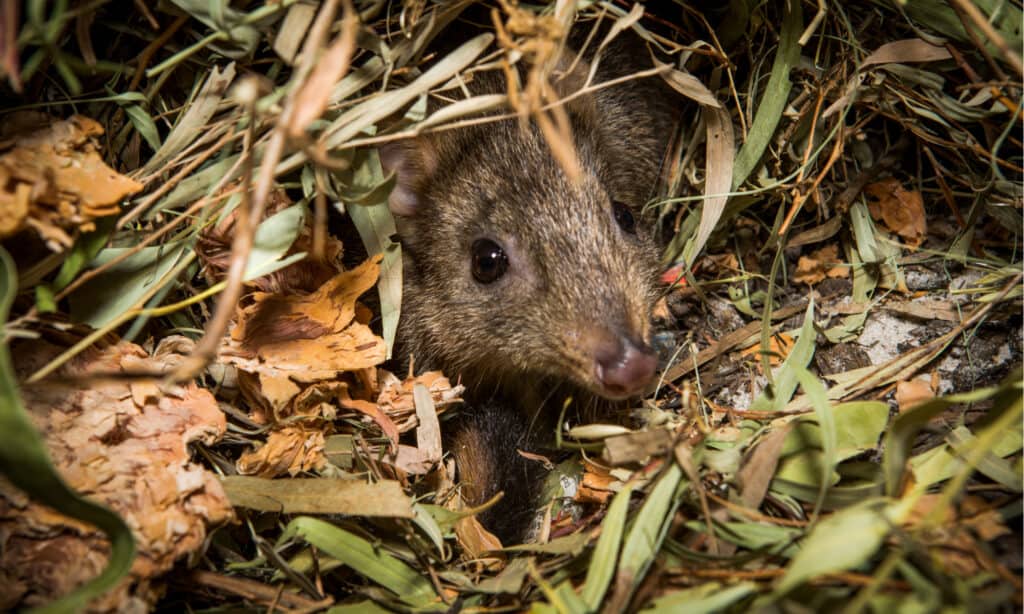
Woylies could once be found in 60% of Australia, but that is no longer true.
©GPT Photography/Shutterstock.com
Known more colloquially as a “woylie,” the brush-tailed bettong is a nocturnal marsupial whose long prehensile tail has a tuft of hair on it (hence the name brush-tailed). Ranging from gray to brown in color, woylies forage for their food: fungi, seeds, truffles. The Columbus Zoo explains that woylies’ search for food helps aerate soil and spread seeds.
Woylies have become critically endangered, with their population falling by an estimated 90%. Foxes and cats prey on woylies. Woylies have also lost their homes, as grassland and brush were cleared to make more room for human settlements. Australia’s wildfires in recent years have further harmed these habitats. Woylies can now be found in just 1% of their historical range.
Conservation efforts have been, and continue to be, somewhat but not fully effective. These include breeding programs, moving the animals to other potentially prosperous habitats, and predator control programs.
Numbat
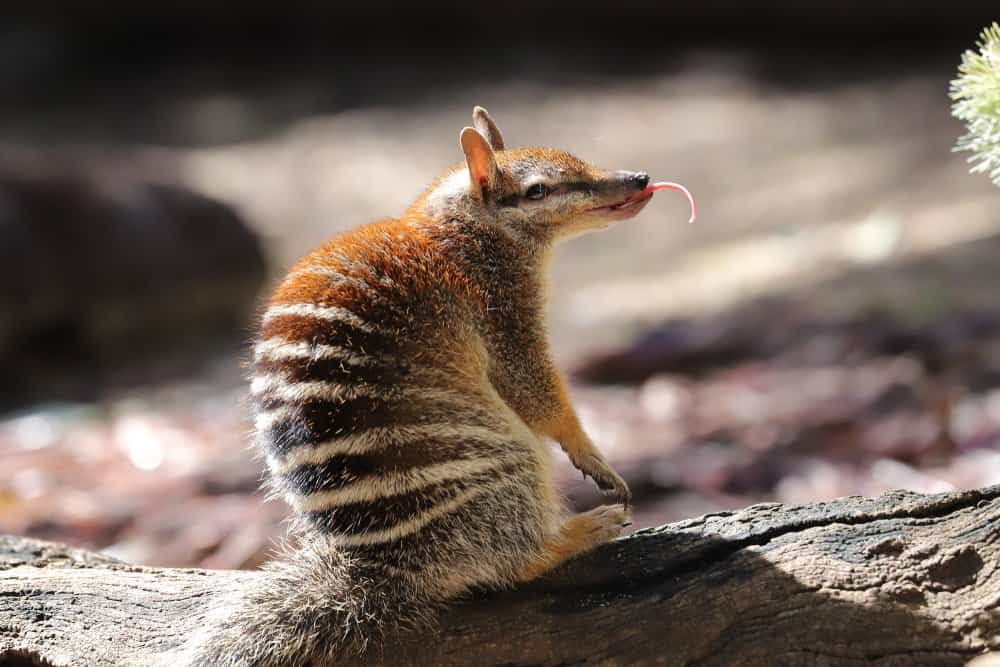
If you’ve got termites in your home, a numbat could be your best friend!
©Ken Griffiths/Shutterstock.com
Watch out, termites: this tiny marsupial is coming for you. The numbat of Western Australia slurps termites from the ground using its long, sticky tongue. These creatures live in wooded areas, which give them both hollow logs to live in and areas to hunt in. Numbats are active during the day instead of at night, making them unique.
Habitat loss is challenging for numbats, but they face an even greater threat: predators like feral cats, foxes, reptiles, and birds. Even if numbats escape these animals, they can be left injured or with diseases that decimate the remaining population.
According to Project Numbat, there are fewer than 1,000 numbats in the wild. Project Numbat explains that habitat restoration, land protection, and fox and cat control are crucial to saving numbats. Some breeding and rewilding programs already exist. Project Numbat is also making an impact through educational initiatives, digging surveys, funded research, and numbat radio collars for monitoring. Several sanctuaries have also been established for numbats.
What Other Australian Animals Are At Risk?
Because so many of Australia’s creatures are endemic to the continent, they do not exist anywhere else in the world. Losing the woylie, the numbat, and these creatures would be a tragedy:
- Corroboree frog
- Kangaroo Island dunnart
- Leadbeater’s possum
- Regent honeyeater
- Northern hairy-nosed wombat
- Western swamp turtle
Europe
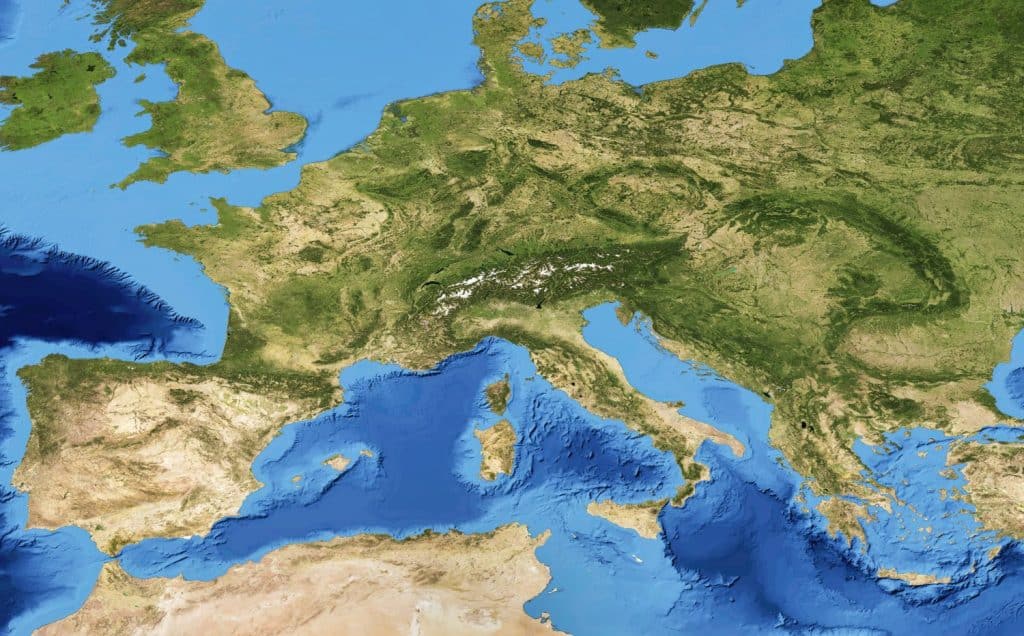
Over the last few decades, Europe has been increasingly prioritizing conservation initiatives.
©Viacheslav Lopatin/Shutterstock.com
Europe is home to striking mountain ranges, open green spaces, and gorgeous coastal scenes. But a lack of conservation management has led to the continent’s biodiversity disappearing at a frightening rate. While Europe has been investing in conservation measures more recently, there are still several species that might not survive the decline.
European Mink
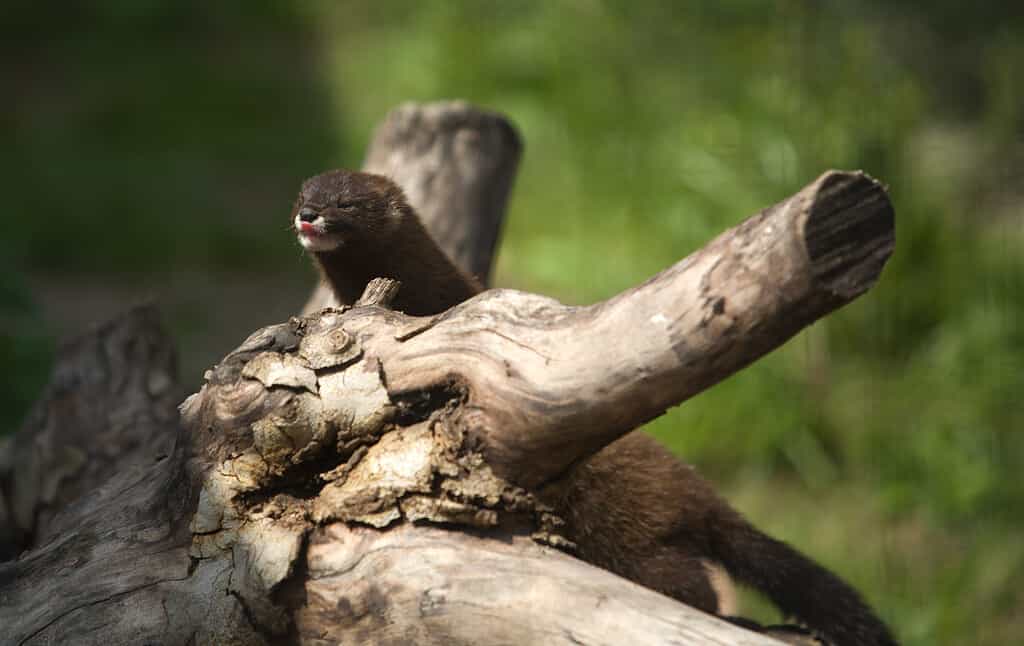
The European mink inhabits 85% less space than it did in the 19th century.
©Juan García Aunión/iStock via Getty Images
Somewhat smaller than the American mink, the European mink is a semi-aquatic mammal found in Russia, Estonia, Spain, France, Romania, and Ukraine. As a carnivore, the European mink eats frogs, crustaceans, voles, and fish. European minks typically live near riverbanks, but may move temporarily if the river floods. Habitat loss, which also contributed to lower food sources, is one factor lessening the population. However, hunting and competition from other species have had an even greater impact.
Historically, European minks were highly sought after for their thick fur. They were massively overhunted to create mink coats and other clothing items. But European minks also face threats from American minks, which have been introduced in Europe in the mid-20th century. American minks are larger in size, giving them a leg up on feeding or shelter, and have also spread disease.
European Mink Conservation Efforts
The IUCN SSC Small Carnivore Specialist Group advocates for four specific conservation measures to save the European mink:
- Breeding European minks in captivity
- Eventually rewilding those minks
- Capturing and removing American minks, as well as shutting down American mink factories or farms
- Protecting wetlands to maintain habitats
Research projects have also been implemented, such as a microchipping and monitoring program and translocating minks into new areas.
Montseny Brook Newt
This aquatic salamander can only be found in streams located in Spain’s El Montseny Natural Park and Biosphere Reserve. First formally described in 2005, the Montseny brook newt can grow to around 2.3 inches long. When handled, the Montseny brook newt sometimes releases a sticky and smelly substance that scientists believe is meant to deter predators. Around 1,000-1,500 of these newts exist in the wild, and they can only be found in around seven streams within the park.
The Amphibian Survival Alliance explains that the drying out of brooks, as well as companies sourcing drinking water from mountain streams, is a huge threat to the survival of Montseny brook newts. Some conservation efforts center around better managing the waterways. There are also several breed-and-release programs, including one by Zoo Barcelona.
Additional European Animals in Danger
There are several other animals at risk of extinction throughout Europe, which include:
- Balearic shearwater
- Bavarian pine vole
- Adriatic sturgeon
- Tenerife speckled lizard
North America

North America is home to an estimated 32,000 different species of animals, plants, and insects.
©Harry Beugelink/Shutterstock.com
Right now, North America is facing a crossroads in conservation efforts. Recent governmental policies and plans have been made to reduce environmental protections, increase drilling and building, and loosen hunting restrictions. Here’s what we could lose if these measures are implemented.
Cozumel Raccoon
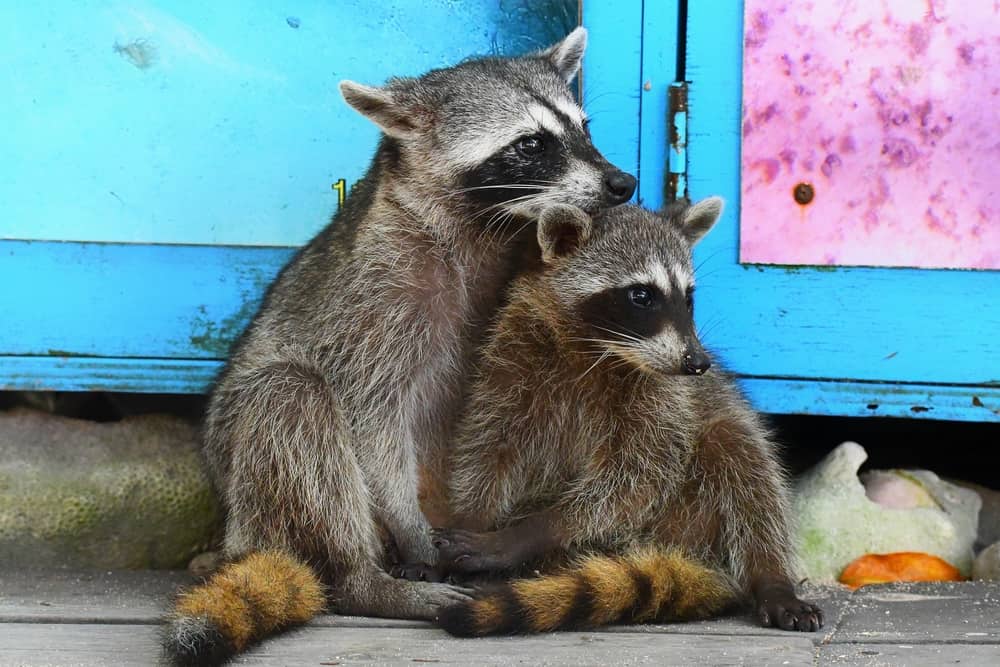
The Cozumel raccoon, also known as the dwarf or pygmy raccoon, only grows to weigh around 6.5 pounds.
©Sebastian Schwegmann2/Shutterstock.com
Cozumel raccoons are endemic to Cozumel, an island in Mexico. These small raccoons are about 17 inches long, with a 10-inch tail, and weigh less than seven pounds when fully grown. Beyond the size differences between Cozumel raccoons and the common raccoon, Cozumel raccoons also have a shorter snout. Cozumel raccoons eat a variety of prey, including lizards and crabs, and prefer to hunt (and live!) in wetlands and mangrove swamps.
Today, there are only around 192 Cozumel raccoons left in existence. There are several existing threats to their survival. Both feral and domestic dogs and cats hunt and kill Cozumel raccoons. Raccoons that survive may develop illnesses. As tourists visit Cozumel and it expands, causing deforestation, the Cozumel raccoon’s already small territory continues to decline. These raccoons may be hit and killed by cars, as well as lose access to homes and food sources. Hurricanes and other natural disasters only compound habitat loss. As this progresses, raccoons must adapt, but this sometimes means traveling farther and reducing access to potential mates.
Cozumel Raccoon Conservation Efforts
The Nature Conscious Tourism Initiative is one of the leading voices in Cozumel raccoon conservation. Through its efforts, the NCTI aims to raise Cozumel raccoon awareness and fund research into how to best educate tourists about this species. Its Mexican Raccoon SEO Project hopes to correct online misinformation that falsely displays images of the white-nosed coati when people search for “Mexican raccoons.” Further, the NCTI is running a study through Miami University on tourist perceptions of Cozumel raccoon conservation.
Red Wolf
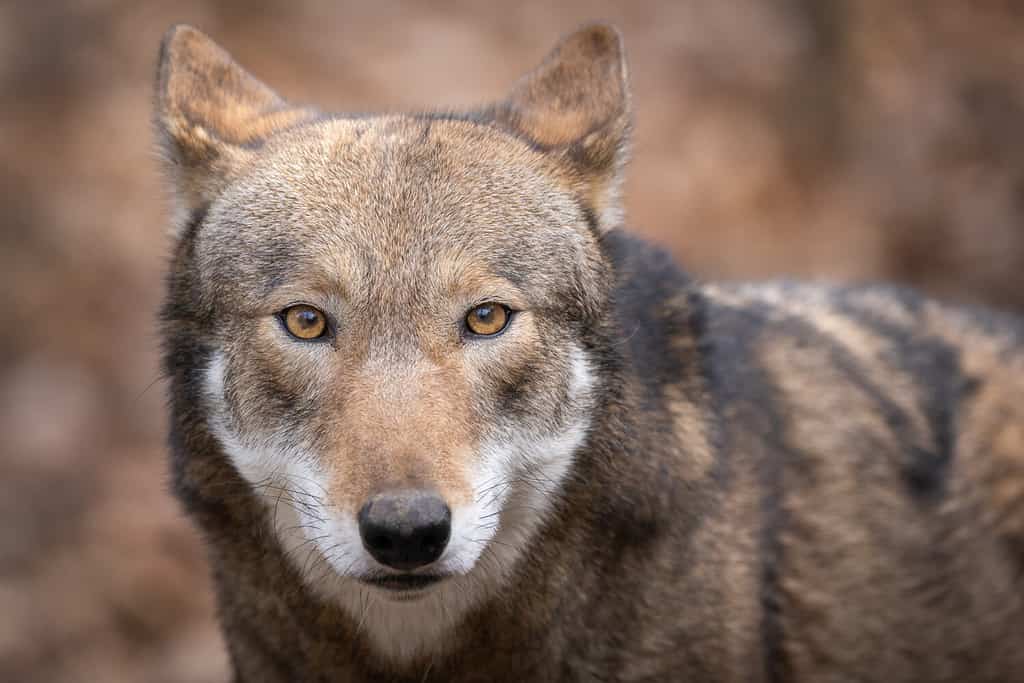
Red wolves were actually declared extinct in the wild in 1980.
©Matt Cuda/Shutterstock.com
The red wolf used to thrive in the wild. According to the prominent U.S. conservation association Defenders of Wildlife, the red wolf’s territory used to comprise “as far west as Texas, down into Florida and up into the Midwest.” Unfortunately, the organization also shares that the red wolf’s territory has been decimated by a stunning 99.7%. Red wolves, typically spanning four to five feet in length, can now only be found in the wild in North Carolina’s Beaufort, Dare, Hyde, Tyrrell, and Washington counties.
Less than 31 red wolves exist in North Carolina, though there are upwards of 250 in captivity across the country. The red wolf’s population fell due to habitat destruction and predator control programs. Red wolves were seen as threats to American settlers, who believed the wolves would kill their livestock and threaten their livelihoods. However, red wolves are known as a keystone species, crucial to maintaining the balance of the ecosystem.
The 1966 Endangered Species Preservation Act and the Endangered Species Act of 1973 attempted to implement protections for red wolves. Wolves were captured for breeding programs, but wild wolves were considered extinct as of 1980. Rewilding began in North Carolina in 1987. The population grew to over one hundred individuals.
But humans once again contributed to the decline: accidentally hitting wolves with cars, and illegal hunting. As communities also begin to spread, red wolves continuously lose access to their old territories, forcing more interactions with humans and worsening the blow.
Red Wolf conservation efforts
The Red Wolf Coalition in North Carolina advocates for the preservation of red wolves through education. If you’re located in or around Columbia, NC, you can contact the Red Wolf Coalition to volunteer. You can also donate to the organization to spread awareness of red wolves’ contributions to the local ecosystem. Additional organizations and initiatives working to conserve red wolves include:
- Reintroduction/rewilding efforts in North Carolina over the last five years
- The Wolf Conservation Center has contributed to rewilding, advocacy, policy, and awareness efforts. The WCC also offers an Action Center where you can contact your legislators about wolf-related legislation.
- A collaboration between the U.S. Fish & Wildlife Service (USFWS) and the North Carolina Wildlife Federation to warn drivers where wolves might be on the road
- UWS’ Red Wolf Recovery Program
Vaquita
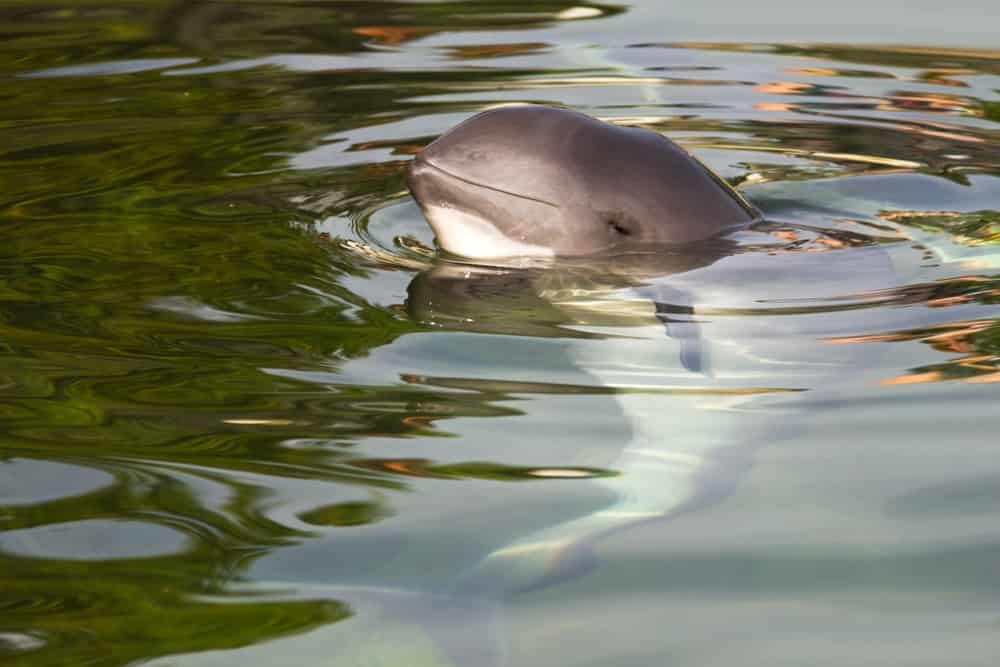
The vaquita population has declined by over 90%, and may become extinct in five years or less without intervention.
©Tharuka Wanniarachchi/Shutterstock.com
Known as the world’s rarest marine mammal, the vaquita is a small porpoise around 4-5 feet long that is endemic to Mexico’s Gulf of California. First named in 1958, vaquitas are known for their minute stature and shy disposition. In 1997, scientists estimated that around 567 vaquitas lived in the Gulf of California. At the time of this article, fewer than 10 vaquitas are estimated to still be alive.
Vaquitas, which are usually dark gray in color and have a dark ring around their eyes, eat various fish, squid, and shrimp. Unfortunately, this is also one of the reasons why their population has been declining. Fishers deploy gillnets to catch fish and shrimp. Vaquitas accidentally get caught in these nets as bycatch, leading them to drown. Although the Mexican government banned gillnet fishing in the area, illegal fishing operations for a fish called the totoaba still pose a huge threat to vaquitas. Vaquitas may also get hit and killed by boats.
Vaquita Conservation Efforts
The Sea Shepherd Conservation Society, through its “Saving the Last Vaquita” campaign, has been working with the Mexican Navy to patrol the Gulf of California for illegal fishing operations or ghost gear (abandoned fishing gear). The organization has removed over 1,200 gillnets in the last ten years. You can donate to keep Sea Shepherd on the water via the website. Additional vaquita support initiatives and organizations include VaquitaCPR, the National Marine Mammal Foundation (NMMF)’s Operation Grace and Operation Esperanza, and an online petition to save the vaquita being sent to Mexico’s President, Claudia Sheinbaum Pardo.
Viva Vaquita also offers educational and advocacy resources and numerous ways for YOU to act: writing to elected officials (they provide a template), volunteering, buying sustainable seafood, boycotting Mexican shrimp, and signing petitions. These efforts and protective measures matter. Researchers even spotted one or two new vaquita calves this year!
Other North American Animals on the Brink of Extinction
Unfortunately, it would be difficult to profile every animal on the continent at risk of extinction. However, you can use the information below as a jumping-off point to continue your research. The following animals are considered critically endangered:
- Kemp’s ridley turtle
- Laysan duck
- Axolotl
- California condor
- Alcorn’s pocket gopher
- Vancouver Island marmot
If you’re based in the United States, consider signing a petition to tell Congress to save federal wildlife conservation programs.
South America
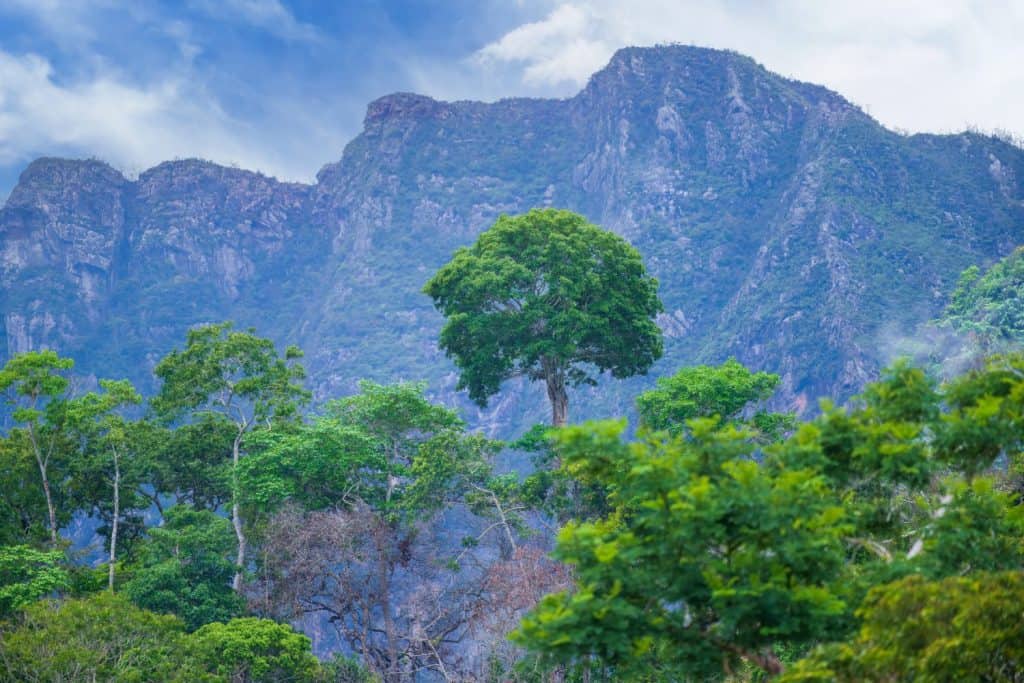
Outside of animals, there are thousands of plant species endemic to South America.
©Miroslav Srb/Shutterstock.com
South America is an incredibly biodiverse region of the world. According to the International Union for Conservation of Nature (IUCN), South America is home to 40% of the world’s biodiversity, including 25% of all forests and 26% of freshwater resources. Without conservation efforts central to South America, it would be nearly impossible to save these species.
Alta Floresta Titi Monkey
Found in Brazil’s forests around the Mato Grosso state, Alta Floresta titi monkeys are a subset of titi monkeys. These small, fluffy monkeys were first seen in 2012 and first described in scientific research in 2016. Researchers shared that the monkeys’ black tails, reddish fur, and furry faces all set them apart from other titi monkeys in South America. Because of its relatively recent identification, we don’t know much more about the Alta Floresta titi monkey except that it is critically endangered.
Its critically endangered status comes from the fact that the Alta Floresta titi monkey lives in an area subject to heavy deforestation. Much of the deforestation is due to the collection of palm oil or the spread of cattle ranching. The authors of the above study estimate that 42% of the monkeys’ habitat, which is located within the “Arc of Deforestation,” has already been lost, and they will likely lose 86% of the habitat within the next 17 years.
Alta Floresta Titi Monkey Conservation Efforts
Because of their relatively new status, there are limited conservation initiatives around just the Alta Floresta titi monkeys. However, there are efforts aimed at titi monkeys as a whole. In Alta Floresta, the Reconecta project set up seven canopy bridges to help wildlife cross through the rainforest above busy roads. The goal was to minimize monkeys getting hit and killed by cars, and was initially spurred by locals, highlighting how communities can play a role in conservation. The Titi Conservation Alliance, founded in 2001, is centered more around titi monkeys in Costa Rica and preserving their habitat. However, raising awareness around another threatened titi monkey species could be beneficial in eventually sharing the plight of the Alta Floresta titi monkey, too.
Orinoco Crocodile
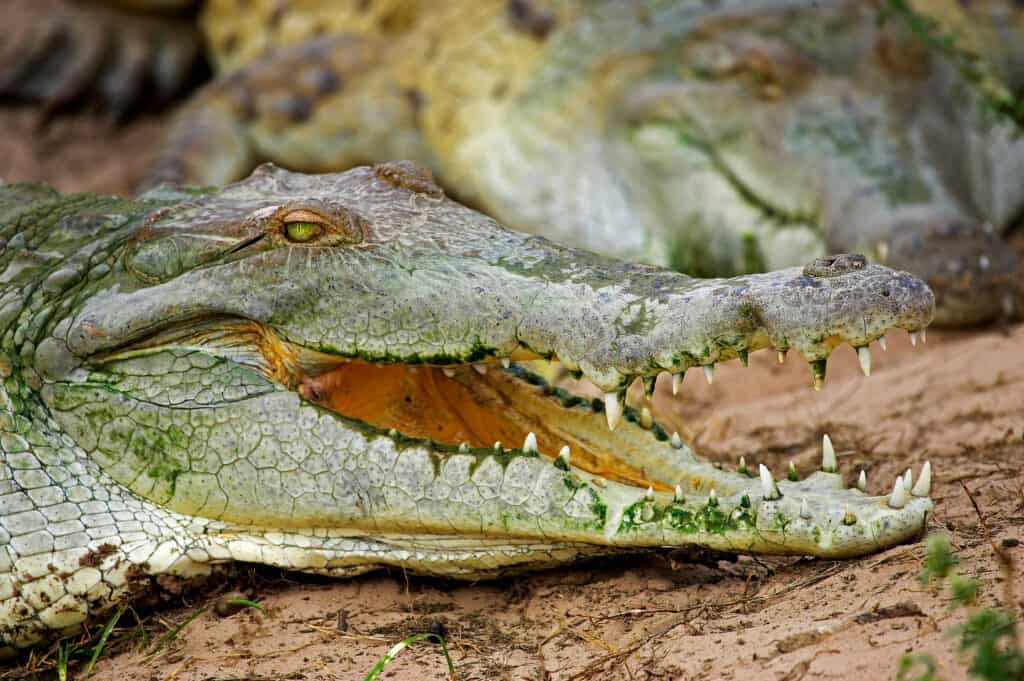
Orinoco crocodiles can grow up to sixteen feet in length!
©slowmotiongli/Shutterstock.com
Known as one of the largest predators on the continent, the Orinoco crocodile is found in freshwater basins around the Orinoco and Meta rivers. Males of this species can weigh up to 840 pounds, while females are more diminutive at 440 pounds. They may appear in several colors, ranging from gray and tan to dark green, and typically have 68 teeth. Unlike other crocodile species, Orinoco crocodiles may vocalize to each other to communicate.
Somewhere between 100 and 250 Orinoco crocodiles are thought to be alive today. Between the 18th and 20th centuries, these crocodiles were hunted for various parts of their body, including their skin, teeth, meat, and eggs. Some individuals ate the meat as food, while others repurposed the other body parts for different purposes. Britannica suggests that Orinoco crocodile parts were frequently used in traditional and indigenous medicines. Pollution and habitat loss have also been indicated in the species’ decline.
Orinoco Crocodile Conservation Efforts
Over the years, there have been several programs focused on breeding and releasing Orinoco crocodiles, including the Orinoco Crocodile Conservation and Management Program in the Eastern Plains of Colombia (2010), Project Return to the Llanos (2023), a partnership between Newport Aquarium and the Association of Zoos and Aquariums (2024), and ongoing repopulation efforts through WCS Colombia. Researchers are also working to better quantify and monitor existing populations.
Other South American Animals on the Brink of Extinction
Saving all natural life in South America should be at the top of our priority list. Otherwise, here are some more species that might not make it another century:
- Santa Catarina’s guinea pig
- Colorful puffleg
- Glaucous macaw
- Glass frog
- Red-crested tree-rat
- Hooded grebe
Zealandia

Not all scientists consider Zealandia a continent, though many geologists believe it fits the bill.
©ChrisNoe/Shutterstock.com
Known by some as Earth’s eighth or “lost” continent, Zealandia was once part of the southern supercontinent Gondwana, which broke off from Pangea. Today, Zealandia sits 94% submerged under water, with New Zealand and New Caledonia above water. Since it is made up of continental crust, many people consider it its own continent or, at the very least, a microcontinent. However, not every scientist or geologist is in agreement. Regardless, Zealandia is home to some unique and rare species not found in many other places in the world. Several of these species are also threatened.
Kākāpō
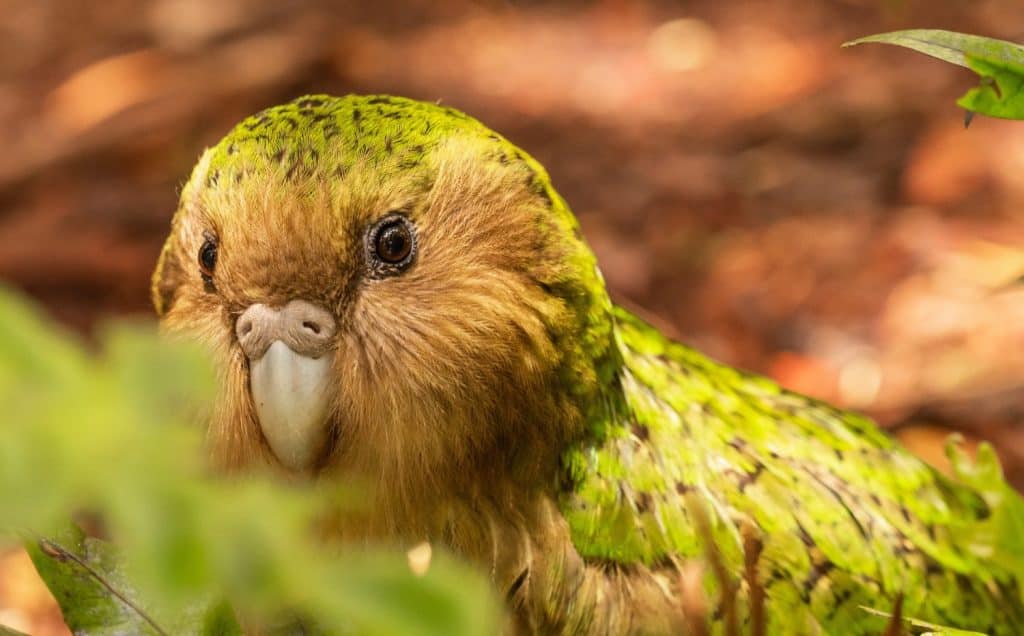
Less than 300 kākāpō are alive in New Zealand today.
©FeatherStalker Don/Shutterstock.com
You’ve never seen a bird quite like the kākāpō. New Zealand’s brightly colored parrot can weigh in at nearly nine pounds. The nocturnal kākāpō is the only flightless parrot in the world, but it is quite adept at climbing up trees. Its owl-like face is also quite distinctive. Finally, the kākāpō’s lek-breeding method, where males gather together and share loud, booming mating calls, allows for females to pick the male of their choice from the gathered bunch.
Kākāpō used to be widespread across New Zealand. Unfortunately, when humans began to build homes and develop agricultural land, the kākāpō’s habitat was significantly reduced. These birds, since they do not fly, were also easily hunted and captured by dogs or other animals. Rats and stoats, introduced to New Zealand by new settlers, began to eat kākāpō eggs. Essentially, the kākāpō had been protected when it had no natural predators on the island, but the arrival of humans and invasive animals created ripple effects.
Kākāpōs very nearly became extinct, but a recovery program helped grow the population to around 237 birds today. Still, animal predation is a huge threat to kākāpōs. New Zealand’s Department of Conservation runs Kākāpō Recovery, which brings together community stakeholders like rangers and scientists to save these birds. The program includes tracking and monitoring systems, egg incubation, breeding and rewilding, and treatment for illnesses like exudative cloacitis.
Māui Dolphin
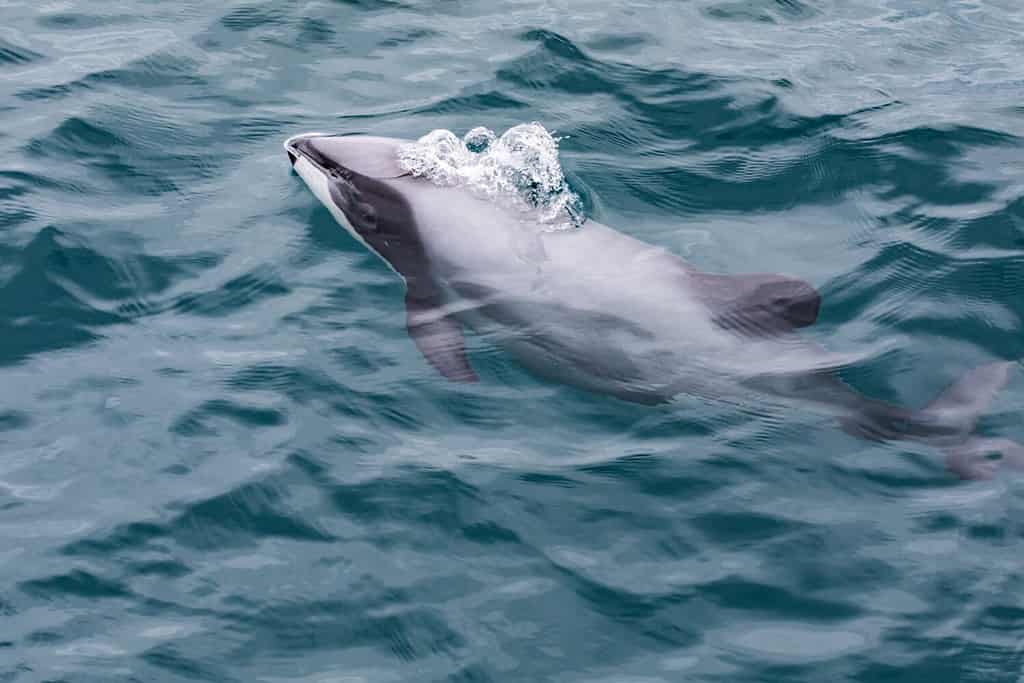
Out of all dolphin species worldwide, Māui dolphins are the smallest known species.
©sljones/Shutterstock.com
Scientists believe that only 48 to 64 adult Māui dolphins, a subspecies of Hector’s dolphins, are currently living in the waters around New Zealand’s North Island. The Māui dolphin is New Zealand’s only native dolphin species. These dolphins grow to around five feet long, and you can tell them apart from other species because they lack a beak and have an interestingly rounded dorsal fin. Māui dolphins usually live to be about twenty years old and are slow to reproduce.
Toxoplasmosis and other diseases are killing Māui dolphins. The Department of Conservation asks that everyone refrain from flushing cat feces down the toilet and instead throw it away in the garbage, which can help mitigate the risk of spreading toxoplasmosis. Māui dolphins may also be injured by boats, water pollution, or seabed mining.
But more devastating for Māui dolphins are fishing-related injuries. These dolphins are drawn to some of the seafood being fished by commercial fisheries. When they attempt to get the food, they can get caught in the nets and drown. Limiting fishing in protected areas is a start. But the WWF argues that creating a protected sea corridor and limiting mining for oil or gas is equally important. You can sign petitions to ask the New Zealand government to better support conservation initiatives via Māui and Hector’s Dolphin Defenders.
Additional Zealandia Animals At Risk of Extinction
Whether Zealandia might one day be fully reclaimed by the ocean or not, these species might still go missing before their time:
- Kaala striped gecko
- New Caledonian owlet-nightjar
- New Zealand fairy tern
- Clutha flathead galaxias