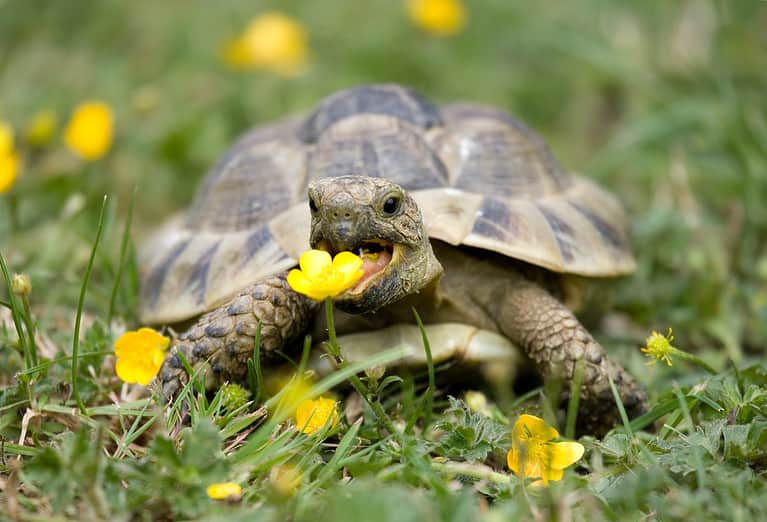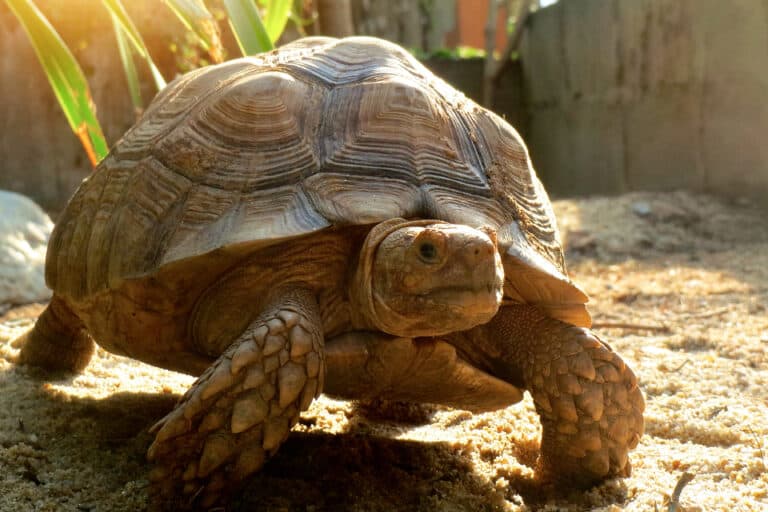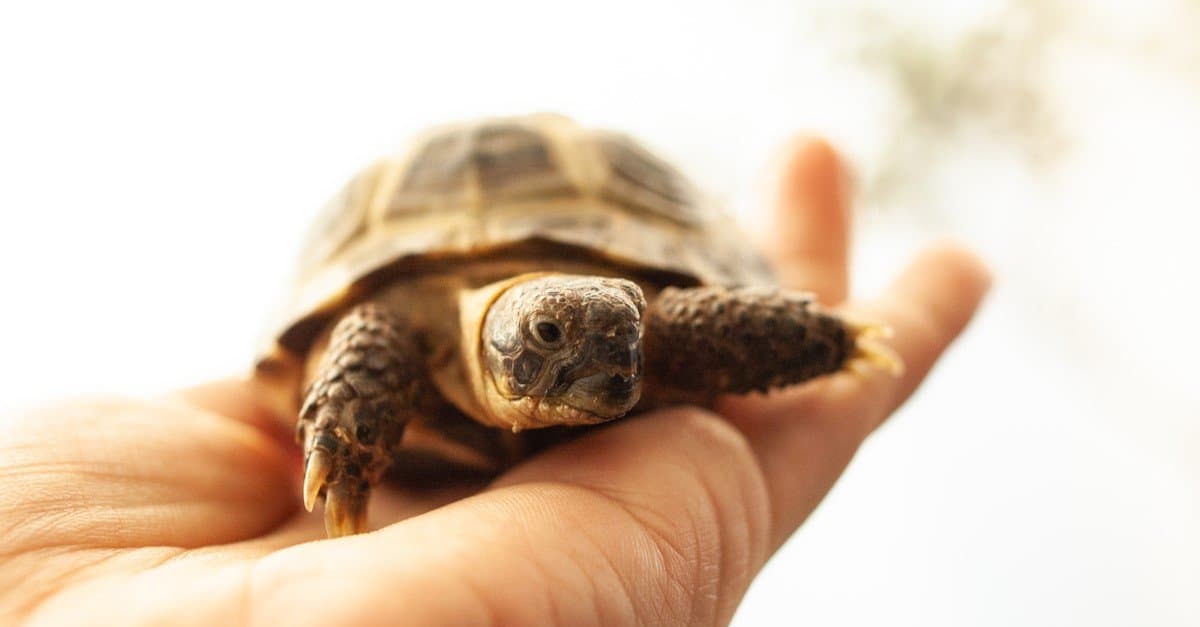

This young tortoise posted by through.the.lleaves is the cutest thing ever. Fig, a little leopard tortoise, enjoys a good scratch on his bony bottom, wiggling back and forth to make sure his owner gets all the itchy spots. Those of us who have never owned a tortoise or turtle may be startled to learn they can feel through their shells. In fact, most of what we think we know about tortoise shells is probably wrong. So, keep reading to find out why.
Tortoise Lore
Tortoises and turtles have existed on this planet in some form for well over 200 million years. The earliest known turtle was a lizard-like reptile called Eunotosaurus africanus. Like turtles, its trunk was wide and stiff with nine vertebral ribs that would later develop into the familiar shell. This reptile lived in southern Africa 260 million years ago — 30 million years before the first dinosaurs.
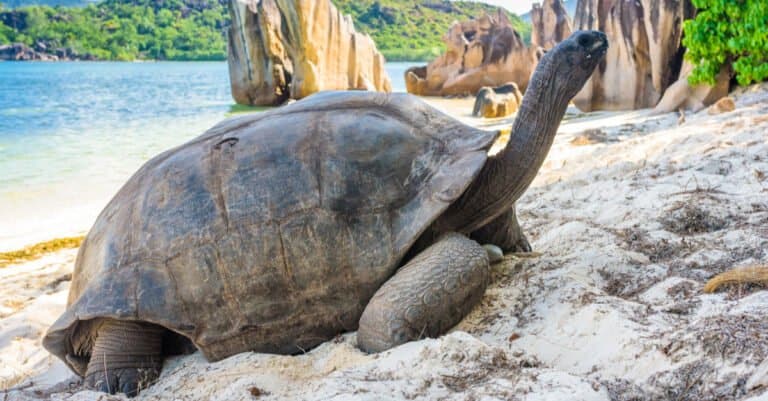
Like turtles and terrapins, tortoises belong to the order Testudine. Unlike turtles and terrapins, tortoises live strictly on land. They have thick, sturdy legs to support their weight, like elephants. The size and weight of tortoises can vary significantly, but pet tortoises range from a few pounds to over 100 pounds. The little tortoise shown above will reach somewhere between 30 and 120 pounds. Tortoises are also long-lived, with many pets living up to 80 years. Giant tortoises live even longer, regularly surpassing 100 years. A tortoise named Jonathan living on St. Helena Island is believed to be nearly 200 years old.
A Tortoise’s Shell Isn’t Just a Home
A tortoise’s shell not only protects and supports its skeleton and organs, it also provides a convenient shelter for its retractable head and limbs. The shell is an important part of thermoregulation, too, as heat can be retained or lost through the shell. The tortoise’s shell is constructed of the carapace, the top of the shell, and the plastron, which is the bottom. The sections are fused together on the sides by a bony bridge. However, the shell is not an exoskeleton or a separate structure. The tortoise’s skeleton is integrated into the shell. During the tortoise’s development, the ribs and vertebrae flatten and grow into the skin, fusing into bony plates that form the shell.
Tortoise shells are not just made of bone. The scutes, or scales, protecting the bones underneath are made of keratin, like our fingernails. Unlike turtles, which shed scutes as they grow, tortoises continue to grow new ones underneath the old ones. However, superficial keratin layers may peel occasionally during a growth spurt. This process gives the shell a layered appearance and provides additional protection. Also, since tortoises are reptiles, their skin does not expand as they grow. So, they shed their skin, but it comes off in small, flaky patches, not in one piece as is common in snakes.
How Much Can Tortoises Actually Feel Through Their Shells?
A tortoise’s spine is connected to the shell, so the shell has blood vessels and nerve endings. Shells are not simply bony coverings — shells are living tissue. So a tortoise can bleed if the shell is injured. The shell may eventually be able to heal, but the process could take months or even years for more for serious injuries. Tortoise owners must also be careful about what comes into contact with their pets’ shells. Wildlife officials note that some owners paint their turtles’ and tortoises’ shells. However, chemical toxins can enter their bloodstreams through the shells and the paint can hinder the growth of new scutes.
Tortoises are also sensitive to touch, pressure, temperature, and vibrations. Scientists found that the nerves in the superficial layers of the tortoise shell could detect and interpret these types of tactile stimuli. Special sensory cells then convert these stimuli into electrical signals that are sent to the brain. This is why some tortoises enjoy a good scratch, plus they can feel itchy when new scutes are coming in. Other tortoises may like back rubs or gentle pats. The down side is they can also feel pain when the shell is injured. Like any pet, individual tortoises have different preferences, but the tiny tortoise above clearly appreciates the attention.