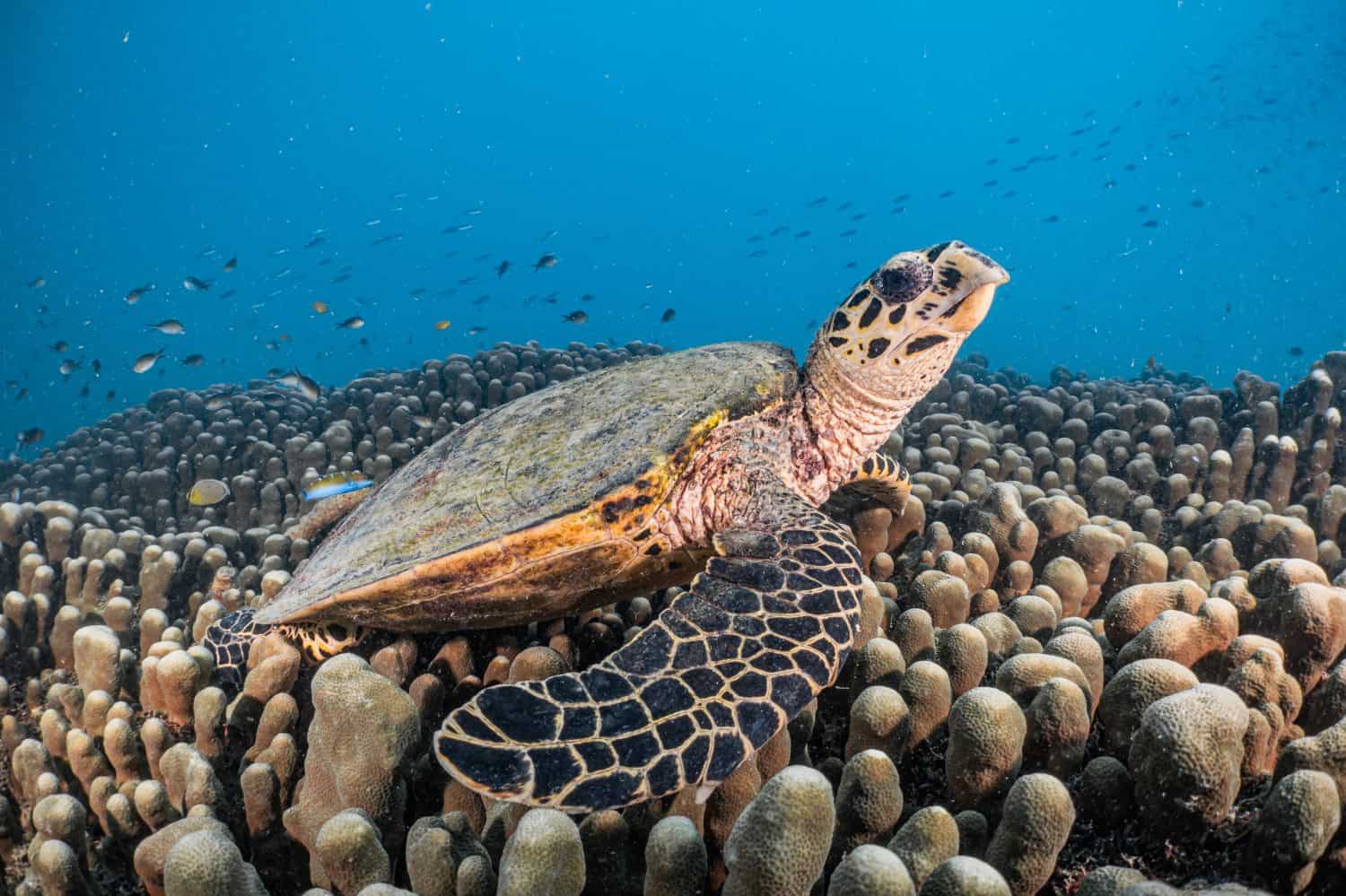

Quick Take
- Sea turtles now serve as biological record holders, recording 20 to 30 years of ocean chemical history.
- Chemical changes in the ocean over time were documented thanks to sea turtle shells’ ability to retain chemicals in their keratin layers.
- Six of the seven species of sea turtles are at risk of going extinct.
- The chemical record can provide conservationists with a map of the stress the ocean has imposed on a sea turtle over its lifetime, helping them develop better plans to conserve and save sea turtles.
Sea turtles have an average lifespan of 20 to 30 years. During that timeframe, they experience changes in ocean chemistry, ocean temperatures, and even prey abundance. Just how much sea turtles are exposed to has been difficult to determine, given their mostly aquatic lifestyle. That has recently changed, as sea turtles have become a living record, telling a tale about the changing sea they live in.
How Turtle Shells Reveal Changes in the Ocean
Sea turtles have been living in the Earth’s oceans for 110 million years. They are some of the oldest living creatures on the planet. During the time that sea turtles have been alive, the oceans have undergone massive changes. Over the last several decades, change has happened at an incredible rate and has had detrimental effects on marine life. But just how much change was not understood until sea turtle shells were given a closer look.
According to a new study published in Marine Biology, sea turtle shells hold a wealth of information about the ocean they live in. This is because each layer of the shell tells a story about where the sea turtle lived, the ocean’s chemical makeup, and even the turtle’s diet.
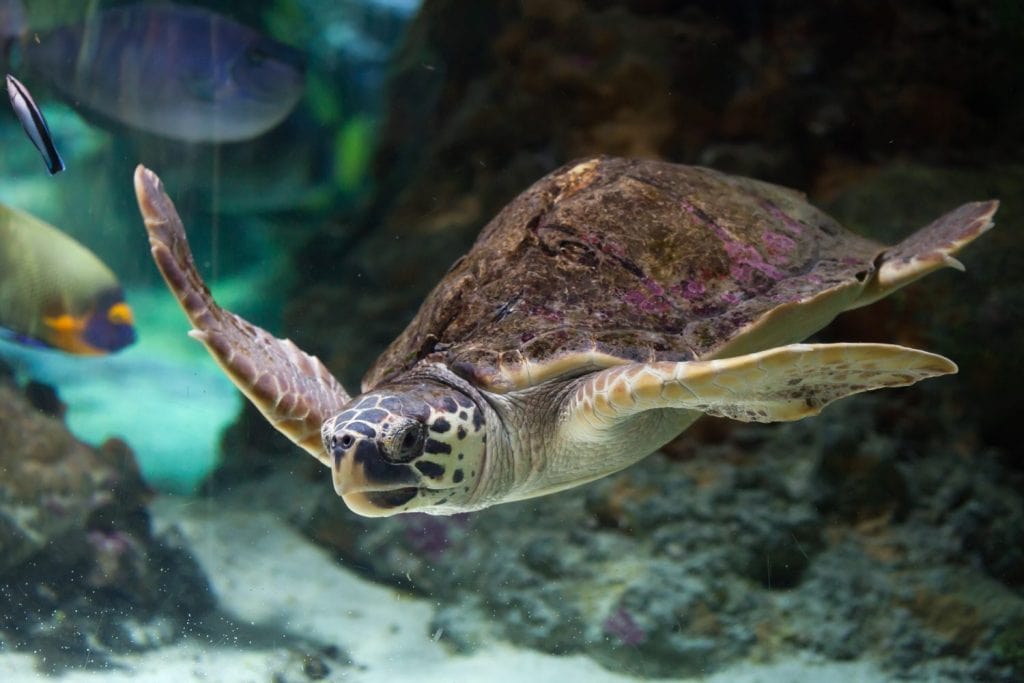
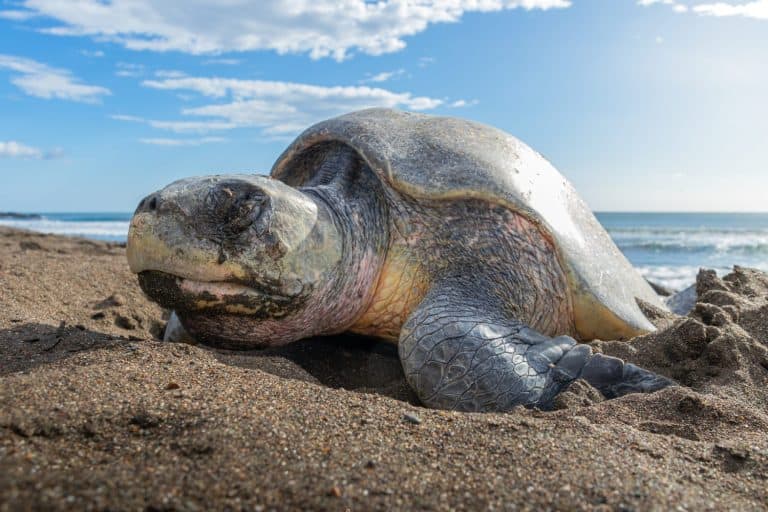
Sea turtles spend the majority of their lives in the open ocean, allowing their shells to absorb the ocean’s chemicals, which log the health of both the ocean and the sea turtles.
©Vladimir Wrangel/Shutterstock.com
The study, conducted by researchers Dr. Bethan Linscott and Dr. Amy Wallace, along with researchers from the University of Florida, the University of Bristol, and Earth Sciences New Zealand, found that the scutes that make up turtles’ shells continuously grow. As they grow, they create a record of sorts. The record can reflect the ocean’s environmental conditions at the time each scute layer formed.
To determine this, researchers took shell samples from 24 stranded sea turtles along Florida’s coast. The species included loggerhead turtles and green turtles. These samples were collected between 2019 and 2022. The small, circular samples were sliced into minuscule rings, measuring 50 microns thick, or the thickness of a human hair. These samples were then radiocarbon-dated, giving researchers spot-on information about the health of the ocean and turtles at any given point in their lives.
How Quickly Do Sea Turtle Shells Grow?
This is not the first study in which researchers have used sea turtle shells to learn more about turtles’ lives. In the past, the shells have been used to determine the health of sea turtles and any diseases that ailed them. What was not known was how quickly sea turtle shells grow, nor what timeframe each layer in the shell’s growth represented.
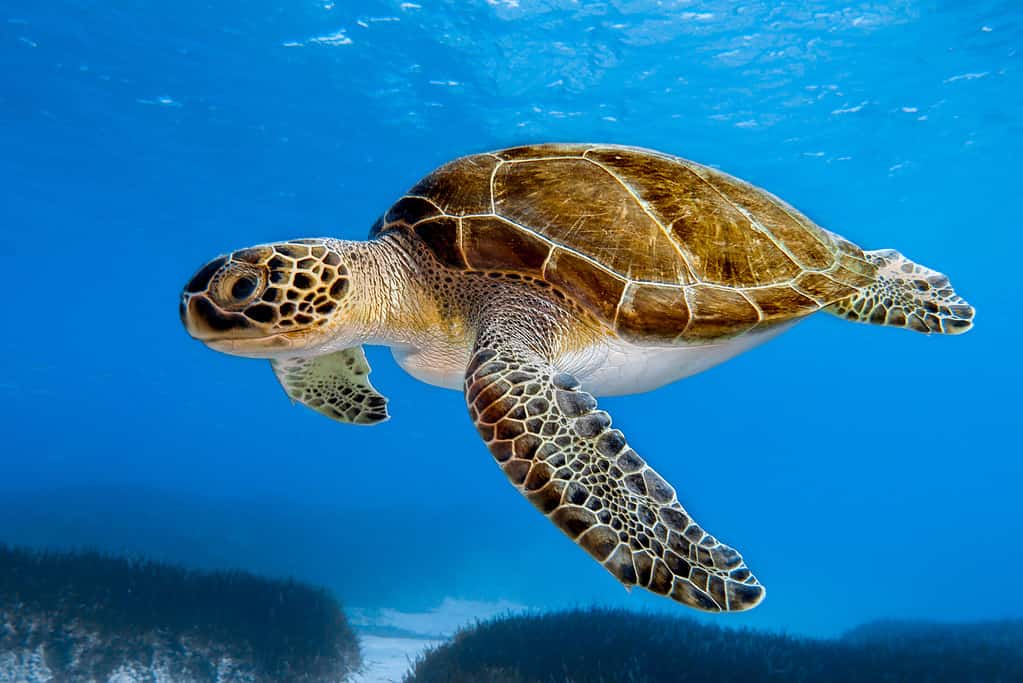
Sea turtle shells were found to grow between every seven and nine months.
©Sakis Lazarides/ via Getty Images
To answer these questions, the study’s researchers extracted 120 incredibly thin scute layers from the shells and obtained radiocarbon measurements from each. A scute is a “shield-like scale” that provides a protective layer for the turtle. These scutes cover the sea turtle’s shell.
The measurements were then radiocarbon-dated and compared with the “bomb pulse,” a period in history when nuclear bombs were tested in the ocean, leaving behind large amounts of carbon-14. The measurements showed that each layer took about seven to nine months to grow, although each species had its own growth rate. Therefore, each scute layer also represents a time in the ocean that corresponds to the turtle’s shell growth.
Makeup of Turtles’ Shells Absorbs Ocean’s Chemical Changes
The ocean absorbs 90% of the heat caused by greenhouse gas emissions and 30% of the CO2 humans emit. The consequences of increased greenhouse gases and CO2 have been directly linked to marine heatwaves, ocean acidification, rising ocean temperatures, and rising sea levels. This has been well documented throughout the marine scientific community. But there is now an official record of the chemical changes the ocean has undergone, which is in sea turtles’ shells.
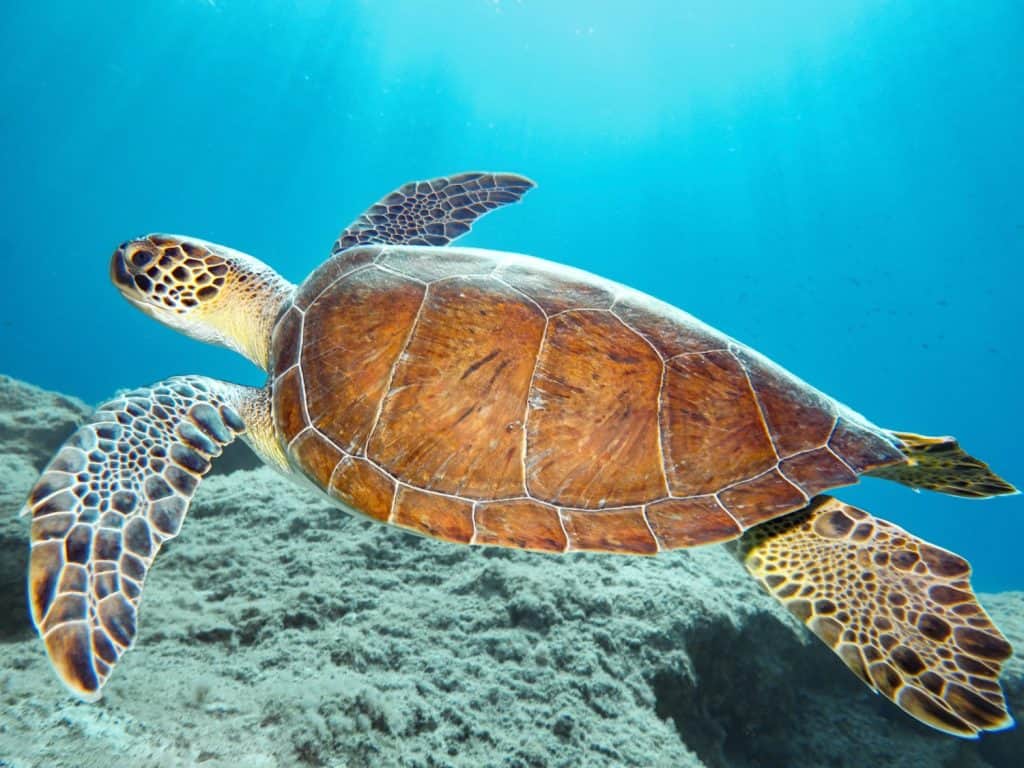
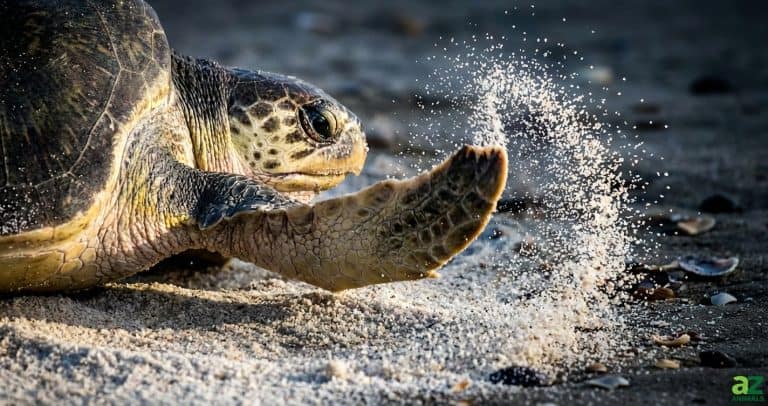
Sea turtles’ shells are made of layers of keratin.
©Sakis Lazarides/Shutterstock.com
Sea turtle shells are made from keratin. Keratin, a protein that gives both human hair and nails strength, grows in layers. The newest layer is on top, with the oldest underneath.
As the layers grow, the study finds that keratin absorbs the chemicals present in the ocean at any given time. The new layer will eventually seal off the previous layers. In doing so, a record of the chemical makeup of the ocean is forever sealed. According to the study, this process gave researchers insight into what the ocean looked like chemically during the sea turtle’s lifetime. It also pointed to stressors that would have made survival more difficult for the turtle.
Does Stress Slow Sea Turtle Shell Growth?
Oceans have undergone changes since the beginning of time. For the first time in history, shifts in ocean temperatures and chemical makeup are not solely due to natural environmental factors. Instead, these changes are directly related to climate change, human-caused pollution, and chemical use.
Every time the ocean changes, it is documented in the shells of sea turtles. These changes have also been shown to stunt turtle shell growth. This is because when sea turtles face environmental stressors, they must expend more energy to survive rather than to grow their shells.

Sea turtles’ shell growth will slow when the ocean is unhealthy.
©wasan bunchusuphakit/Shutterstock.com
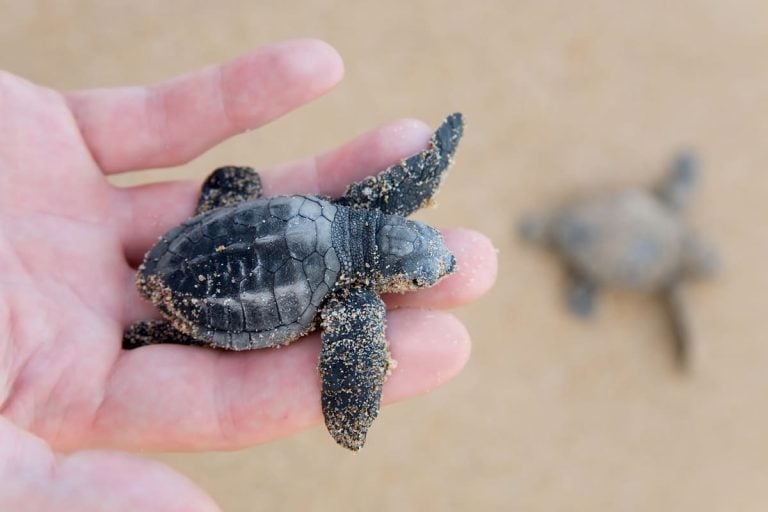
According to the study, each sampled sea turtle shell showed a slowdown in growth at the same time. Recent shifts in the ocean, occurring in 2015 and from 2017 to 2018, were related to red tides and a massive increase in Sargassum seaweed, which makes it difficult for hatchlings to reach the ocean from the beach. These events were reflected in slowed growth in the turtles’ shells. The health of the ocean is directly related to how large and strong sea turtle shells grow. When the ocean is under stress, sea turtles are as well.
Threats Sea Turtles Face Today
Sea turtles face a number of threats today. Currently, of the seven different species of sea turtles, six are threatened. Of those six, five are on the brink of extinction, with three classified as endangered and two as critically endangered.
The sea turtle species on the brink include:
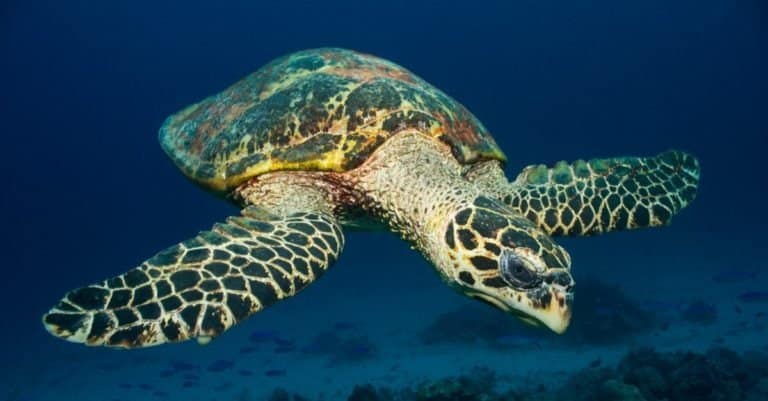
- Hawksbill Sea Turtle: Critically endangered
- Kemp’s Ridley Sea Turtle: Critically endangered
- Green Sea Turtle: Endangered
- Leatherback Sea Turtle: Endangered
- Loggerhead Sea Turtle: Endangered
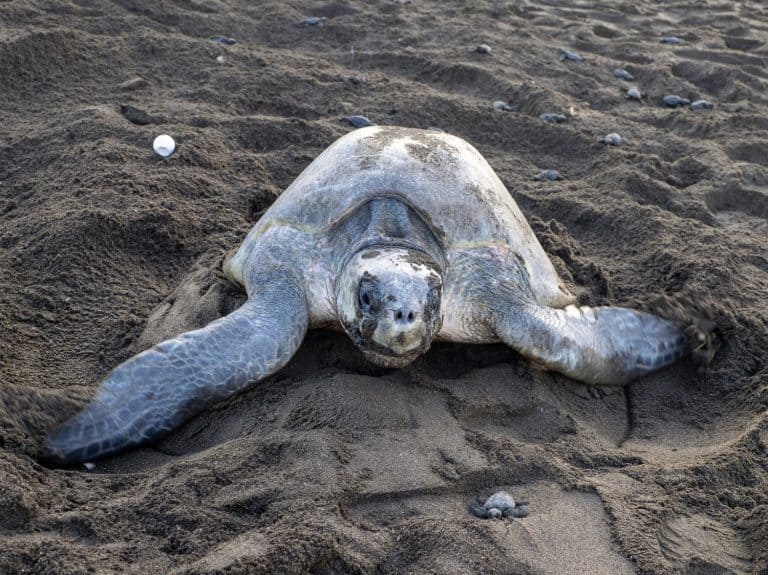
These turtles, along with the Olive Ridley and Flatback sea turtles, which are classified as vulnerable and data-deficient, respectively, face similar threats to their survival.
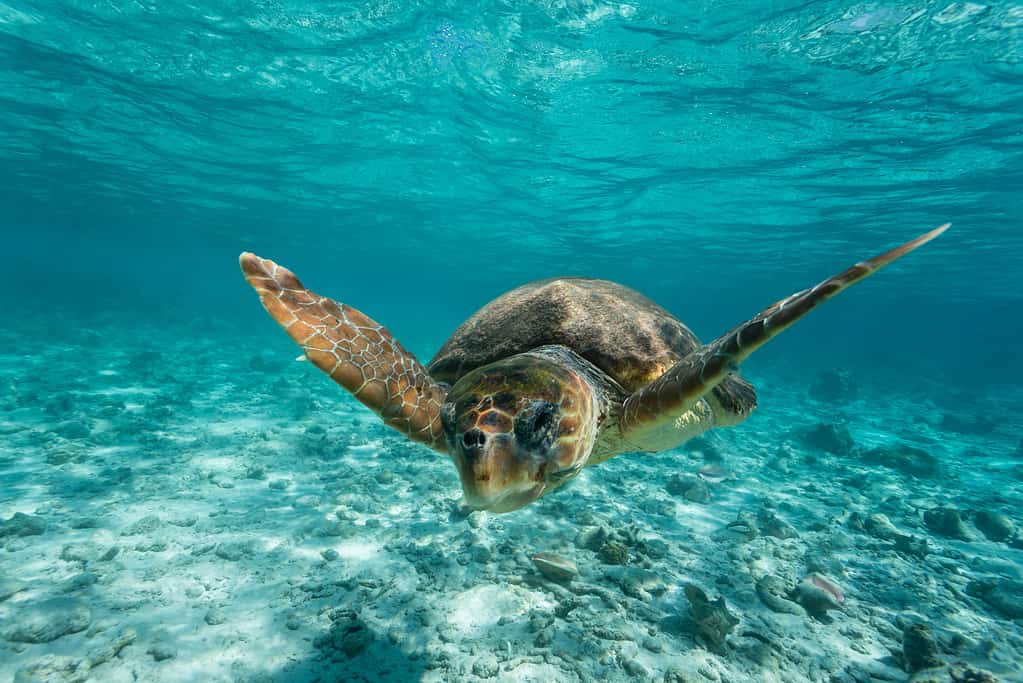
Loggerhead sea turtles are one of the endangered sea turtle species.
©pniesen/iStock via Getty Images
As the study noted, chemical changes in the ocean can significantly affect turtle health. In addition to this, the other threats that sea turtles face are as follows:
- Becoming bycatch
- Black market trade and poaching
- Habitat destruction
- Habitat fragmentation
- Climate change
- Plastic ingestion
Despite all sea turtles being protected, regardless of their conservation status, populations continue to decline globally. Unless stricter conservation efforts are implemented soon, the likelihood of some of these species surviving in the long term remains low.
How Sea Turtles’ Shells Can Help with Conservation
Sea turtles spend the vast majority of their lives in the open ocean. Because of this, it is infinitely more difficult to protect them than to protect other animals. However, with the information gleaned from the turtles’ shells in the study, developing conservation plans for these magnificent creatures may become easier in the future.
The authors of the study recognize that, with sea turtles spending so much of their time in the sea, there is little anthropological evidence to point to events that would have dramatically impacted the survival of the turtles. However, with the shells providing a timeline of how the oceans have changed over time, it is easier for scientists to predict how the oceans will continue to change and, therefore, how best to help the turtles survive, according to Linscott, research assistant professor of sea turtle conservation at the Robert K. Johnson Center for Marine Conservation at the University of Miami Rosenstiel School of Marine, Atmospheric, and Earth Science.
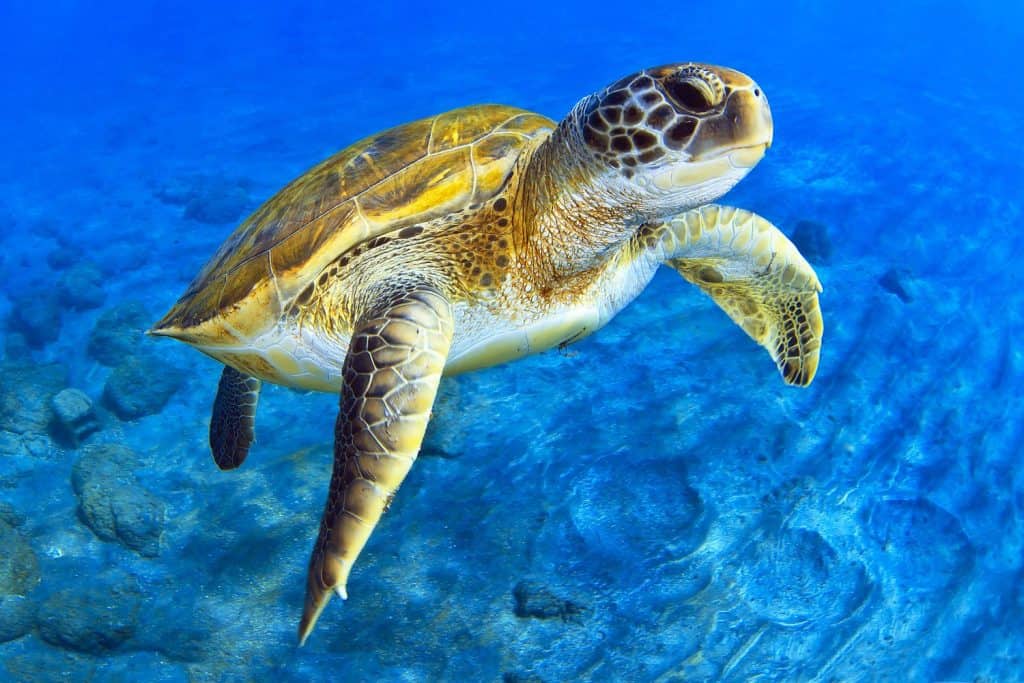
The hope is that by discovering just how much environmental stress there is in the ocean, conservationists will be better able to devise plans to save endangered sea turtles.
©David Carbo/Shutterstock.com
“These shells are effectively recording environmental stress in the ocean,” Linscott explained in a press release. “It’s a bit like sea turtle forensics. We can use chemical fingerprints preserved in scutes to detect ecological shifts.”
Linscott, who co-authored the study, continued, “Our findings can help scientists better understand how marine ecosystems are changing and how species respond to those changes.”
Understanding how past changes in the ocean affected sea turtles is just one component of conserving them. Being able to predict how the sea will continue to change as a result of climate change, pollution, and similar factors will also be instrumental. The hope is that this information has not come too late to save sea turtles, which are keystone species in their habitats. If sea turtles disappear, marine environments will not only suffer, but they will never be the same.