
Quick Take
- The 2,000-pound leatherback is the fourth-largest reptile.
- Leatherback turtles can grow up to eight feet long.
- Unlike other reptiles, leatherback turtles use thermoregulation to warm up or cool down.
- Leatherback turtles are found in all oceans except the Arctic and Antarctic Oceans.
Leatherback sea turtles start life the same size as other sea turtles. As they age, however, they grow progressively larger. These giants of the reptile world are relics from the Late Triassic and the last members of the family Dermochelyidae, making a look inside the life of the 2,000-pound leatherback especially interesting.
Leatherback Turtles Are the Largest Sea Turtles
There are seven species of sea turtles found in oceans around the world. Of the seven, the leatherback is the largest.
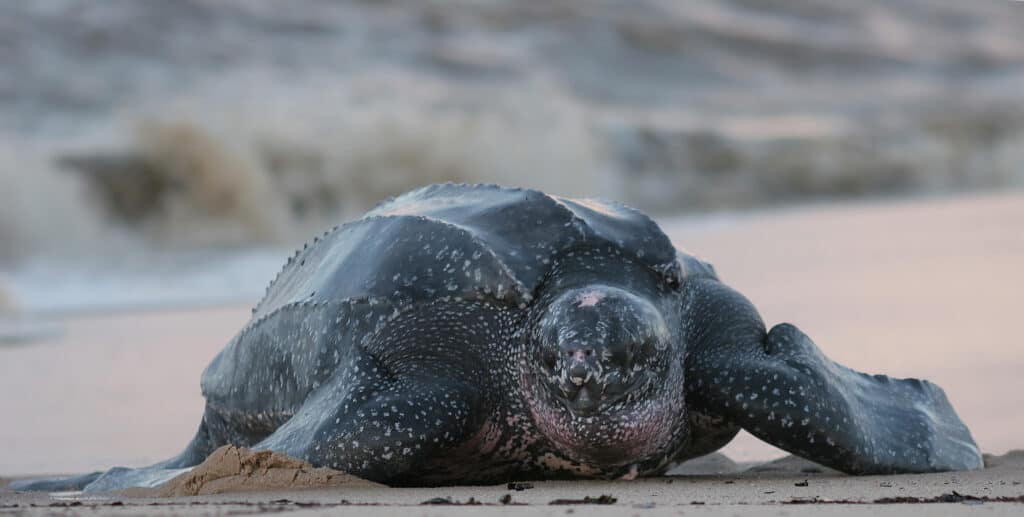
Leatherback turtles can grow up to eight feet long and weigh 2,000 pounds.
©Stephanie Rousseau/Shutterstock.com
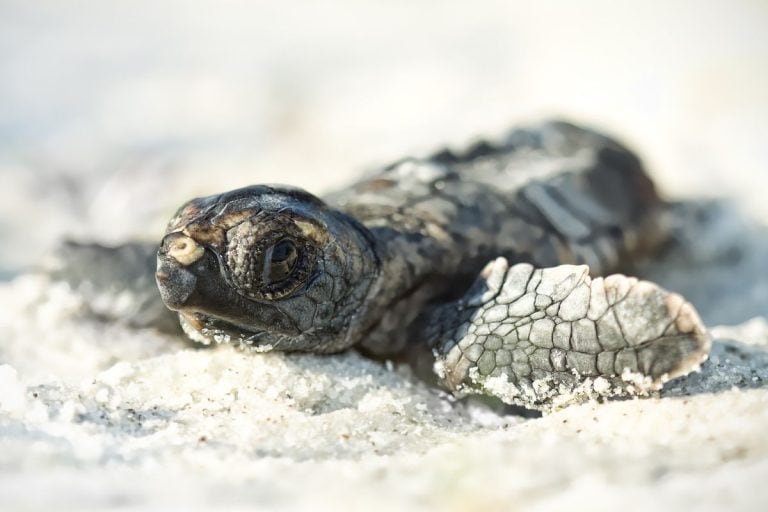
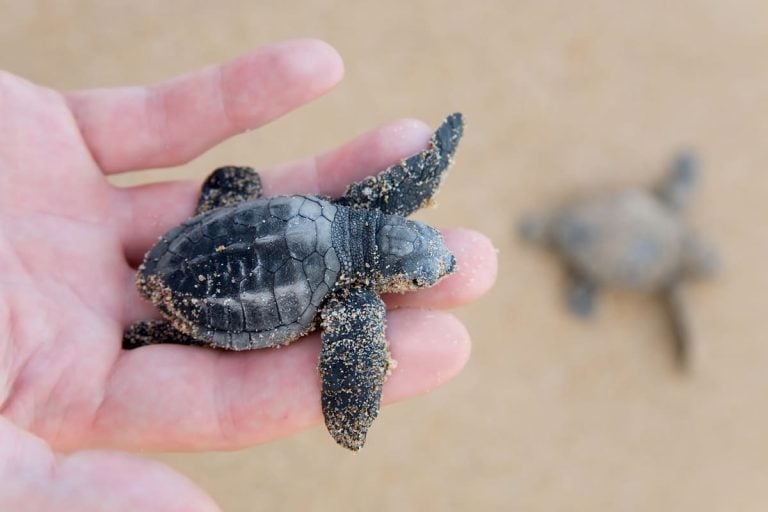
Leatherback sea turtles are approximately two to 2.5 inches long when born and weigh just over 1.5 ounces. By the time they reach adulthood, leatherback turtles will grow up to eight feet long. To reach this length and weigh up to 2,000 pounds, it will take 13 to 14 years.
To support this massive size during their 50 years of life, leatherbacks will consume a significant amount of jellyfish. Leatherbacks will eat up to 73% of their body weight in jellyfish daily. This equates to 16,000 calories necessary to support leatherback sea turtles as they glide through the ocean.
Why Don’t Leatherback Turtles Have Hard Shells?
The majority of sea turtles have hard shells made of bone, cartilage, and keratin scutes. This design serves to protect the turtles’ vital organs. When turtles first existed, however, their hard shells were used for digging and burrowing.
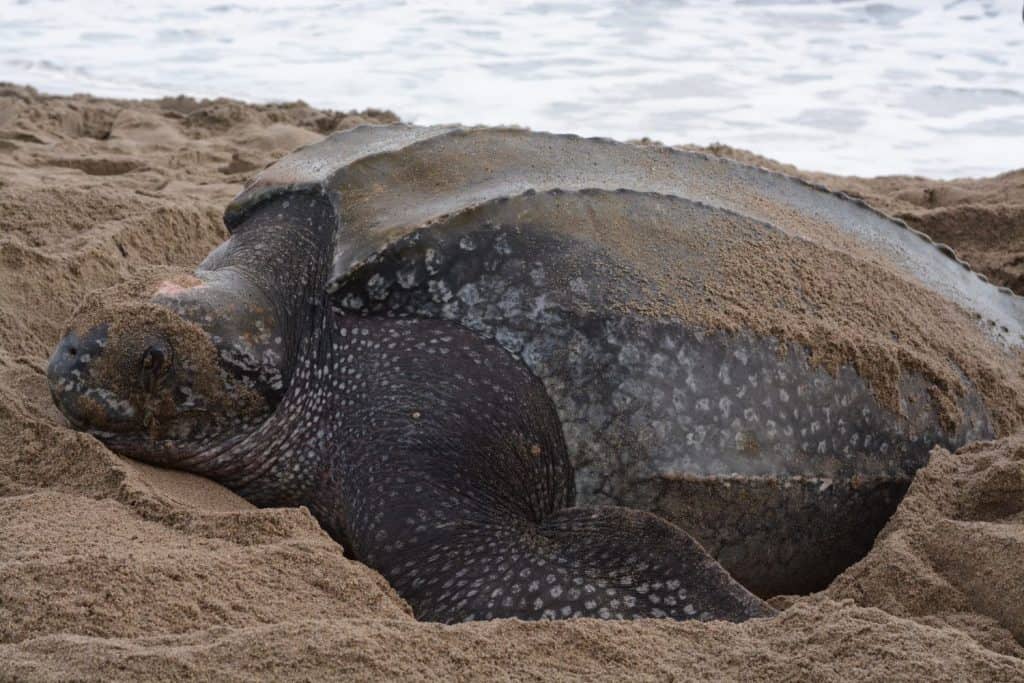
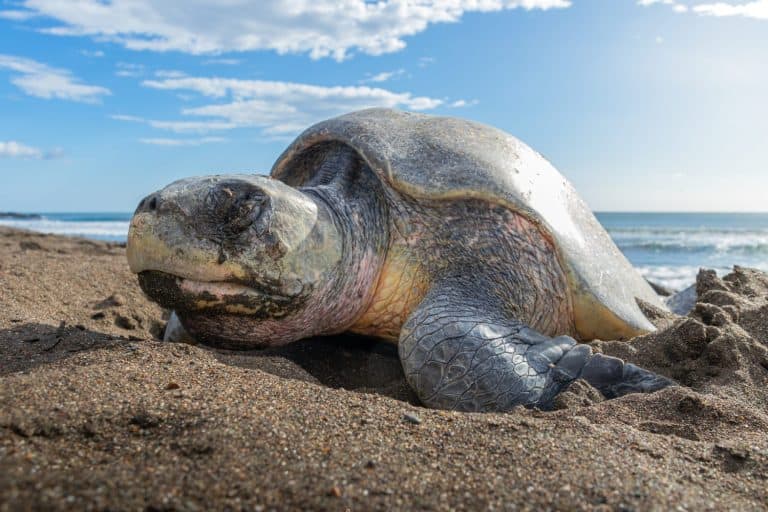
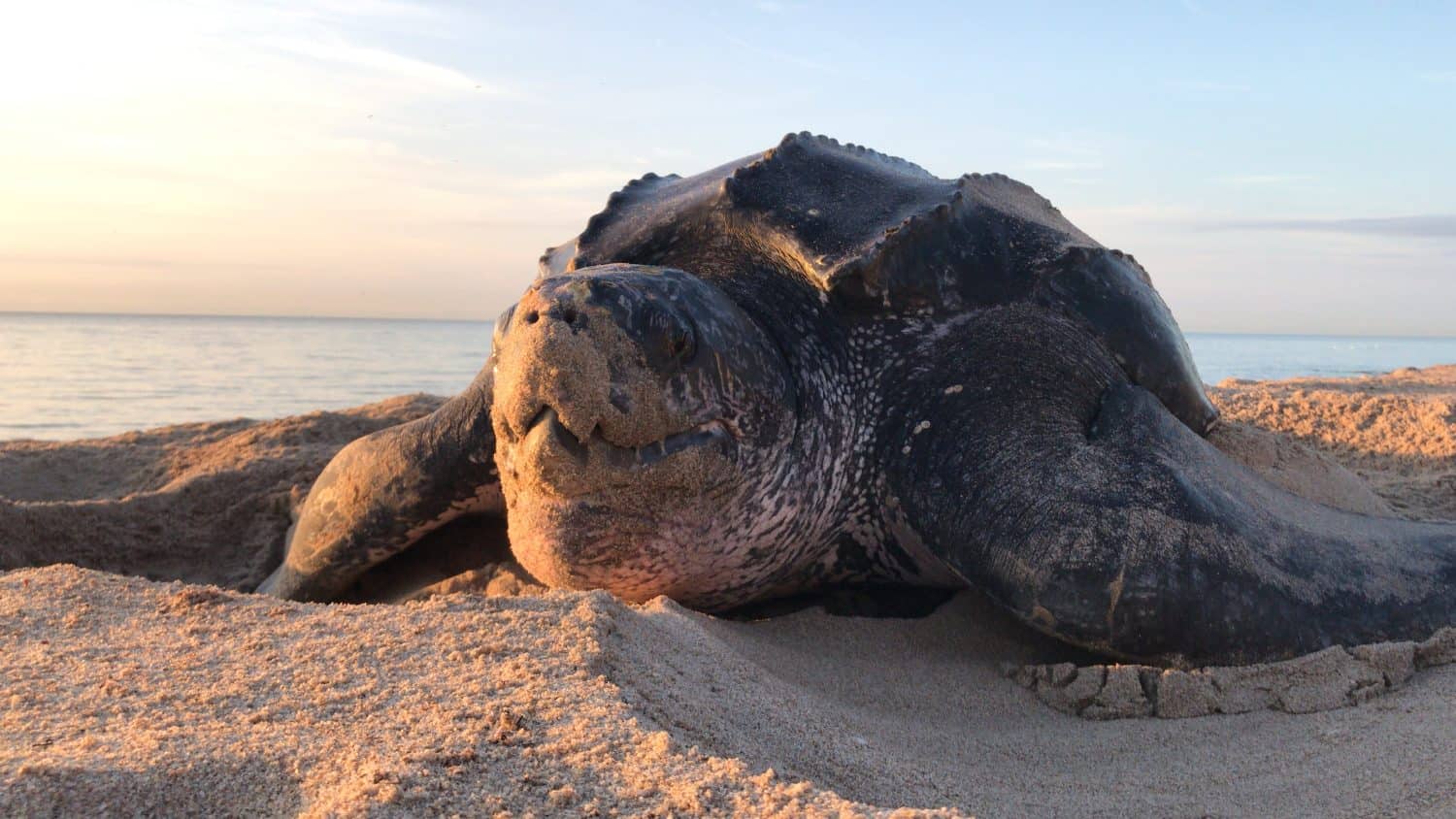
Leatherback turtles’ shells are made of leathery skin.
©Gilbert S. Grant/Shutterstock.com
Leatherback turtles do not have hard shells like other sea turtles. Instead of bone and cartilage, their shells are made of leathery skin. Underneath the skin, as with other turtles, there are bony plates. Unlike other sea turtles, these plates are not fused. The joints are flexible, with the skin stretching over them.
It is no coincidence that leatherback turtles have flexible shells. Leatherbacks can dive up to 4,000 feet. To put this in perspective, recreational divers typically go to depths of approximately 100 feet. The deeper the turtles go, the more pressure there is on their shells. If the shells were rigid, according to Science Insights, there would be a risk that the turtles’ bodies would be crushed under pressure. But with the shells’ flexibility, the turtle’s body can slowly compress, allowing it to reach depths no other sea turtle can.
How Leatherback Turtles Regulate Body Temperature
Reptiles are not known for regulating body temperature. The outdoor temperature, therefore, determines how active a reptile is. Despite being the fourth largest reptile in the world, leatherback turtles are remarkably good at regulating their body temperature. The reason behind this is a combination of factors. Those factors include:
- Fat insulating tissue in different layers of the body
- Blood circulation from one flipper to the next
- Endothermic heat production via the vascular plexus lining of the trachea
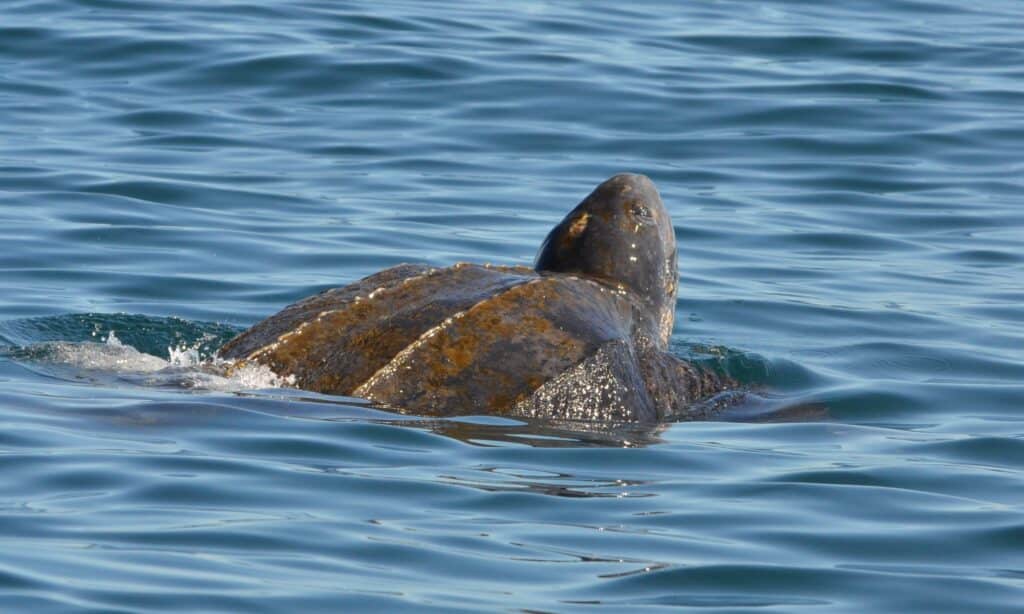
Leatherback turtles are reptiles capable of thermoregulation.
©iStock.com/jtstewartphoto
Additionally, the way leatherback turtles swim helps them to regulate body temperature. Flipper strokes change depending on whether the sea turtle is too warm or too cold. Leatherback turtles will also dive to deeper parts of the ocean or swim in the shallows to use seawater to help with the thermoregulatory strategy.
Where Leatherback Turtles Live
Leatherback turtles live in more places on the planet than any other reptile. This is due to their uncanny ability to live in both warm and cold climates, in the water, or on the beach. The sea turtles are found in every ocean except the Arctic and Antarctic Oceans. Regionally, according to NOAA, they are found in the following areas:
- Alaska
- New England
- Mid-Atlantic
- Pacific Islands
- Southeast
- West Coast
Each year, leatherback turtles swim nearly 10,000 miles as they move between their nesting and foraging homes. The nesting grounds are located primarily on subtropical islands, with the largest populations remaining in Trinidad and Tobago, the West Indies, and Gabon, Africa.
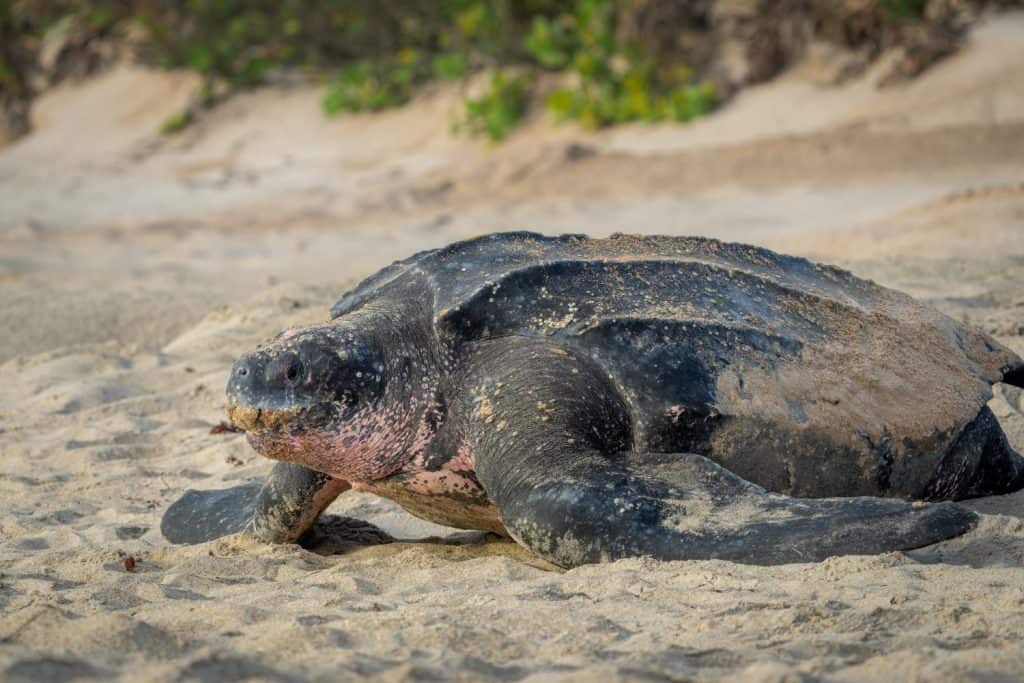
Leatherback turtles are found in all oceans but the Arctic and Antarctic.
©PRIYA S NAIR NATURE/Shutterstock.com
In other parts of the world, populations have declined by up to 90% in just three generations. This is why, even though the species as a whole is considered endangered, subspecies such as the Pacific leatherbacks, with 2,300 breeding females, are considered critically endangered.
Without continued conservation efforts, leatherbacks face a high risk of extinction, which would mean the loss of the last living members of the Dermochelyidae family—a lineage that has existed for tens of millions of years.