
Quick Take
- Achieving 100 percent identification accuracy requires mapping distinct ridge patterns found only on canine noses.
- The 1990s move to microchips created a visual verification problem for owners identifying similar breeds.
- Providing lifelong identification is possible because nasal patterns remain counterintuitively stable as dogs age.
- The Canadian Kennel Club accepted nose prints as a form of identification to help prevent theft and record errors.
Humans, for decades, have used our own fingerprints as a biometric for identification purposes. Whether it’s for police investigations or border control, fingerprints have uses in a variety of areas. Did you know that dogs have a similar form of identification through their nose? Just like human prints, dogs’ noses have distinct ridge and crease patterns that are just as unique as human fingertips. This Instagram post by @walkertrainingofficial discusses this amazing similarity. Read below to learn more!
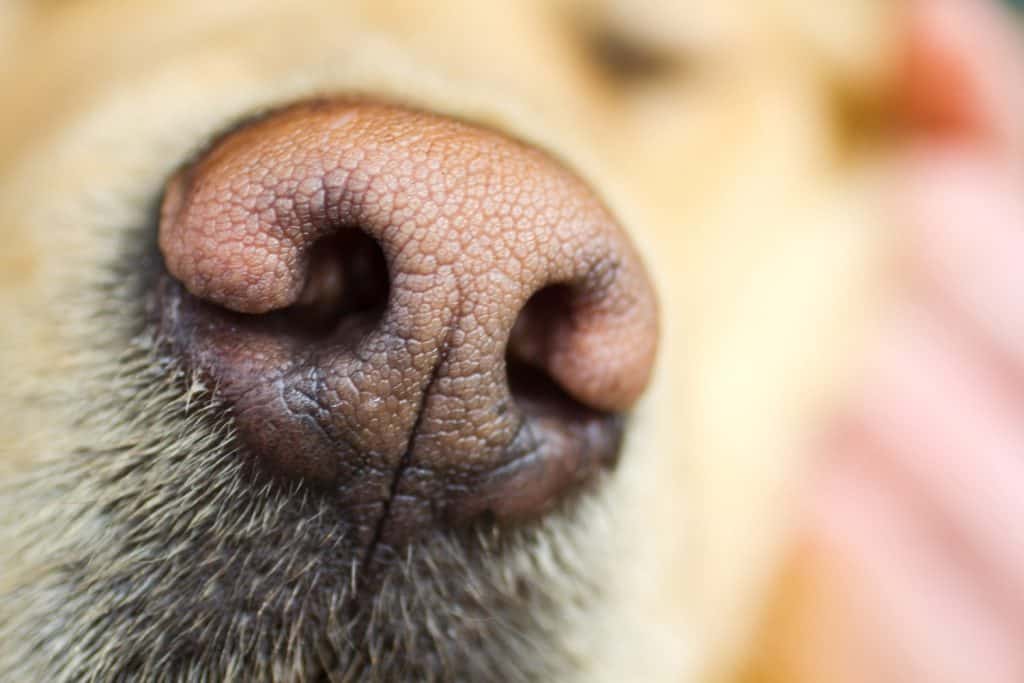
A dog’s nose is like a human fingerprint in its uniqueness.
©Nicholas J Klein/Shutterstock.com
What Are Biometrics?
Biometrics are the unique physical or behavioral characteristics of individuals that help with their identification. The most common example is fingerprints, but biometrics can also include voice or iris patterns. We use these biometrics on our phones for passwords or identification. Dogs‘ noses are full of ridges, grooves, and patterns that are unique to each individual, making them perfect for identification. As dogs get older, the pattern on their nose does not change significantly, meaning it stays with them for life. Vets may sometimes take a dog’s nose print by applying non-toxic ink and pressing paper or a card to the nose.
Historically, organizations such as the Canadian Kennel Club accepted nose prints as a form of identification until the early 1990s. Thanks to technological advancements, the use of microchips or registration numbers has become more prominent. Biometric identification goes beyond just finding lost dogs. It helps prevent theft, manage health and vaccination records, improve veterinary management, and is useful for legal matters as well.
Dogs of the same breed may look extremely similar, making it easy to confuse one for another. To help prevent mistakes or incorrect identification, biometrics such as nose prints are a reliable way to manage a dog’s health and well-being. Although nose prints are no longer commonly used for identification—having been largely replaced by microchips and registration numbers—they laid the groundwork for the development of reliable pet identification methods.