
Quick Take
- Some animals create paintings through training and enrichment, while others build complex, art-like structures in the wild without human involvement.
- High-value animal artworks reflect storytelling, conservation support, and human interpretation more than traditional artistic intent.
- Whether labeled as art or enrichment, these behaviors highlight animal intelligence, choice, and the importance of mental stimulation across species.
Art typically seems like a human activity, tied to culture, symbols, and personal expression. Yet a small group of animals has created paintings and designs that sold for surprising sums. Their work has appeared in galleries, charity auctions, and private collections. These pieces prompt curiosity and debate. Do animals create art with intention, or do they respond to training and reward? Why do people value these works so highly?
Looking at famous animal artists, along with creative behavior seen in the wild, helps clarify the issue. Some animals paint with brushes provided by people. Others build detailed structures without any human involvement that look artistic to human eyes. Together, these examples reveal how creativity, enrichment, and interpretation intersect when animals interact with art.
Pigcasso and the Record-Breaking Painting
As of February 2026, the highest publicly reported price for artwork created by an animal belongs to Pigcasso, a rescued domestic pig from South Africa. Her large abstract canvas titled Wild and Free sold in December 2021 for more than £20,000 (about $27,165 at the time), placing it well above earlier animal art records. Before her death in 2024 at the age of eight, the proceeds from sales of her paintings supported the rescue where she lived and animal conservation programs.
Pigcasso learned to hold a brush in her mouth and move it across large canvases placed on the ground. She selected colors from paint-coated tools and applied them in wide, energetic strokes. Videos of her painting show purposeful movement rather than random splashing. Her caretaker directs the setup but does not guide each stroke. The high price reflects not only the visual appeal of the painting but also the story behind the artist and the cause her art supports.
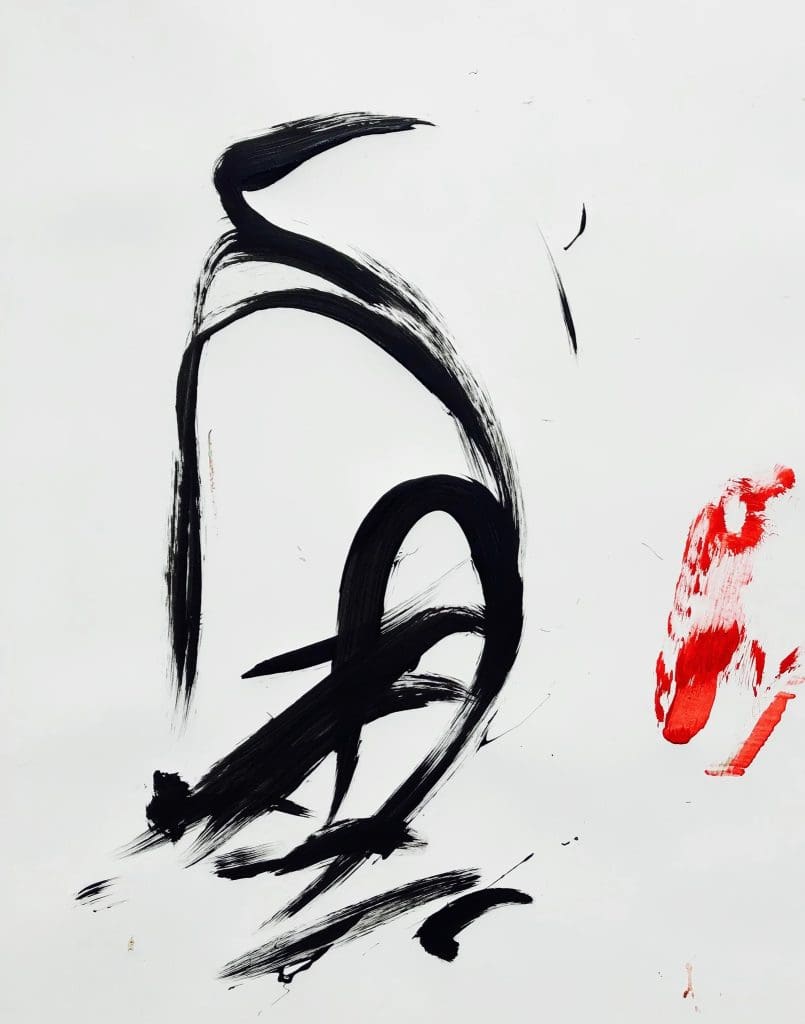
“The Penguin” is a painting by Pigcasso, a South African painting pig.
Congo the Chimpanzee and Early Animal Art Fame
Decades before Pigcasso, a chimpanzee named Congo gained attention for his paintings. Congo worked in the 1950s under the supervision of zoologist and artist Desmond Morris. Unlike later animal painters, Congo used paper and smaller formats. His paintings showed balance, repetition, and color spacing that surprised many observers.
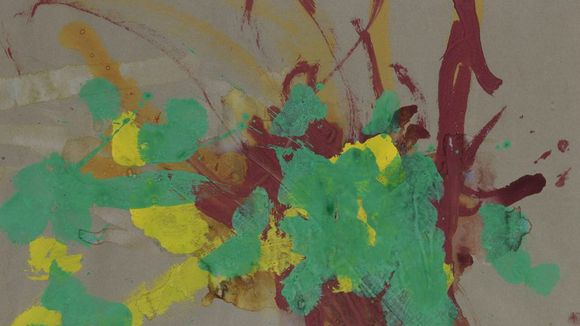
This is a painting by Congo, a chimpanzee studied by Desmond Morris.
Congo appeared to recognize when a painting felt complete. He often resisted having a piece taken away too early and rarely returned to a finished work. This behavior fueled debate about whether he had a sense of composition. In 2005, several of Congo’s paintings sold at a London auction for a total of over £14,000, exceeding the prices fetched by some works by Pablo Picasso and Andy Warhol in that specific sale.
Ruby the Elephant and Public Painting Programs
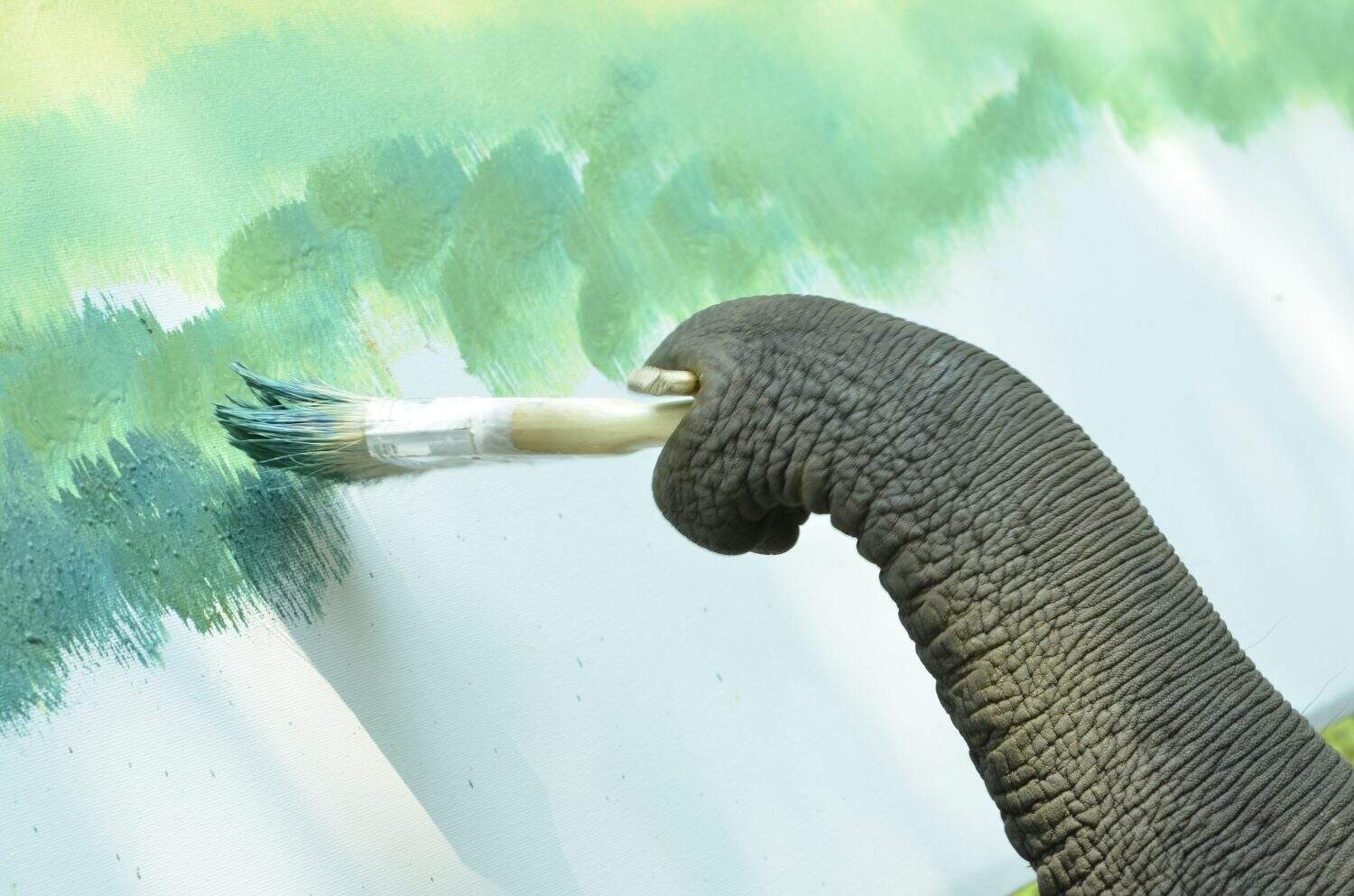
Ruby was an African elephant who lived at the Phoenix Zoo for several decades. Care staff introduced painting as enrichment after noticing her interest in manipulating objects. Using her trunk, Ruby held brushes and applied paint to canvases mounted at a comfortable height.
Her paintings featured sweeping lines and layered colors. Over time, her style evolved and developed a distinctive appearance. Some of Ruby the Elephant’s paintings sold for up to $5,000, especially when linked to fundraising events. Revenue often supported zoo programs and conservation efforts. Visitors gathered to watch Ruby paint, turning the activity into both enrichment and public education.
Opinions differed on how to interpret her work. Some viewers saw emotional depth. Others viewed the paintings as the outcome of training and reinforcement. Regardless of interpretation, Ruby’s painting sessions highlighted elephant intelligence and the need for mental stimulation in captive animals.
Orangutans and Voluntary Artistic Enrichment
Several zoos around the world have introduced painting programs for orangutans as a form of cognitive enrichment. Keepers provide canvases, brushes, and safe paints during optional sessions. Orangutans may finger-paint, dab color with tools, or smear paint across surfaces.
Some of the animals show intense interest and concentration in the activity, suggesting that the process itself is rewarding, not just the treat. Paintings created during these sessions have sold for hundreds of dollars at charity events. Funds usually support zoo care or conservation projects in Southeast Asia. Participation remains voluntary.
A Horse Finds a Second Career in Art
Metro Meteor, known as Metro, was a former racehorse in the United States. After injuries ended his racing career, his owner introduced painting as a new activity. Metro learned to hold a brush in his mouth and apply paint to canvases mounted at head height.
His abstract paintings sold for up to several hundred dollars each. Proceeds helped fund his medical care and supported horse rescue organizations. Painting also offered physical and mental engagement after the structure of racing life ended.
Creative Structures in the Wild
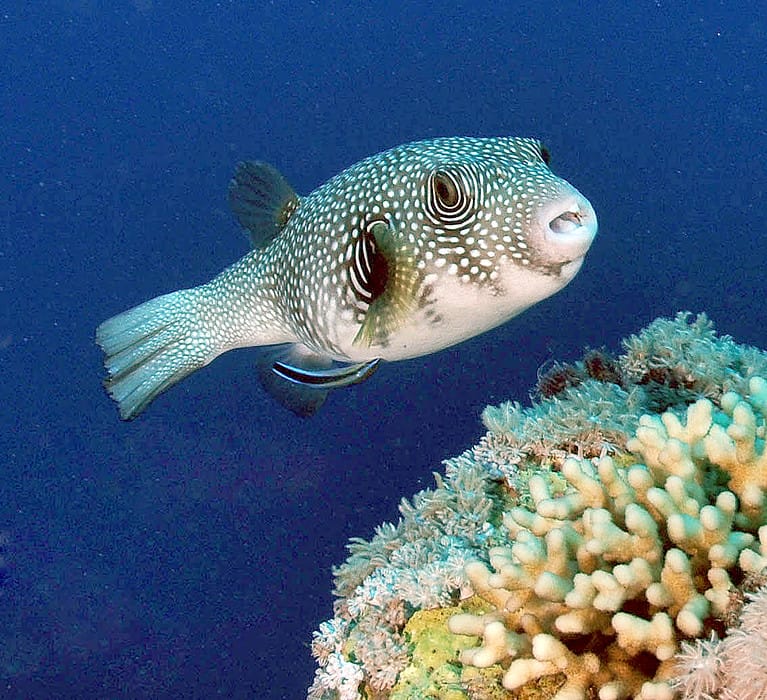
Art-like behavior does not only appear in human settings. Some animals create striking structures in nature without training. The white-spotted pufferfish constructs large circular sand patterns on the seafloor as a mating and nesting ritual. Males shape ridges and grooves using fin movements, producing designs several feet across. Females inspect these structures before choosing mates.
Bowerbirds provide another example of animal-made structures. Males build bowers from sticks and decorate them with shells, flowers, berries, and human-made objects. Color choice and arrangement matter. Females evaluate these displays when selecting partners. These behaviors serve reproductive functions, not artistic ones. Still, they involve pattern, repetition, and spatial planning. To human observers, the results resemble aesthetic design.
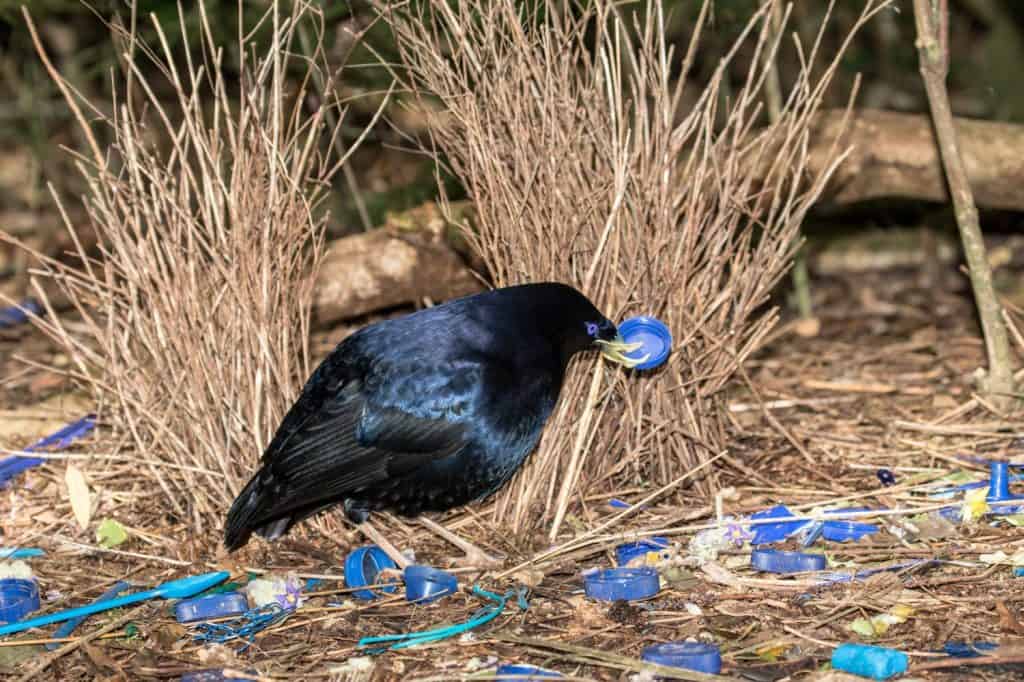
Bowerbirds create “art installations” to attract mates.
©Ken Griffiths/Shutterstock.com
How Animals Learn to Paint
Most animal paintings sold or displayed come from structured training programs. Trainers rely on positive reinforcement. Desired behaviors earn rewards such as food, praise, or play. Training begins with familiarization. Animals learn that brushes, paint, and canvases pose no threat.
Next, trainers shape actions gradually. Touching the canvas earns a reward. Longer contact earns another. Over time, the animal learns to move the brush across the surface. Non-toxic, animal-safe paints remain essential. Trainers also monitor posture, breathing, and engagement. In responsible programs, animals can refuse to participate. The aim is mental stimulation, not production. A finished painting matters less than the process.
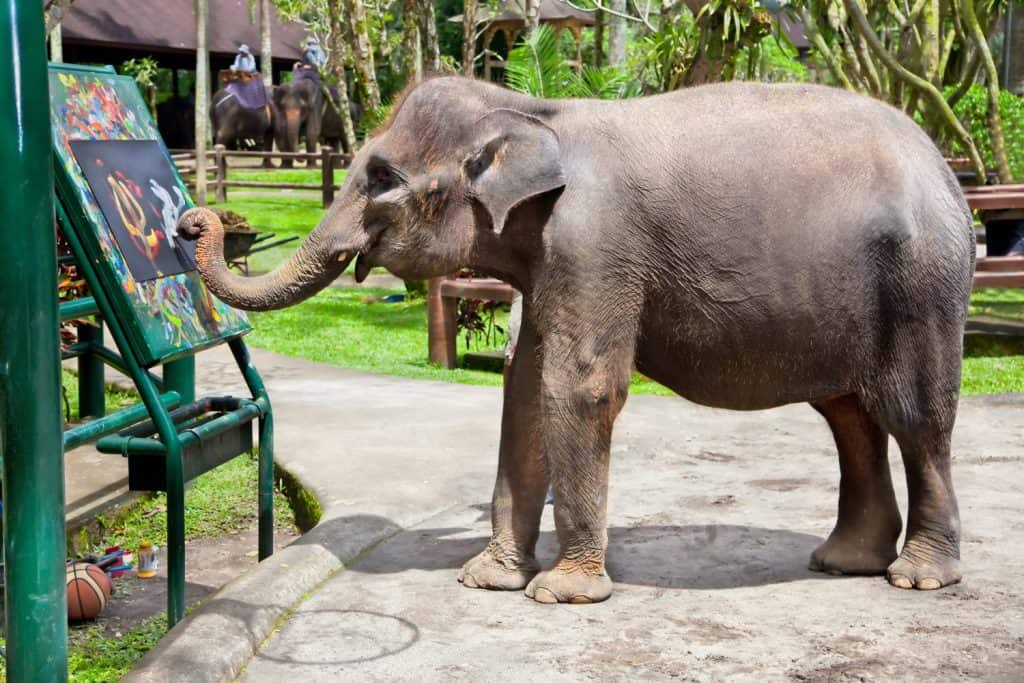
An Asian elephant in Bali, Indonesia, creates art.
©Aleksandar Todorovic/Shutterstock.com
Do Animals Actually Enjoy Making Art?
Enjoyment cannot be measured directly, but behavior offers clues. Many animals approach painting materials willingly. Some show anticipation when sessions begin. Others walk away once interest fades. These choices suggest engagement rather than coercion.
Not every animal responds positively. Well-run programs stop if an individual avoids tools, freezes, or shows agitation. Experts stress that enrichment must prioritize welfare. When animals choose to participate, painting can offer novelty and challenge. That benefit exists regardless of whether humans label the result as art.
Trying Art Activities with Pets
Trying art with your pet can be a fun, low-pressure way to engage their curiosity while doing something creative together, but it works best when expectations stay realistic. Not every animal enjoys new textures, sounds, or routines, so start slowly and watch their comfort level.
Positive reinforcement matters more than obedience. Treats, praise, and short sessions help animals associate the activity with something enjoyable. Never force participation, and keep materials non-toxic and pet-safe. Some animals respond well to simple cue training, like touching an object with a paw or nose, while others do better when the activity feels like play rather than instruction.
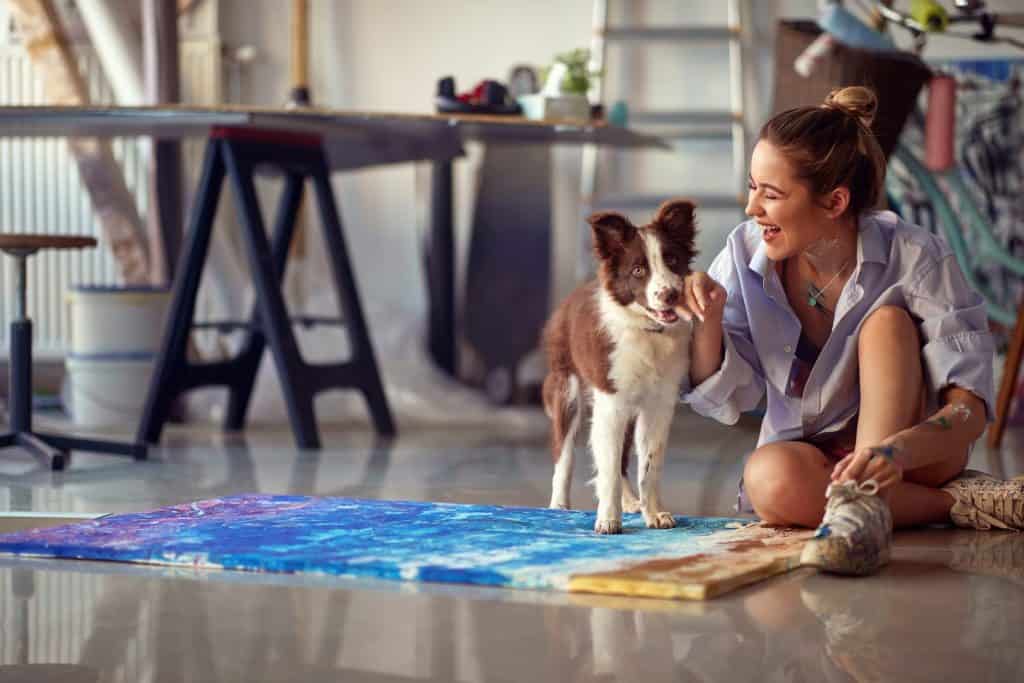
Art can be a fun activity with your furry friend.
©Lucky Business/Shutterstock.com
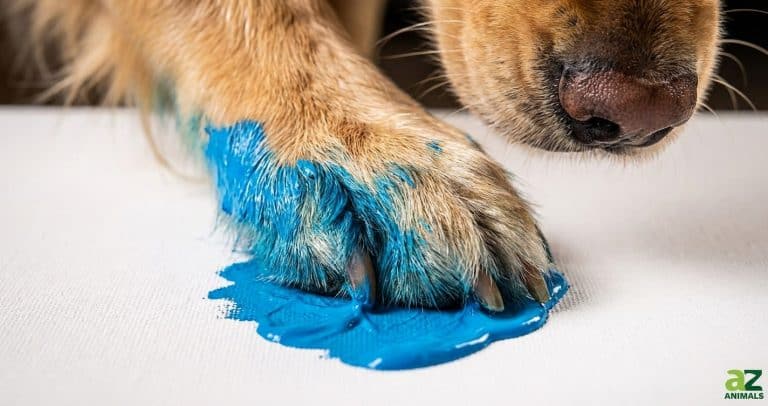
The projects themselves can be simple. Dogs can make abstract paintings by nudging a ball dipped in washable paint inside a sealed container or by stepping on paper with safe, colored paw prints. Cats may enjoy batting lightweight objects across inked paper placed under a clear surface. Birds can drag or peck at soft brushes attached to paper, while small animals like rabbits may create patterns by moving across textured surfaces. You can also let your pet crumple the painting or chew its edges to add authenticity to the animal-created artwork.
The goal isn’t control or polish. It’s capturing movement, interaction, and personality. The most successful pet art projects focus less on teaching animals to create art and more on providing them a safe space to express how they explore the world.
Rethinking Creativity Across Species
Animal-made art challenges assumptions about creativity. High-priced paintings by pigs, chimps, elephants, and horses begin as enrichment but grow into cultural symbols. Wild builders add further evidence that pattern and design matter beyond human society.
Whether these creations qualify as art remains open to debate. What feels clear is that animals think, choose, and interact with their environments in complex ways. Seeing creativity through this lens encourages respect and curiosity, and it invites people to consider intelligence and expression beyond their own species.