
Quick Take
- Ravens were historically linked to prophecy, battle outcomes, and divine insight due to their intelligence and scavenging behavior.
- Across cultures, from Norse gods to Arctic Indigenous myths, ravens are seen as creators, tricksters, and guides through life’s thresholds.
- Their reputation evolved over time, blending sacred wisdom, ominous symbolism, and modern cultural references like the Baltimore Ravens.
“Prophet!” said I, “thing of evil!—prophet still, if bird or devil!—
Whether Tempter sent, or whether tempest tossed thee here ashore,
Desolate yet all undaunted, on this desert land enchanted—
On this home by Horror haunted—tell me truly, I implore—”
-Edgar Allan Poe, The Raven (1845)
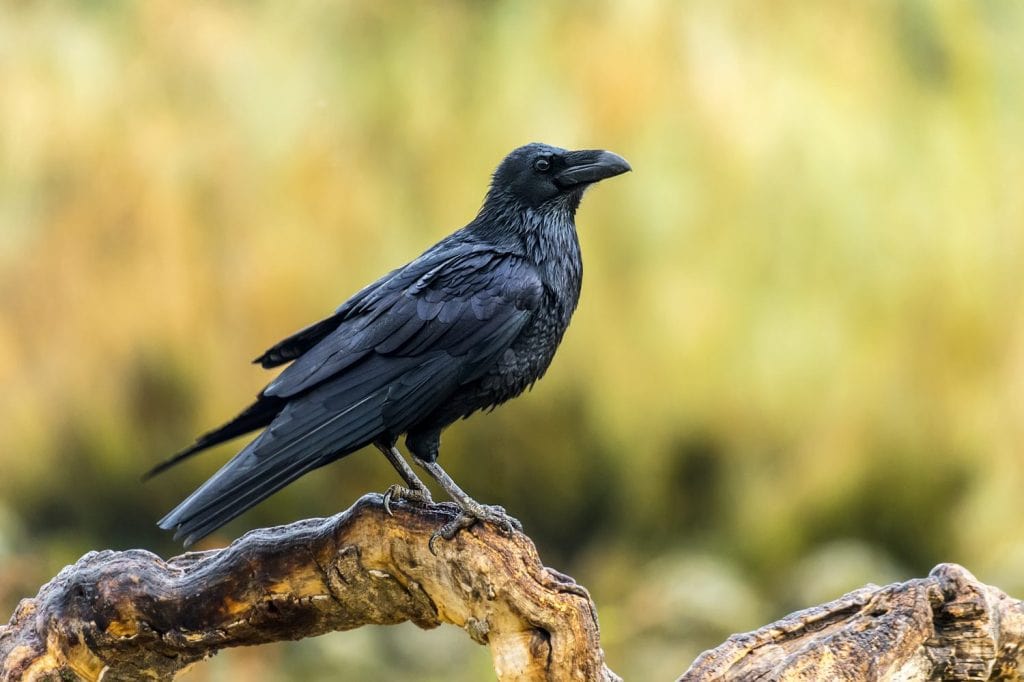
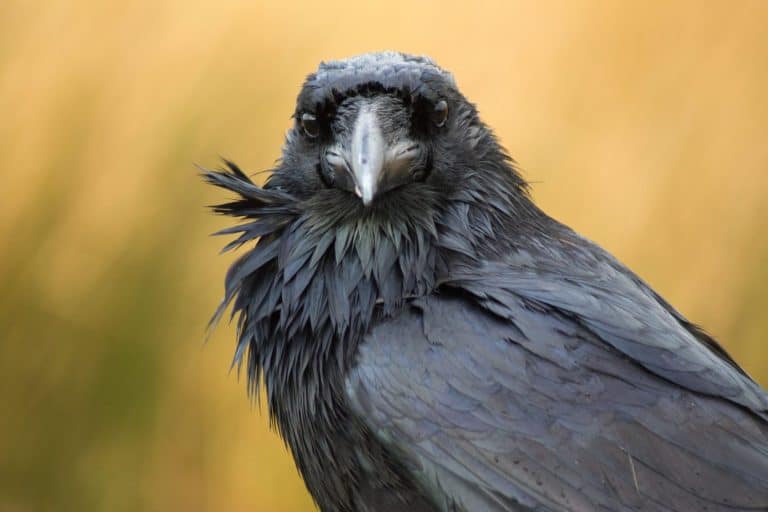
Ravens occupy liminal spaces, bridging myth and reality, life and death, guiding humans and symbolizing vision across cultures.
©fernando sanchez/Shutterstock.com
Across Europe and the Arctic, few animals carry as much symbolic weight as the raven. Large, intelligent, and almost impossibly black, ravens have long drawn human attention—sometimes awe, sometimes fear. Being scavengers, they were often associated with the dead, as they tended to appear where death had already occurred. But in many cultures, they weren’t dismissed as mere harbingers of doom. Ravens were seen as messengers of the gods, keepers of hidden knowledge, and guides between worlds. Their association with prophecy, warfare, and divine insight didn’t arise despite their scavenging habits, but partly because of them. To ancient peoples, the raven’s presence at moments of transformation—death, battle, and rebirth—made it sacred, not sinister.
The Undeniable Raven
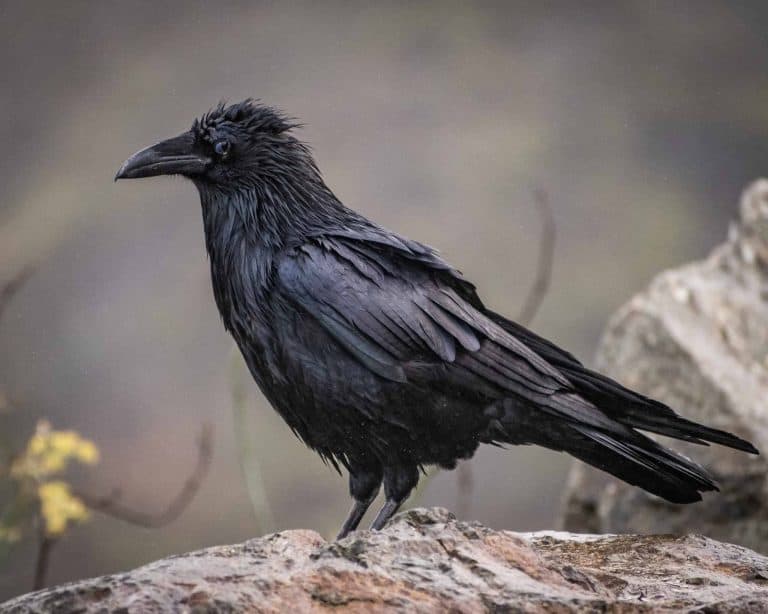
The common raven is one of the largest songbirds in the world, with a wingspan that can exceed four feet, which is the average height of a seven-year-old child. It is also among the most intelligent non-human animals known. Modern research shows ravens can solve complex problems, remember specific individuals for years, and demonstrate advanced problem-solving, long-term memory, and social awareness. They use tools, engage in play, and communicate with an impressive range of vocalizations.
But long before science documented these abilities, people had already noticed them. Ravens seemed watchful and deliberate. They followed hunters and armies, learned patterns of human behavior, and appeared to know where food—in their case: death—would be found. For societies without microscopes or behavioral experiments, such traits suggested more than mere animal instinct. Ravens were thought to be observers, perhaps even interpreters, of the world.
The Battlefield Bird
In Iron Age and early medieval Europe, ravens were closely associated with battlefields. This wasn’t mere superstition or symbolism; there were concrete reasons for this association. After a fight, ravens gathered quickly to feed on the dead. Their arrival could signal the outcome of a conflict to nearby townsfolk or travelers even before messengers arrived.
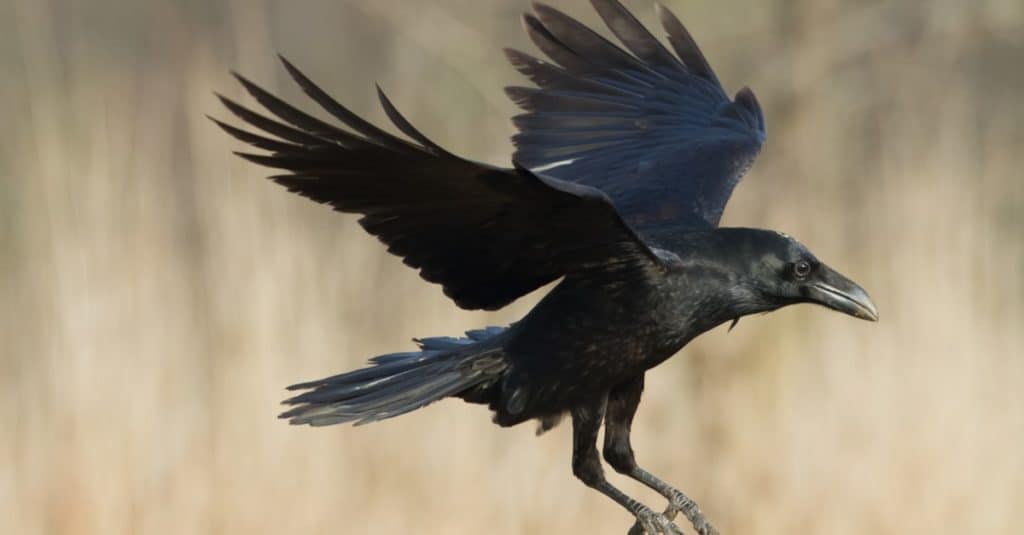
Vikings believed ravens could predict battle outcomes, and Odin’s Huginn and Muninn symbolized thought and memory.
©Marcin Perkowski/Shutterstock.com
In Norse culture, this connection was elevated to mythology. The god Odin was accompanied by two ravens, Huginn and Muninn—names usually translated as Thought and Memory. Each day, they flew across the world and returned to Odin, whispering what they had seen. Odin was a god of war, but also of wisdom, poetry, and prophecy. The ravens’ reports gave him knowledge of human affairs as well as the fate of battles.
Viking warriors carried raven banners into combat, believing the bird represented Odin’s favor. If the banner fluttered strongly, victory was expected; if it hung limp, defeat was anticipated. The raven embodied awareness—serving as an eye in the sky, observing the chaos of war and interpreting its meaning.
In Celtic traditions, the goddess Morrígan often appeared in the form of a raven or crow, hovering over battlefields. She was linked to fate and sovereignty, deciding who would live and who would die. When she took the form of a raven, she was not simply feeding on corpses; she was declaring the outcome of war and marking the boundary between life and death.
Even in modern times, the raven’s association with battle and foreknowledge hasn’t entirely faded. When Baltimore’s NFL team adopted the name Ravens in the 1990s, it drew from the Poe poem rather than ancient myth. Football prizes intimidation, endurance, and strategic awareness—traits long projected onto ravens. The bird no longer circles fallen warriors, but it still serves as an emblem of watchfulness and fate in the competitive arena of football.
Prophecy and the Reading of Signs
Ancient cultures frequently practiced divination by observing animals, a system now known as augury. Birds were especially important because they moved between earth and sky. Ravens, with their intelligence and distinctive behavior, naturally became favored subjects for reading omens.
In classical Rome, ravens were considered birds of prophecy. Their calls, flight patterns, and timing were interpreted by augurs to guide political and military decisions. A raven appearing at the right moment could signal divine approval, while an unexpected cry could serve as a warning.
Greek mythology also contains prophetic ravens. One story tells of a raven originally white, sent by Apollo to watch over his lover. When the bird reported her betrayal, Apollo cursed it, turning its feathers black. While the tale explains the raven’s color, it also reinforces its role as a truth-teller, even when the truth brings destruction.
Scavengers at the Threshold
The idea of scavenging often carries negative connotations, but for many traditional societies, scavengers played a crucial ecological and spiritual role. Ravens removed carrion, limiting disease and returning nutrients to the land. They appear where death has occurred, but they don’t cause it. In fact, they transform it.
This placed ravens at a threshold—a liminal space between life and decay, body and spirit. In cultures deeply attuned to natural cycles, this wasn’t grotesque. Quite the opposite. It was sacred. Death was not an ending but a passage, and ravens were guides through that passage.
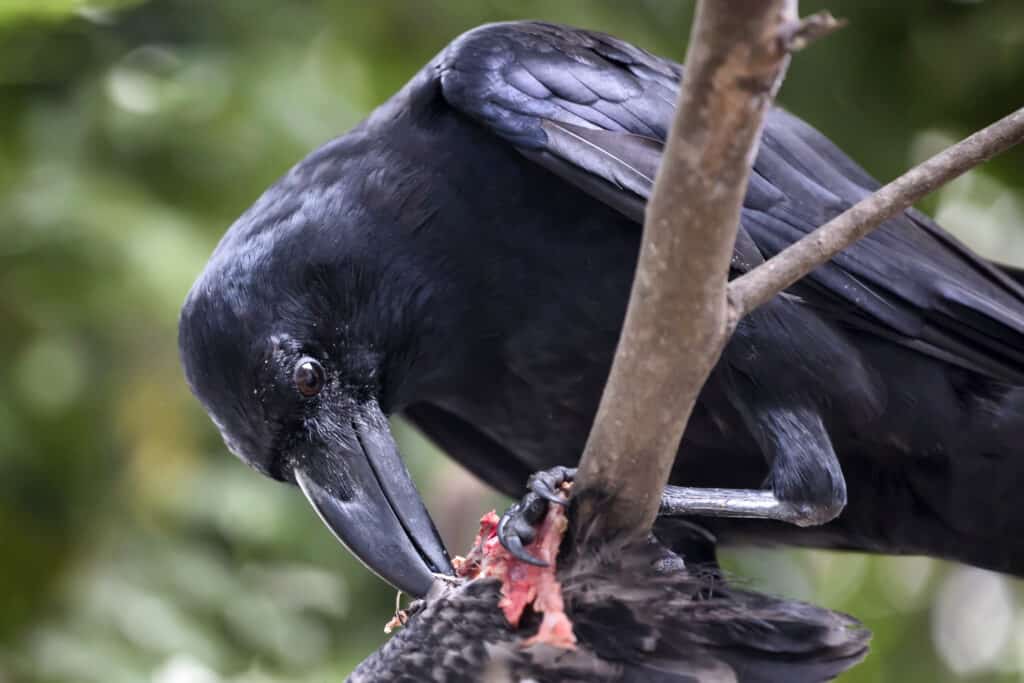
Ravens feed on carrion, appearing where death occurs, symbolizing the transformation between life, death, and survival.
©Raven eating carrion/Shutterstock.com
Among several Arctic Indigenous peoples, ravens occupy a central mythological role that goes far beyond death. In many Inuit and Northwest Coast traditions, Raven is a creator figure and trickster who operates at boundaries—between darkness and light, hunger and abundance, chaos and order. He brings light to the world, releases the sun, moon, and stars, and teaches humans essential lessons for survival. Greedy and flawed, yet clever and necessary, Raven embodies transformation rather than morality.
These stories likely arose through close observation. Ravens in the Arctic are year-round residents, surviving brutal winters alongside humans and often appearing at the margins of camps, hunts, and carcasses. By locating food, recycling remains, and thriving where few animals can, ravens visibly transform death and scarcity into continuity. To people living in extreme environments, the raven’s ability to survive at the edge of life and make survival possible appeared as wisdom bestowed by the cosmos itself.
Divine Insight and Memory
Ravens’ association with knowledge is one of their most consistent symbolic traits. Odin’s ravens did not simply spy; they remembered. Long before the invention of the printing press and the ubiquity of the written word, memory was sacred in oral cultures. History, law, and identity depended on accurate recall. A creature that seemed to remember landscapes, people, and events naturally became linked to wisdom.
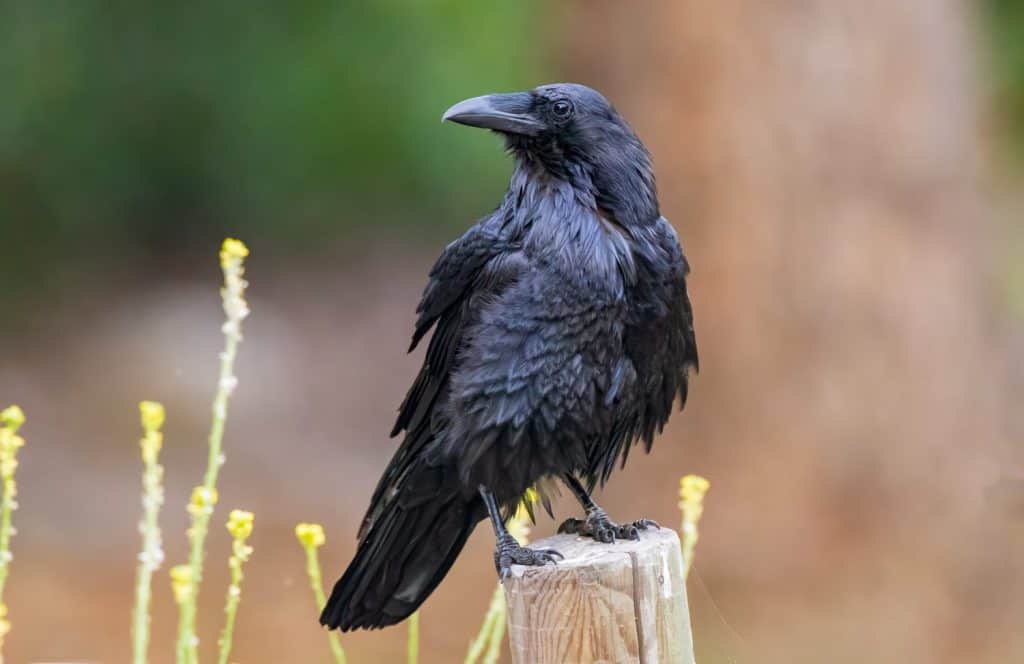
Ravens were valued in oral cultures for their perceived memory and wisdom, sometimes even feeding saints in the wilderness.
©Matt Krofcheck/Shutterstock.com
In medieval Europe, ravens were sometimes connected to monastic symbolism. While not universally positive, they could represent contemplation and solitude. Legends describe ravens feeding saints in the wilderness, echoing earlier biblical stories of ravens bringing food to the prophet Elijah. In these accounts, the raven is an instrument of divine provision, not malice.
This duality—both ominous and protective—helped ravens resist simple categorization. They were not evil birds. They were powerful ones. Power could be dangerous or benevolent, depending on context and respect.
From Sacred Bird to Dark Omen
It’s tempting to assume that black feathers and scavenging habits automatically led to fear. In reality, ravens earned their sacred status because they were reliable observers. They consistently appeared at significant moments: hunts, battles, deaths, and seasonal changes. They solved problems, remembered faces, and adapted to human presence with uncanny ease.
To pre-scientific societies, this level of intelligence bordered on the supernatural. Ravens seemed to know things before people did—where food would be, where death had occurred, which way fate was leaning. When a raven appeared, it felt meaningful.
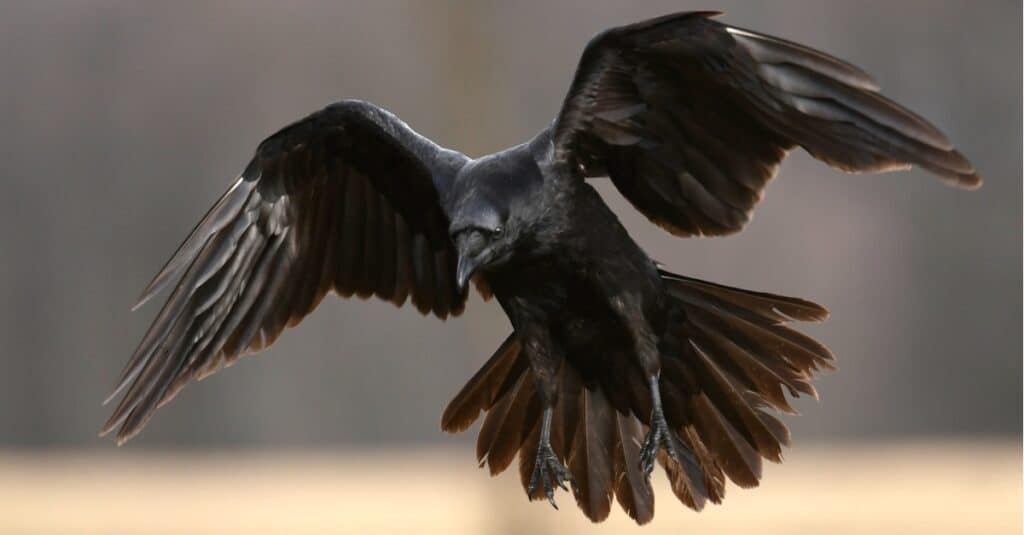
Over time, European societies linked black-feathered scavengers to sin, though folklore preserved their sacred and intelligent image.
©iStock.com/Piotr Krzeslak
Over time, especially in later Christian Europe, ravens’ symbolism shifted toward the negative. Associations with death became moralized. Blackness was increasingly linked with sin, and scavengers were seen as unclean. Ravens didn’t entirely lose their sacred status, but their darker reputation grew stronger.
Even so, the older layers haven’t disappeared. Ravens continued to appear in folklore as wise, ancient beings. In literature, from medieval poetry to modern fantasy, they remain messengers and watchers, not villains.
Perhaps counterintuitively, modern science has actually brought us closer to ancient perspectives. As researchers uncover the depth of raven intelligence—their ability to plan, empathize, and communicate—earlier cultures’ views of them as more than mere animals seem far more logical than superstitious.
Flying at the Edge
Ravens live comfortably at the edge of human worlds. They don’t fully belong to wilderness or civilization, life or death, myth or reality. That liminal existence made them ideal symbols for prophecy and divine insight. They occupied the spaces where transformation happens.
For the people of Europe and the Arctic, ravens were not sinister scavengers lurking in the shadows. They were interpreters of fate and companions of the gods. By watching ravens, humans learned to pay attention to death, to change, and to the unseen patterns shaping their lives. The raven’s reputation was never really about darkness. It was about vision.