
The mountain gorilla (Gorilla beringei beringei), a subspecies of the eastern gorilla, is an endangered species that only lives in the wild in two regions. There were once fewer than 500 individuals left on the planet. Fortunately, conservation efforts helped their numbers grow to over 1,000. As seen in the Nature on PBS YouTube video, scientists sent spy robot gorillas into the mountains to get a closer look at the behavior and habits of these fascinating apes. With the spy robot getting much closer than a human ever could, the researchers ended up with footage of gorillas “singing” while they happily munched on leaves.

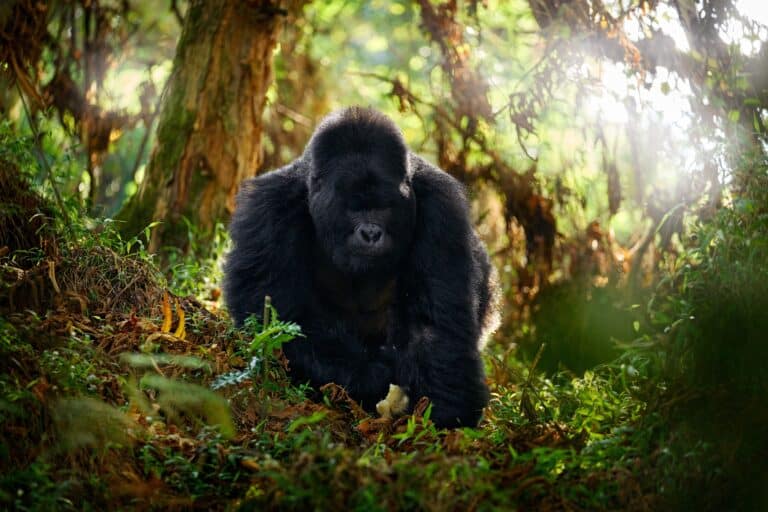
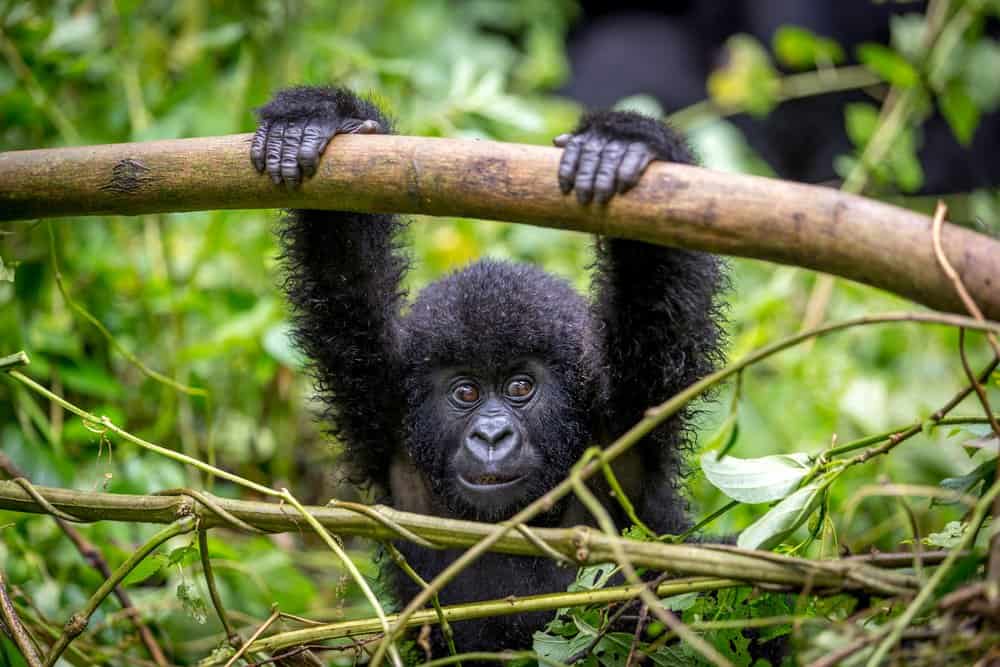
Mountain gorillas live at high elevations in the mountains.
©Martin Prochazkacz/Shutterstock.com
Where Do Mountain Gorillas Live?
As their name suggests, mountain gorillas live at high elevations deep in the forests of mountain ranges. Their range extends in Uganda’s Bwindi Impenetrable National Park and the Virunga Volcanoes. The Virunga Volcanoes stretch across Rwanda, Uganda, and the Democratic Republic of the Congo (DRC).
Thanks to conservation efforts, these intelligent primates, once thought to be nearly extinct, have made a comeback. Unfortunately, mountain gorillas still face many challenges. Some include losing their habitat to human development, getting caught in snares meant for wild antelopes, and the effects of climate change on their ecosystem.
How a Robot Gorilla Infiltrated the Troop
Filmmakers planted a lifelike animatronic gorilla spy within a troop in Uganda. The robot was built to appear like a young gorilla and was given movements that mimicked a gorilla’s behavior. The troop accepted the new robot member enough to engage in normal activity around the spy. The eyes of the robot were filming the entire encounter.

A robot spy went deep into the jungle to observe a troop of mountain gorillas in their natural habitat.
©Nature on PBS / YouTube
The key to a realistic robot that wouldn’t be rejected by the gorillas was designing a face that could display emotions. When the gorillas first spotted the spy, they marched over and looked directly into its eyes. This robot needed to have an expressive and detailed face for the gorillas to let it remain among them.
The Spy in the Wild series by PBS has used the same technology to infiltrate other animals, including orangutans, penguins, mountain lions, hippos, and bald eagles. Each animal robot requires something different to be accepted by the group. While gorillas need detailed faces, other animals may need to be more mobile or even have the same scent as the animals.
You can take a look at the gorillas singing on the YouTube Channel, Nature on PBS, from the Spy in the Wild Series. Philip Dalton, producer of the Spy in the Wild series, explained in a statement, “These animatronic robotic camera devices not only mimic the way that the animals look, but also how the animals behave.”
Gorillas Sing for Their Supper
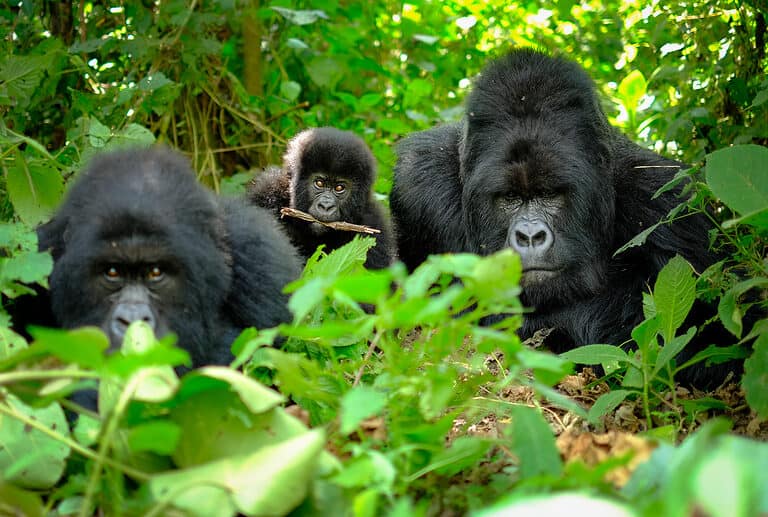
Footage from the spy shows the gorilla troop relaxing and munching on a meal of leaves. They eat a diet of mainly plants, including leaves, shoots, and stems. According to the narrator of the video, mountain gorillas eat around 40 pounds a day of plants.

Wild mountain gorillas were filmed humming and vocalizing happy tunes while they munched on leaves in the forest.
©Nature on PBS / YouTube
These gorillas vocalized as they ate. The narrator described their humming as a “chorus of appreciation.” However, in addition to vocalizing, the video points out that eating massive quantities of plants can result in quite a bit of flatulence as well, which was also caught on camera by the spy gorillas.
Wild Gorillas Sing Happy Songs During Meals
In 2016, scientists found that wild gorillas hum to themselves happy tunes while they eat. The researchers believed this was a way for the gorillas to show contentment with their food, and also to signal to the others that it’s time for dinner. The animals in the study were wild western lowland gorillas living in the Republic of the Congo.
The gorillas were observed both humming and singing. And it wasn’t the same tune every time. The researchers believe the gorillas compose “their little food songs.” Reports from zookeepers confirm that gorillas often sing or hum while they eat. Scientists believe these vocalizations during eating may help us to understand the origins of our own language.
Robot Spies Can Help Us Understand Animals in New Ways
Robot animal ambassadors can get far closer to animal groups without disturbing their natural behavior than any human ever could. By using animatronic robots, filmmakers are able to show wildlife in a more intimate way than documentaries of the past. Dalton said in a statement, “There are a lot of people that would not necessarily want to engage in a wildlife film, but when they see a robotic gorilla or robotic fruit bat filming in the wild, it definitely lures in a new type of audience.” This increasing awareness can be used to help educate and inspire conservation.