
Quick Take
- A chance encounter with a prehistoric fish pulled Attenborough out from behind the scenes, though it wasn't the discovery itself that launched his on-camera career. Trace his early career →
- During a 1979 filming expedition, a wild animal did something so unexpected that it became one of the most iconic moments in documentary history. See the gorilla encounter →
- Over 50 species carry his name, but one of them comes from a world that disappeared long before humans ever walked the earth. Explore species named after him →
- Attenborough's shift from wildlife wonder to climate alarm was not a creative choice. Something he witnessed firsthand forced his hand. See his climate pivot →
Few names are as synonymous with nature as Sir David Attenborough. Thanks to his innovative video storytelling and distinctive, hushed narrative style, he introduced generations of people to animals around the world.
From unexplored forests in remote South Pacific islands to soaring mountain peaks in the Himalaya to the lush jungles of the Amazon, he gave viewers a glimpse into worlds they might never otherwise see. He captured viewer imagination and kept their attention with stunning scenery and never-before-captured animal behaviors. Along the way, he shared knowledge that helped people better understand the natural world.
As he turns 100 years old, a look at his astounding career and accomplishments reveals a man whose passion for animals and nature has influenced his entire life.
A Seven-Decade Career Focused on Nature
Attenborough was born on May 8, 1926, in Isleworth, Middlesex, England. His interest in nature was fueled by bicycle rides he took in the countryside surrounding his home in Leicester. During his adventures, he’d collect treasures he found along the way. Fossils were always a prized find.
He’d bring them home to show his father, who encouraged his son’s curiosity. That encouragement became the foundation of Attenborough’s future career. As he told Smithsonian Magazine in 1981, “I’d find a fossil and show it to my father and he’d say ‘Good, good, tell me all about it.’ So I responded and became my own expert.”
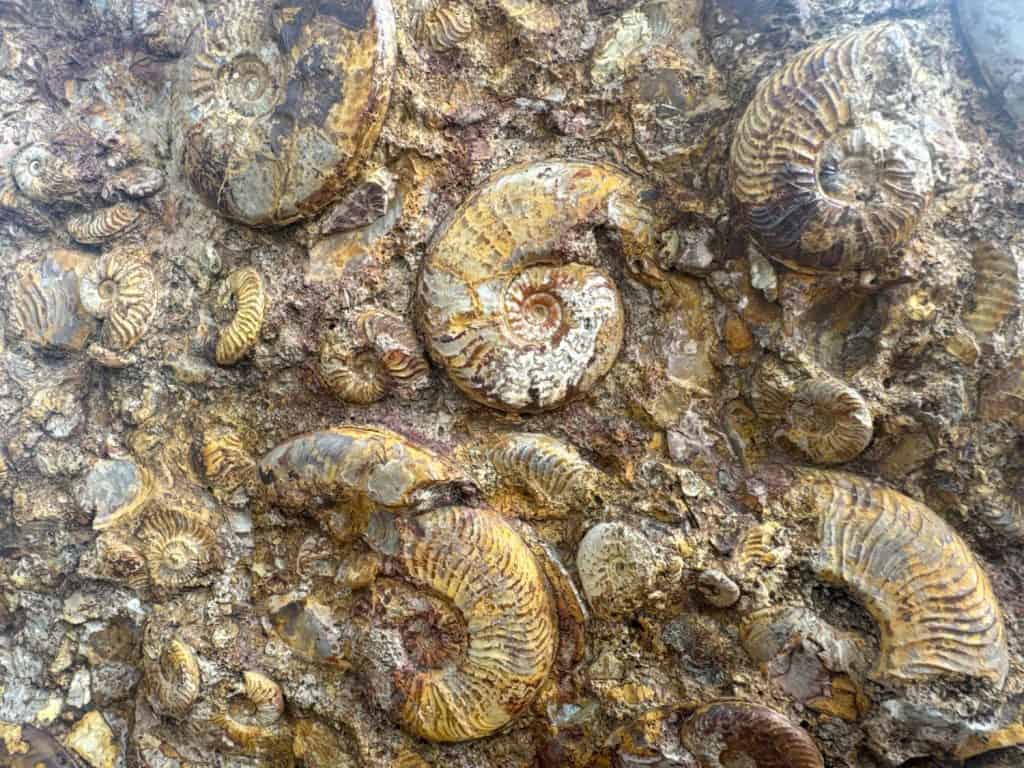
Fossils were Sir David Attenborough’s earliest inspiration to study nature.
©Tib-nature/Shutterstock.com
He studied geology and zoology at the University of Cambridge. After graduation, he joined the BBC in 1952, but he worked largely behind the scenes. It was a chance discovery of a fish off the coast of Africa that changed all that. Attenborough’s boss tasked him with producing a short piece about the coelacanth, a type of prehistoric fish scientists long believed was extinct.
The show aired, featuring Professor Julian Huxley, an evolutionary biologist, in a BBC studio. He explained the discovery using props such as preserved wildlife specimens and a photograph of the fish. Attenborough knew there were better ways to get viewers excited about the natural world.
He spent several years convincing his BBC bosses to pursue his idea for first-hand video filmed on location. In 1954, he was finally able to join a London Zoo expedition heading to West Africa. It was the start of his nine-year career hosting and producing “Zoo Quest.”
Attenborough went on to produce and narrate many other programs during his 70-plus-year career, including Life on Earth, The Blue Planet, the Planet Earth series, and more.
Animals, Accolades, and Awards
Attenborough’s storied career had many firsts. One of the highlights was when he encountered a group of mountain gorillas in 1979 while filming Life on Earth on the Rwanda-Zaire (now Congo) border. A remarkable scene was captured on camera when a young gorilla lay down across Attenborough’s chest. Several gorilla babies were seen playing with his shoes.
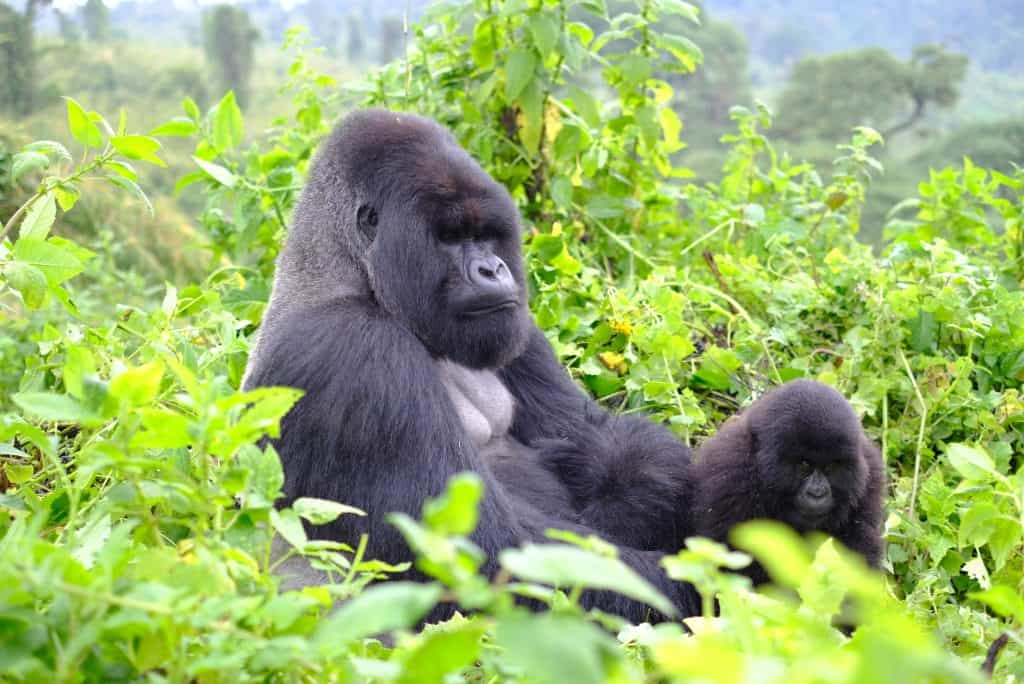
An encounter with gorillas while filming in Rwanda began Attenborough’s legacy as a nature documentarian.
©thisisnetnetnet/Shutterstock.com
His documentary work has earned him numerous awards and recognitions. Over the course of his career, he’s been honored by having more than 50 newly discovered species named after him, including the Attenborosaurus, an early Jurassic marine reptile. In 2022, he received the UN Champions of the Earth Lifetime Achievement Award, the highest environmental honor awarded by the United Nations. He received the Rothschild Medal in 2024 for his conservation work, and the PBS Beacon Award in 2025 for his contributions to conservation and natural history broadcasting.
Attenborough has been knighted twice, once by Queen Elizabeth II in 1985 and again by King Charles in 2022, recognizing his service to broadcasting and conservation.
Setting the Standard for Nature Storytelling
Attenborough’s unique narration style and emphasis on stunning videography set the bar for nature storytelling. His work was both engaging and informative, unlike studio-produced shows that felt more like a school science class.
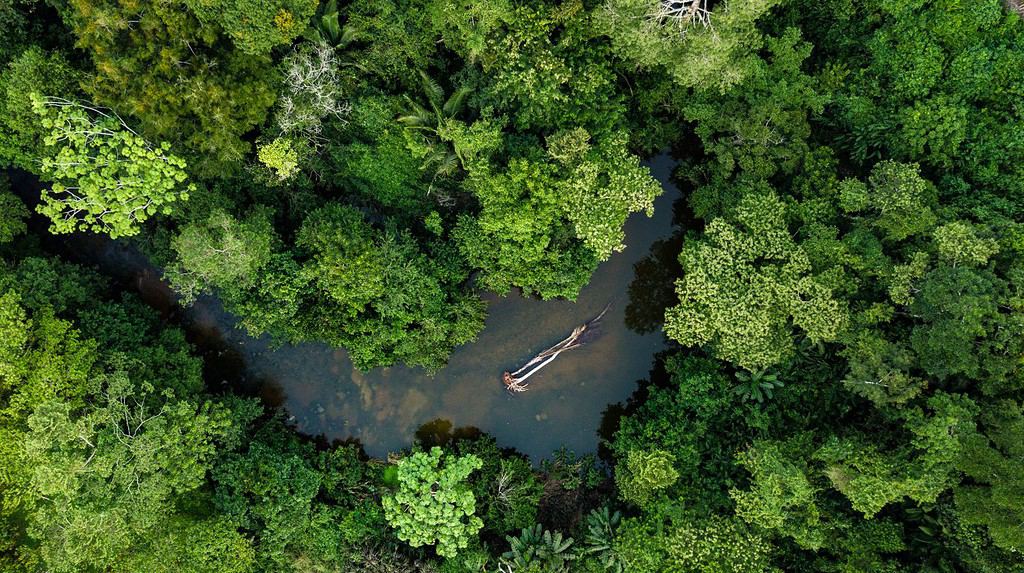
Attenborough transported viewers to faraway locations, like the Amazon rainforest.
©qualtaghvisuals/Shutterstock.com
His programs were about more than just beautiful scenery, though. Attenborough paid close attention to scientific accuracy in his narrations. This helped viewers learn about things like animal behavior, biodiversity, and evolution — topics they may never otherwise have explored or understood.
Generations of nature documentarians have adopted Attenborough’s style.
Sounding the Alarm on Climate Change
In the latter part of his career, Attenborough turned his attention to climate change and its impact on the natural world. In the course of his work, he witnessed first-hand the impact humans are having on the planet and its animals.
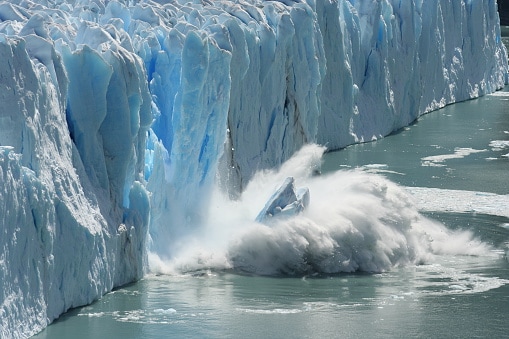
Attenborough pivoted to talking about climate change in his later career.
©Bernhard_Staehli/iStock via Getty Images
His concerns over the impact of rising global temperatures prompted him to produce Our Planet in 2019, Netflix’s first original nature documentary, which examines how climate change impacts all living creatures across the natural world. That was followed by other climate-focused productions, including Climate Change – The Facts and Extinction: The Facts.
One of his enduring legacies is the attention he brought to how climate change affects all living things on the planet.
Happy birthday, Sir David Attenborough!