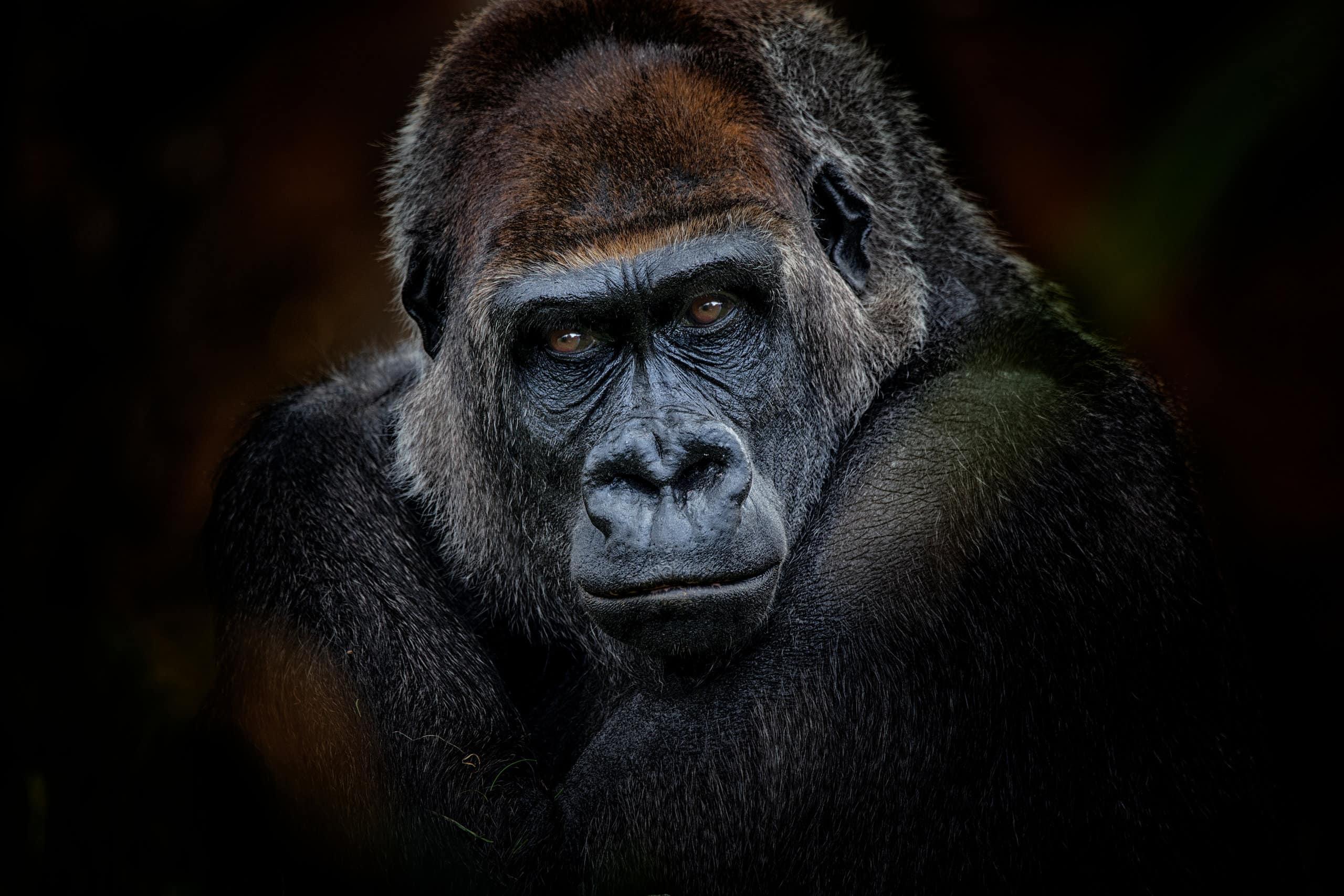

Gorillas are the gentle giants of the forests. Despite their impressive stature and intimidating looks, it is not widely known that gorillas are gentle giants. Consequently, gorillas continue to face declining populations as the apes are hunted for bushmeat, ancient medical recipes, or, sadly, trophies.
World Gorilla Day was established in 2017 as a way to bring awareness to the plight of gorillas. On September 24, this important day will be celebrated, helping to dispel myths about the large apes who are on the brink of extinction. As long as myths—such as gorillas being aggressive and willing to attack without provocation—are believed, hunting gorillas is not given a second thought. When their true, shy, and gentle nature is revealed, gorillas are seen for who they are: animals that have more in common with humans than just about any other species on the planet.
Gorillas Are Gentle and Shy
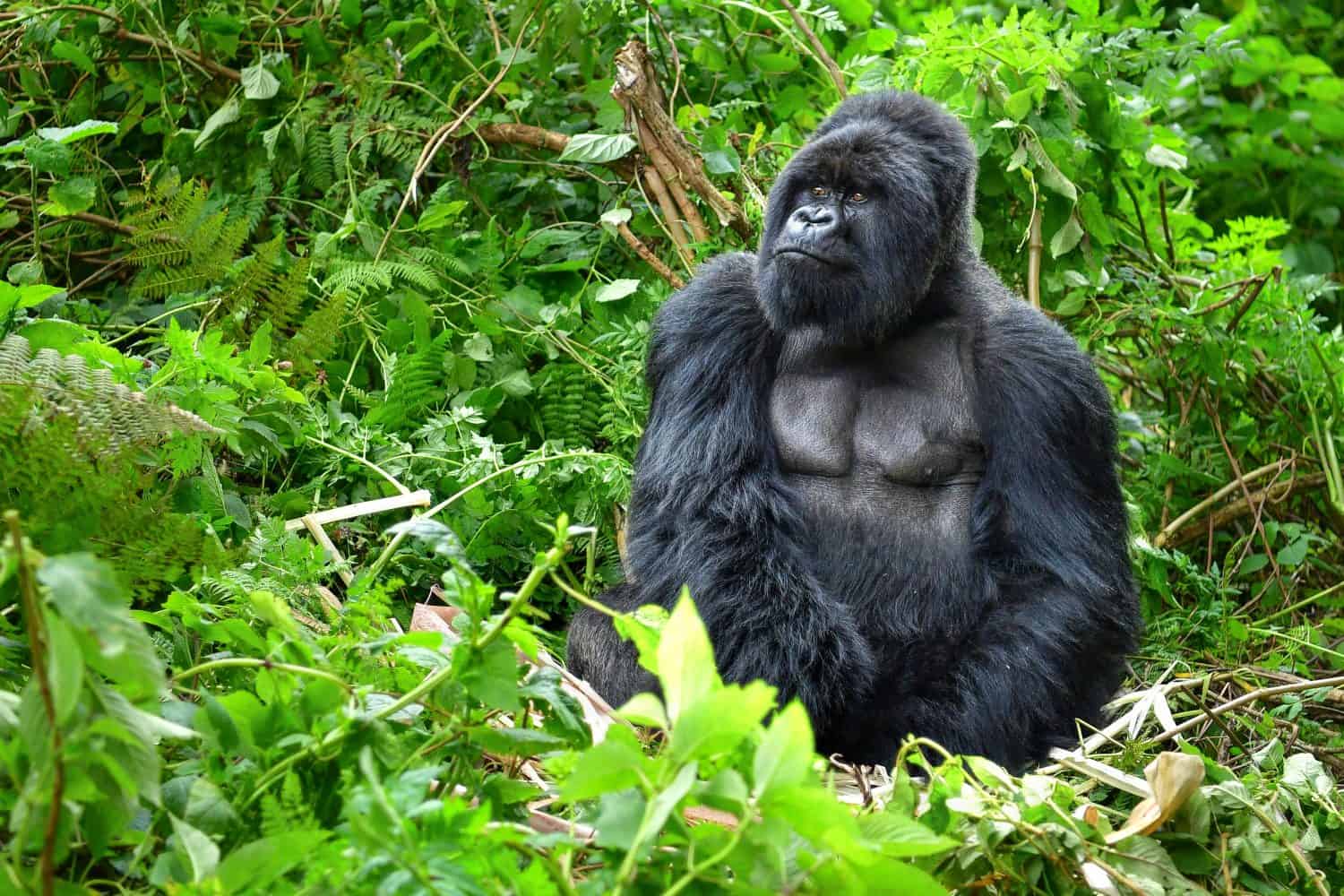
Gorillas are animals that spend their time eating and being social, rather than being aggressive toward one another or people.
©Onyx9/Shutterstock.com
More often than not, gorillas are characterized as being aggressive and fearsome animals. While gorillas, especially males, will not back down if there is a threat to their community, on the whole, gorillas are gentle and shy. Gorillas and people have 98.3% of their DNA in common. This means that gorillas are one of humans’ closest relatives. With so much DNA in common, gorillas feel emotions similarly to people. They are also extremely intelligent, showing the ability to adapt and make quick decisions.
Because of all of these traits, gorillas are not driven by anger and rage. Gorillas spend most of their lives with their families and communities, socializing, entertaining themselves, and eating nearly around the clock to maintain their massive size. Therefore, while gorillas may appear to be formidable animals—which they can be under certain circumstances—they prefer to keep to themselves and avoid conflict, spending their days grazing among their favorite vegetation.
Gorillas Spend Nearly Half Their Day Foraging
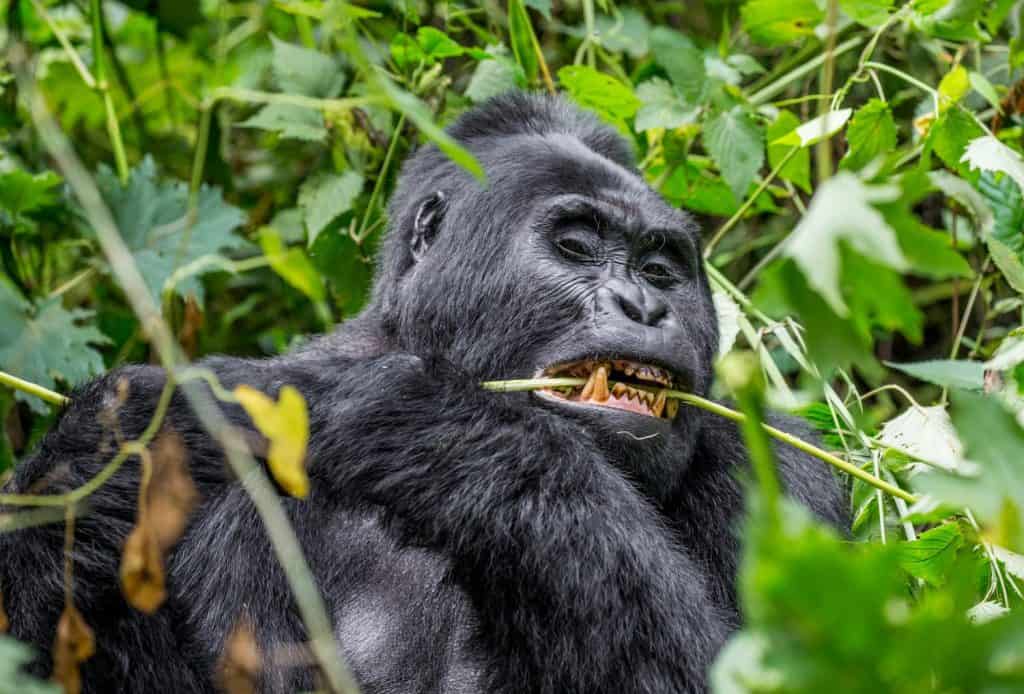
Gorillas will spend 50% of their days foraging for food, consisting mostly of plants.
©GUDKOV ANDREY/Shutterstock.com
With their massive canines, there is a large misconception that gorillas use their strength and teeth to hunt and eat large prey. But in reality, while gorillas are omnivores, they have a preference for a diet that is more vegetarian than not.
Each species of gorilla varies in the types of plants it consumes. This depends on the habitat the gorillas live in and the availability of plants that grow there. Therefore, the diets of different species of gorillas are as follows:
| Type Of Gorilla | Number of Plant Species Consumed | 104, an unknown percentage of the diet |
| Western Lowland Gorilla | 104, an unknown percentage of diet | Fruit, seeds, termites, caterpillars |
| Eastern Lowland Gorilla | 142, making up 96% of the diet | Fruit, ants, termites |
| Mountain Gorilla | 142, making up 96% of diet | Fruit, ants, snails, grubs |
| Cross River Gorilla | Unknown | Fruit, invertebrates |
Gorillas spend 50% of their days foraging for food. This happens from the time they wake up until they go to sleep. However, breaks will be taken during the day when the weather is too hot, when socializing, or when a rest is needed. Gorillas rest frequently, as they often travel long distances in search of the perfect plants to consume.
Fortunately, as gorillas travel long distances looking for food, they do not have to locate water sources. Thanks to their diet that is heavy in plants, they get adequate hydration. This leaves more time to socialize and create the strong family bonds gorillas are known for having.
Gorillas Have Strong Family Bonds
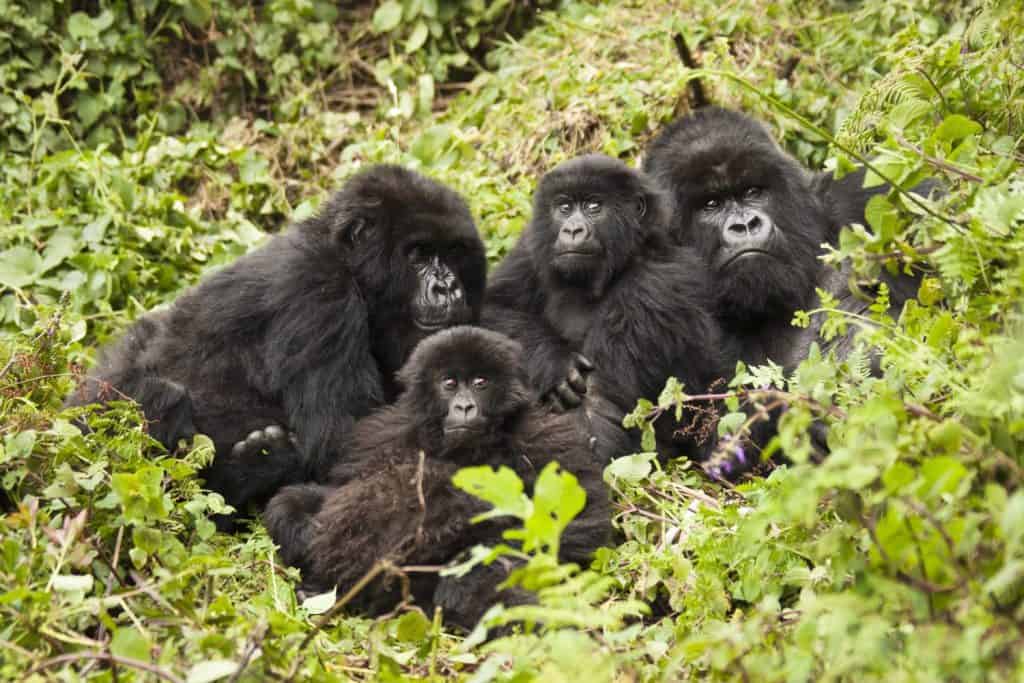
Gorillas live in groups of three to 30, depending on how long the group has been together.
©Mary Ann McDonald/Shutterstock.com
Gorillas are among the most social animals outside of humans. Not only do they enjoy being around one another, but without the social interaction and bonding, gorillas would not thrive. The size of the group that gorillas are a part of varies. However, for most, the group will range between three and 30 gorillas. The group, regardless of size, is hierarchical, with a silverback always in charge of the group, making decisions as to where to forage for food, where to live, and always keeping every member of the group safe.
In addition to the dominant silverback, the group may also include several adult females, subordinate silverbacks, juvenile gorillas, and infants. While many of these gorillas are related, others may not be. This generally occurs in larger groups, where a community of sorts is formed. In these cases, hierarchy still exists, but the members of the group are both family and long-time friends.
All members of the group, regardless of size, are under the responsibility of the dominant silverback. Therefore, if the silverback feels threatened, this is when the peaceful nature of the gorillas disappears, and a more aggressive side is revealed.
Gorillas Will Become Aggressive If They Feel Threatened
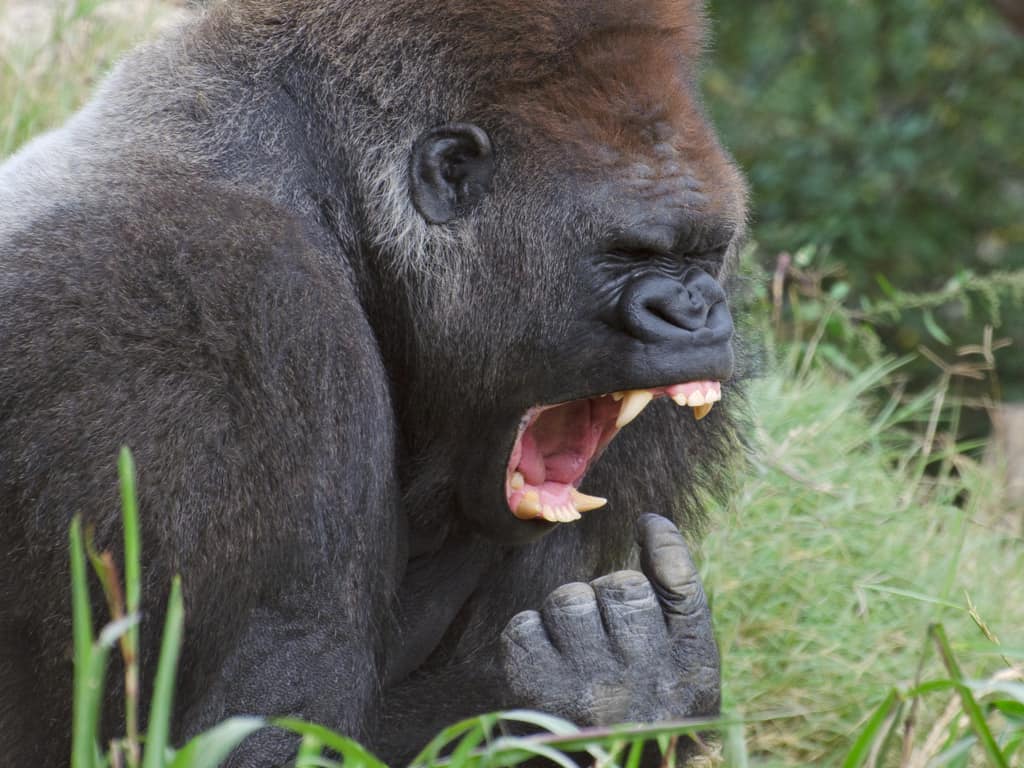
Gorillas will become aggressive if they feel their females, their territory, or themselves are under attack.
©BDMPhoto/Shutterstock.com
Like all gorillas, silverbacks are peaceful and shy the majority of the time. However, if they sense danger or there are issues within the group, silverbacks will exhibit aggression without hesitation, making it clear just who the dominant gorilla is. According to Jodi Carrigan, Curator of Primates at Zoo Atlanta, when silverback gorillas become aggressive, they show their feelings in a multitude of ways.
“Aggression typically takes the form of vocalizations, chest beating, charging, or even full contact,” Carrigan says. “Gorillas can show aggression when they feel they are threatened or under attack. They can also display aggression within their own social groups for reasons such as competition for resources, dominance or hierarchy, or even breaking up squabbles between group members.”
In addition to these reasons, Daniel Mfossa, a San Diego Zoo Wildlife Alliance-supported Stakeholder Mediator with the Cameroon Biodiversity Association, says that males attempting to mate with females of another community can lead to problems as well.
“Dominant male gorillas often attack other males who try to mate with females in their troop,” Mfossa tells A-Z Animals. “Gorillas become aggressive in the presence of threats or danger, including defending their territory or protecting their family members when they encounter another troop.”
Both Mfossa and Carrigan state that gorillas tend to be more aggressive toward other gorillas than they are toward people.
“Gorillas appear to be more aggressive toward other gorillas than they are toward humans, but the number of interactions—and caution from humans during the interaction—adds nuance,” Mfossa says. “The primary reason for aggression is to demonstrate dominance, often driven by competition for territory, food, or mates.”
Mfossa goes on to say, “Gorillas can usually sense when other gorillas are in the vicinity, and silverbacks will always be alert to the presence of other males. Actual physical altercations are avoided unless deemed necessary by the silverback.”
“Aggression typically occurs when a male is trying to take over a group from another male,” Carrigan states. “Aggression can also occur over food, resting spots, and dominance.”
Incredibly enough, despite fewer interactions with people than with gorillas, gorillas can learn to see people as non-threatening. However, this does not mean that interactions should be sought out; gorillas should be left to live their lives in peace.
Gorillas become aggressive in the presence of threats or danger, including defending their territory or protecting their family members when they encounter another troop.
Daniel Mfossa of the Cameroon Biodiversity Association
Gorillas Can Learn Not to Fear People
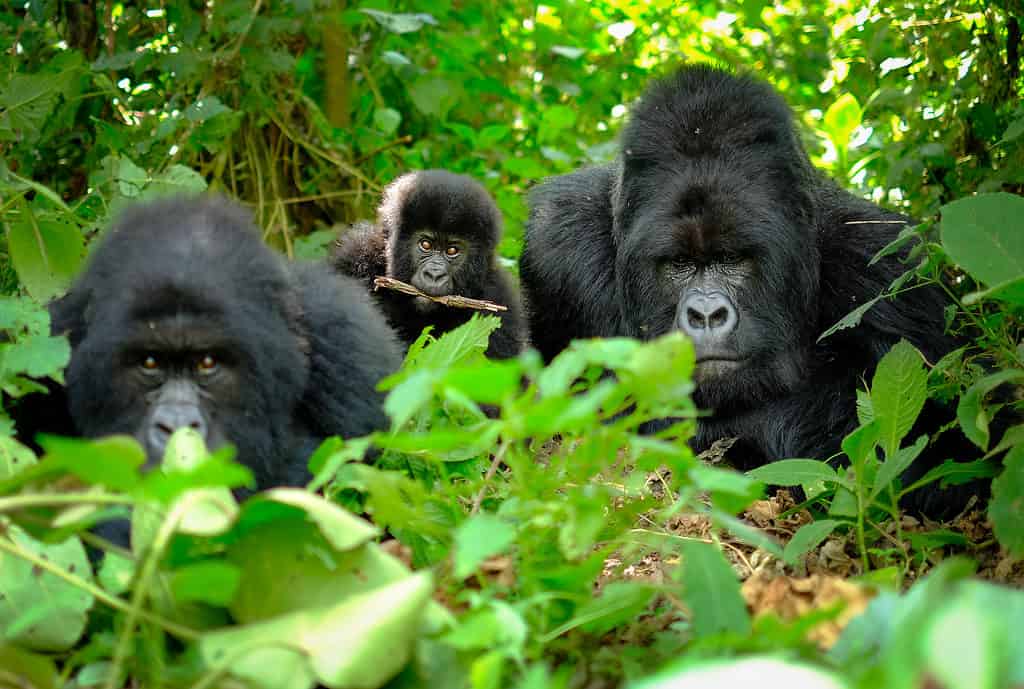
Gorillas that become habituated learn that humans are not a threat.
©Marian Galovic/Shutterstock.com
Gorillas that are not accustomed to being in the presence of people tend to be leery of them. But those who have spent time around people have learned to understand that people are not a threat. This is not an overnight process, however, and it takes time to get to this point.
“There are many gorillas in DR Congo, Rwanda, and Uganda who are habituated for tourism and research,” Carrigan explains. “Over time, these gorillas learn that humans are not a threat, but this habituation takes time.”
It can take years for the habituation process to take effect. During this time, the silverback must accept people coming into their habitat, or habituation will not be successful. Unfortunately, when habituation is successful, gorillas are less afraid of people. While this is a benefit from a research standpoint, it makes gorillas easier to hunt, and can even draw gorillas to local communities in search of food.
Just because gorillas have become habituated does not mean all people wandering into their habitat will be accepted. This is why, if in contact with a gorilla, it is necessary to come across as non-threatening as possible to keep altercations from occurring.
What to Do If You Encounter a Gorilla
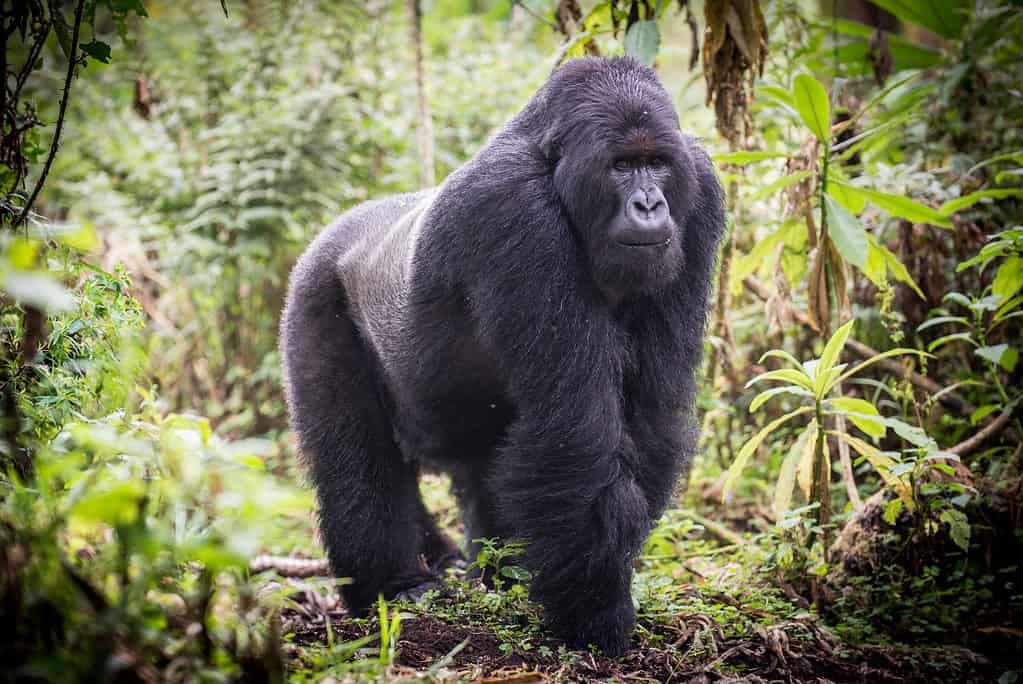
If contact is made with a gorilla, it is important not to make eye contact, run, or seem like a threat to the large ape.
©Jurgen Vogt/Shutterstock.com
Wild animals should always be given a wide berth so as not to upset or disturb them. Gorillas are no exception. However, if an accidental meeting occurs, there are ways to de-escalate the encounter without incident.
“If you encounter a gorilla in the wild, remain calm. Do not run, do not shout, do not panic,” Mfossa says. “Avoid eye contact and keep sight of the gorilla in your peripheral vision. Stay low to the ground so that you are not seen as physically threatening. As you slowly back away, seem extremely interested in something you’ve seen on the ground and pretend to eat leaves or grass, or gently scratch your head. If you’re in a group, stay together.”
According to Carrigan, gorillas have a tendency to make a big show but would prefer not to attack. However, it is impossible to know what the gorilla is thinking, which is why gorillas should never be approached.
“Never attempt to approach a gorilla. Do not run or go towards a gorilla,” Carrigan explains. “Most times, a gorilla will only display rather than make contact, but we would always discourage people from approaching gorillas.”
Gorillas are often given a bad rap for being aggressive animals. However, the reason why gorillas choose to attack is incredibly relatable, given that they do so to protect their loved ones. Given our nearly identical DNA, it would be reasonable to expect that gorillas would be better understood than they are.
Unfortunately, this is not the case. One of humankind’s closest DNA matches is critically endangered, primarily due to habitat loss, poaching, and disease. If this happens, the loss of one of Earth’s keystone species will be felt globally, with no species ever being able to replace the mighty but peaceful gorilla.