
September 1st is International Primate Day, a great opportunity to celebrate the incredible diversity of primates all around the world. Ranging from tiny pygmy marmosets to massive gorillas, primates are our closest relatives. They are highly intelligent creatures, playing a vital role in keeping their ecosystems healthy.
Sadly, many primates are in danger of disappearing forever. They face serious threats like the destruction of their forest homes, unlawful hunting, and the illegal wildlife trade. This list highlights some of the world’s most endangered and rare primates, detailing their unique traits and the critical conservation efforts needed to save them from extinction.
Brown Spider Monkey (Ateles hybridus)
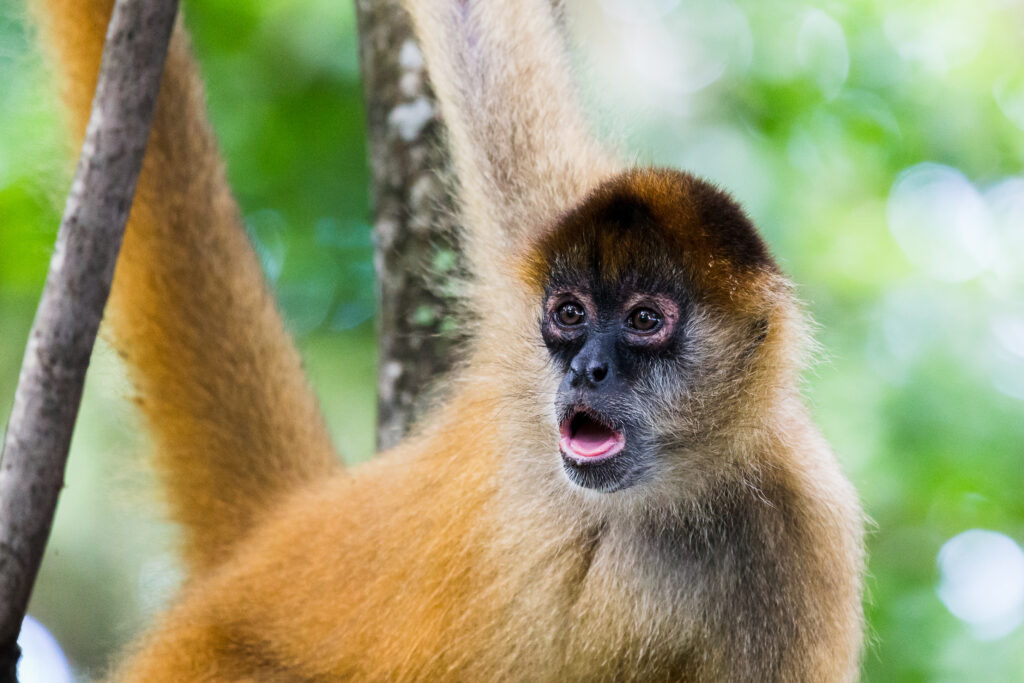
Spider monkeys are one of the most intelligent primates.
©Jason Wells/Shutterstock.com
The brown spider monkey, or the variegated spider monkey, has a coat with subtle color variations, which range from light to dark brown. Found only in Colombia and Venezuela, these large primates weigh 16 to 22 pounds and have long, slender arms and legs. Their incredibly flexible, 30-inch-long tail allows them to grip branches as they navigate through the forest canopy. Unfortunately, brown spider monkeys are critically endangered. The International Union for Conservation of Nature (IUCN) predicts that in just 45 years, its population could decrease by more than 80 percent. Humans are destroying their forest habitats at an alarming rate for logging, roads, cattle ranches, and agriculture. People also hunt them for meat and traditional medicine, and poachers capture the monkeys for the illegal pet trade.
The Primates Project Foundation in Colombia is working to save brown spider monkeys from extinction. In 2018, the foundation reconnected isolated forest patches by creating six new forest corridors with 12,000 plants grown in forest nurseries. The project has also helped train new wildlife biologists and environmental engineers and hosted workshops to educate local communities on the importance of these animals.
Cotton-Top Tamarin (Sanguinus oedipus)
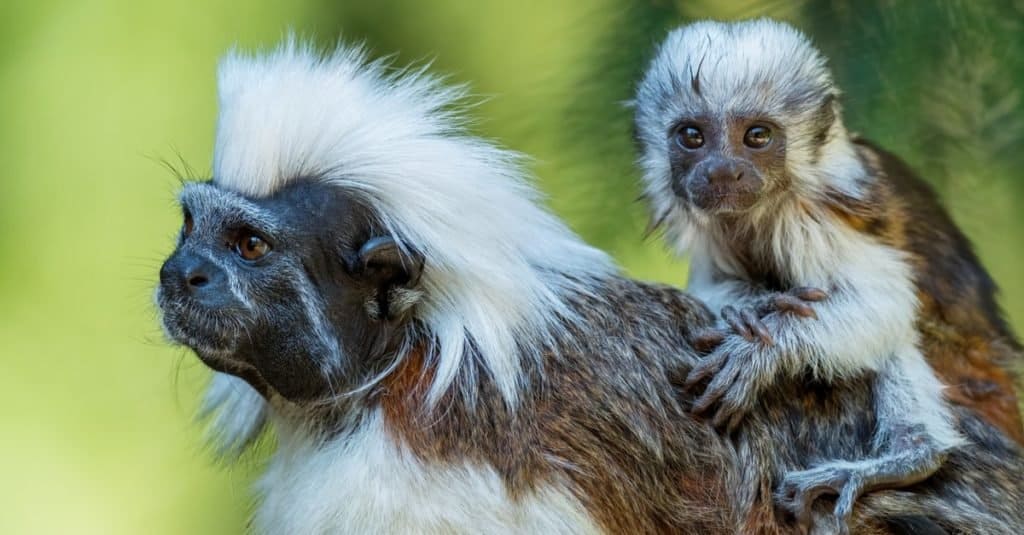
Cotton-top tamarins are social animals and typically live in troops of two to 10 family members.
©David Havel/Shutterstock.com
Native to the tropical forests of northwestern Colombia, the cotton-top tamarin is a tiny primate with an eye-catching crest of white hair. These critically endangered animals weigh less than a pound and are only 7 to 9 inches long. There are fewer than 74,000 cotton-top tamarins left in the wild, and their numbers are falling. With at least two-thirds of their forest habitat already destroyed, these rare primates struggle to survive. Their high metabolism means they must eat often, but fragmented forests make it difficult for them to find enough food and suitable places to live.
The Colombian-based Proyecto Tití Foundation is working to save the cotton-top tamarin by protecting and restoring its habitat. The foundation partners with local landowners and communities to reconnect fragmented forests and replant native trees. It also educates the public and helps local communities to find alternative ways to earn a living that don’t rely on exploiting forest resources. Additionally, the foundation conducts important research to monitor wild populations and collects data to shape national conservation policies.
Hainan Black Crested Gibbon (Nomascus hainanus)

Hainan black crested gibbons are endemic to Hainan Island.
©Camera trap photographs taken by Kadoorie Farm and Botanic Garden / CC BY 4.0 / Wikimedia Commons – Original / License
The Hainan black crested gibbon is an incredibly rare primate and one of the world’s most critically endangered mammals. These special animals once lived across half of China. However, they were pushed to the brink of extinction by human activity, poaching, and habitat loss. By the late 1970s, their numbers had plummeted from an estimated 2,000 to just 10 individuals.
The Hainan Bawangling National Nature Reserve was established in 1980 to protect the gibbons’ last remaining habitat on Hainan Island. In 2000, a government program began helping local woodcutters transition to roles as forest rangers, creating a mutually beneficial relationship between the local community and conservation efforts. The Hainan Institute of National Parks, founded in 2020, also provides a dedicated base for long-term conservation. The institute is exploring new technologies to track the gibbons. It is also partnering with local villages to build a collaborative approach to protecting the species. Conservationists are also working to restore the gibbons’ fragmented forest habitats by planting native trees and installing rope bridges to help the animals move safely between areas.
Despite this progress, the Hainan gibbon is still critically endangered, and there is much more that needs to be done to secure its future. As of 2025, there are around 42 Hainan gibbons in the wild, which is an increase from 37 individuals in 2022.
Golden Snub-Nosed Monkey (Rhinopithecus roxellana)
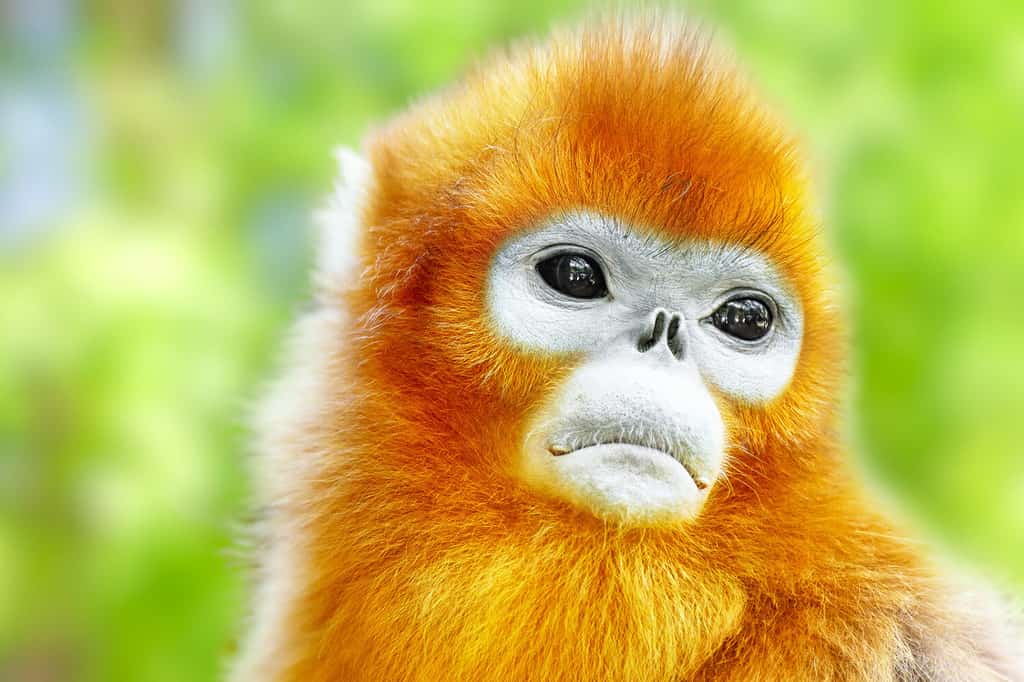
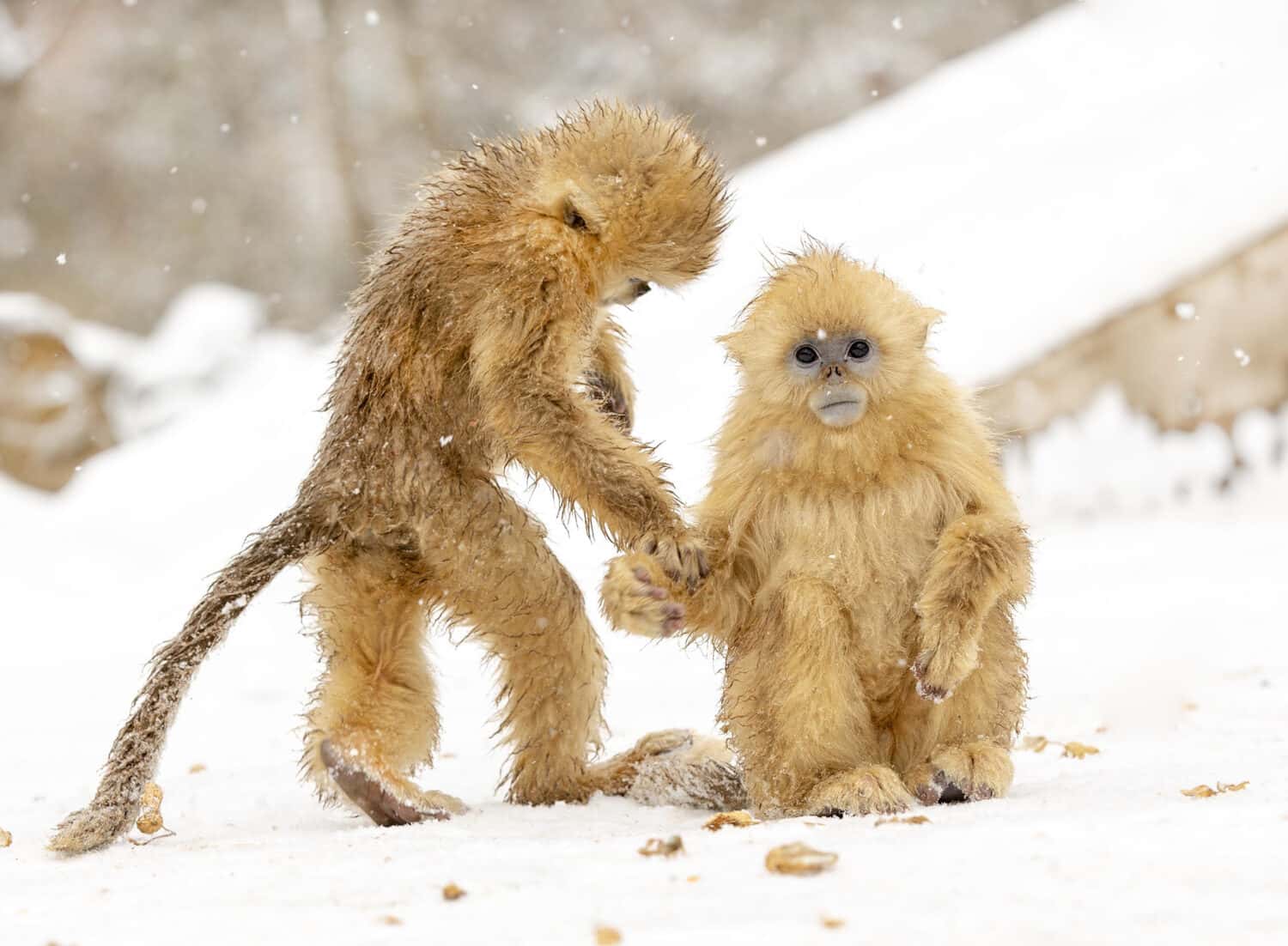
Golden snub-nosed monkeys can survive in colder climates than any other primate except for humans.
©V_E/Shutterstock.com
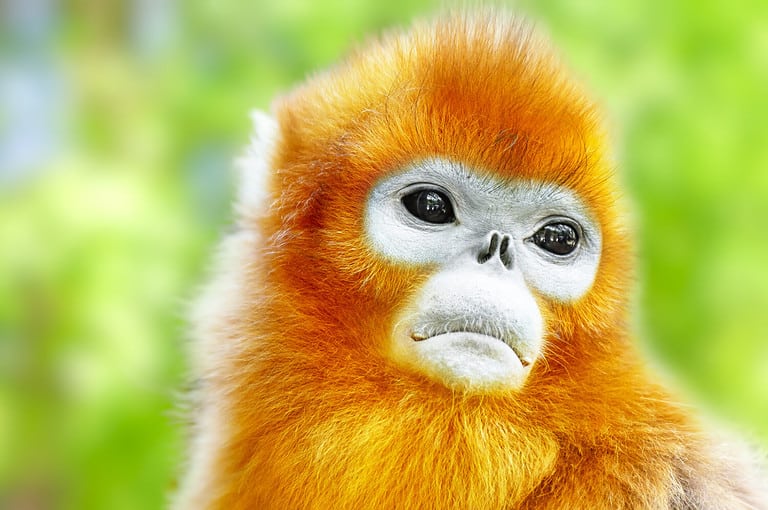
Known for their bold, contrasting colors and unique light-blue faces, golden snub-nosed monkeys are a rare primate species found only in the mountain forests of central China. They are remarkably adapted to their high-altitude environment, often enduring freezing temperatures as low as 17 degrees Farehneit. To survive these cold winters, their coats grow longer and thicker. Scientists also believe their distinctively “snubbed” noses may help protect against frostbite.
Sadly, golden snub-nosed monkeys face significant threats, including poaching for their meat, tourism, and habitat loss and fragmentation. These factors are driving the monkeys‘ populations into smaller regions and disrupting their natural behaviors and habitats. Fortunately, conservationists are working to protect the remaining population of 8,000 to 15,000 golden snub-nose monkeys. The Chinese government has established protected reserves and is working to raise awareness and educate the public. They are also restoring degraded forest areas and creating new urban parks and shelter systems.
Cao-Vit Gibbon (Nomascus nasutus)
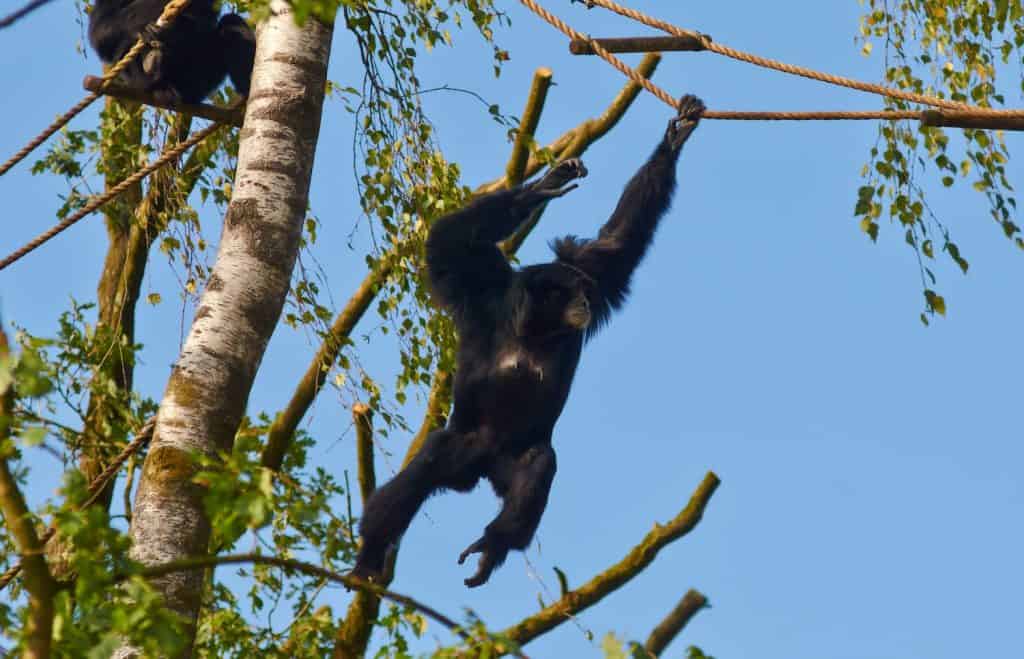
Female and male cao-vit gibbons sing together in unique duets.
©tatianaput/Shutterstock.com
Named for their unique and distinct “cow-veet” calls, cao-vit gibbons are incredibly fast and agile, swinging through trees at speeds of up to 35 miles per hour. Females have light, yellowish-brown fur with black faces. In contrast, males have dark brown or black hair with a small crest of hair on top of their heads.
Native to the forests of Southeast Asia, cao-vit gibbons were believed to be extinct in the 1960s. However, Fauna & Flora International (FFI) rediscovered these rare primates in 2002. While previous numbers estimated a rebound to 135, more recent estimates suggest only around 74 individuals remain, making Cao-Vit gibbons one of the most endangered primates on the planet. Hunting and habitat loss due to logging, wood harvesting, and livestock grazing threaten their future survival. However, they are a National First Class Protected Animal in China. In addition, FFI is continuing its efforts to protect these rare primates and their habitat by working with local communities to create patrol groups. Scientists are also exploring new monitoring methods, such as vocal fingerprinting, to better track the gibbon population.
Madame Berthe’s Mouse Lemur (Microcebus berthae)
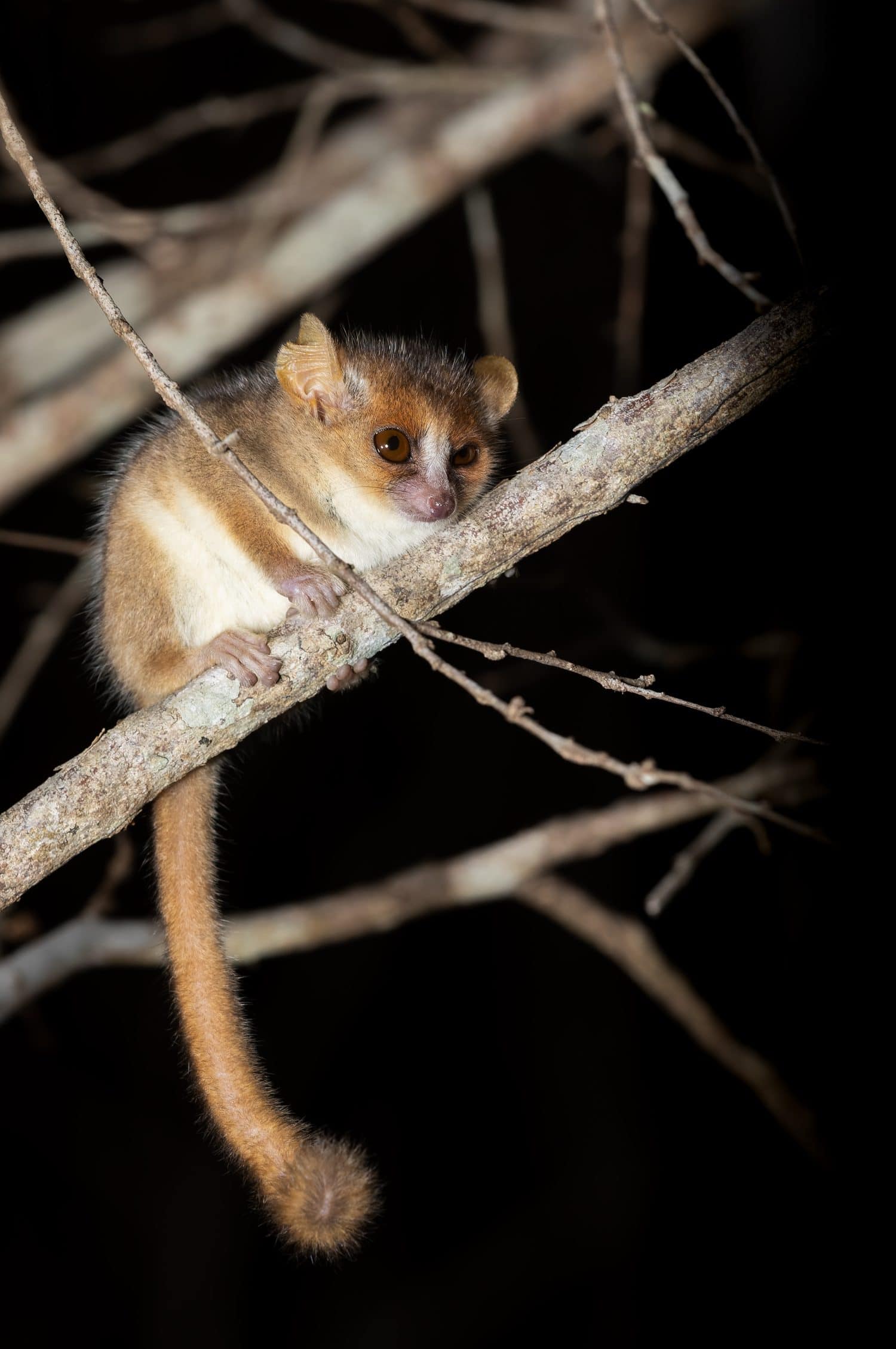
Madame Berthe’s mouse lemurs forage for tree gums and fruits at night.
©Artush/Shutterstock.com
Found only in western Madagascar, Madame Berthe’s mouse lemur is the smallest primate on Earth. These tiny animals measure just 4 to 5 inches long and weigh a little over an ounce — half as much as a regular chicken egg! With their long tails, big round eyes, and reddish-brown fur, they look a lot like a mouse. They also have a cream-colored belly and a dark stripe that runs down their back and tail.
Discovered in the 1990s, Berthe’s mouse lemurs are already critically endangered. They face a high risk of extinction due to habitat loss and fragmentation caused by illegal logging, tree harvesting, and slash-and-burn agriculture. Researchers believe the Kirindy Forest may now be home to the entire population. While this is a protected area, these protections are not well-enforced. Experts fear that if current threats continue, the forest and the lemurs could disappear within the next decade. In response to these threats, conservationists have started community patrols to help protect the forests. They have also launched educational programs for local communities.
Bornean Banded Langur (Presbytis chrysomelas)
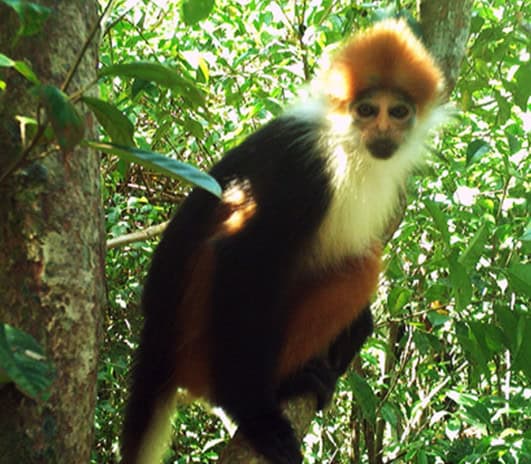
Wild populations of the Bornean banded langur are in a rapid decline.
©Ampeng et al. / CC BY-SA 4.0 / via Wikimedia Commons – Original / License
The Bornean banded languar — also known as the cross-marked languar or Sarawak surill — is a critically endangered primate found exclusively on the island of Borneo. Although these primates were common here in the past, their population has dropped by over 80 percent in the last 30 years. Today, they inhabit only five percent of their original range. Bornean banded langurs face severe threats from habitat loss due to human development, especially the expansion of palm oil plantations.
Forced into a handful of isolated areas, researchers estimate only 200 to 500 individuals remain, living across just five locations: the Samunsam Wildlife Sanctuary, and the Maludam, Gunung Pueh, Similajau, and Tanjung Datu National Parks. Unfortunately, even these protected habitats offer little security. The Pan Borneo highway expansion in 2018 severed the connection between the Samunsam Wildlife Sanctuary and Tanjung Datu National Park. To make matters worse, a new resort has been proposed for construction in the same area. This would further threaten the already fragile population.
Javan Slow Loris (Nycticebus javanicus)
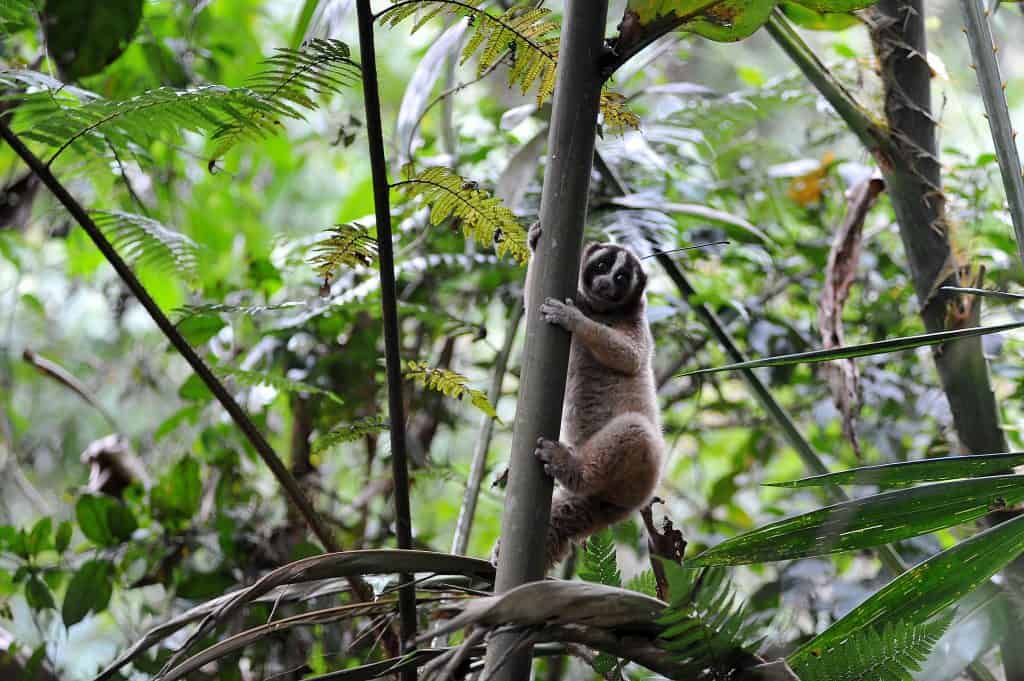
Although they cannot leap, Javan slow lorises are excellent climbers.
©Jefri Tarigan / CC BY-SA 4.0 / Wikimedia Commons – Original / License
The Javan slow loris may look cute with its plush fur coat and big, round eyes, but be wary — this venomous primate has a very nasty and toxic bite. When the loris licks the glands under its armpits, the oil mixes with its saliva to create a surprisingly potent venom. This toxic concoction enters the animal’s grooved teeth, allowing it to deliver a bite that can cause flesh to rot.
Found only in the central and western regions of Java, these rare nocturnal primates move slowly through the trees at night. Their population has crashed by at least 80 percent in the last 30 years due to hunting, extensive habitat loss, and fragmentation. Unfortunately, their slow movements and adorable appearance make them easy targets for the illegal pet trade. However, they cannot survive as pets and often suffer greatly before wasting away. Fortunately, conservationists sometimes rescue Javan slow lorises from the pet trade and take them to the YIARI Primate Rehabilitation Centre in Indonesia. The center has saved over 1,000 of these animals and released more than 670 back into the wild.
Tapanuli Orangutan (Pongo tapanuliensis)
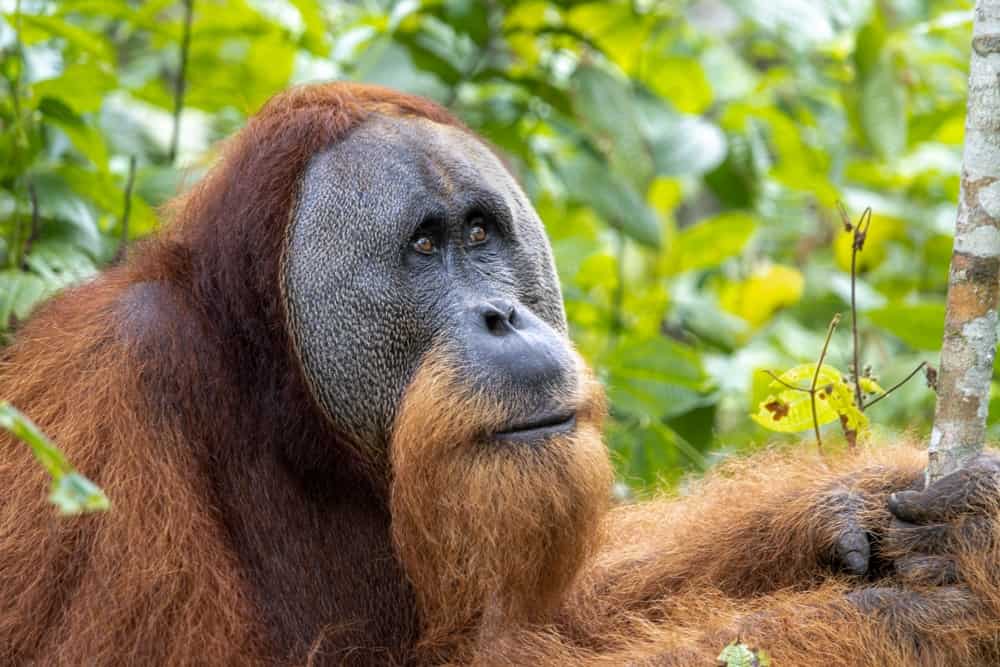
Experts believe that the Tapanuli orangutan now occupies only 3 percent of its original range.
©Wirestock Creators/Shutterstock.com
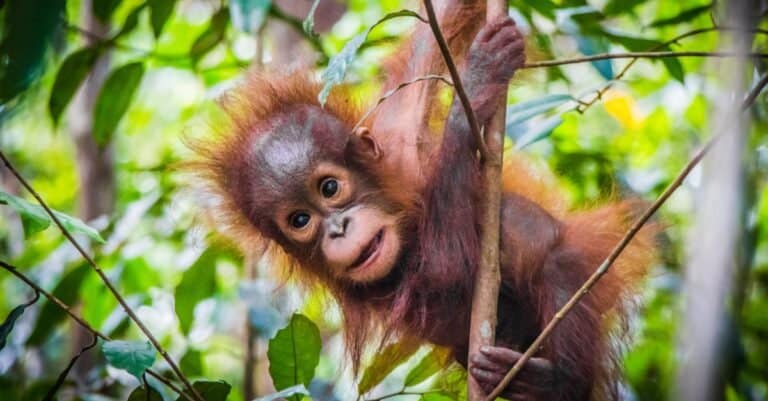
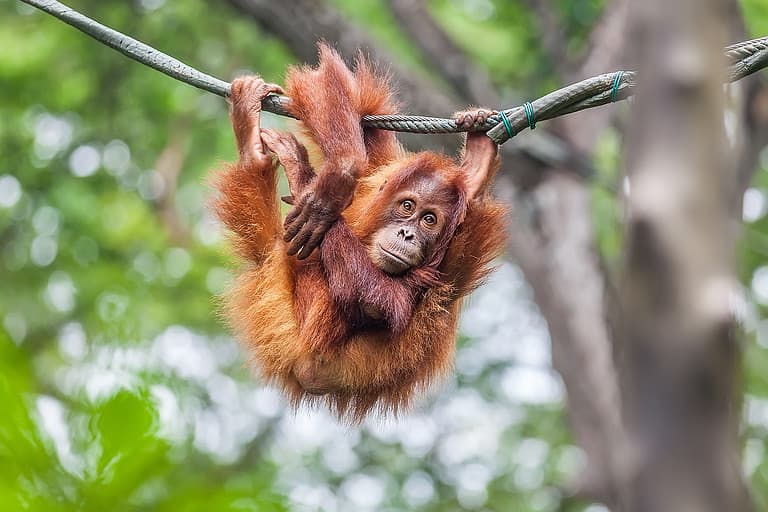
The Tapanuli orangutan, found exclusively in Sumatra’s Tapanuli region, is the most recently discovered of the three orangutan species, although it is actually the most ancient. Unfortunately, it is also the rarest great ape on Earth. With an estimated population of only 800 individuals, these rare primates are critically endangered. Habitat loss and fragmentation, illegal killings, and human encroachment have pushed them into just three percent of their original range. Forests are continually being destroyed for human settlements and palm oil plantations. Additionally, poachers kill orangutan mothers and sell their orphaned babies on the black market. Although there are official protections on some of their forest habitats, companies still have limited rights to mine, log, and develop the land. There are also plans to build a hydroelectric dam in the orangutan’s most densely populated habitat.
Thanks to conservation groups, many of the dam project’s financial backers withdrew their support, though it remains to be seen whether the project will be stopped entirely.
Gorilla (Gorilla)
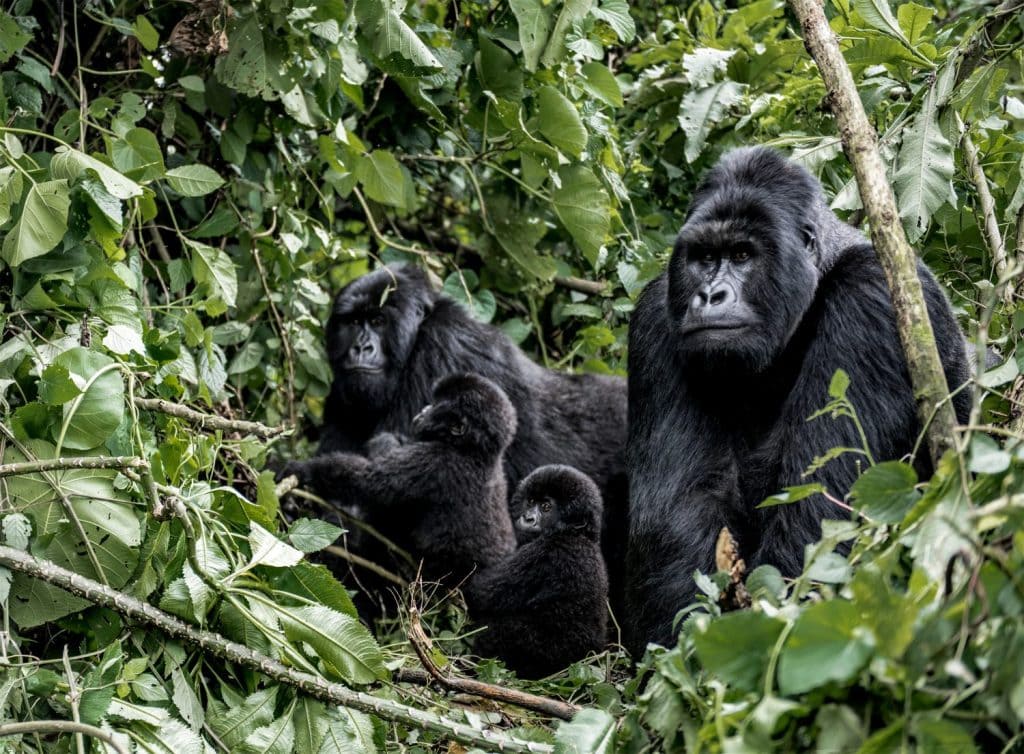
Gorillas can weigh up to 400 pounds.
©Eric Isselee/Shutterstock.com
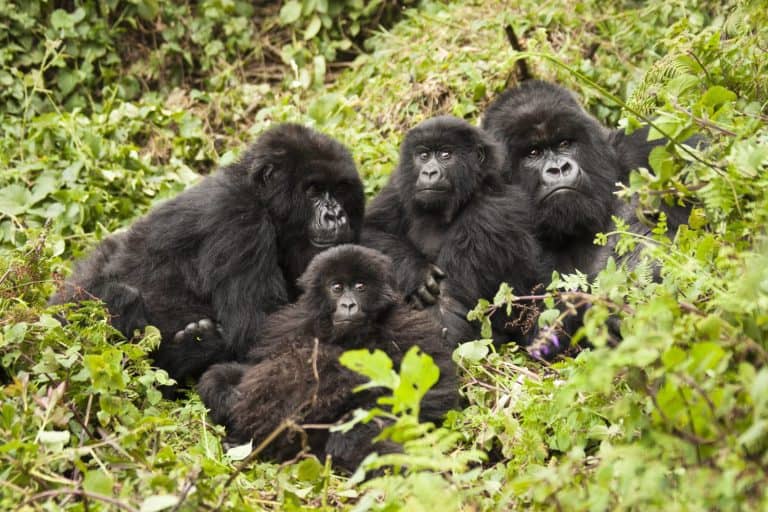
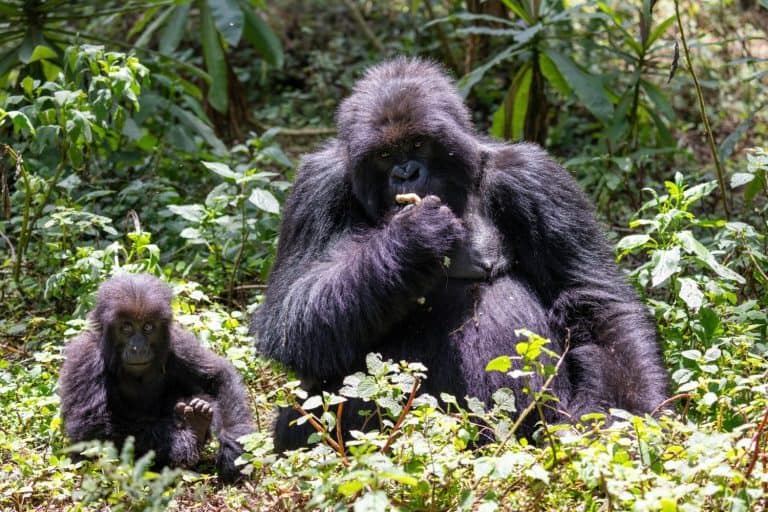
There are two main species of gorilla: the western gorilla and the eastern gorilla. Both are critically endangered.
Western gorillas consist of two subspecies: the western lowland gorilla (Gorilla gorilla gorilla) and the Cross River gorilla (Gorilla gorilla diehli). The western lowland gorilla has the largest population of all gorillas. There are an estimated 95,000 to 100,000 individuals in Central Africa. However, their numbers have dropped by over 60 percent due to poaching, habitat loss, and diseases like Ebola. In contrast, the Cross River gorilla is one of the rarest subspecies, with only 200 to 300 individuals remaining in Nigeria and Cameroon. Their small, fragmented population makes these rare primates vulnerable to inbreeding and low genetic diversity, in addition to the threats faced by all gorillas.
The eastern gorilla also has two subspecies: the eastern lowland gorilla (Gorilla beringei graueri) and the mountain gorilla (Gorilla beringei beringei). The eastern lowland gorilla, or Grauer’s gorilla, is the largest gorilla on Earth but has a population of fewer than 6,000 in the Democratic Republic of Congo. This is a massive decline of over 50 percent since the 1990s. The mountain gorilla, in contrast, lives only in the Virunga Mountains and Bwindi Impenetrable National Park. Here, they live in a very small area and face threats from human encroachment, hunting, and disease. However, mountain gorillas are also the only subspecies with a growing population, thanks to the combined efforts of many different conservation groups.
Yellow-Tailed Woolly Monkey (Lagothrix flavicauda)
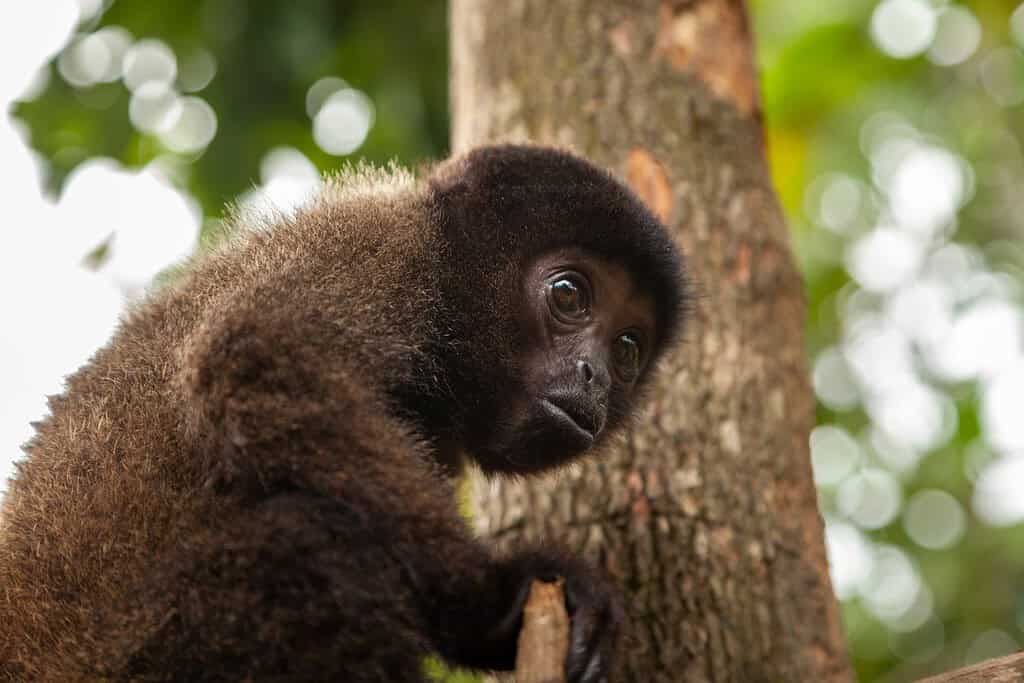
Yellow-tailed woolly monkeys live in a small area of cloud forest in northeastern Peru.
©alvarobueno/Shutterstock.com
The yellow-tailed woolly monkey is a large primate with thick mahogany-colored fur. It gets its name from its impressive prehensile tail, which can measure up to 26 inches long with yellow fur covering the last third. Yellow-tailed woolly monkeys are generally non-aggressive animals, preferring to use body language rather than physical conflict to show their displeasure.
Unfortunately, yellow-tailed woolly monkeys can only be found in a small, isolated region of the Peruvian Andes. They face many challenges, including habitat loss from deforestation and human expansion, and illegal hunting and capture for the pet trade. In addition, their fragmented habitat makes it difficult to find mates, and they have a low birth rate. Although some conservation efforts are helping protect some of their small habitat, more is needed, particularly from local communities. For example, in 2007, the local farming community in Yambrasbamba, Peru, voluntarily committed to cutting back on hunting and deforestation. Scientific surveys conducted in 2008 to 2009 and again in 2012 to 2013 showed a notable increase in the local monkey population, with a boom in the number of infants and juvenile monkeys.