
Quick Take
- Triops maintained evolutionary stasis for 300 million years and outlasted dinosaurs.
- These crustaceans will eat practically anything, including shrimp, potatoes, and lunch meat.
- Triops act as biological allies against West Nile Virus while simultaneously destroying California rice crops.
- Entering a 50-year suspended animation can be necessary for Triops to survive radiation levels and drought.
Sometimes, creatures are so strange-looking that they compel us to do a double-take. This Instagram video shows active, trilobite-like creatures grabbing earthworms in the water, riding them, and wrestling them down to the sand. In turn, more of these prehistoric crustaceans dive bomb the worms, resulting in a chaotic display.
This video shows triops as they feast on earthworms, one of their favorite meals. These creatures, ancient-looking and somewhat terrifying, are actually a small genus of crustaceans that belong to an order known as tadpole shrimps or shield shrimps. Often called living fossils for their uncanny resemblance to ancient fossils from the same genus, triops are fascinating animals that have existed for hundreds of millions of years. Smaller than your thumb but as vicious as a vulture, these ancient crustaceans have a voracious appetite to keep up with their intensive metabolism. Let’s learn more about these oddities and why earthworms are one of their favorite meals.
Shelling for Shrimp
Triops are one of those creatures that adhere to the “if it ain’t broke, don’t fix it” principle of evolution. Scientists estimate that triops split from the only other living genus of Notostraca between 150 and 230 million years ago. Even so, triops have remained practically unchanged for over 300 million years. That means they even outlasted the dinosaurs. Their name comes from the Greek words ‘tri’ (three) and ‘ops’ (eye).
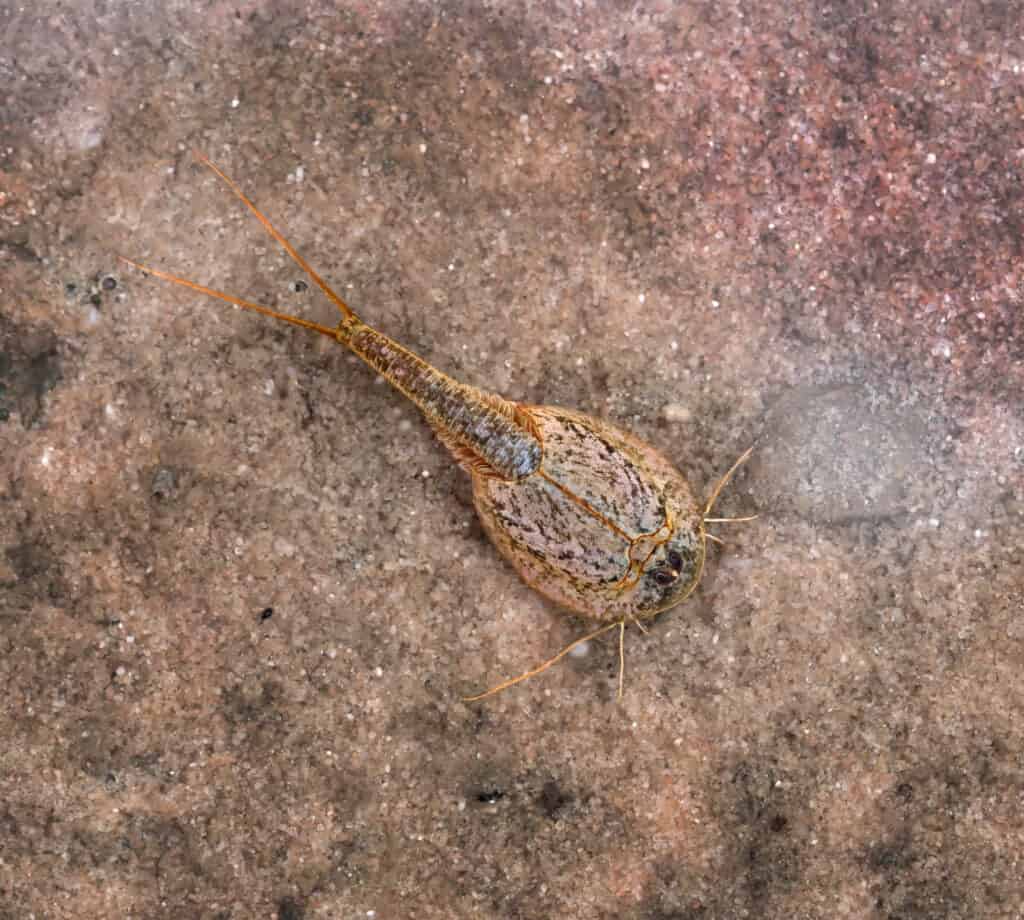
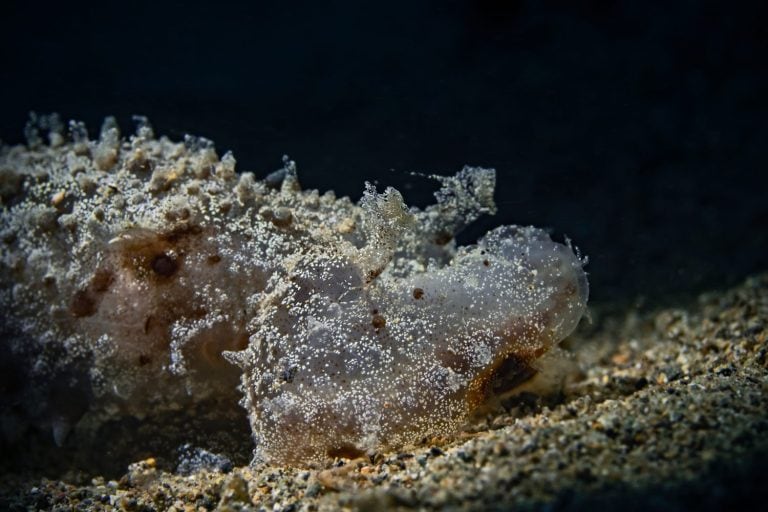
Triops look like miniature horseshoe crabs.
©IrinaK/Shutterstock.com
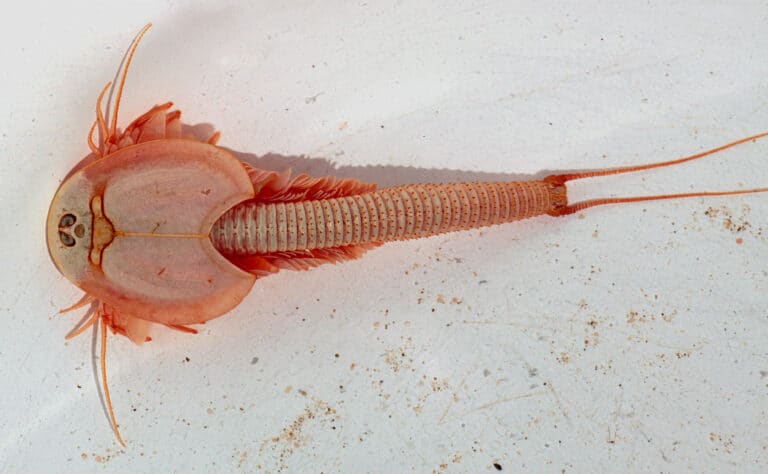
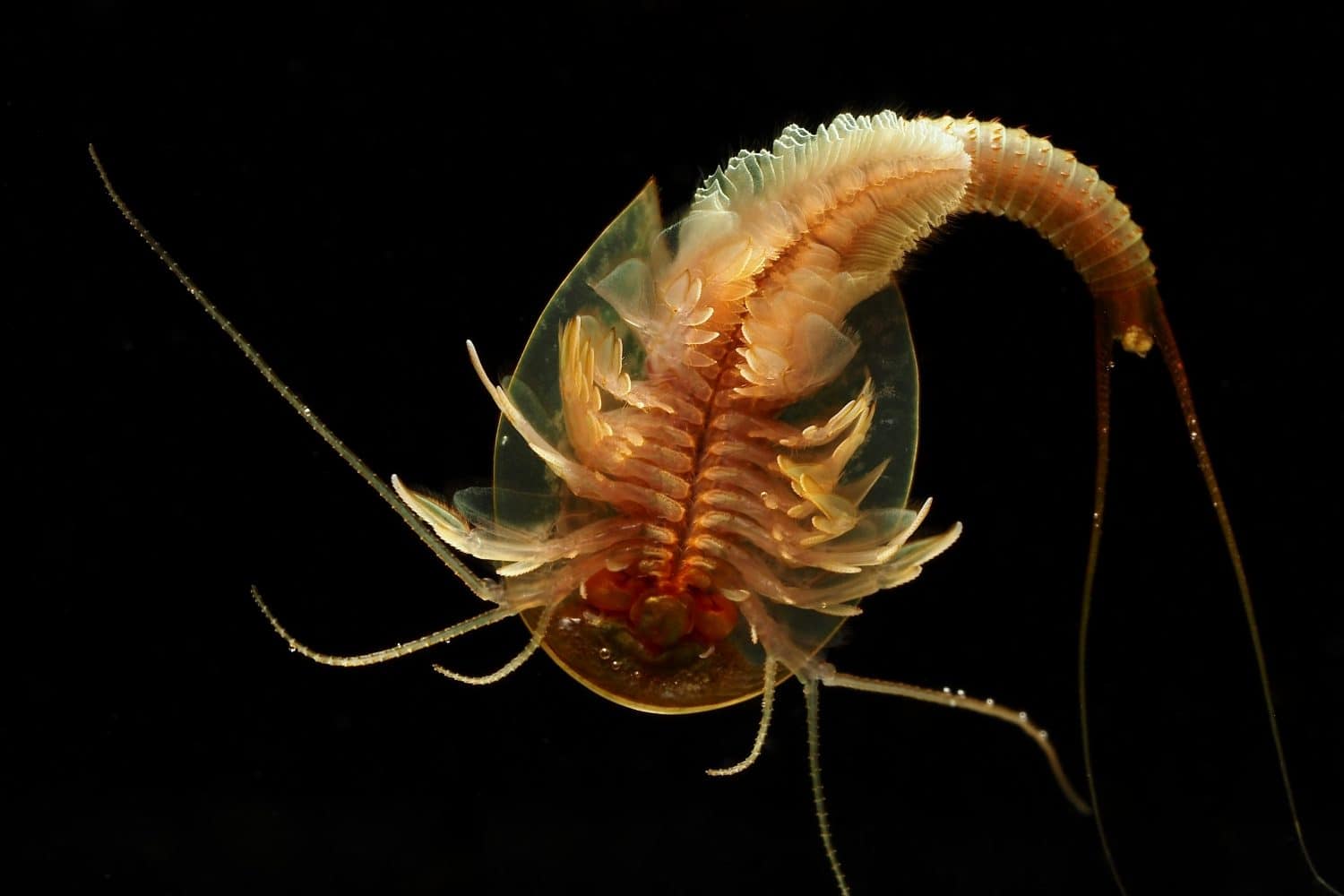
This name is due to their three eyes: two compound eyes on the top of their head that detect movement and basic shapes, and a simple, central “third eye” that senses light and helps them navigate murky water. Beyond that, triops look like miniature trilobites or horseshoe crabs. They have shield-like shells that cover the front half of their bodies, up to 140 legs that they use for swimming, digging, and even breathing via gills, and tails with two-pronged forks for stability.
Resilience
Once they hatch in shallow pools, triops grow quickly. So quickly, in fact, that triops often double in size each day, reaching maturity in less than two weeks. After that, they endure a surprisingly quick lifespan; triops typically live between 30 and 90 days, depending on the species (T. longicaudatus, T. cancriformis, T. australiensis) and water temperature. Despite these short lifespans, triops are incredibly resilient. These small crustaceans have lingered around since the Devonian period thanks to several adaptations. For one, their eggs can enter a state of suspended animation.
This ability allows them to dry out and remain inert for up to 50 years! The eggs or cysts can also survive drastic temperature changes and even high levels of radiation, only hatching once they are submerged in fresh rainwater. This has made Triops longicaudatus one of the most widely distributed notostracan crustaceans (Americas, Japan, Pacific Islands).
Triops has survived five mass extinction events, including the one that wiped out the dinosaurs. Fish tank owners have found a contemporary use for triops as peaceful “living fossil” ornaments. Triops, however, are not to be trifled with. As this Instagram video shows, their short lifespans and manic metabolisms make them opportunistic predators.
The Frenzy Factor
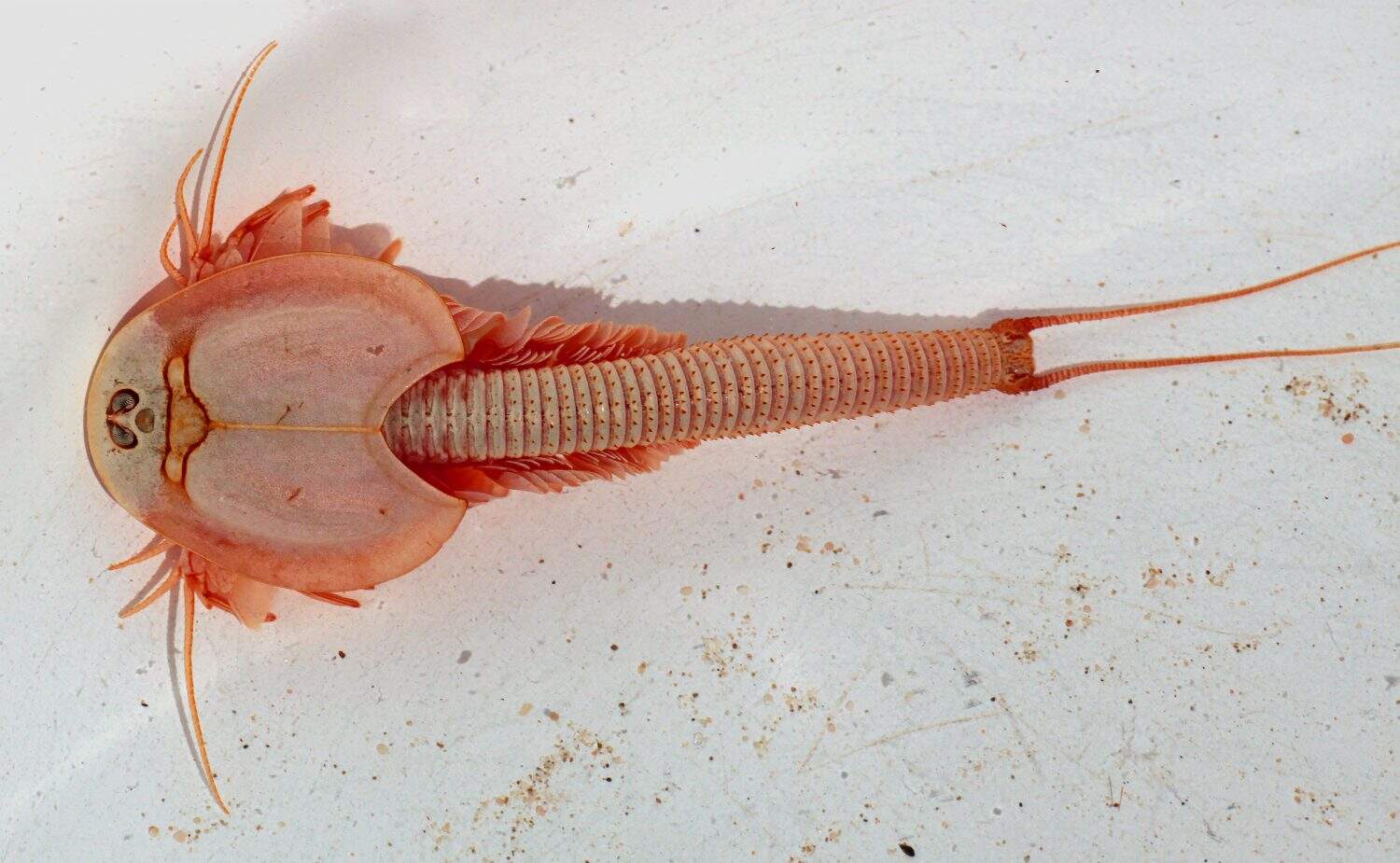
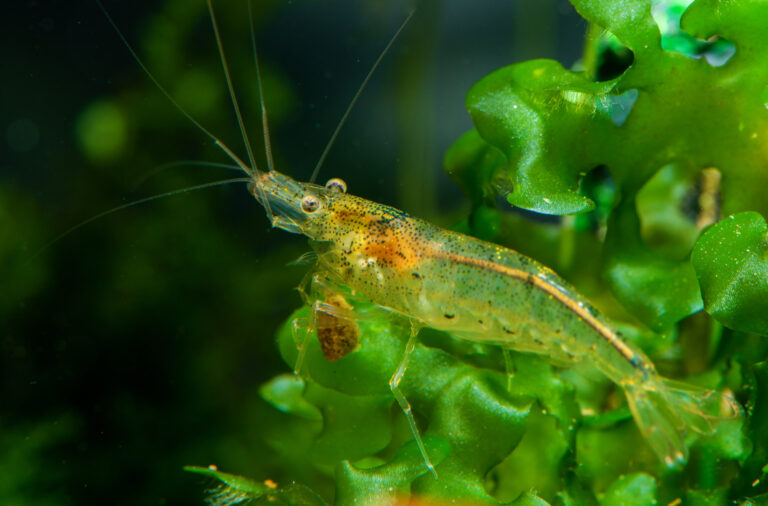
Triops are opportunistic predators that will eat everything from living shrimp to dried lunch meat.
©Dmitry Fch/Shutterstock.com
This Instagram video shows a group of triops going absolutely hog-wild on several earthworms. Some triops are riding them in the water before wrestling them to the sand, prompting other triops to dogpile the helpless worms. Triops may appear cute and harmless to us, but they likely strike fear into the hearts of smaller creatures.
However, it’s nothing personal for the triops. They are such opportunistic predators that they will eat almost anything thrown at them; carrots, shrimp pellets, living shrimp, lunch meat, crackers, and potatoes are all foods they can eat. Triops are likely attracted to earthworms for two reasons. First, triops lack jaws like mammals and instead have rows of gnathobases—hard, tooth-like nodes at the base of their legs.
They use them to pin creatures like earthworms against their gnathobases, which basically shreds them into more manageable pieces. Second, earthworms are like soft protein tubes, which makes them easy for triops to digest. The fact that worms wiggle and trigger the triops’ instinctual hunting responses is just icing on the cake. As seen in the Instagram video, the presence of earthworms in the waters sparks a veritable triops feeding frenzy.
An Ally Against West Nile Virus
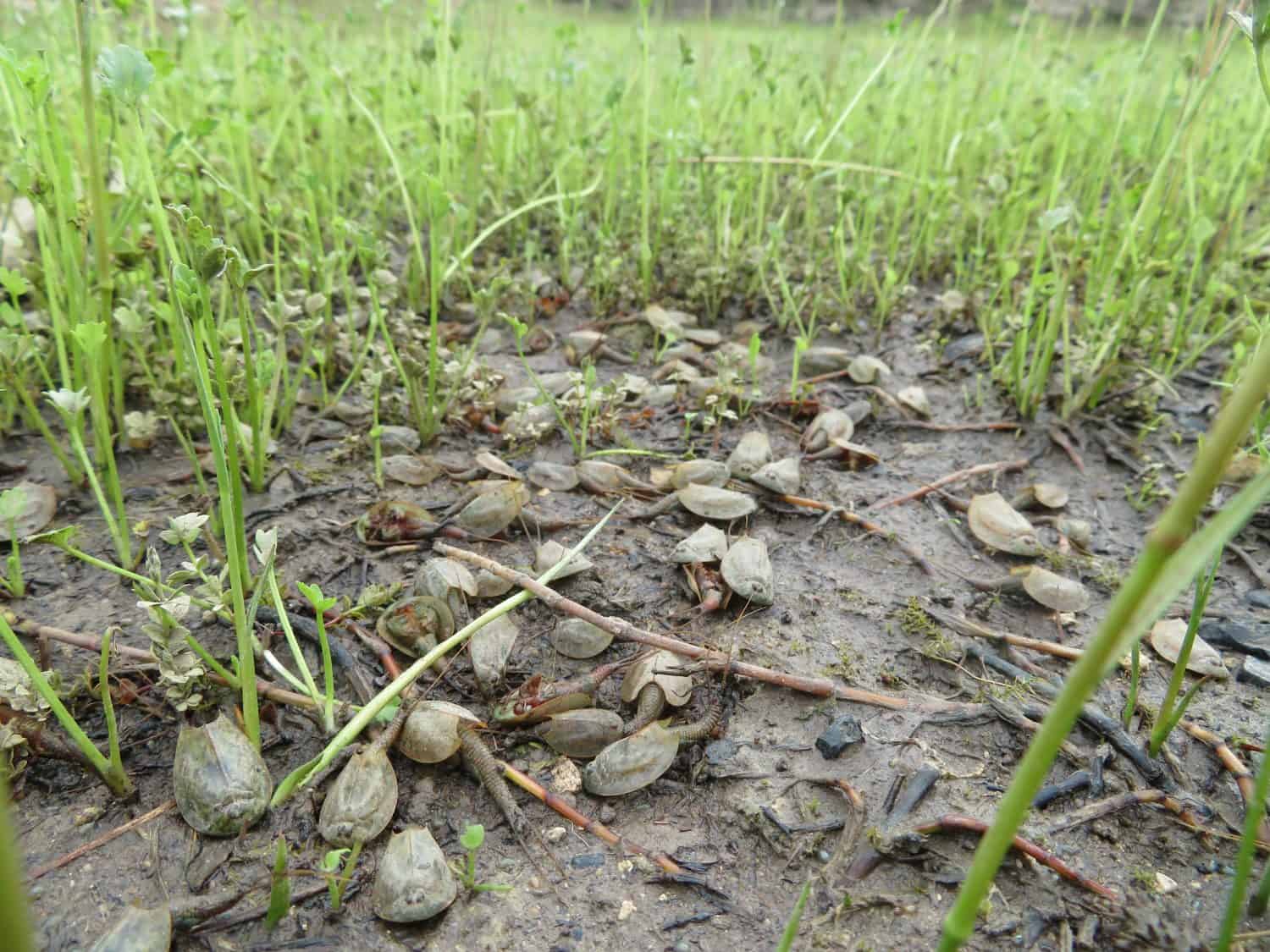
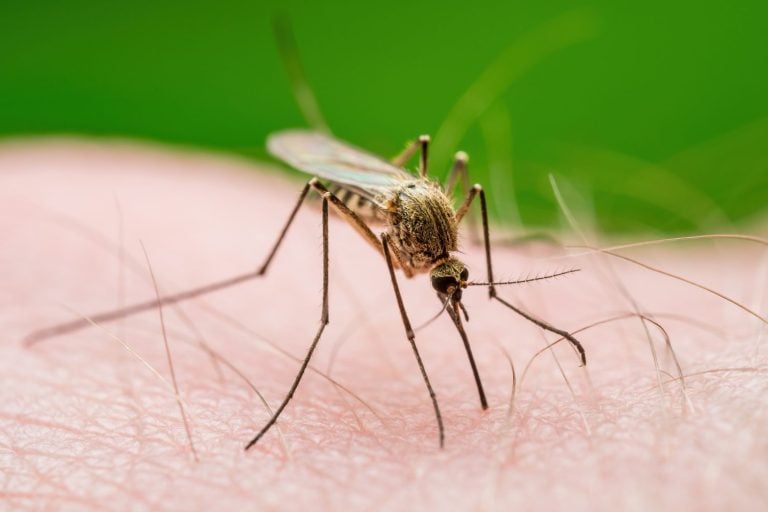
Triops are an ally in the fight against West Nile Virus because they eat mosquito larvae.
©Wirestock Creators/Shutterstock.com
Some people keep triops as pets, or at least aquarium fixtures, but these crustaceans also make effective exterminators. In fact, Triops longicaudatus is considered a true ally in the fight against West Nile virus because they consume mosquito larvae. These creatures are also used across the world for various forms of pest control.
In Japan, triops are used as a biological pest control for rice cultivation as they eat the weeds that spring up in rice paddies. Meanwhile, in California, Triops longicaudatus has become a significant pest in rice cultivation because they dig up and damage young rice seedlings. As we’ve seen, triops’ appetite can’t be stopped, so it’s best to redirect it when possible.