
Quick Take
- The deer's body language says one thing, and it's not what you'd expect in a store full of strangers.
- Several triggers can pull a wild deer into human spaces, and one is far more likely for young ones.
- Bright lights and open doors do something to a deer's sense of direction that makes exits harder to find.
- Spot a deer indoors? Wildlife officials have a specific rule about what to do, and instinct may steer you wrong.
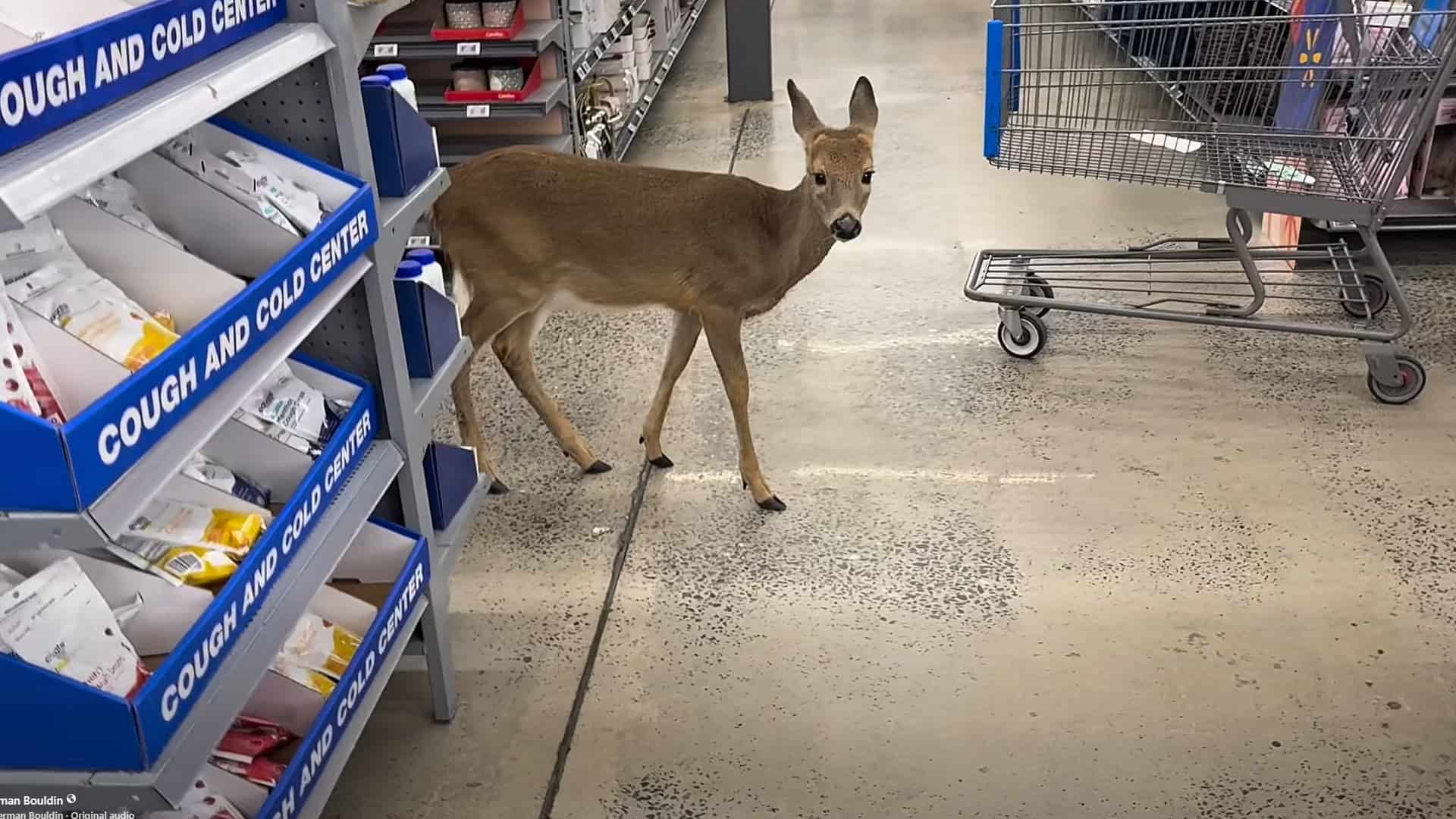
A young deer made an unexpected trip indoors when it wandered into a store and ended up looking more like a holiday shopper than a wild animal. Standing near the aisles and glancing around at the scene, the deer seems calm, curious, and more than a little out of place.
It’s the kind of clip that instantly writes its own joke. With Christmas around the corner, the deer looks like it showed up early to beat the rush and cross a few items off its list.
What happens in the clip?
The young deer stands inside the store near the shelves and shopping carts, looking around as if it is trying to figure out where to go next. It doesn’t appear aggressive or panicked in the moment shown here. Instead, it has that classic deer expression: alert, cautious, and slightly confused about how it ended up surrounded by bright lights, smooth floors, and human stuff.
That’s what makes the scene so funny. One second you expect to see ordinary shoppers, and the next there’s a deer standing in the aisle like it came in for a few last-minute holiday essentials. The contrast between a wild animal and such a normal retail setting is what gives the image its charm.
Why do deer wander into places like this?
Deer sometimes end up in neighborhoods, parking lots, and even buildings when they are startled, chasing food, or simply moving through developed areas that overlap with their habitat. Young deer can be especially prone to wandering into strange places because they are still learning how to navigate the world around them.
Bright lights, open doors, and unfamiliar noise can also leave a deer disoriented once it gets too close to human spaces. In situations like this, wildlife officials usually recommend giving the animal room and letting trained responders help guide it out safely if needed.