
Quick Take
- Snow-covered deer showed up at someone's front door and didn't leave. Find out what happened when the door opened. See the deer visit →
- Those deer standing in a blizzard look freezing, but their winter biology tells a very different story. Discover their cold adaptations →
- Deer have a hidden survival trick that most people never notice, and it is written all over their winter coat. Explore their winter coat →
- Even a perfectly adapted animal has a winter breaking point, and the conditions that trigger it are closer than you might think. Find their survival limits →
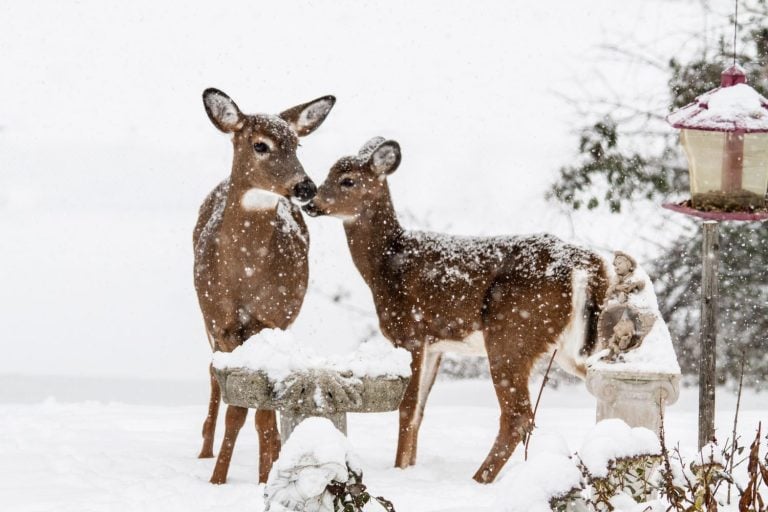
A snow-covered group of deer showing up outside your door is about as close as real life gets to a Christmas card. Add falling snow, a warm house in the background, and a little holiday music, and the scene practically does the work itself. That is exactly what happened in the video below, when several deer gathered just outside a home’s front door.
Don’t Miss the Video Below!
Snow-Covered Deer Sighting
The short TikTok clip above, posted by the Emily Grace account, shows a small group of deer standing just outside a home while snow clings to their backs. Instead of immediately disappearing into the woods, the animals linger near the doorway and look inside. Between the snow-covered deer and the holiday music playing over the video, the whole scene looks almost staged for a Christmas card.
Christmas Deer Come Knocking at the Door
As the video begins, the door opens to reveal several deer gathered only a short distance away. Their coats are dusted with snow, and the animals seem far more interested in the people inside than bothered by the winter weather around them. It makes for a ridiculously picturesque scene, but the deer are much better equipped for that cold than they may look.
Can Deer Survive in the Cold?
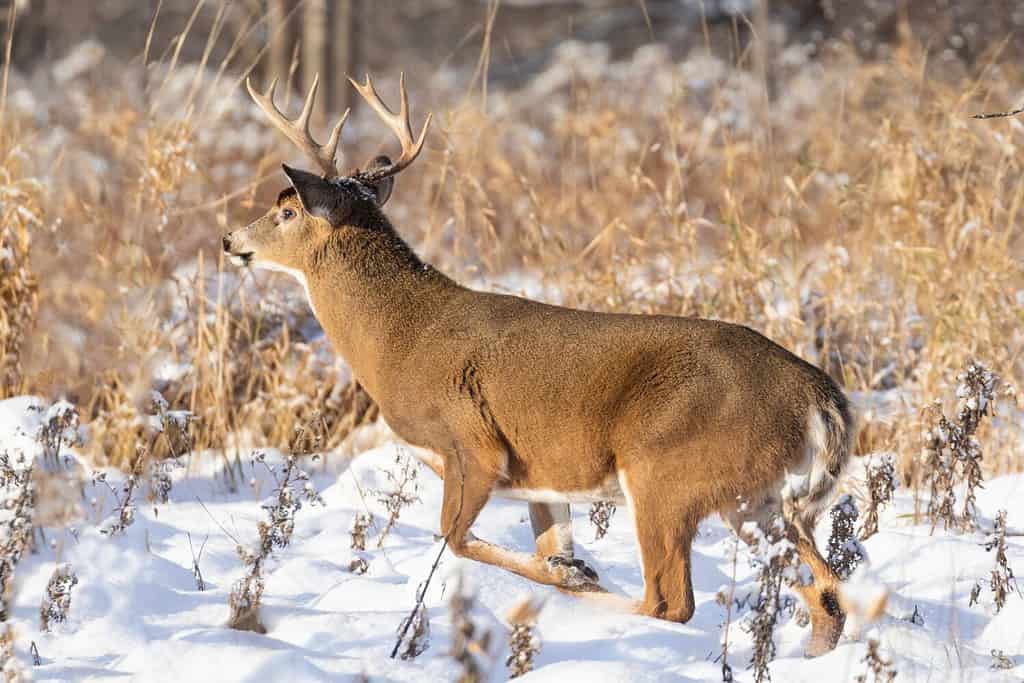
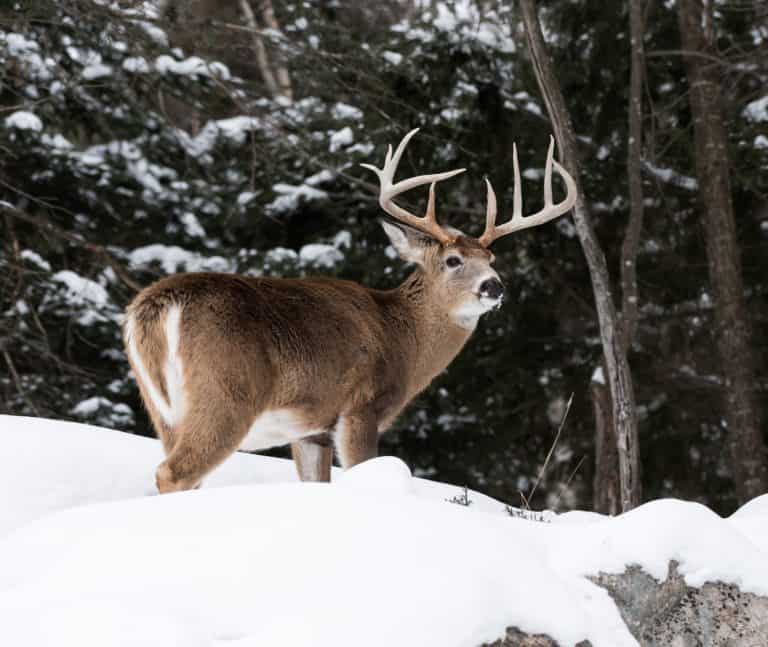
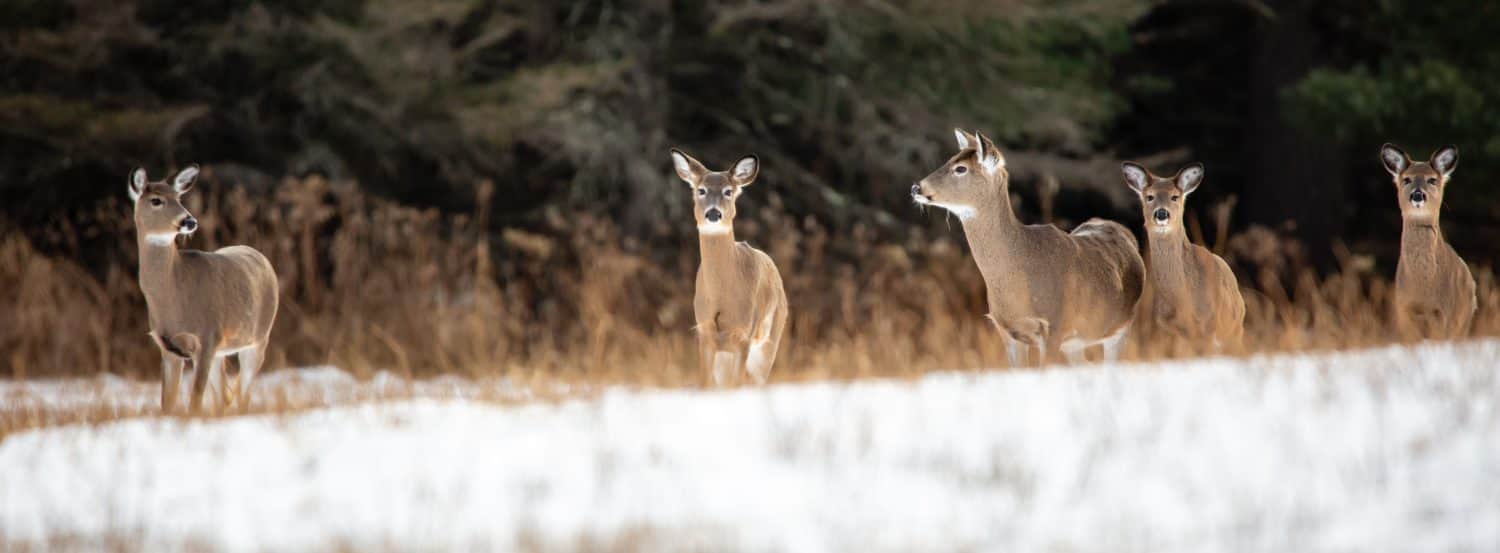
White-tailed deer can sprint at speeds of up to about 35 miles per hour.
©Mircea Costina/Shutterstock.com
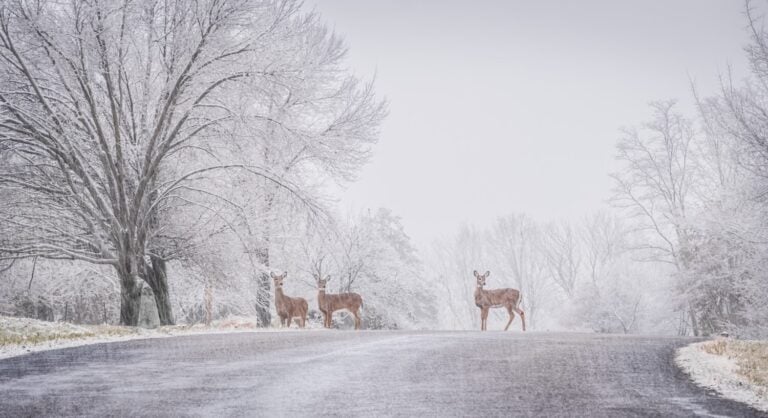
Deer are well adapted to cold climates, and many species regularly live through snowy winters that would be dangerous for an unprotected human. White-tailed deer, for example, grow a much thicker grayish-brown winter coat than the reddish coat they wear during warmer months. The winter coat includes longer guard hairs and a dense underfur that help trap body heat.
Body fat is another important part of winter survival. Deer build fat reserves during the warmer months and fall, then draw on that stored energy when food becomes scarcer and temperatures drop. They also conserve energy by reducing activity during harsh weather. Their winter diet shifts with what is available and may include woody browse, buds, evergreen leaves, acorns, and other nuts and fruits.
In addition to their stored fat, deer rely heavily on their fur for insulation. According to the Lloyd Center for the Environment, the outer coat includes long, hollow hairs that help trap heat, while a shorter, dense undercoat adds another layer of insulation.
That does not mean winter weather can never become dangerous. Prolonged cold, deep snow, limited food, and poor winter habitat can increase mortality, particularly during severe winters. Deer often seek sheltered areas such as dense stands of evergreens, where trees can reduce wind and snow depth and help them conserve energy. So the deer in the video probably did not need an invitation inside, even if they certainly looked like they were waiting for one.