Quick Take
- This fly spends nearly her whole life pregnant, and her reproductive strategy defies what you expect from an insect.
- Two versions of the same disease move at wildly different speeds, and one can hide until it's too late.
- A disease named for a bedtime quirk does something stranger to the brain than the name suggests.
- The fly's strangest trait is the very reason standard pest control fails against it.
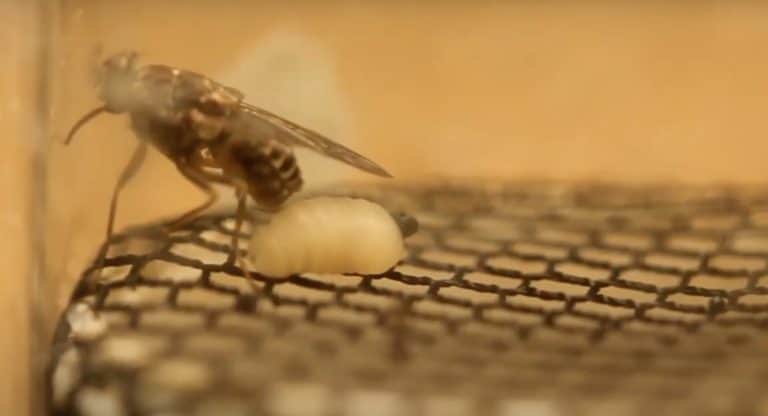
A female tsetse fly (genus Glossina) of sub-Saharan Africa spends almost her entire 4-month lifecycle pregnant. During those four months, she produces around 8 to 10 larvae. However, unlike most insects, the tsetse fly produces a single larva at a time. The egg hatches and develops inside the fly’s body. The mother feeds her larva a nutrient-rich, milk-like secretion from specialized glands. Once the larva is ready to pupate, it is nearly as large as its mother. The female fly deposits her offspring onto the ground, and it burrows into the soil where it forms a pupa. She then ovulates another egg, which is fertilized by sperm stored from a previous mating, which she can keep alive inside her body her entire life.
The tsetse fly with an unusual method of reproduction is best known for something quite dangerous: sleeping sickness. The native sub-Saharan African fly feeds on blood and spreads the parasite that causes the disease.
The Tsetse Fly Spreads a Parasite That Causes Sleeping Sickness
Tsetse flies feed almost exclusively on the protein-rich blood of mammals, reptiles, and birds. At about 0.25 to 0.5 inches, they are around the size of a housefly. Tsetse flies consume nearly twice their body weight every few days, which females need to produce the nutrient-rich substance they feed to their larvae. The males also need frequent meals to give them the energy they need for mating and reproduction.
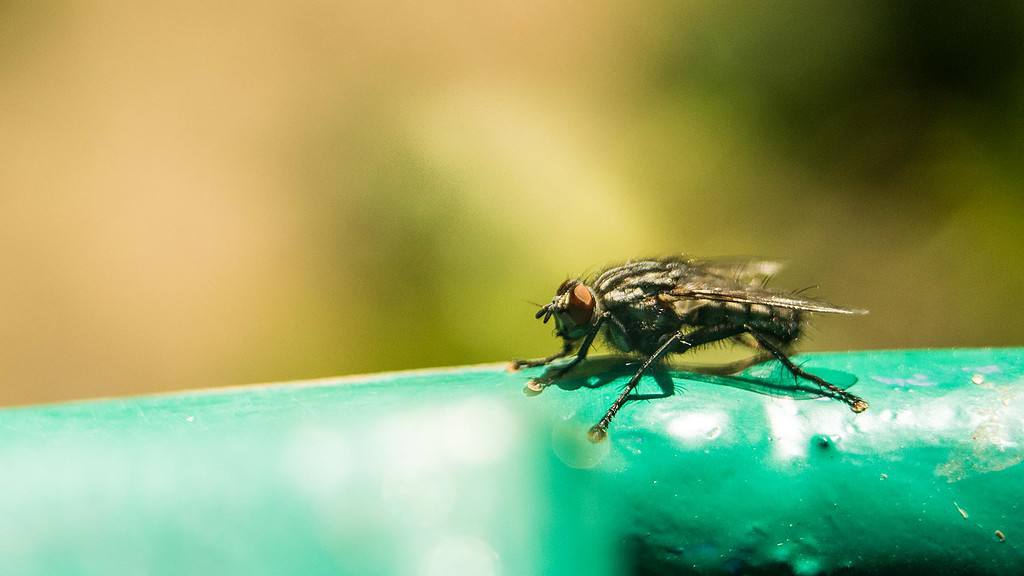
Tsetse flies are responsible for transmitting a dangerous disease commonly known as sleeping sickness.
©Vladimir Sitkovskiy/Shutterstock.com
Some tsetse flies carry a microscopic parasite known as Trypanosoma brucei, which can be transmitted to humans and animals through the bite of an infected fly. The parasite enters the bloodstream and moves into the lymphatic system. In humans, this infection may cause a disease called human African trypanosomiasis, commonly known as sleeping sickness. Not every tsetse fly carries the parasite, and even when they do, it’s not always transmitted with a bite. But it remains a dangerous disease for humans.
Two Forms That Progress at Different Speeds
Two subspecies of T. brucei infect humans: T. b. gambiense and T. b. rhodesiense. Each of these species contributes to a different form of sleeping sickness. In West and Central Africa, sleeping sickness is caused by T. b. gambiense. This form accounts for 92% of reported cases and develops slowly over months or even years.
Often, by the time the infected individual begins to notice symptoms, the disease has already advanced and has begun affecting their nervous system. Alternatively, T. b. rhodesiense, which occurs in East and Southern Africa, can cause a much faster-acting form of the disease. Symptoms may appear within weeks or months of infection.
Two forms of sleeping sickness
-
Faster-acting
- T. b. rhodesiense Symptoms may appear within weeks or months
-
Slow
- T. b. gambiense Develops slowly over months or even years
The Parasite Eventually Reaches the Brain and Disrupts Sleep
Both forms of sleeping sickness have two stages. In the first stage, the parasite circulates in the blood and lymphatic system. Symptoms during this stage may include fever, headaches, joint pain, and swollen lymph nodes.

A female tsetse develops just one fertilized egg at a time inside her uterus.
©Wirestock/ via Getty Images
During the late stage, or second stage of the disease, the parasite reaches the brain and crosses into the central nervous system. At this point, it disrupts the sleep-wake cycle. People may experience daytime sleepiness and nighttime wakefulness, which is where the name comes from. Further late-stage symptoms include behavioral changes, confusion, and neurological issues. Without treatment, the disease can be fatal.
Reported Sleeping Sickness Cases Have Dropped Dramatically
According to the latest World Health Organization (WHO) data, there has been a dramatic drop in reported cases of sleeping sickness over the past two decades. The WHO reports that between 1999 and 2025, new reported cases caused by T. b. gambiense fell by 98%. Meanwhile, the sickness caused by T. b. rhodesiense fell by 93%.
The key reasons for the decline include disease surveillance, screening, pest control, and treatment. A new oral medication called fexinidazole has helped improve treatment options. Older treatments often involved invasive administrations that sometimes required hospitalization.
98
%
fall in new reported T. b. gambiense cases, 1999 to 2025
Tsetse Flies Also Spread a Disease That Threatens Cattle
Like humans, wild and domestic animals are also vulnerable to contracting the disease caused by the Trypanosoma parasite. A third subspecies known as T. b. brucei infects animals and is closely related to the subspecies responsible for human sleeping sickness. Animals may contract animal African Trypanosomiasis (AAT), or nagana, when bitten by an infected fly. Without treatment, the disease can be fatal and affects cattle, horses, mules, camels, and dogs.

Zebu cattle are vulnerable to nagana (animal African trypanosomiasis) transmitted by the bite of infected tsetse flies.
©Floratta/Shutterstock.com
Nagana is a serious economic hardship for livestock owners and tends to affect animals that rural communities depend on for food, income, and transportation. Symptoms include fever, anemia, weight loss, reduced milk production, and weakness.
Understanding Tsetse Fly Reproduction Helps Control Populations
By studying the tsetse fly’s unusual reproductive cycle, scientists gain valuable information to help reduce tsetse populations and thereby reduce the spread of infection in humans and animals. Because the fly’s reproductive cycle is very different from that of other pests, different measures must be used to successfully control populations.
For example, while many means of controlling insect populations involve targeting the larvae, tsetse larvae are uniquely protected inside the adult until they burrow into the ground. This, and the tsetse’s slow breeding cycle, requires a completely different approach to pest management, such as targeting adults rather than larvae.