
Quick Take
- Its fuzzy coat isn't just fur, and what it's made of changes everything. Explore the bacterial coat →
- This creature runs a self-sustaining food operation without ever hunting. See how it feeds →
- Its name carries a story about a submersible and a doomed city. Discover the naming story →
On average, a human can withstand dry heat up to 122°F. It would be unpleasant, exhausting, and altogether extremely uncomfortable, but doable in short intervals. In humid heat, 104°F is usually the maximum temperature we can endure before our bodies start to fail.
Now, during the hottest day you’ve experienced, imagine doubling that temperature. Some of Earth’s hottest zones are underwater, reaching temperatures of 140°F or more. And for the creatures that live there, like the Pompeii worm (Alvinella pompejana), this is just an ordinary day.
While the average mammal would cook at this temperature, the Pompeii worm endures the unimaginable heat.
The Most Heat-Tolerant Animals on Earth
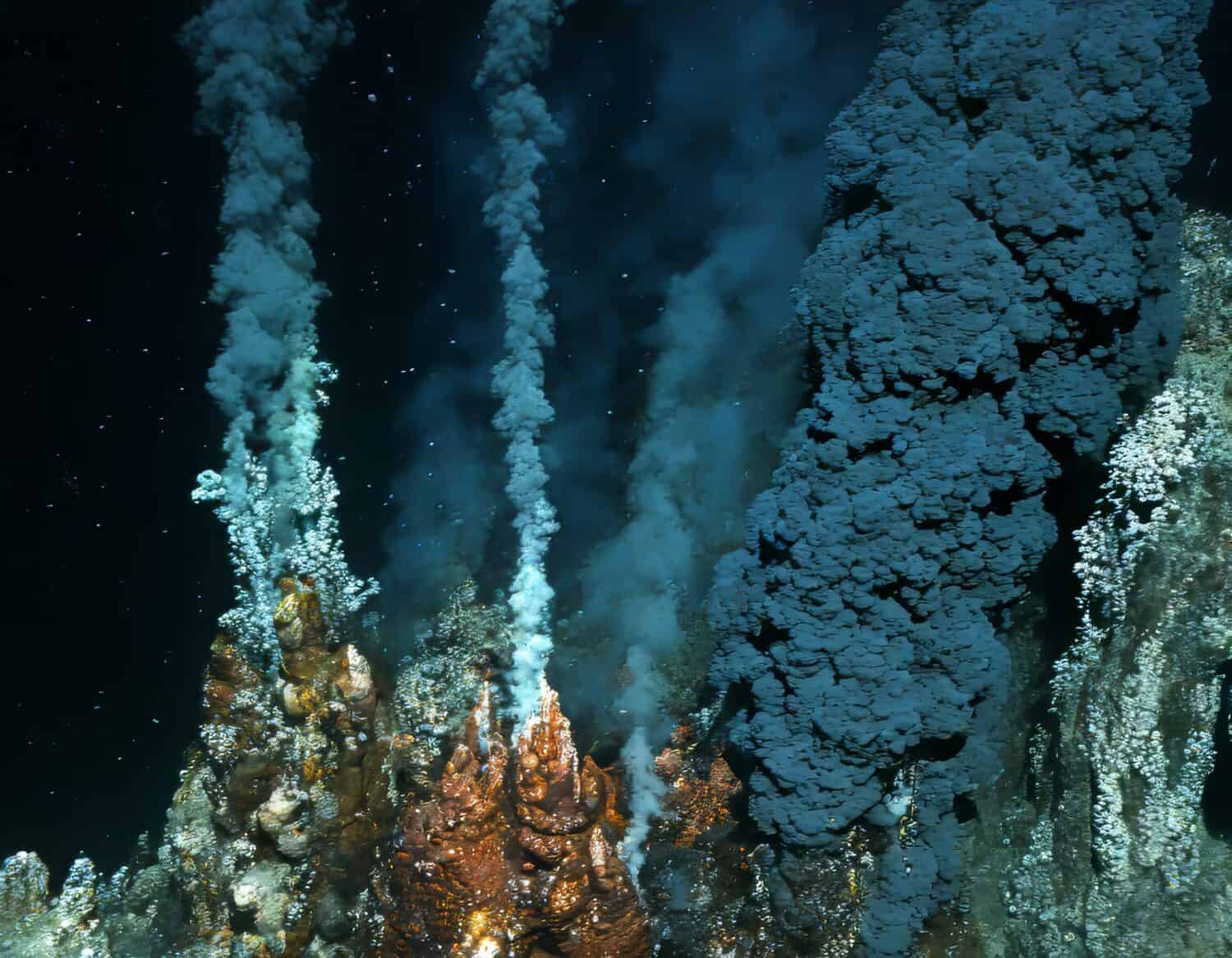
Volcanic hydrothermal sea vents lie hidden deep beneath the Pacific Ocean. These seabed cracks release mineral-rich water as pressure builds. As ocean water enters these cracks, it flows through tectonic plates and is heated by magma beneath the Earth’s crust. At its hottest, water temperatures can reach 752°F. By the time it flows back out through black smoker vents, its temperature can drop to roughly 350°F.
But as this ocean water flows through Earth’s crust, it picks up iron, copper, and zinc. These minerals support a host of marine life, including the Pompeii worm. It consumes bacteria that grow on its body because of the nutrient-rich water it lives in, as well as other microscopic organic matter.
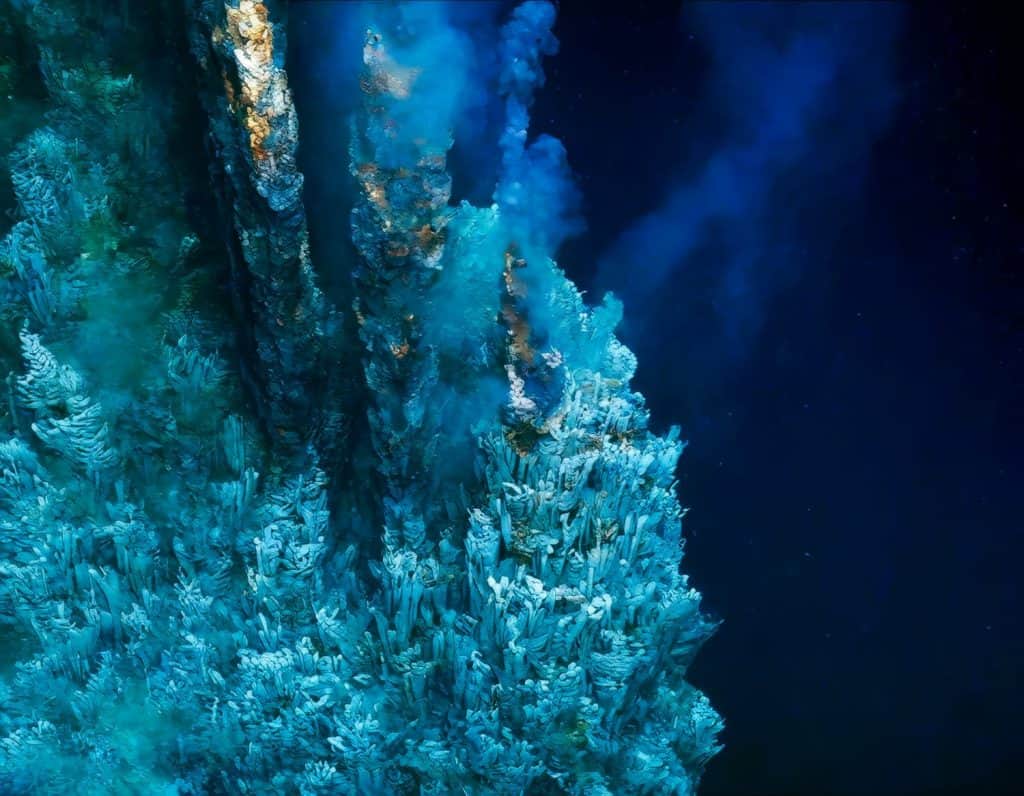
Very few species can live in or near hydrothermal vents because of the extremely high temperatures.
©Gallwis/Shutterstock.com
Its ability to sustain its nutritional needs is one key to the Pompeii worm’s survival. It doesn’t forage or hunt and rarely leaves a hydrothermal vent. Instead, it clings to the side, endures extreme temperatures, and passively consumes whatever floats past.
But its extraordinary existence also depends on the “armor” it wears. Its appearance is bizarre, but it’s also one of the most impressive of any heat-tolerant species. Its skin not only sustains its appetite but also doubles as a protective heat barrier.
Pompeii Worms Are Built to Take the Heat
Pompeii worms are difficult to kill. Their genetics make them one of the world’s most heat-resistant sea worms, and their skin is the secret. The “fuzzy” outside layer of their shells is actually made of chemosynthetic bacteria. These bacteria feed on a sugar-like substance the Pompeii worm excretes through its skin. As they feed, the bacteria grow larger, creating a protective blanket for the worm.
When it’s time to feed, the Pompeii worm consumes some of these bacteria. This closes the loop, allowing it to continually grow its own food and protective layer. When it can’t eat self-grown bacteria, it may also consume food directly from water exiting volcanic vents.

For the Pompeii worm, the mineral-rich water from black smokers helps it thrive in its hot environment.
©National Science Foundation (University of Delaware College of Marine Studies), Public domain, via Wikimedia Commons – 1 November 2001 – Original / License
Since it remains mostly immobile, the Pompeii worm relies solely on chemical energy. Hydrogen sulfide and other sulfur compounds feed the bacteria on its skin. Without black smokers producing these chemicals, the Pompeii worm would not survive, making it an ideal candidate for its environment.
This is what makes the Pompeii worm so fascinating. While its bottom half stays stuck to the vent wall, its furry top half can withstand cooler temperatures. This means a Pompeii worm’s tail end might sit in water between 140°F and 176°F while its top half pokes out into 72°F seawater. Its dual nature lets it reap the benefits of the vent’s mineral-rich water while also scavenging microbes that prefer nearby, temperate water.
Temperatures in the story
Discovering the Pompeii Worm Was No Small Feat
Although it’s been around for centuries, scientists didn’t discover the Pompeii worm until 1980. French marine biologists Daniel Desbruyères and Lucien Laubier were exploring hydrothermal vents in the Pacific when they spotted some unusual specimens.
In a climate that few animals could survive, the ocean’s volcanic vents were covered with strange-looking creatures. They were adhered to the sides of each vent, held on by a gray, paper-like cone. Each had a worm-like head and a body covered in white fuzz. This was the first time scientists had discovered a heat-tolerant animal this far beneath the ocean’s surface.
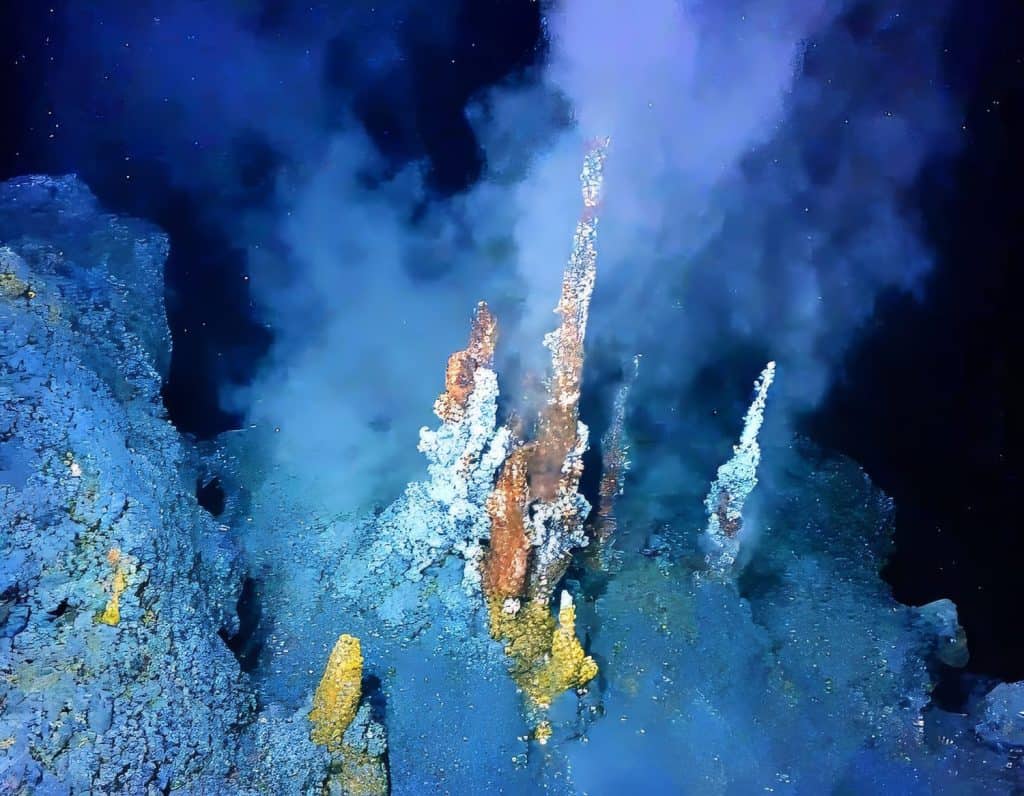
Pompeii worms often cover vent sides, eager to consume passing organic matter.
©Gallwis/Shutterstock.com
Using a deep-sea submersible named Alvin, they moved in for a closer look. The submersible allowed them to observe the volcanic vents up close. This was the first recorded observation of the Pompeii worm, and the marine biologists decided it needed a name that accurately described its lifestyle.
They named it Alvinella after the submersible and pompejana after the ancient Roman city of Pompeii. For short, the worm became known simply as the “Pompeii worm.” Its name also evokes the devastating effects of volcanic activity and testifies to the species’ incredible ability to withstand heat.