
Quick Take
- Aphids inject a protein that doesn't resemble anything science has seen before, and its 3D structure finally reveals how these tiny insects rewrite plant biology from the inside. See the structural discovery →
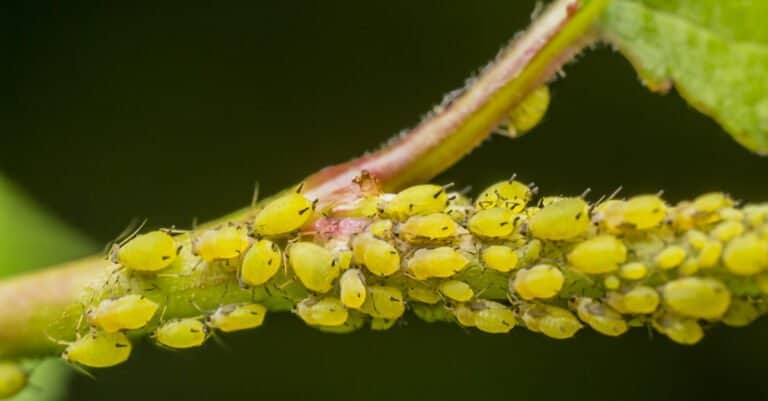
- A single female aphid's saliva can override a plant's immune system and force it to build a living nursery, and scientists have now uncovered the molecular trick behind it. Meet the aphid behind it →
- The AI tool built to crack protein mysteries completely failed on these aphid proteins, but that changed when researchers tried something unexpected in the field. How fieldwork rescued AlphaFold2 →
- These parasitic proteins evolve so fast they outpace the plant's own defenses, and that same speed is also what made them nearly impossible to study. Explore BICYCLE protein evolution →
Tiny insects known as cone gall aphids pull off an incredible molecular trick by manipulating plants into growing them a custom home. The aphids hijack the plant’s gene expression, causing it to grow a protective shelter called a gall. It is here that the aphid and its offspring live and feed off the plant’s nutrient-rich sap. Researchers have uncovered fascinating details about how these insects bypass the host plant’s immune defenses and trigger it to grow something specifically useful to the insect. New research studied seven aphid species and found the underlying structural blueprints of rapidly evolving parasite proteins the aphids use to manipulate their host plants.
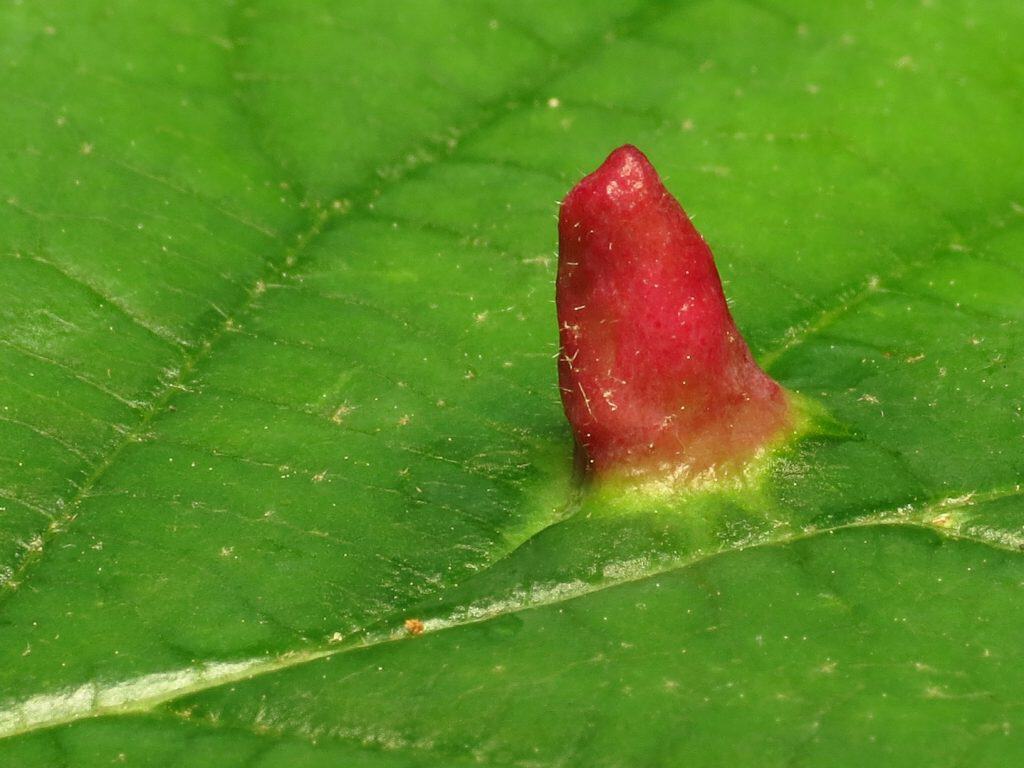
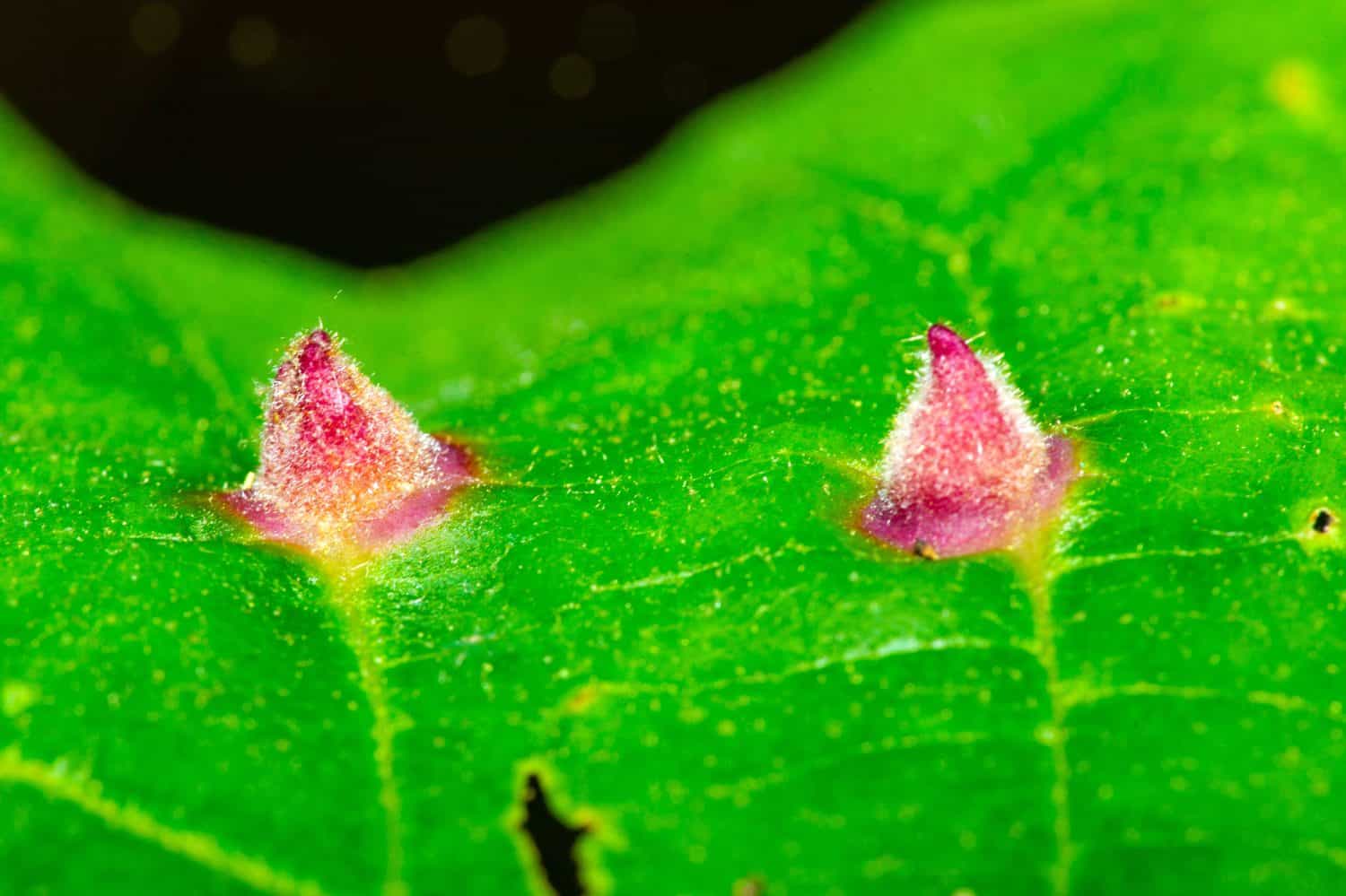
Witch hazel cone galls appear as red, yellow, or green cone-shaped witch hats on the leaves.
©Katja Schulz's photo, licensed as CC BY 2.0 – Original / License
The Molecular Weapons Hiding in Aphid Saliva
Researchers in the lab of Investigator David Stern, Ph.D., at the Stowers Institute for Medical Research, in collaboration with structural biologists in the lab of Angela Gronenborn at the University of Pittsburgh, uncovered the hidden 3D blueprint of BICYCLE proteins. Gall aphids inject hundreds of proteins (known as BICYCLE proteins) into plants. These proteins hijack plant genomes into building galls from the plant’s own tissue.
Scientists in the study analyzed the proteins from seven aphid species. These included the horned-gall aphid (Hormaphis cornu), its close relatives H. betulae, H. hamamelidis and Hamamelistes spinosus, as well as Schlechtendalia chinensis, Tetraneura akinire and the pea aphid (Acyrthosiphon pisum).
Meet the Witch-Hazel Cone Gall Aphid
The primary aphid studied, H. cornu, is commonly known as the witch-hazel cone gall aphid. The tiny aphid lives on witch-hazel (Hamamelis virginiana) in the spring and river birch (Betula nigra) in the summer. In the spring, eggs laid the previous winter on witch-hazel plants begin to hatch.
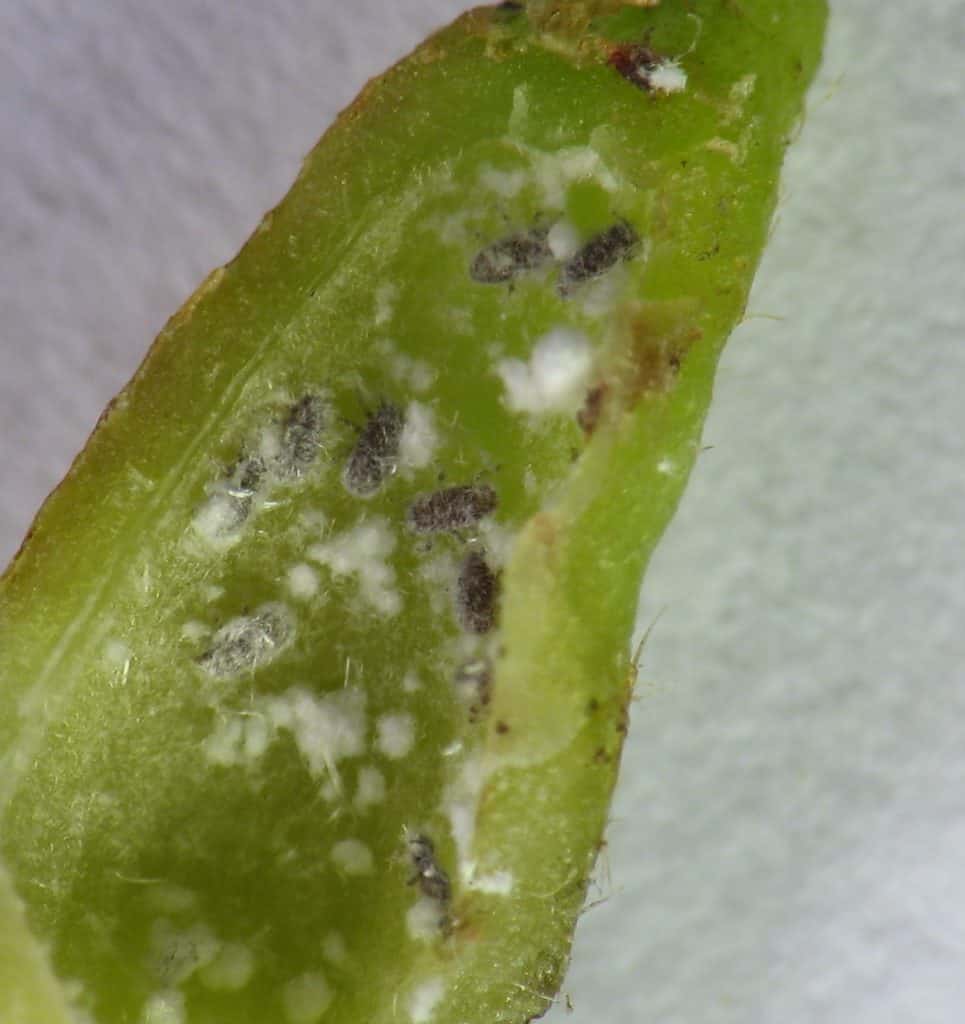
When a gall is cut open, the tiny aphids are found living inside.
©Beatriz Moisset, CC BY-SA 4.0, via Wikimedia Commons – Original / License
Only female aphids emerge and start feeding on the leaves. The female aphids’ saliva triggers the plant to grow a gall around her. Inside the gall, the aphid develops into a mature female. She then reproduces asexually, and her offspring live with her inside the gall, feeding and developing.
From Witch-Hazel to River Birch: The Seasonal Migration
In summer, the gall dries out, and the aphids have matured into winged adults. They emerge from the gall and fly to birch trees where they feed on the leaves. In the fall, they travel back to witch-hazel plants and lay eggs. The eggs overwinter and hatch in the spring. The cycle begins once again.
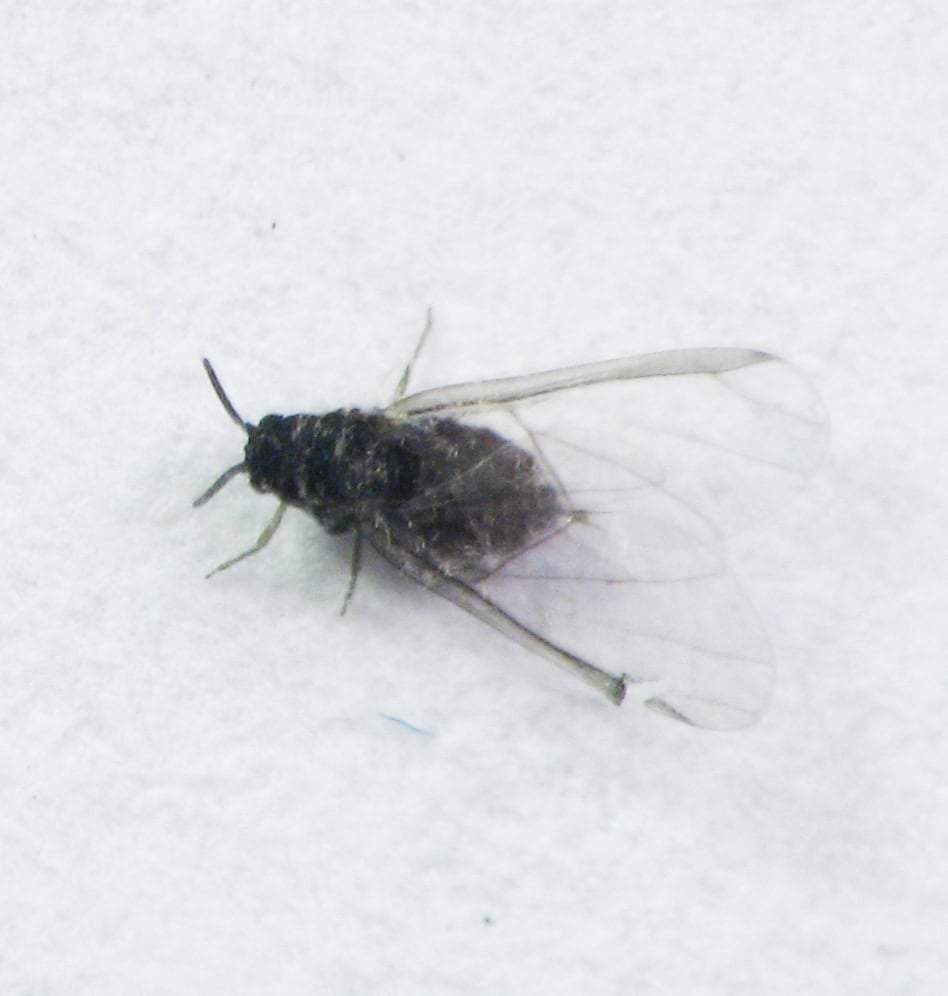
Witch-hazel cone gall aphids emerge from galls as adults and fly to birch trees to feed on the leaves in the summer.
©Beatriz Moisset, CC BY-SA 4.0, via Wikimedia Commons – Original / License
What Are BICYCLE Proteins?
BICYCLE proteins, discovered by Stern in 2021, are found in aphid saliva. Aphids inject these proteins into plant cells to override the plant immune system, forcing them to grow protective galls around the aphids.
An incredible thing about BICYCLE proteins is how rapidly they evolve. Plants constantly mutate to detect and block parasites. However, the aphids in the study also mutated and rapidly rewrote their genetic structure. This way, they managed to stay ahead of the constantly changing plants.
Stern explained in a press release, “We’ve been very focused on what these proteins are actually doing in the plant. How do these proteins function? They don’t look like anything that we’ve seen before. One way to try to gain insight into that problem is to solve the 3D structure of these proteins, and that was the motivation for this project.”
Cracking the Saposin Structure Blueprint
Researchers first examined two BICYCLE proteins using X-ray crystallography. The sequences didn’t match anything on record. However, they both contained a saposin-like fold. These folds are similar to a basic architectural blueprint that can be remodeled into many different buildings.
Next, the researchers predicted structures for about 2,400 BICYCLE proteins collected from seven aphid species. What they found was that every single protein contained the predicted saposin-like folds, although the structures could be arranged differently. “That suggests that these proteins are really exploiting many different mechanisms in the plant to take over the plant cell,” Stern said in the press release.
AlphaFold2 Stumbled, but Fieldwork Saved It
AlphaFold2 is an AI model that scientists use to predict protein structures. At the start, researchers found that AlphaFold2 struggled with the BICYCLE protein predictions. The proteins evolve so quickly that existing databases didn’t contain enough sequence comparisons, and the AI failed at prediction.
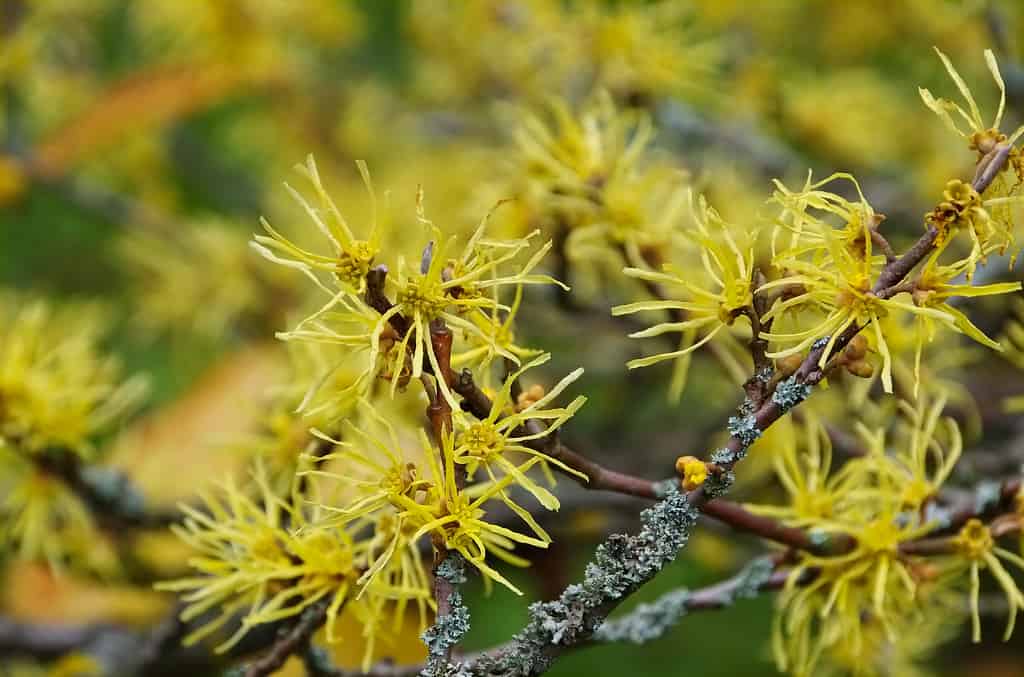
Witch hazel is the primary host for gall producing aphids.
©LianeM/iStock via Getty Images
When the researchers sequenced genomes from closely related aphid species and supplied that data to AlphaFold2, “Lo and behold, AlphaFold2 gave us back the crystal structure that we had solved,” Stern said. Once the AI system had the missing information, it could generate high-confidence predictions.
An Evolutionary Arms Race Hidden Inside a Plant
Researchers hypothesize that the BICYCLE proteins are able to interact with different plant targets inside the plant while at the same time outsmarting the plant’s immune defenses. The researchers emphasized that this is an early step toward understanding how BICYCLE proteins actually control plant biology.
“This is really the beginning of our work on the BICYCLE proteins, the beginning of our work on how insects control plants,” Stern explained. “I’m very excited about the future and what we’re going to be able to do here to really understand how these molecules control plant biology.”
Other labs can now benefit from these methods to study other rapidly evolving proteins. In agriculture, the benefits include learning more about host-parasite interactions and plant immunity.