
Quick Take
- European hamsters are typically 2-3 times larger than their domesticated relatives, which helps them survive in the wild.
- European hamsters’ body weight influences their survival and hibernation, with larger individuals generally better able to withstand periods of food scarcity.
- Some research suggests that diets high in corn may negatively affect European hamster health and behavior.
Wild hamsters might sound like a cartoon concept, but they are real animals that live across large parts of Europe and western Asia. They are also far larger and more complex than the small pet hamsters many people remember from childhood. Among them, the European or common hamster stands out for its size, behavior, and ecological role. These rodents reshape soil, spread plant seeds, and support food chains, yet their numbers have fallen sharply in recent decades. Understanding how wild hamsters live, what they eat, and why they matter helps explain why their decline affects far more than just their own species.
Wild Hamsters in the World

European hamsters have a wide range that once extended into Central Asia.
©PhotocechCZ/Shutterstock.com
When people refer to wild hamsters, they are often thinking of the European hamster, also called the common hamster. Scientifically known as Cricetus cricetus, this species once occupied a wide stretch of territory from western Europe into parts of Russia and Kazakhstan. Its range includes countries such as France, Germany, Belgium, Ukraine, and neighboring regions. These animals prefer lowland areas with deep, workable soil, especially grasslands, steppes, and agricultural fields.
Wild hamsters construct extensive underground burrow systems. These burrows may extend several meters below the surface and often include multiple entrances. Inside, separate chambers serve different purposes, including nesting, sleeping, and food storage. This underground lifestyle protects them from predators and temperature extremes while allowing them to live close to open feeding areas.
Size and Physical Traits
European hamsters are much larger than most pet hamsters, which surprises people who encounter them for the first time. While a typical Syrian hamster kept as a pet reaches about 6 to 7 inches in body length, adult European hamsters commonly grow between 8 and 14 inches. That’s comparable to the length of a Guinea pig. Their tails add another 1.5 to 2.5 inches, and adults may weigh anywhere from about 10.5 to 21 ounces (roughly 0.65 to 1.3 pounds) depending on season and food availability.

Guinea pigs like this are similar in size to European hamsters.
©Tatyana Vyc/Shutterstock.com
Their bodies are compact and muscular, with short legs adapted for digging. Rounded ears sit low on the head, and their eyes are relatively small. One of their most noticeable traits is their large cheek pouches, which stretch back toward the shoulders. These pouches allow them to transport large amounts of food at once. Coat colors vary, but many individuals have brown or gray backs with dark undersides and lighter patches along the sides, creating strong contrast that makes the species easy to recognize.
Burrow Architecture and Daily Life
The burrow systems of wild hamsters are among the most complex built by small rodents. A single burrow may include multiple tunnels branching out from a main shaft. Nest chambers are lined with soft plant material, while storage chambers remain dry and well protected. Some burrows include emergency exits that allow a hamster to escape quickly if threatened.
Wild hamsters usually leave their burrows to forage during the night. This pattern reduces exposure to predators such as hawks and foxes while also helping them avoid daytime heat. Although they may appear slow or clumsy above ground, they are capable runners when startled and can disappear underground in seconds. Their sense of smell and hearing guide most of their movement, as their eyesight is limited.
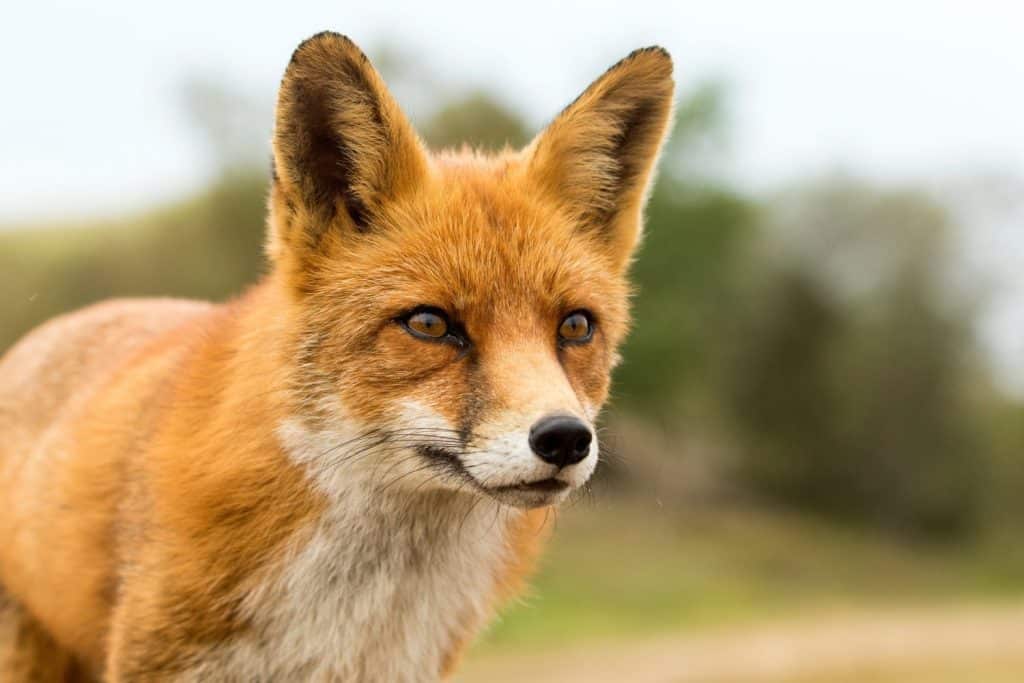
Foxes are one of the main predators of European hamsters.
©AngelaLouwe/Shutterstock.com
Diet and Food Storage
Wild hamsters are omnivores with a diet shaped by seasonal availability. Much of what they eat comes from plants, including seeds, grains, roots, and green shoots from grasses and crops. Wheat, barley, corn, and clover all appear regularly in their diet when available. They also consume insects, larvae, and other small invertebrates, which provide protein during periods of high activity.
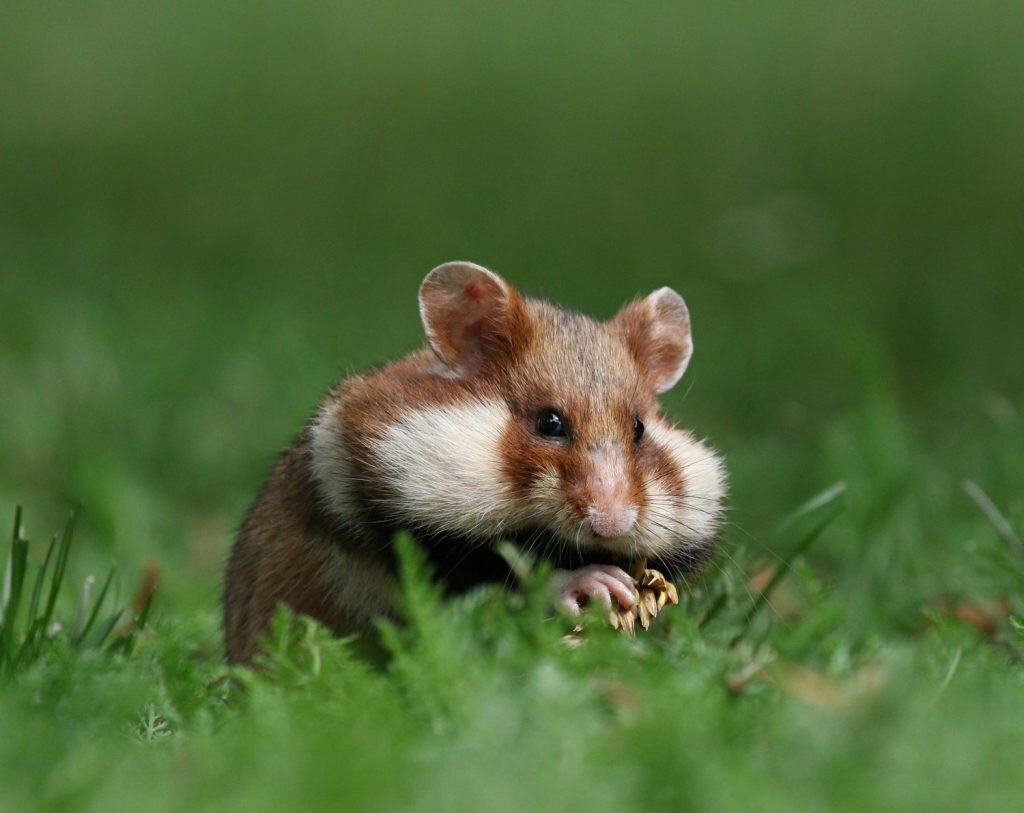
European hamsters can store enormous amounts of food in their cheek pouches.
©janveber/Shutterstock.com
One defining behavior of wild hamsters is food hoarding. Using their expandable cheek pouches, they carry food back to their burrows and store it in underground chambers. These stores allow them to survive periods when food is scarce. Typical caches weigh several kilograms, though unusually large hoards have been recorded under exceptional conditions. This habit helps them survive winter and poor harvest years, but it has also contributed to conflict with farmers.
Seasonal Behavior and Hibernation
In temperate climates, European hamsters follow a strong seasonal rhythm. During late summer and autumn, they spend much of their time gathering food and building fat reserves. As temperatures drop, they retreat underground and enter hibernation, usually between October and March depending on local conditions.
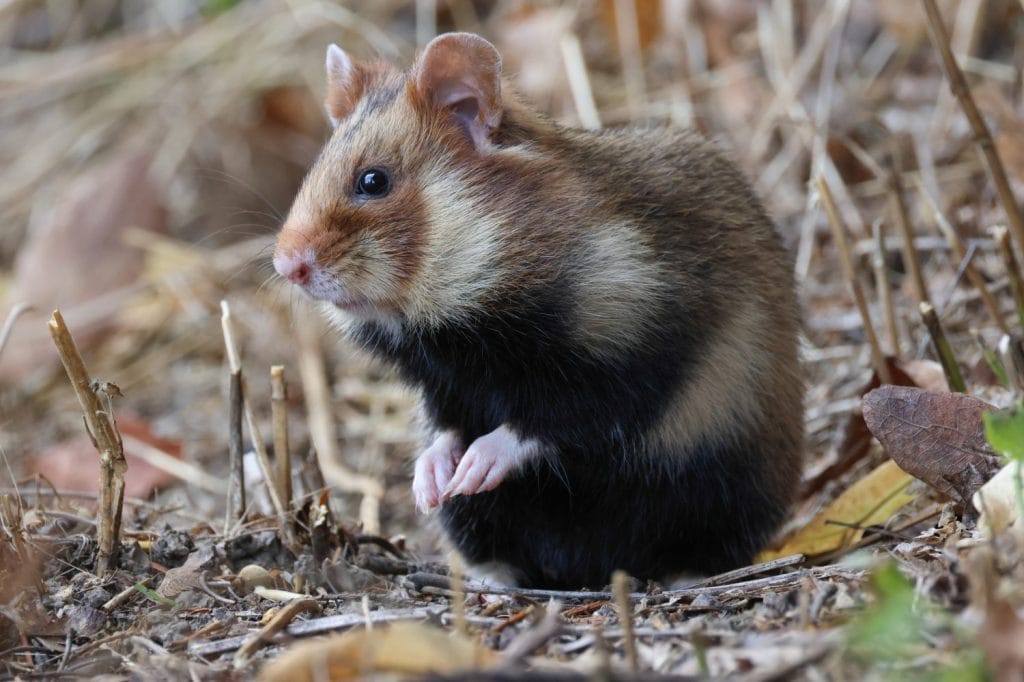
During hibernation, European hamsters wake occasionally to get a snack.
©Sandra Standbridge/Shutterstock.com
Unlike some animals that remain continuously asleep, hamsters wake periodically during hibernation. These brief awakenings allow them to eat from stored food and maintain body functions. Their metabolism slows dramatically, conserving energy over the winter months. When spring arrives, they emerge and begin feeding actively, preparing for the breeding season.
Solitary and Defensive Nature
Wild hamsters are solitary animals for most of the year. Each adult maintains its own burrow and surrounding feeding area, and encounters between adults outside the breeding season often lead to aggression. This territorial behavior helps ensure access to food and shelter but limits how closely individuals can live together.

When threatened, a hamster will stand on its back legs to make it look intimidating. It doesn’t work.
©Eric Isselee/Shutterstock.com
When threatened, a wild hamster may stand upright on its hind legs, spread its front paws, and emit loud vocalizations. This posture exposes the dark underside of its body, which can deter predators by making the hamster appear larger and more confrontational. While they rely on bluff more than physical strength, their sharp teeth make them capable of defending themselves if necessary.
Reproduction and Early Development
Breeding season typically begins in spring and may extend into early autumn depending on climate and food supply. After mating, females give birth to litters that usually range from three to eight young. The young are born blind and hairless, relying entirely on their mother during the first weeks of life.
Growth is rapid. Within a few weeks, the young develop fur, open their eyes, and begin sampling solid food. By the time they leave the nest, they already display digging and hoarding instincts. Survival rates for young hamsters vary widely, influenced by predation, weather, and habitat quality.
Wild Hamsters and Pet Relatives
Only a small number of hamster species have been domesticated for use as pets. These include the Syrian hamster and several dwarf species originating from the Middle East and Central Asia. Domestication selected for smaller size, reduced aggression, and tolerance of human handling over many generations.
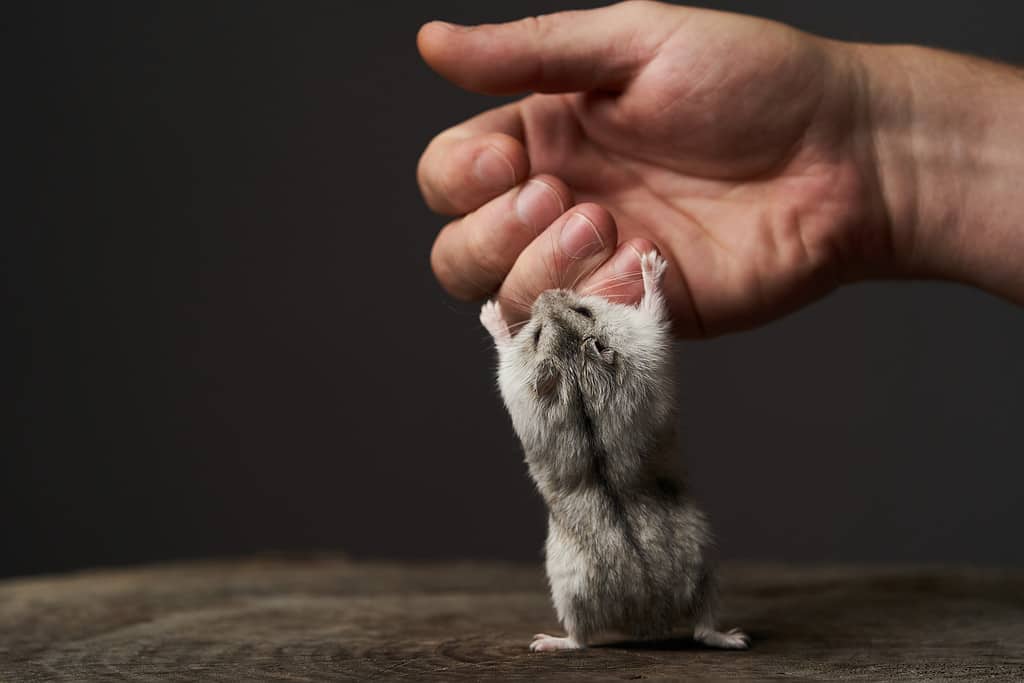
Due to their smaller size and docile temperament, Syrian hamsters are a favored pet species.
©geckophotos/iStock via Getty Images
Despite these differences, pet hamsters still share behaviors with their wild relatives. They dig, hoard food, and remain most active during low-light hours. The key difference lies in environmental pressure. Wild hamsters must constantly assess risk and competition, while pets live in controlled settings where food and safety are provided.
Role in Grassland Ecosystems
Wild hamsters influence their environment in subtle but important ways. Their digging loosens compacted soil, improving water absorption and soil structure. Burrows also create shelter for insects and other small organisms. When hamsters store seeds, some are forgotten or abandoned, allowing plants to sprout in new locations.
They also form a crucial part of local food chains. Predators such as foxes, owls, and birds of prey rely on hamsters as a seasonal food source. When hamster populations decline, predators may struggle or shift toward other prey, altering the balance of the ecosystem.
Decline and Conservation Status
The European hamster has experienced a steep population decline over the last century. In many regions, it is now considered critically endangered. Large-scale farming practices have replaced mixed farmland with single-crop systems, reducing food diversity and destroying burrow sites. Mechanized harvesting and pesticide use further reduce survival rates. Urban expansion has fragmented remaining populations, isolating groups from one another. This isolation limits genetic diversity and raises the risk of local extinction. The war in Ukraine has disrupted major parts of the hamster’s once-strong habitat there.

The war in Ukraine has disrupted a large area of hamster habitat with trench-building, explosive ordnance, and leaking wreckage.
©mojahata/Shutterstock.com
Conservation Efforts Underway
Efforts to protect wild hamsters focus on habitat restoration, population monitoring, and breeding programs. Conservation groups work with farmers to leave uncultivated strips along field edges and adjust planting schedules to reduce nest destruction. Some programs reduce chemical use to improve food availability.
Captive breeding initiatives aim to reintroduce hamsters into areas where they have disappeared. These efforts require careful planning to ensure released animals can survive and reproduce. Public education also plays a role, encouraging people to report sightings rather than harm animals encountered near homes or gardens.
Living Alongside Humans
Wild hamsters sometimes appear in suburban areas, particularly where gardens or green spaces border farmland. Their presence can surprise residents unfamiliar with their size or behavior. While they may damage crops or gardens, they rarely pose a direct threat to people if left undisturbed. A cemetery in Vienna is one place that has attracted an especially active colony of hamsters.

A hamster peeks around a grave in a Vienna cemetery.
©Martin Prochazkacz/Shutterstock.com
Learning to coexist with wildlife reduces unnecessary conflict. Simple measures, such as protecting garden plants and maintaining distance, help limit problems. In many regions, harming wild hamsters is illegal, reflecting their protected status.
Why Their Survival Matters
The loss of wild hamsters would remove an important piece of grassland ecosystems. Their disappearance signals deeper environmental problems linked to land use and biodiversity loss. Protecting them supports healthier landscapes that benefit many other species.
Preserving wild hamsters also maintains a living connection between modern environments and natural systems shaped over thousands of years. Their continued presence reminds us that conservation often begins with understanding the ordinary animals living quietly beneath our feet.