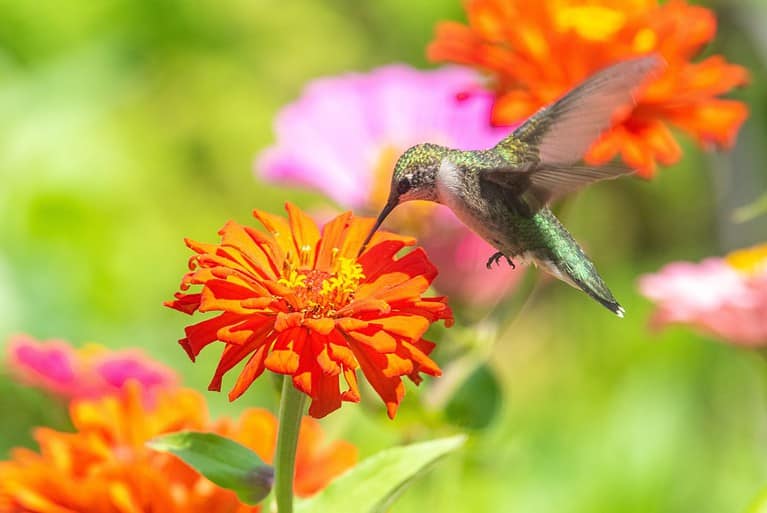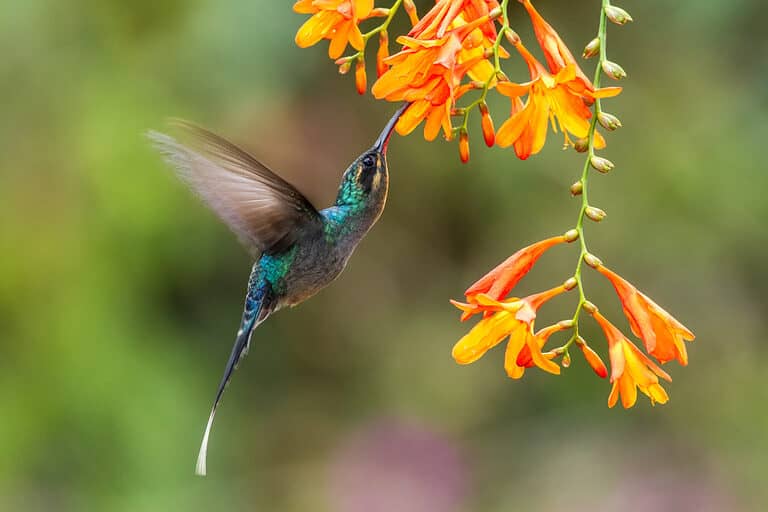

Although many people associate chrysanthemums with fall, they aren’t the only flower that blooms beautifully during this season. If you’re looking to add color to your garden in autumn, you don’t have to settle for just planting chrysanthemums. There are also great options for those of us who live in small spaces. Follow along to discover 12 beautiful potted flower alternatives to buy this fall instead of chrysanthemums.
1. Daisies
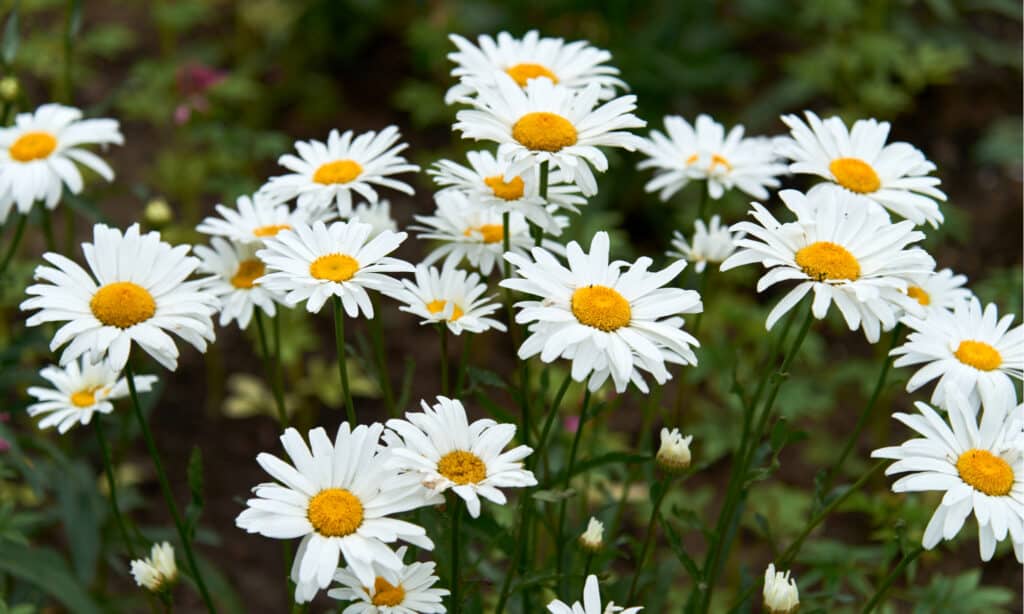
There are hundreds of species and cultivars of daisies.
©Smyshliaeva Oksana/Shutterstock.com
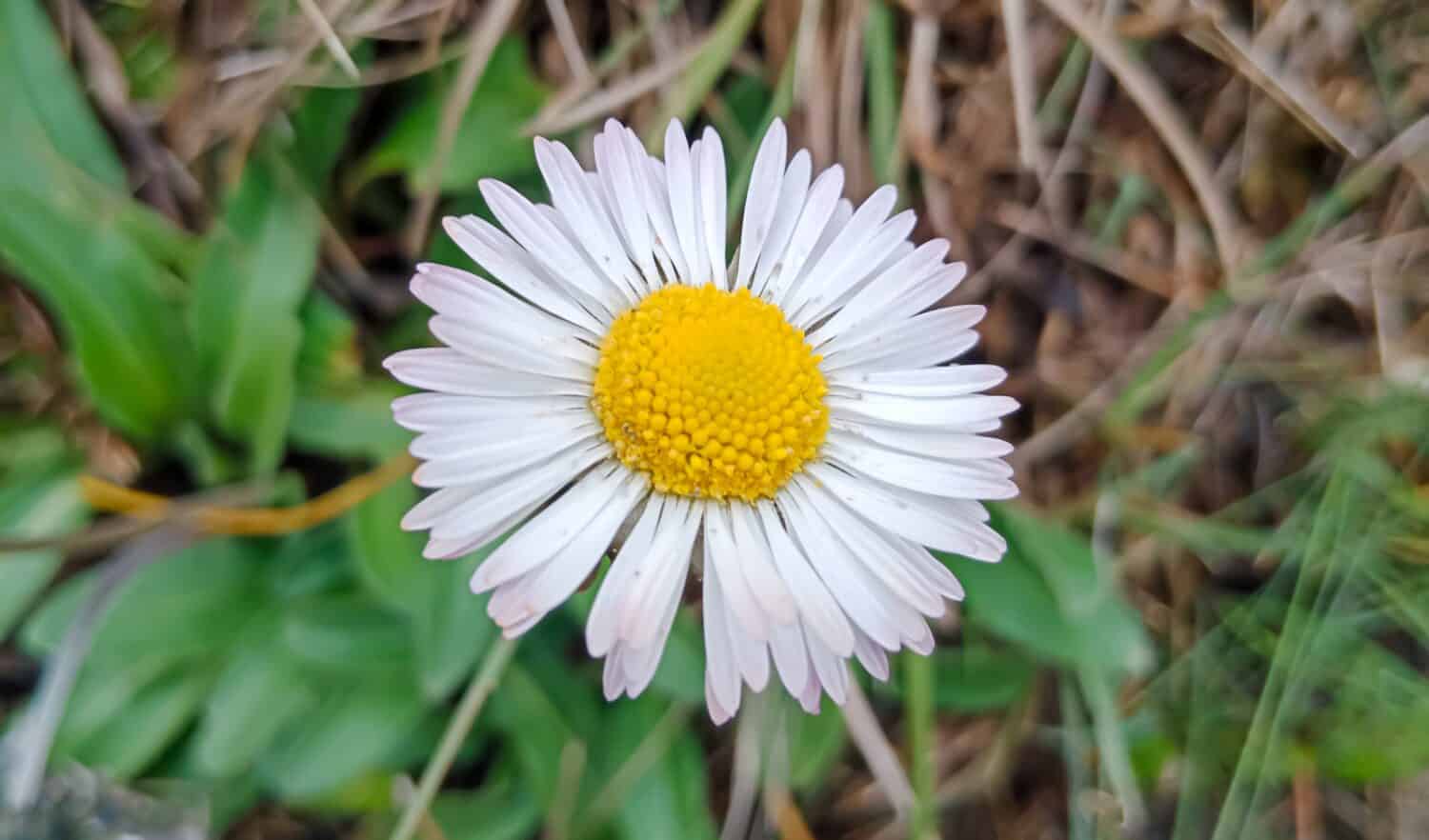
The first flower on our list is the daisy. It’s a simple, but well-known flower that can bloom well into fall depending on the environment and variety. The word daisy can refer to many different flowering plants. They vary in shape, size, and color. One of the most commonly planted daisy species is the common daisy, also known by its scientific name, Bellis perennis.
Daisies have large bright blooms that last up to a few weeks. They are excellent plants to grow in containers. Daisies in containers may need more water than those in the ground as some containers dry out faster than others. For your best chance of long-lasting blooms and many flowers, it’s best to repot (transplant) your daisy plant as it grows into a larger container. The roots need to stretch.
2. Coral Bells
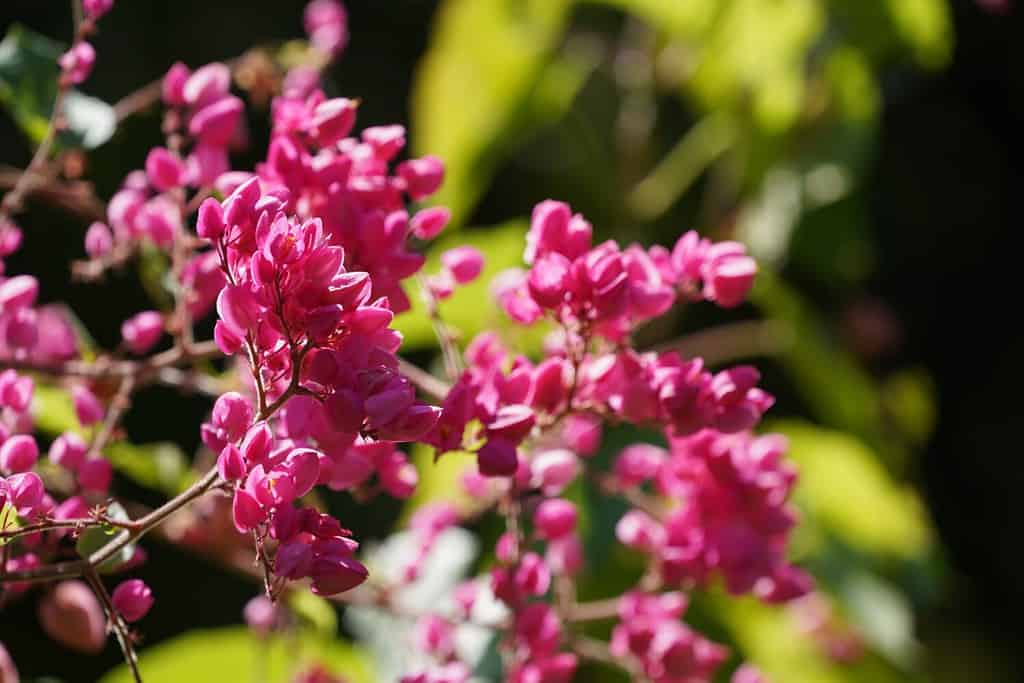
Coral bells can grow in containers but need pots with drainage holes.
©Doikanoy/Shutterstock.com
Another excellent potted flower alternative to chrysanthemums is coral bells. These lovely plants start blooming in late spring and may continue producing flowers into fall. They can be grown in the ground or pots. Coral bells though need deep containers with a lot of space. You can use ceramic or decorative concrete pots to hold your coral bells. These plants require drainage holes at the bottom of your pot and well-draining soil. They also need at least 4 to 6 hours of sunlight. Some varieties though require 8 hours of direct sunlight. Coral bells aren’t just praised for their long and tall flowers, but also their colorful and large leaves. The flower clusters are generally white or pink, and the leaves can be any color from dark green, to vivid red, and purple-black.
3. Asters
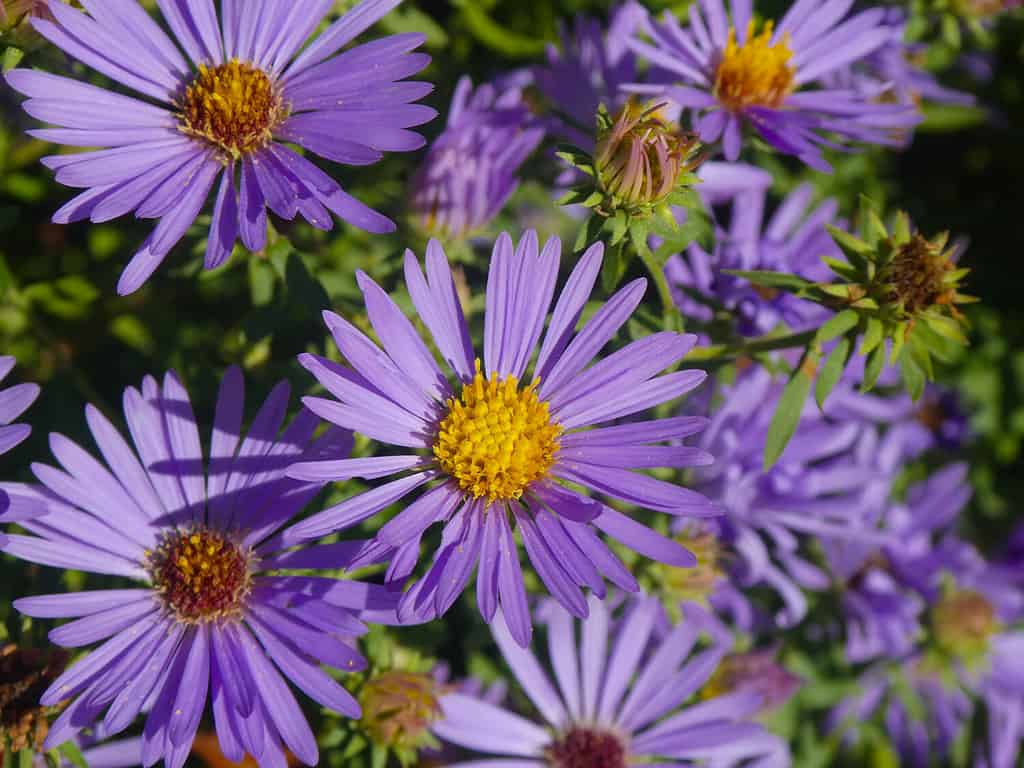
You can grow aster seeds in containers all year round. They do best in USDA hardiness zones 3 to 8.
©ForestSeasons/Shutterstock.com
Asters are daisy-like flowers within the same family. They are fall favorites for many, especially those looking to purchase potted flower alternatives. Technically, aster is a genus of hundreds of cultivars of flowering plants in the family Asteraceae. Most species are native to Eurasia.
The best part about growing asters isn’t their vibrant blooms, but their ease. They are one of the easiest flowering plants to care for in small spaces. You can either purchase already mature aster flowers in garden stores or plant your own. If you’re going to plant asters, you’ll need to start the seeds 4 to 6 weeks before the expected last frost indoors. If you don’t have enough warmth or sunlight in your home, you can use an LED grow light. Outside, aster flowers grow best in USDA hardiness zones 3 to 8.
4. Petunias
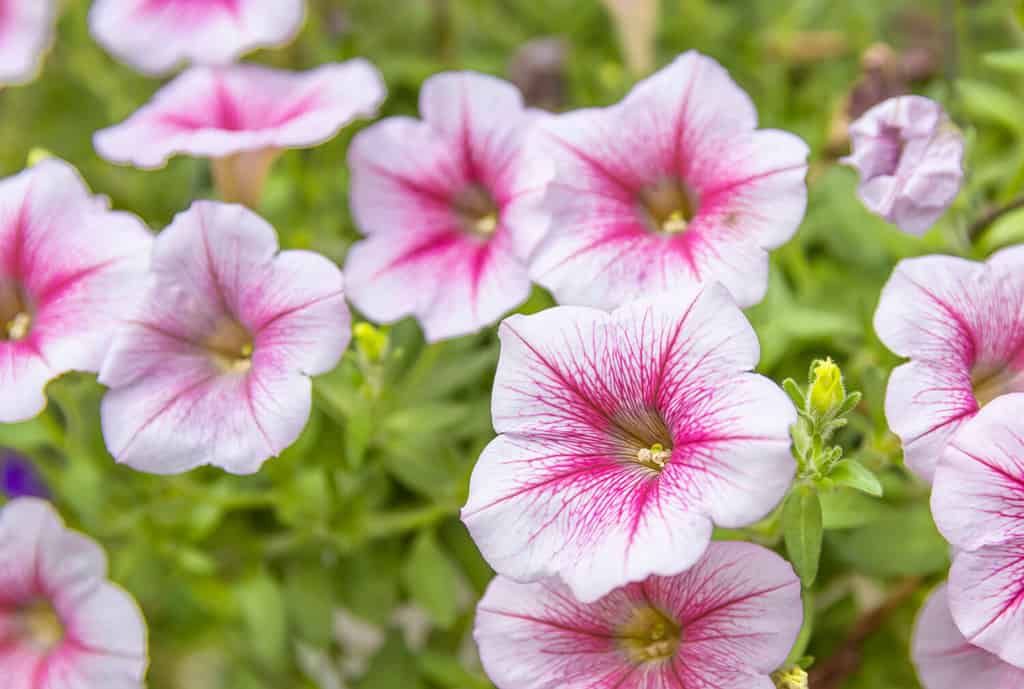
Petunias thrive in warm and sunny conditions. These plants produce gorgeous flowers that vary a lot in coloration.
©aomnet7/Shutterstock.com
Instead of purchasing a chrysanthemum plant this year, why not brighten your place with a petunia plant? Petunias vary a lot in appearance, which makes them such excellent flowers. You can get creative with the variety and placement. Petunias grow in different environments. You can grow them inside or outside depending on the temperature. Petunias grow best in USDA hardiness zones 9 to 11.
Like aster, petunia is a genus of many flowering species of plants. Petunias mainly originate in South America, although are found throughout the world. A popular petunia species is the large white petunia, although some petunia flowers are multi-colored, red, pink, yellow, and purple.
5. Dahlias
©iStock.com/Maksims Grigorjevs
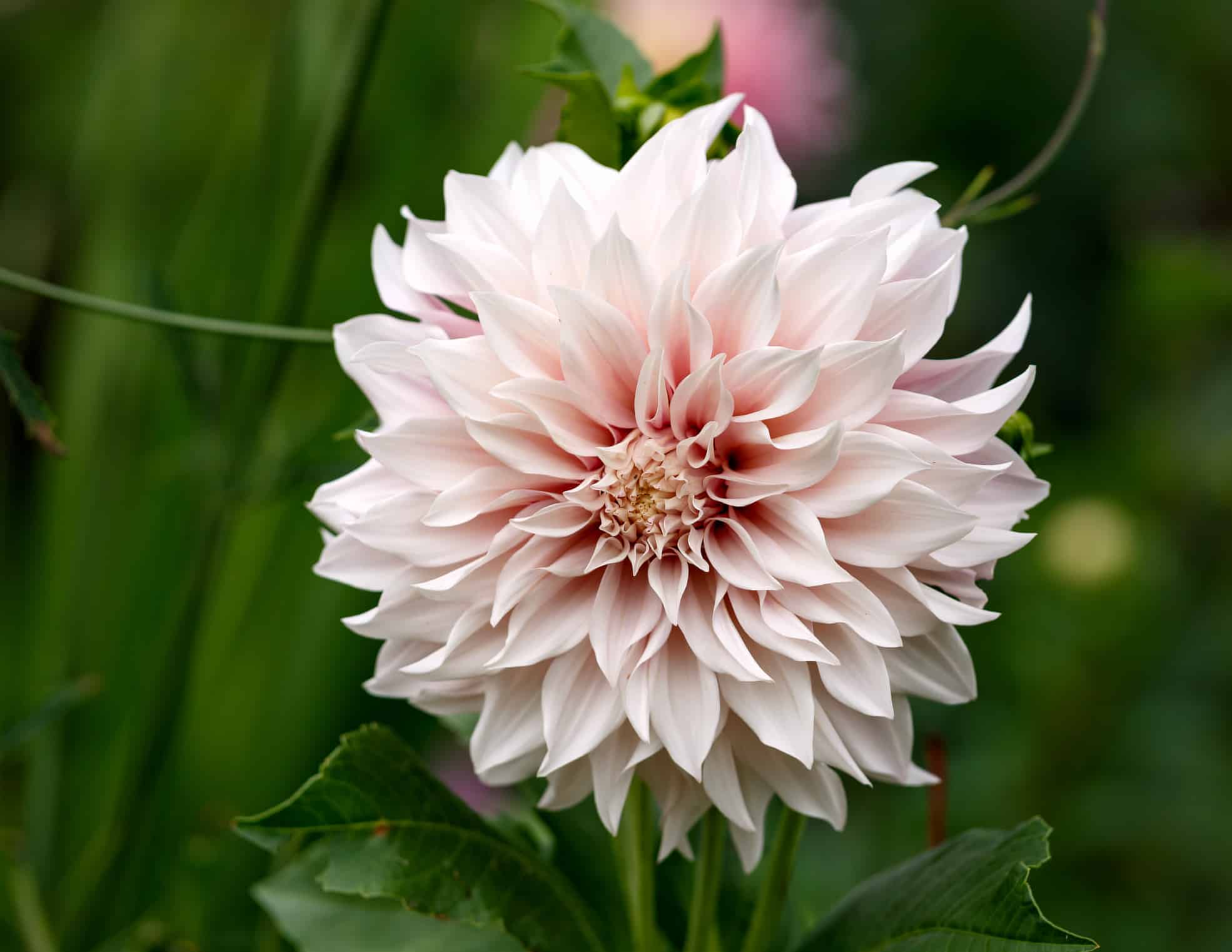
Dahlias are also excellent potted flower alternatives to buy this fall instead of chrysanthemums. While there is nothing wrong with purchasing and growing chrysanthemums, dahlias are just as large and showy. Both chrysanthemums and dahlias have a lot in common. They are often confused with one another.
Like most flowers on our list, dahlia is a genus of flowering plants. This genus is native to Mexico and Central America. The flowers are popular in many gardens for their size and showiness. Although best grown in warmer climates, dahlias can be grown as an annual in places that experience cold winters. These perennial plants with tuberous roots bloom in later summer and early fall. They are generally scent-free.
6. Zinnias
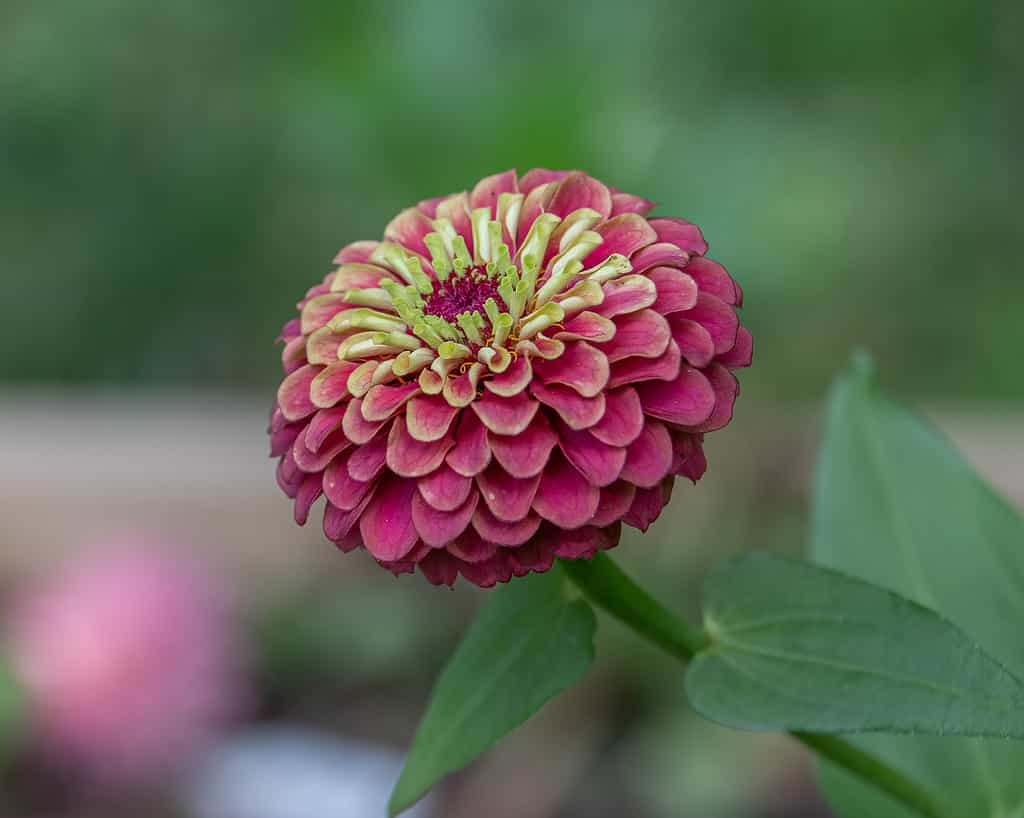
Zinnia flowers can be multi-colored or solid.
©Joshua Goddard/iStock via Getty Images
Next on our list of potted flower alternatives for this fall is the zinnia, a favorite for many gardeners. Zinnias are very popular across the United States as spring flowers, but they can also bloom through all. Zinnia is a genus of plants within the family Asteraceae. Although widespread, their native range is from the Southwestern United States to South America.
No two zinnia flowers look alike. These flowering plants produce large flowers with dozens of vibrant petals. They can be pink, red, orange, white, purple, and yellow. Zinnias are extremely popular container-friendly flowers. They grow in clusters and attract pollinators.
7. Oxalis
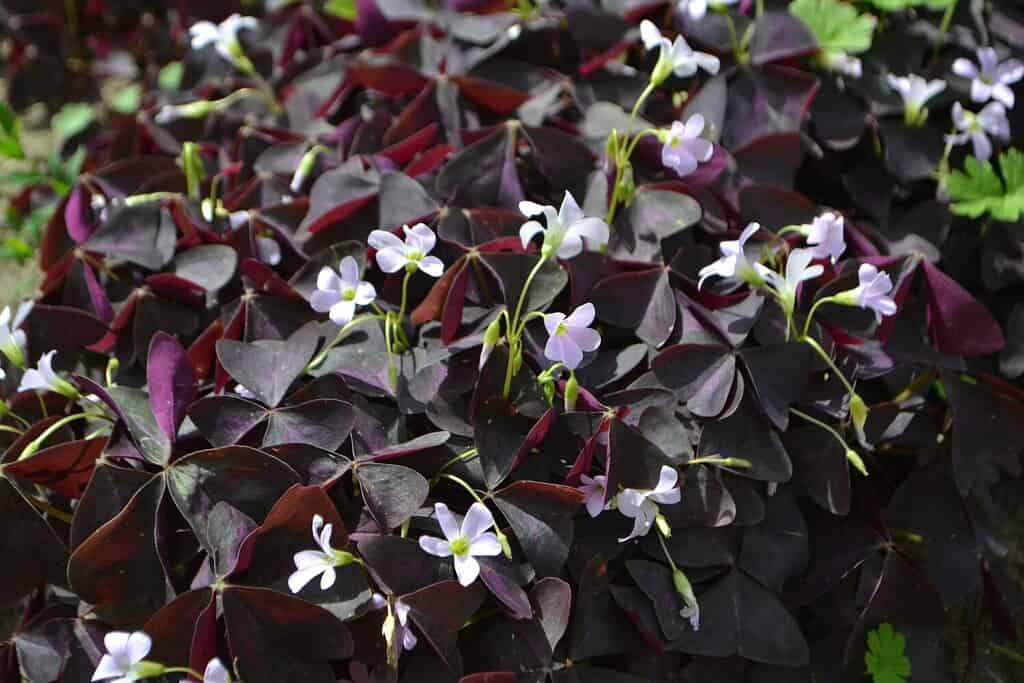
Some oxalis plants produce beautiful purple or red leaves that resemble flowers.
©Edita Medeina/Shutterstock.com
Have you ever heard of the oxalis? It’s a genus with over 500 flowering plants in the family Oxalidaceae. Oxalis flowers aren’t just beloved for their unique and gorgeous flowers, but their leaves that range in size and color. Some oxalis species and cultivars produce green, red, or purple leaves with 3 or 4 leaflets. The leaves themselves almost look like flowers.
Although the flowers aren’t as thick or as full as mums, they are still excellent choices for fall gardens. Oxalis plants thrive in USDA hardiness zones 5 to 10. You can even grow them indoors in containers and they bloom all year round with enough light!
8. Japanese Anemones
Another alternative to buying chrysanthemums in the fall is the Japanese anemone, a flowering plant in the buttercup family Ranunculaceae. Although native to Asia, it’s found throughout the United States. This hardy, but delicate and beautiful flower, produces gorgeous red, purple, white, and pink blooms. Some are bi-colored. You can either purchase one for your garden or for a friend.
Japanese anemones hold a lot of meaning. These lovely flowers can symbolize sincerity. They may also represent protection against evil or negativity. It’s a great gift for someone you appreciate and want to keep safe. Japanese anemones are also great flowers to plant in pots. The container needs to be large enough or your plant may suffer from being root bound. This is when the roots have no space to grow or spread and tighten against each other.
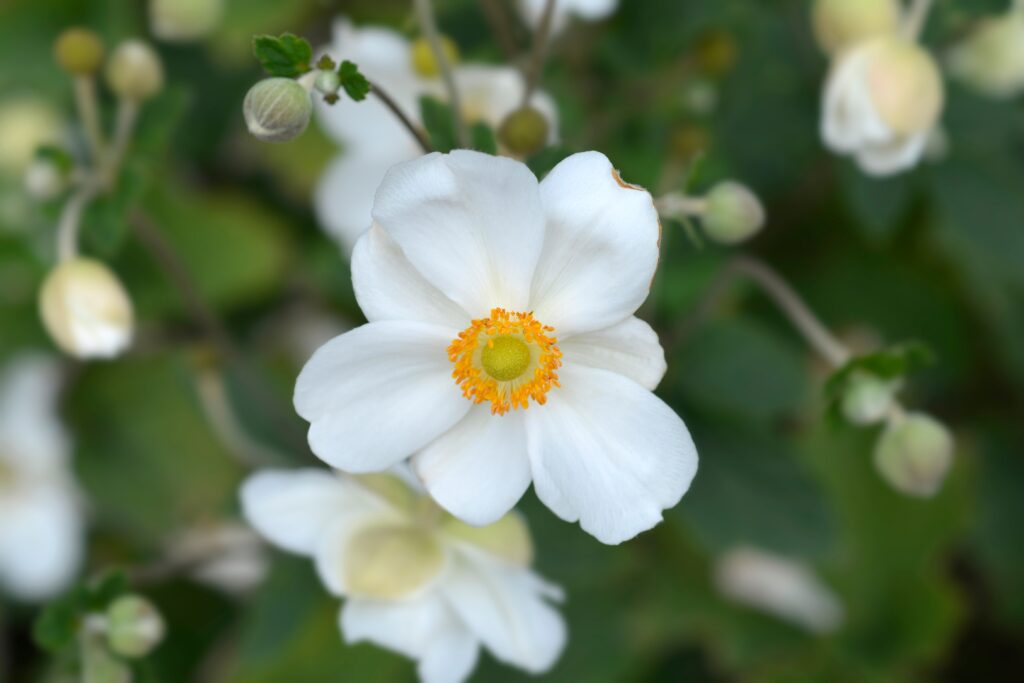
There are hundreds of cultivars of Japanese anemones. Some produce red, white, pink, purple, or yellow flowers.
©Nahhana/Shutterstock.com
9. Snapdragons
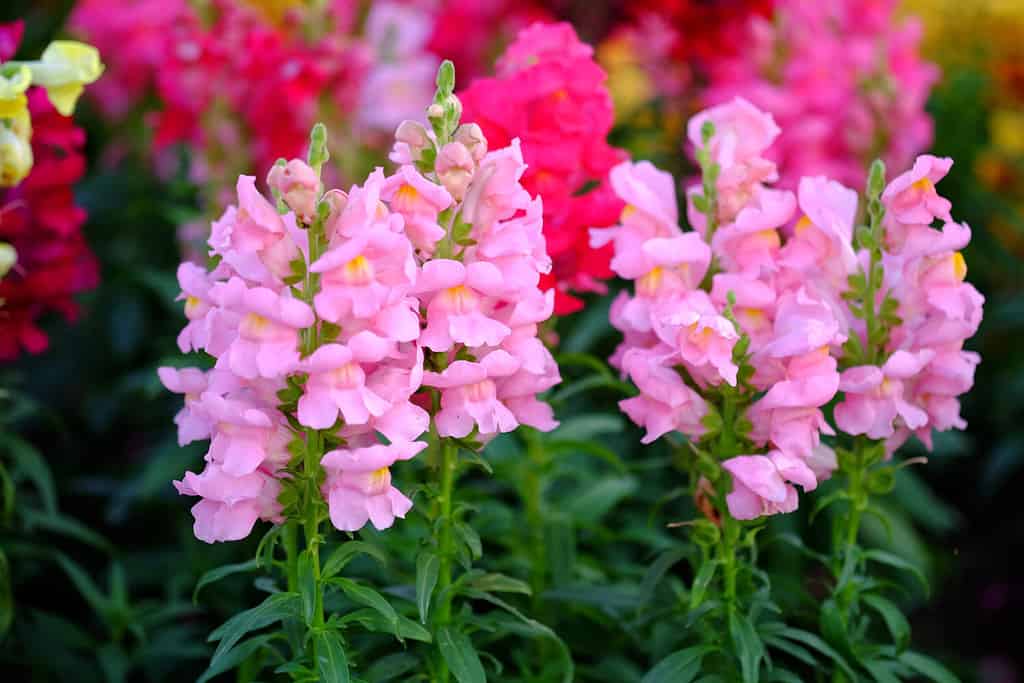
Snapdragons are one of the best flowers to plant in gardens. They also thrive in containers.
©Nualanong/Shutterstock.com
Have you ever grown snapdragons? Although many people prefer wide-blooming flowers like daisies, sunflowers, chrysanthemums, or roses, snapdragons have their unique beauty. Snapdragons are gorgeous flowers native to rocky areas of Europe, the United States, Canada, and North Africa. They are very resilient and tough, often growing through cracks in buildings. Technically, snapdragons are a genus of plants. They are popular ornamental flowers in many gardens in the United States. You can grow them in the ground or in containers.
Purchasing these flowers in time for fall is a great move! Have you ever wondered why snapdragons are named this way? Well, if you lightly squeeze or pink a snapdragon flower, it resembles the face of a dragon opening and closing its mouth. Snapdragon flowers grow on a long step and there are often multiple flowers produced by one plant. The flower colors range from red to white, to even yellow. Snapdragons are favorites for containers because you can grow them with other plants. They make excellent accent flowers in mixed pots.
10. Hydrangeas
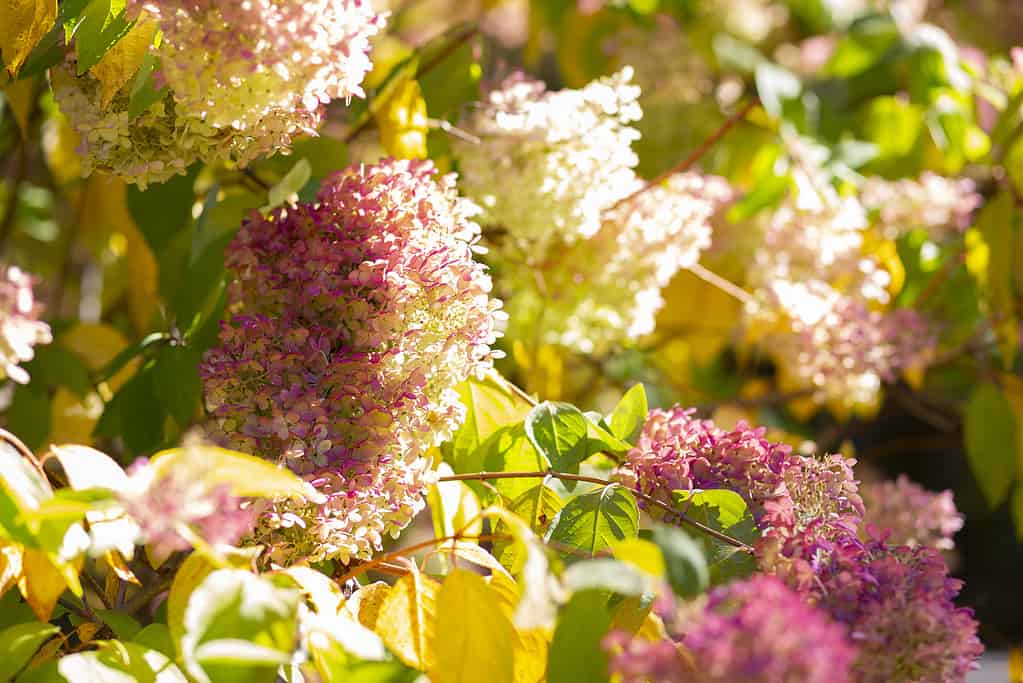
Plant hydrangeas in the early spring or fall when they are still dormant. They are great potted flower alternatives to chrysanthemums.
©Baber Photography/iStock via Getty Images
Next on our list of potted flower alternatives to buy this fall instead of chrysanthemums are hydrangeas. They are breathtaking flowers easy to identify from the large circular clusters they form. Hydrangeas is a genus of more than 70 species of flowering plants. The plants are native to Asia and the Americas. Depending on the species, they can be thick bushes, small and tall trees, and woody climbing vines.
Hydrangea flowers are tricky in the fall. If you purchase one that is mature, they are likely already flowering. Most varieties bloom between spring and fall, while others bloom from spring to early summer. They can be tricky to grow in containers, but there are dwarf and small varieties. Even drawf varieties though require a large container of at least 18 to 20 inches in diameter. Generally, hydrangeas sold in stores in small containers need to be transplanted so they can continue to grow.
11. Black-eyed Susans

Black-eyed Susan are commonly found in gardens throughout the contiguous United States.
©LauraTabor/iStock via Getty Images
Another excellent fall flower to buy that is just as beautiful as the chrysanthemum is the black-eyed Susan. These gorgeous flowers are native to Eastern and Central North America. Like a few other flowering plants on this list, they are members of the Asteraceae family. They are common flowers in the United States with a wide distribution. Currently, its NatureServe conservation status is Secure.
Black-eyed Susans are favorites for many. They are easy to grow and grow in large clusters together. You can grow them from seed or purchase these stunning daisy-like flowers in nurseries and sometimes grocery stores. There are at least four varieties and hundreds of more cultivars and types. Black-eyed Susans have a long blooming season starting in early summer and sometimes ending as late as the first sign of frost. They are a great flower to give that symbolizes encouragement, joy, and motivation. These flowers are often associated with justice.
12. Sweet Alyssums
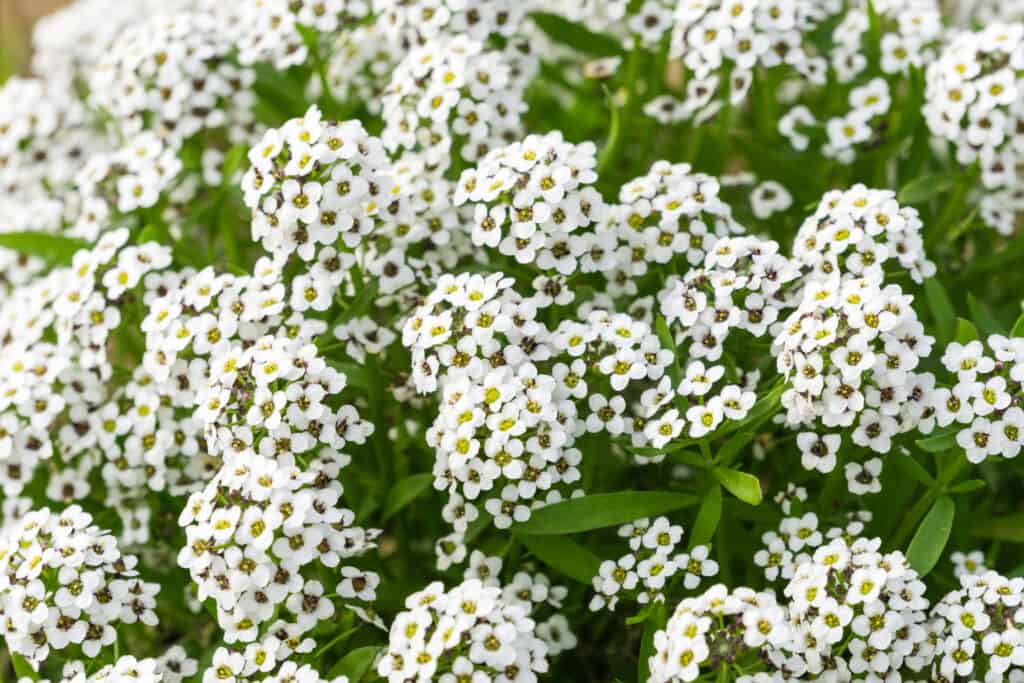
Sweet alyssum grow in large bunches of small white flowers.
©iStock.com/Sundry Photography
Last but not least is the twelfth plant on our list of potted flower alternatives to chrysanthemums, the sweet alyssum. They are sometimes also called sweet alison flowers. These lovely fall favorites are members of the Brassicaceae family. These annual plants are bushy and can easily reach taller than a foot. Although often grown in public parks are a shrub or tree, you can grow them in containers.
Potted sweet alyssum thrive in containers, as long as they have enough space. These beautiful clustering white flowers need at least 4 to 6 hours of direct sun and plenty of water. Too much shade and your flowers won’t bloom or develop. Some gardeners get creative with their containers and choose ones with faces so that the sweet alyssums grow outward like hair.
Summary of the 12 Beautiful Potted Flower Alternatives to Buy This Fall Instead of Mums
| # | Flower |
|---|---|
| 1 | Daisies |
| 2 | Coral Bells |
| 3 | Asters |
| 4 | Petunias |
| 5 | Dahlias |
| 6 | Zinnias |
| 7 | Oxalis |
| 8 | Japanese Anemones |
| 9 | Snapdragons |
| 10 | Hydrangeas |
| 11 | Black-eyed Susans |
| 12 | Sweet Alyssums |