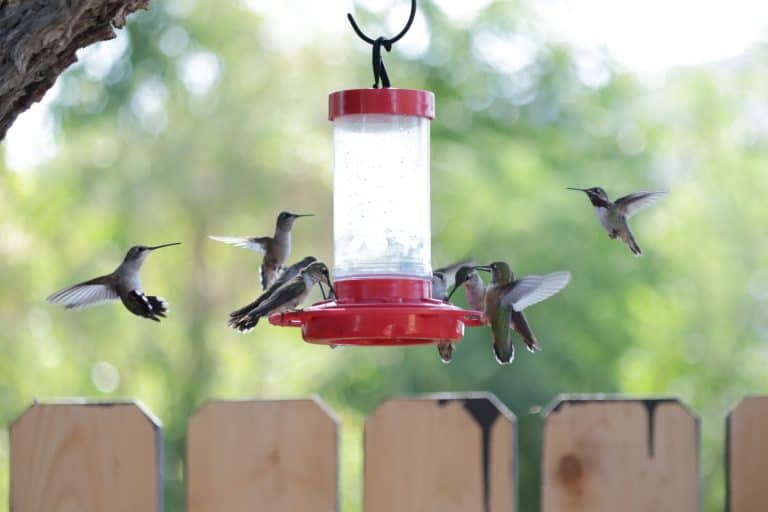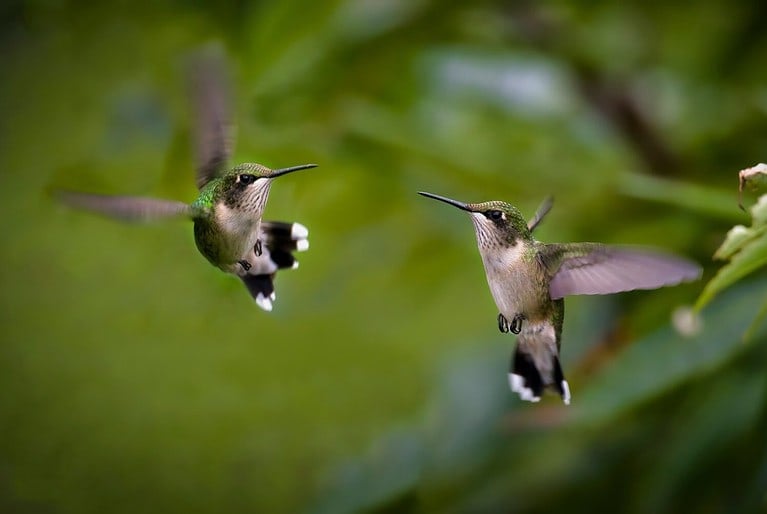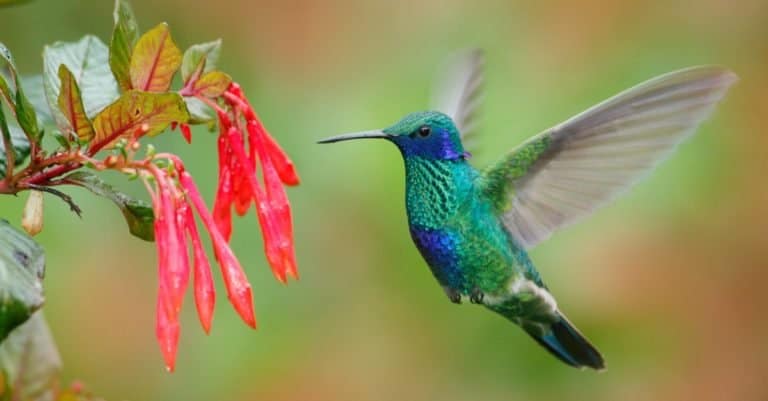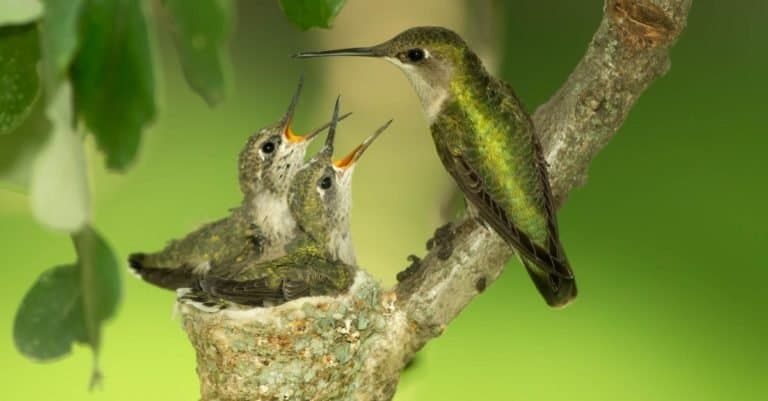

These small migrating birds usually travel solo in The Lone Star State. They are unique in their ability to fly backwards and the sound their wings make is like a hum you can easily recognize, no matter where you are in the state. Discover eight hummingbirds in Texas and the types of plants they love!
Hummingbirds In Texas: 8 Types and the Plants They Love
1. Ruby-throated Hummingbird
Scientific name: Archilochus colubris
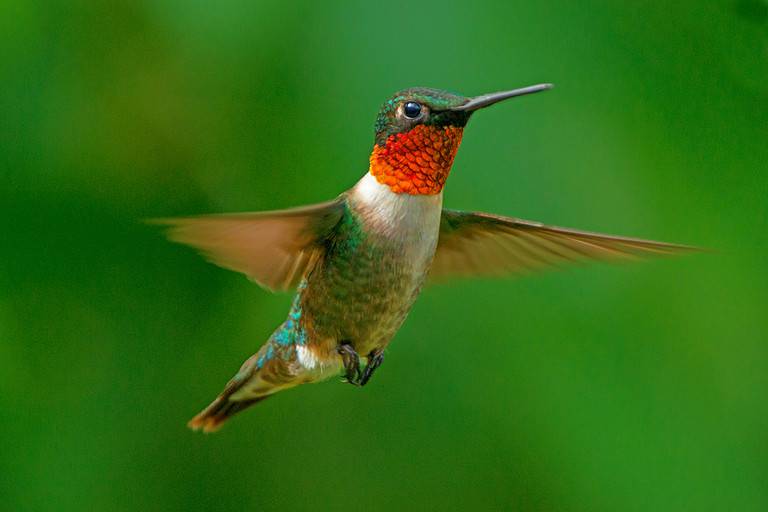
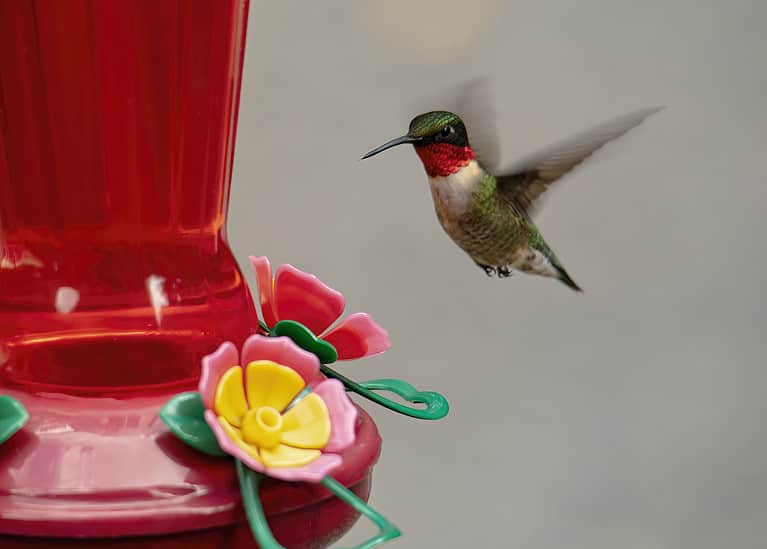
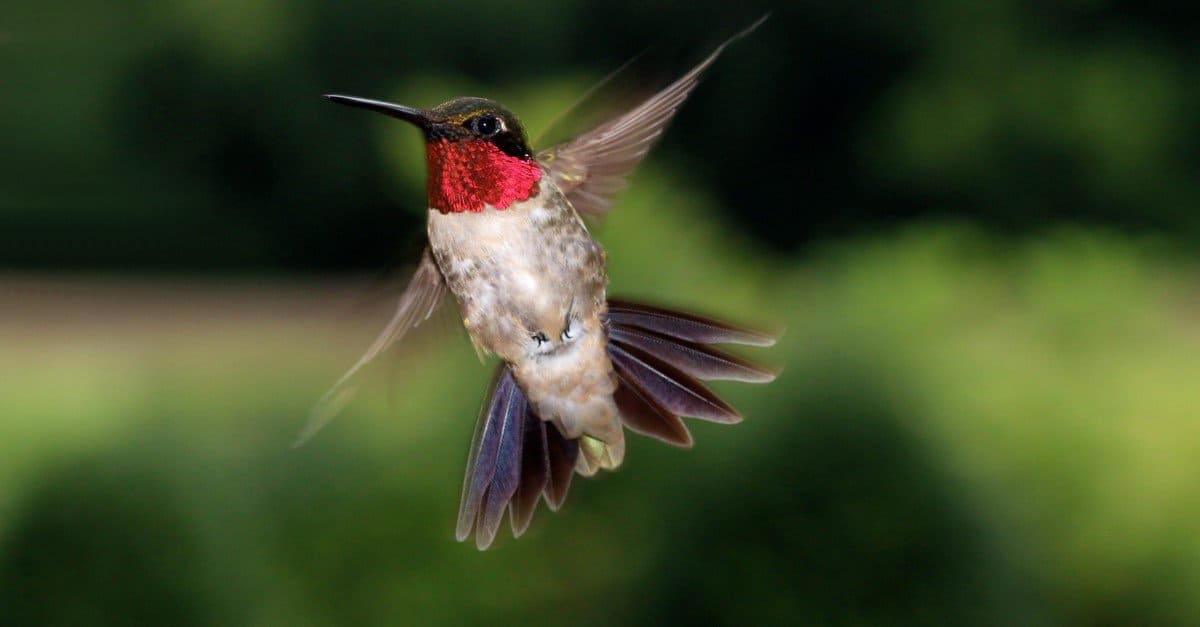
Ruby-throated hummingbirds grow up to 3.5 inches long and weigh, on average, 0.1 to 0.2 ounces. Their wingspan is a little bit bigger than the size of their bodies, ranging from 3.1 to 4.3 inches long. These hummingbirds are found in the eastern region of the state in cities like Austin and Dallas. You can distinguish these hummingbirds by their back and crown, which are usually a golden green color or a bright emerald green. Their underparts are both gray and white and they gravitate to wildflowers like lemon beebalm, trumpet honeysuckles, and cardinal flower.
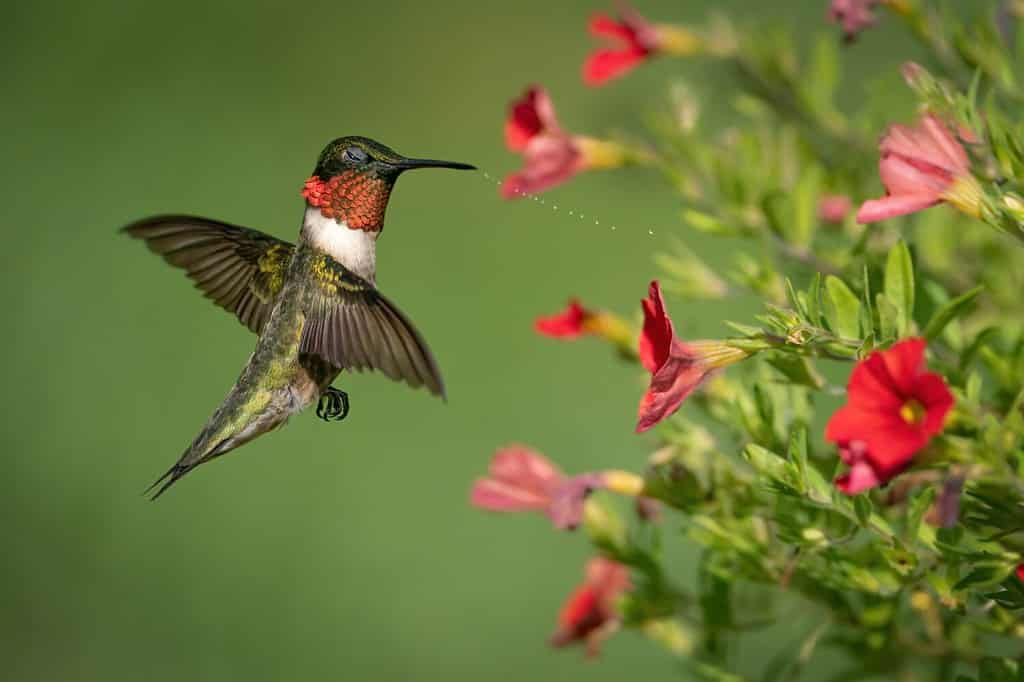
Ruby-throated hummingbirds gravitate to a variety of flowers.
©Cavan-Images/Shutterstock.com
2. Broad-tailed Hummingbird
Scientific name: Selasphorus platycercus
The broad-tailed hummingbird grows up to 3.5 inches long, weighs up to 0.2 ounces, and has a wingspan of 5.25 inches. These hummingbirds are found in the western region of Texas in places like Big Bend National Park. The adult males have a rather large head and a magenta-colored throat. Their breasts are white, and their flanks are green. These hummingbirds gravitate to meadows where there are endless flowers like red columbine and scarlet mint for them to enjoy.
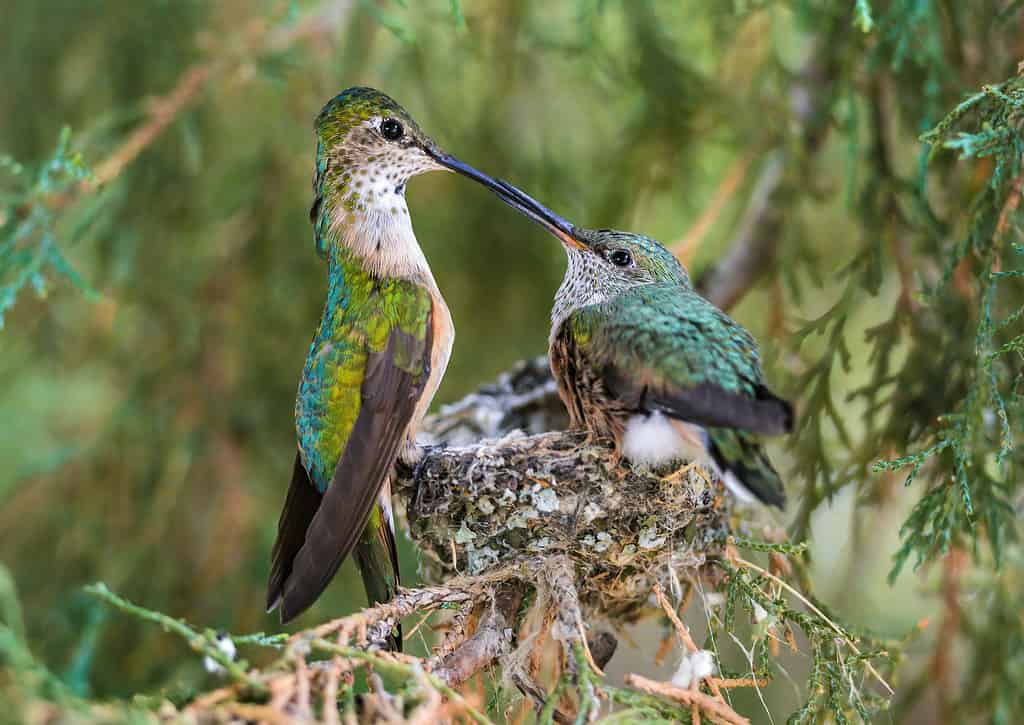
Broad-tailed hummingbirds enjoy plants like scarlet mint.
©Susan Hodgson/Shutterstock.com
3. Rufous Hummingbird
Scientific name: Selasphorus rufus
The rufous hummingbird has a reputation for being quite feisty. The male is orange while the female sports both green and orange colors. These hummingbirds put up a fight with other hummingbirds — even those larger than them! They are extra excitable around feeders and tubular flowers (like columbine, lilies, and larkspurs) and while they add to the beauty in your garden, they certainly know how to bully any other hummingbird species that might also be attracted to your yard. The good news is they move on quickly!
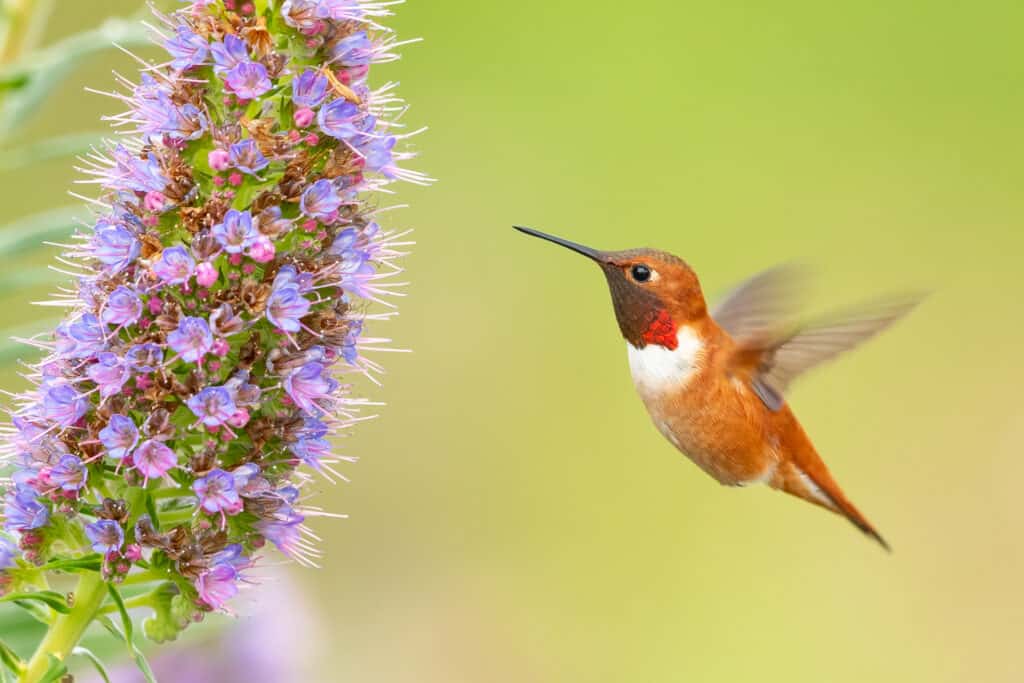
Rufous hummingbirds are known for their feisty nature.
©Keneva Photography/Shutterstock.com
4. Allen’s Hummingbird
Scientific name: Selasphorus sasin
Allen’s hummingbird has a stocky build. The adult males have a red/orange-colored throat with a lighter, orange-colored belly. The female sports a metallic green back. These hummingbirds use varying habitats when it’s breeding season. The males look for females in one area and after the female visits and mates, she heads on into forests to build her nest and raise her young. If the weather is warm, they let their feet dangle while in flight but if it’s cold, they tuck them up into their bellies to keep warm while soaring. They enjoy sage, eucalyptus, Indian paintbrush, and bush monkeyflower.
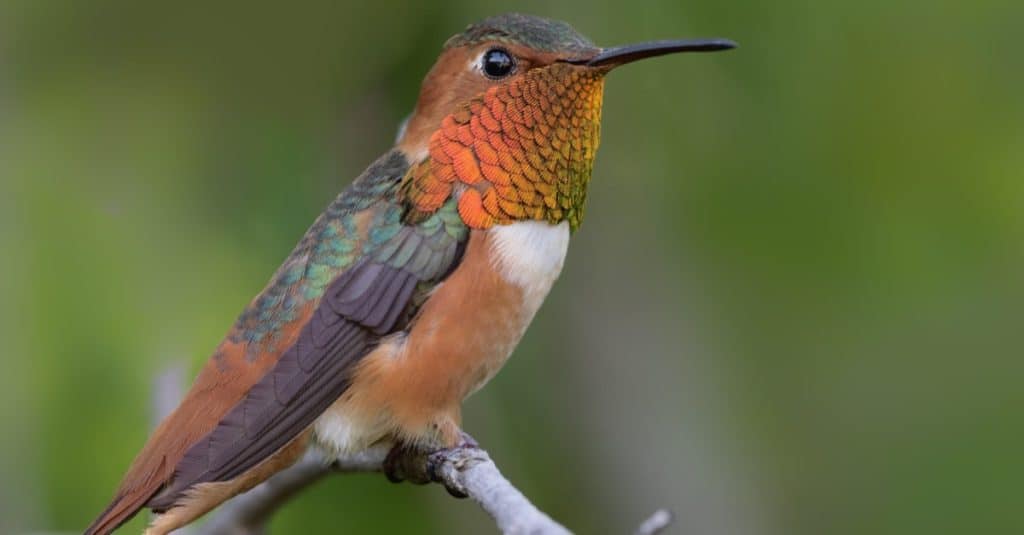
Allen’s hummingbirds enjoy eucalyptus and sage.
©iStock.com/Angel Di Bilio
5. Violet-crowned Hummingbird
Scientific name: Amazilia violiceps
The violet-crowned hummingbird is aptly named because it has a violet-colored crown. This hummingbird has an elegant appearance complemented by a long red bill. Unlike other hummingbirds, the violet-crowned hummingbird does not have a colorful throat. These hummingbirds breed in Arizona and the southern region of New Mexico and there have only been about 24 accepted recordings of these hummingbirds in Texas. Though they don’t frequent the state, they have made their way over. Their plant preferences include flowers and flowering trees with high sugar content.
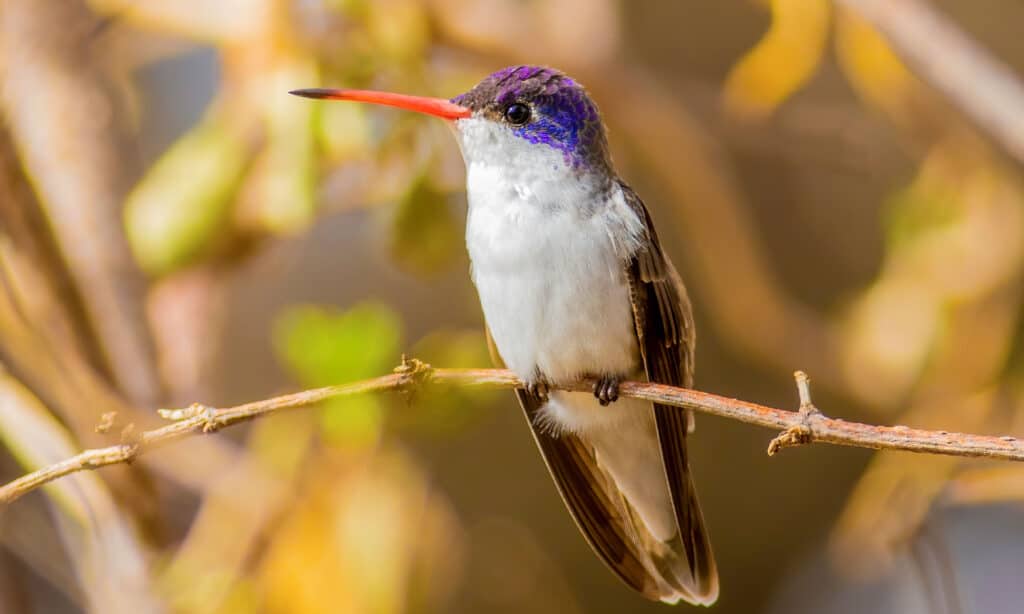
Violet-crowned hummingbirds are unique in that they don’t have colorful throats.
©Matthew Jolley/Shutterstock.com
6. Lucifer Hummingbird
Scientific name: Calothorax lucifer
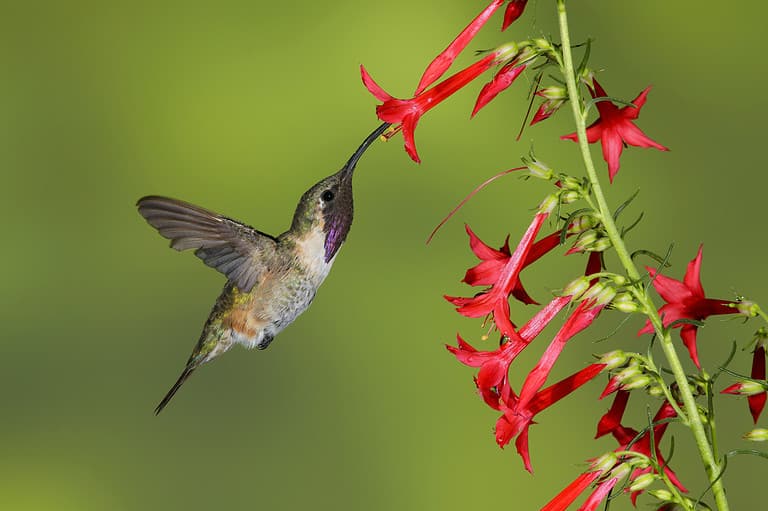
The Lucifer hummingbird grows to 3.5 inches long and weighs only 0.1 ounces. It has a wingspan of four inches. Like the broad-tailed hummingbird, you can find this one in areas like Big Bend National Park where they have a breeding population. These hummingbirds have a unique curved bill along with forked tails. The adult males have a glittering purple throat. They love cacti, ocotillos, and agaves.
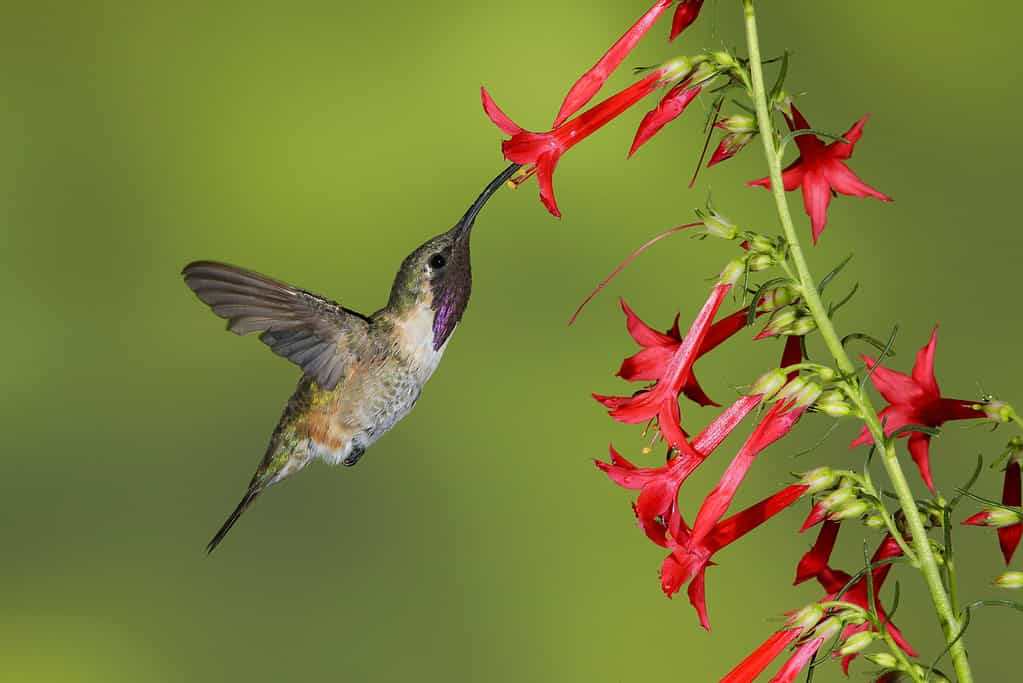
Lucifer hummingbirds have curved bills.
©AGAMI stock/iStock via Getty Images
7. Calliope Hummingbird
Scientific name: Selasphorus calliope
This hummingbird grows between 3.1 and 3.5 inches long. It weighs 0.1 ounces and has a wingspan of up to 4.3 inches. These hummingbirds migrate through the western region of Texas around El Paso. These are tiny hummingbirds that aren’t the easiest to spot. They have a unique throat color, however, that can help you identify them. Not only is it a bright magenta but it also forms rays that seem to emanate from its throat down toward its breast. These hummingbirds like fireweed, creeping mahonia, and larkspur.
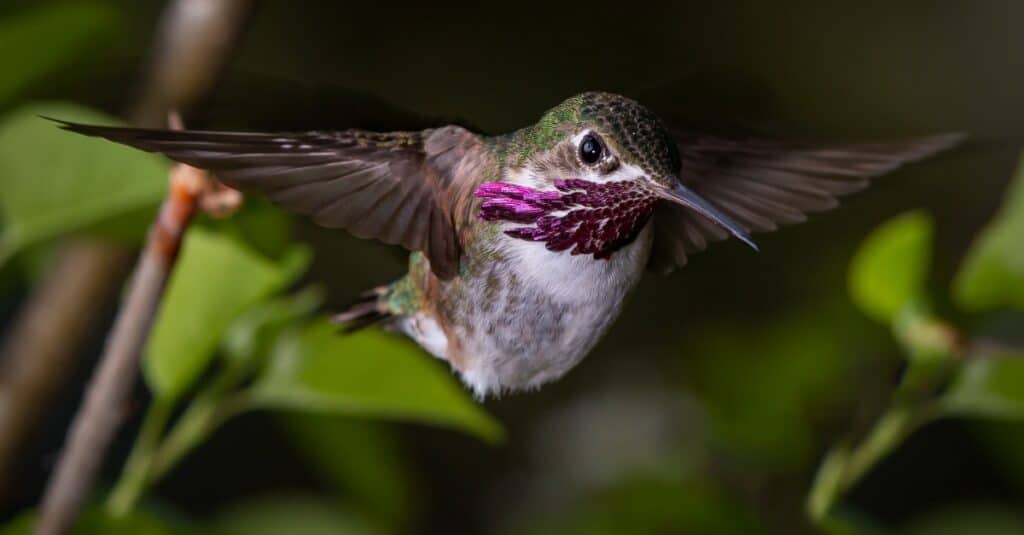
Calliope hummingbirds have a strikingly beautiful gorget.
©iStock.com/McBenjamen
8. Blue-Throated Mountain Gem
Scientific name: Lampornis clemenciae
The blue-throated mountain gem hummingbird is larger than other hummingbirds, reaching up to 4.7 inches in length. It weighs 0.3 ounces and has a wingspan of up to 3.1 inches. Texas is one of the only states where these hummingbirds are found. The other two states include Arizona and New Mexico. These hummingbirds prefer open wetlands and feed on nectar. Adult males have a sapphire-colored throat that shimmers when the light hits it just right. Both males and females have white stripes on their faces. They enjoy desert honeysuckle, golden columbine, and mountain sage, among others.
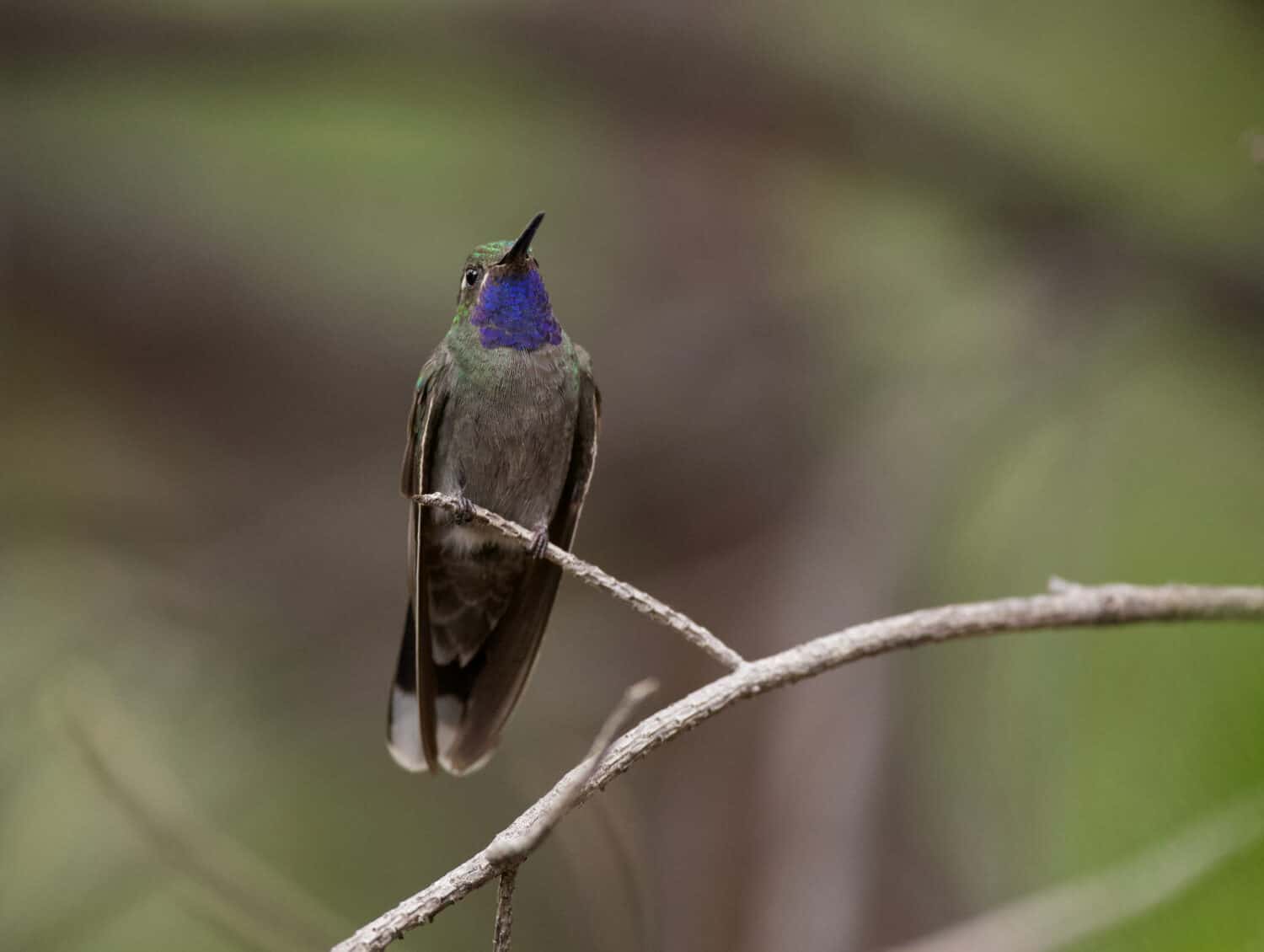
Blue-throated mountain gem hummingbirds are the largest in the U.S.
©Brian Magnier/Shutterstock.com