
When we think of dazzling, brightly colored insects, butterflies immediately come to mind. But the spotlight too often misses the many moths that are just as spectacular. In fact, the world’s most colorful moths can easily rival the beauty of butterflies — but these eye-popping hues are also crucial to their survival. Let’s take a closer look at some of the world’s most colorful moths and how they utilize their marvelous designs!
False Tiger Moth (Dysphania)
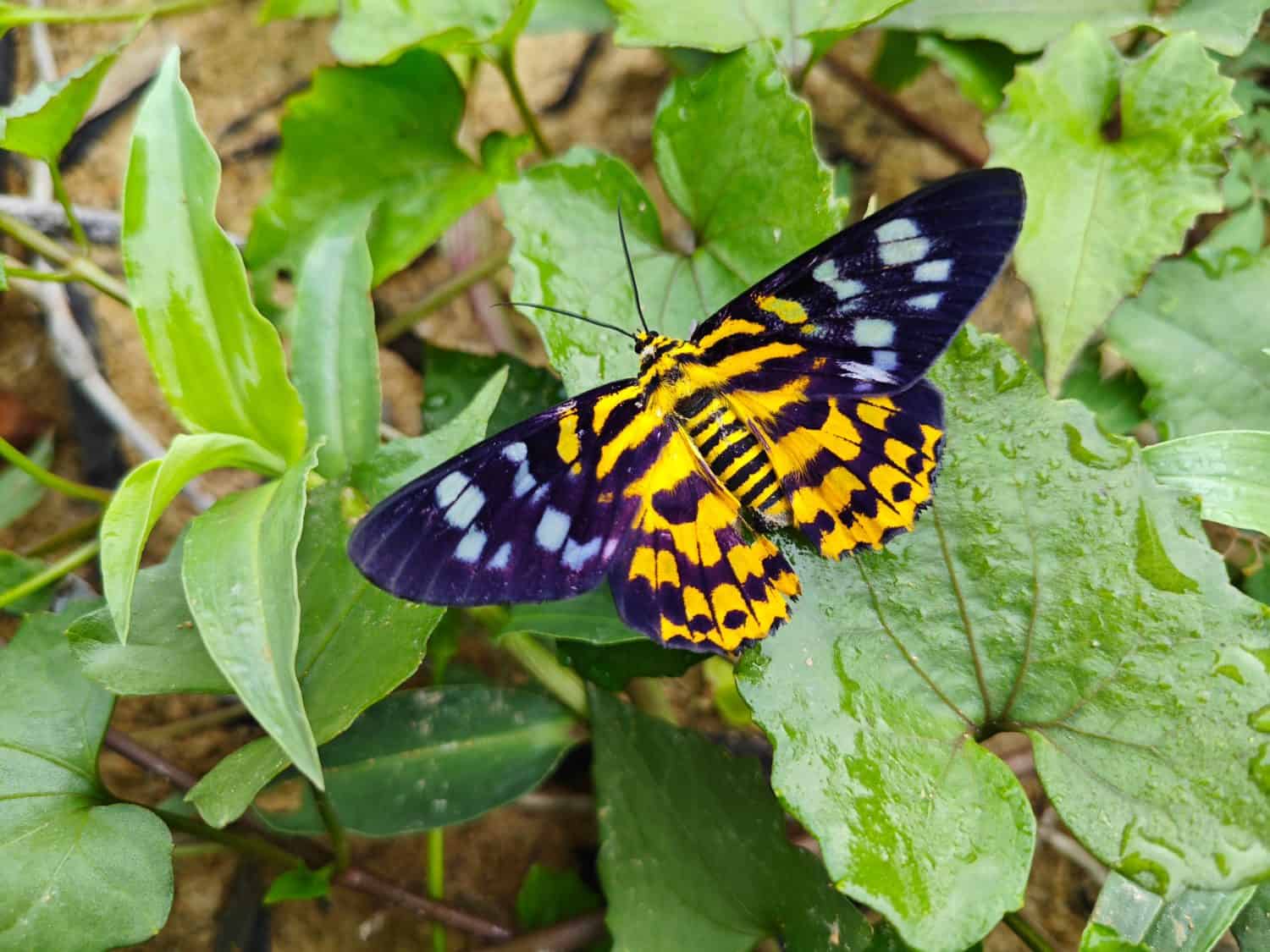
Native to tropical regions of Australia and Southeast Asia, false tiger moths thrive in warm climates and are often active during the day.
©Young Swee Ming/Shutterstock.com
These large, brilliantly colored moths hardly look like moths at all! With wingspans of 2 to 3 inches, their wings feature bold blends of golden yellow, deep purple, orange, and black hues. Their patterns typically fall into two styles: one features bright yellow or cream wings with dark, abstract purple or reddish markings, while the other displays deep blue or black wings with pale white or gray patches reminiscent of stained glass. Many also have a row of orange or yellow spots on their hindwings.
Harnessed Tiger Moth (Apantesis phalerata)
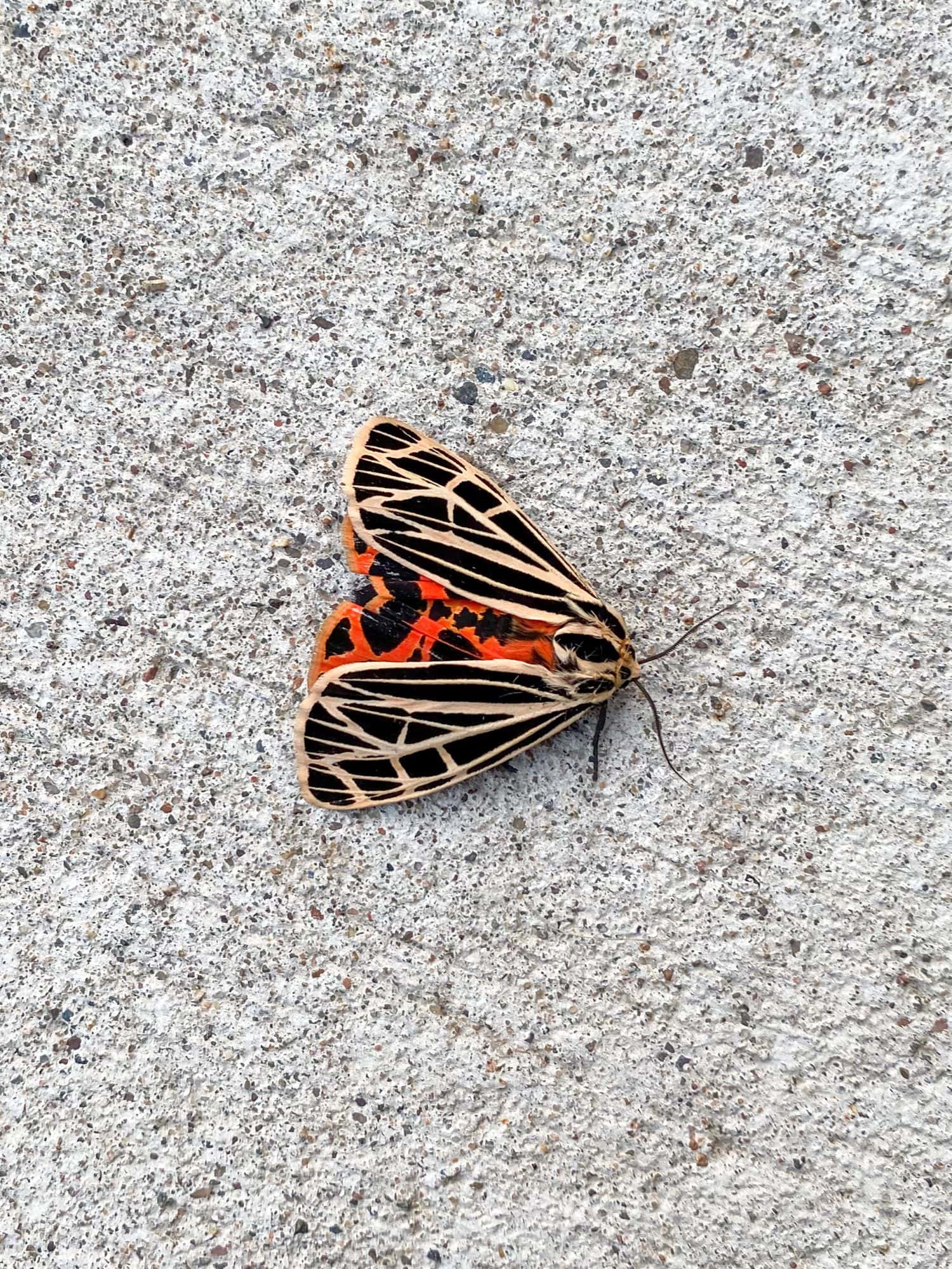
Harnessed tiger moth caterpillars eat many common plants, including dandelions, clover, corn, and plantains.
©Akerri/Shutterstock.com
The harnessed tiger moth is small but striking, with a unique wing pattern that resembles straps or a harness. Its black forewings sharply contrast with bold cream-colored lines and borders. Beneath these striking patterns, the moth’s body often has a warm and inviting reddish, yellowish, or rosy colored hue.
Although bold and colorful, these patterns actually help the moth disappear against leaves, bark, and shadows, making it difficult for predators to see. Harnessed tiger moths are common across central and eastern North America and are active on warm summer nights.
Rosy Maple Moth (Dryocampa rubicunda)
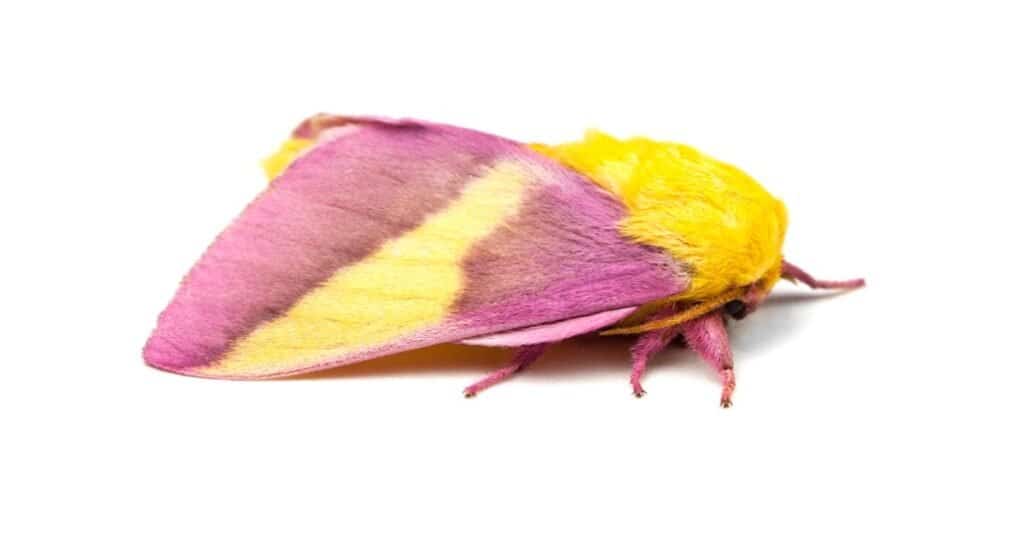
Rosy maple moths lay their eggs on various types of maple trees.
©Melinda Fawver/Shutterstock.com
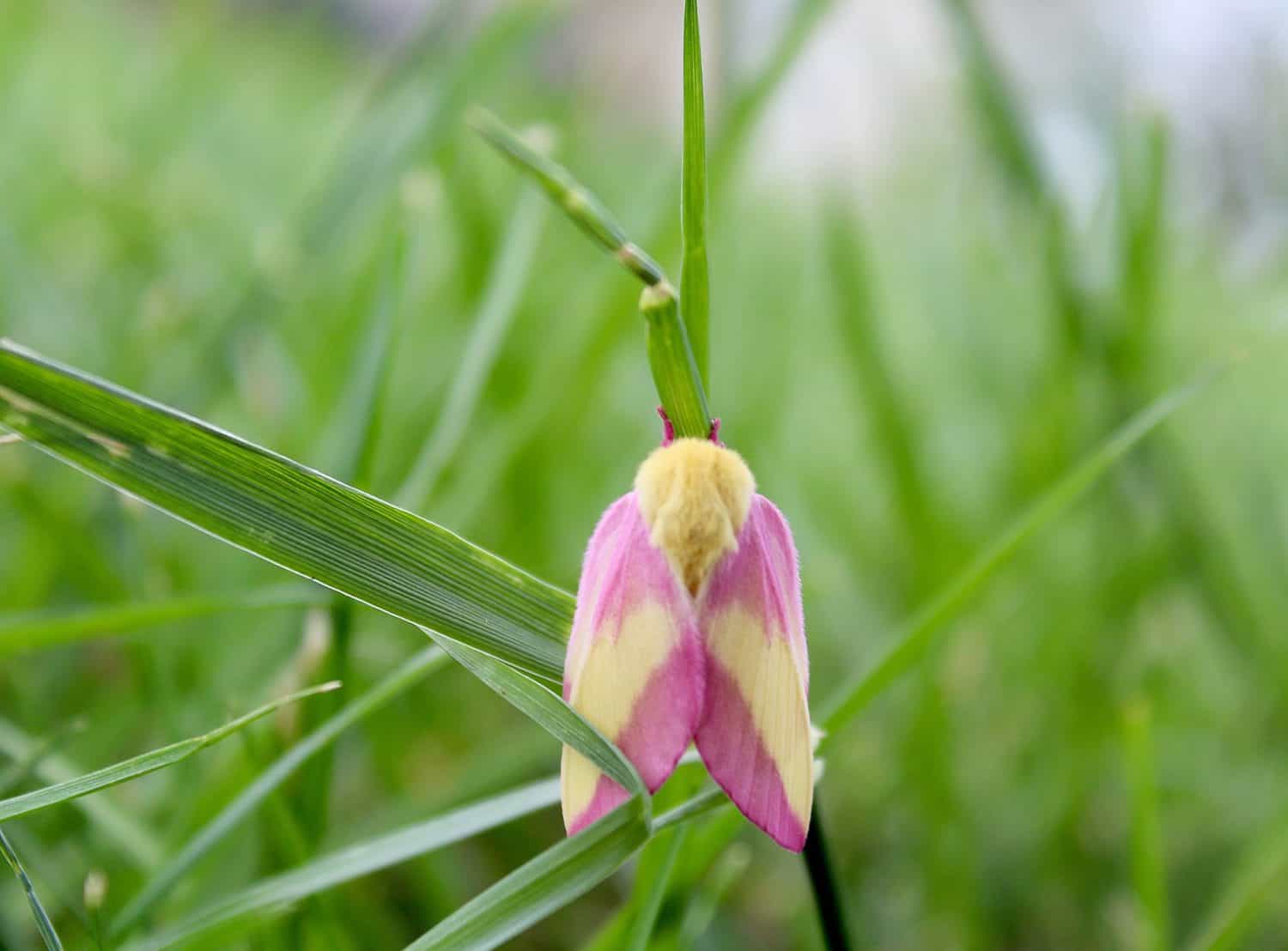
This vibrant moth is perfect proof that not all moths are drab. With a wingspan of only 1.2 to 1.7 inches, this tiny yet colorful moth looks like candy. Their bodies are brilliant shades of pink and yellow, which sometimes lean closer to soft cream or white.
Surprisingly, these bright colors actually provide the moths with camouflage. When they rest on maple leaves or seeds, their bright colors and patterns help break up their outline, especially when dappled sunlight filters through the trees, making it difficult for predators to spot them. You can find these colorful moths in deciduous forests, ranging from southern Canada down to Florida and Texas, typically in the late afternoon or evening.
Giant Leopard Moth (Hypercompe scribonia)
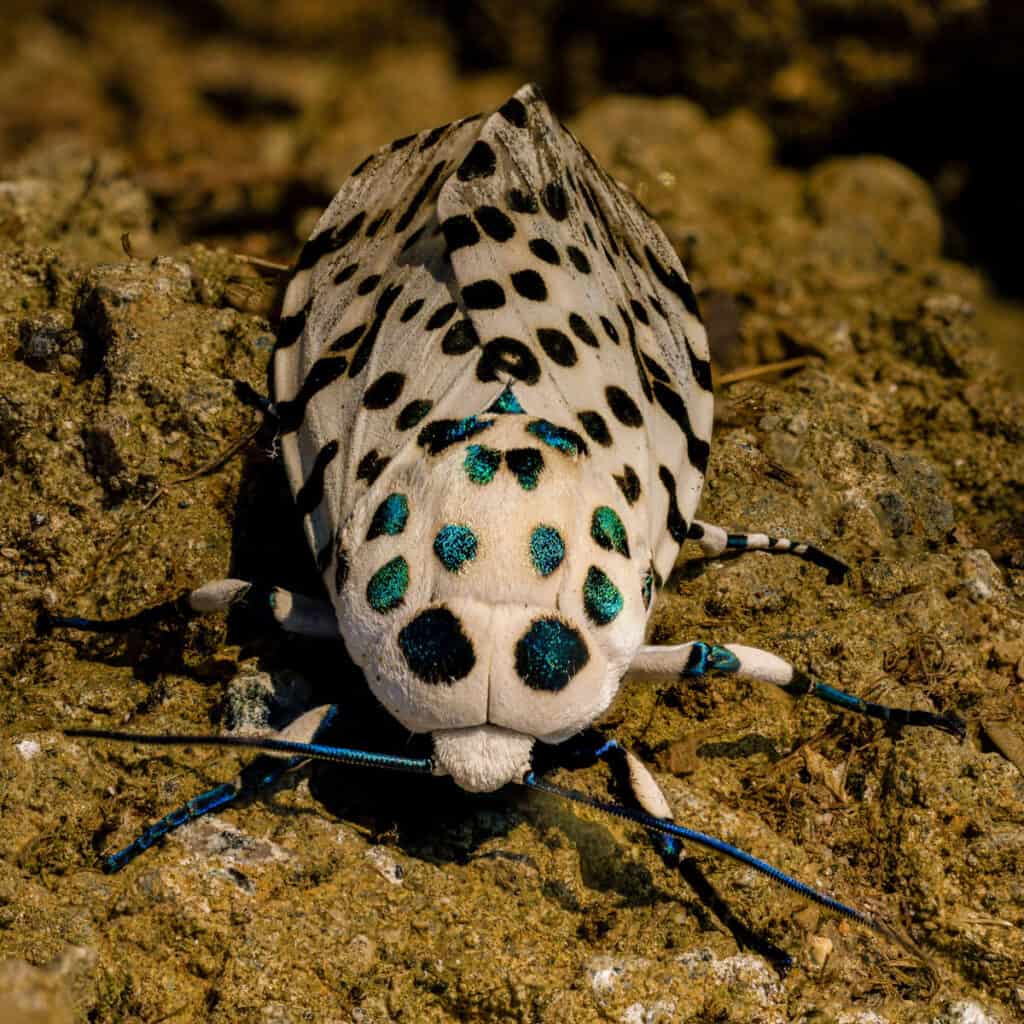
Giant leopard moths can be found across much of the eastern United States.
©Wirestock Creators/Shutterstock.com
The giant leopard moth is instantly recognizable thanks to its striking, snowy-white wings and bold black spots. If you look closely, you may notice that some of these spots have delicate, translucent white “windows” at their centers. When sunlight hits them, these dark spots can shimmer with an iridescent blue sheen. Underneath these striking wings, the moth’s abdomen is colored with vivid blue, black, and orange stripes.
Madagascan Moon Moth (Argema mittrei)
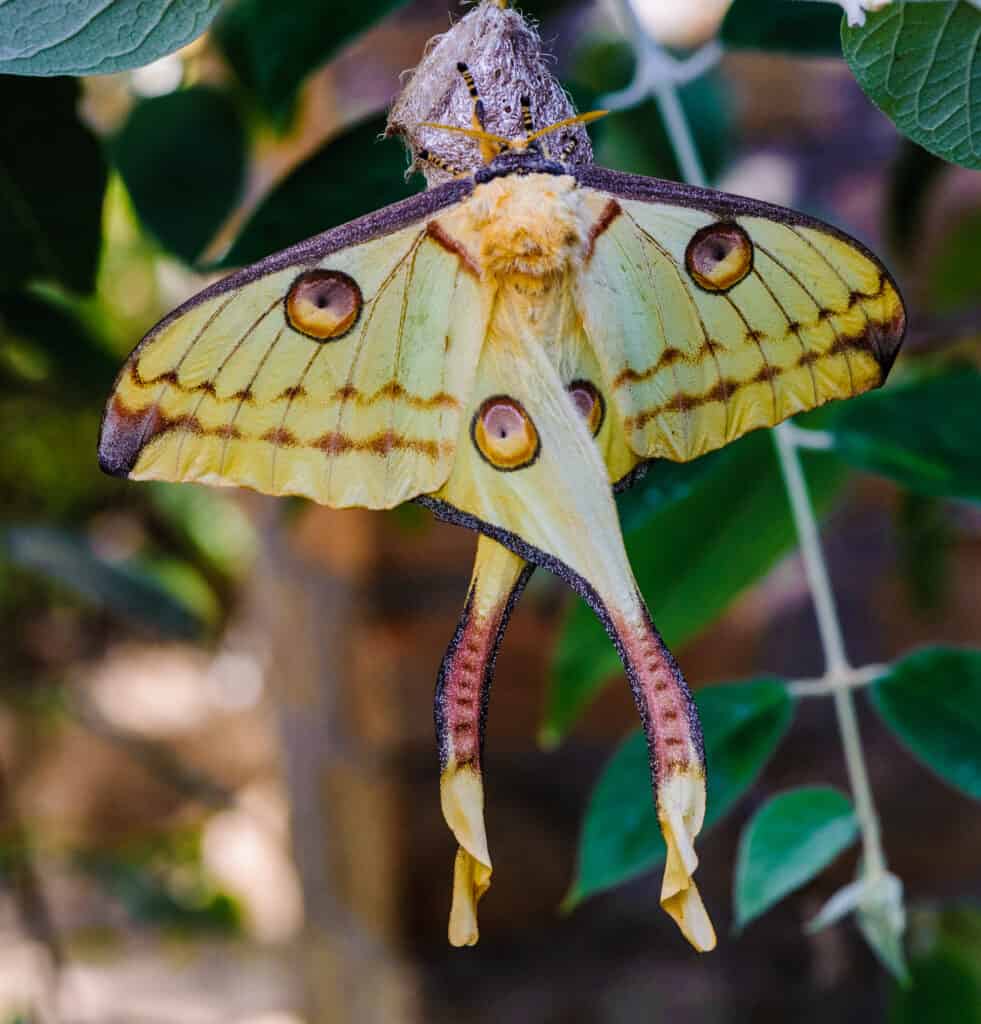
The Madagascan moon moth is also called the comet moth.
©Anton_Ivanov/Shutterstock.com
Found only on the island of Madagascar, this large silk moth has an otherworldly appearance with its bright colors and long, ribbon-like tails. The wings themselves are brilliant yellow and red, with intricate eye-like markings. These vibrant colors actually help the moth remain hidden while it rests during the day, as it only flies at night.
Researchers suggest that the moth’s long, beautiful tails act as a defensive mechanism against its main predator, bats. The fluttering tails are thought to disrupt the bat’s echolocation. Instead of attacking the moth’s body, the bat often strikes the tail, giving the moth a better chance to escape.
Western Sheep Moth (Hemileuca eglanterina)
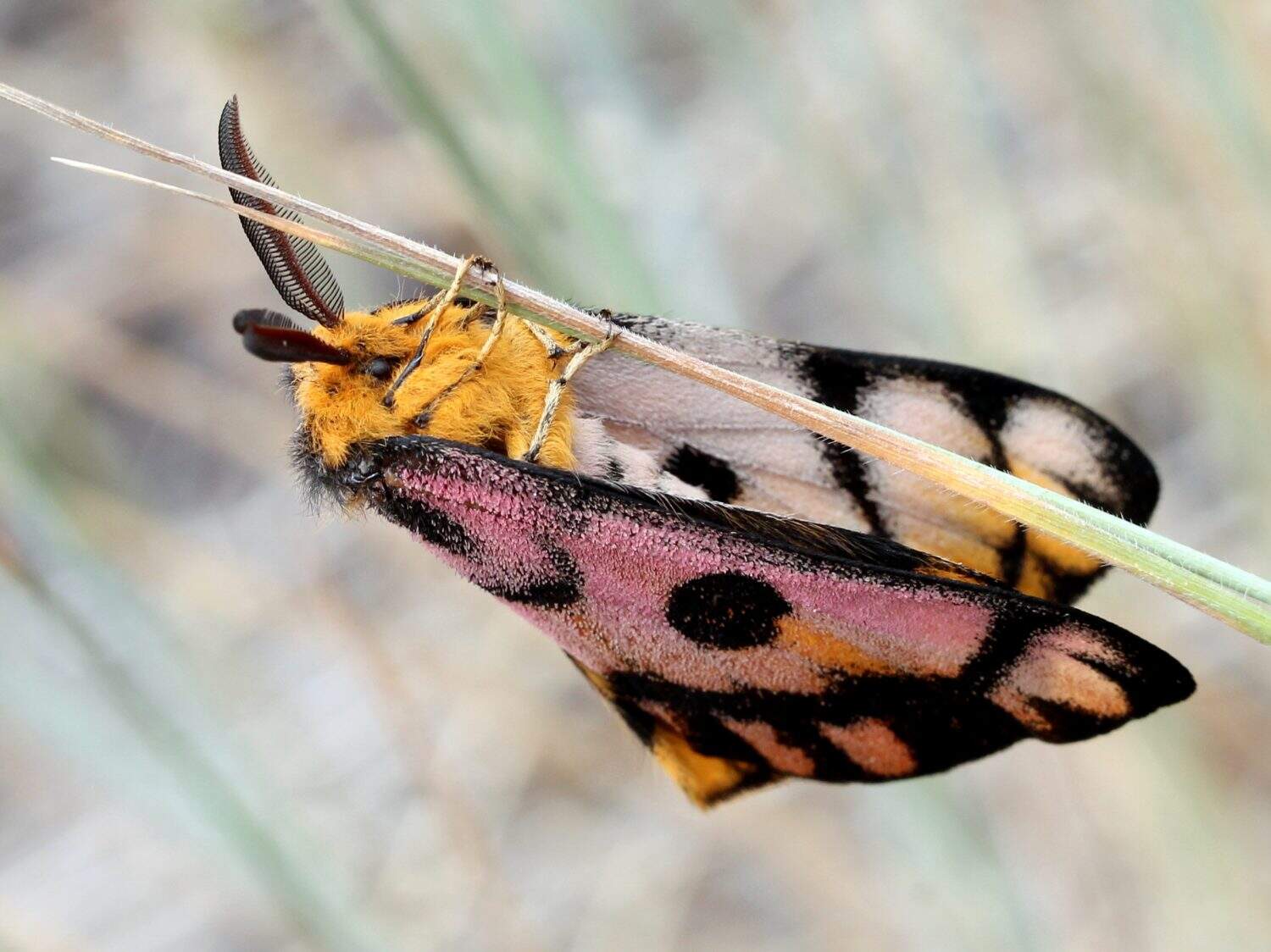
The western sheep moth is also called the common sheep moth.
©Randy Bjorklund/Shutterstock.com
The western sheep moth is often mistaken for a butterfly due to its stunning and colorful patterns and its habit of flying during the day. Its large wingspan, typically 2.5 to 3.5 inches, displays a variety of hues. The forewings are usually pink, yellow-orange, or cream, often with bold black markings. The hindwings are typically yellow-orange or orange, also accented with black.
The western sheep moth lives from Vancouver Island and Alberta down through much of the western United States. Interestingly, moths in Wyoming and California often lack the typical black wing markings, while moths in northern California and southern Oregon sometimes have all-pink or all-black forewings. In contrast, moths in northern California and southern Oregon sometimes have all pink or all black forewings.
Garden Tiger Moth (Arctia caja)
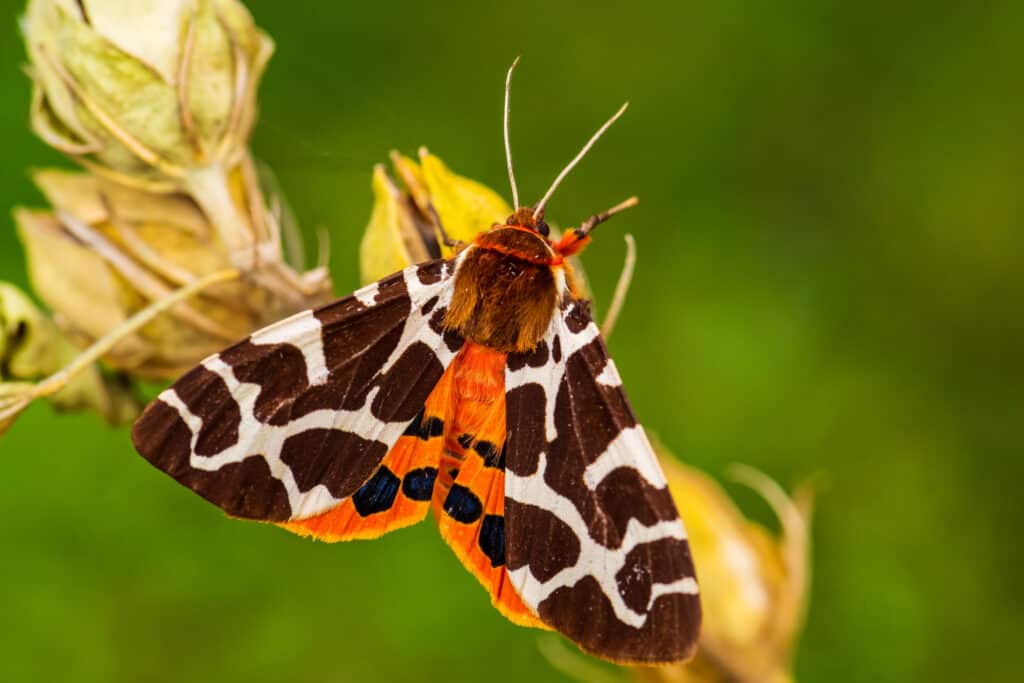
Garden tiger moths can release a clear, yellowish defensive fluid from glands behind their head.
©David Havel/Shutterstock.com
The garden tiger moth is hard to miss with its bold colors and patterns. Its forewings are cream and brown, with a pattern reminiscent of a giraffe. The hindwings, in contrast, are a stunning orange with blue-black spots. When threatened, the moth flashes its colorful hindwings to startle predators. These colors also serve as a warning that the moth is poisonous to eat.
Luna Moth (Actias luna)
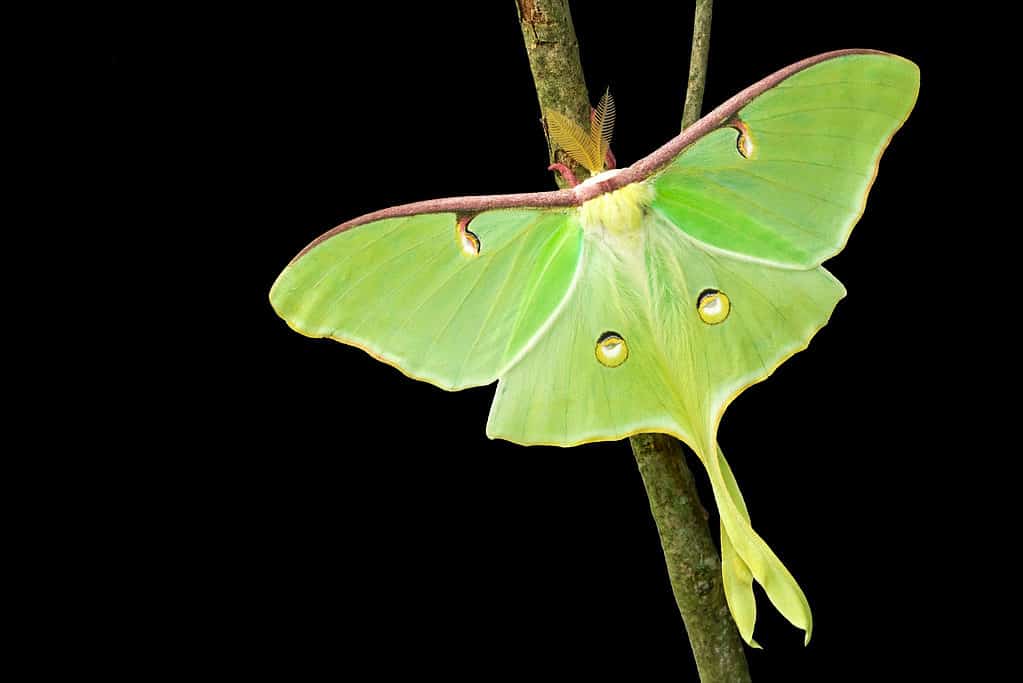
Despite its delicate beauty, the luna moth is a surprisingly strong flyer.
©JasonYoder/Shutterstock.com
It’s easy to see how the luna moth earned its celestial name, with its ethereal pale green wings and graceful, trailing tails. Despite its fragile, moonlit appearance, the luna moth is one of North America’s largest moths, with an impressive 3- to 4.5-inch wingspan and a delicate ‘eyespot’ in the center of each wing.
The luna moth’s wing edges can change color depending on the time of year and geographic location. Luna moths are nocturnal and live in deciduous forests across much of eastern North America.
Cecropia Silkmoth (Hyalophora cecropia)
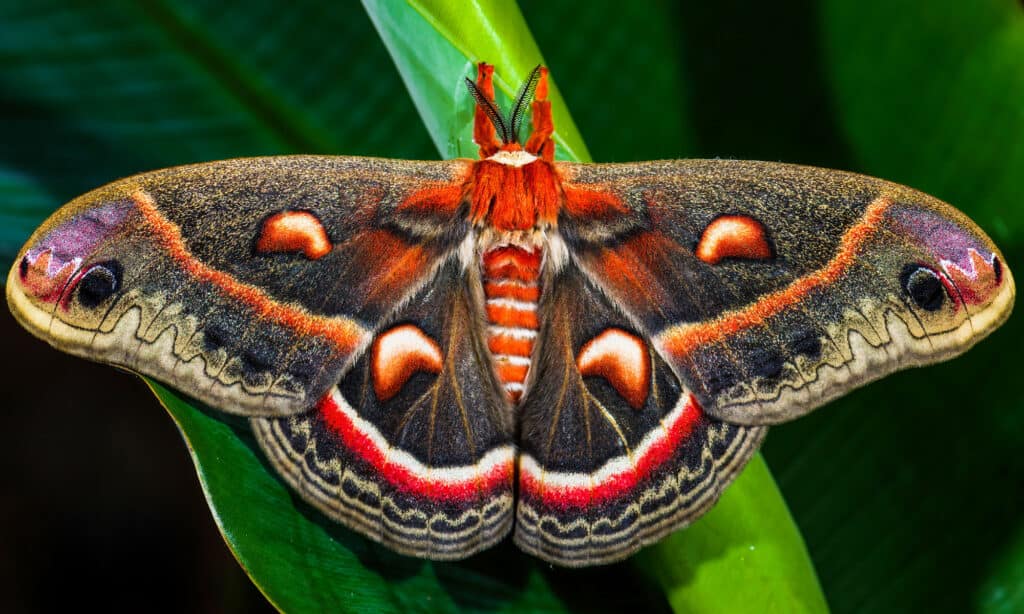
Cecropia silkmoths are short-lived and typically emerge between March and July.
©David Havel/Shutterstock.com
The beautiful cecropia silkmoth is not only North America’s largest native moth, but it is also one of its most colorful. These giants thrive in a variety of environments, from natural woodlands and forest edges to suburban parks and yards.
The moth’s massive wingspan, reaching 4 to almost 6 inches across, features broad, dark brown wings dusted with fine white scales, giving them a frosted appearance. Each wing features reddish crescent-shaped eyespots bordered by clean white lines and a flash of red near their base.
Arge Moth (Apantesis arge)
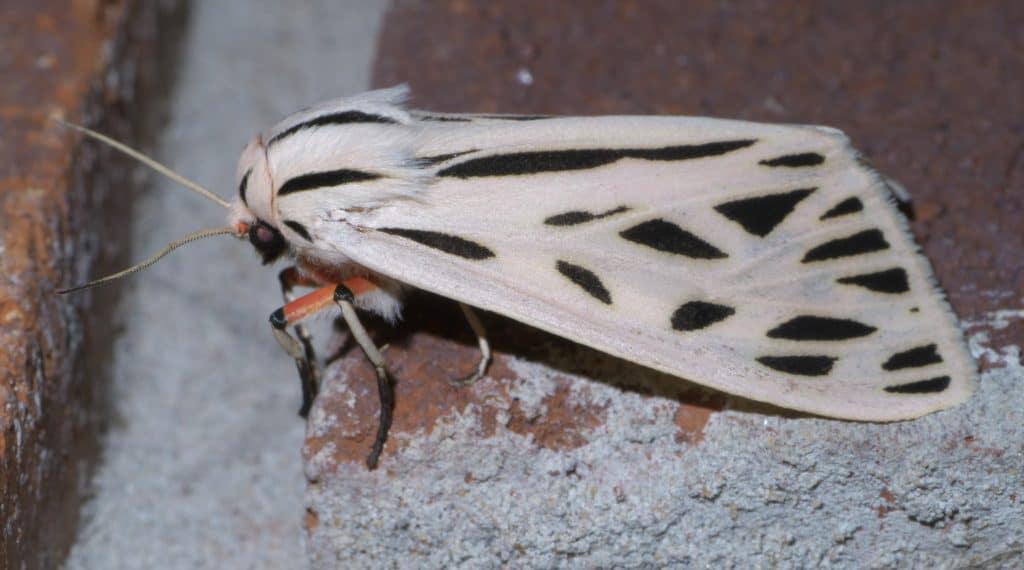
Found across eastern and central North America, adult arge moths are typically visible between April and September.
©xpda / CC BY-SA 4.0 / Wikimedia Commons – Original / License
The soft, sophisticated colors and sharply contrasting patterns of the arge moth seem better suited for a fashion runway than a forest. These elegant moths have a modest wingspan of 1.5 to 2 inches, with a light pink or white abdomen neatly punctuated by a row of black spots. Their bright white wings feature bold black, wedge-shaped designs. When the wings part, however, they reveal a vibrant splash of sunset pinks and soft peach hues on the moth’s hindwings.
Painted Lichen Moth (Hypoprepia fucosa)
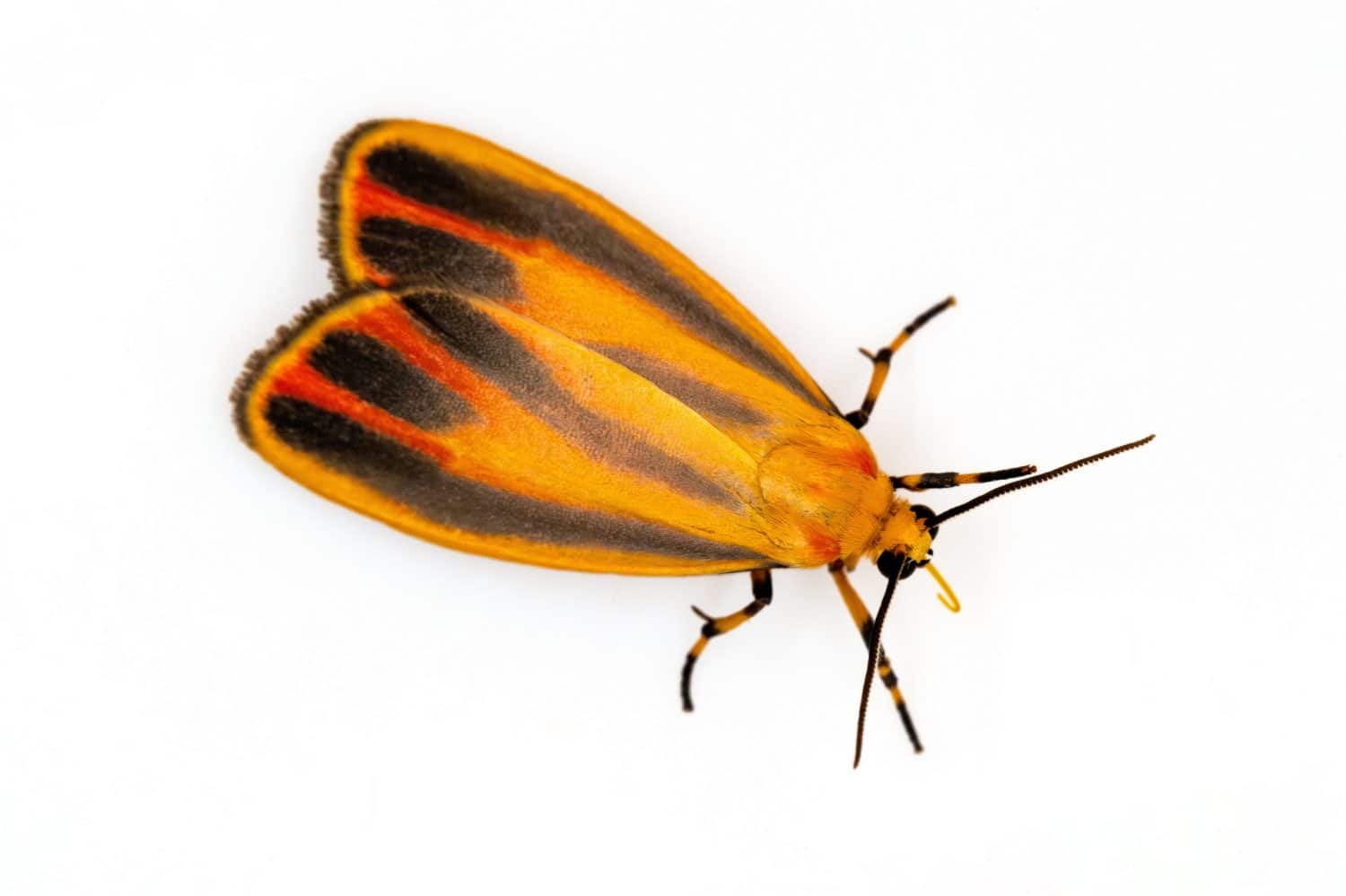
Living up to its name, the painted lichen moth caterpillar primarily eats lichens.
©CatbirdHill/Shutterstock.com
Despite its tiny 1- to 1.5-inch wingspan, the painted lichen moth is a bold and colorful moth found in the eastern regions of North America. These moths are nocturnal and best observed at night near the edges of woodlands. The moth’s vibrant forewings are a striking red-orange with three dark gray stripes that transition to yellowish hues near the head. The hindwings feature a pinkish base with a dark band along the outer edge. Like many colorful moths, these bold patterns serve as a warning to potential predators, signaling that the moth’s body contains foul-tasting chemicals that could make predators sick.
Madagascan Sunset Moth (Chrysiridia rhipheus)
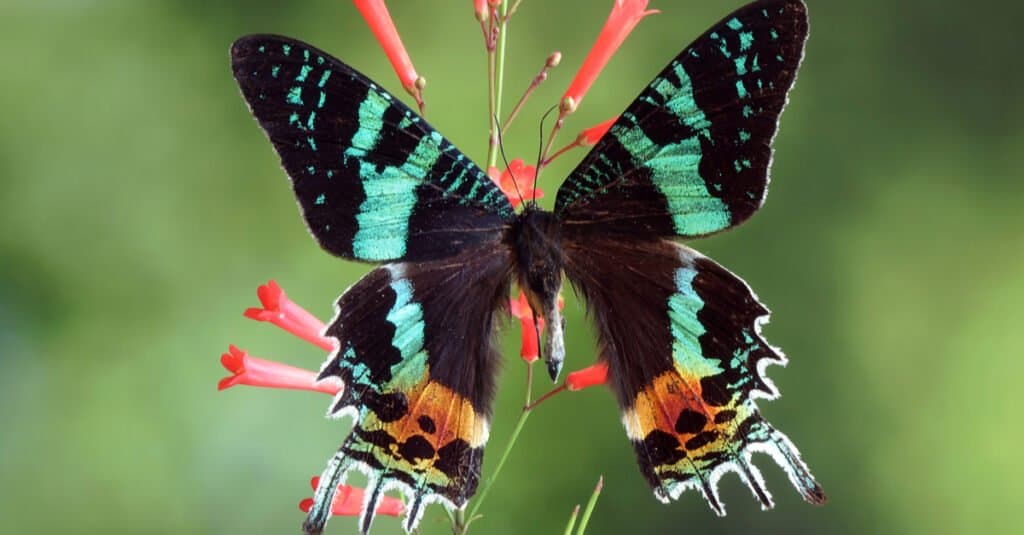
The radiant, metallic colors of the Madagascan sunset moth are produced by light reflecting off microscopic scales on the moth’s wings.
©Mark Brandon/Shutterstock.com
The Madagascan sunset moth is easily one of the most dazzling insects on Earth. Although it is a moth, its brilliant colors and habit of flying during the day regularly cause people to mistake it for a butterfly. In fact, this colorful creature breaks all the typical “moth rules” by being active during the day and having wings full of striking colors. Its wings shimmer with a full rainbow of hues, ranging from fiery reds and oranges to iridescent blues and greens. These bold colors and patterns serve as a clear warning to predators that the moth is toxic and highly unpalatable.
Ornate Bella Moth (Utetheisa ornatrix)
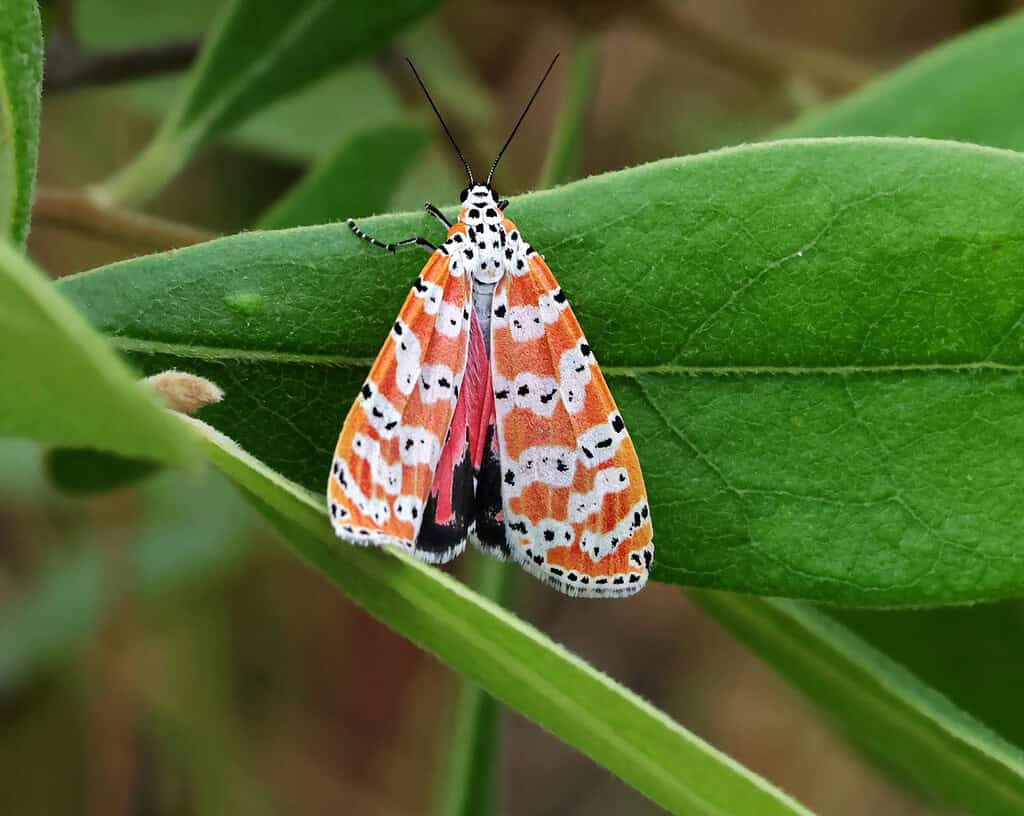
Ornate bella moths are petite with a wingspan ranging from 1.2 to 1.8 inches.
©Jean Blom/Shutterstock.com
Similar to the Madagascan sunset moth, the ornate bella moth breaks the mold by being active during the day, making its small but vividly colored form easier to spot. While individual moths vary greatly, the most common form features yellow forewings accented by white bands with black spots and speckled patterns. Others may range in color from pink and yellow to orange or red. Ornate bella moth caterpillars feed exclusively on toxic rattlebox plants and store the noxious chemicals in their bodies. As adults, their bright colors warn predators of the moth’s unpalatable properties.
Io Moth (Automeris io)
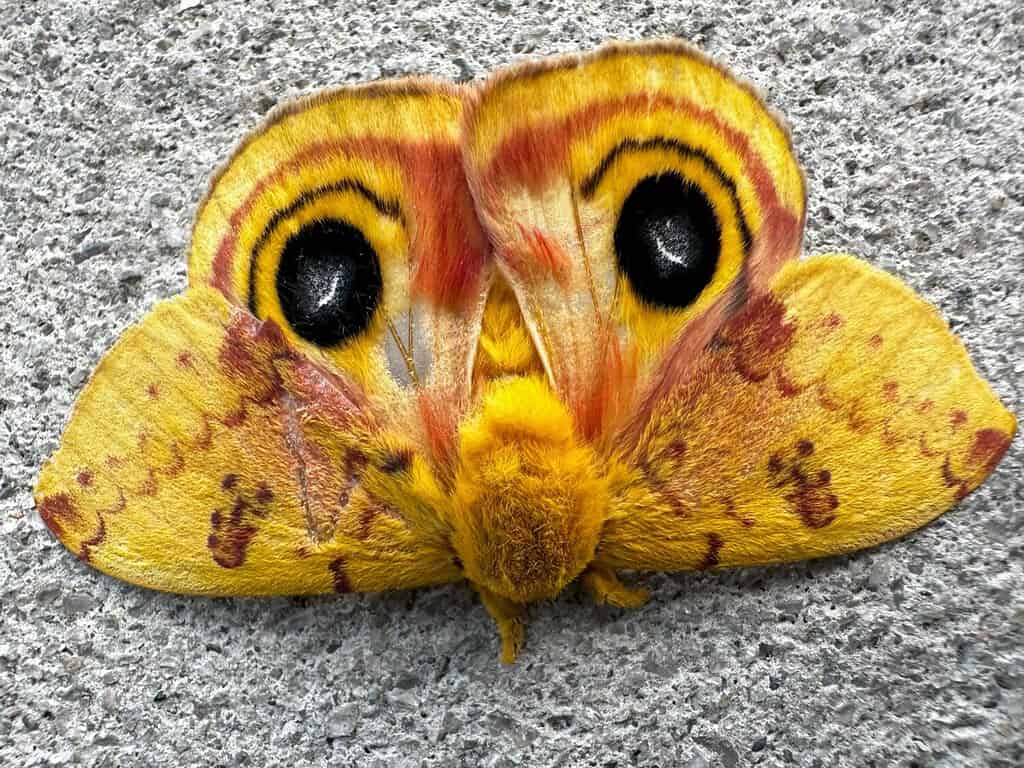
Io moths prefer habitats like deciduous forests and thorny scrublands.
©Linardo_respado/Shutterstock.com
Found across much of North and Central America, the Io moth is best known for the dramatic eyespots on its hindwings — bold black-and-blue circles with a white dash at the center — which it uses to startle predators. The moth’s forewing color, however, changes with the seasons: in spring, males are usually brown, while females range from brown or reddish-brown to purplish, sometimes with faint or missing bands and eyespots. Both sexes have yellow to orange hindwings, often edged in brighter shades.
Oleander Hawk Moth (Daphnis nerii)
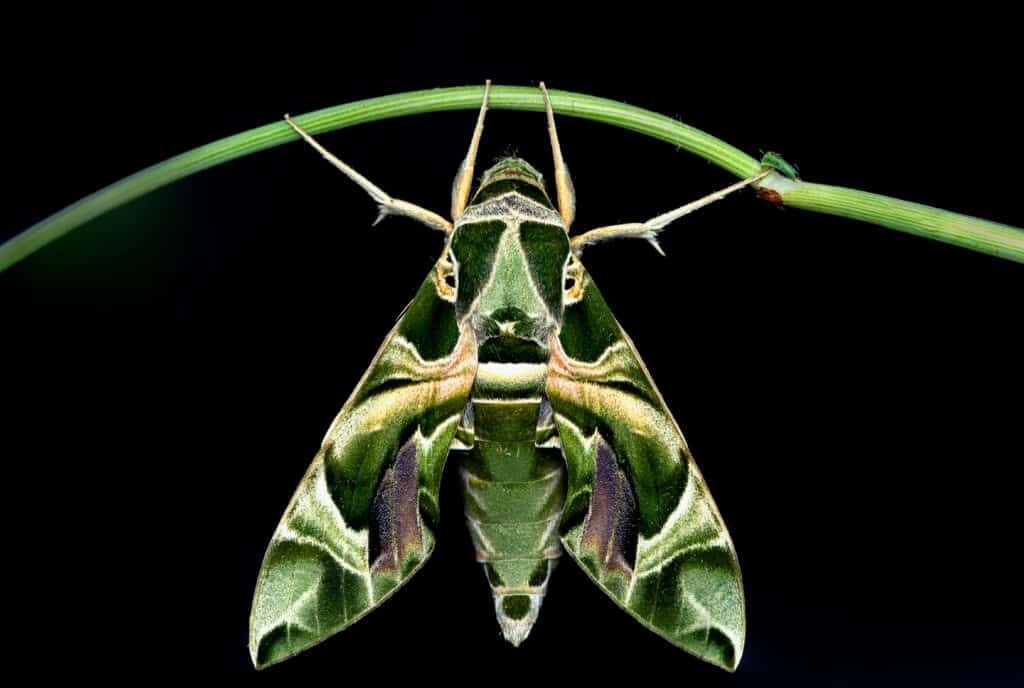
With a wingspan of 3.5 to 5.1 inches, the oleander hawk moth is both colorful and impressive.
©KHALID ALHADRAMI/Shutterstock.com
The oleander hawk moth is a colorful species found across southern Europe, parts of Asia, and Africa. It has also been introduced to Hawaii. The moth’s head is a soft green with touches of reddish-brown and a gray stripe along the top. The wings are a stunning display of color, resembling abstract artwork with swirling patterns of deep green, purple, pink, and white. Often called the “army green moth,” its camouflage-like colors and patterns resemble military fabric and help it blend seamlessly into its surroundings.
Joseph’s Coat Moth (Agarista agricola)
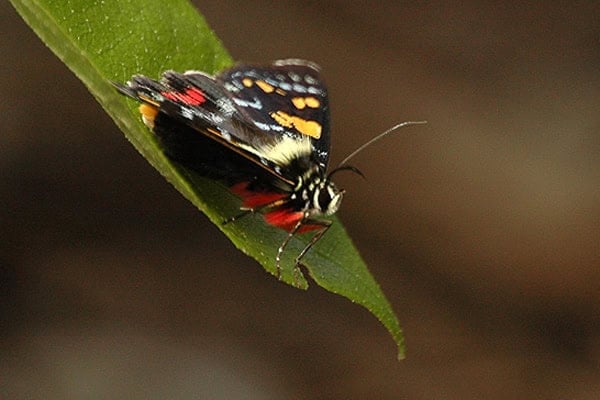
The Joseph’s coat moth gets its name from the famous Biblical story of Joseph’s “coat of many colors.”
©Tom Tarrant / CC BY-SA 3.0 / Wikimedia Commons – Original / License
The Joseph’s coat moth, also known as the painted vine moth, is a brightly colored species found in Australia and Papua New Guinea. Active during the day, it is easily mistaken for a butterfly thanks to its striking black wings and vivid red, green, yellow, blue, and white markings.
The caterpillars are just as eye-catching as the adult moths, featuring bold black-and-white stripes and deep orange coloring at the front and back of their bodies. Long black hair-like tufts, orange heads, and orange feet complete their whimsical look — almost like something straight out of Alice’s Adventures in Wonderland.
Spanish Moon Moth (Graellsia isabellae)
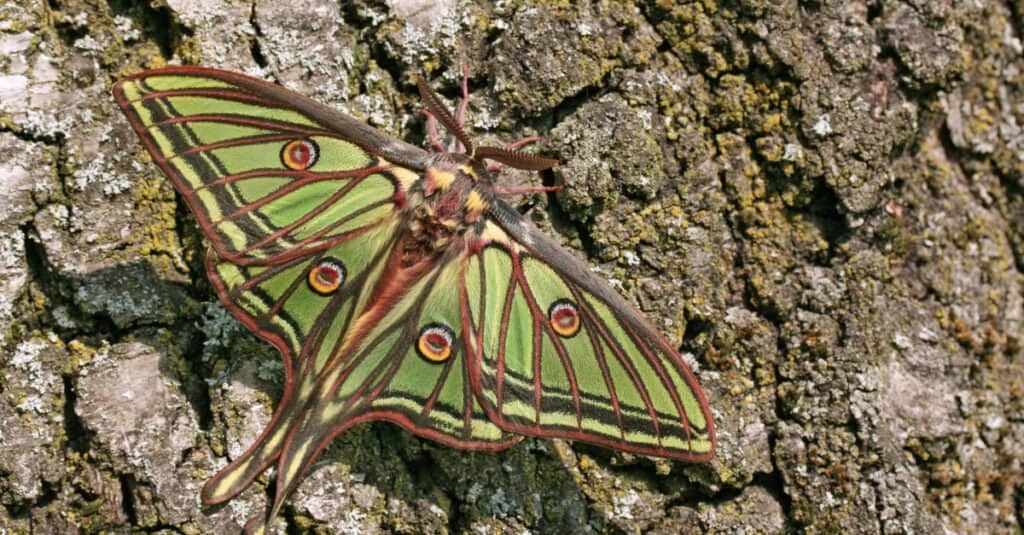
Closely tied to pine forests, Spanish moon moth caterpillars feed primarily on native pine species and spend the winter safely enclosed in their cocoons until spring.
©Andreas Weitzmann/Shutterstock.com
The Spanish moon moth is a rare and breathtaking species found only in the mountainous regions of the Pyrenees and Alps in France, Spain, and Switzerland. Adult moths reach a wingspan of up to 4 inches and display soft, pale green wings that look almost hand-painted. Delicate, dark reddish-brown to black lines trace the veins, while each wing features a large and colorful eyespot ringed with shades of violet, red, or yellow. Their long, elegant tails — sometimes as long as their bodies — trail gracefully behind them and look like silk flowing in the breeze.
Cinnabar Moth (Tyria jacobaeae)
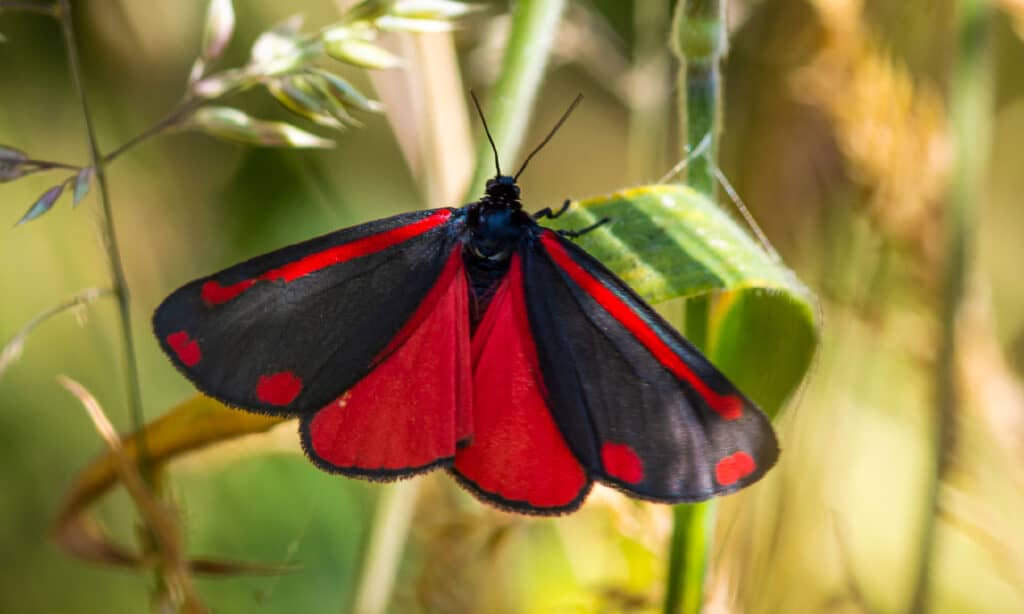
Native to Asia and Europe, cinnabar moths are often found in open habitats such as meadows and grasslands.
©iStock.com/EstuaryPig
Named after the bright red mineral, the cinnabar moth has striking red and pinkish-red markings across its slate-black wings. Its hindwings are a vivid red, sometimes edged with a thin black border. These bold, contrasting colors serve as a warning to predators that the moth is toxic.
Unlike many moths, cinnabar moths are active during the day, fluttering slowly and calmly from plant to plant. Their caterpillars feed on common ragwort, absorbing its toxins for their own protection.
White-Lined Sphinx Moth (Hyles lineata)
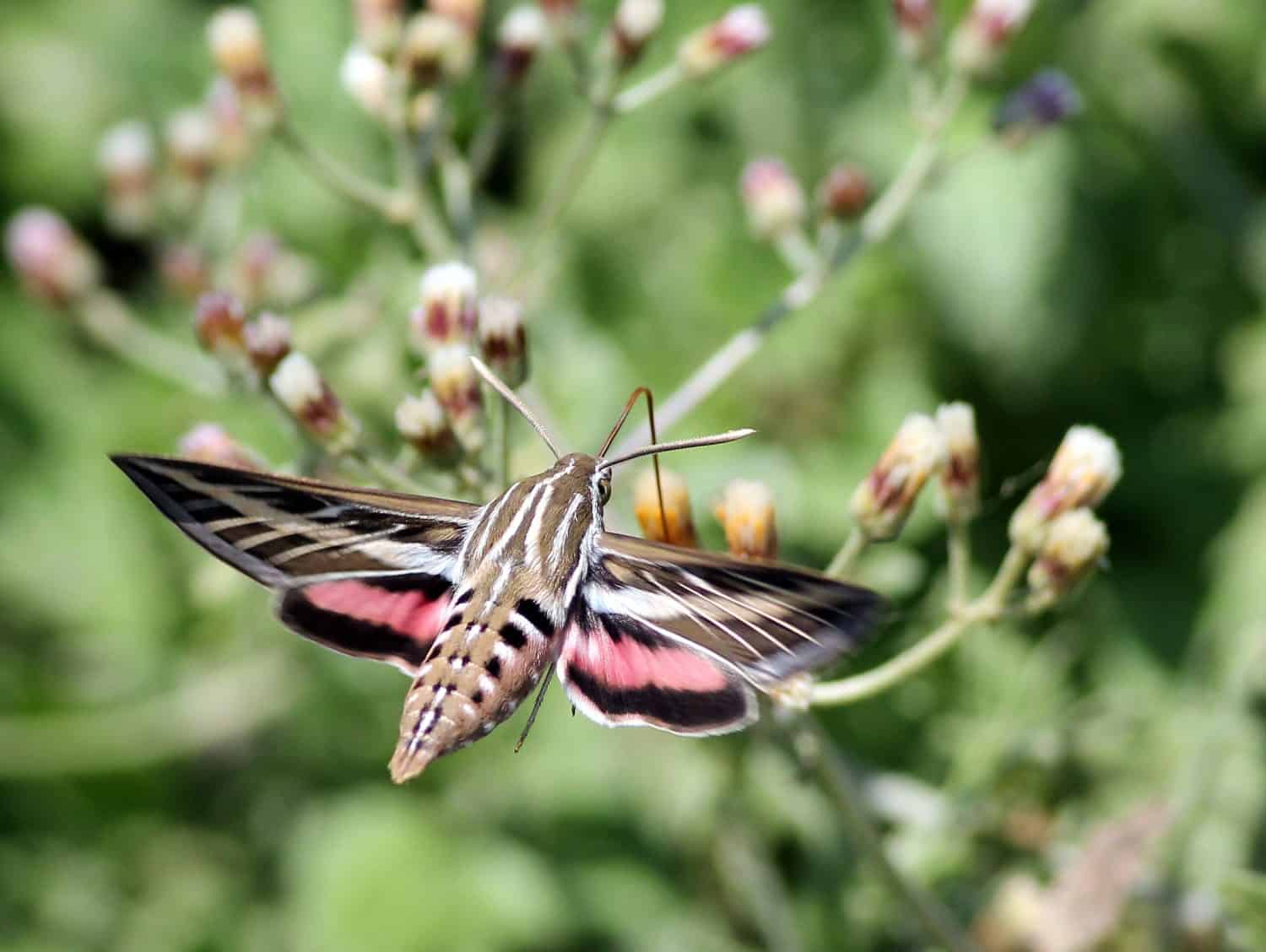
White-lined sphinx moths often visit flowers like columbine, honeysuckle, lilac, hosta, and petunia.
©Randy Bjorklund/Shutterstock.com
This large, fast-flying, and colorful moth is found throughout most of North America. It has a wingspan of 2.5 to 3.5 inches, with long, narrow forewings of dark olive-brown, marked by a wide tan band and thin white stripes along the veins. The moth’s hindwings are black with a vivid reddish-pink center.
White-lined sphinx moths are most active from July through September, depending on the region. Their relatively small wings and large bodies require rapid wingbeats to stay aloft, allowing them to hover above flowers much like hummingbirds.
Crimson-Speckled Flunkey (Utetheisa pulchella)

Crimson-speckled flunkey moths are widespread, found across Europe, North Africa, Central Asia, the Near East, and parts of the western Indomalayan region.
©Somyot Mali-ngam/Shutterstock.com
This small but eye-catching moth is a member of the tiger moth family (Arctiidae). Adults are active both day and night, and often rest in sunny shrublands and open meadows. Their long, narrow forewings are white or cream-colored, with tiny black dots and larger, vivid red spots that give the moth its distinctive and colorful appearance.