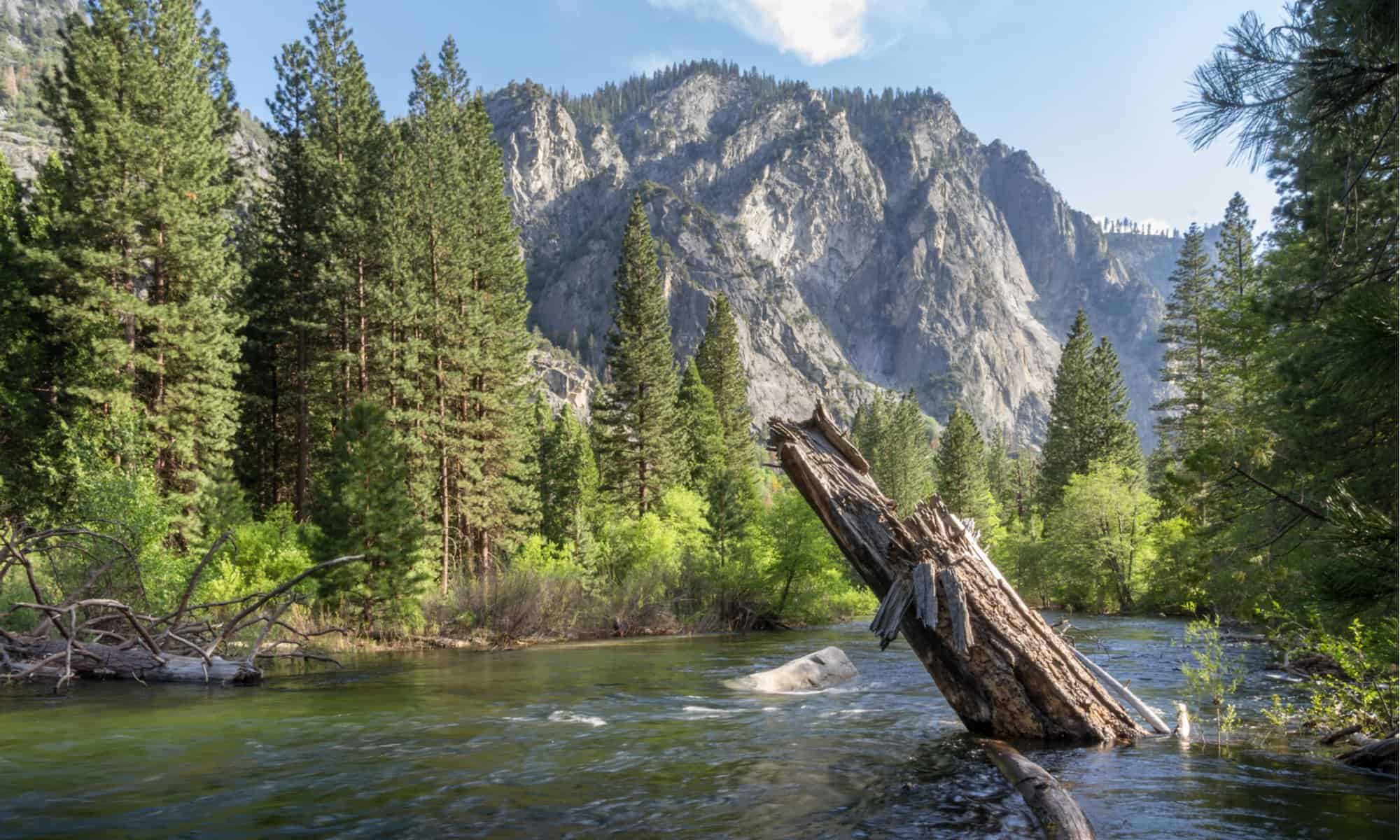

Kings Canyon National Park, located in the Southern Sierra Nevada region of California, is generally visited for its massive groves of old-growth sequoias within its boundaries. What many do not know until they explore Kings Canyon National Park for the first time is that it is also home to the deepest canyon in the country. To put this into perspective, Kings Canyon is 2,000 feet deeper than the Grand Canyon.
Exploring the sequoias and the canyon is not the only activity to partake in while visiting the national park. There are waterfall hikes, meadow hikes, horseback riding excursions, fishing, and camping to enjoy as well. This is why Kings Canyon National Park continues to see increasing visitor numbers, with 562,963 in 2021 and over 1.5 million in 2022. (Numbers for more recent years have not been released.)
Animal watching is also a big attraction for visiting the national park. Here is a full list of the wildlife that can be seen at Kings Canyon National Park.
Bighorn Sheep
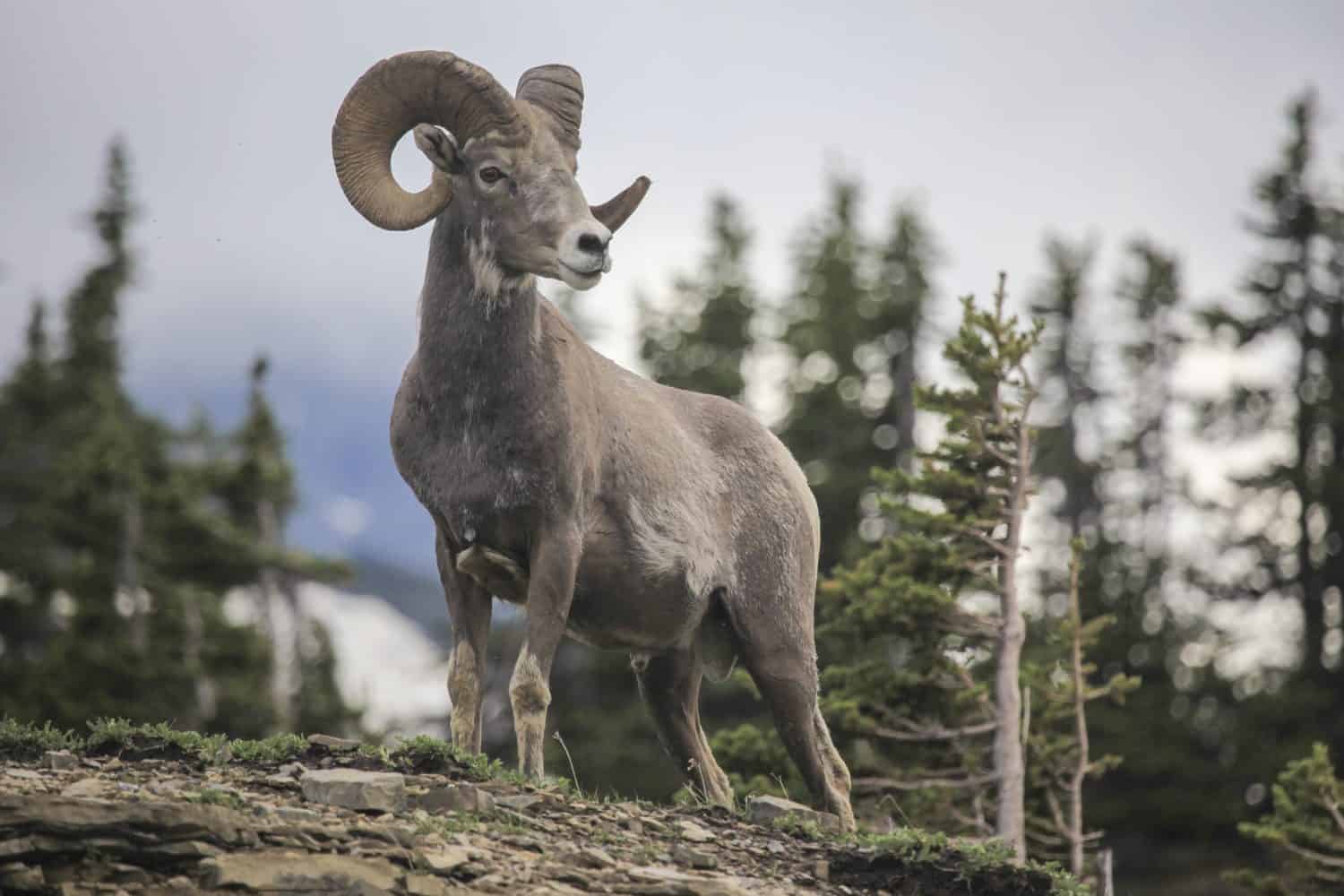
There are 11 herds of bighorn sheep that move between Kings Canyon and Sierra National Parks.
©Tory Kallman/Shutterstock.com
Bighorn sheep are an endangered species. With about 13,000 left in the United States due to disease and habitat loss, ensuring their survival is of the utmost importance.
To help the species survive and, hopefully, begin to thrive again, the bighorn sheep were relocated from Inyo National Forest to the Big Arroyo region of Sierra National Park in 2014. Because Kings Canyon National Park and Sierra National Park are adjacent to each other, the bighorn sheep have migrated into portions of Kings Canyon over the years.
Today, 11 herds of bighorn sheep move between the two national parks, totaling over 500 bighorn sheep. Plans are being discussed to bring a herd to the Taboose Creek region of Kings Canyon and the Laurel Creek region of Sequoia National Park.
Mule Deer
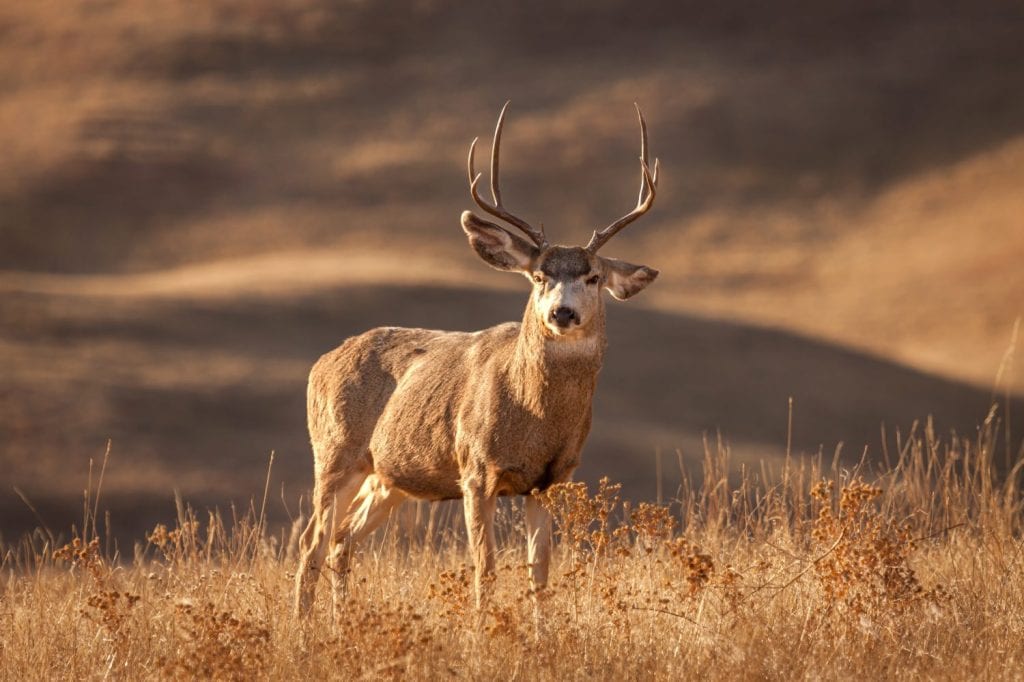
With an abundant population of mule deer, seeing one at Kings Canyon National Park is likely.
©Dennis Laughlin/Shutterstock.com
In the United States, there are four million mule deer. While the largest concentration of deer lives in Colorado, given their population numbers, there is a good chance of seeing one while visiting Kings Canyon National Park.
The large-eared, tan deer with a small white tail that has a black tip can be found in the Grant Grove and Cedar Grove areas of the national park. With males sporting antlers up to four feet wide and the deer weighing between 100 and 300 pounds, the mule deer are easy to spot in the park.
| Currently Located In Park | Yes |
| Abundance | Common |
| Nativeness To The Park | Native |
Coyote

Coyotes tend to be shy, but can be seen in multiple regions of Kings Canyon National Park.
©karlumbriaco/iStock via Getty Images
California is home to 250,000 coyotes. Coyotes have lived in the Golden State for centuries, but are becoming a more common sight as urban expansion increases.
While coyotes tend to be shy around visitors to Kings Canyon, those who want to try to catch a glimpse of one are best suited to venture to the Grant Grove Area, the Cedar Grove Area, or Zumwalt Meadows. The coyotes will be recognized by their long, pointy ears, bushy tail, and black, tawny, and gray coloration. Often mistaken for wolves, coyotes are smaller canines that are four feet long, stand two feet high, and can weigh up to 55 pounds.
| Currently Located In Park | Yes |
| Abundance | Uncommon |
| Nativeness To The Park | Native |
Grey Fox
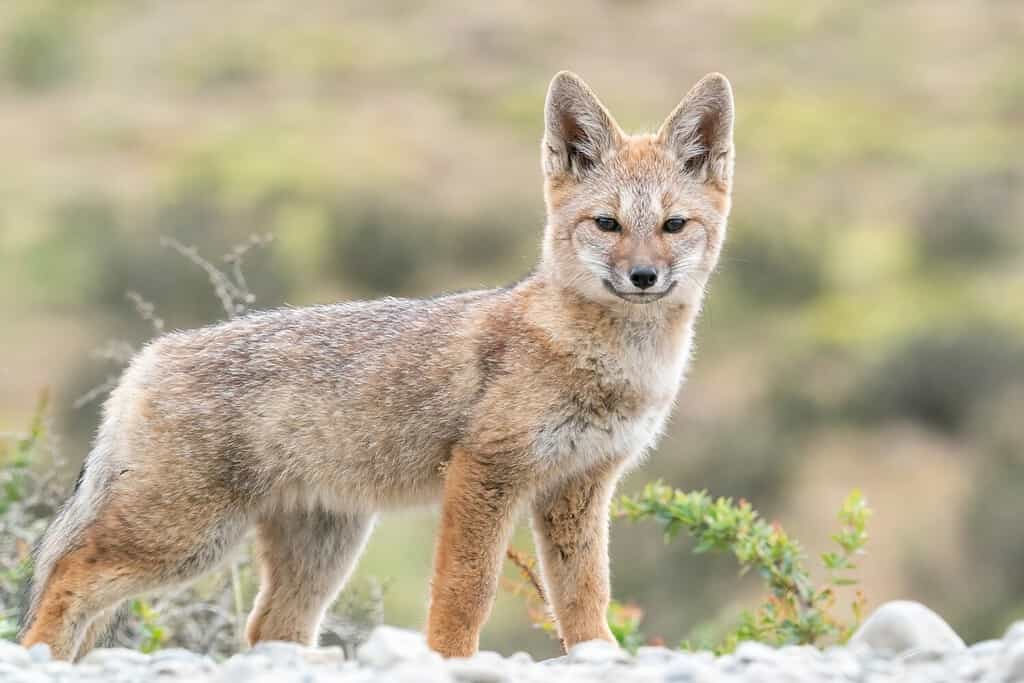
Grey foxes tend to be more active during dusk and evening, making their chances of being one during the day at Kings Canyon slim.
©Rob Jansen/Shutterstock.com
Grey foxes are the most common foxes in California. However, the chances of seeing one in Kings Canyon National Park are slim, given that these tiny foxes prefer the cover of darkness before becoming active.
The grey fox weighs less than 10 pounds and, despite its name, has grey, red, and white markings. There are no specific areas in the national park where foxes can be spotted. But if oak woodlands and chaparral shrubs are part of the environment being explored, the grey foxes may be nearby.
| Currently Located In Park | Yes |
| Abundance | Uncommon |
| Nativeness To The Park | Native |
Red Fox
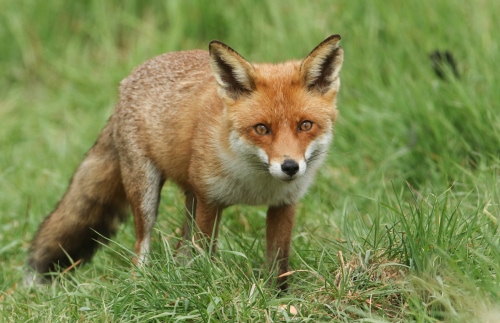
There is no exact population count of red foxes at Kings Canyon National Park, but populations have lived there in the past.
©Sandra Standbridge/Shutterstock.com
As their name suggests, red foxes are red. With their bright coloration and white chest, these canines are hard to miss. The problem is that locating them in Kings Canyon can be difficult.
It is currently unknown how many red foxes live in California, let alone in the national park. The best places to see red foxes hunting for a rodent to make a good snack are the Grant Grove Area, the Cedar Grove Area, and Zumwalt Meadows.
| Currently Located In Park | Probably Present |
| Abundance | Unknown |
| Nativeness To The Park | Native |
Bobcat
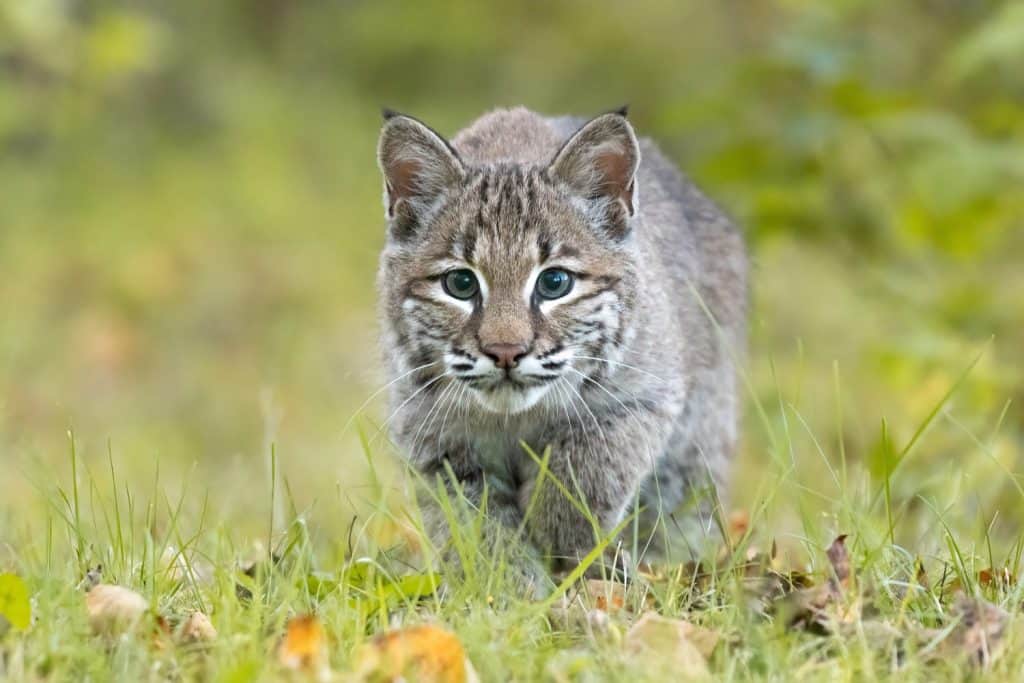
The best time to spot a bobcat in Kings Canyon National Park is early morning or during the evening.
©Travis Potter/Shutterstock.com
There are 30,000 to 100,000 bobcats living in California. While the exact population of bobcats in Kings Canyon National Park is unknown, many do call the park home.
Bobcats tend to be most active early in the morning or at night. Their brown fur and dark spots identify them. Bobcats are smaller than other wild cats, weighing between 15 and 35 pounds. They stand approximately 30 to 40 inches tall and eat rodents, rabbits, and birds.
The best places to see a bobcat in Kings Canyon National Park are Cedar Grove and Roaring River Falls.
| Currently Located In Park | Yes |
| Abundance | Uncommon |
| Nativeness To The Park | Native |
Mountain Lion
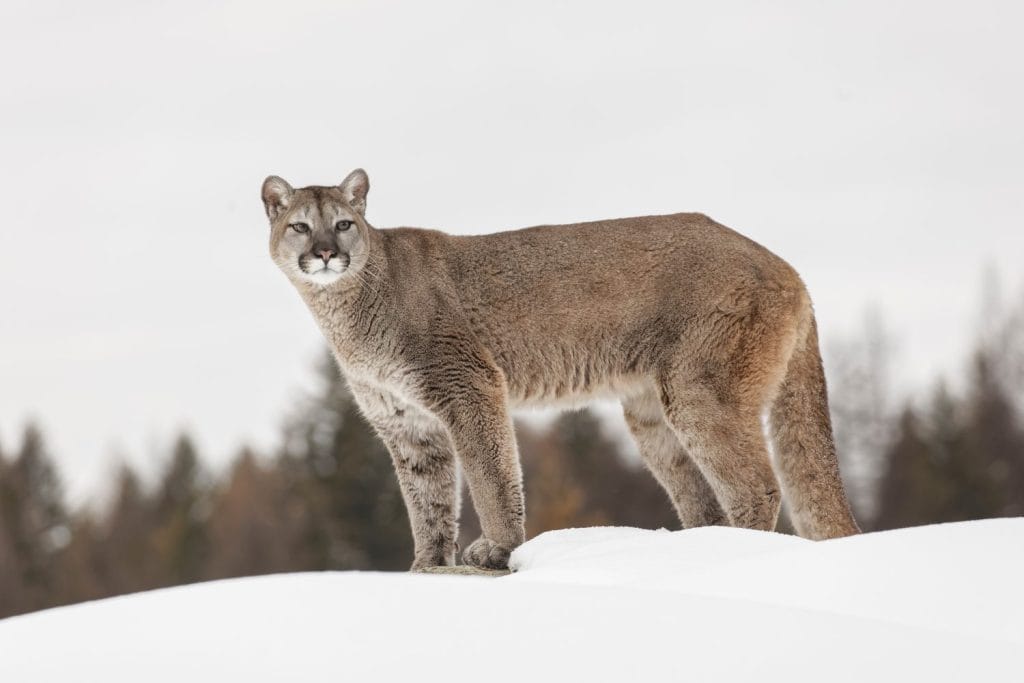
Given that mountain lions do not like to be around people, the likelihood of seeing one at Kings Canyon National Park is very low.
©Danita Delimont/Shutterstock.com
For those looking to spot a mountain lion in Kings Canyon National Park, the chances are slight. Mountain lions tend to spend the majority of their time in more remote locations of the park, away from visitors.
More often than not, a mountain lion will see a visitor to the park before they are spotted. The large, tawny colored cats with long tails have not attacked any visitors to the national park to date. But if one is spotted, it is best not to approach the lion, make noise, and make yourself as large as possible.
In most instances, the tracks of a mountain lion are seen but not the big cat. Potential sightings can be made in Cedar Grove, Zumwalt Meadows, or more remote hiking trails.
| Currently Located In Park | Yes |
| Abundance | Uncommon |
| Nativeness To The Park | Native |
Striped Skunk
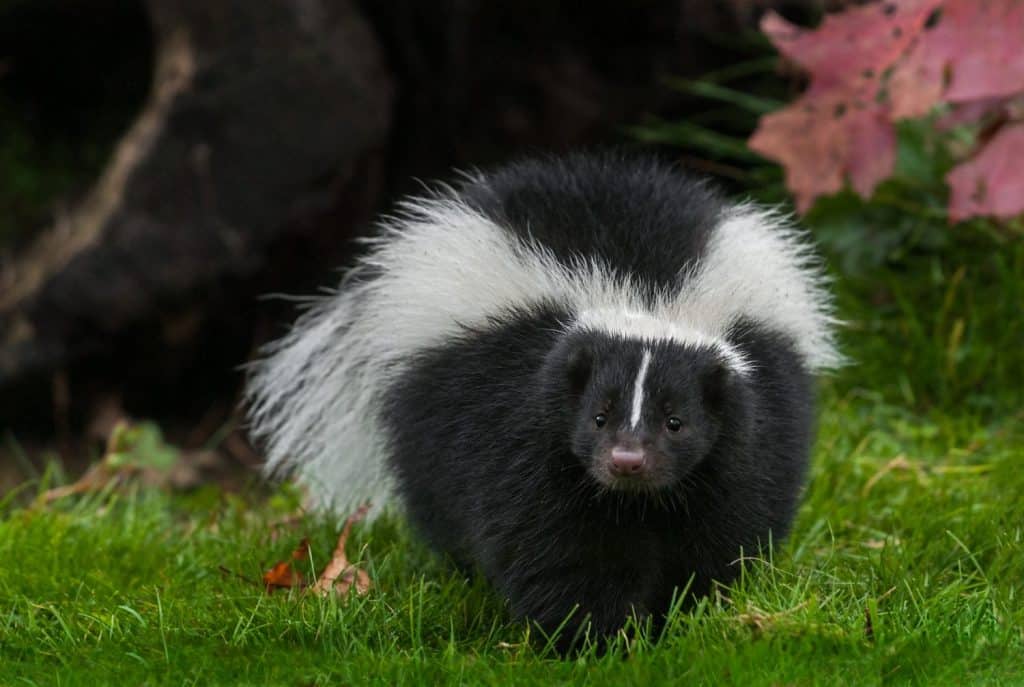
The striped skunk is the most abundant skunk species in California and a resident of Kings Canyon.
©Holly Kuchera/Shutterstock.com
California is home to two species of skunk. Of the two, the striped skunk is the most abundant. Just how many live in the state is unknown. What is even more interesting is that while the striped skunk can adapt to just about any habitat, they is not often seen in Kings Canyon National Park.
The black critters with a white stripe down their back prefer to live in woodlands and grasslands. However, there is no specific region of the park where they are most abundant. They are more often seen at night, so if camping in Kings Canyon and happen upon a striped skunk, back away slowly, do not make eye contact, and stay calm. Skunks will only spray if they feel threatened. Therefore, keeping them calm is the best strategy to prevent spraying.
Eastern Spotted Skunk

The Eastern Spotted Skunk has experienced a massive population decline both in California and at Kings Canyon National Park.
©Holly Kuchera/Shutterstock.com
The other skunk found in California and at Kings Canyon National Park is the Eastern Spotted Skunk. This skunk, once abundant throughout much of the U.S., has experienced a population decline over the last several decades.
While there is no exact population count in California, let alone in the national park, Eastern Spotted Skunks have a more “patchy” distribution than striped skunks, given they do not do well in heavily populated locales. For those who hope to catch a glimpse of the black and white spotted critters, the best places to look at Kings Canyon are woodlands, mountainous regions, and even among the chaparral after dusk.
| Currently Located In Park | Yes |
| Abundance | Uncommon |
| Nativeness To The Park | Native |
American Marten
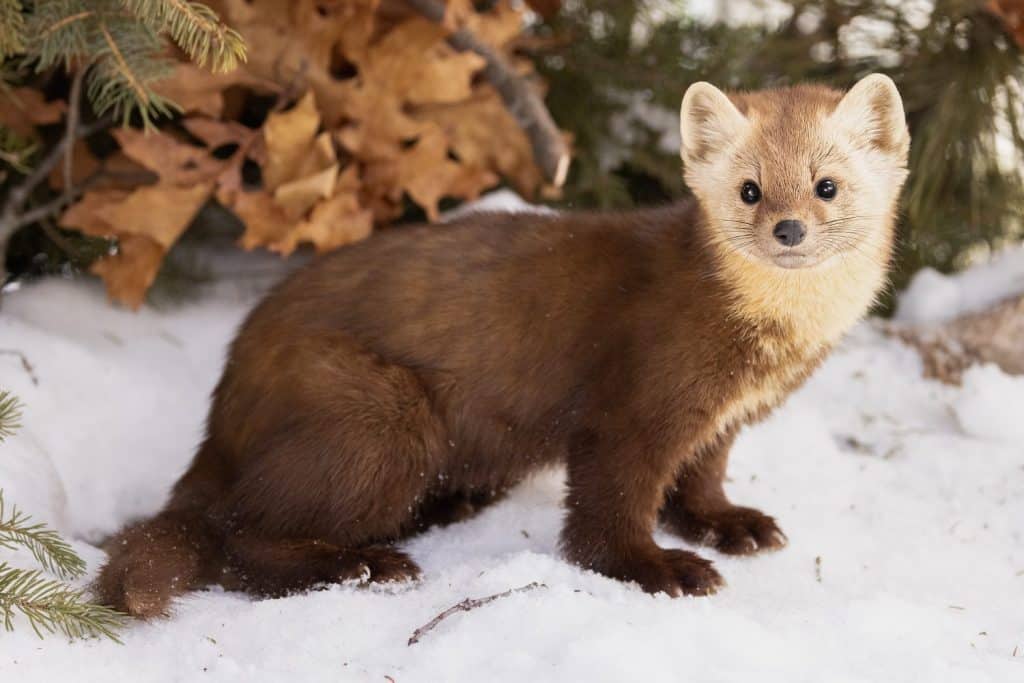
The American Marten is an elusive creature that calls Kings Canyon home.
©Agnieszka Bacal/Shutterstock.com
The American Marten, like many other animals in California, was once abundant. But, due to habitat destruction and being overhunted, some counties, such as Humboldt and Del Norte, have very tiny populations or the populations have gone extinct entirely.
While the American Marten has been spotted sporadically in Kings Canyon National Park, the creatures are very elusive and secretive. To see one in its natural habitat, going to higher elevations is key. The American Marten is likely found in forest habitats at elevations between approximately 6,000 and 11,000 feet.
Martens have a variety of coat colors, ranging from yellow to dark brown. They are 19 to 27 inches long, with tails that can add up to an additional 10 inches. The American Martens do well both on the ground and in the trees. Therefore, look all around when searching for the American Marten.
| Currently Located In Park | Yes |
| Abundance | Uncommon |
| Nativeness To The Park | Native |
Long-Tailed Weasel
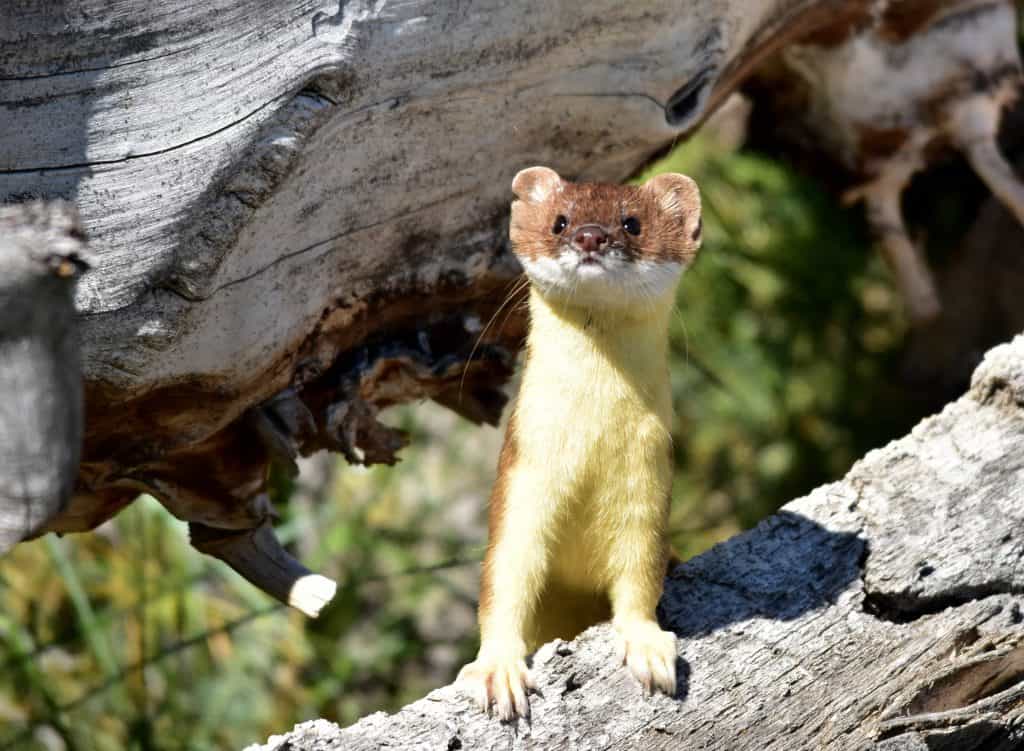
The long-tailed weasel is an abundant species found in Kings Canyon National Park.
The long-tailed weasel is an abundant species throughout California. They are not commonly seen in Kings Canyon National Park because they are nocturnal. Therefore, day visitors are less likely to spot one than those who spend the night in the park.
Long-tailed weasels can be found within the park, where there are habitats such as woodlands and brushlands. The fawn and cream-colored animals that weigh no more than a pound may look cute and cuddly, but they are fearsome. Long-tailed weasels have little fear and will take on animals larger than themselves for a meal. The presence of people does not even perturb them. Therefore, if one is spotted in Kings Canyon, simply observe and let it be.
| Currently Located In Park | Yes |
| Abundance | Uncommon |
| Nativeness To The Park | Native |
American Badger
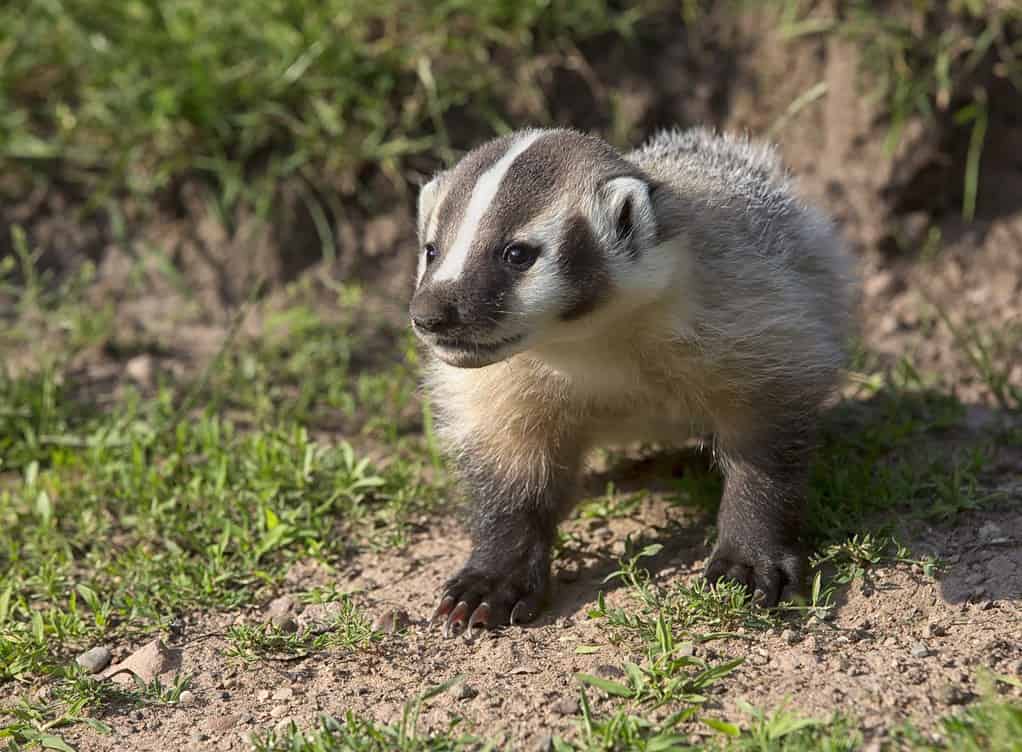
The American badger is a Species of Special Concern in California.
©critterbiz/Shutterstock.com
American badgers are found throughout California. As a result of habitat destruction, the species has become a Species of Special Concern in the state. This is why seeing badgers in Kings Canyon National Park is rare. However, they are seen from time to time in the park’s open grasslands.
The American badger helps keep rodent populations in check. With their grey-brown coats and black-and-white striped faces, badgers tend to camouflage well in their environments. The American badgers tend to stay low to the ground when traveling, making their bodies, which can be up to 33 inches long and weigh up to 25 pounds, appear smaller than they are.
Raccoon
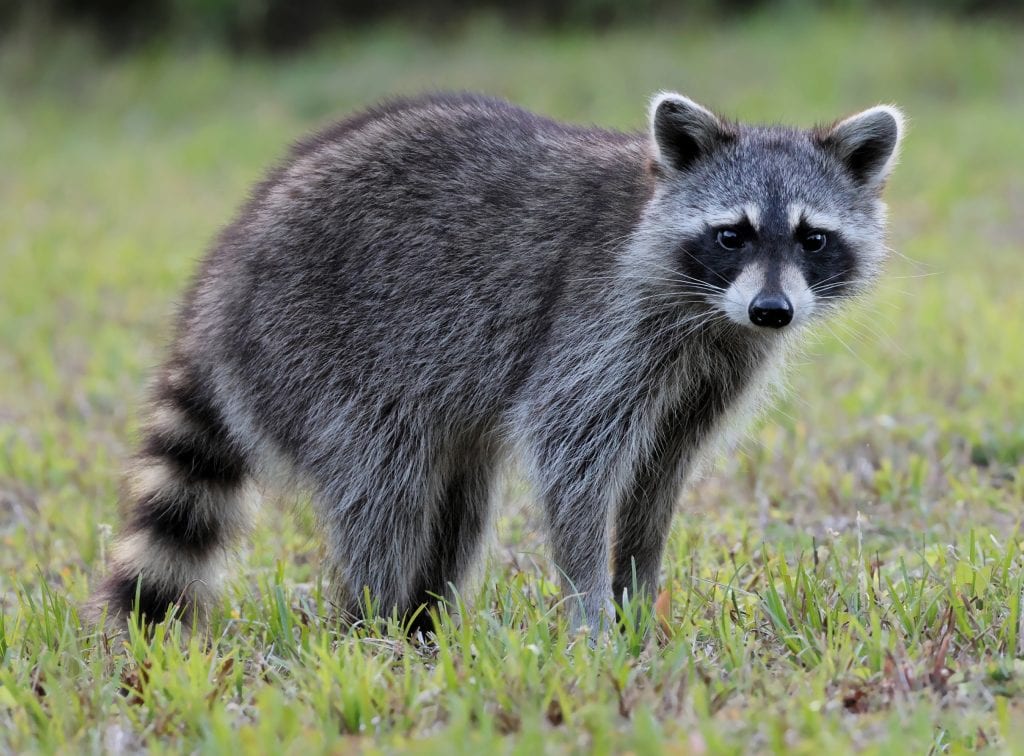
Raccoons can be found in multiple regions of Kings Canyon National Park.
©Jean Blom/Shutterstock.com
Raccoons are abundant throughout California. Therefore, it is no surprise that they would call Kings Canyon National Park home.
Raccoons are not often seen in the park because they are nocturnal. For those campers who have not secured their food, however, they will find that raccoons will seek them out to get an easy meal.
The best places to be on the lookout for raccoons in the national park are the Grant Grove Area, the Cedar Grove Area, Zumwalt Meadows, and other areas around the park where there are forests and tree cavities to call home.
| Currently Located In Park | Yes |
| Abundance | Uncommon |
| Nativeness To The Park | Native |
Black Bear
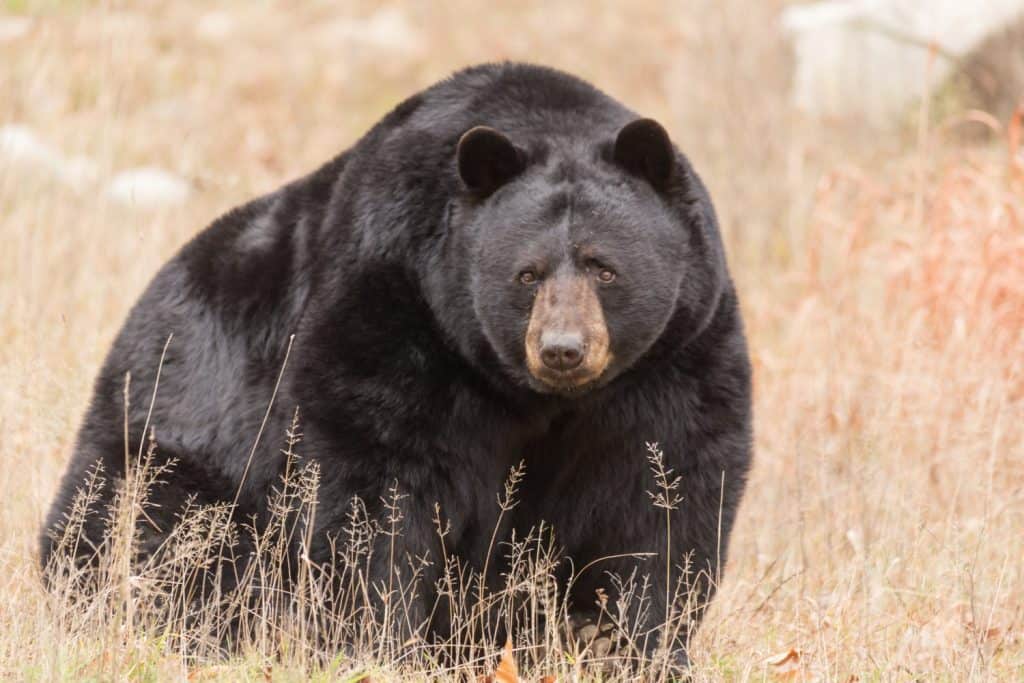
Once grizzly bears were eradicated from the Kings Canyon region, the black bear population soared.
©Josef Pittner/Shutterstock.com
It used to be that grizzly bears were the most abundant bears in what is now Kings Canyon National Park. But as the grizzlies were eradicated from the region in the early 20th century, black bears took their place. Today, the black bear population is significant in the national park, and is growing by two to five percent annually.
Given the large black bear population, there have been attacks over the last several decades. In total, there have been 23 attacks since 1943. This is why, when hiking past meadows, oak forests, and even manzanita groves, it is essential to remain aware, as this is prime black bear country.
Unlike grizzlies, black bears are easier to scare off. Things like yelling, making yourself look larger, and using bear spray are usually effective against black bears. However, the best defense is to give bears 300 feet of space so they do not feel threatened or feel the need to attack.
| Currently Located In Park | Yes |
| Abundance | Common |
| Nativeness To The Park | Native |
Bats
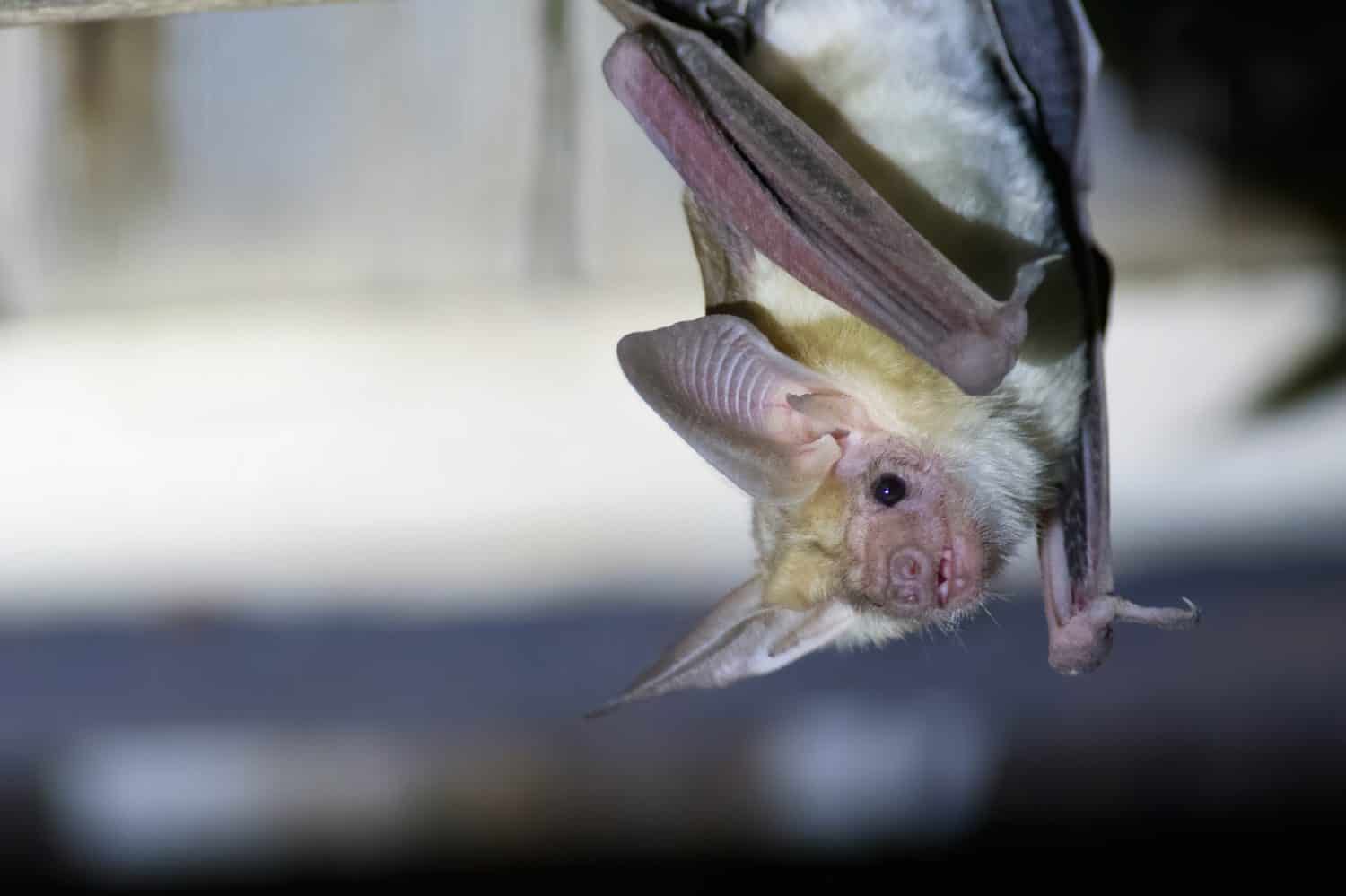
Pallid bats are just one species of bat that call Kings Canyon National Park home.
©Amanda Guercio/Shutterstock.com
There are eight different species of bats that call Kings Canyon National Park home. All are native to the region, but each species has a different population size.
The different bats found in the national park include:
- Western Mastiff Bat
- Brazilian Free-tailed Bat
- Pallid Bat
- Big Brown Bat
- Pinto Bat
- Black Bat
- Red Bat
- Hoary Bat
- Townsend’s Big-eared Bat
Between Kings Canyon National Park and the adjoining Sequoia National Park, there are 275 caves that the bats can find refuge in. There are also eight additional bat species that live in Sequoia National Park. This is how bats account for 20% of the mammals found between the two parks.
Given that bats are most active at night, staying late or camping in Kings Canyon will be necessary to view them in action.
| Currently Located In Park | Yes |
| Abundance | Western Mastiff Bat (uncommon); Brazilian Free-tailed Bat (abundant); Pallid Bat (uncommon); Big Brown Bat (abundant); Pinto Bat (uncommon); Black Bat (rare); Red Bat (uncommon); Hoary Bat (common); Townsend’s Big-eared Bat (rare) |
| Nativeness To The Park | Western Mastiff Bat (native); Brazilian Free-tailed Bat (native); Pallid Bat (native); Big Brown Bat (native); Pinto Bat (native); Black Bat (native); Red Bat (native); Hoary Bat (native); Townsend’s Big-eared Bat (native) |
Virginia Opossum

The Virginia opossum is not native to California, but has thrived in the state since its introduction.
©Karel Bock/Shutterstock.com
It may be surprising to some, given their large population, that the Virginia opossum, or common possum, is not native to California. The opossums were introduced in the early 1900s and have thrived in a variety of habitats since.
Opossums may be nocturnal, but they can be seen from time to time in the dawn or dusk hours of the day. The grey-bodied, white face creatures enjoy all the habitats the park has to offer, from the meadows to the foothills and even the alpine regions. But because they are shy animals, the chances of seeing opossums are slim.
| Currently Located In Park | Yes |
| Abundance | Rare |
| Nativeness To The Park | Non-native |
Shrews
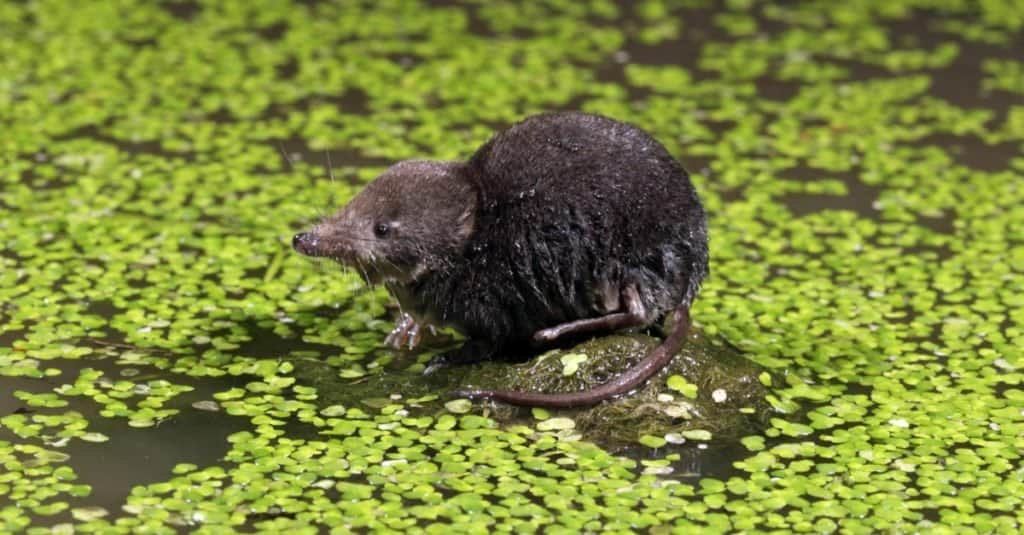
Shrews, similar to this water shrew, are found in Kings Canyon National Park.
©Erni/Shutterstock.com
California is home to 13 different species of shrew. In Kings Canyon National Park, five of those species can be found. How many of each species live in the park is not known, given that the creatures spend most of their lives underground.
The different types of shrews in Kings Canyon National Park include:
- Vagrant Shrew
- Dusky Shrew
- Ornate Shrew
- American Water Shrew
- Trowbridge’s Shrew
The habitat for shrews is varied. They enjoy living in forests, woodlands, grasslands, and meadows, all of which are within the park’s boundaries. While the likelihood of seeing shrews is small, they are there, burrowing just under the surface in search of food and shelter.
| Currently Located In Park | Yes |
| Abundance | Vagrant Shrew (unconfirmed); Dusky Shrew (uncommon); Ornate Shrew (uncommon); American Water Shrew (uncommon); Trowbridge’s Shrew (uncommon) |
| Nativeness To The Park | Vagrant Shrew (non-native); Dusky Shrew (native); Ornate Shrew (native); American Water Shrew (native); Trowbridge’s Shrew (native) |
Broad-Footed Mole
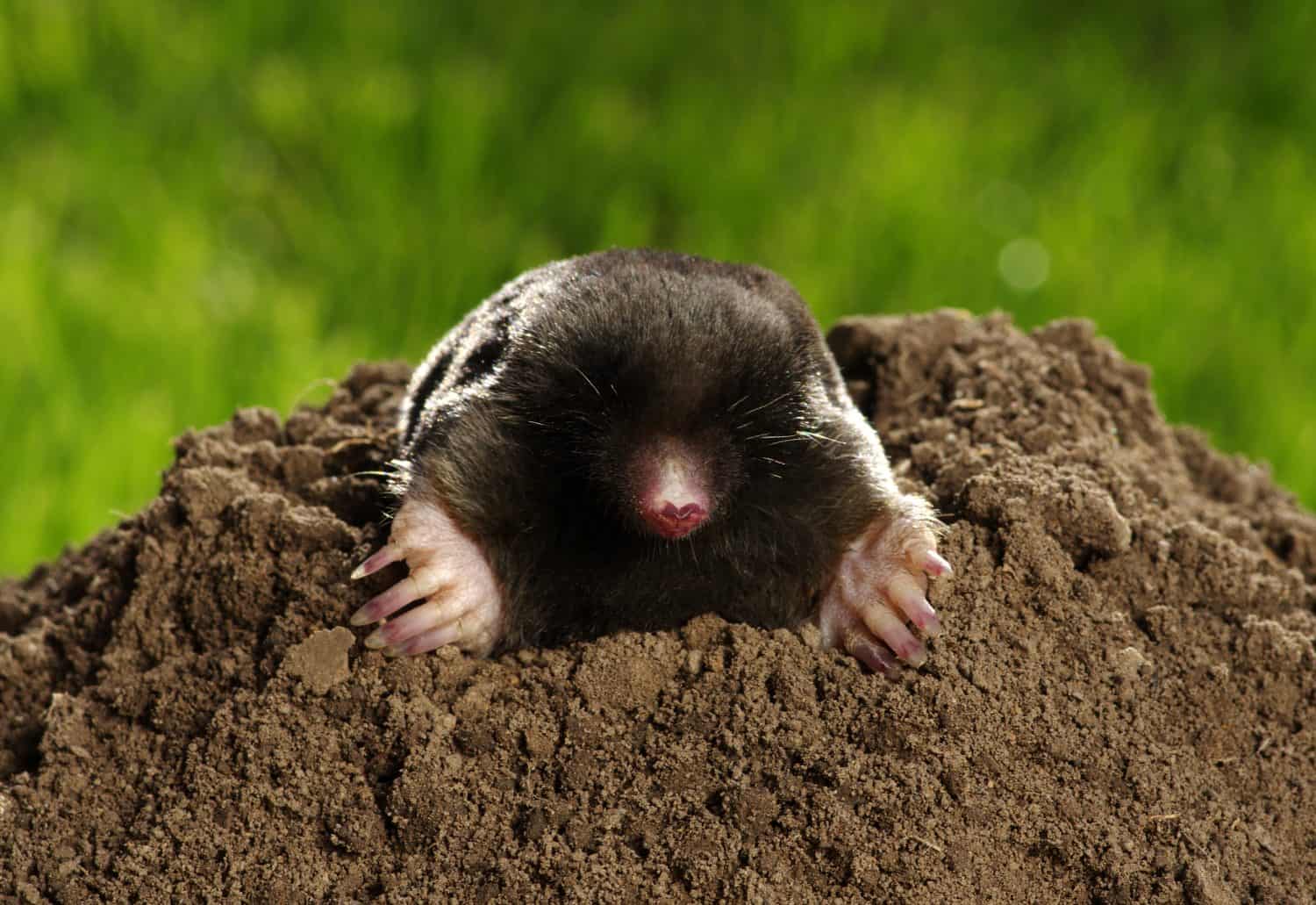
The broad-footed mole is common in California and Kings Canyon National Park.
©irin-k/Shutterstock.com
The broad-footed mole is a common animal in California. They live in regions from the Oregon border to San Diego, including Kings Canyon National Park. Just how many live within park boundaries is not known; however, given that they live underground.
The typical habitat for broad-footed moles is grasslands, riparian areas, and meadows near streams. Given that all of these habitats help create the national park, it is a perfect environment for the moles.
| Currently Located In Park | Yes |
| Abundance | Uncommon |
| Nativeness To The Park | Native |
White-Tailed Jackrabbit
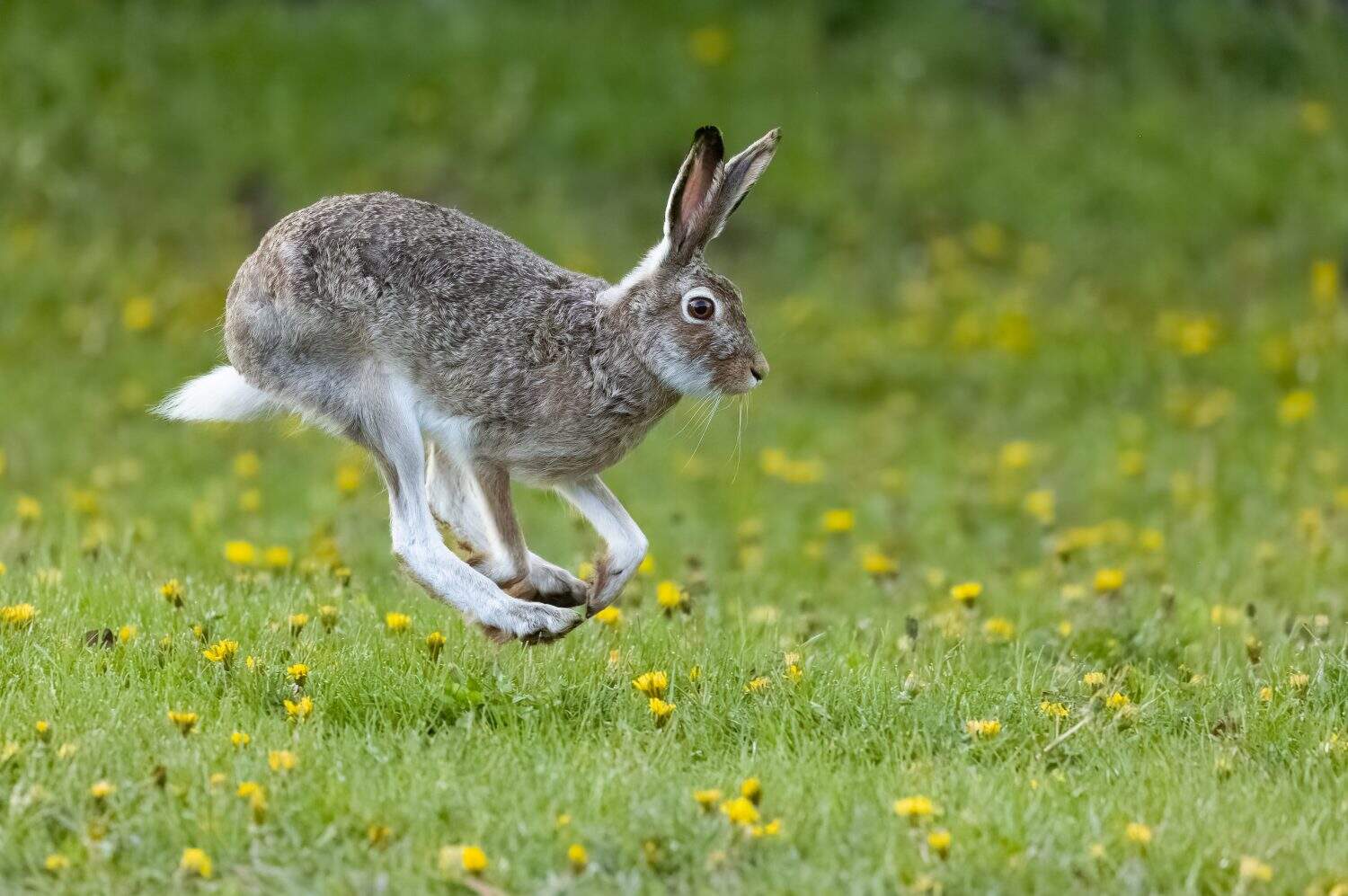
The white-tailed jackrabbit population has declined due to habitat loss.
©ShayneKayePhoto/Shutterstock.com
The white-tailed jackrabbit was once an abundant species in California. However, due to habitat loss and overgrazing, the jackrabbit is now not as commonly seen in the state as it was decades ago.
Fortunately, in places like Kings Canyon National Park, the white-tailed jackrabbit can find sanctuary. While there is no exact number of how many of the jackrabbits live in the national park, there are enough that they are considered a common species to be seen. Though the jackrabbits are nocturnal, those who want a chance of seeing them during the day are best off looking for the fawn-colored, large-eared critter in forested areas and alpine regions of the park.
| Currently Located In Park | Yes |
| Abundance | Common |
| Nativeness To The Park | Native |
Brush Rabbit
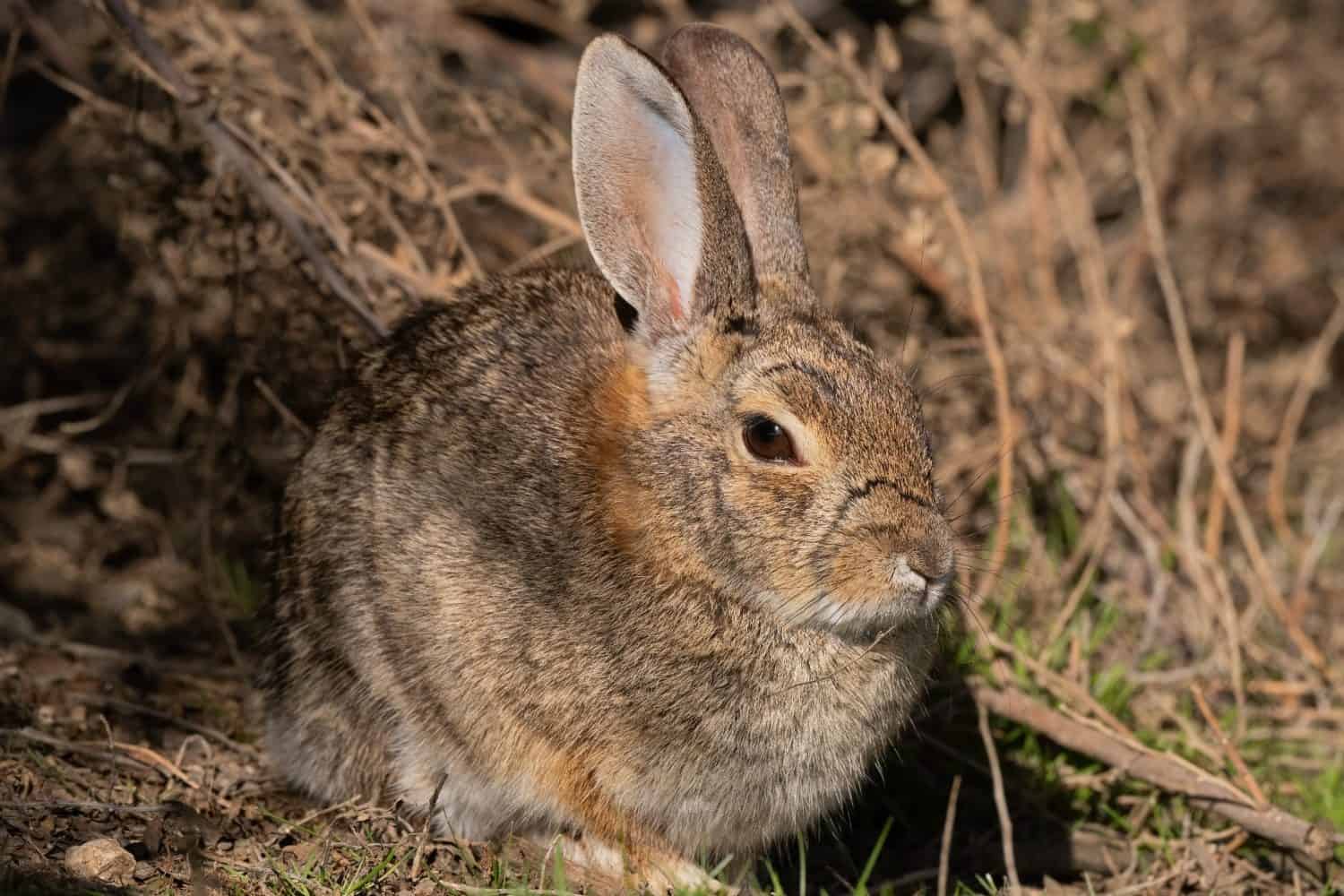
Brush rabbits are good at hiding, making them hard to spot at Kings Canyon National Park.
©Laurie E Wilson/Shutterstock.com
One of the smaller rabbits in California, the brush rabbit can be hard to spot when visiting Kings Canyon National Park. While this rabbit is one of the most populous in the state, it is also very good at hiding. Where does it hide? The brush rabbit lives up to its name, hiding in brush and brambles to stay camouflaged and safe from predators.
To catch a glimpse of the brush rabbit, the gray-brown rabbits can be found in dense chaparral or foothills in the park. They are most active mid-morning, eating and catching a bit of sunlight before returning to their burrows.
| Currently Located In Park | Yes |
| Abundance | Uncommon |
| Nativeness To The Park | Native |
American Pika
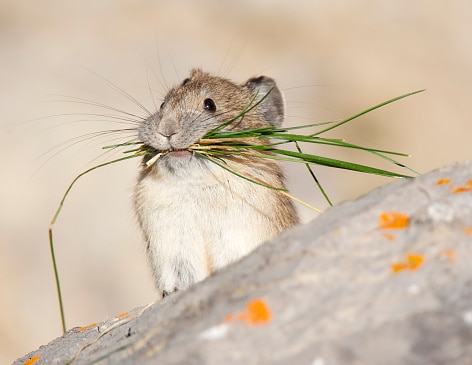
American pika can be found in the alpine regions of Kings Canyon.
©moose henderson/iStock via Getty Images
The American pika lives in regions throughout California. There is no official count of the pika, but because it is sensitive to changes in temperature and has specific habitat needs, the American pika is believed to be facing a population decline from levels a few decades ago. Consequently, it has been named a species of concern in the Golden State.
The little fawn-to-brown critters related to rabbits are often found in the alpine terrain of Kings Canyon National Park. Therefore, those who want to see the tiny animals may have to do a bit of hiking, but it will be well worth it to see the American pika in its natural environment.
| Currently Located In Park | Yes |
| Abundance | Common |
| Nativeness To The Park | Native |
Mountain Beaver
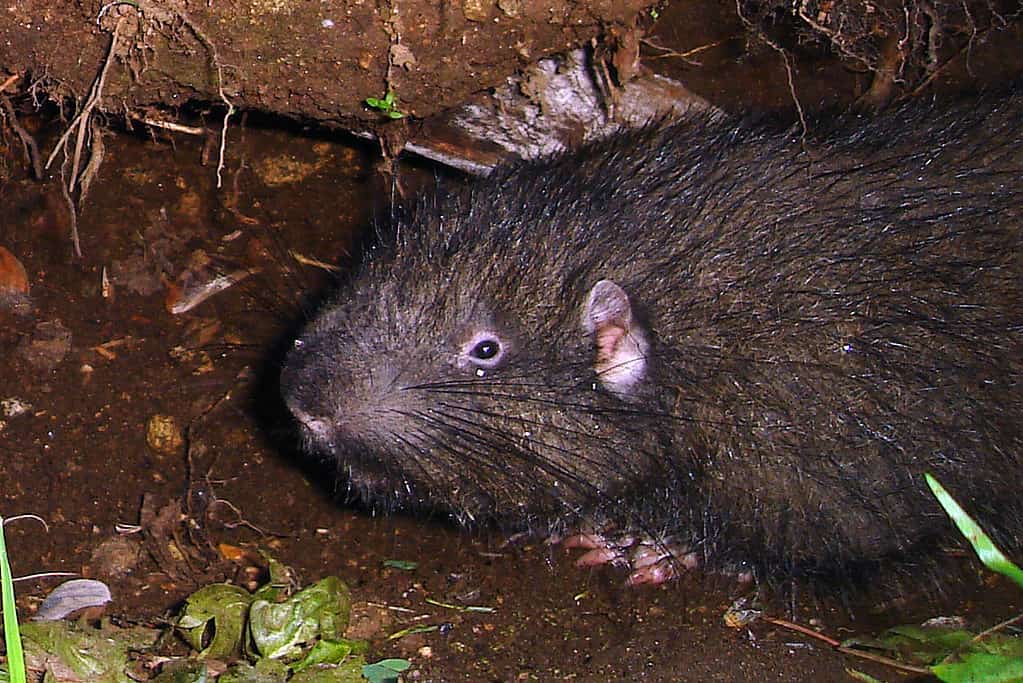
Mountain beavers prefer to burrow near bodies of water in Kings Canyon National Park.
Beavers, in general, were once abundant in California. Just about every stream throughout the state had beavers with dams, with an average of 17 and up to 83 dams per mile. However, this keystone animal was nearly hunted to extinction. In North America, there were once 100 to 200 million beavers. Today, there are 10 to 15 million.
Just how many mountain beavers there are in the U.S. or in California is not known. The estimates range from 10,000 to one million nationally. While they are uncommon sights in Kings Canyon National Park, they can be found in the mountains and dense forests. They will burrow underground rather than build dams, but will do so in close proximity to a body of water.
| Currently Located In Park | Yes |
| Abundance | Uncommon |
| Nativeness To The Park | Native |
American Beaver
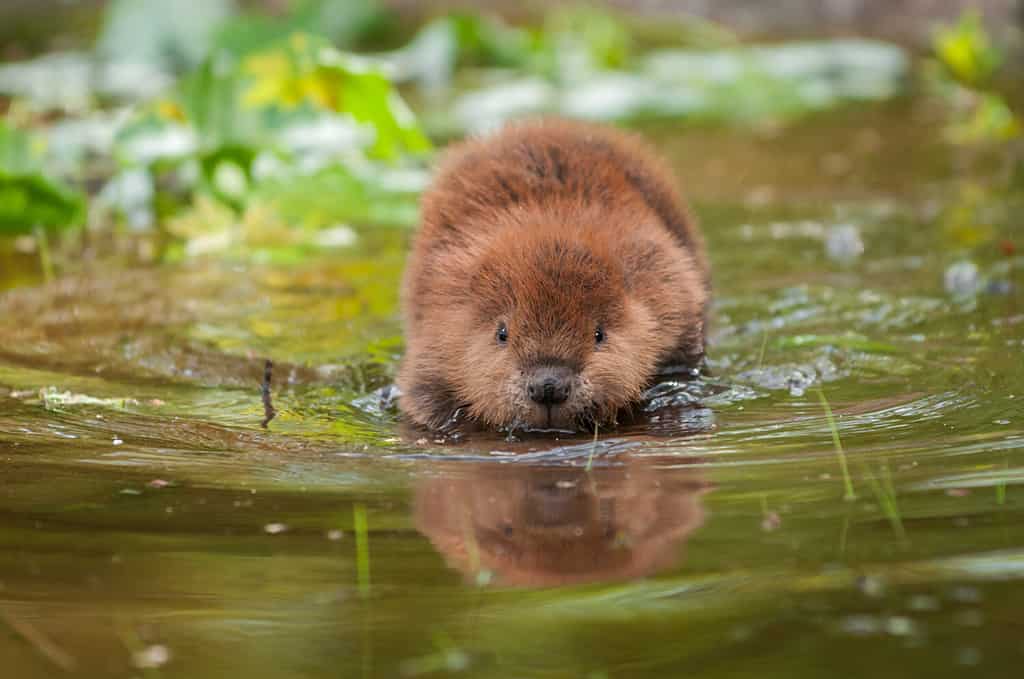
Beavers were once nearly hunted to extinction in North America.
©Holly Kuchera/Shutterstock.com
The American beaver was once plentiful in North America. It used to live throughout California before European settlers arrived. Then, not only was their habitat taken away, but they were hunted for their hides as well.
Today, American beavers are making a small population comeback thanks to reintroduction projects. Though they are not often seen in Kings Canyon National Park, they do live there. They will be found along the 2,600 miles of rivers and streams in the park. Even if they are not seen, their dams will be, indicating a beaver population is thriving within park boundaries.
| Currently Located In Park | Yes |
| Abundance | Uncommon |
| Nativeness To The Park | Non-native |
Voles
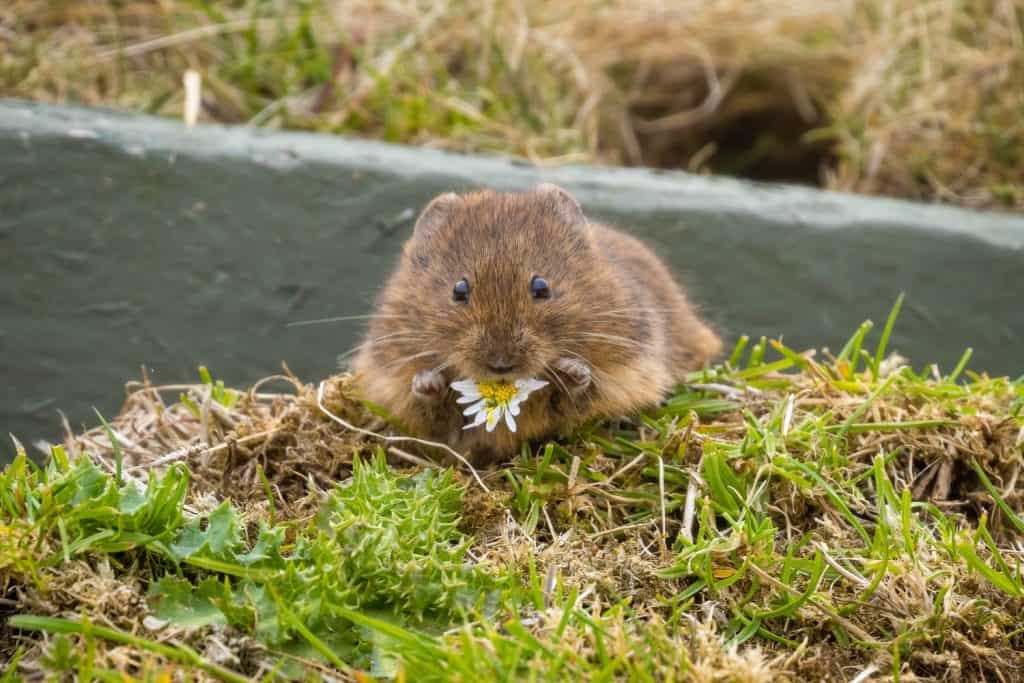
Voles, similar to this one, live in multiple regions of Kings Canyon National Park.
©Paul Abrahams/Shutterstock.com
There are 10 species of voles that live in California. Four of them live in Kings Canyon National Park.
Found in all areas of the national park, some of the voles’ favorite habitats include grassland, dense chaparral, and oak woodlands. All of these habitats are present and are the best places to find voles in Kings Canyon.
The different types of voles found in the national park include:
- Amargosa Vole
- Coronation Island Vole
- Montane Vole
- Heather Vole
Spotting a vole can be challenging, as they live underground in burrows. However, they are an integral part of the park’s ecosystem, regardless of whether their populations are abundant or not well documented.
| Currently Located In Park | Yes |
| Abundance | Amargosa Vole (uncommon); Coronation Island Vole (abundant); Montane Vole (uncommon); Heather Vole (unknown) |
| Nativeness To The Park | Amargosa Vole (native); Coronation Island Vole (native); Montane Vole (native); Heather Vole (native) |
Bushy-Tailed Woodrat
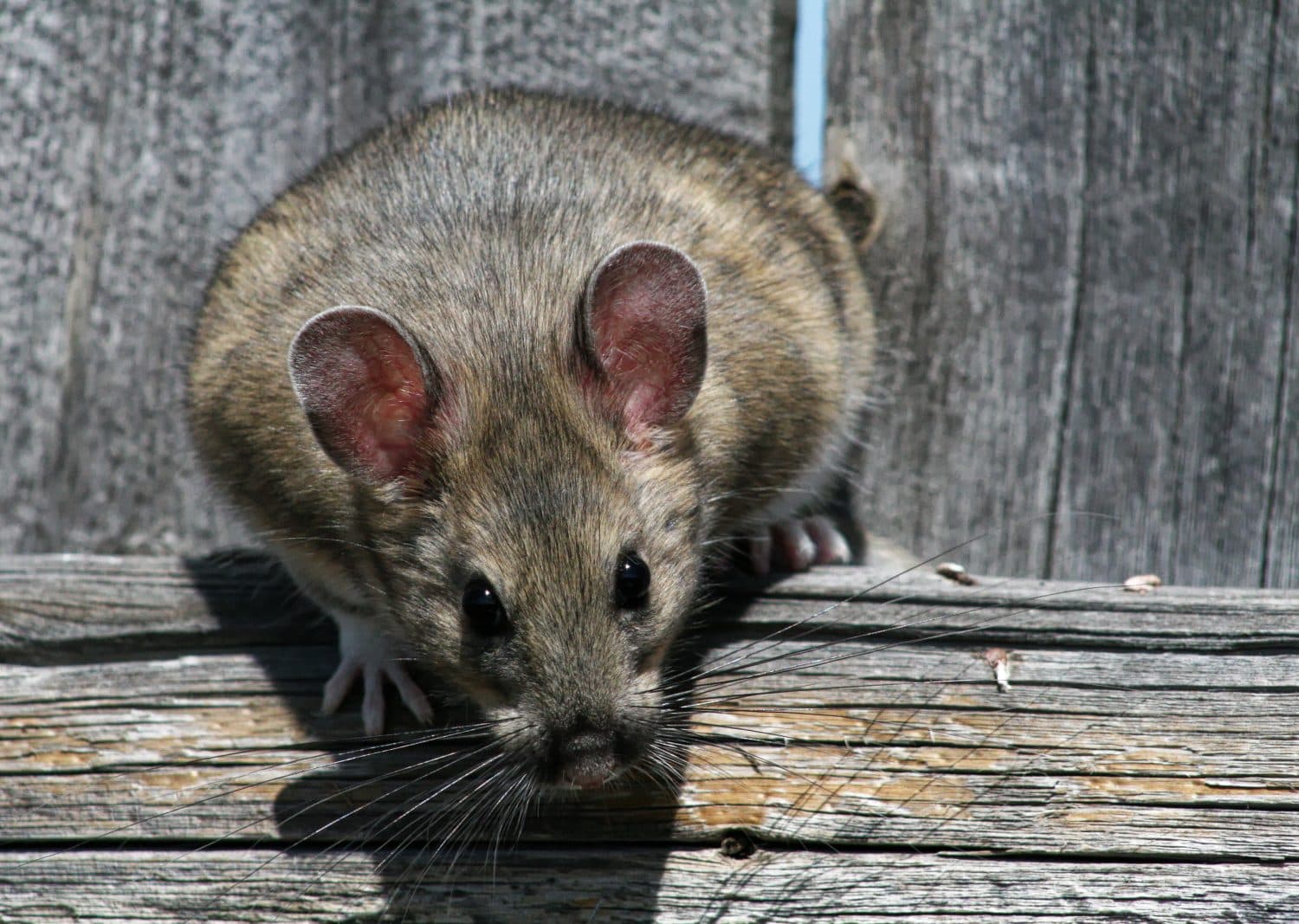
Bushy-tailed woodrats are most often seen at night and live at higher elevations in Kings Canyon National Park.
©M. Leonard Photography/Shutterstock.com
The bushy-tailed woodrat can be found in multiple regions of California. From the Oregon border to Tulare County, where Kings Canyon National Park is located, the woodrat has been spotted. However, how many of them reside in California or the national park is not known.
Bushy-tailed woodrats are nocturnal. They also live in higher elevations in rock outcroppings. Therefore, while they live within the park boundaries, finding one may be difficult when exploring the park.
| Currently Located In Park | Yes |
| Abundance | Uncommon |
| Nativeness To The Park | Native |
Mice
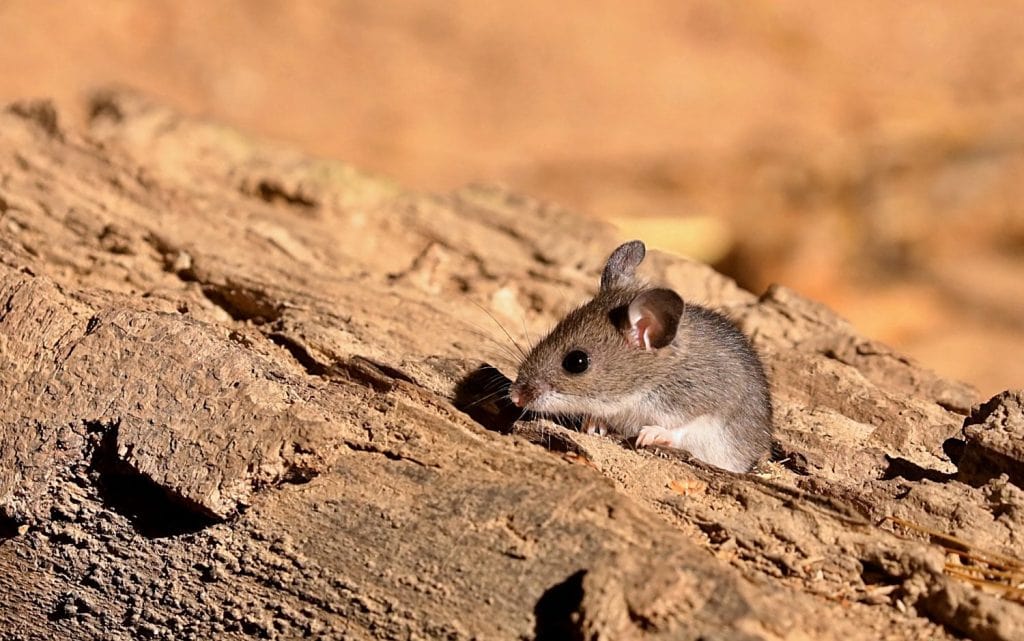
Seven species of mouse, including the deermouse, live in Kings Canyon.
©jitkagold/Shutterstock.com
It should come as no surprise that multiple species of mice live in Kings Canyon National Park. All are native to California, but their populations vary in abundance within the park.
The different types of mice that live in Kings Canyon National Park include:
- Brush Deermouse
- California Deermouse
- Deermouse
- Pinyon Mouse
- Western Harvest Mouse
- Western Jumping Mouse
- California Pocket Mouse
Not only will mice be found in the grasslands and woodlands of Kings Canyon, but they will also be found in campgrounds. Therefore, if camping in the national park, be sure to pack up all food so that these little critters will not make themselves at home.
| Currently Located In Park | Yes |
| Abundance | Brush Deermouse (common); California Deermouse (uncommon); Deermouse (common); Pinyon Mouse (uncommon); Western Harvest Mouse (rare); Western Jumping Mouse (uncommon); California Pocket Mouse (uncommon) |
| Nativeness To The Park | Brush Deermouse (native); California Deermouse (native); Deermouse (native); Pinyon Mouse (native); Western Harvest Mouse (native); Western Jumping Mouse (native); California Pocket Mouse (native) |
Porcupine
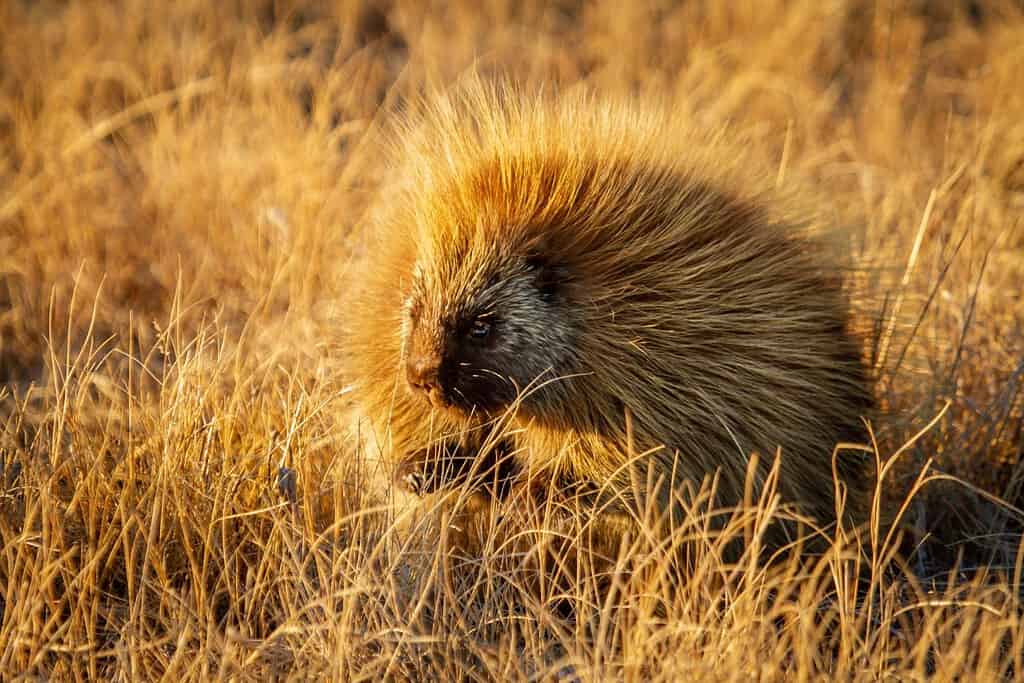
There is a small population of porcupines that call Kings Canyon National Park home.
©Dennis Laughlin/Shutterstock.com
Observing a porcupine in its habitat is something of a rarity these days. With a population that is dwindling, the porcupine, which is not native to California, may become extinct in the Golden State in the future.
According to the California Department of Fish and Wildlife, there have been only 14 porcupine sightings in “recent years,” with an additional eight found as roadkill. While they have been seen in Kings Canyon National Park, it is unclear what the population size is there. If they are to be spotted, it will likely be in the forests, grasslands, or higher elevations among the mountain outcrops.
| Currently Located In Park | Yes |
| Abundance | Rare |
| Nativeness To The Park | Non-native |
Gophers
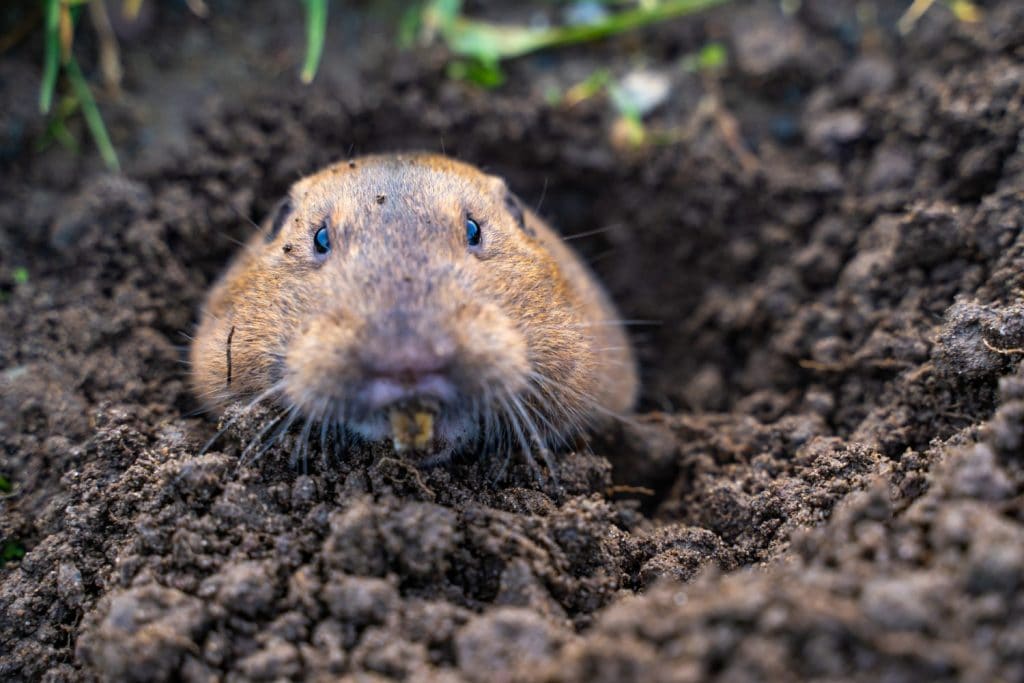
Botta’s Pocket Gopher, seen here, and the Mountain Pocket Gopher are staples in Kings Canyon.
©Iv-olga/Shutterstock.com
Gophers are a staple across California. Of the five species of gophers that live in the state, there are two that can be found in Kings Canyon National Park.
The two species of gophers found in Kings Canyon include:
- Botta’s Pocket Gopher
- Mountain Pocket Gopher
Gophers prefer to live in grasslands and forests where there is soft soil they can easily burrow into. It is not known what the population of gophers is in the national park, but following the gopher berms in the soil has a chance of seeing one of the species of gopher in the park.
| Currently Located In Park | Yes |
| Abundance | Botta’s Pocket Gopher (common); Mountain Pocket Gopher (common) |
| Nativeness To The Park | Botta’s Pocket Gopher (native); Mountain Pocket Gopher (native) |
Squirrels
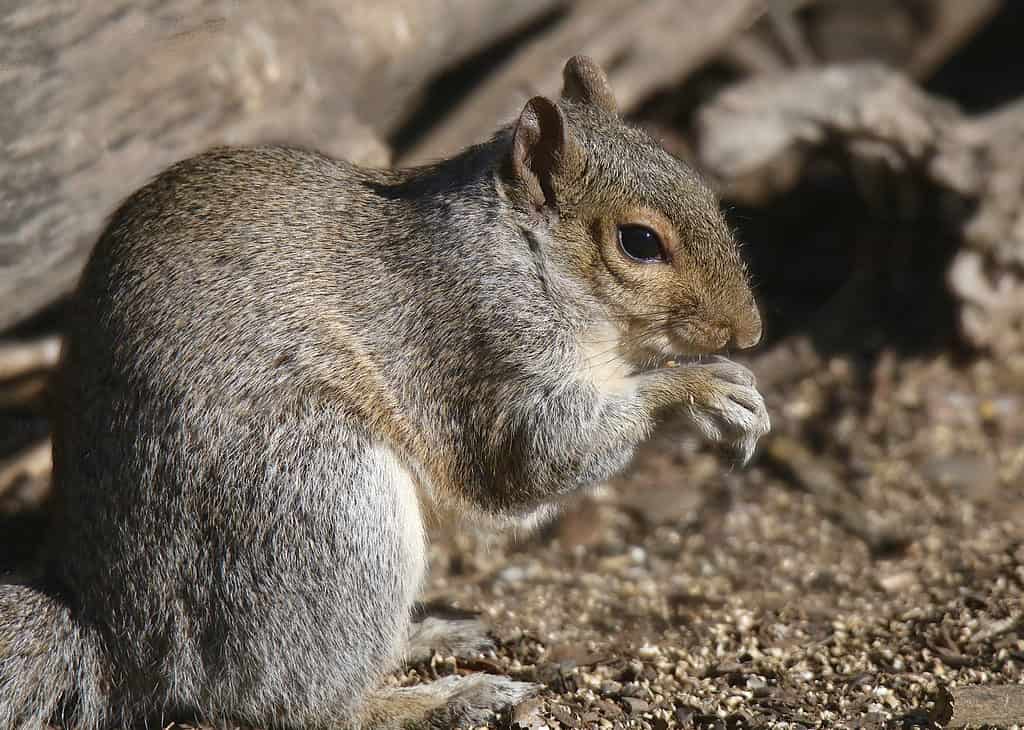
The Western Gray Squirrel is one of six species of squirrels that can be found at Kings Canyon National Park.
©iStock.com/Nancy Strohm
Squirrels are one of the most common animals within the boundaries of Kings Canyon National Park. There are six separate species of squirrels that live in the grasslands, woodlands, forests, and mountains in the national park. Spotting one or more of them is not difficult when visiting.
The different species of squirrels that live in Kings Canyon National Park include:
- Northern Flying Squirrel
- Western Gray Squirrel
- California Ground Squirrel
- Belding’s Ground Squirrel
- Golden-mantled Ground Squirrel
- Douglas’ Squirrel
Be it in the trees or on the ground, visitors will be in for a treat watching the squirrels skitter to-and-fro when visiting Kings Canyon.
| Currently Located In Park | Yes |
| Abundance | Northern Flying Squirrel (uncommon); Western Gray Squirrel (uncommon); California Ground Squirrel (common); Belding’s Ground Squirrel (uncommon); Golden-mantled Ground Squirrel (common); Douglas’ Squirrel (common) |
| Nativeness To The Park | Northern Flying Squirrel (native); Western Gray Squirrel (native); California Ground Squirrel (native); Belding’s Ground Squirrel (Uncommon); Golden-mounted Ground Squirrel (native); Douglas’ Squirrel (native) |
Chipmunks
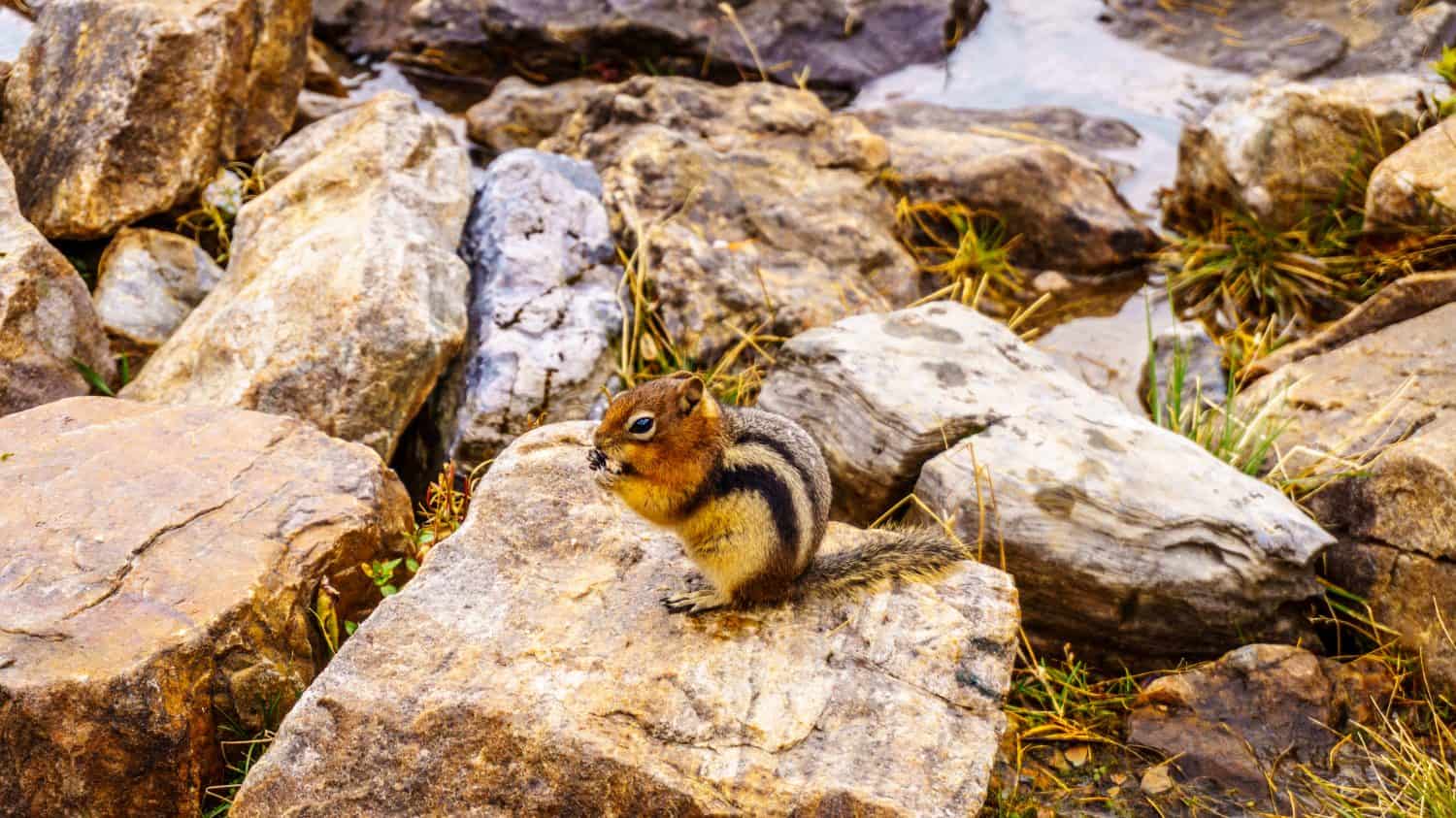
The Alpine chipmunk is one of five species of chipmunk that live in Kings Canyon.
©Harry Beugelink/Shutterstock.com
The reason there are so many different species of chipmunks in Kings Canyon National Park is that the park offers such diverse habitats for the animals. From the forests to the alpine regions of the park, there is plenty of territory for chipmunks to live peacefully, even with five different species being found in the park.
The different species of chipmunks found in Kings Canyon National Park include:
- Allen’s Chipmunk
- Uinta Chipmunk
- Alpine Chipmunk
- Merriam’s Chipmunk
- Lodgepole Chipmunk
There are no specific population numbers available for these species. However, some are more commonly seen than others. While they may appear cute and may accept handouts, it is important to remember that wildlife, including chipmunks, should not be fed.
| Currently Located In Park | Yes |
| Abundance | Allen’s Chipmunk (unconfirmed); Uinta Chipmunk (unconfirmed); Alpine Chipmunk (common); Merriam’s Chipmunk (rare); Lodgepole Chipmunk (common) |
| Nativeness To The Park | Allen’s Chipmunk (non-native); Uinta Chipmunk (native); Alpine Chipmunk (native); Merriam’s Chipmunk (native); Lodgepole Chipmunk (native) |
Hawks
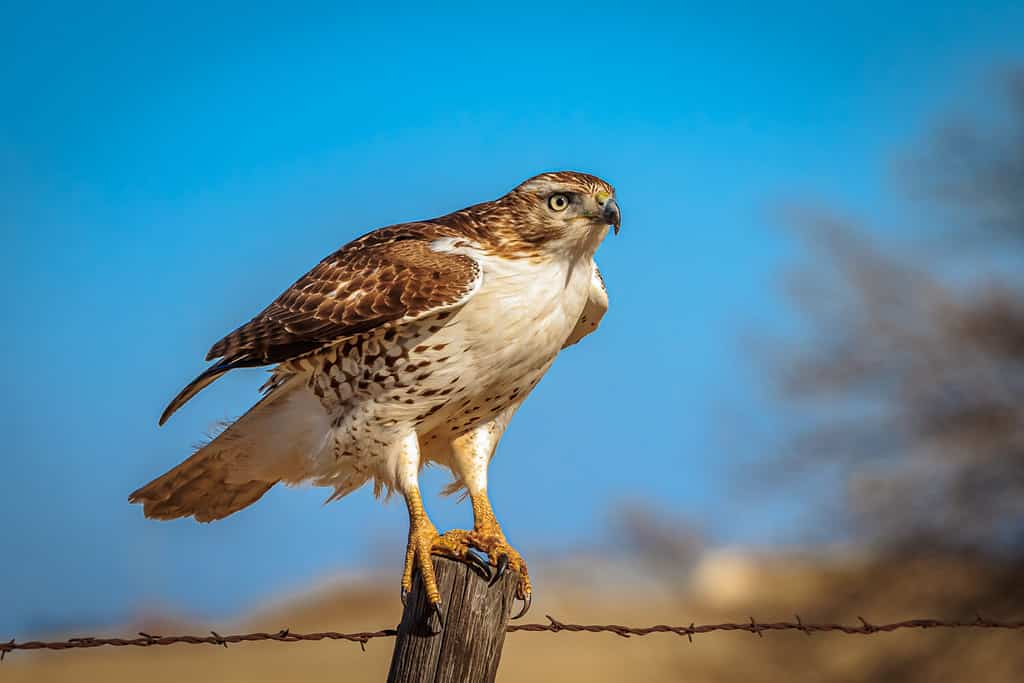
The Red-tailed hawk is one of seven species of hawk that live in Kings Canyon National Park.
©Richard G Smith/Shutterstock.com
In decades past, the population of hawks declined due to pesticides consumed by the prey the hawks targeted. Thanks to these pesticides, some species were nearly wiped out, including one found in Kings Canyon National Park, the Swainson’s Hawk.
While DDT was banned in the 1970s and carbofuran was taken off shelves in 2009, the latter still remains on the black market. Consequently, if hawks or other birds of prey come in contact with the poison, they die nearly instantaneously.
The hawks that are found in Kings Canyon National Park include:
- Cooper’s Hawk
- Northern Goshawk
- Sharp-shinned Hawk
- Red-tailed Hawk
- Red-shouldered Hawk
- Broad-winged Hawk
- Swainson’s Hawk
There is no specific population data for how many of these hawks live in Kings Canyon. However, with the Northern Goshawk having one of the lowest populations of hawks in California, spotting one when visiting the park may be difficult to do.
| Currently Located In Park | Yes |
| Abundance | Cooper’s Hawk (uncommon); Northern Goshawk (uncommon); Sharp-shinned Hawk (common); Red-tailed Hawk (common); Red-shouldered Hawk (uncommon); Broad-winged Hawk (rare); Swainson’s Hawk (occasional) |
| Nativeness To The Park | Cooper’s Hawk (native); Northern Goshawk (native); Sharp-shinned Hawk (native); Red-tailed Hawk (native); Red-shouldered Hawk (native); Broad-winged Hawk (native); Swainson’s Hawk (native) |
Golden Eagle
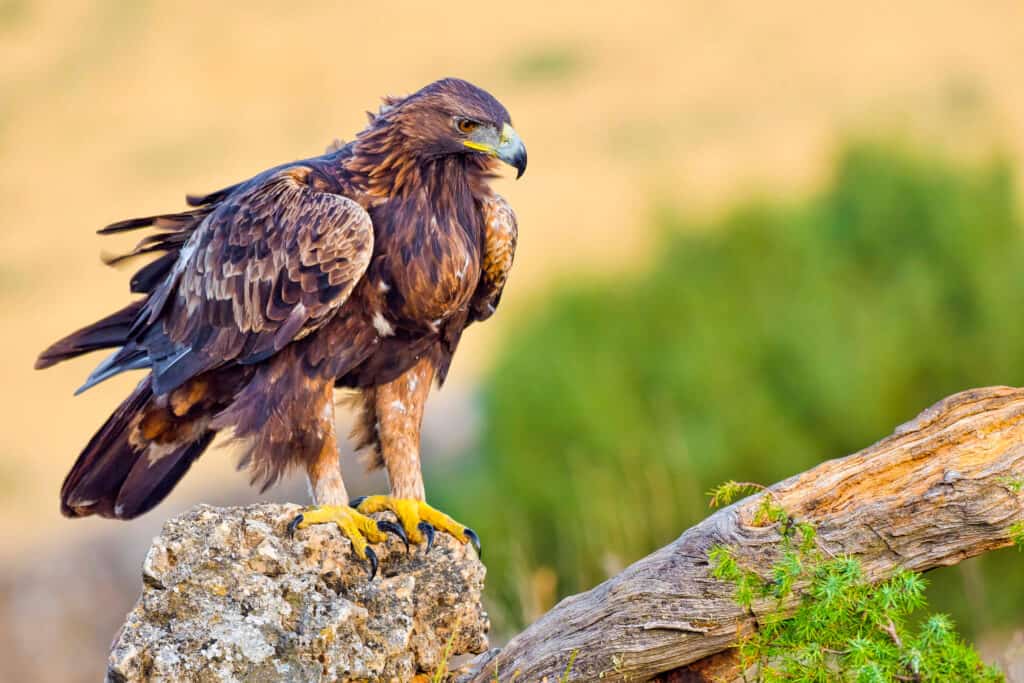
Golden eagles can be found year-round in Kings Canyon National Park.
©Al Carrera/Shutterstock.com
Golden eagles are generally year-round residents of California. While some migrate to the state during the winter, more often than not, the birds of prey can be observed year-round.
Kings Canyon National Park is a wonderful place for golden eagles to live and visit, thanks to the varied habitats it offers. Golden eagles hunt in the grasslands while building their nests in forests or on cliffs at higher elevations. This is done to keep far away from any predators that may want to bring harm.
There are fewer golden eagles in Kings Canyon than other birds of prey, but given that they are native to California, spotting one is not impossible to do.
| Currently Located In Park | Yes |
| Abundance | Uncommon |
| Nativeness To The Park | Native |
Bald Eagle
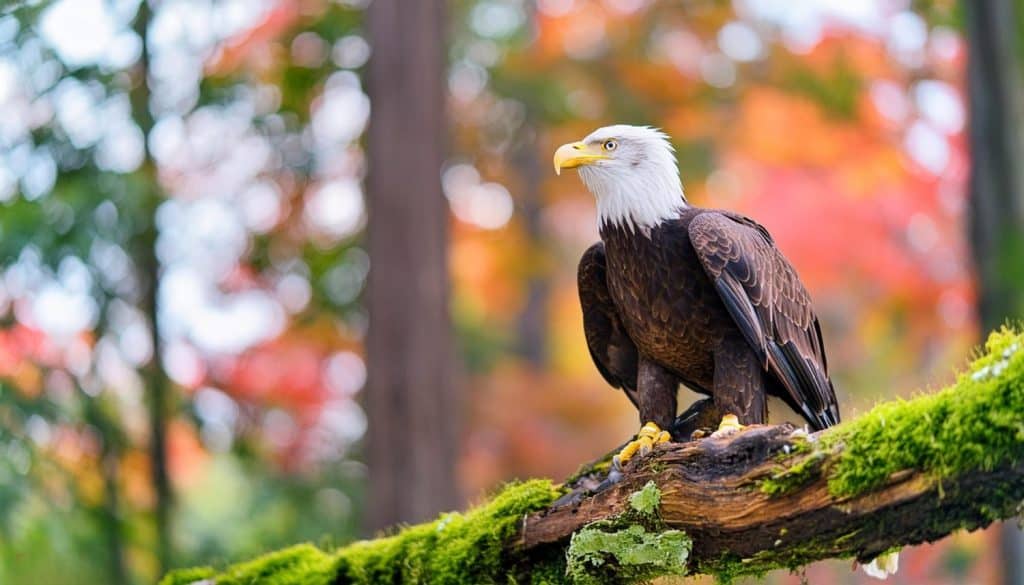
It is not known how many breeding pairs of bald eagles live in Kings Canyon National Park.
©Aikhan000042/Shutterstock.com
Bald eagles may be the poster children for conservation effort success stories. As a result of pesticides being consumed by the bald eagle’s prey, the bald eagles were also consuming the pesticides. Specifically, DDT was to blame for bringing the once-robust bald eagle population in the United States down to just over 400 breeding pairs.
Today, there are over 316,000 bald eagles in the U.S. In California, there are 1,000 individual birds and 400 breeding pairs. How many of those pairs are in Kings Canyon is not known. Given how infrequently they are seen in the park’s woodlands near bodies of water that contain fish, there likely aren’t many.
Turkey Vulture
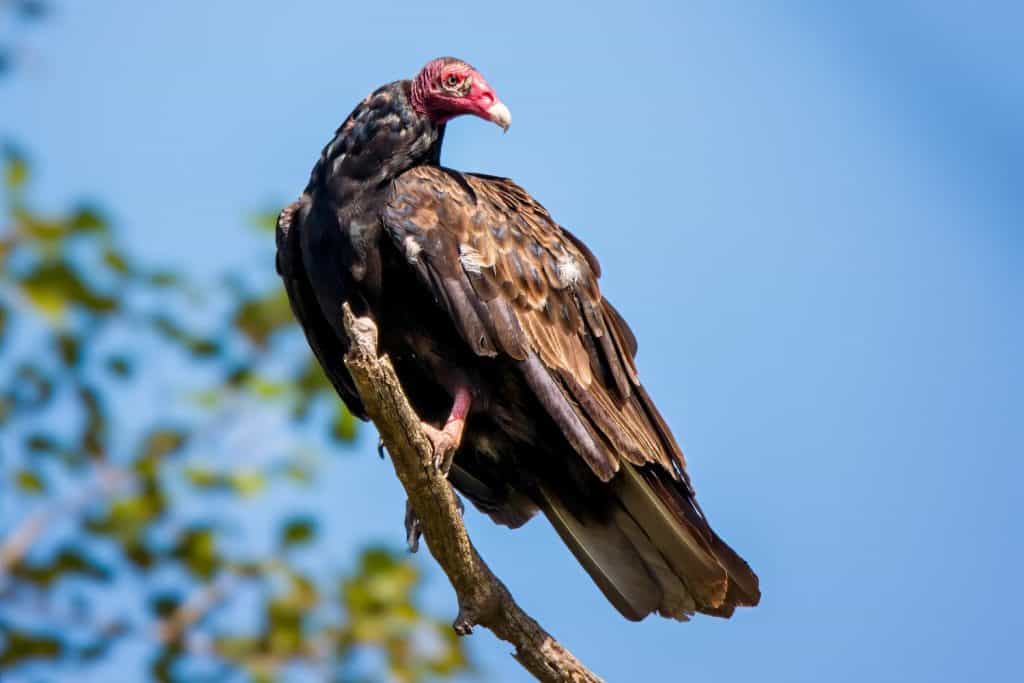
Turkey vultures can be found in meadowlands, grasslands, and forests in Kings Canyon.
©Larry Eiden/Shutterstock.com
Turkey vultures are found across California due to their ability to adapt to almost any habitat. As long as there is consistent carrion available, turkey vultures will do their part to clean up the environment.
To see turkey vultures in action, look for them in meadowlands, grasslands, and forests, as they fly high overhead in Kings Canyon to spot any dead animals. Once one has been identified, turkey vultures will descend on the animal to feed.
Turkey vultures are considered to be shy birds. They will fly off if approached, even if that means leaving a meal behind.
| Currently Located In Park | Yes |
| Abundance | Uncommon |
| Nativeness To The Park | Native |
Osprey
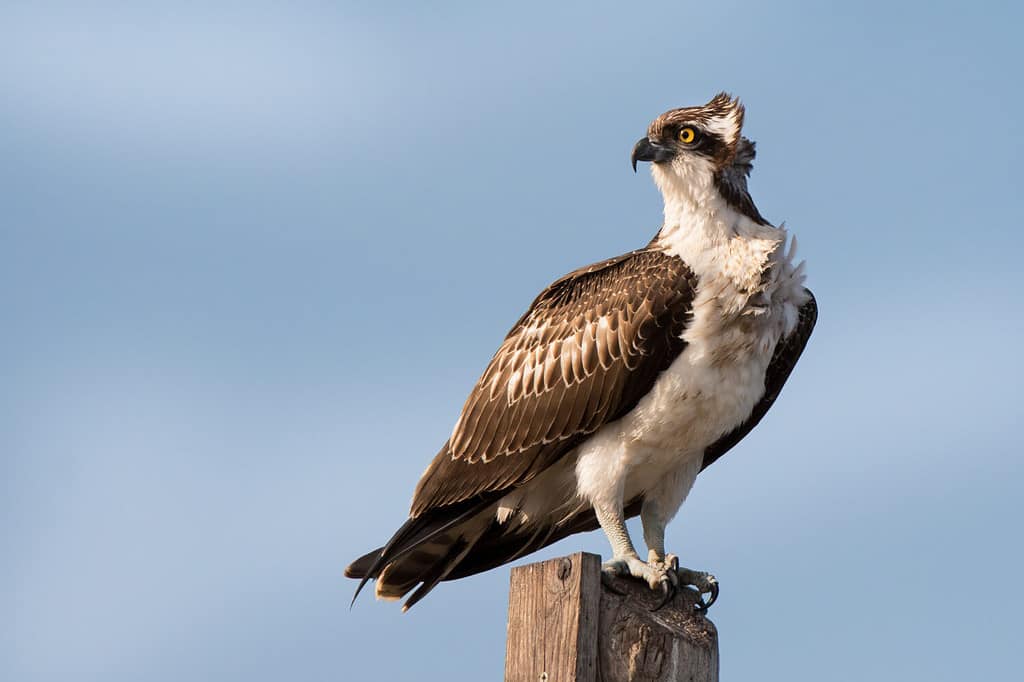
Osprey are found near bodies of water in Kings Canyon National Park.
©Jesus_Miguel/Shutterstock.com
Ospreys are a species of special concern in California. This is because there are approximately 350 breeding pairs in the state. While the population has increased by 4.5% each year from 2020 to 2024, it is still much lower than historic osprey populations were. The hope is that the population continues to increase despite habitat loss.
Ospreys will be found near a body of water. Therefore, the best bet in seeing one of these birds in action is to look near rivers or lakes within Kings Canyon National Park. This is where the dark brown birds with white faces are most apt to be observed.
Ducks
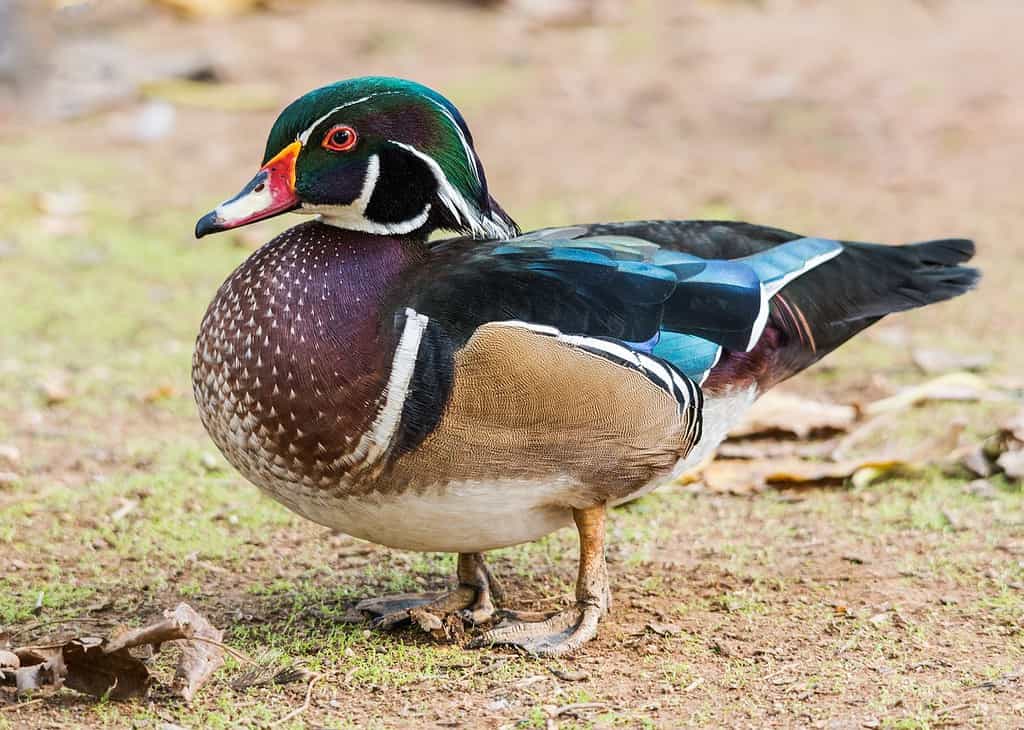
Three different species of duck, including the wood duck, live in Kings Canyon National Park.
©YK/Shutterstock.com
California is home to 30 different species of duck. Of those 30, three call Kings Canyon National Park home. Those ducks include:
- Wood Duck
- Harlequin Duck
- Ruddy Duck
Of these ducks, the Wood and Harlequin are not in large abundance. But to have a chance of seeing the birds, the best places to look are the lakes within the national park. Those lakes include:
- Hume Lake
- Heather Lake
- Middle Rae Lake
- Zumwalt Meadow
None of the ducks found in the national park is endangered. In fact, they are all species of least concern. This has to do with conservation efforts around the state, which have contributed to the populations of these ducks in Kings Canyon National Park.
| Currently Located In Park | Yes |
| Abundance | Wood Duck (rare); Harlequin Duck (rare); Ruddy Duck (occasional) |
| Nativeness To The Park | Wood Duck (native); Harlequin Duck (native); Ruddy Duck (native) |
Canada Goose
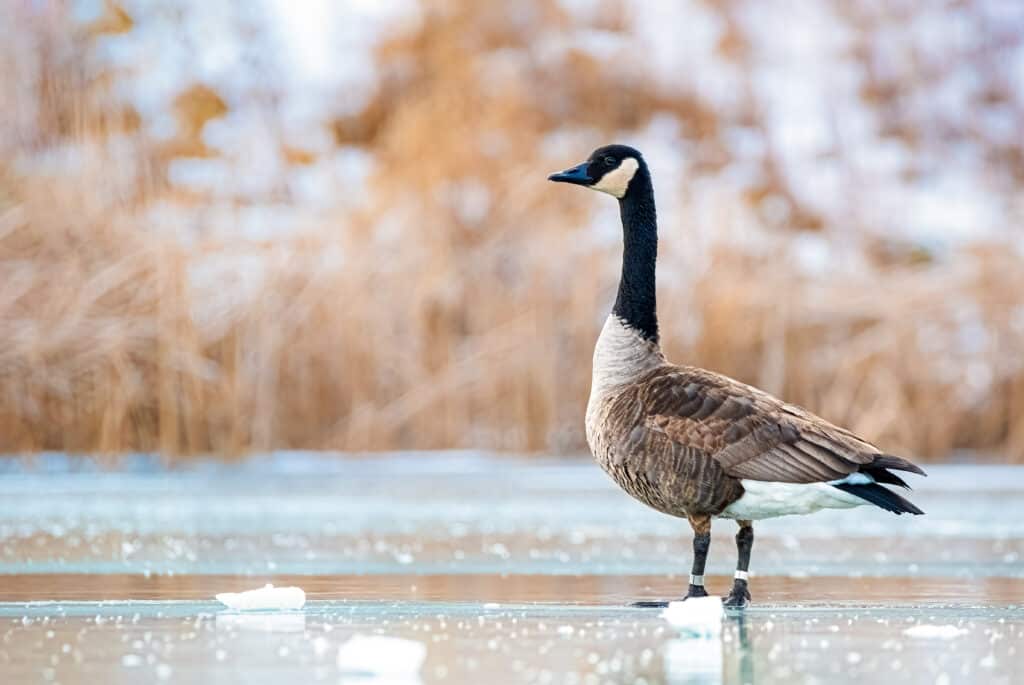
Canada geese are often seen in lakes and ponds in Kings Canyon National Park.
©Rogney Piedra Arencibia/Shutterstock.com
Canada geese are easily identified by their black heads and necks, brown-gray bodies, and cream-colored chests. Unlike the geese from a century ago, today, Canada geese are a permanent, year-round fixture in California. They do not migrate.
For those looking to see the Canada goose in Kings Canyon National Park, lakes and ponds are the best places to look. Some of the best include Hume Lake, Heather Lake, and Middle Rae Lake.
Kings Canyon is not a breeding ground for Canada geese. Consequently, hatchlings are not known to be seen at the park.
Black Swan
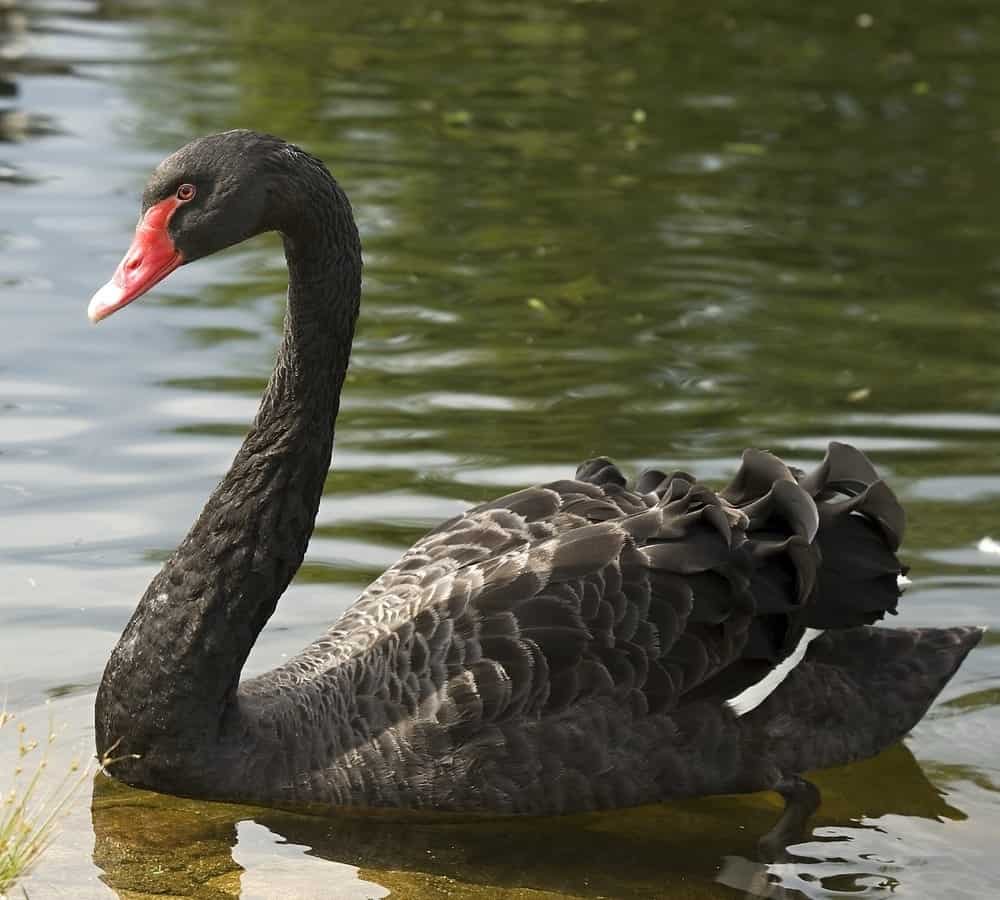
Black swans have been seen from time to time swimming in bodies of water in Kings Canyon.
©efirm/Shutterstock.com
Black swans are not native to California. They were introduced in the 1800s. Over the years, the once ornamental birds were released into the wild, where they have formed small populations in the Golden State.
There is no information on whether black swans are present in a permanent or transient population in Kings Canyon National Park. Nor is there any information on how large the flock is. But if any are to be seen, a body of water is where to find them, which can be found in multiple places throughout the park.
| Currently Located In Park | Yes |
| Abundance | Rare |
| Nativeness To The Park | Non-native |
Tundra Swan
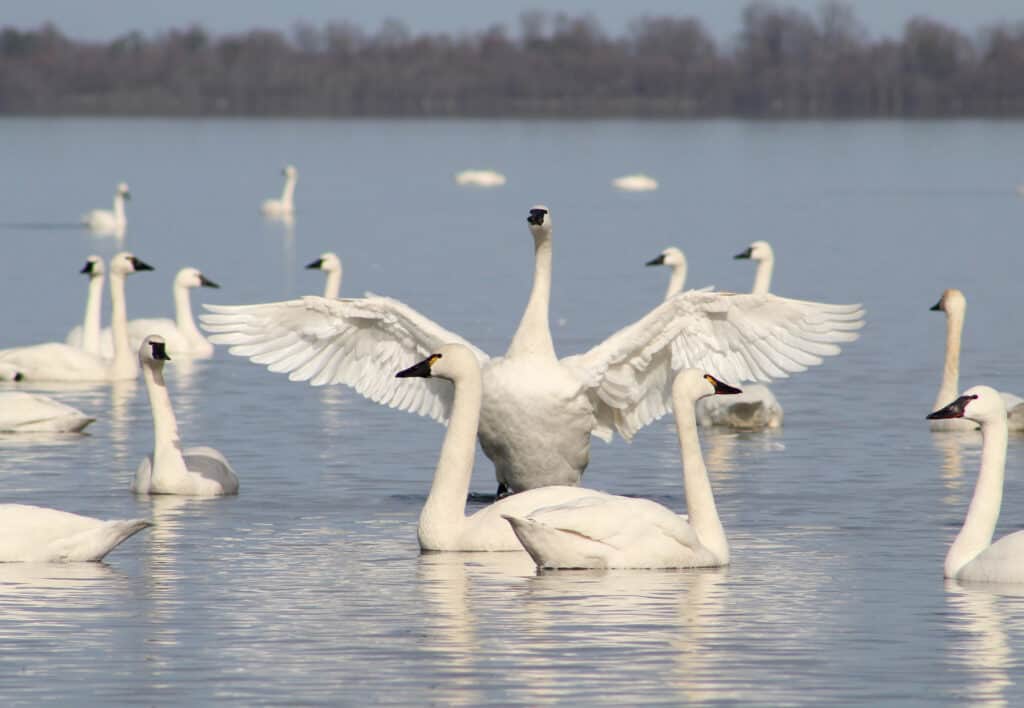
Tundra swan both swim and forage around bodies of water in Kings Canyon National Park.
©hay_mn97/Shutterstock.com
Another non-native species to Kings Canyon National Park is the tundra swan. As with the black swan, there is no information on the population size. However, these swans are seen a bit more frequently than the black swans are.
The best places to see swans in the national park are large bodies of water with plenty of surrounding land for foraging. This would make the lakes in Kings Canyon a wonderful place to start when on the search for the tundra swan.
| Currently Located In Park | Yes |
| Abundance | Occasional |
| Nativeness To The Park | Non-native |
Hummingbirds
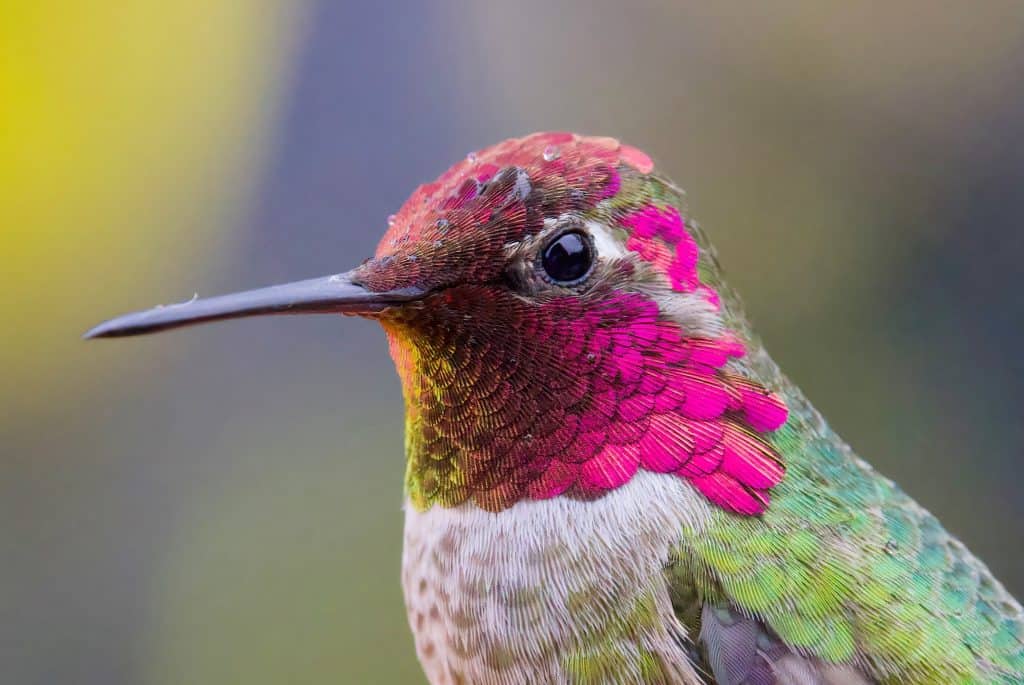
Anna’s Hummingbirds are found throughout Kings Canyon National Park.
©JMONTYGO/Shutterstock.com
Hummingbirds can be found in multiple locations in Kings Canyon National Park. Some of the best lookouts to see hummingbirds (and other birds in the park) include:
- Roaring River Falls
- Scenic Grove Cedar Overlook
- Near the lakes
Because some hummingbirds are migratory, not all can be seen year-round. Therefore, the best bet of catching a glimpse of these tiny birds is to visit the park between Spring and Fall.
There are five different species of hummingbirds found in the park. Those hummingbirds include:
- Black-chinned Hummingbird
- Anna’s Hummingbird
- Rufous Hummingbird
- Allen’s Hummingbird
- Calliope Hummingbird
All of these hummingbirds are native to California. However, with their size and speed, they are not always easy to locate.
| Currently Located In Park | Yes |
| Abundance | Black-chinned Hummingbird (uncommon); Anna’s Hummingbird (common); Rufous Hummingbird (uncommon); Allen’s Hummingbird (rare); Calliope Hummingbird (uncommon) |
| Nativeness To The Park | Black-chinned Hummingbird (native); Anna’s Hummingbird (native); Rufous Hummingbird (native); Allen’s Hummingbird (native); Calliope Hummingbird (native) |
Killdeer
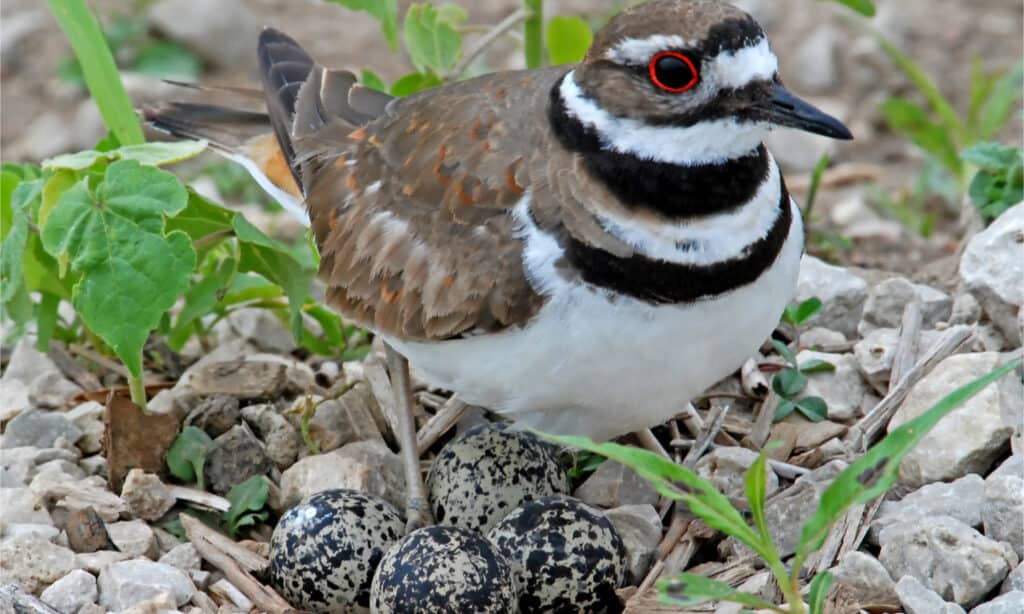
The killdeer constructs a nest on bare soil, gravel roads, or grass fields and lines it with grass, twigs, pebbles, and other debris.
©Brian A Wolf/Shutterstock.com
Killdeer are not considered endangered, but their population has declined dramatically over the last several decades. There have been calls from conservation groups to restore the birds’ habitats, which have been reduced by climate change and urban sprawl.
While it is rare to find killdeer at Kings Canyon National Park, they can be seen on occasion. The best places to see the birds are the Grant Grove and Cedar Grove Areas of the park. The size of the park’s population has not been disclosed, but given that the birds lay their eggs between March and August, this would be the best time to see the small, fawn-colored, and white colored birds with black stripes around their head.
Falcons
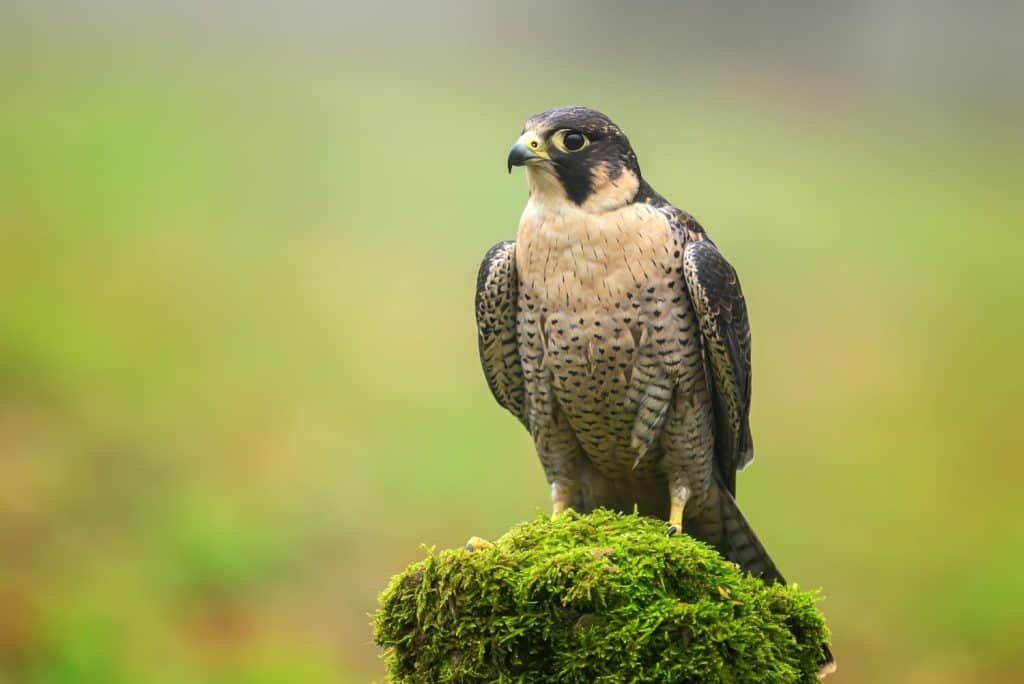
The peregrine falcon is one of three falcons found in Kings Canyon.
©Piotr Krzeslak/Shutterstock.com
There is no denying that Kings Canyon has a wide variety of animals within its boundaries. Flying overhead, there are even more animals, specifically, falcons.
There are three species of falcon that have been spotted in the park. They include:
- Prairie falcon
- Peregrine falcon
- Gyrfalcon
All of these species are native to the region, but they are also rare to see. To see the falcons in their natural habitat, it will require some hiking. Some popular locations to see them include Moro and Chimney Rocks.
It is important to note that if nests are built in these locations, they will be off-limits to the public. Therefore, if falcon watching is on the list of things to do at Kings Canyon National Park, be sure to check the website for closures beforehand.
| Currently Located In Park | Yes |
| Abundance | Prairie falcon (rare); Peregrine falcon (rare); Gyrfalcon (rare) |
| Nativeness To The Park | Prairie falcon (native); Peregrine falcon (native); Gyrfalcon (native) |
Mourning Dove
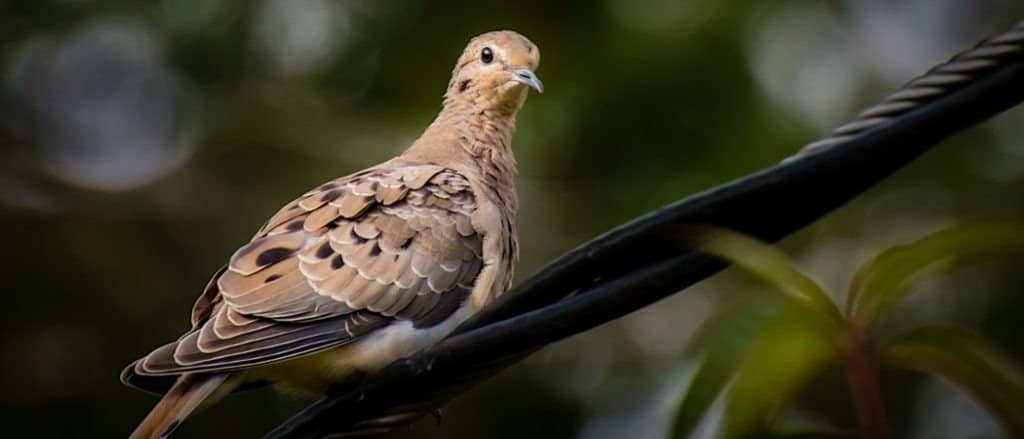
Mourning doves can be found in multiple locations of Kings Canyon National Park.
©Jay Gao/Shutterstock.com
Mourning doves are not native to California. They were brought to the state in the early 1900s as a game bird. Since that time, they have grown their population throughout the state, thanks to the abundance of food nature has provided them.
The best places to see mourning doves in Kings Canyon National Park include:
- Roaring River Falls
- Cedar Grove
- Mist Falls Trail
While these are the most popular locations to spot the doves, it is not uncommon to see them throughout the park while hiking in other locations as well.
| Currently Located In Park | Yes |
| Abundance | Rare |
| Nativeness To The Park | Non-native |
Rock Pigeon
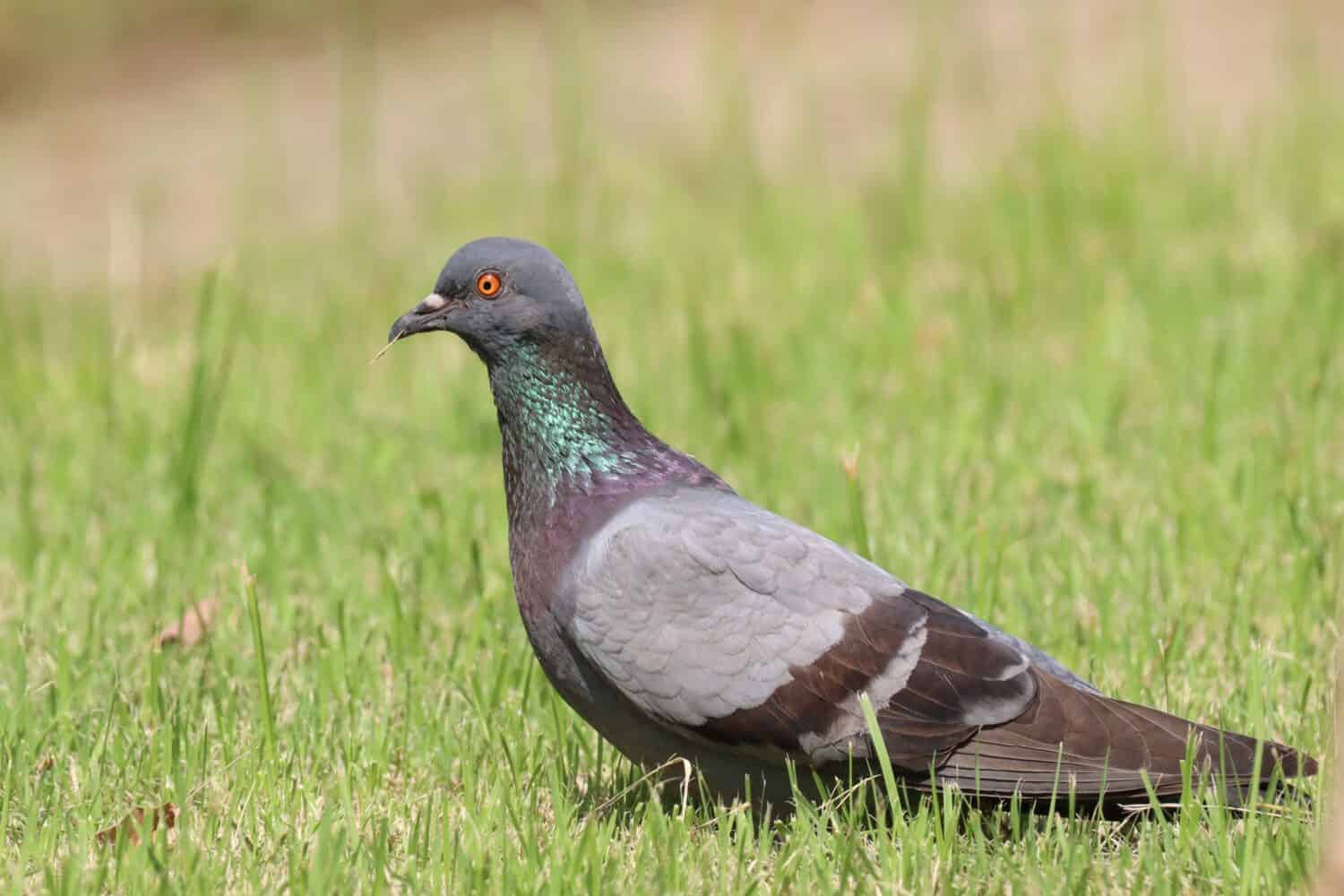
Rock pigeons are not a species native to California or Kings Canyon National Park.
©Opasbbb/Shutterstock.com
Rock pigeons are not native to California, or the United States for that matter. They were brought to the U.S. in 1634, when the first population of birds was introduced to the New England region. Since that time, they have thrived and can be found in most states in the country.
Rock pigeons inhabit many of the same locations as doves in Kings Canyon National Park. From Roaring River Falls to the Mist Falls Trail and even the Cedar Grove Scenic Overlook, doves can be seen in all locations. The pigeons can also be seen in areas where people stop and eat, hoping to grab a snack from visitors willing to feed them.
| Currently Located In Park | Yes |
| Abundance | Rare |
| Nativeness To The Park | Non-native |
Wild Turkey

Foothills and mixed-temperate forests are where wild turkeys can be found in Kings Canyon.
©Joshua Moore/iStock via Getty Images
Wild turkeys can be found throughout Kings Canyon National Park. Some of their favorite places to congregate are in the foothills and mixed-temperate forests.
These large birds are not native to California. They were brought to the U.S. in the 1870s as game birds. The country’s diverse habitats allowed turkeys to thrive. Today, there are between 200,000 and 450,000 turkeys in California alone, pointing to just how large the wild turkey population nationwide is.
| Currently Located In Park | Yes |
| Abundance | Rare |
| Nativeness To The Park | Non-native |
Common Loon
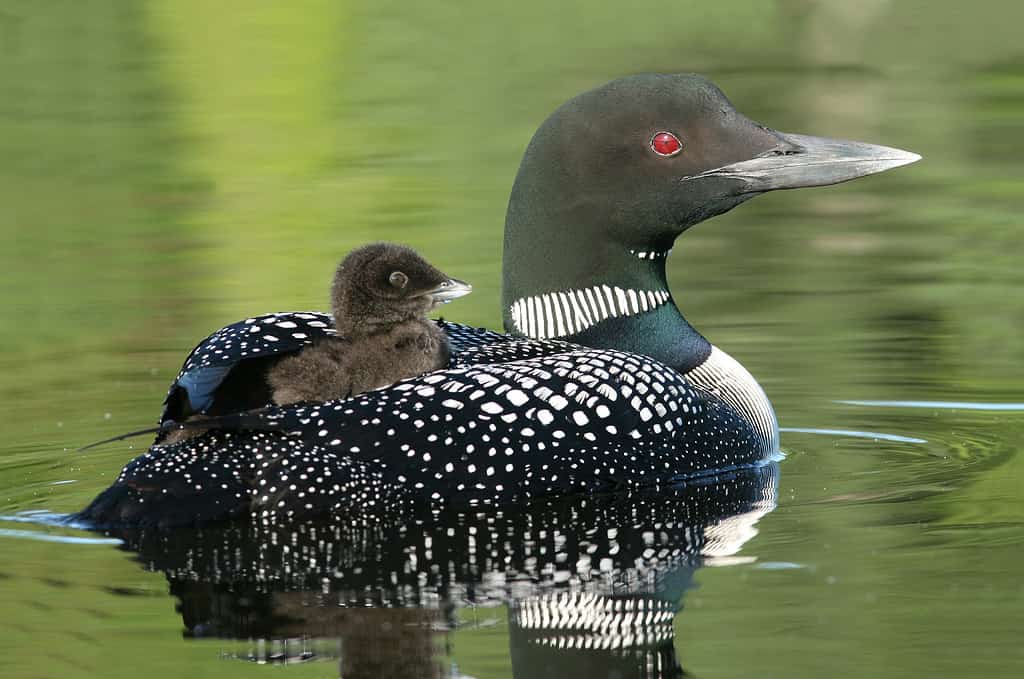
Common loons can be found swimming in the lakes in Kings Canyon National Park.
©BRIAN LASENBY/iStock via Getty Images
The common loon is not native to California. It is not known when the bird first crossed the Golden State’s border, but it has been a fixture for many decades.
Within the confines of Kings Canyon National Park, the common loon can be found swimming on any of the pristine lakes. But because of habitat loss, the loon has been listed as a Species of Concern in some states, including California. If their habitat continues to be destroyed, there is no telling how much longer the waterbird can be observed swimming in the national park.
| Currently Located In Park | Yes |
| Abundance | Occasional |
| Nativeness To The Park | Non-native |
Grosbeak
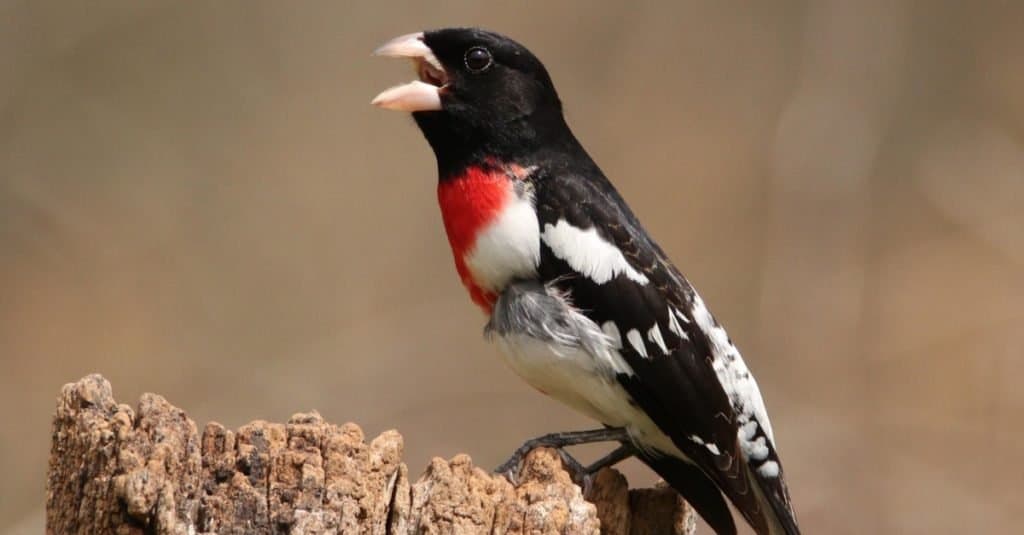
The Rose-breasted Grosbeak is one of several grosbeaks that live in Kings Canyon.
©Mark W. Holdren/Shutterstock.com
Five separate species of grosbeaks have been located in Kings Canyon National Park. Because they are migratory birds, the best time to see them in the park is during the winter. They are often observed finding food in coniferous forests.
The species of grosbeak found in Kings Canyon include:
- Blue Grosbeak
- Rose-breasted Grosbeak
- Black-headed Grosbeak
- Evening Grosbeak
- Pine Grosbeak
The male grosbeaks are much easier to spot than the females because of their bright plumage. With colors that range from yellows to orange, reds, and even blues, the grosbeak is a beautiful bird to observe in Kings Canyon, indeed.
| Currently Located In Park | Yes |
| Abundance | Blue Grosbeak (rare); Rose-breasted Grosbeak (occasional); Black-headed Grosbeak (common); Evening Grosbeak (uncommon); Pine Grosbeak (rare) |
| Nativeness To The Park | Blue Grosbeak (native); Rose-breasted Grosbeak (non-native); Black-headed Grosbeak (native); Evening Grosbeak (native); Pine Grosbeak (native) |
Jays
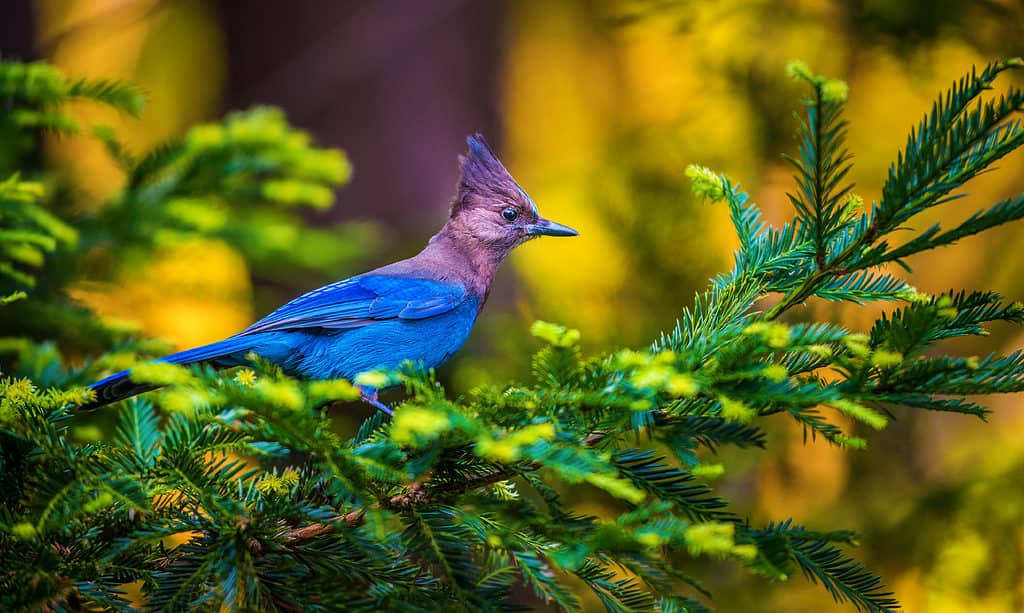
Multiple jays, including the Steller’s Jay, live in Kings Canyon National Park.
©iStock.com/kwiktor
Many who see jays in Kings Canyon will likely hear them before they see them. This is because jays are incredibly loud birds.
In the national park, there are three different species of jay. They include:
- Western Scrub
- Steller’s Jay
- Pinyon Jay
Jays are easier to spot than other birds because of their blue coloration. Look for these birds in dense forests throughout the park, particularly those with oak trees.
| Currently Located In Park | Yes |
| Abundance | Western Scrub (uncommon); Steller’s Jay (common); Pinyon Jay (occasional) |
| Nativeness To The Park | Western Scrub (native); Steller’s Jay (native); Pinyon Jay (native) |
Raven
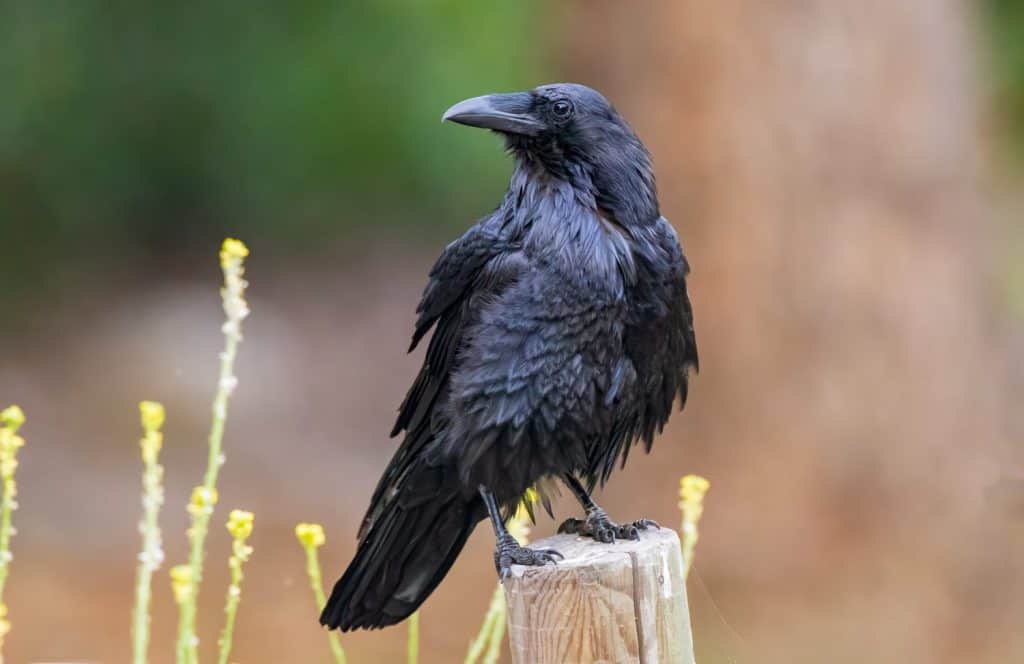
Ravens are one of the most abundant birds in Kings Canyon National Park.
©Matt Krofcheck/Shutterstock.com
One of the most common birds to see at Kings Canyon National Park is the raven. These birds can be spotted scavenging throughout the park. However, the areas where ravens are most often seen are in the low-elevation mixed forests that the national park has to offer.
Many often mistake the raven for a crow. However, ravens tend to be larger than crows and have a low call, rather than something more high-pitched. Both are exceptionally intelligent and adaptable to a multitude of environments, which is why they thrive in California.
| Currently Located In Park | Yes |
| Abundance | Common |
| Nativeness To The Park | Native |
Goldfinches
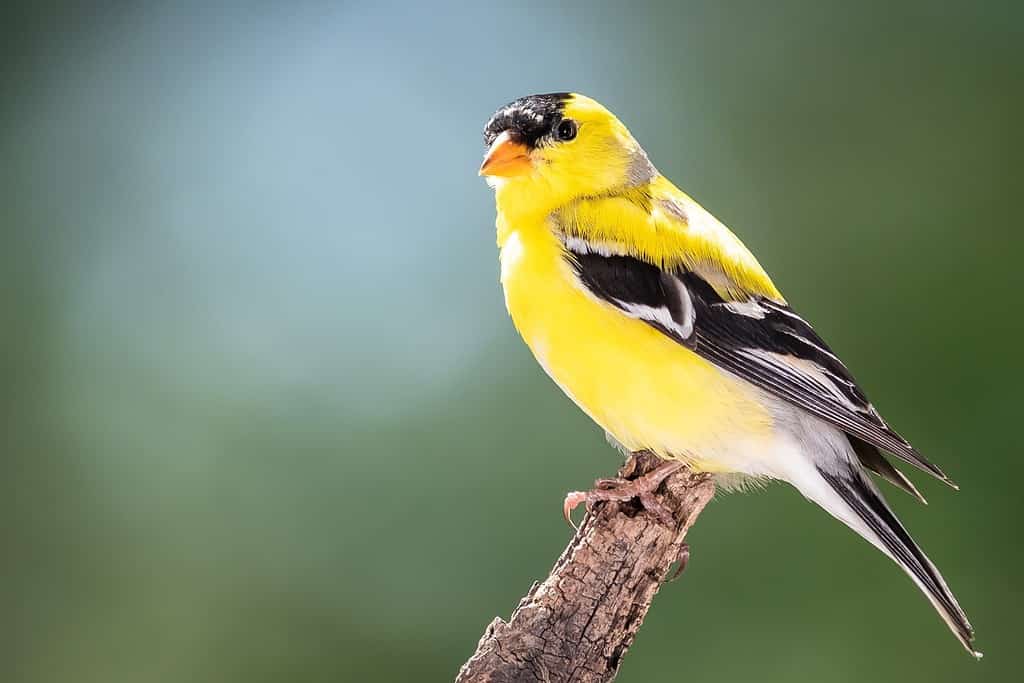
The American goldfinch is one of three goldfinches that live in Kings Canyon.
©rck_953/Shutterstock.com
Three goldfinches call Kings Canyon home. They are the Lawrence’s goldfinch, the Lesser goldfinch, and the American goldfinch. All are native to California, but some of these goldfinches are easier to spot in the national park than others.
These brightly-colored birds can be found in open woodlands, meadows, and grasslands. Therefore, when hiking through these areas, keep an eye out for small yellow birds, who are likely foraging and chirping throughout the day.
| Currently Located In Park | Yes |
| Abundance | Lawrence’s goldfinch (rare); Lesser goldfinch (common); American goldfinch (rare) |
| Nativeness To The Park | Lawrence’s goldfinch (native); Lesser goldfinch (native); American goldfinch (native) |
Finches
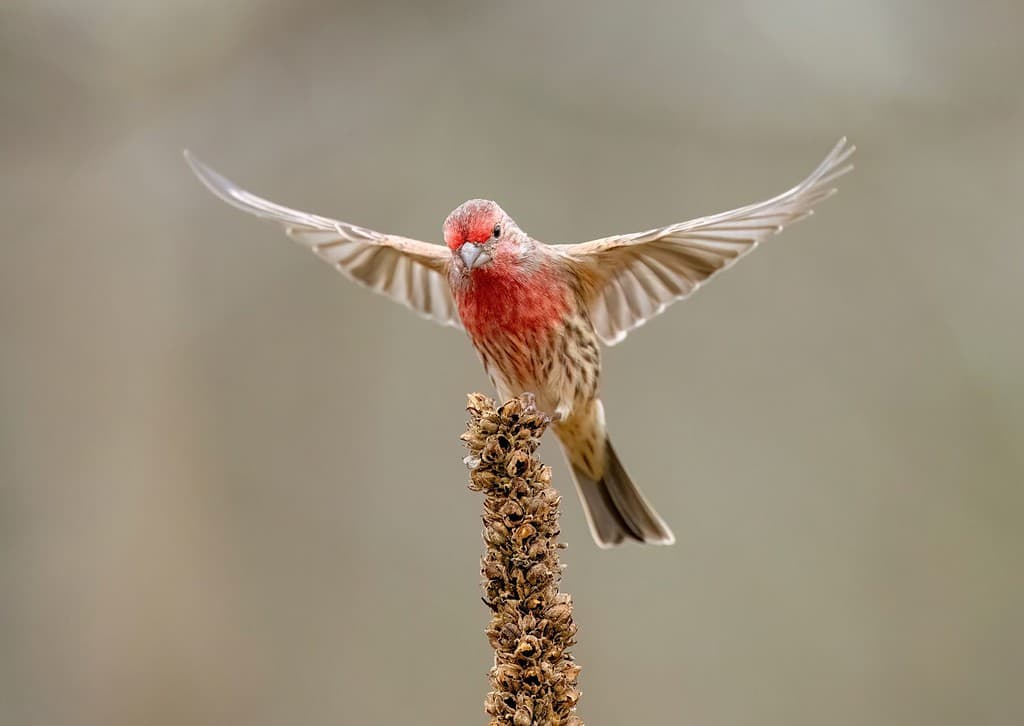
Four different species of finch, including the House finch, live in Kings Canyon National Park.
©Jeff Caverly/Shutterstock.com
Finches thrive in a variety of habitats. In Kings Canyon National Park, they can be found in the grasslands, open fields, and meadowlands.
Of the birds found in the national park, four are finches. They include:
- Cassin’s finch
- House finch
- Purple finch
- Gray-crowned rosy finch
Like goldfinches, these finches are also brightly colored. With reds and purples that adorn the birds’ feathers, they are truly beautiful little birds to observe in nature.
| Currently Located In Park | Yes |
| Abundance | Cassin’s finch (uncommon); House finch (uncommon); Purple finch (uncommon); Gray-crowned rosy finch (uncommon) |
| Nativeness To The Park | Cassin’s finch (native); House finch (native); Purple finch (native); Gray-crowned rosy finch (native) |
Swallows
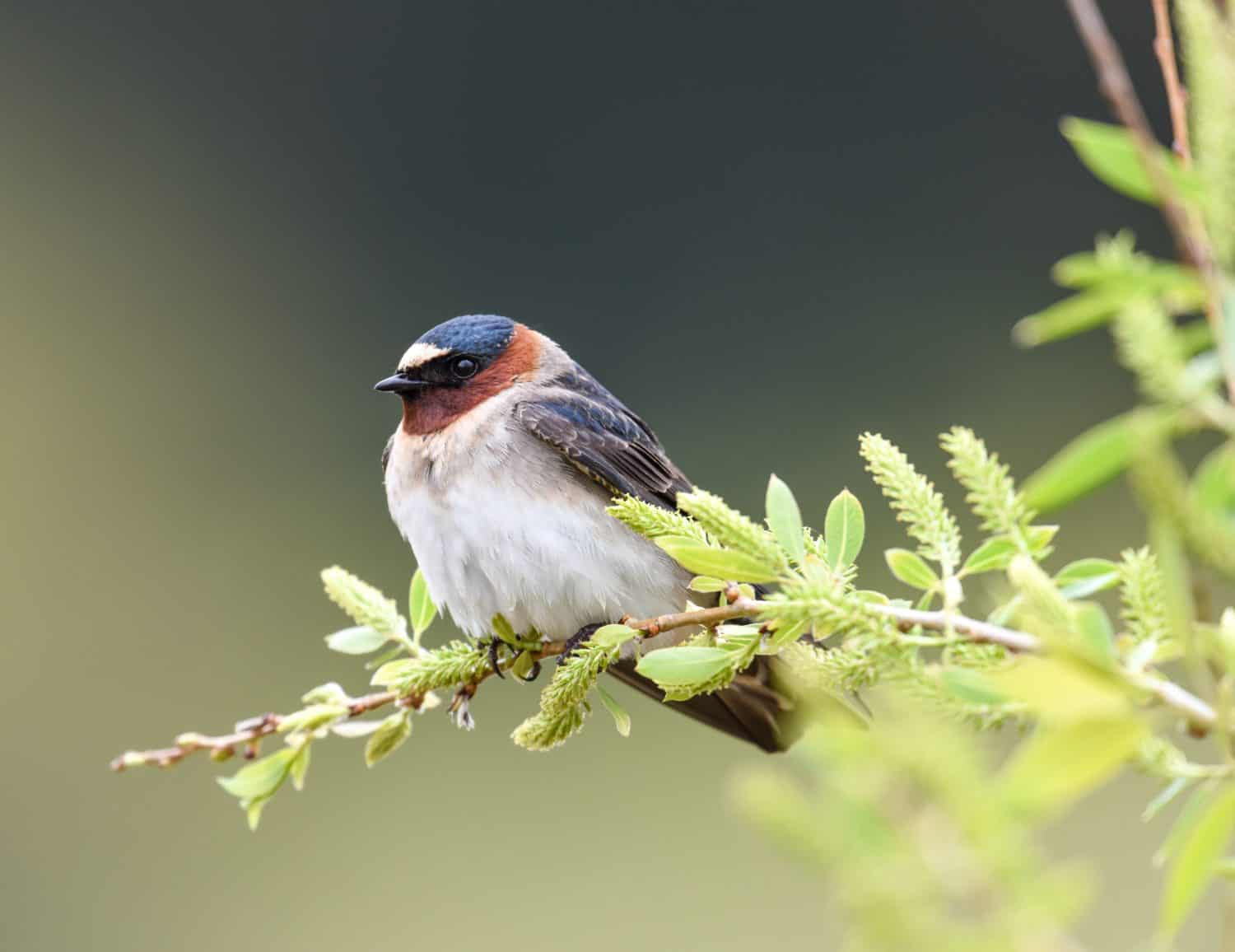
Cliff swallows are one of several species of swallow that live in Kings Canyon.
©Sharon Haeger/Shutterstock.com
Up on the cliffs and tucked away in canyons, swallows can be found making Kings Canyon their home.
There are five different species of swallows found in the national park. They include:
- Barn swallow
- Cliff swallow
- Northern Rough-winged swallow
- Tree swallow
- Violet-green swallow
Swallows build their nests high up to stay protected from predators and the weather. They are mainly seen from spring through fall, as they migrate south for the winter.
| Currently Located In Park | Yes |
| Abundance | Barn swallow (rare); Cliff swallow (uncommon); Northern Rough-winged swallow (rare); Tree swallow (rare); Violet-green swallow (common) |
| Nativeness To The Park | Barn swallow (native); Cliff swallow (native); Northern Rough-winged swallow (native); Tree swallow (native); Violet-green swallow (native) |
Red-Winged Blackbird
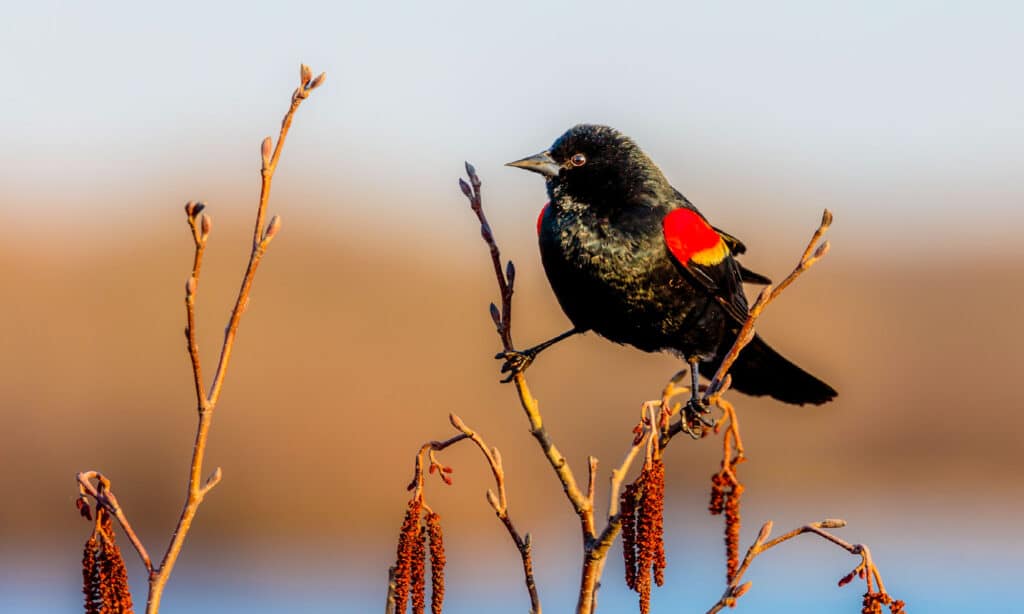
Red-winged blackbird populations are declining due to habitat loss.
©iStock.com/Michael-Tatman
Look in the meadows and fields in Kings Canyon National Park, and there are bound to be red-winged blackbirds hunting for food.
There are typically fewer red-winged blackbirds today than there were in the past. While not yet considered a Species of Concern, the populations are dwindling across the United States. This has sparked a call for action among conservationists to restore habitats before the blackbirds suffer population losses to the point where they struggle to survive.
| Currently Located In Park | Yes |
| Abundance | Uncommon |
| Nativeness To The Park | Native |
Northern Mockingbird
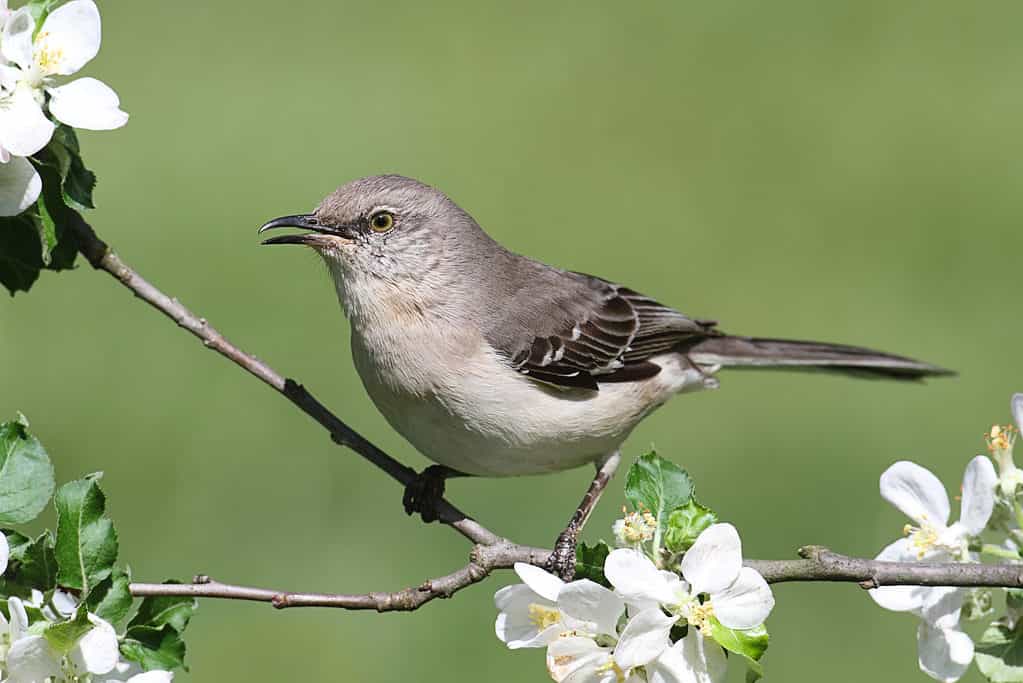
Northern Mockingbirds and other mockingbirds living in Kings Canyon National Park can easily sound like other bird species.
©Steve Byland/Shutterstock.com
The northern mockingbird is quite skilled at mocking the sounds of other birds. This is done to not only defend territory, but also to attract mates.
For those who want to hear the calls of the mockingbird, they are often found on the forest edges and in the low shrubbery of Kings Canyon National Park. However, with their grey bodies well camouflaged in the environment, they are not always easy to spot, leaving only the bird calls to enjoy.
Warblers
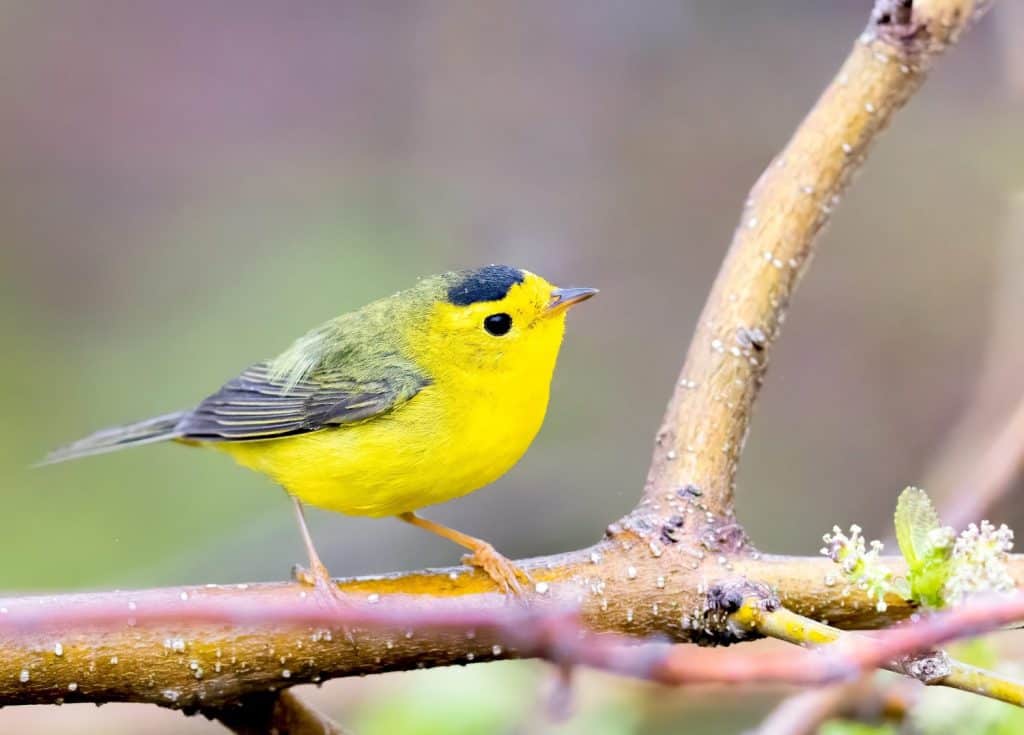
Wilson’s warbler is one of the more uncommon birds to see in Kings Canyon.
©Rajh.Photography/Shutterstock.com
Of all the species found in Kings Canyon National Park, the warbler population may be the most abundant.
There are 10 species of warblers that can be located at one time or another in Kings Canyon. The warblers include:
- Yellow-rumped warbler
- Black-throated gray warbler
- Hermit warbler
- Chestnut-sided warbler
- American Yellow warbler
- Townsend’s warbler
- MacGillivray’s warbler
- Orange-crowned warbler
- Lucky’s warbler
- Wilson’s warbler
Some of these warblers are seen more often than others. Looking both like a sparrow and a finch, the warblers can be easily misidentified as another species. These tiny birds can be found in the wooded and riparian areas of the national park, with the yellow-rumped warbler being the most common of the bunch.
| Currently Located In Park | Yes |
| Abundance | Yellow-rumped warbler (common); Black-throated gray warbler (uncommon); Hermit warbler (uncommon); Chestnut-sided warbler (rare); American Yellow warbler (uncommon); Townsend’s warbler (rare); MacGillivray’s warbler (uncommon); Orange-crowned warbler (uncommon); Lucy’s warbler (occasional); Wilson’s warbler (uncommon) |
| Nativeness To The Park | Yellow-rumped warbler (native); Black-throated Gray warbler (native); Hermit warbler (native); Chestnut-sided warbler (native); American Yellow warbler (native); Townsend’s warbler (native); MacGillivray’s warbler (native); Orange-crowned warbler (native); Lucy’s warbler (native); Wilson’s warbler (native) |
Sparrows
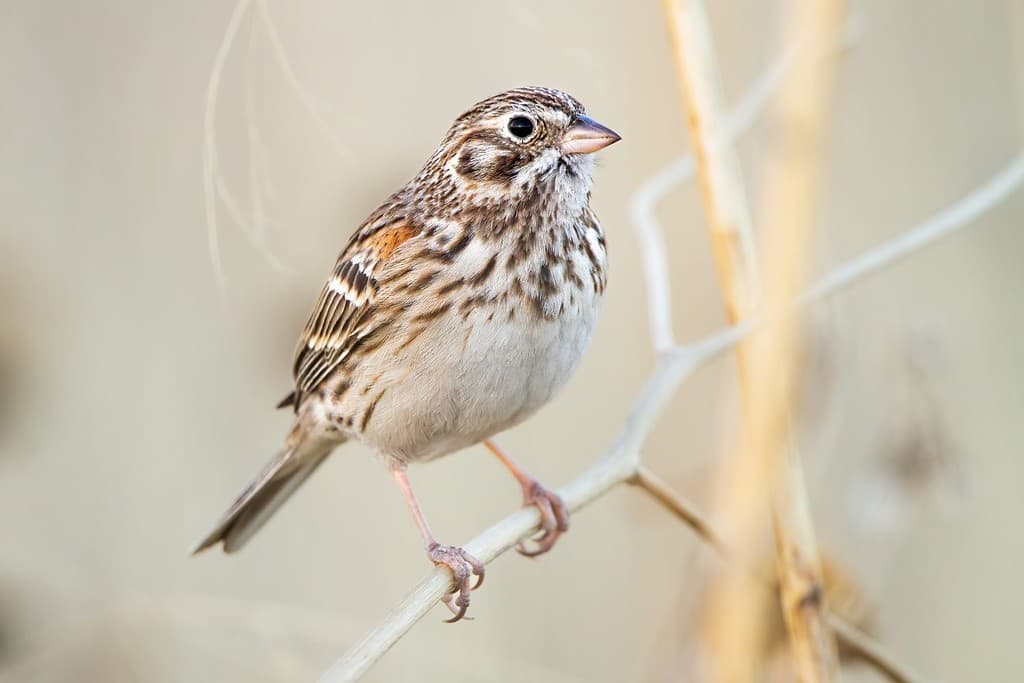
Vesper sparrows make up just one species of sparrow that lives in Kings Canyon National Park.
©Wirestock Creators/Shutterstock.com
Another common bird found in Kings Canyon National Park is the sparrow. With 15 different species of bird, seeing at least one while visiting the park is highly likely.
The different species of sparrow in Kings Canyon include:
- Rufous-crowned sparrow
- Sage sparrow
- Black-throated sparrow
- Lark sparrow
- Lincoln’s sparrow
- Song sparrow
- Savannah sparrow
- Fox sparrow
- Vesper sparrow
- Black-chinned sparrow
- Brewer’s sparrow
- Chipping sparrow
- Golden-crowned sparrow
- White-crowned sparrow
- House sparrow
Each of these sparrows has a habitat preference. Be it the sage, open fields, grasslands, or thickets, sparrows will gravitate to these regions. They are not typically found in dense forests, as they eat seeds from the grassier areas in an environment.
| Currently Located In Park | Yes |
| Abundance | Rufous-crowned sparrow (rare); Sage sparrow (rare); Black-throated sparrow (occasional); Lark sparrow (uncommon); Lincoln’s sparrow (uncommon); Song sparrow (uncommon); Savannah sparrow (rare); Fox sparrow (common); Vesper sparrow (occasional); Black-chinned sparrow (rare); Brewer’s sparrow (occasional); Chipping sparrow (uncommon); Golden-crowned sparrow (common); White-crowned sparrow (common); House sparrow (rare) |
| Nativeness To The Park | Rufous-crowned sparrow (native); Sage sparrow (native); Black-throated sparrow (non-native); Lark sparrow (native); Lincoln’s sparrow (native); Song sparrow (native); Savannah sparrow (native); Fox sparrow (native); Vesper sparrow (non-native); Black-chinned sparrow (native); Brewer’s sparrow (native); Chipping sparrow (native); Golden-crowned sparrow (native); White-crowned sparrow (native); |
Nuthatches
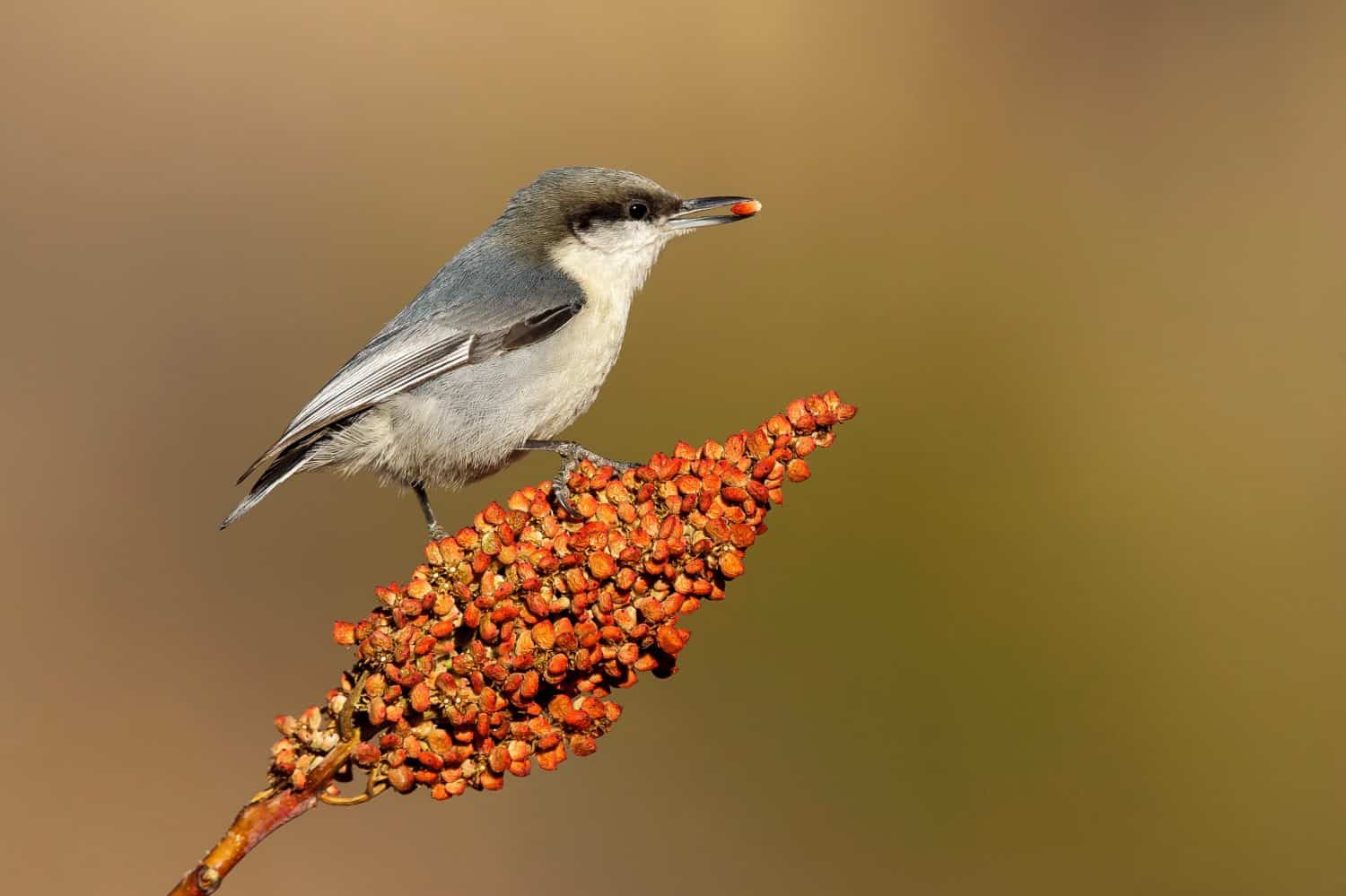
The Pygmy nuthatch is one of three species of nuthatches living in Kings Canyon National Park.
©Agami Photo Agency/Shutterstock.com
Nuthatches prefer living in dense forest spaces. Because of this, those who do not hike through or camp in these regions of Kings Canyon National Park may not see any of these striking birds as they forage and fly.
The three nuthatches found in Kings Canyon include:
- Red-breasted nuthatch
- White-breasted nuthatch
- Pygmy nuthatch
All are native to California, but are becoming increasingly rare to see in Kings Canyon as a result of habitat loss and climate change.
| Currently Located In Park | Yes |
| Abundance | Red-breasted nuthatch (uncommon); White-breasted nuthatch (uncommon); Pygmy nuthatch (rare) |
| Nativeness To The Park | Red-breasted nuthatch (native); White-breasted nuthatch (native); Pygmy nuthatch (native) |
Wrens
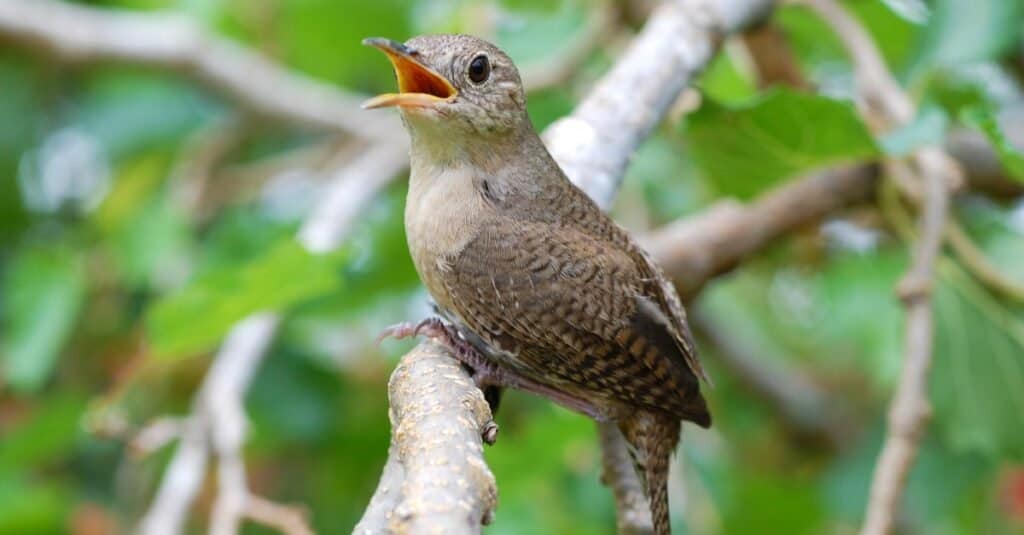
Wrens, like the house wren, are small species of birds living in Kings Canyon.
©Gualberto Becerra/Shutterstock.com
Wrens prefer a habitat of woodlands and rocky outcroppings or cliffs. Therefore, these are the regions that need to be explored when trying to locate the wrens located in Kings Canyon National Park.
The different types of wrens found in the national park include:
- Canyon wren
- Rock wren
- Bewick’s wren
- House wren
- Winter wren
Wren populations are declining, as are those of other bird species, due to habitat loss and climate change. Conservation efforts are underway to stabilize these populations before they reach critical levels.
| Currently Located In Park | Yes |
| Abundance | Canyon wren (uncommon); Rock wren (uncommon); Bewick’s wren (uncommon); House wren (common); Winter wren (uncommon) |
| Nativeness To The Park | Canyon wren (native); Rock wren (native); Bewick’s wren (native); House wren (native); Winter wren (native) |
Mountain Bluebird
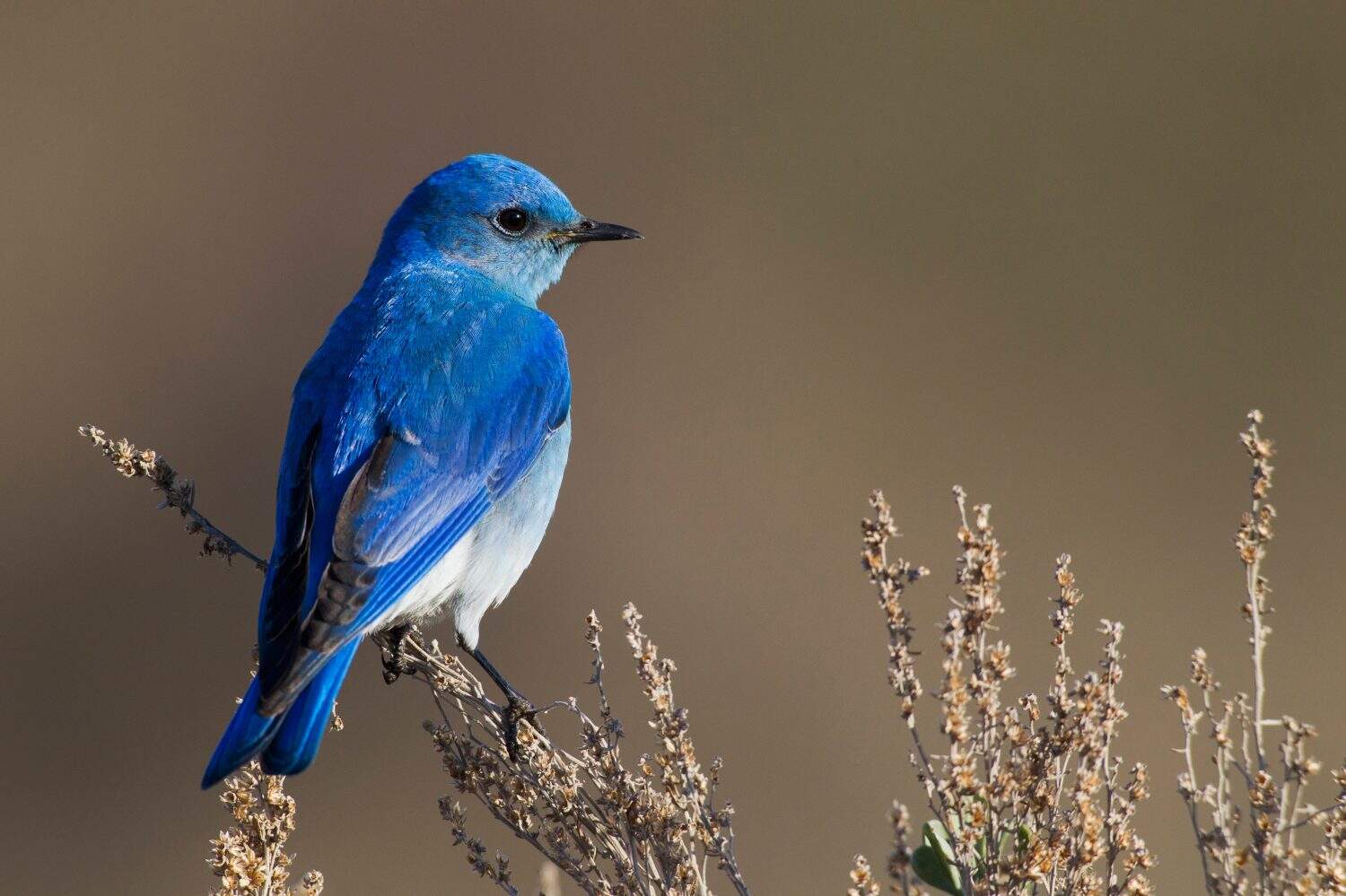
Mountain bluebirds live in the higher elevations of Kings Canyon National Park.
©Danita Delimont/Shutterstock.com
With its striking blue color, the Mountain bluebird is hard to miss. As its name suggests, these birds prefer higher elevations. They are easier to spot than other bird species in Kings Canyon, given that they enjoy treeless areas to forage for food as well as short vegetation in the foothills for nesting purposes.
| Currently Located In Park | Yes |
| Abundance | Uncommon |
| Nativeness To The Park | Native |
Western Bluebird
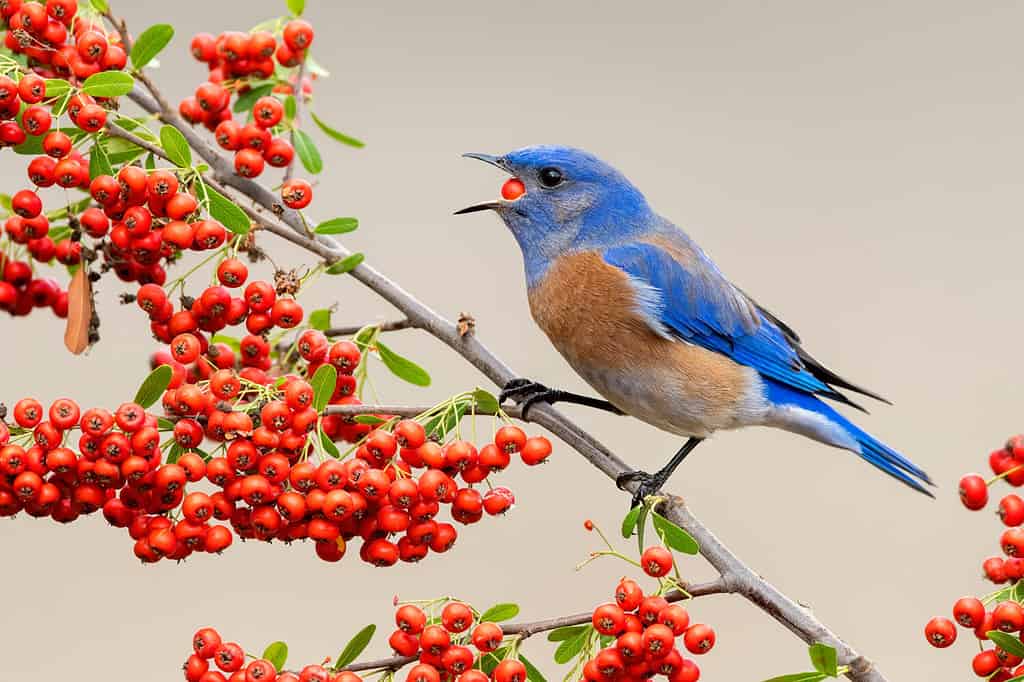
Western bluebirds call Kings Canyon National Park home.
©Agami Photo Agency/Shutterstock.com
Western bluebirds differ from Mountain bluebirds in that they have rust-colored feathers on their chest in conjunction with their blue-colored bodies.
Western bluebirds can be found in the woodlands, particularly deciduous and evergreen woodlands. They are also one of the few species that can thrive in forests after a fire, as long as there are still suitable places to build nests.
| Currently Located In Park | Yes |
| Abundance | Common |
| Nativeness To The Park | Native |
Flycatchers
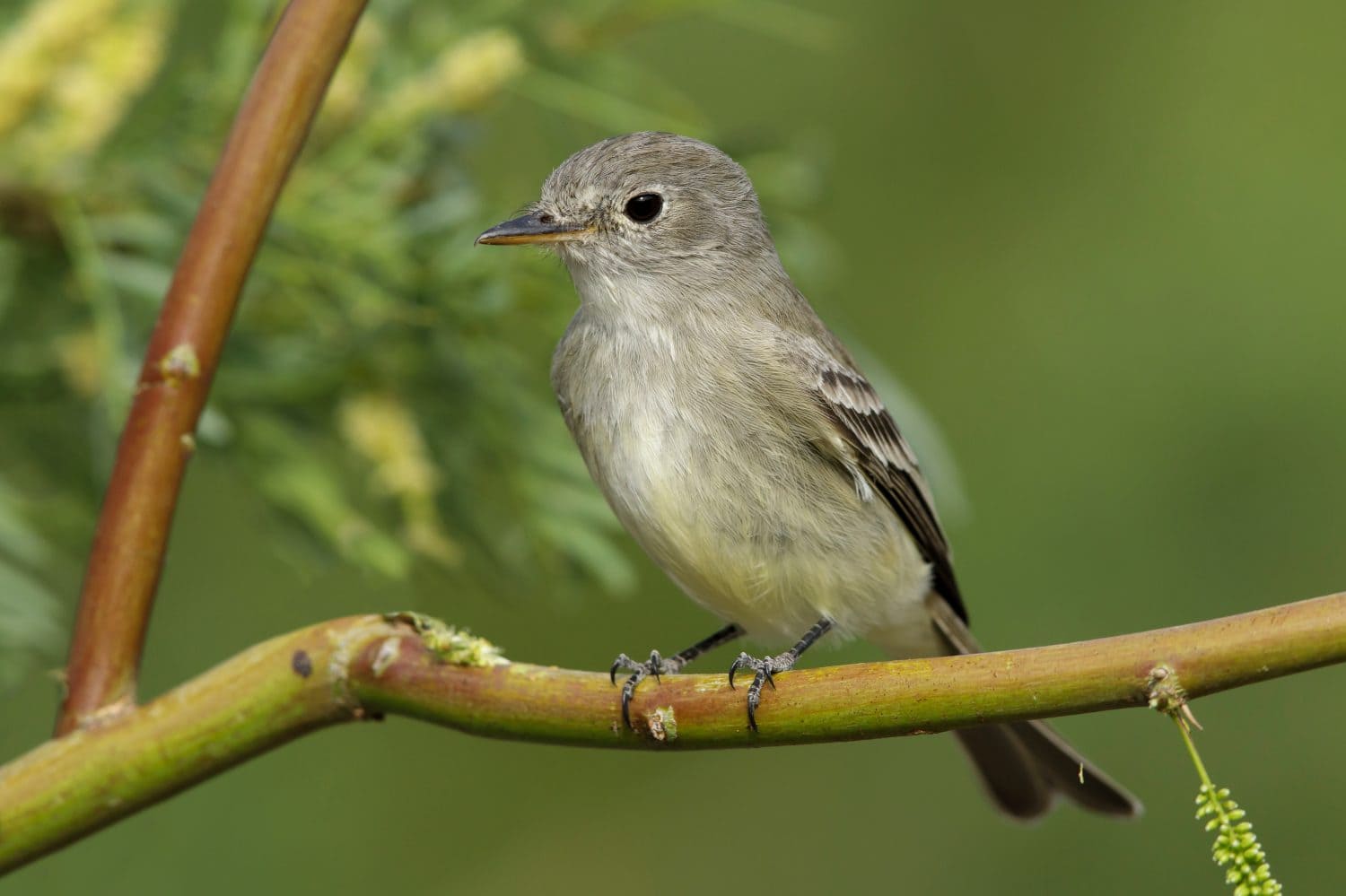
Many different species of flycatchers, like the American Grey, live in Kings Canyon.
©Agami Photo Agency/Shutterstock.com
A number of different species of flycatchers have been seen in Kings Canyon National Park over the years. But, as their habitat has been disturbed, those numbers have declined.
The different species of flycatchers found in Kings Canyon include:
- Olive-sided flycatcher
- Pacific slope flycatcher
- Hammond’s flycatcher
- American Dusky flycatcher
- Willow flycatcher
- American Grey flycatcher
- Ash-throated flycatcher
To see any of these flycatchers in action, they can be found in forests, woodlands, scrublands, grasslands, and the alpine region of the park.
| Currently Located In Park | Yes |
| Abundance | Olive-sided flycatcher (uncommon); Pacific slope flycatcher (native); Hammond’s flycatcher (native); American Dusky flycatcher (uncommon); Willow flycatcher (rare); American Grey flycatcher (occasional); Ash-throated flycatcher (uncommon) |
| Nativeness To The Park | Olive-sided flycatcher (native); Pacific slope flycatcher (native); Hammond’s flycatcher (native); American Dusky flycatcher (native); Willow flycatcher (native); American Grey flycatcher (non-native); Ash-throated flycatcher (native) |
Northern Flicker
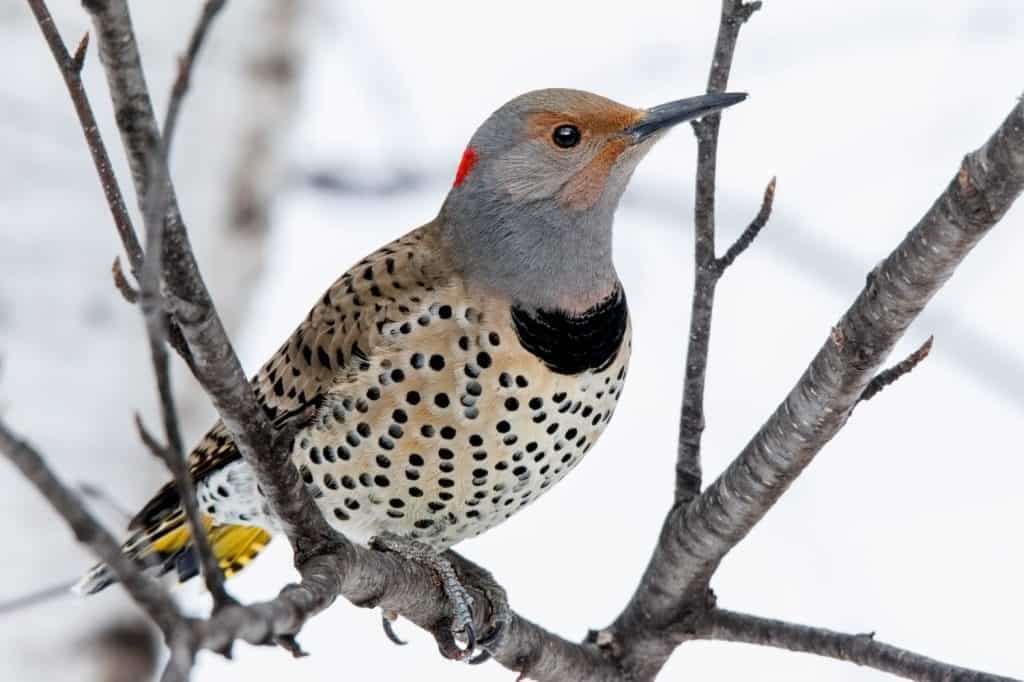
The Northern Flicker is a migrating bird that spends time in Kings Canyon National Park.
©Larry Eiden/Shutterstock.com
During the spring and through the fall, Northern Flickers can be found in Kings Canyon. During the winter, the spotted birds with the bright orange beaks migrate south.
To see the Northern Flicker in action, visitors will need to hike near forests, but not dense ones. This is because the Northern Flicker needs clearings to forage for food.
| Currently Located In Park | Yes |
| Abundance | Uncommon |
| Nativeness To The Park | Native |
Woodpeckers
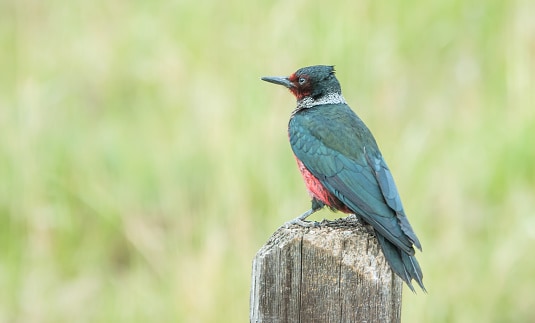
Lewis’s Woodpecker is just one of many woodpeckers living in Kings Canyon National Park.
©Darryl Saffer/ via Getty Images
Take a hike through the forests in Kings Canyon, and a knocking noise may be heard. This is coming from any one of the many woodpeckers that call the national park home from time to time.
The different species of woodpeckers found in Kings Canyon include:
- Pileated woodpecker
- Acorn woodpecker
- Lewis’s woodpecker
- White-headed woodpecker
- Black-headed woodpecker
- Nuttall’s woodpecker
- Downy woodpecker
- Ladder-backed woodpecker
Like other bird populations, woodpecker populations are also declining. However, with the number of species in the park, the chances of hearing a little pecking are high.
| Currently Located In Park | Yes |
| Abundance | Pileated woodpecker (uncommon); Acorn woodpecker (uncommon); Lewis’ woodpecker (rare); White-headed woodpecker (uncommon); Black-headed woodpecker (rare); Nuttall’s woodpecker (uncommon); Downy woodpecker (uncommon); Ladder-backed woodpecker (occasional) |
| Nativeness To The Park | Pileated woodpecker (native); Acorn woodpecker (native); Lewis’ woodpecker (native); White-headed woodpecker (native); Black-headed woodpecker (native); Nuttall’s woodpecker (native); Downy woodpecker (native); Ladder-backed woodpecker (non-native) |
Sapsuckers
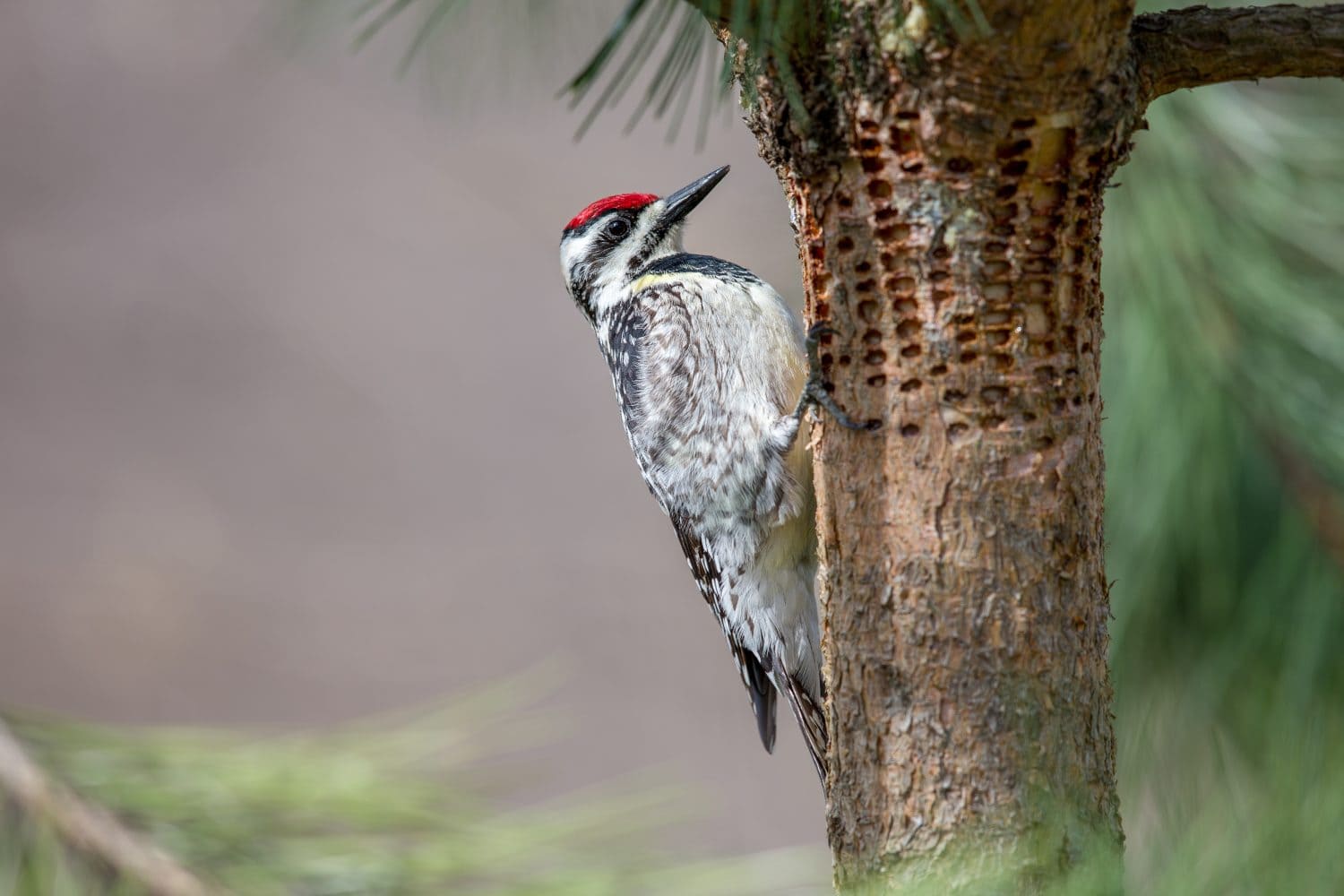
Several different sapsuckers, similar to this one, live in Kings Canyon.
©James.Pintar/Shutterstock.com
Sapsuckers are native to California. Therefore, it is not surprising to find that several species of birds call Kings Canyon National Park home.
The different species of sapsuckers found within the national park include:
- Red-naped sapsucker
- Red-breasted sapsucker
- Williamson’s sapsucker
Sapsuckers prefer younger growth trees over mature forests. Therefore, where younger oaks and pines are found in Kings Canyon, this is likely where sapsuckers will be found.
| Currently Located In Park | Yes |
| Abundance | Red-naped sapsucker (rare); Red-breasted sapsucker (uncommon); Williamson’s sapsucker (uncommon) |
| Nativeness To The Park | Red-naped sapsucker (native); Red-breasted sapsucker (native); Williamson’s sapsucker (native) |
Owls
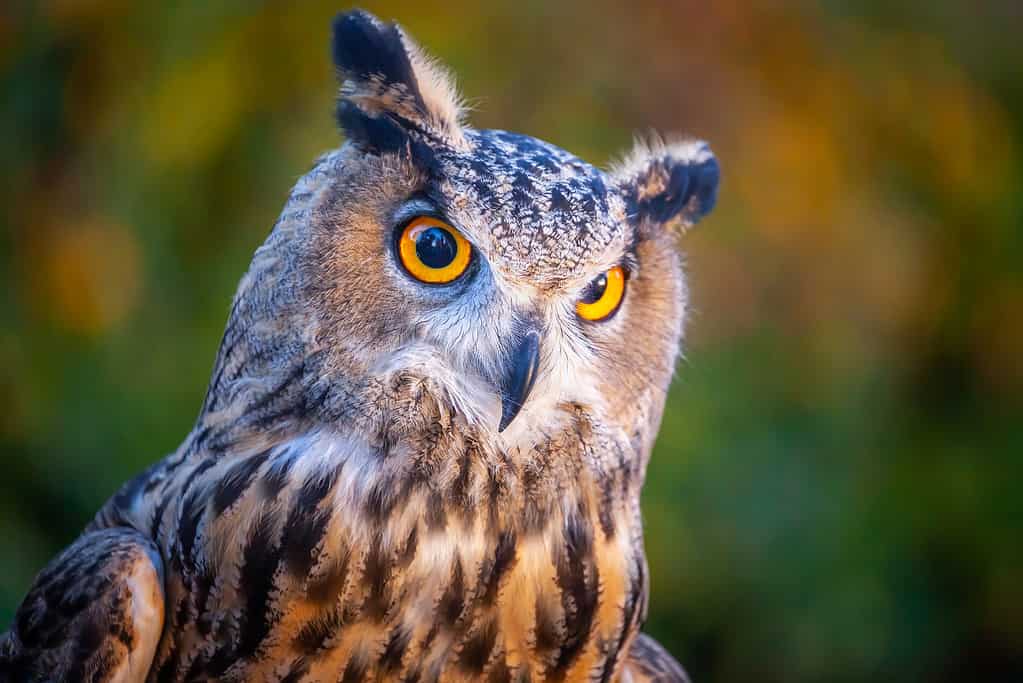
Great Horned owls are just one of the many species of owl that live in Kings Canyon National Park.
©agustavop/iStock via Getty Images
There are several types of owls that live within the confines of Kings Canyon National Park. These owls include:
- Northern Saw-Whet Owl
- Short-eared owl
- Long-eared owl
- Great Horned Owl
- Mountain Pygmy Owl
- Western Screech Owl
- Flammulated owl
- Great Grey Owl
- Spotted owl
- Barred owl
- Barn owl
While some owls tend to be shy and are rarely seen, this is not the case for the Mountain Pygmy. This owl hunts during the day, making for an uncanny sight for visitors.
Other owls in the park tend to prefer old-growth forests, making them harder to spot. But with a good eye, the more common owls, such as the Western Screech, have a high probability of being seen.
| Currently Located In Park | Yes |
| Abundance | Northern Saw-Whet owl (rare); Short-eared owl (rare); Long-eared owl (rare); Great Horned owl (uncommon); Mountain Pygmy owl (uncommon); Western Screech owl (common); Flammulated owl (rare); Great Grey owl (rare); Spotted owl (uncommon); Barred owl (rare); Barn owl (rare) |
| Nativeness To The Park | Northern Saw-Whet owl (native); Short-eared owl (native); Long-eared owl (native); Great Horned owl (native); Mountain Pygmy owl (native); Western Screech owl (native); Flammulated owl (native); Great Grey owl (native); Spotted owl (native); Barred owl (non-native); Barn owl (native) |
Double-Crested Cormorant
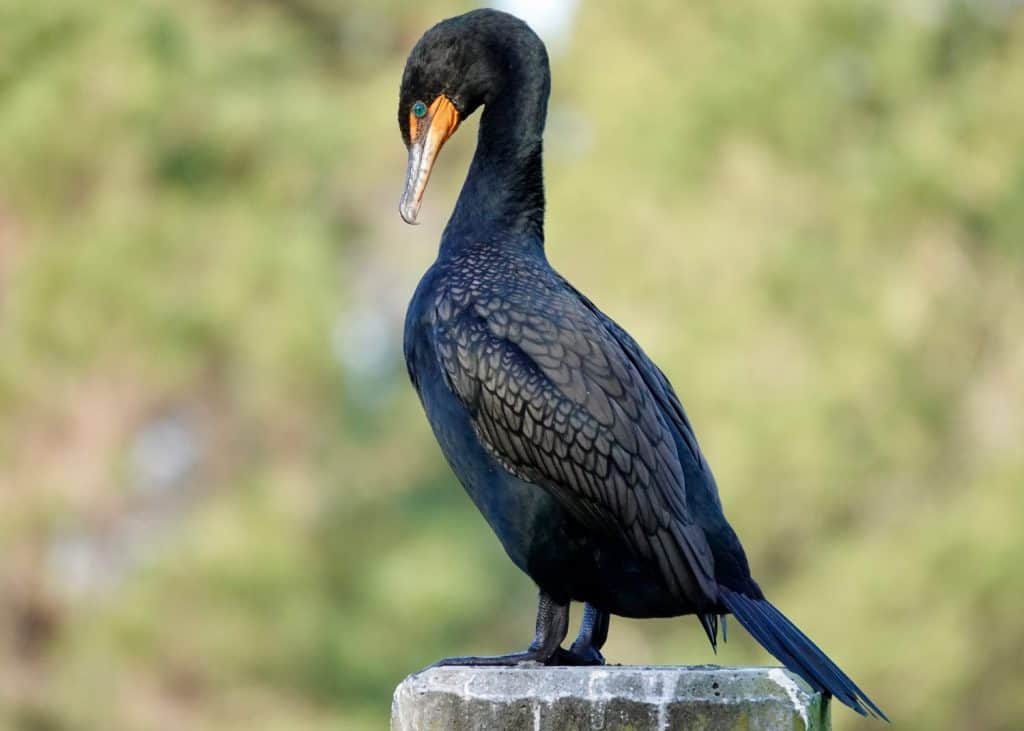
Double-crested cormorants are occasionally seen in Kings Canyon.
©Chris Klonowski/Shutterstock.com
While not a common sight, the double-crested cormorant has been seen on occasion in and around lakes and rivers within Kings Canyon National Park. These dark-colored birds with bright orange beaks are easy to spot, but they are also easily startled. Therefore, observe from a distance so as not to disturb the cormorants.
| Currently Located In Park | Yes |
| Abundance | Occasional |
| Nativeness To The Park | Non-native |
Lizards
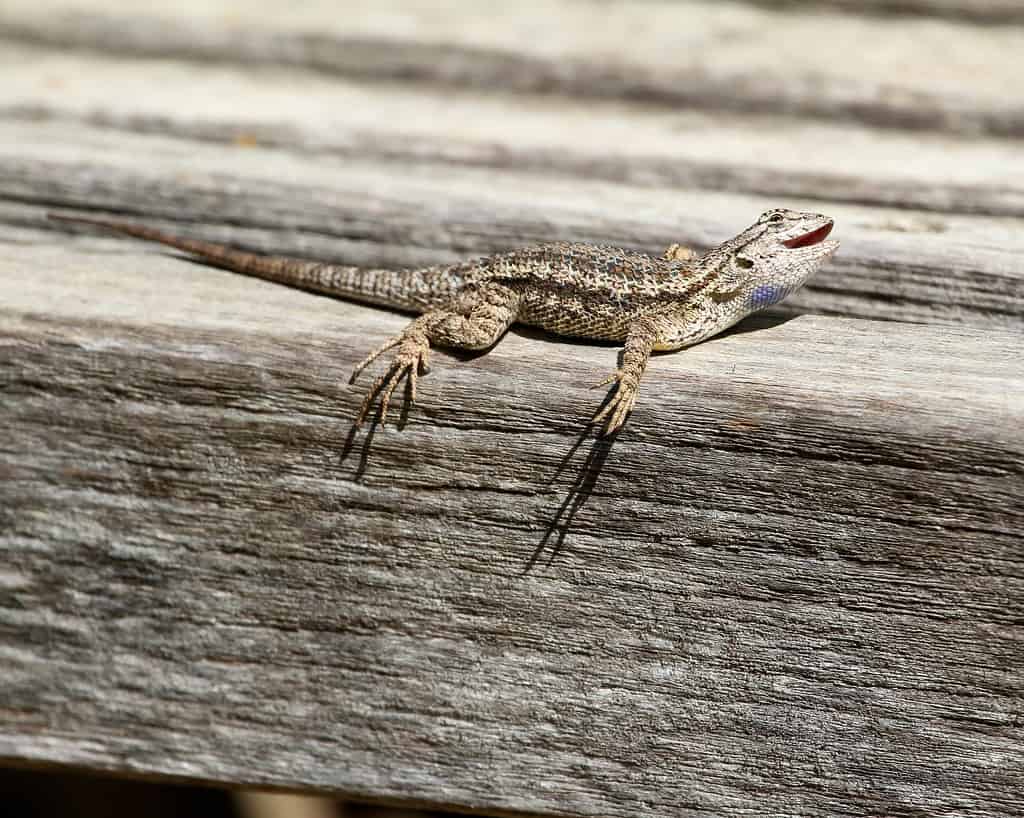
Western Fence Lizards are an abundant species found in Kings Canyon National Park.
©A. Viduetsky/Shutterstock.com
With the variety of habitats Kings Canyon National Park offers, it should come as no surprise that there are lizards throughout the park. While some may be abundant and others less so, there is no shortage of lizards in the park.
The different types of lizards in Kings Canyon National Park include:
- Sagebrush lizard
- Western Fence Lizard
- Northern Alligator lizard
- Southern Alligator lizard
For those looking to see any of these lizards, a good place to start is near the park’s grasslands. Here, there are a variety of plants and grasses to hide under to stay safe from predators, when not basking in the sun.
| Currently Located In Park | Yes |
| Abundance | Sagebrush lizard (uncommon); Western Fence lizard (abundant), Northern Alligator lizard (common); Southern Alligator lizard (common) |
| Nativeness To The Park | Sagebrush lizard (native); Western Fence lizard (native); Northern Alligator lizard (native); Southern Alligator lizard (native) |
Snakes (Non-Venomous)
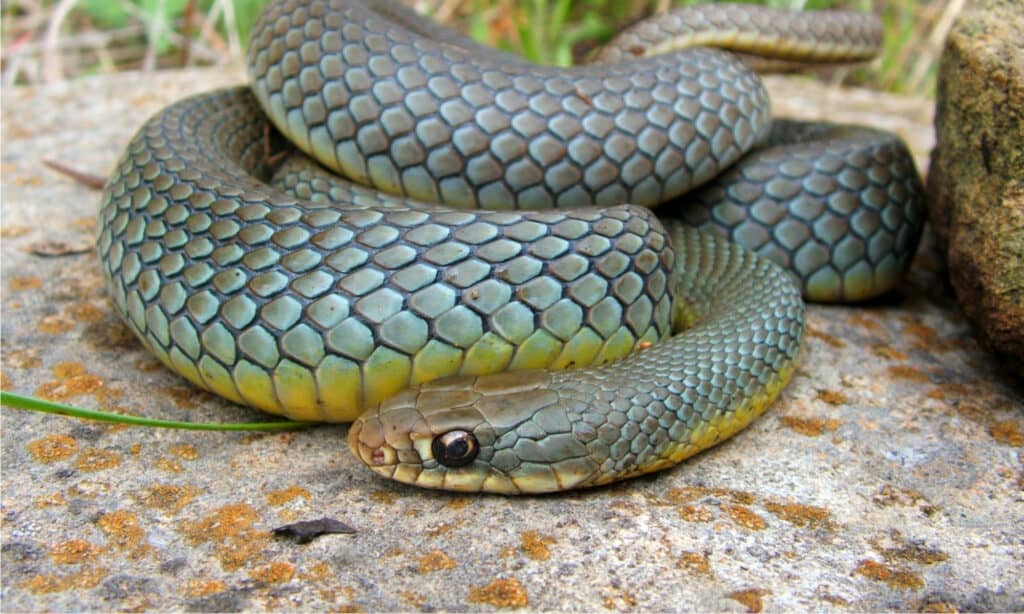
Eastern racers are a non-venomous species of snake found in Kings Canyon.
©Matt Jeppson/Shutterstock.com
Like most national parks, Kings Canyon is home to a variety of snakes. Most of the snakes that call the park home are not venomous and would prefer to be left alone.
The snakes that live in Kings Canyon National Park include:
- Northern Rubber Boa
- Eastern Racer
- Sharp-tailed snake
- Kingsnake
- California Mountain Kingsnake
- Striped Racer
- Gopher snake
- Long-Nosed snake
- Smith’s Black-headed snake
- Western aquatic water snake
- Terrestrial garter snake
While some of these snakes can mimic the actions or even the appearance of venomous snakes, they are harmless. However, it is best to leave snakes be in the national park, because, while not venomous, they can still bite. These bites hurt and can cut a day of adventure short.
| Currently Located In Park | Yes |
| Abundance | Northern Rubber Boa (common); Eastern Racer (rare); Sharp-tailed snake (uncommon); Kingsnake (common); California Mountain Kingsnake (uncommon); Striped Racer (common); Gopher snake (common); Long-Nosed snake (rare); Smith’s Black-headed snake (rare); Western aquatic water snake (common); Terrestrial garter snake (common) |
| Nativeness To The Park | Northern Rubber Boa (native); Eastern Racer (native); Sharp-tailed snake (native); Kingsnake (native); California Mountain Kingsnake (native); Striped Racer (native); Gopher snake (native); Long-Nosed snake (native); Smith’s Black-headed snake (native); Western aquatic water snake (native); Terrestrial garter snake (native) |
Snakes (Venomous)
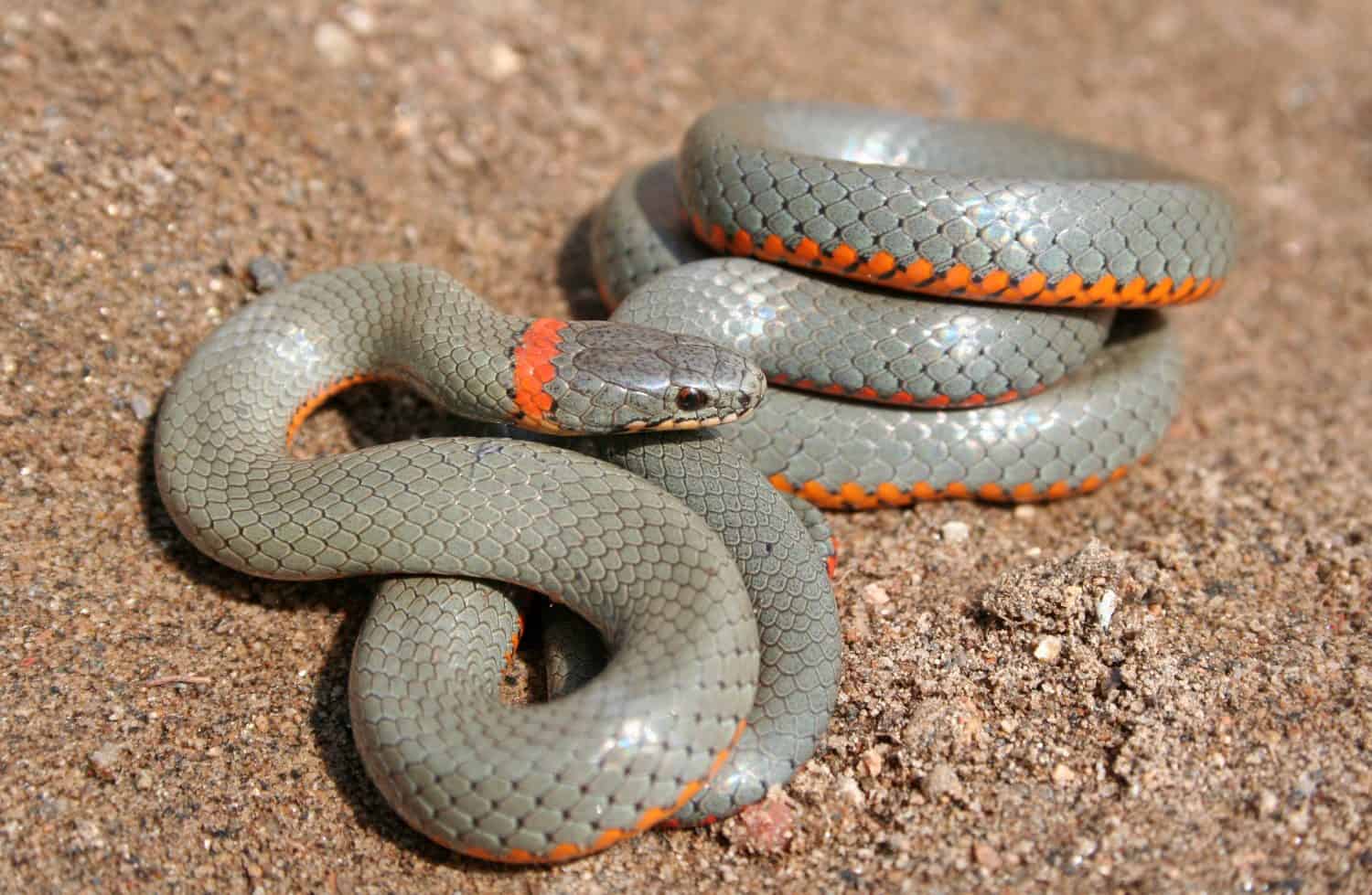
Ring-necked snakes are venomous snakes found in Kings Canyon National Park.
©Creeping Things/Shutterstock.com
In addition to the non-venomous snakes at Kings Canyon National Park, there are also venomous snakes. If these snakes are seen, the best bet is to stay calm, back away slowly, and do not try to harm or kill the snake. In more instances than not, those who attempt to bring harm to a venomous snake wind up bitten.
The venomous snakes in Kings Canyon include:
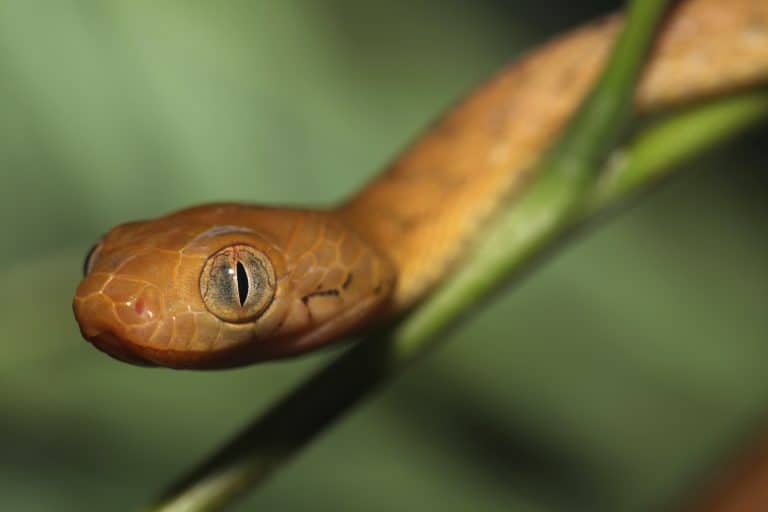
- Ring-necked snake
- Night snake
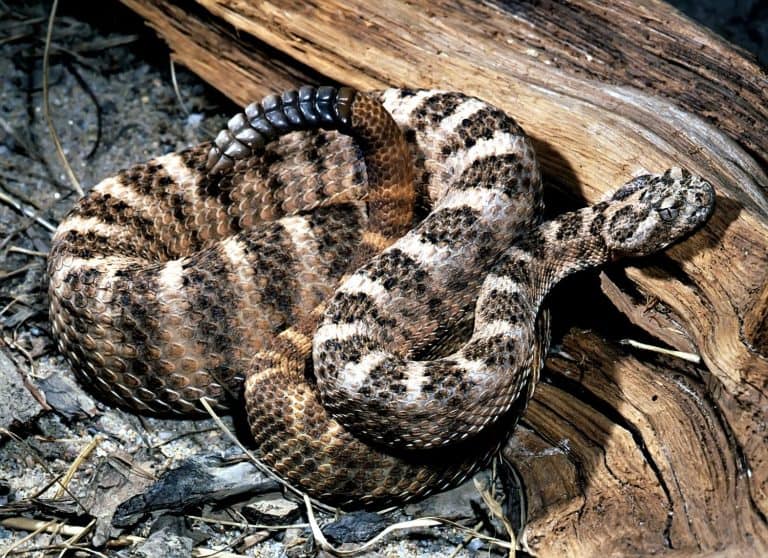
- Western rattlesnake
It should be noted that of these three snakes, only the Western rattlesnake poses any real harm to people. The Ring-necked and night snakes are venomous, but their venom is used to subdue prey. While it could make a person feel unwell, a bite will not cause a person to die if left untreated.
| Currently Located In Park | Yes |
| Abundance | Ring-necked snake (uncommon); Night snake (rare); Western rattlesnake (common) |
| Nativeness To The Park | Ring-Necked snake (native); Night snake (native); Western rattlesnake (native) |
Northern Pacific Pond Turtle
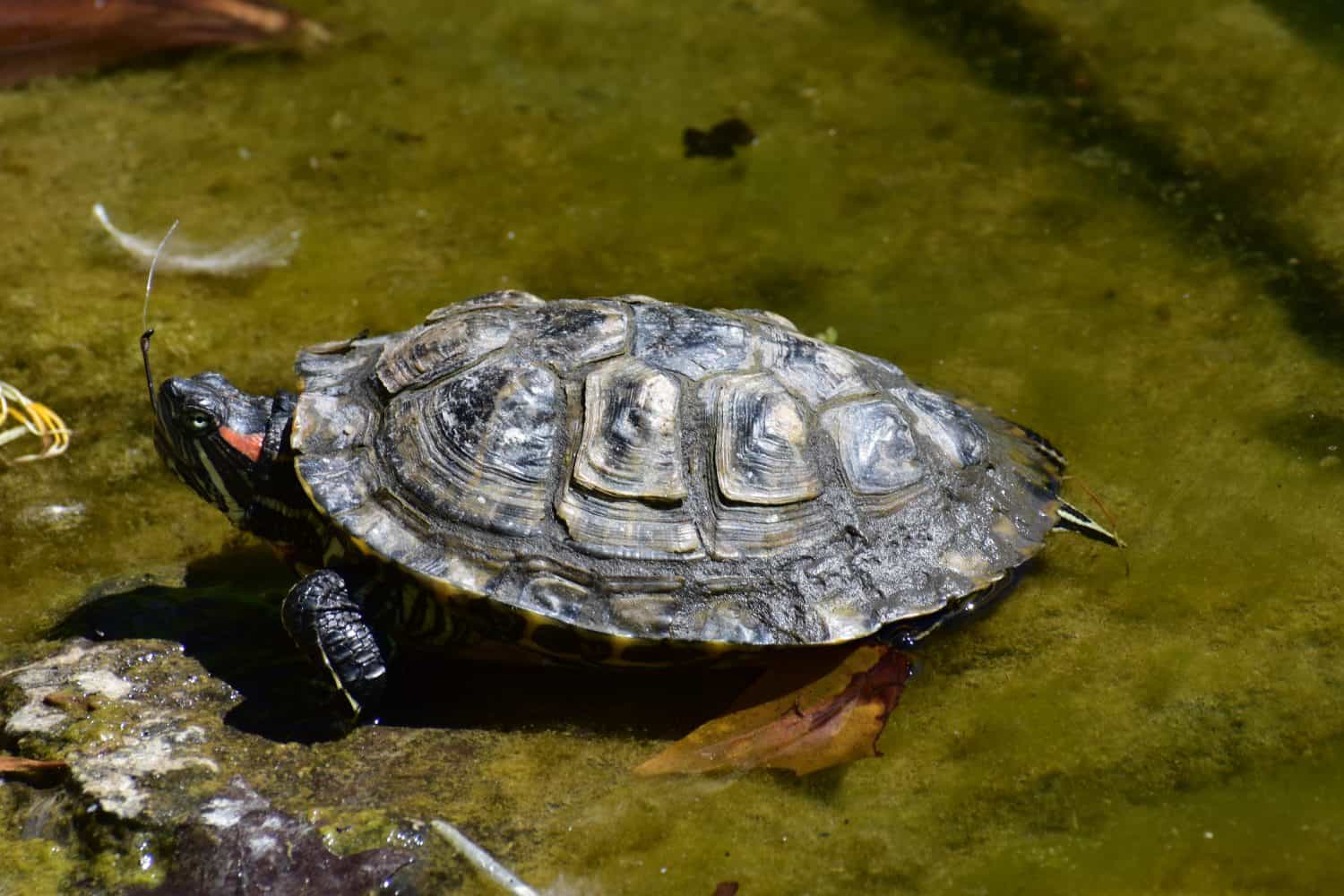
Similar to this Western pond turtle, the Northern Pacific pond turtle likes to spend time in lakes, streams, or ponds.
©Mekong Photography/Shutterstock.com
The Northern Pacific pond turtle is a Species of Special Concern in California. The turtles are declining in numbers due to habitat loss, prompting conservationists to take action before the Northern Pacific pond turtles become a threatened or even endangered species.
Thanks to the park’s variety of habitats, the turtles have a choice of aquatic homes. Be it in lakes, streams, or ponds, Northern Pacific pond turtles spend most of their days in large bodies of water to be healthy and thrive.
| Currently Located In Park | Yes |
| Abundance | Uncommon |
| Nativeness To The Park | Native |
Toads
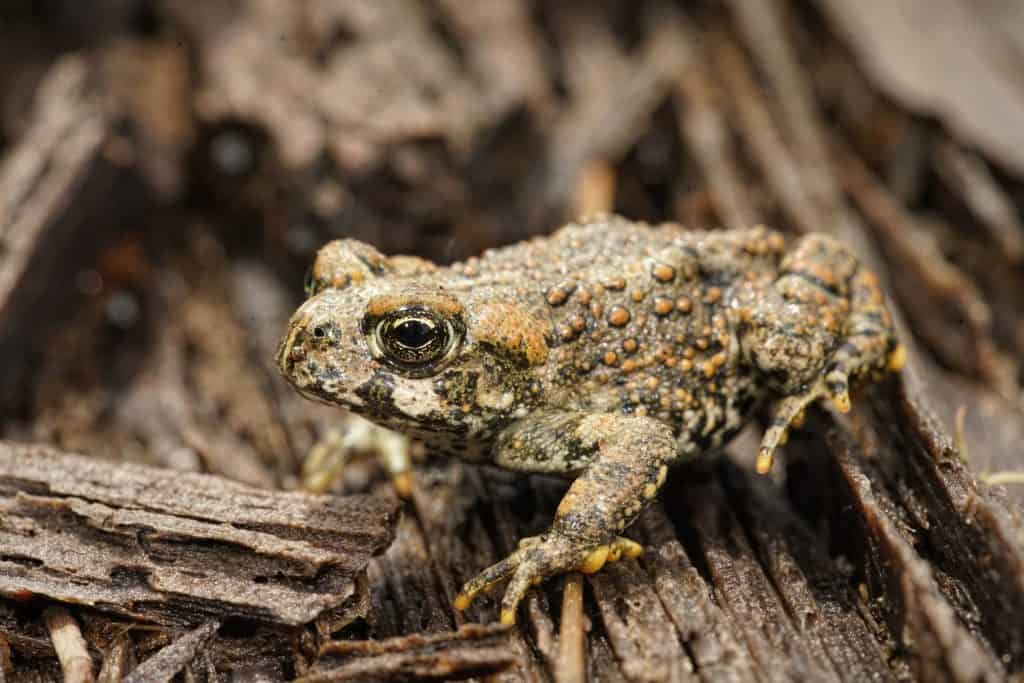
Western toads make up the wildlife in Kings Canyon.
©HWall/Shutterstock.com
Toads may not be often seen in Kings Canyon, but that does not mean they are not there. But to see the two species, different parts of the national park need to be explored.
To see the Yosemite toad, it requires hiking to higher elevations. These toads live more than 11,000 feet in elevation in some instances. There are lakes at higher altitudes, and this is where many of these toads can be found.
The Western toad, on the other hand, can be found at lower elevations. They prefer bodies of water that are both near forests and meadows and are shallow. This makes the Western toad easier to locate, in some instances, than the Yosemite toad.
| Currently Located In Park | Yes |
| Abundance | Western toad (rare); Yosemite toad (rare) |
| Nativeness To The Park | Western toad (native); Yosemite toad (native) |
Frogs
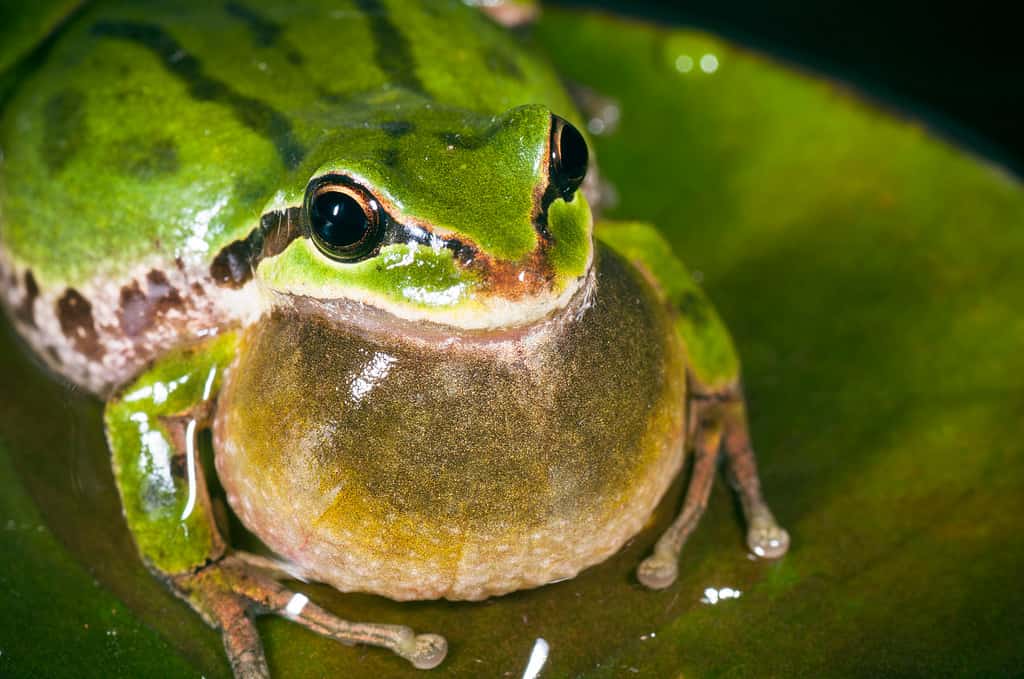
Northern Pacific Treefrogs are found in Kings Canyon National Park.
©Elementspace/Shutterstock.com
With the different bodies of water in Kings Canyon National Park, it should come as no surprise that there are frogs that call these habitats home.
The types of frogs that live in Kings Canyon include:
- Northern Pacific Treefrog
- American Bullfrog
- Mountain Yellow-legged frog
- Sierra Nevada Mountain Yellow-Legged frog
Frogs have had a tough go over the last several decades. With habitat loss and waterborne infectious diseases causing the frogs to perish, recovery efforts are underway to stabilize the frog population. For those who would like to see how the populations are faring, Spring and Summer are the best times to see the frogs.
| Currently Located In Park | Yes |
| Abundance | Northern Pacific Treefrog (abundant); American Bullfrog (uncommon); Mountain Yellow-legged frog (uncommon); Sierra Nevada Mountain Yellow-Legged frog (uncommon) |
| Nativeness To The Park | Northern Pacific Treefrog (native); American Bullfrog (non-native); Mountain Yellow-legged frog (native); Sierra Nevada Mountain Yellow-Legged frog (native) |
Salamanders
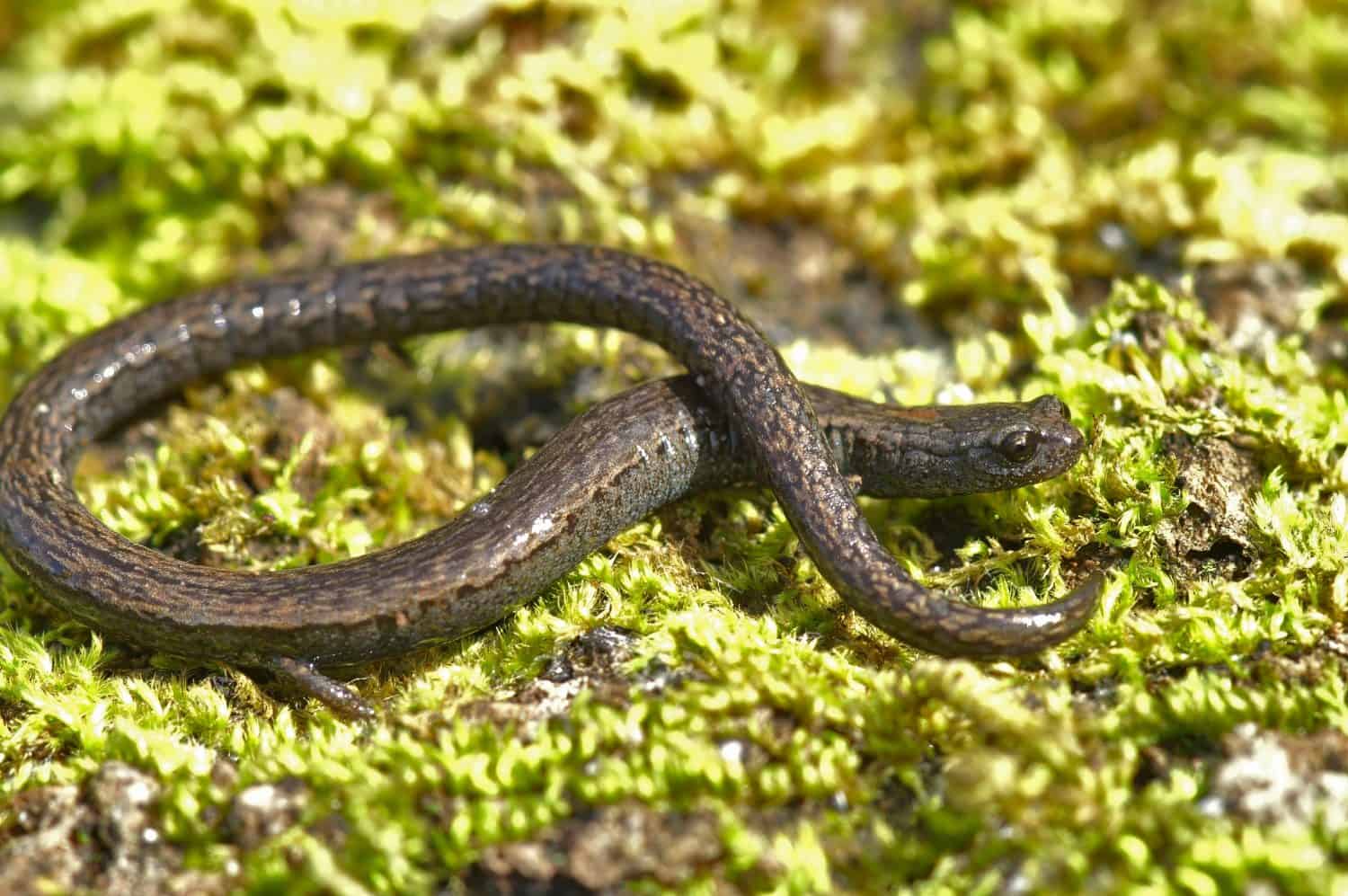
Salamanders, similar to this slender salamander, call Kings Canyon National Park home.
©HWall/Shutterstock.com
Salamanders can be found in multiple habitats within the boundaries of Kings Canyon National Park. Consequently, coming across one while exploring is not difficult.
The salamanders that live in Kings Canyon include:
- Gregarious Slender Salamander
- Sequoia Slender Salamander
- Kings River Slender Salamander
- Mount Lyell Salamander
Be it at over 8,000 feet of elevation or below 1,200 feet, salamanders make up a large group of animals in Kings Canyon National Park.
| Currently Located In Park | Yes |
| Abundance | Gregarious Slender Salamander (uncommon); Sequoia Slender Salamander (uncommon); Kings River Slender Salamander (uncommon); Mount Lyell Salamander (uncommon) |
| Nativeness To The Park | Gregarious Slender Salamander (native); Sequoia Slender Salamander (native); Kings River Slender Salamander (native); Mount Lyell Salamander (native) |
It is because of the salamanders and all the other animals at the national park that the park is so special. Without the variety of habitats available at Kings Canyon National Park, there would be far fewer wildlife and not nearly as amazing an experience for hikers and nature lovers alike to enjoy.