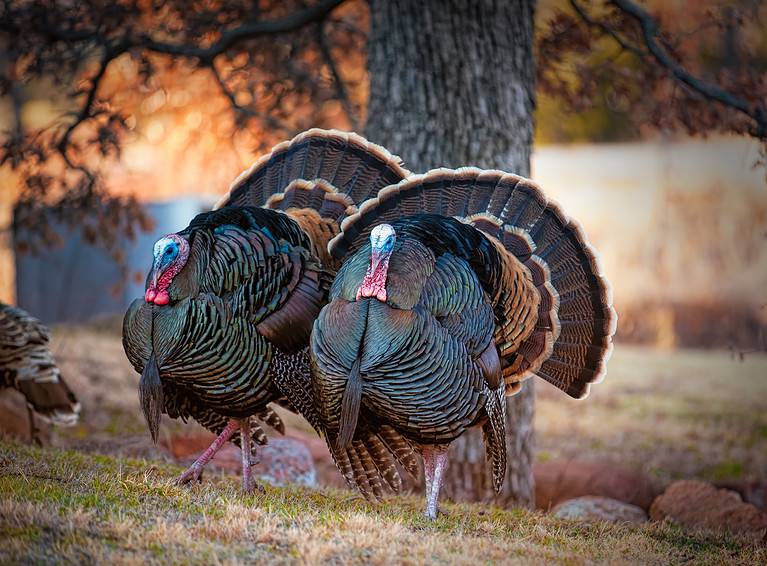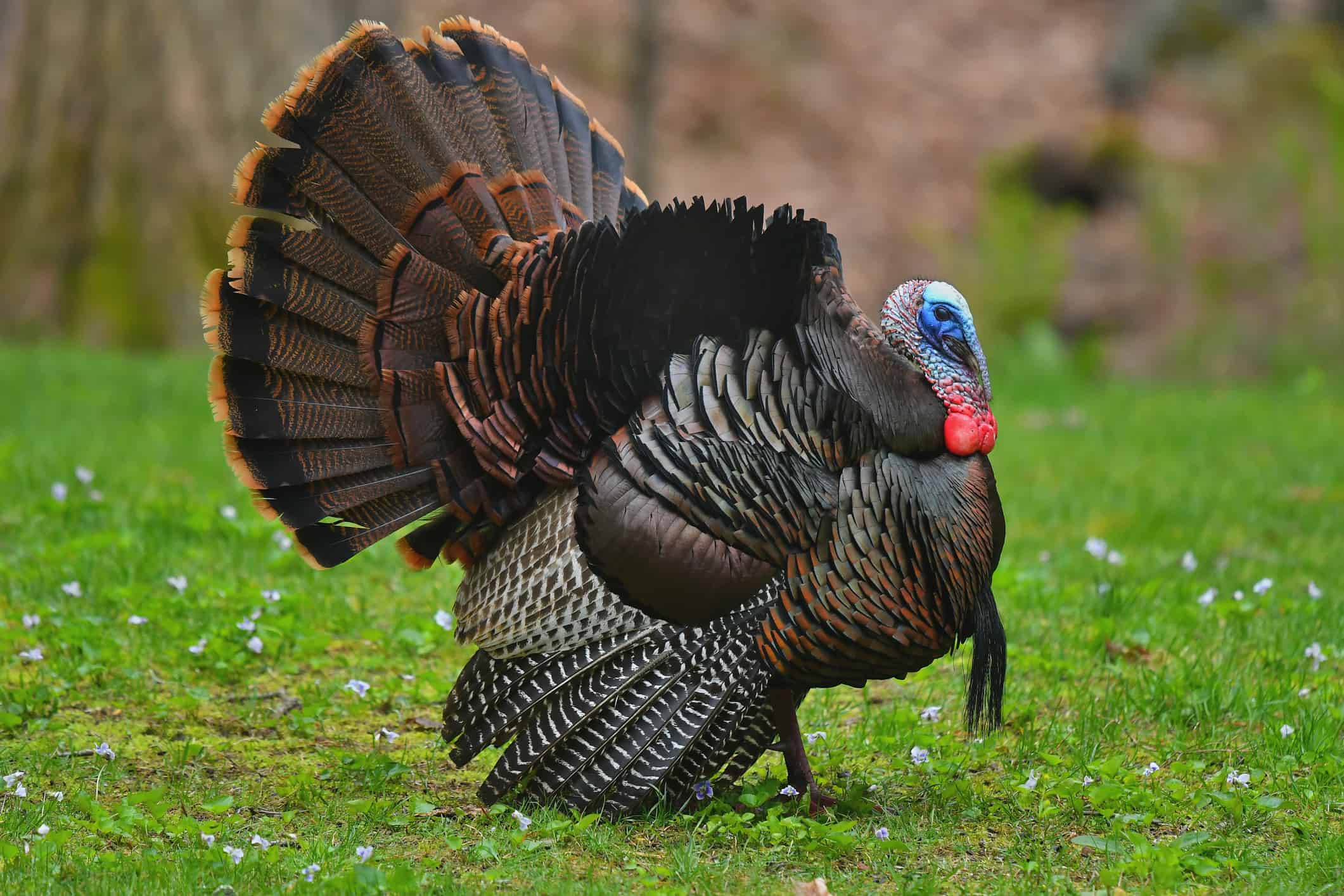

[The turkey is] a much more respectable Bird, and withal a true original Native of America…He is besides, though a little vain & silly, a Bird of Courage.
– Benjamin Franklin in a letter to his daughter in which he criticized the original eagle design for the Great Seal
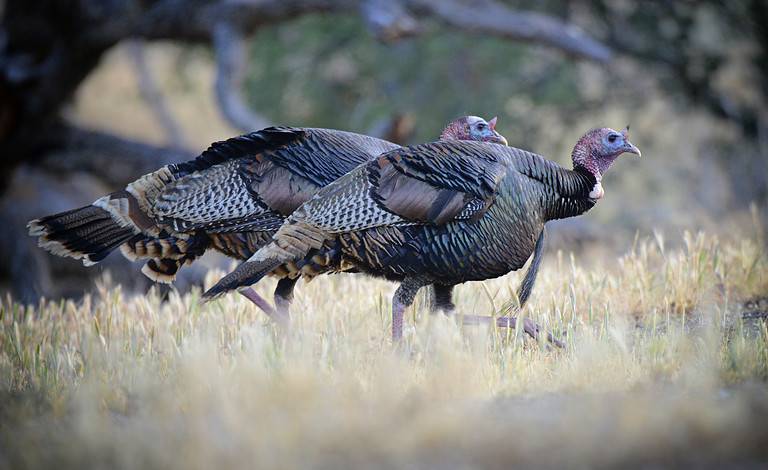
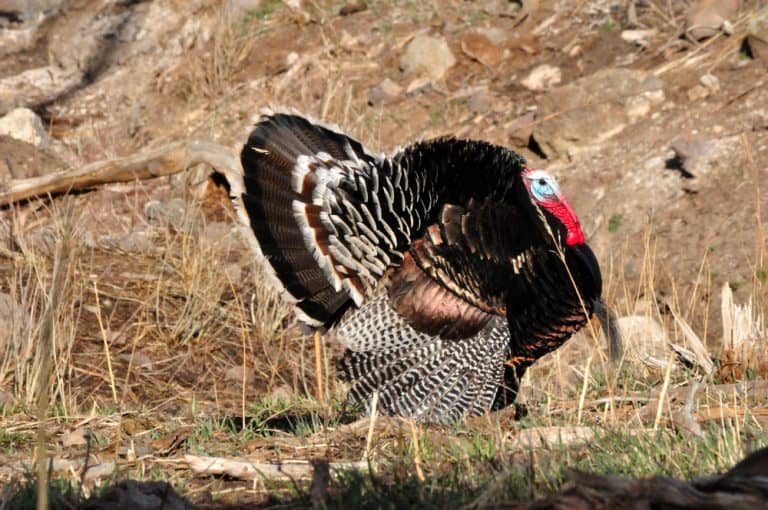
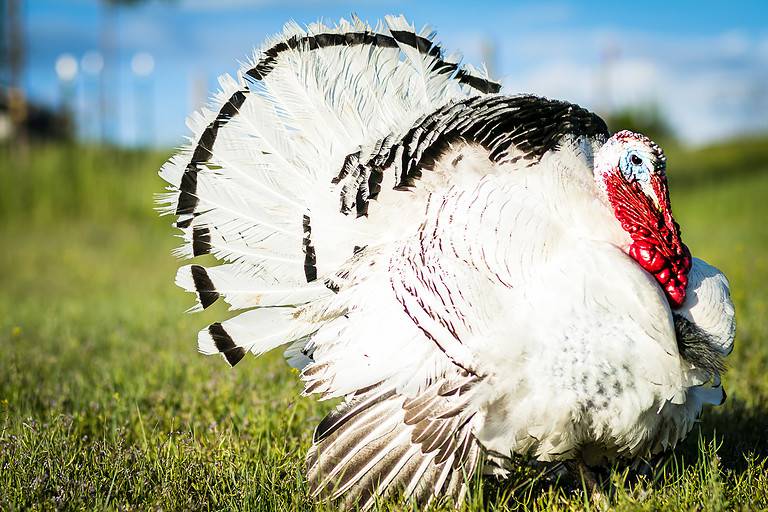
The turkey stands as a quintessential American icon dating back to the “first” Thanksgiving of 1621. Just as it did 400-plus years ago, the turkey plays the central role in any proper Thanksgiving feast. In fact, a Turkey Day dinner for eight adults and seven children (with leftovers for sandwiches later) requires a 20-pound turkey, according to the Butterball calculator. Twenty pounds equates to a nice-sized turkey, and that number seems to be about the average weight of an adult gobbler. A wild one, anyway. Domesticated bird can weigh a lot more.
It is no coincidence that turkeys are so closely associated with the United States. Every species but one and all subspecies are endemic to the “Land of the Stars and Stripes.” The North American turkey, Meleagris gallapavo, has roamed the continent for thousands of years and is believed to have been domesticated by Indians as early as 25 AD. In fact, according to the National Wild Turkey Federation, turkeys were “one of the earliest animals domesticated and raised for food in America.”
Both domestic and wild turkeys are classified as M. gallapavo, but here we’ll be discussing the five subspecies of the North American turkey and the second species of wild turkey, the smaller, more colorful ocellated turkey (M. ocellata). The subspecies were determined by their geographic distribution, feather coloration and design, wattle color, and size.
Eastern Wild Turkey (Meleagris gallopavo silvestris)
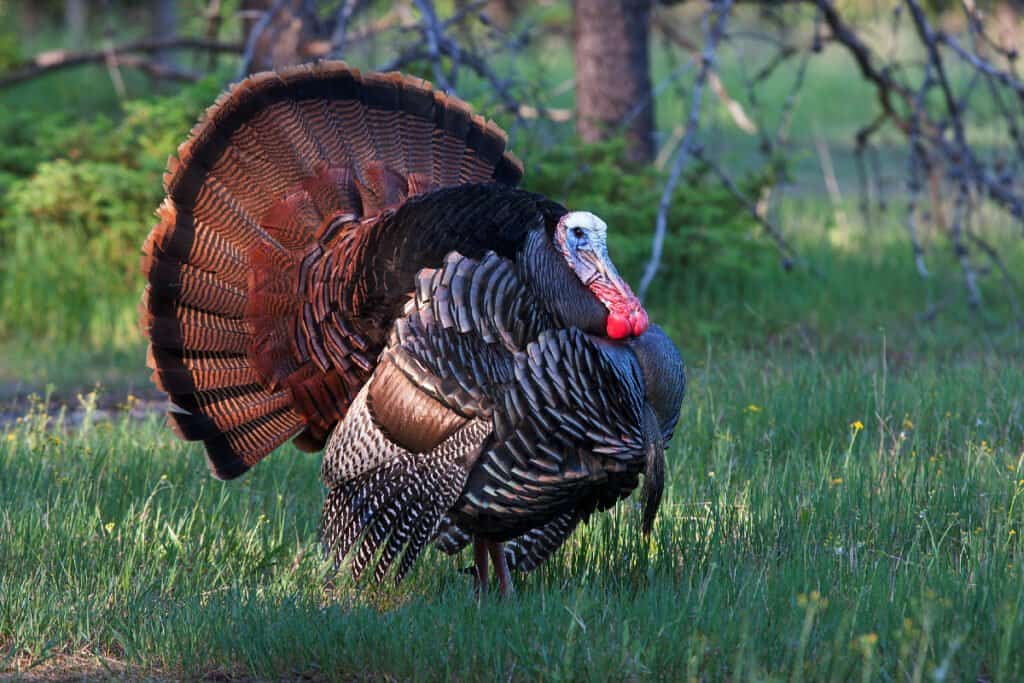
Eastern wild turkeys live in 38 of 50 U.S. states and several Canadian provinces.
©Jim Cumming/Shutterstock.com
By far the most widely distributed and common wild turkey, the eastern wild turkeys are found in most states east of the Mississippi and many states to the west of it. My guess, it was an eastern wild turkey that Pilgrims and Wampanoag Indians feasted on (if they did have a turkey at that meal) as they expressed gratitude for a successful harvest. Had they, they would have eaten the largest known turkey subspecies.
Gobblers or toms, the terms used for adult male turkeys, average about 17 pounds in weight, although they can weigh as much as 25 pounds. Hens weigh less, of course, typically between 8-11 pounds. These ground birds that can fly (but not their domesticated cousins) are easily recognized by their bronzy, iridescent body plumage with black-tipped breast feathers; females have light brown breast feather tips.
Male turkeys also have a beard, a tuft of feathers that protrudes from the breast as well as an upward curving spur on their lower legs (“Howdy, cowboy!). Hens usually don’t have either feature. The beard is also the longest all of subspecies. In fact, the beard on the tom that Cody May shot in Bowie, Texas, in April 2007 measured 22.5 inches, setting a record with the National Wild Turkey Federation and besting a 1998 record from Virginia of 18.125 inches.
Both sexes have a snood, a protrusion from the base of the beak. When toms are displaying to attract a hen’s attention, their snood and caruncles, fleshy outgrowths on the head of a turkey, become engorged with blood and change color, either to red or blue.
Osceola or Florida Wild Turkey (Meleagris gallopavo osceola)
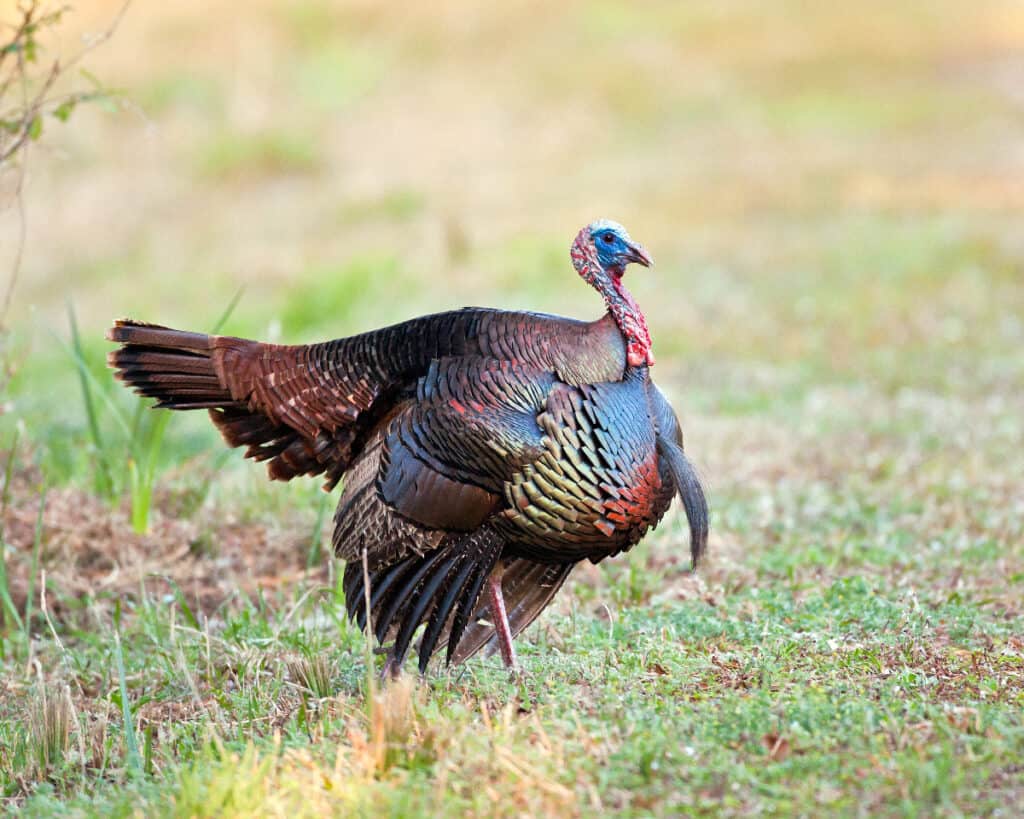
Osceola turkeys are a subspecies of turkeys that can only be found in Florida.
©Sandy Hedgepeth/Shutterstock.com
Two subspecies of turkey inhabit Florida’s diverse landscape, the above-mentioned eastern wild turkey and the Osceola wild turkey. The latter is native to Florida, and while they do look similar to their wild eastern cousins, they are physically distinct from them. The Florida Fish and Wildlife Conservation Commission describes their differences this way: “The Florida wild turkey is best distinguished from the eastern subspecies, which it closely resembles, by the white barring on its wing feathers. On Florida wild turkeys, the white bars on the primary wing feathers are narrower than the black bars and are irregular or broken, which tends to give the wing an overall darker appearance compared to eastern wild turkeys.”
Named by ornithologist W. E. B. Scott in 1890 after Chief Osceola of the Seminole Indian Nation, the Osceola wild turkey is smaller than its eastern cousins, but “there is so much overlap between specimens that size is useless as an identification character,” explains Lovett E. WIlliams Jr. in the book “The Wild Turkey: Biology and Management” (214).
Currently, it is estimated that there are about 100,000 (give or take ~20,000, depending on the source) Osceola wild turkeys living in peninsular Florida, their native habitat. Those farther north and across the panhandle interbreed with the eastern wild turkey. Like all subspecies, this woodlands bird favors the forest and its edges and openings where it forages for seeds, insects, spiders, small reptiles, grains, fruits, and nuts.
Hunters prize harvesting these birds, and Florida has a robust Wild Turkey Management Program to manage the turkey populations and monitor turkey hunting. It even maintains a Wild Turkey Registry, which “recognizes gobblers that meet certain minimum beard and spur length requirements.” In 2011, Clinton Woods harvested an Osceola turkey with the longest beard: 15.5 inches.
Rio Grande Wild Turkeys (Meleagris gallopavo intermedia)
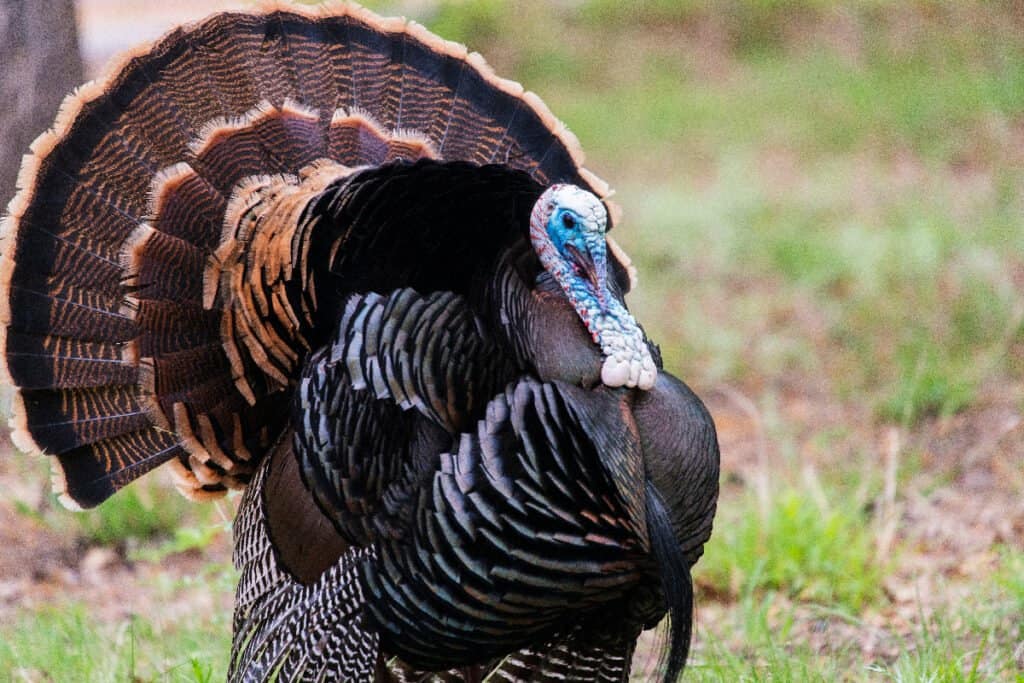
Rio Grand species of turkey can be found in Texas, Oklahoma, Kansas, and parts of Mexico.
©Brent Coulter/Shutterstock.com
The Rio Grande wild turkey lives in the middle of the country and seems to be quite average or intermediate, at least according to George B. Sennett who first described the subspecies in 1879. According to The Wild Turkey: Biology and Management,” Sennett “said the Rio Grande wild turkey differed from the other races by being intermediate; hence its name” (7).
These birds are native to the central plains states (Oklahoma, Kansas), central and western Texas, and northeastern Mexico. The Oklahoma Department of Wildlife Conservation explains that Rio Grande wild turkeys prefer “brush areas near streams and rivers or mesquite, pine, and scrub oak forests…[,] may be found up to 6,000 feet elevation[,] and generally favors country that is more open than the wooded habitat favored by its eastern cousins.” While wild turkeys do not migrate, the Rio Grande turkey does have distinct summer and winter ranges.
Like other turkey subspecies, between 5,000-6,000 feathers cover their bodies, which provide insulation, lift during flight, and touch sensation and ornamentation. They molt these feathers five time during their lifetime; however, they never molt their beards. Toms’ feathers are vibrant in iridescent colors of copper, bronze, red, green, and gold. The hens have these same colors but they are muted, so they often just look brown.
These turkeys are similar in size to Osceola turkeys, weighing about 15-20 pounds, but like Williams mentioned in the book “The Wild Turkey” size isn’t the best species identification tool. Rio Grande wild turkeys feature tan-colored tips on their tail feathers and their gobbles (sounds they make), beards, and spurs are all intermediate or moderate.
Merriam’s Wild Turkeys (Meleagris gallopavo merriami)
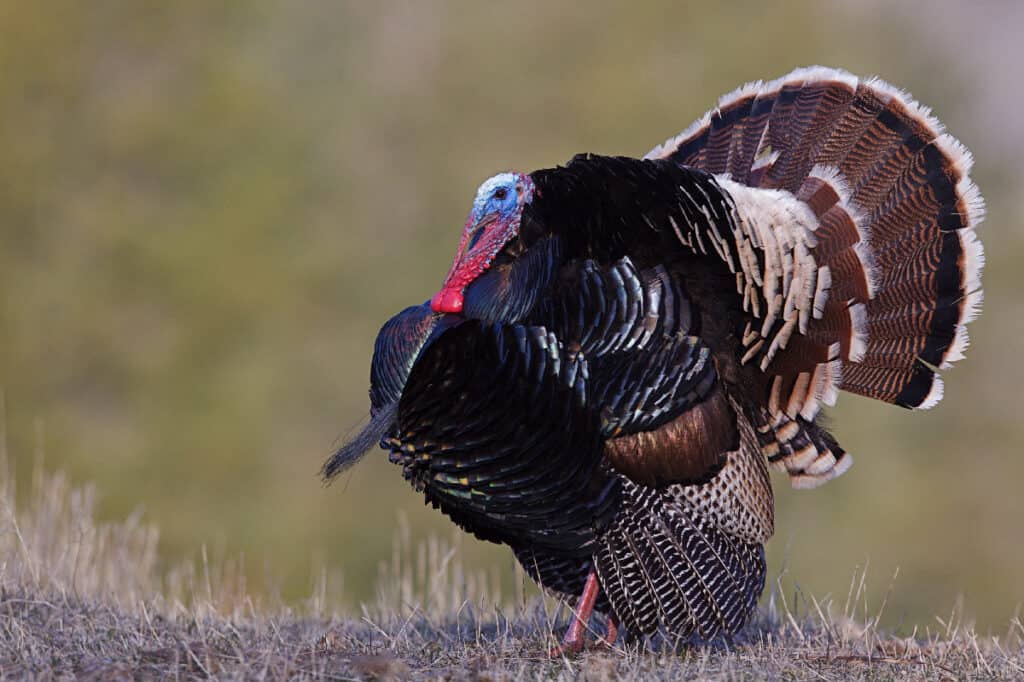
Merriam’s wild turkeys bear the name are found mostly in the Rocky Mountains but can be found in other western states as well.
©Tom Reichner/Shutterstock.com
Also known as mountain wild turkeys, Merriam’s turkeys inhabit the ponderosa pine, western mountain regions of the United States. In other words, the Rocky Mountains. These birds migrate not east to west or north to south but up and down. It’s not a true migration, but Merriam’s turkeys move up to higher elevations in the summer months and head down for the winter. They typically have a range of about 1-40 miles.
Merriam’s were named by Dr. E. W. Nelson in 1900 to honor the first chief of the U.S. Biological Survey, Clinton Hart Merriam, who also has a lizard, elk (now extinct), pocket mouse, chipmunk, and ground squirrel that bear his name.
Their feathers are purplish bronze, and the colors on the hens are duller compared to their male counterparts. Merriam’s most closely resemble Gould’s wild turkeys, but the way to distinguish the two subspecies boils down to the feather color on the lower back and tail feather margins. Merriam’s toms have nearly white feathers on the lower back and tail feather margins; hens have even more white. The beards and spurs are the shortest of all subspecies, and their gobbles are also quite weak.
Like its cousins, Merriam’s are opportunistic feeders, seeking out habitat where “breeding, nesting, brood rearing, and winter habitat in the proper combination” come together in perfect harmony.
Gould’s Wild Turkeys (Meleagris gallopavo mexicana)
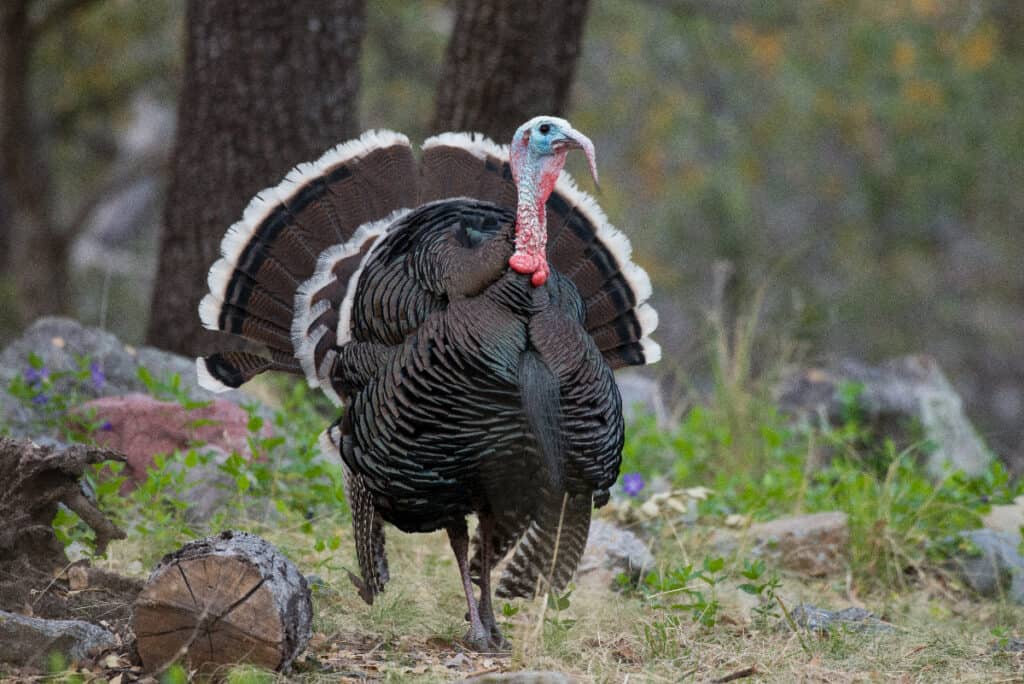
Gould’s wild turkeys have the smallest population in the United States, but they are regarded as the largest of the wild turkey subspecies.
©Sean R. Stubben/Shutterstock.com
English ornithologist John Gould traveled to Mexico in 1856, and his descriptions of this wild turkey—the first ever—was eventually honored by its being named in his honor. The Gould’s wild turkey is generally regarded as the largest; however, this may have more to do with the fact that the Gould’s turkey has longer legs, feet, and tail feathers than its cousins as this turkey’s average weight for both toms and hens is in the same general range as the other turkeys.
Not only is this bird large but also quite rare in the United States. While the population of the Gould’s wild turkey is quite small today in southern Arizona and New Mexico, where it was once found in abundance, they more than make up for it in northwestern portions of Mexico.
This bird of the mountains is the subject of U.S. and Mexican conservation efforts that “are working cooperatively to reintroduce a strong Gould’s population first into Arizona and then into other states where suitable range exists.”
The feathers, even those on its rump, of the Gould’s wild turkey are coppery to greenish gold, while the rectrix and upper tail cover tips are pink to white in color.
Ocellated Wild Turkeys (Meleagris ocellata)
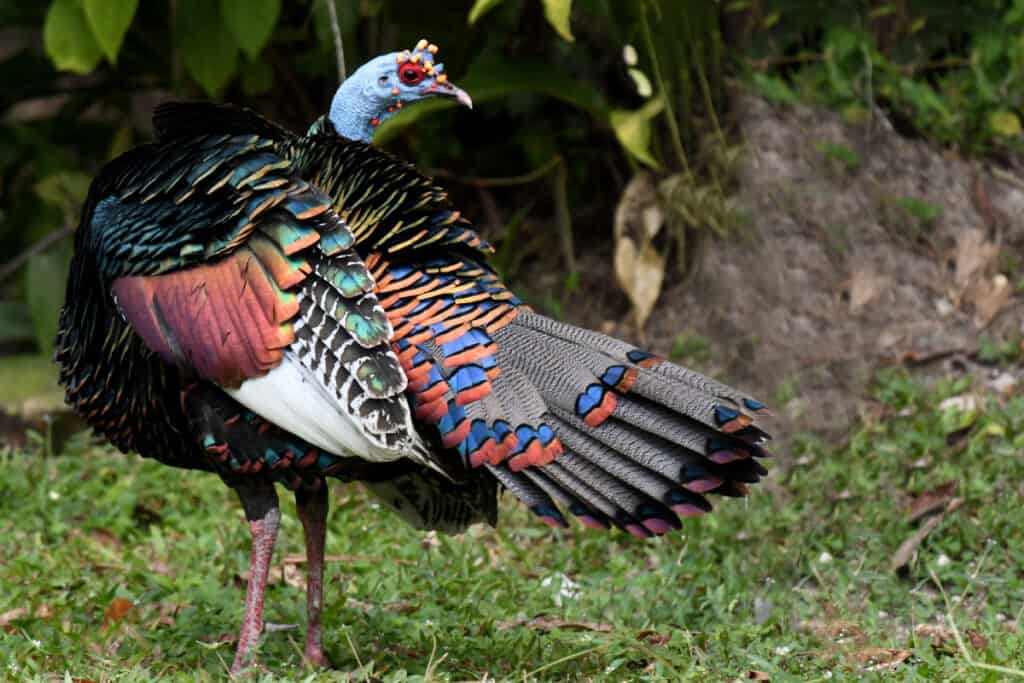
The ocellated turkey’s vibrant, iridescent feathers with eye-shaped circles at the tips resemble those of a peacock, even though the two species come from different biological families.
©Lev Frid/Shutterstock.com
The peacock-esque appearance of the smallest species of turkey make it difficult to turn away. The ocellated wild turkey is stunning, an iridescent feather rainbow on two reddish-orange stick legs. The ocellated turkey earned its name for the “eye-like markings” created by the metallic blue and orange spots on its tail coverts. Its blue head and neck features randomly spaced yellow and pinkish growths that resemble the candy Nerds. On males, the growths grow
These small but mighty and fierce birds live in a 50,000-square-mile area comprising the Yucatán Peninsula in Mexico, parts of northern Belize, and the El Petén region of northern Guatemala. Toms and hens weigh 11-12 and 6-7 pounds, respectively. This wild turkey species also does not have a beard, and their gobbles are quite different from the loud, rapid gurgling sound of its northern cousins. It’s often described as high-pitched and preceded by a hollow drumming sound. Additionally, their spurs are much longer than the other species of wild turkey, averaging more than 1.5 inches
Conservationists are keeping an eye on this species as the IUCN has placed their conservation status as “near threatened.”