
Turkeys are incredibly well-known birds, with wild ones roaming most US states and domesticated ones being reared for the table. Have you ever wondered how to tell the difference between male and female turkeys? Fortunately, there are a few telltale signs. Let’s take a look.
Comparing Male vs. Female Turkeys
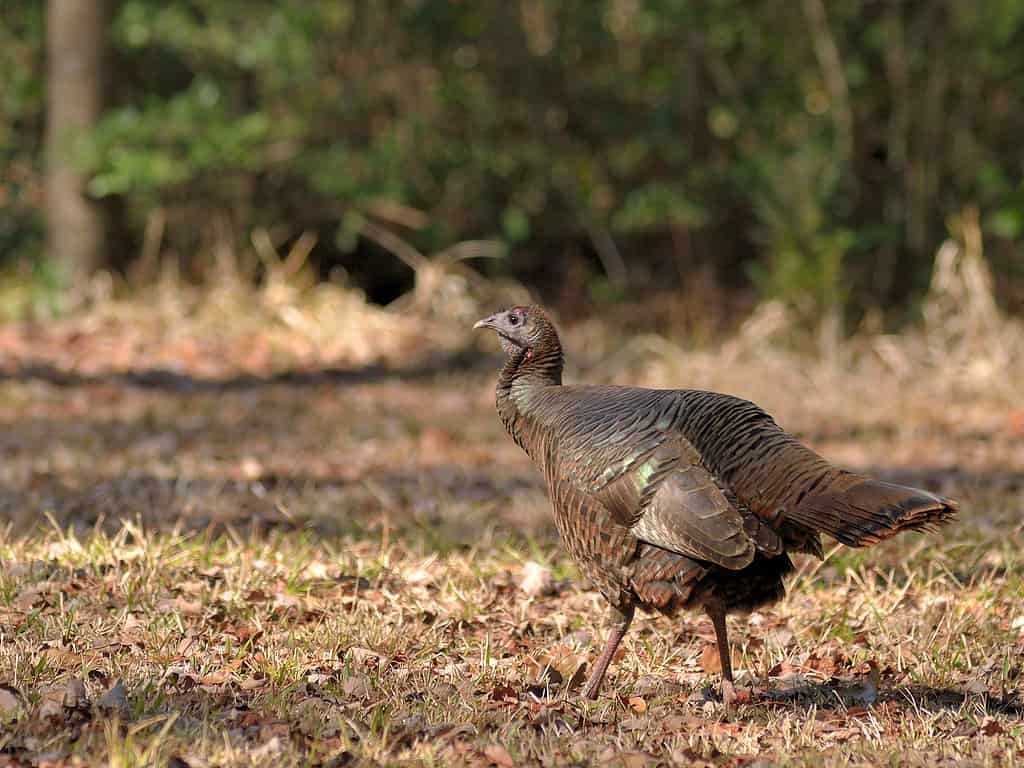
Female turkeys have a much duller appearance than males.
©Bob Balestri/iStock via Getty Images
There are two species of turkeys — the ocellated turkey (Meleagris ocellata), which inhabits Mexico and parts of Central America, and the more common wild turkey (Meleagris gallopavo) from which domesticated turkeys are descended. Regardless of the species, there are still clear differences between males and females.
| Male Turkey | Female Turkey | |
|---|---|---|
| Size | Wild turkeys: 12 to 25 pounds Domesticated turkeys: Up to 80 pounds | Wild turkeys: 5 to 12 pounds Domesticated turkeys: 8 to 16 pounds |
| Color | Black and white barring on wings, greenish hue on body, red or blue head and neck | Mainly gray and brown |
| Spurs | Yes | Very rarely |
| Vocalizations | Distinctive loud gobble | Quieter clucking sounds |
| Behavior | Strutting, puffing up feathers, and fanning out tails to assert dominance | Calmer nature but will defend clutches of eggs and chicks |
| Droppings | Longer, J-shaped droppings | Spiral-shaped droppings |
The Key Differences Between a Male and a Female Turkey
When it comes to distinguishing between male turkeys (toms) and females (hens), the main differences are their size and appearance. However, other differences include their behavior and even their vocalizations.
Male vs. Female Turkey: Size
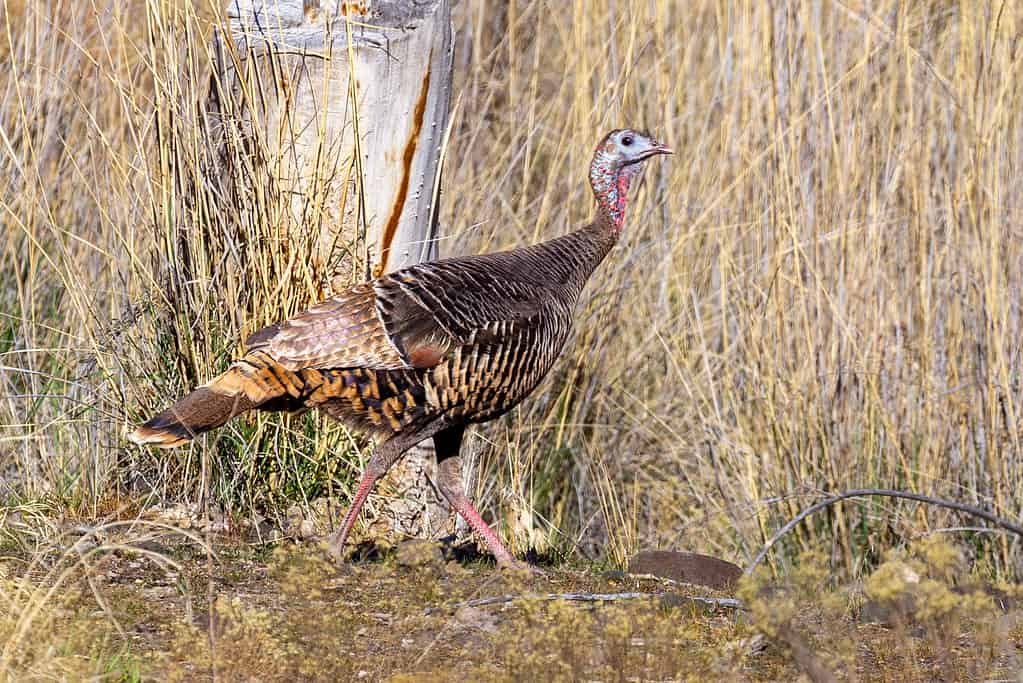
Female turkeys are much smaller than males.
©christiannafzger/iStock via Getty Images
One of the easiest ways to tell the difference between a male and a female turkey is to look at their size because males are larger than females. Wild male turkeys typically weigh 12 to 25 pounds and have a length of 39 to 49 inches, whereas females only weigh five to 12 pounds, with a length of up to 39 inches.
Domesticated turkeys are much larger than their wild counterparts, but the size difference between males and females is still true. Male domesticated turkeys can reach a whopping 80 pounds, depending on the breed, while females are generally in the eight to 16-pound range.
Although ocellated turkeys are much smaller than the more common Meleagris gallopavo species, the males and females can still be distinguished by their size. In this case, males weigh around 11 to 13 pounds, while females are approximately six to eight pounds.
Male vs. Female Turkey: Appearance
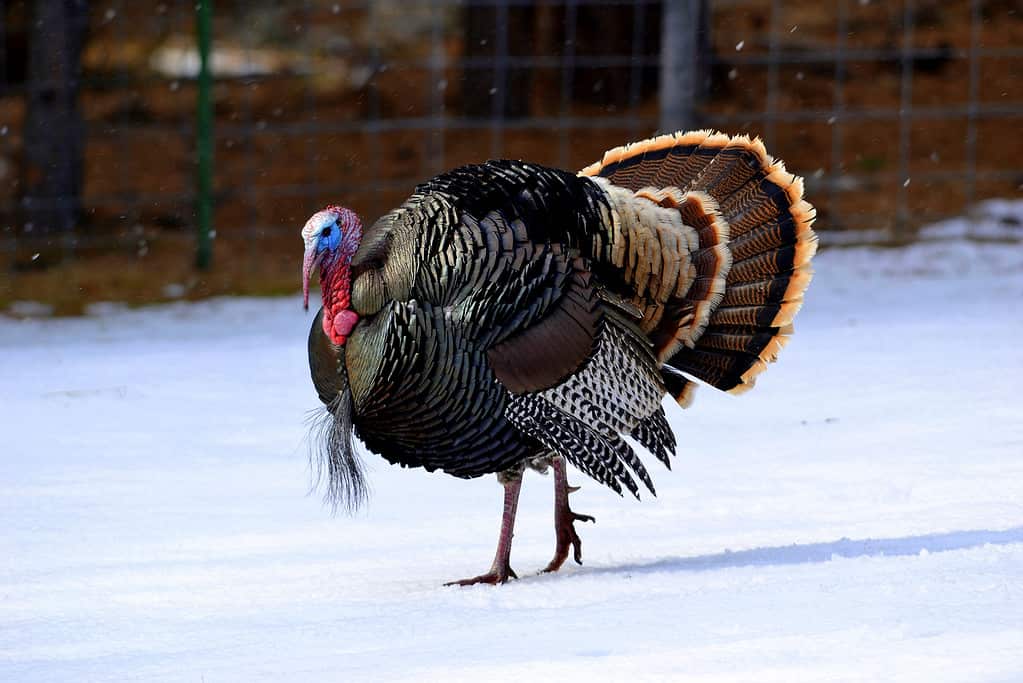
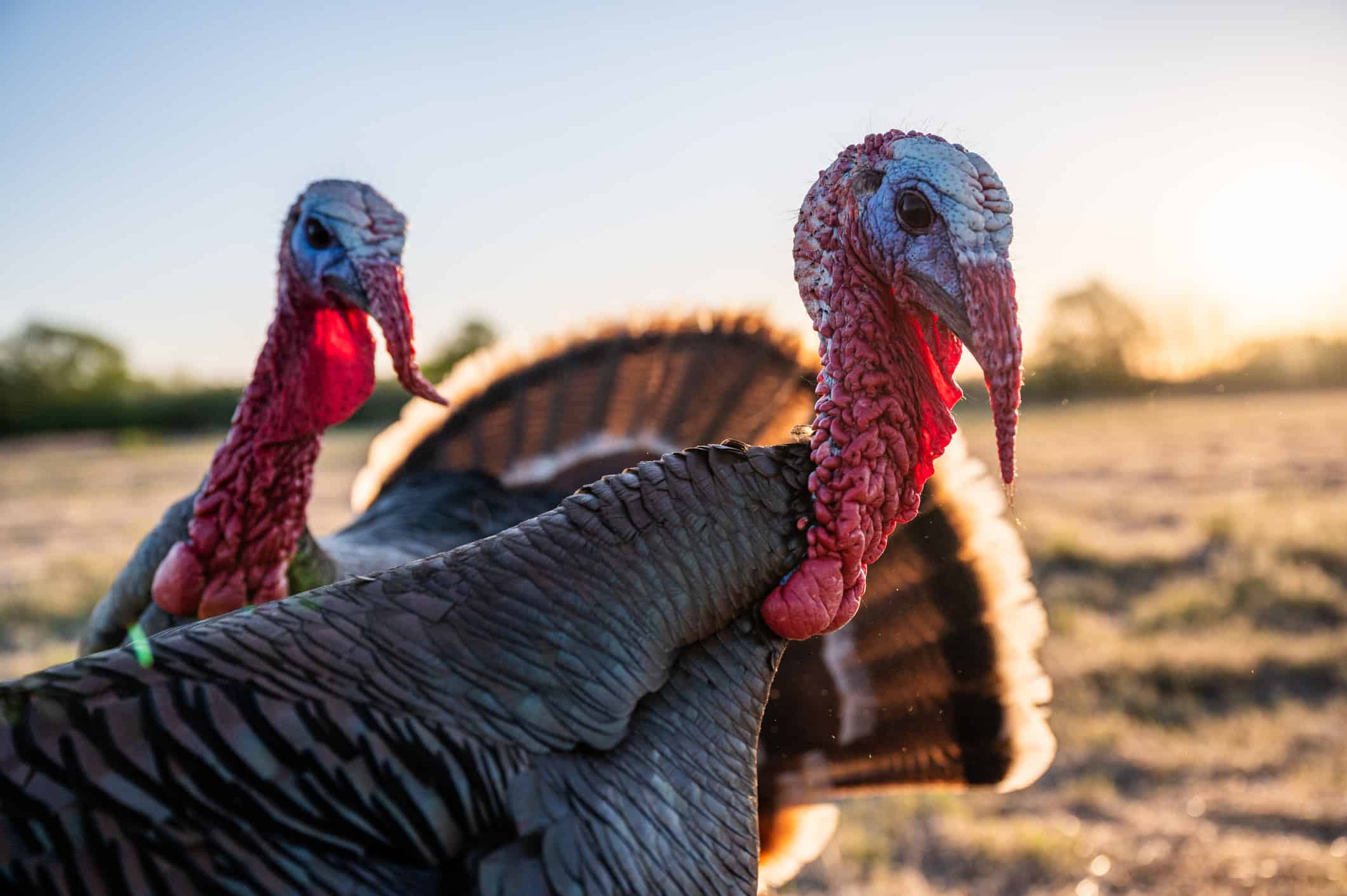
Male turkeys have distinctive black and white feathers with a bright red neck.
©Debraansky/iStock via Getty Images
Size isn’t the only noticeable difference between male and female turkeys, as they also have different colors. Female turkeys are mainly gray and brown, whereas males have black and white barred markings on their wings. They also have a black body with a greenish hue. Both sexes have a bald head and neck, but males have much brighter red and blue coloration than females.
Males also have “beards,” which are tufts of feathers protruding from their chests. Females usually lack beards, although some may have small ones. Male turkeys also have long spurs—sharp spikes on the backs of their legs—used for fighting with other males, usually when competing for females. Females typically lack spurs, or they may have only small bumps.
The color difference is a little less clear in ocellated turkeys, as both are a stunning blue-green color. However, females are typically a duller color than males. Neither sex has a beard, although male ocellated turkeys do still possess prominent spurs.
Male vs. Female Turkey: Vocalization
The distinctive gobble is the sound most commonly associated with a turkey. However, not all turkeys gobble. Instead, gobbling is only produced by male turkeys, while females produce a quieter clucking sound. Gobbling is not just a general form of communication; males use it to attract females and announce their availability to mate.
Male vs. Female Turkey: Behavior
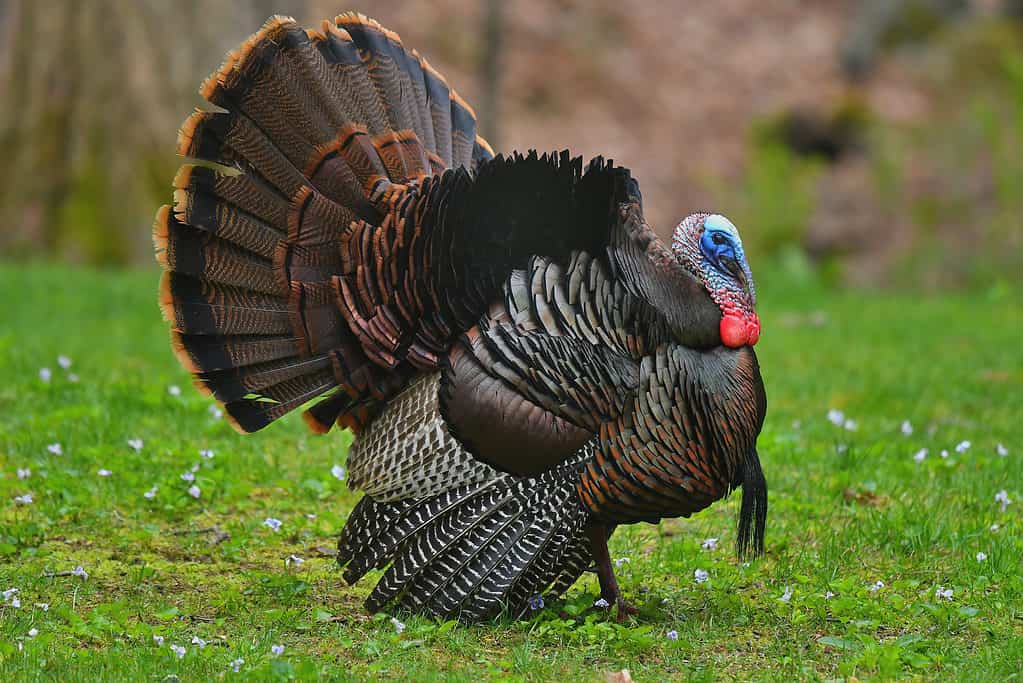
Tom turkeys puff their feathers up when exhibiting dominant behavior.
©iStock.com/Robert Winkler
Male and female turkeys also behave differently. Males are known for their dominant behavior, both in an attempt to attract the females and to ward off other males. Their courtship behavior, in particular, involves strutting and dragging their wings along the ground. They also puff their feathers up and fan their tails out, making themselves look bigger. This behavior is usually accompanied by their loud, distinctive gobbling.
In contrast, females are much calmer, quieter birds. They don’t exhibit any of the same dominant behavior. However, they can be defensive when they are protecting their clutch of eggs or young chicks.
Male vs. Female Turkey: Droppings
Although it’s not something that you’ll want to examine closely, one of the most unusual differences between male and female turkeys is the shape of their droppings. Male turkeys produce distinctive J-shaped droppings, while females produce spiral-shaped clumps. This difference is due to their anatomy: birds excrete from the same orifice they use for reproduction, and the female’s is slightly larger to allow eggs to pass through. As a result, female droppings have more room to clump, while the male’s smaller orifice prevents the droppings from coiling.