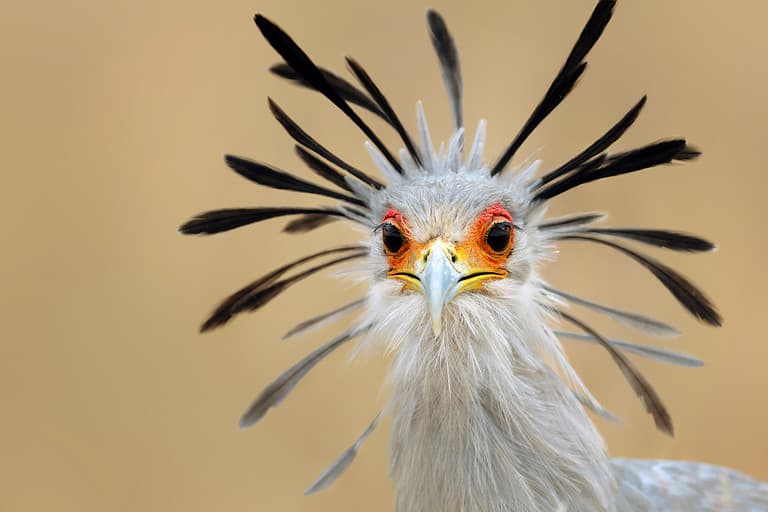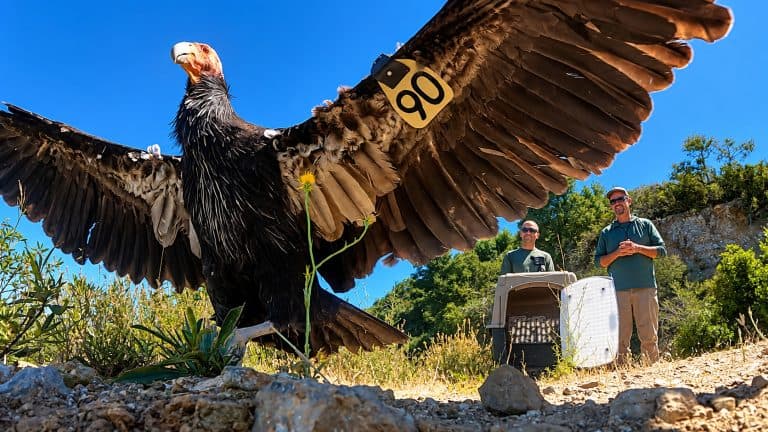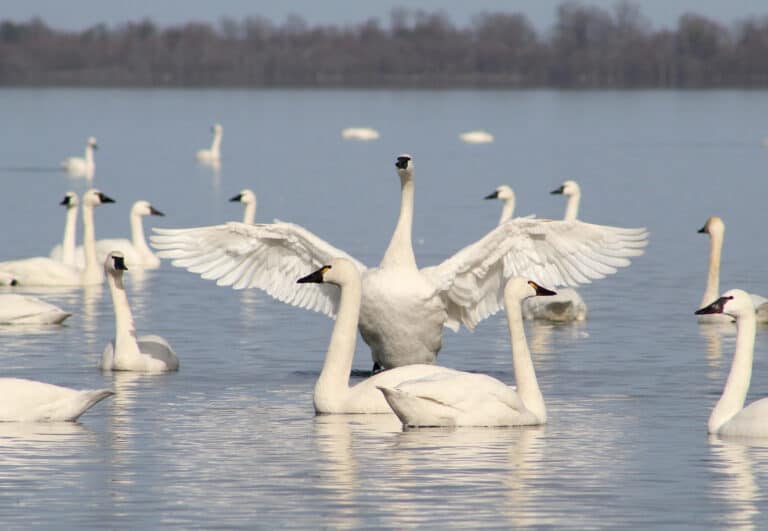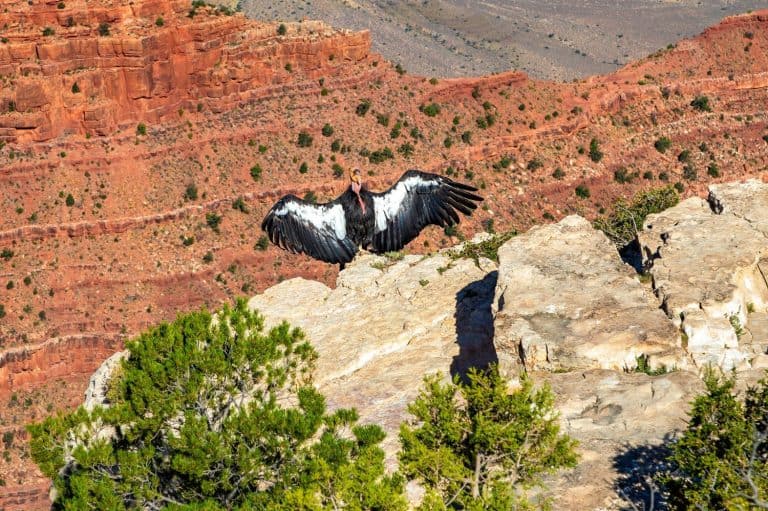

From giant vultures and eagles to majestic storks and cranes, Arizona offers year-round possibilities for large bird sightings. These birds can be seen in a variety of different habitats, from the Grand Canyon to the Sonoran Desert to the Tucson Mountains. Check out this list of the 15 largest flying birds in Arizona and learn more about their sizes and where they can be seen.
15. Double-Crested Cormorant
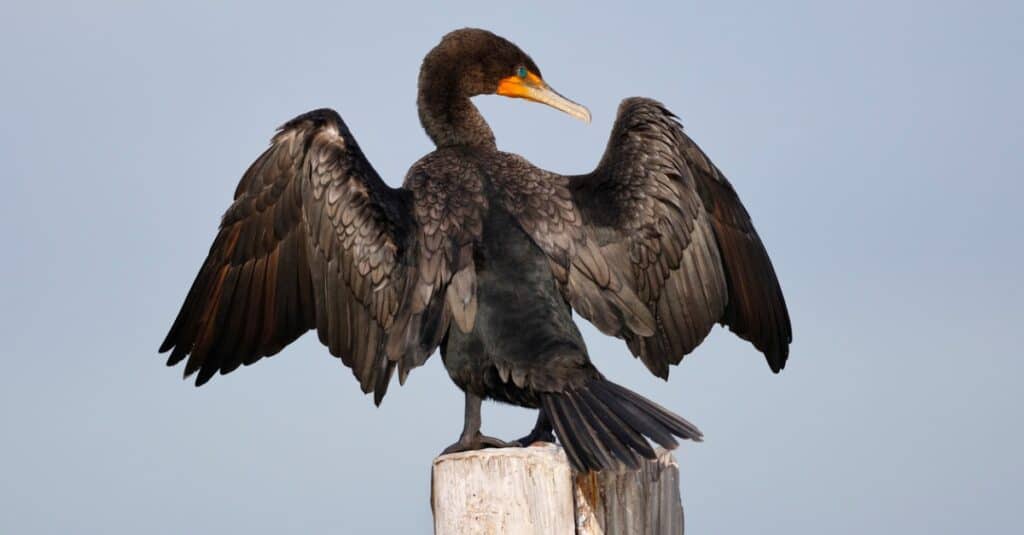
The double-crested cormorant lives in rivers and ponds in the Sonoran Desert.
©iStock.com/BrianLasenby
Double-crested cormorants (Nannopterum auritum) are large waterbirds that can weigh over 5 pounds, measure about 3 feet long, and have a wingspan of up to 4 feet. These stocky, birds have dark brown plumage and yellowish-orange skin on their faces. You can find these cormorants in southeastern Arizona, including urban areas such as Tucson. They can also be seen in rivers and ponds in the Sonoran Desert.
14. Great Egret
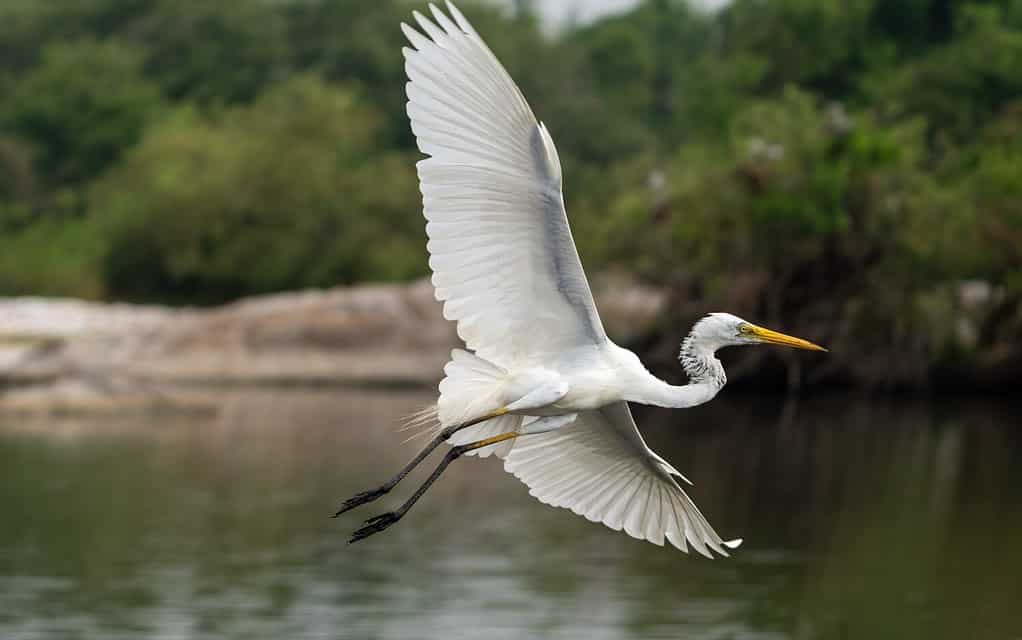
The great egret has a remarkably long neck and a spear-like bill to catch aquatic prey.
©Banu R/Shutterstock.com
Great egrets (Ardea alba) stand over 4 feet tall and have a wingspan of over 4 feet. They can weigh up to around 3 pounds. These large, white wading birds have long, black legs and feet and long necks. Great egrets can be found in Arizona’s wetland habitats, marshes, and near rivers. They are more commonly seen in the southern part of the state.
13. Common Raven
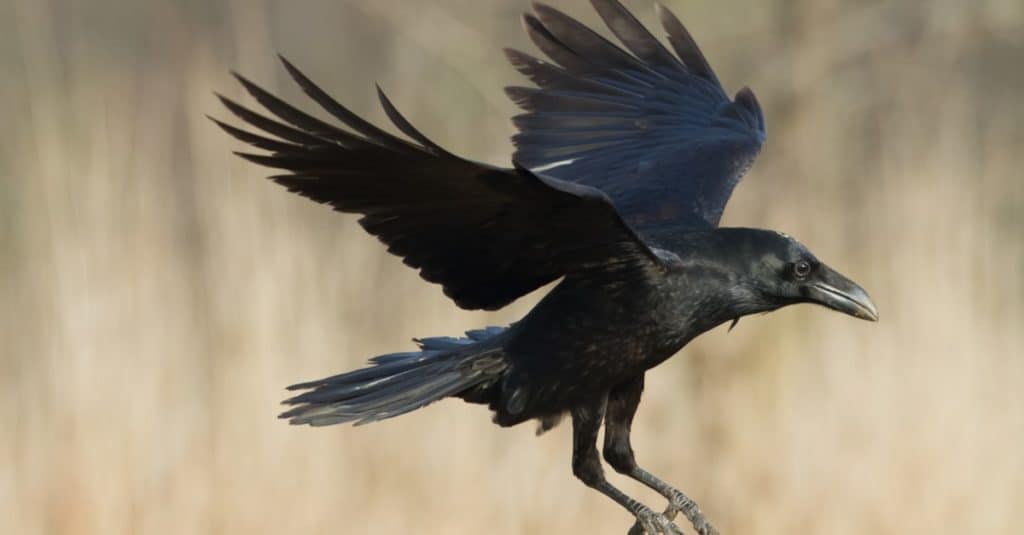
Common ravens have a wingspan of around 4.7 feet.
©Marcin Perkowski/Shutterstock.com
The common raven (Corvus corax) is over 2 feet long and weighs over 3 pounds. These glossy, black birds have a wingspan of up to about 4.7 feet. They live in a wide range of habitats from mountain forests to deserts. They are frequently sighted throughout the Sonoran Desert and in the mountain region around Tucson.
12. Ferruginous Hawk
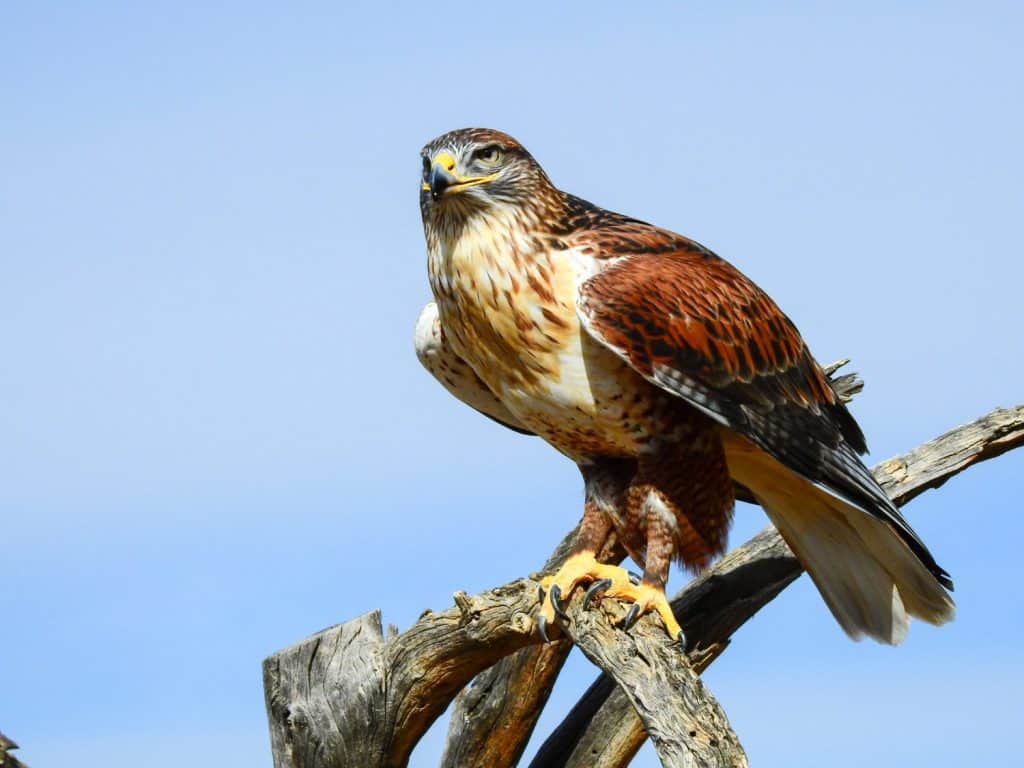
The ferruginous hawk is the largest hawk in Arizona.
©Susan E. Viera/Shutterstock.com
Ferruginous hawks (Buteo regalis) are large raptors with rust, black, and white plumage. They can be found in dry, open areas such as prairies and grasslands. Ferruginous hawks are over 2 feet long with wingspans of around 4.7 feet. They typically weigh around 3 pounds. These hawks are commonly seen near the Santa Cruz Flats and in the Sulphur Springs Valley.
11. Wild Turkey
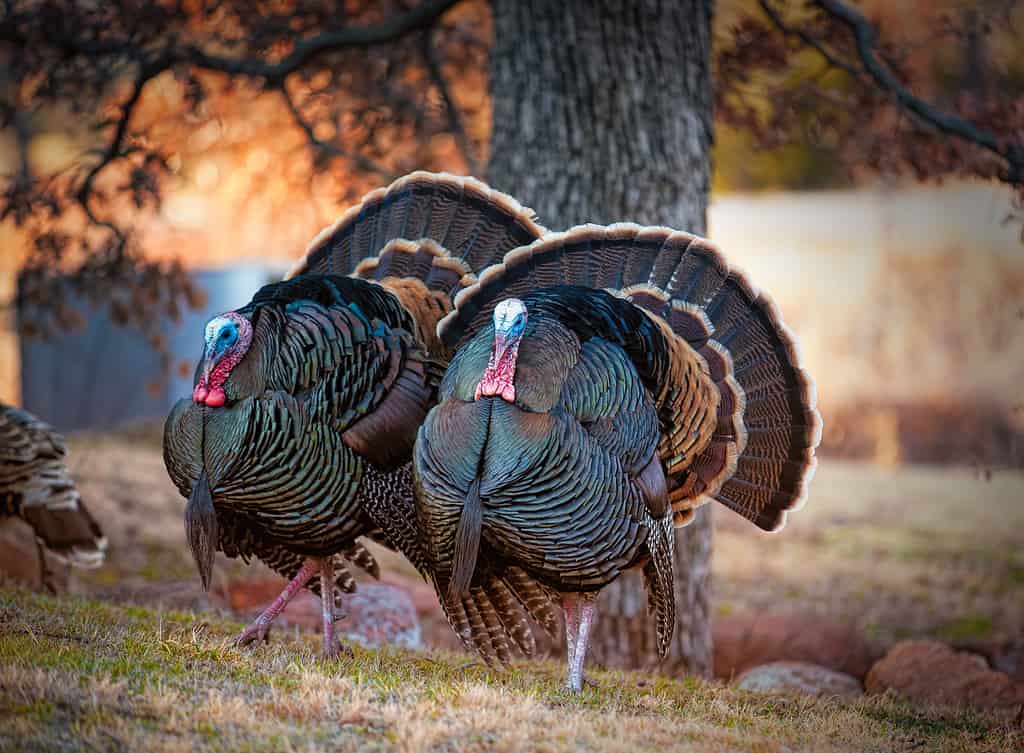
The wild turkey can reach flying speeds of 55mph in short bursts.
©davidsdodd/iStock via Getty Images
Wild turkeys (Meleagris gallopavo) can reach up to 4 feet tall and weigh up to 25 pounds. While wild turkeys do not fly long distances, they are capable of flight and have a wingspan of 4.7 feet. Wild turkeys fly to escape predators and roost in the trees during the day. They can reach speeds of up to 55 mph for short distances. You can find wild turkeys in Arizona’s mountains and ponderosa pine forests.
10. Black Vulture
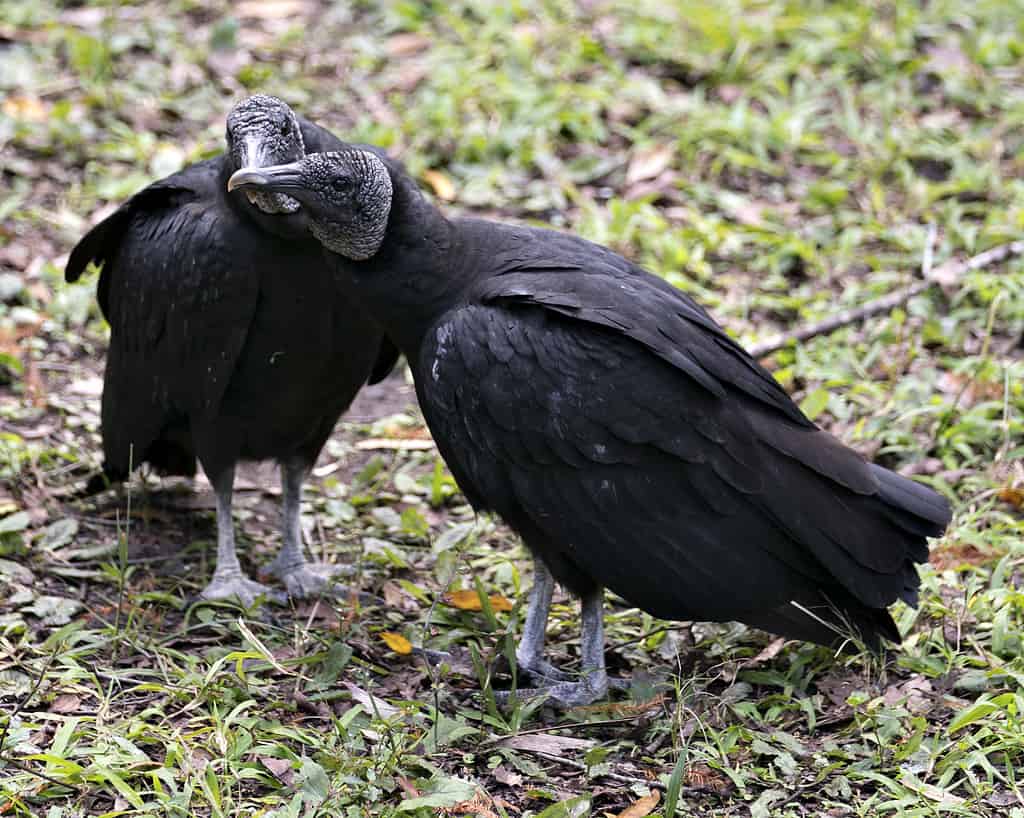
The black vulture can often be seen in the Santa Cruz Valley.
©iStock.com/Rejean Bedard
Black vultures (Coragyps atratus) have mostly black plumage with bald gray heads and necks. These vultures can grow to around 2.25 feet long and weigh up to 6 pounds. They have wingspans up to 5.6 feet. The black vulture prefers open country and is most commonly seen in the Santa Cruz Valley to the convergence of the Santa Cruz and Gila Rivers. They can also be seen in the Nogales and Patagonia areas.
9. Turkey Vulture
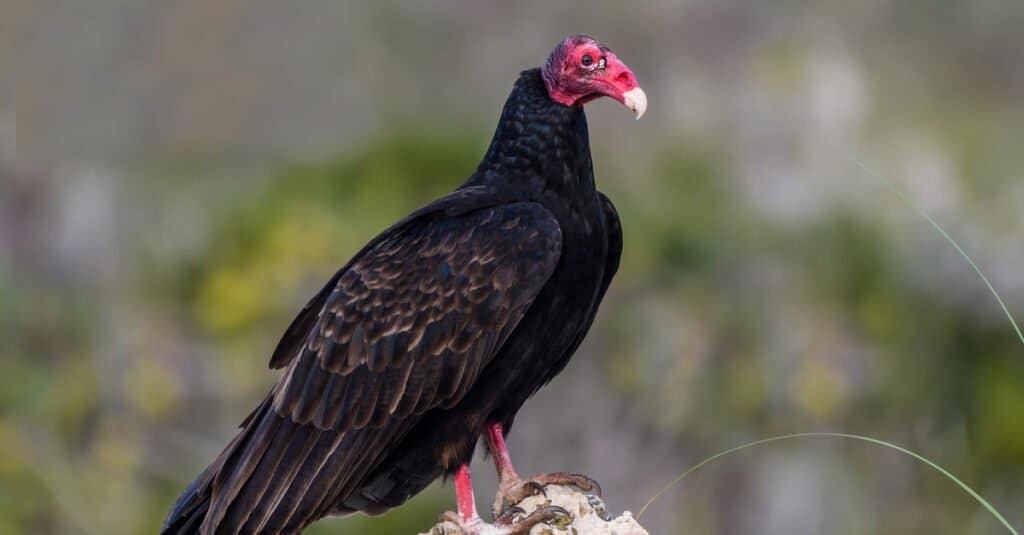
The turkey vulture has a curved beak, enabling it to tear meat from carrion.
©FotoRequest/Shutterstock.com
Turkey vultures (Cathartes aura) live year-round in the southern desert regions of Arizona and are seasonal visitors to the northern part of the state. They can be distinguished from other raptors by the way they soar with their wings in a V-shape. These birds have dark bodies and bald, red heads. They can reach around 2.7 feet long and have a wingspan of 6 feet. They can weigh over 5 pounds.
8. Canada Goose
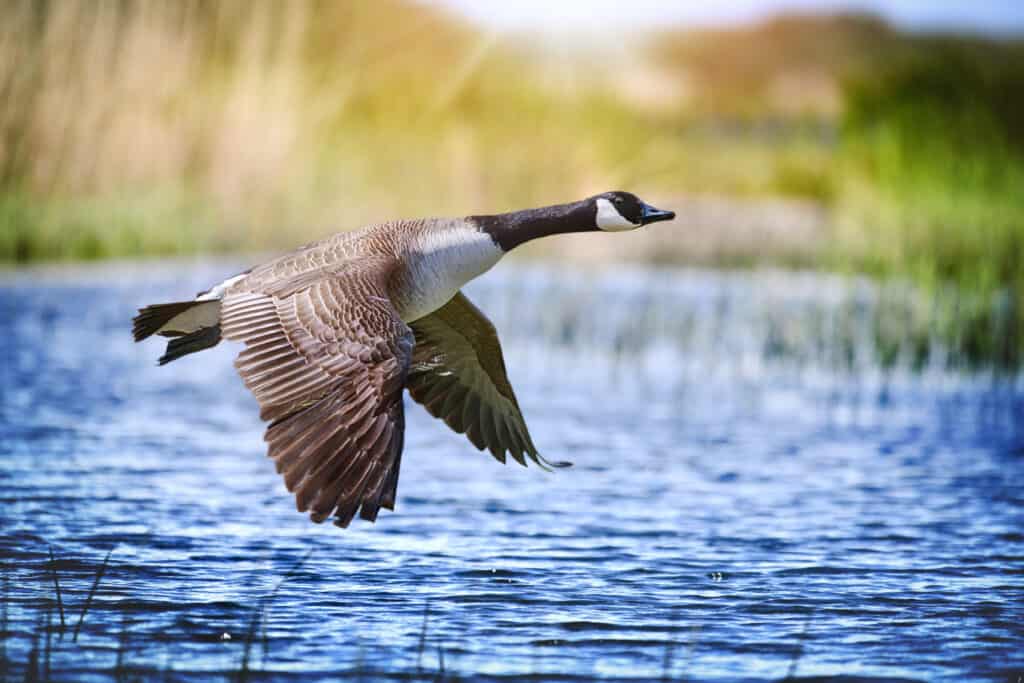
The Canada goose is a frequent visitor to urban areas such as Phoenix during the fall and winter.
©Krasula/Shutterstock.com
Canada geese (Branta canadensis) vary in size depending on subspecies. They weigh an average of about 12 pounds. These geese can reach 3.75 feet long with wingspans of more than 6 feet. They have brown to greyish-brown bodies, black heads and necks, and white cheek patches. This waterfowl is a common visitor to the state during the fall and winter. They can often be found in urban parks and lakes, as well as agricultural areas, wetlands, and reservoirs.
7. Sandhill Crane
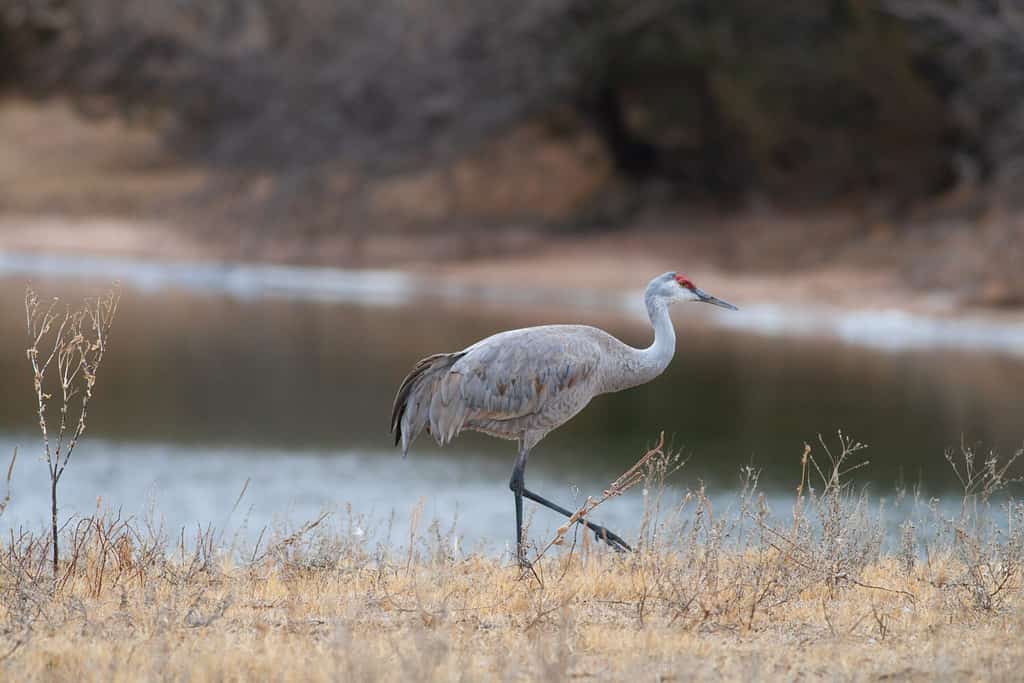
The sandhill crane is often found in the Whitewater Draw Wildlife Area.
©Benjamin Tillotson/Shutterstock.com
The elegant sandhill crane (Antigone canadensis) has long, thin legs, grey plumage, and a red patch on its forehead. They stand up to 4.5 feet tall and have a wingspan of more than 6 feet. They can weigh up to about 12 pounds. The best place to see these birds is during the fall and winter in the Whitewater Draw Wildlife Area.
6. Great Blue Heron
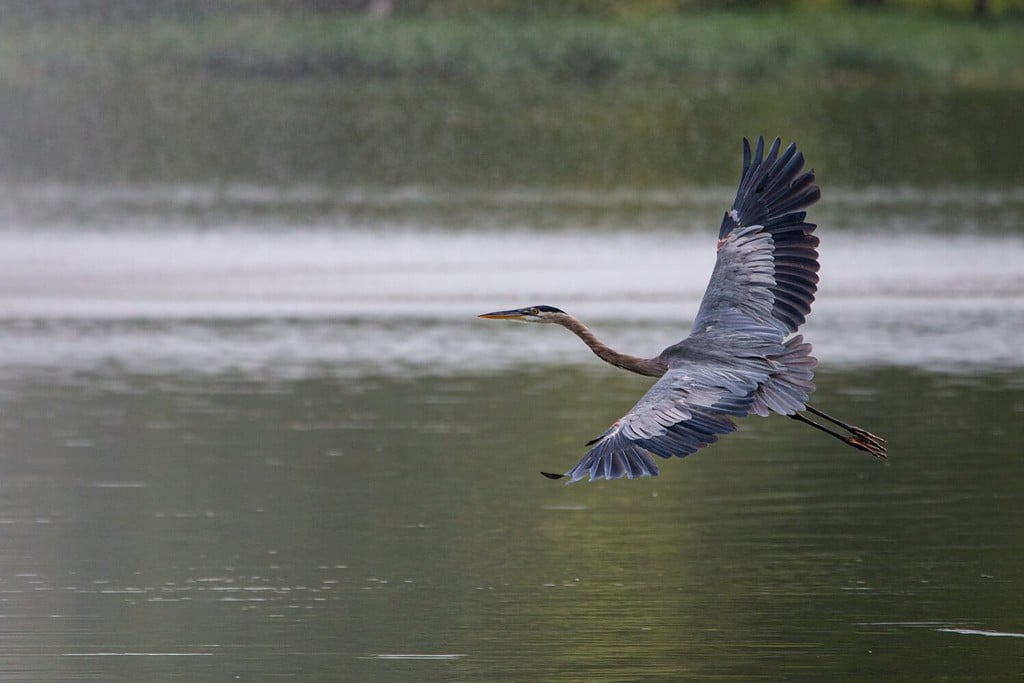
Great blue herons are often seen along the banks of shallow water.
©Michael Munster/Shutterstock.com
The great blue heron (Ardea herodias) stands about 4 feet tall, weighs up to 6 pounds, and has a wingspan of around 6.5 feet. They have blue-gray feathers and white heads with black plumes. In Arizona, you can find great blue herons along river edges, wetlands, lakes, and even irrigation canals. They have been seen near Salt River and Watson Lake, as well as in flooded fields near urban areas.
5. Golden Eagle
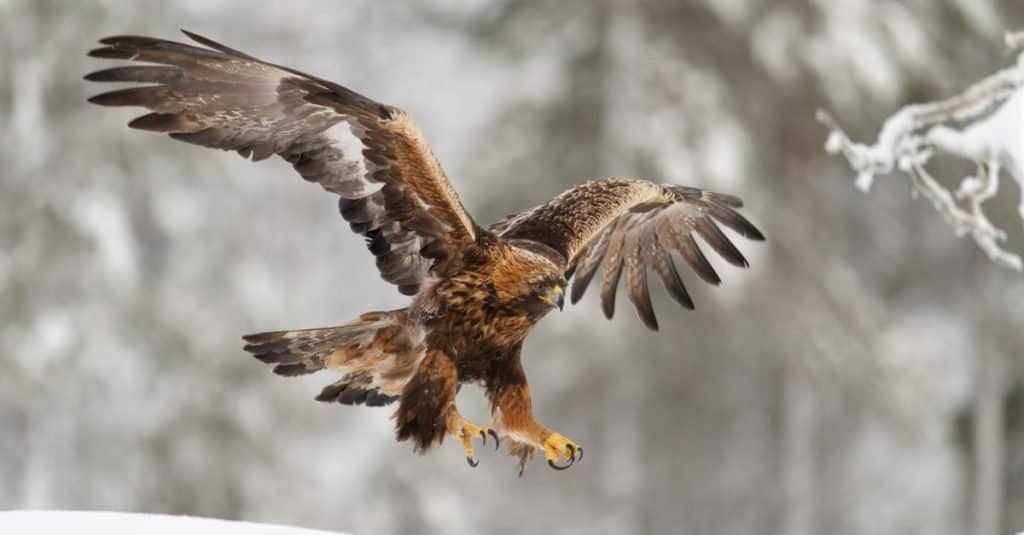
The golden eagle lives in Arizona’s mountains, deserts, canyons, and open country.
©Vladimir Kogan Michael/Shutterstock.com
Golden eagles (Aquila chrysaetos) are large, dark brown birds of prey with golden-brown feathers on their heads and necks. They weigh up to 13 pounds, reach over 3 feet in length, and have wingspans of up to 7 feet. In Arizona, you can find golden eagles in open country, canyonlands, mountains, and desert habitats. They are frequently seen around the Grand Canyon, Salt River Canyons, and Monument Valley.
4. Brown Pelican
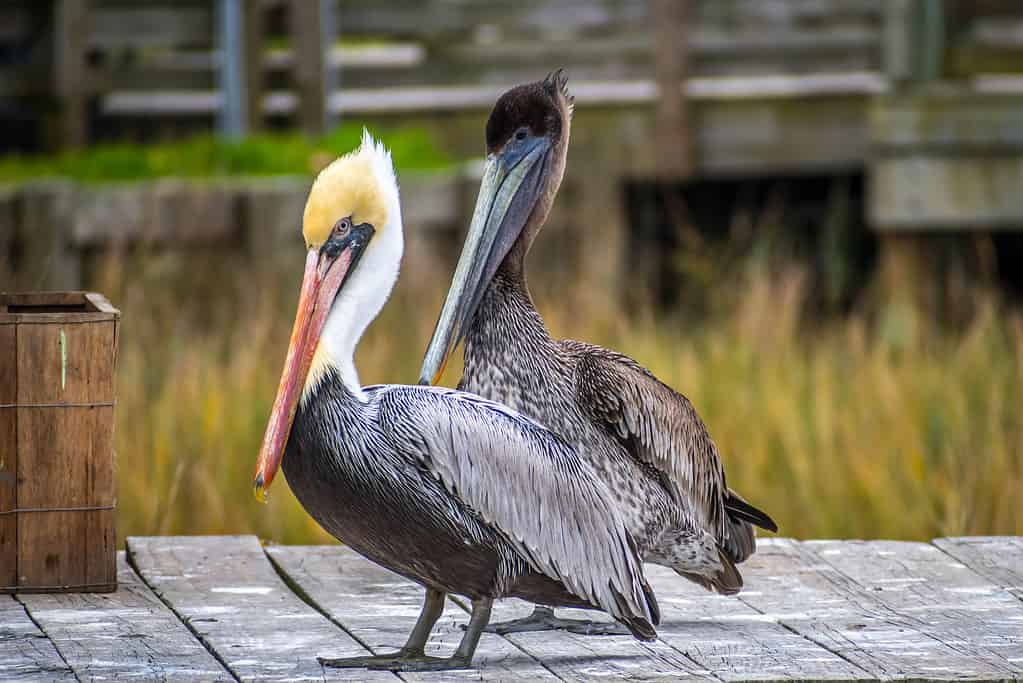
Brown pelicans are the smallest pelican species.
©Cheri Alguire/iStock via Getty Images
While they may be the smallest pelicans, brown pelicans (Pelecanus occidentalis) can stand up to 4.5 feet tall and have wingspans of over 7 feet. They typically weigh up to 11 pounds. They have dark, grey-brown bodies with white and brown heads that turn yellow during the breeding season. You are most likely to spot these pelicans in bodies of water in southeast Arizona.
3. Bald Eagle
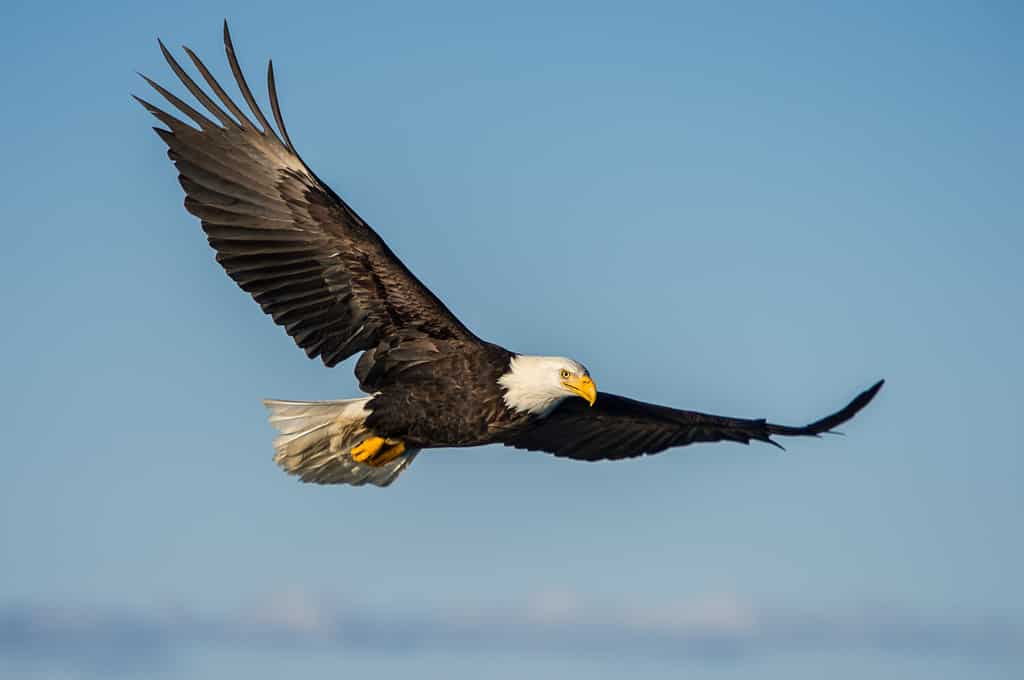
Female bald eagles can have a wingspan of up to 8 feet.
©FloridaStock/Shutterstock.com
Bald eagles (Haliaeetus leucocephalus) are endemic to North America and are the largest birds of prey in the state. Adult eagles have brown bodies with white feathers on their heads. The females can weigh up to 14 pounds, with a length of over 3 feet and a wingspan of up to 8 feet. The best place to find bald eagles in Arizona is the Tonto National Forest near the Salt and Verde rivers.
2. American White Pelican
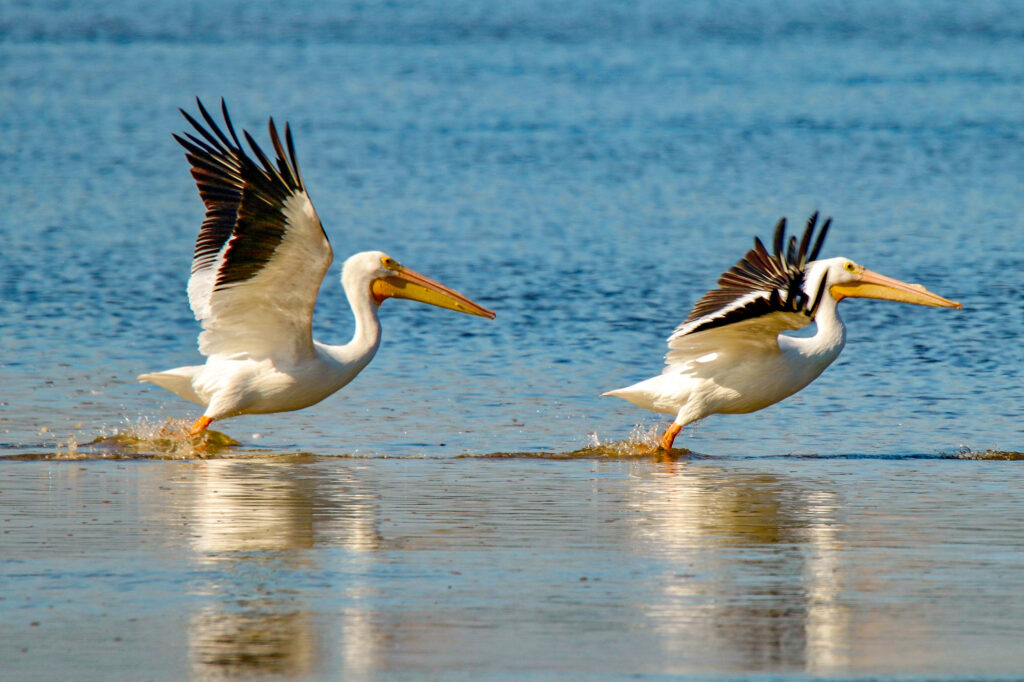
American white pelicans have a wingspan of 9.5 feet.
©Susan Rydberg/Shutterstock.com
The American white pelican (Pelecanus erythrorhynchos) is a large waterbird with a white body and black and white wings. These heavy-bodied birds can weigh up to 20 pounds. American white pelicans can reach 5.4 feet in length with a wingspan of 9.5 feet. While these pelicans are not full-time residents of Arizona, you can find them during the winter in reservoirs and lakes along the Colorado River and in the Sonoran Desert.
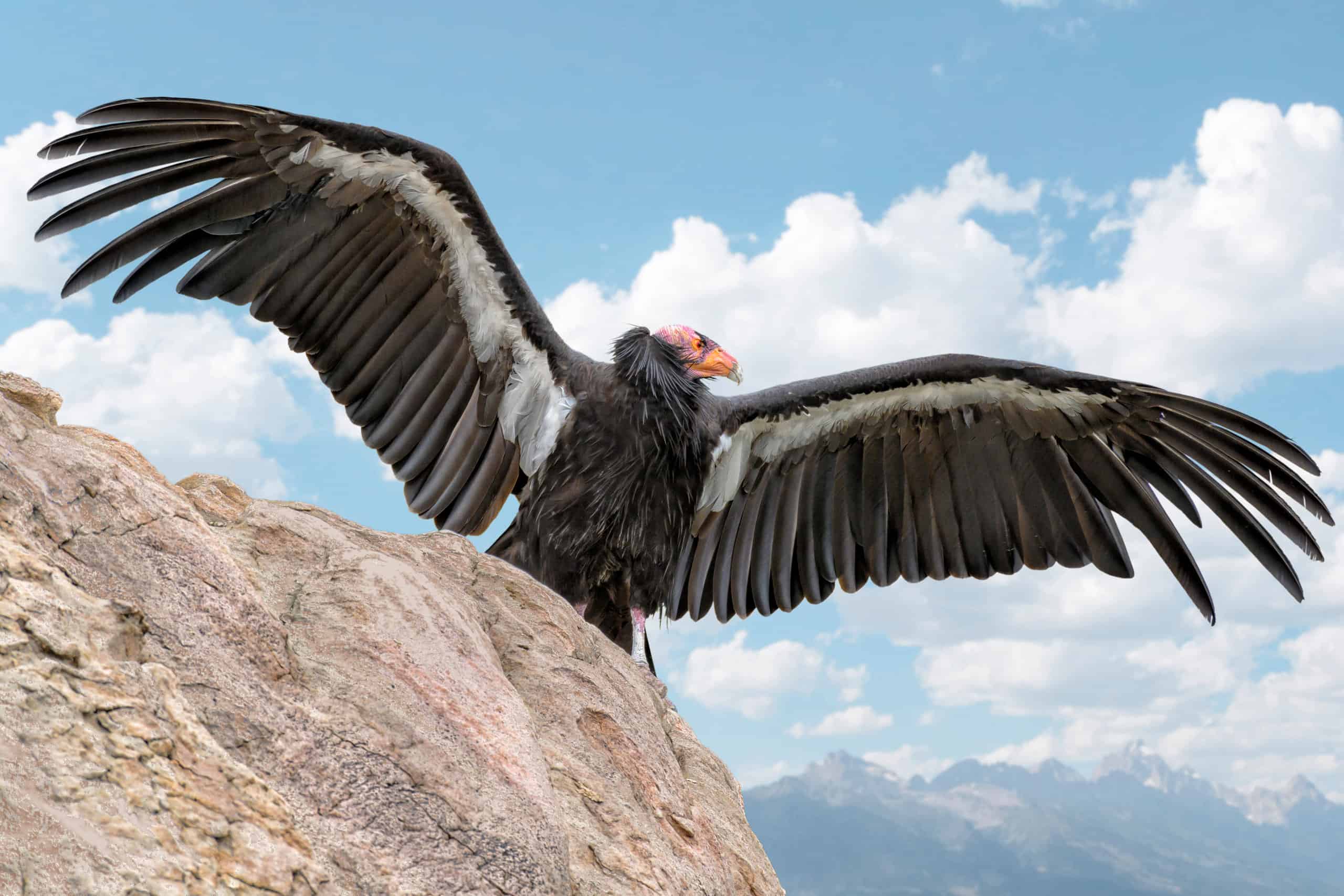
1. California Condor
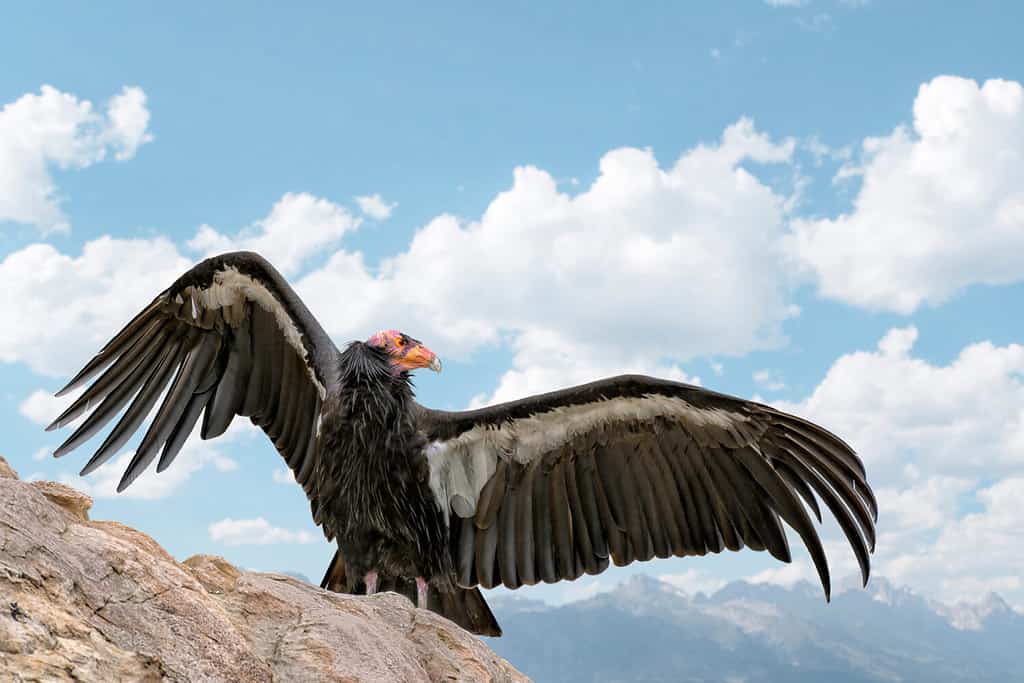
The California condor is the largest land bird on the continent.
©Barbara Ash/Shutterstock.com
With wingspans of up to 9.5 feet, heights of 3.5 feet at the shoulder, and weights up to 25 pounds, the California condor (Gymnogyps californianus) is the largest bird found in Arizona. These massive birds have dark brown to black bodies with bald heads and necks. Their plumage is primarily black with white along the upper edges. They are frequently seen in the canyonlands, particularly from the South Rim of the Grand Canyon.