
Florida is filled with a diverse array of exotic wildlife, and Florida’s birds are no exception. Home to over 500 avian species, many of Florida’s birds are quite large. Florida’s large birds represent a range of different types, including waterbirds, birds of prey, and large wading birds like storks and cranes. Florida’s diverse environments, from coastal waters to inland swamps and wetlands, support their foraging and nesting behaviors. These birds include year-round residents as well as migrating species. Continue reading to learn about the 27 largest flying Floridian birds, according to wingspan.
27. Swallow-Tailed Kite
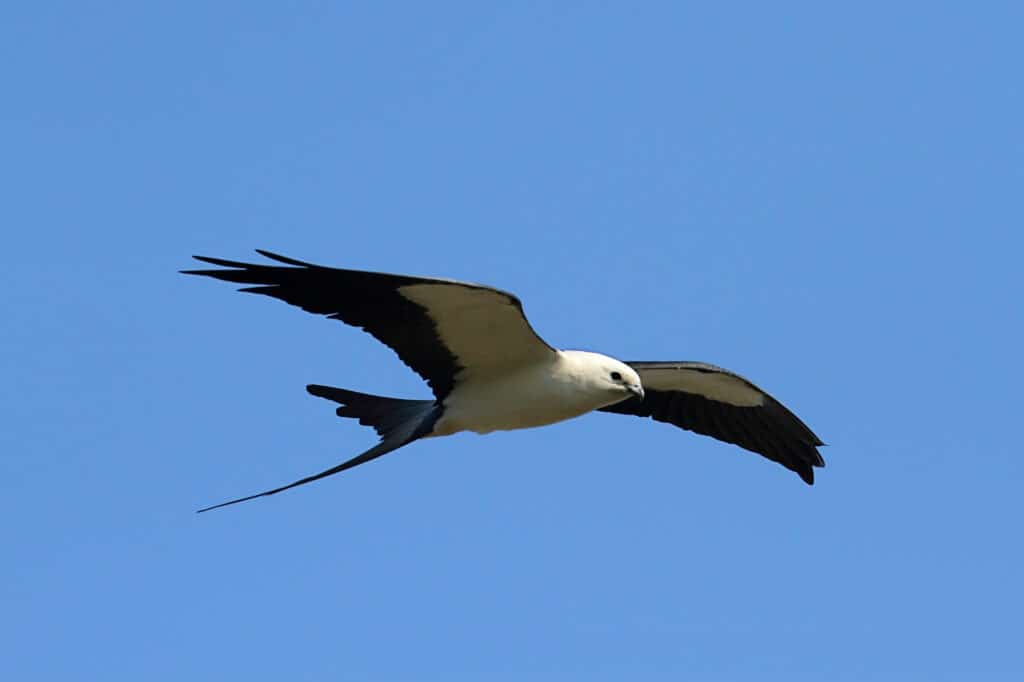
Swallow-tailed kites often eat while flying through the air.
©iStock.com/SteveByland
The swallow-tailed kite (Elanoides forficatus) is the only species in the Elanoides genus. These birds barely flap their wings, exploiting air currents to glide and soar efficiently. The deep fork in the swallow-tailed kite’s tail allows for outstanding maneuverability. Swallow-tailed kites live in South America year-round but come to Florida during their breeding season.
- Wingspan: 48 inches
- Length: 19-25 inches
- Weight: 13 ounces -1.3 pounds
- Lifespan: Around 6 years
- Florida Range: All of Florida during breeding season
26. Crested Caracara
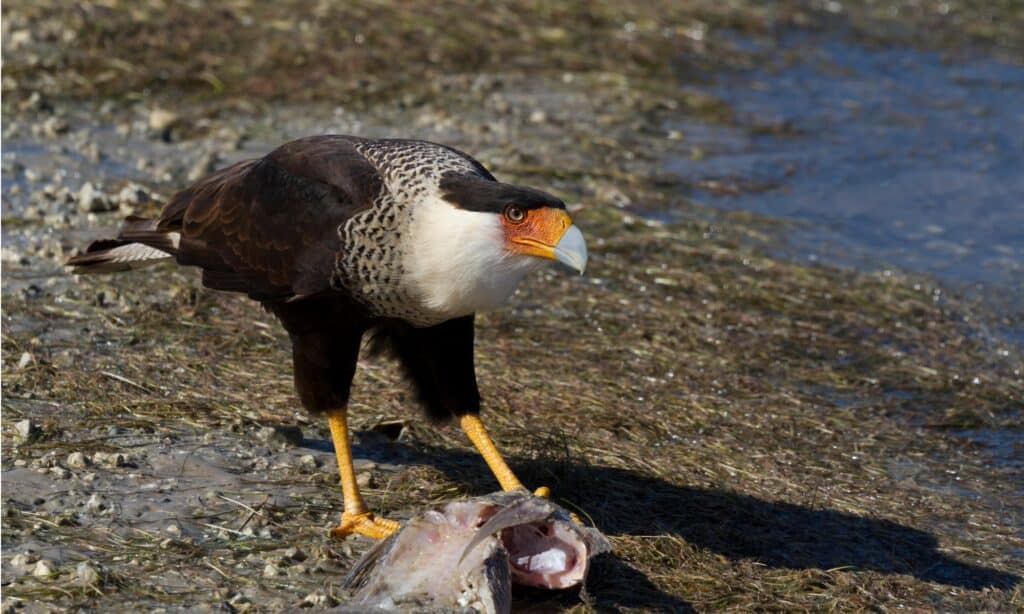
Also known as the Mexican eagle, these are rarely found in the United States.
©iStock.com/Florence and Joseph McGinn
The crested caracara (Caracara plancus) resembles a hawk. These birds of prey are found primarily in South-Central Florida, as well as parts of Texas and Arizona, with their range extending through Mexico, Central America, and South America.
- Wingspan: 48-49 inches
- Length: 19-22 inches
- Weight: 2.3-3.1 pounds
- Lifespan: Over 30 years
- Range: South-Central Florida
25. Caspian Tern
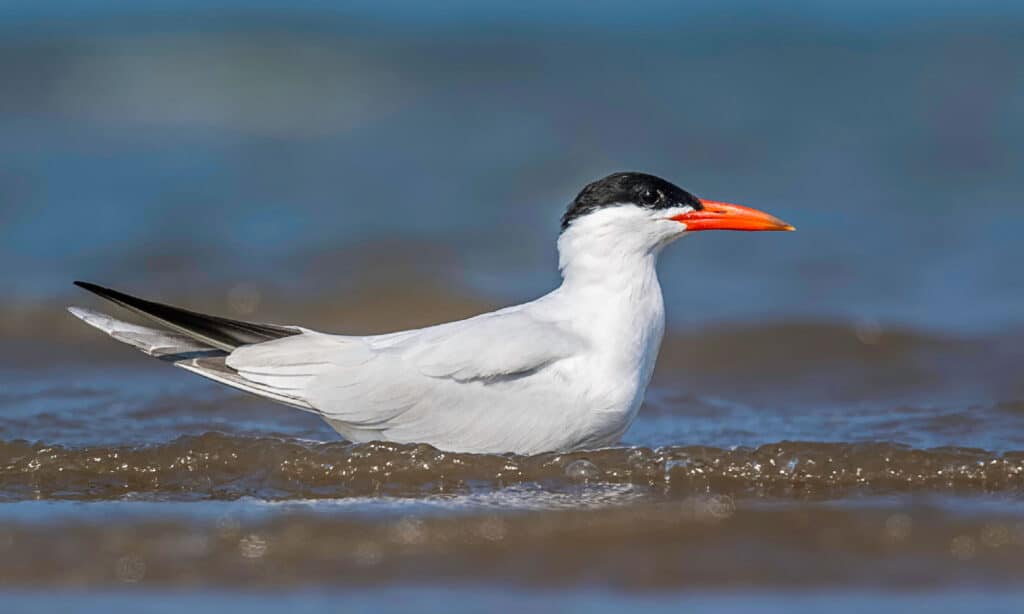
Caspian terns are aggressive during their breeding season.
©Sriram Bird Photographer/Shutterstock.com
The Caspian tern (Hydroprogne caspia) is named after the Caspian Sea, where the first specimen of this species was found. It is an aggressive bird that is protective of its breeding colony, attacking people who get too close. The largest breeding colony is located on the Columbia River in Oregon, which is home to over 6,000 breeding pairs.
- Wingspan: 49-50 inches
- Length: 18-21 inches
- Weight: 1-1.7 pounds
- Lifespan: Around 12 years
- Range: All of Florida at various times of the year
24. Roseate Spoonbill
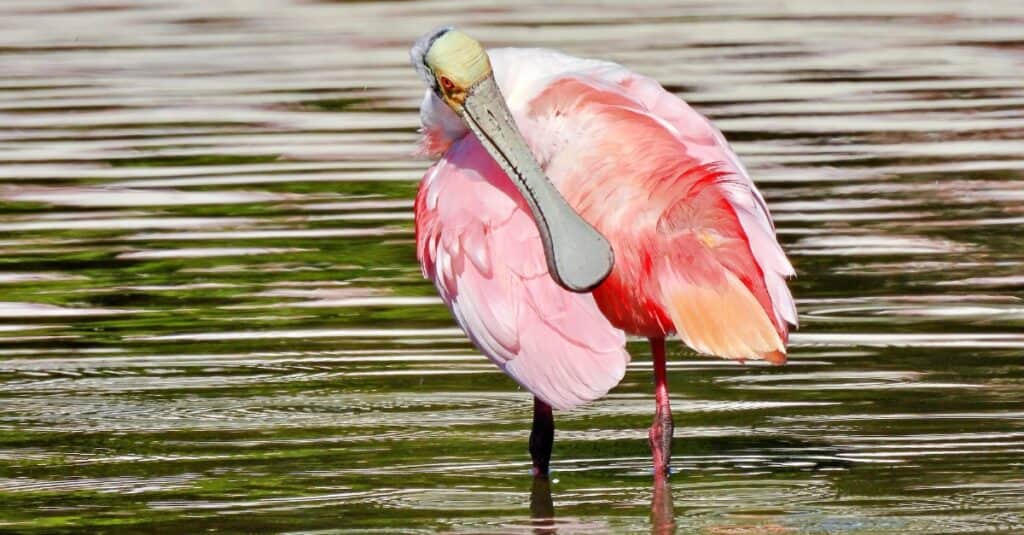
Roseate spoonbills have an unusual bill shape.
©iStock.com/passion4nature
The roseate spoonbill (Platalea ajaja) is the only spoonbill in the Americas. Besides the roseate spoonbill, there are five other spoonbill species, found in Europe, Australia, Asia, and Africa. Their pink plumage is the result of carotenoid pigments they ingest by eating shrimp and other crustaceans.
- Wingspan: 47-51 inches
- Length: 28-34 inches
- Weight: 5.5-13.5 pounds
- Lifespan: 10-15 years
- Range: Year-round in the southern tip of Florida
23. Common Loon
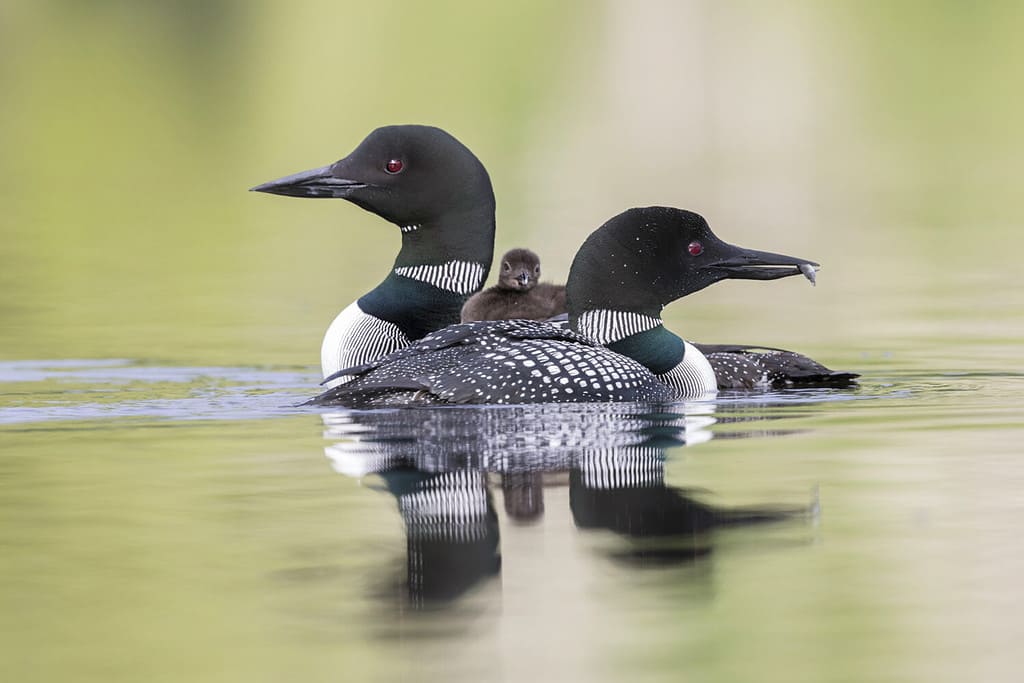
Common loons have unique patterns.
©Brian Lasenby/Shutterstock.com
The common loon (Gavia immer) only comes to shore to nest. They spend most of their time in the water, catching prey and swimming. After spearing or grabbing a fish with its sharp, dagger-like bill, the loon’s rearward-pointing mouth projections, called denticles, and its specialized tongue hold the fish firmly in place. Their plumage changes to the striking black and white seen above during the breeding season and molts to duller greys and browns during the winter.
- Wingspan: 41-51 inches
- Length: 26-35 inches
- Weight: 5.5-13.5 pounds
- Lifespan: Around 25 years
- Range: Migrate to all of Florida
22. Red-Tailed Hawk
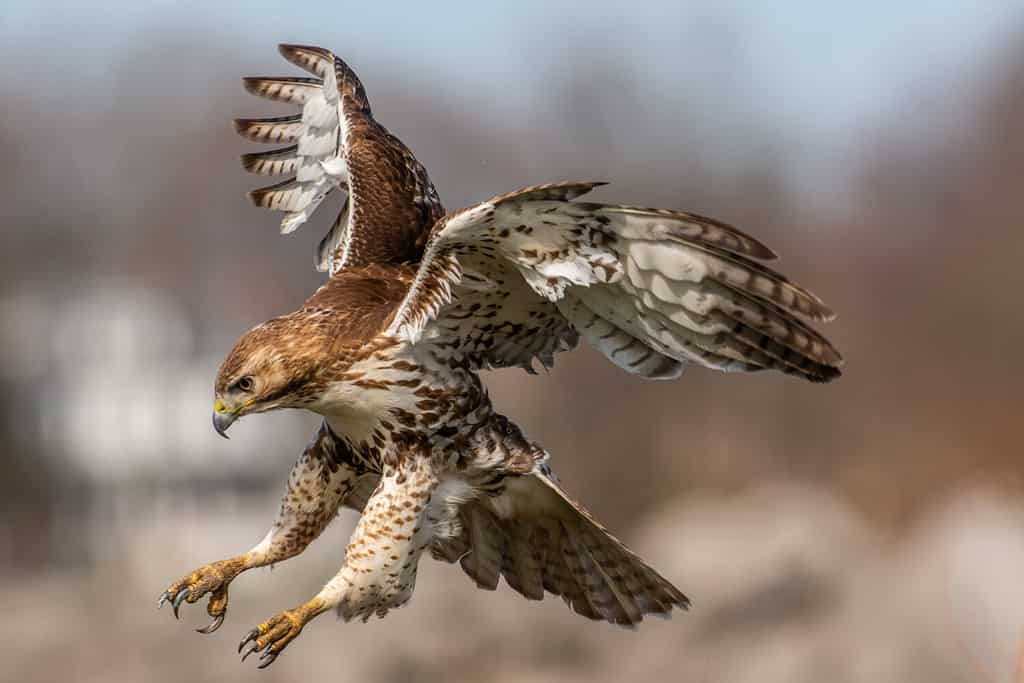
This is the bird responsible for every eagle cry in movies.
©David Brace/Shutterstock.com
The red-tailed hawk (Buteo jamaicensis) is the most common hawk species in North America. Movies often use audio recordings of red-tailed hawks for bald eagle characters’ calls. Red-tailed hawks mate for life, only taking a new mate when their current mate dies.
- Wingspan: 45-52 inches
- Length: 17-25 inches
- Weight: 1.5-3.1 pounds
- Lifespan: Around 20 years
- Range: All of Florida year-round
21. Wild Turkey
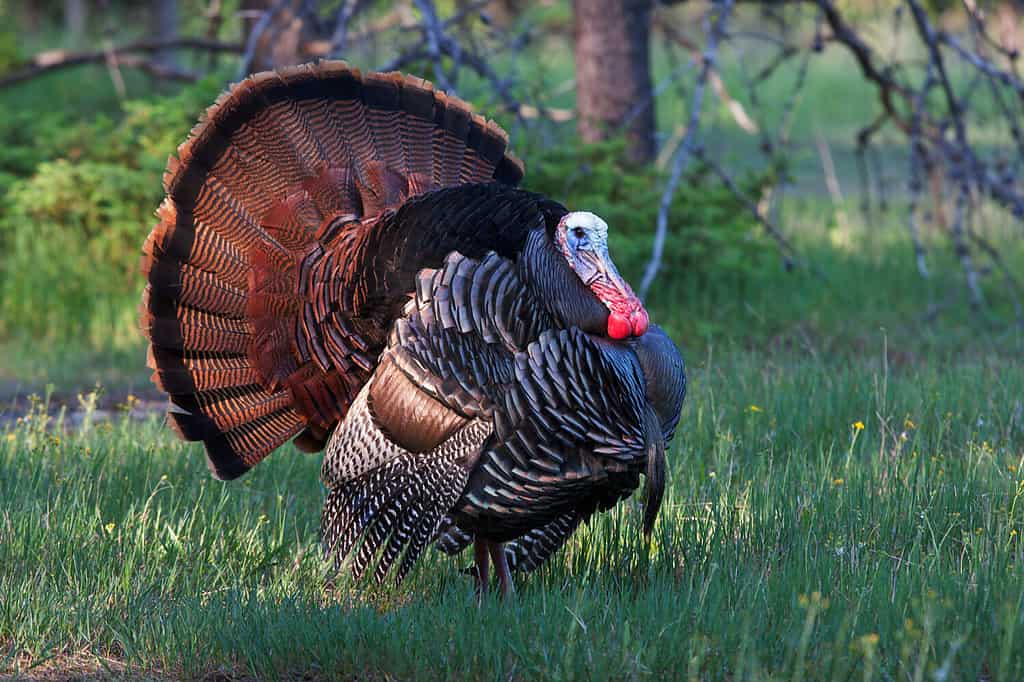
Wild turkeys are a common sight in the woods, often seen strutting around.
©Jim Cumming/Shutterstock.com
Also known as the Eastern turkey (Meleagris gallopavo), the wild turkey is one of two domesticated birds native to the Americas, along with the Muscovy duck (Cairina moschata). Interestingly, wild turkeys were not domesticated in the United States. They were discovered in Mexico by Europeans and domesticated there before being brought back to North America.
- Wingspan: 49-56 inches
- Length: 43-45 inches
- Weight: 5.5-23.8 pounds
- Lifespan: 3-5 years
- Range: All of Florida year-round
20. Great Egret
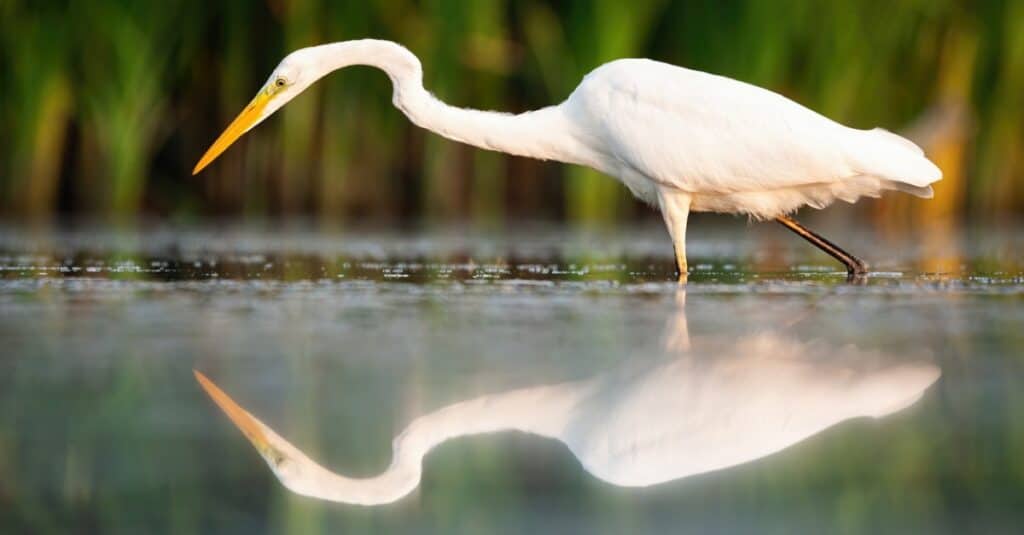
The great egret is elegant, but a little slow.
©WildMedia/Shutterstock.com
The great egret (Ardea alba) is a large, white wading bird found in wetlands across the Americas, Europe, Africa, and Asia. Once hunted to near-extinction for its elegant plumes, the species has made a significant recovery due to conservation efforts. As a result of their resurgence, these birds have become the symbol of the National Audubon Society.
- Wingspan: 51-57 inches
- Length: 37-41 inches
- Weight: 2.1 pounds
- Lifespan: Around 15 years
- Range: All of Florida year-round
19. Great Horned Owl
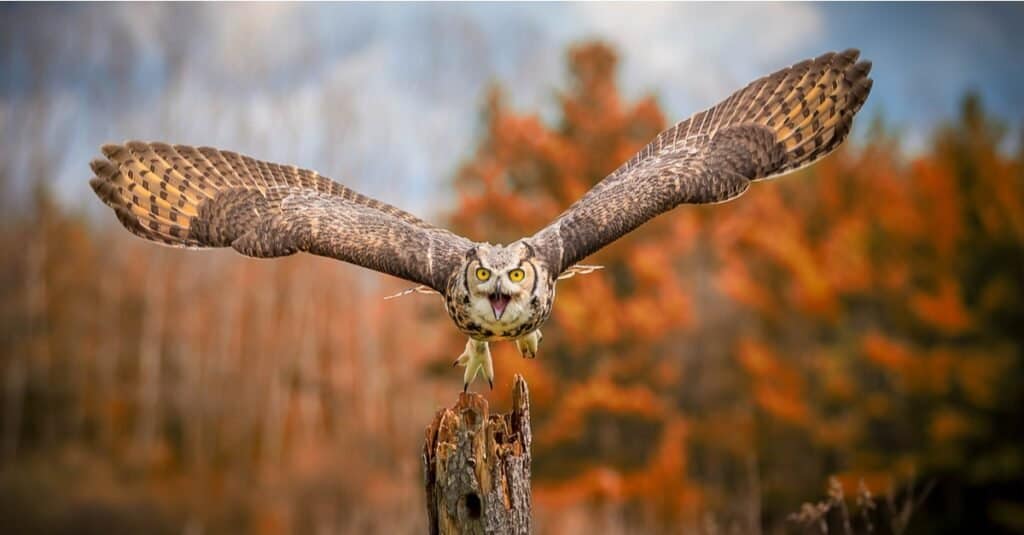
A great horned owl will fight almost anything.
©Imran Ashraf/Shutterstock.com
The great horned owl (Bubo virginianus) is a fierce predator, taking on birds larger than themselves, such as ospreys. Great horned owls also fight and eat other owls and falcons. However, they typically hunt smaller prey, including mice, frogs, and scorpions.
- Wingspan: 39-57 inches
- Length: 18-24 inches
- Weight: 2-5.5 pounds
- Lifespan: 20-30 years
- Range: All of Florida year-round
18. Herring Gull
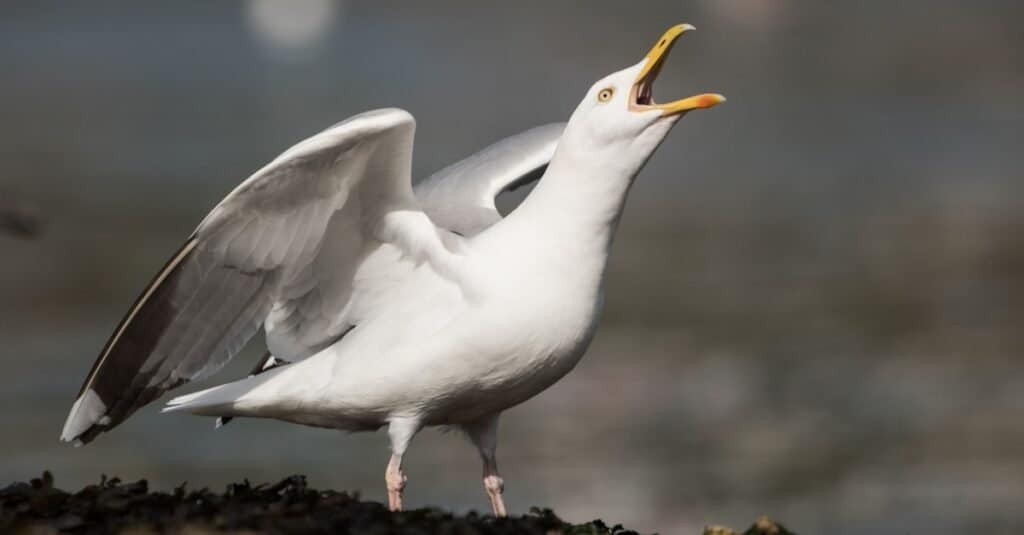
The boldness of the herring gull, together with its sharp beak, makes them potentially very dangerous.
©Maciej Olszewski/Shutterstock.com
Herring gulls (Larus argentatus) are large, opportunistic seabirds found globally. They are known for their adaptable diet, including seafood, invertebrates, and human food waste, as well as their raucous social behaviors like stealing food and aggressive territorial disputes. They nest in colonies and are characterized by their pink legs, yellow bill, and distinctive calls.
- Wingspan: 54-57 inches
- Length: 22-26 inches
- Weight: 1.75-2.75 pounds
- Lifespan: 40-50 years
- Range: All of Florida for winter
17. Black Vulture
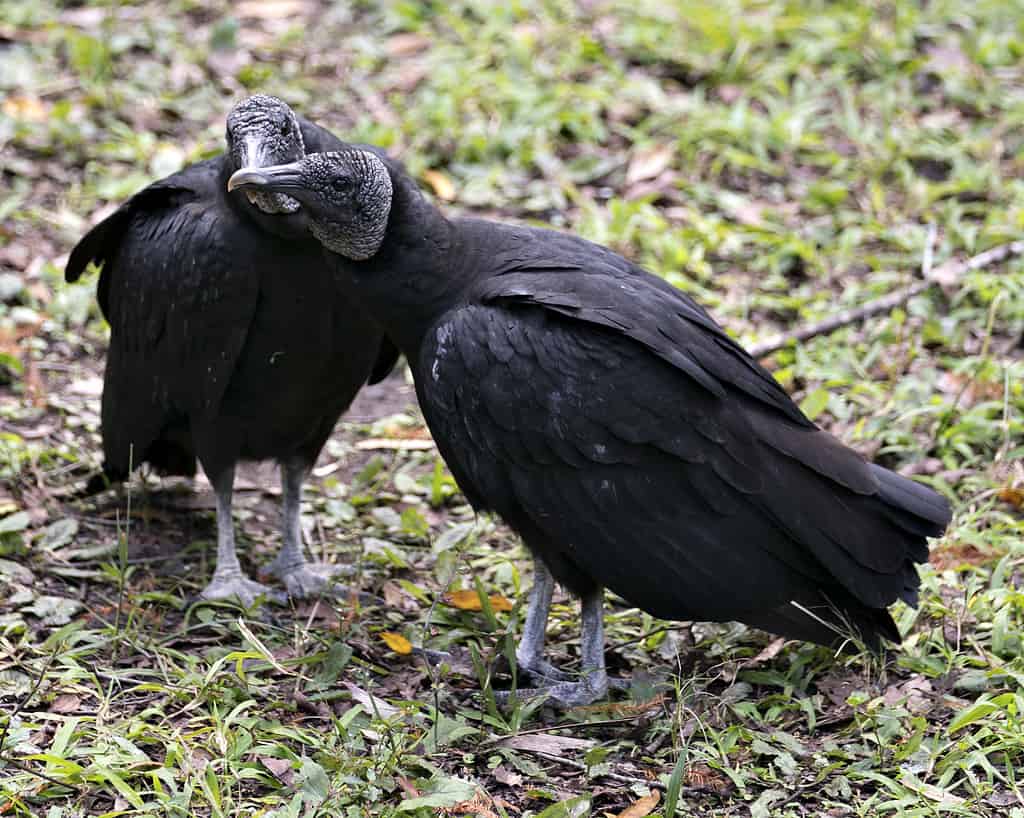
These vultures will sometimes stay with their mate for several years.
©iStock.com/Rejean Bedard
Black vultures (Coragyps atratus) are highly social and abundant scavengers found across the Americas. Often seen traveling in flocks, these birds play a critical role in the ecosystem by consuming carrion, or dead animals, which helps prevent the spread of disease. Black vultures will reuse successful mating sites, and both parents take turns incubating the eggs.
- Wingspan: 53-59 inches
- Length: 23-26 inches
- Weight: 3.5-4.8 pounds
- Lifespan: Around 20 years
- Range: All of Florida year-round
16. Masked Booby
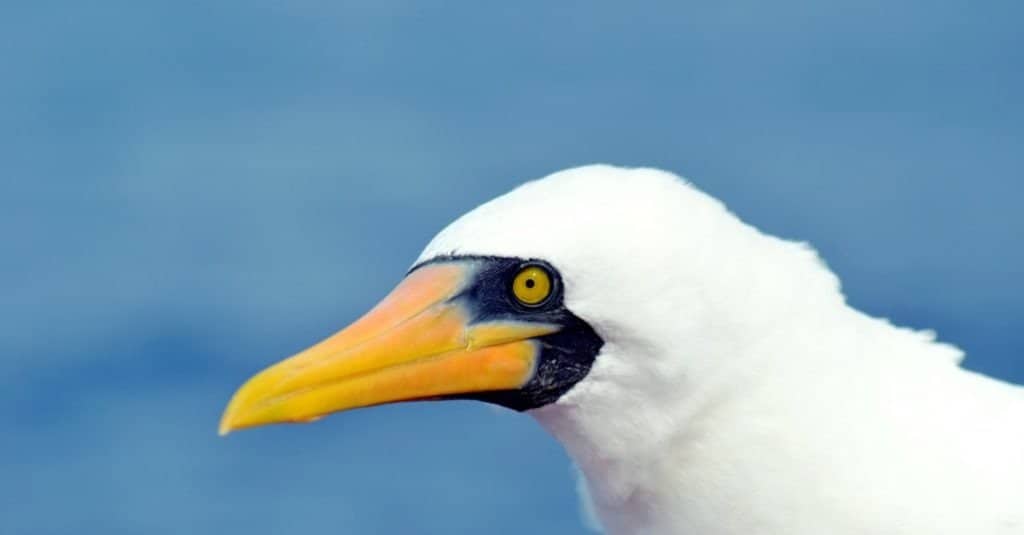
A masked booby may dance silly, but it is still a great hunter.
©Mariusz Bugno/Shutterstock.com
The masked booby (Sula Dactylatra) is a large, striking seabird predominantly white with a black tail and wing edges, a yellow bill and eyes, and a dark facial mask. The largest of the booby species, it has a streamlined body and long wings that splay at the tips in flight. Found in tropical oceans worldwide, it feeds on flying fish and other prey, plunging to catch them.
- Wingspan: 63 inches
- Length: 29-34 inches
- Weight: 2.8-5.1 pounds
- Lifespan: Up to 25 years
- Range: Over the water on the tip of South Florida
15. Great Black-Backed Gull
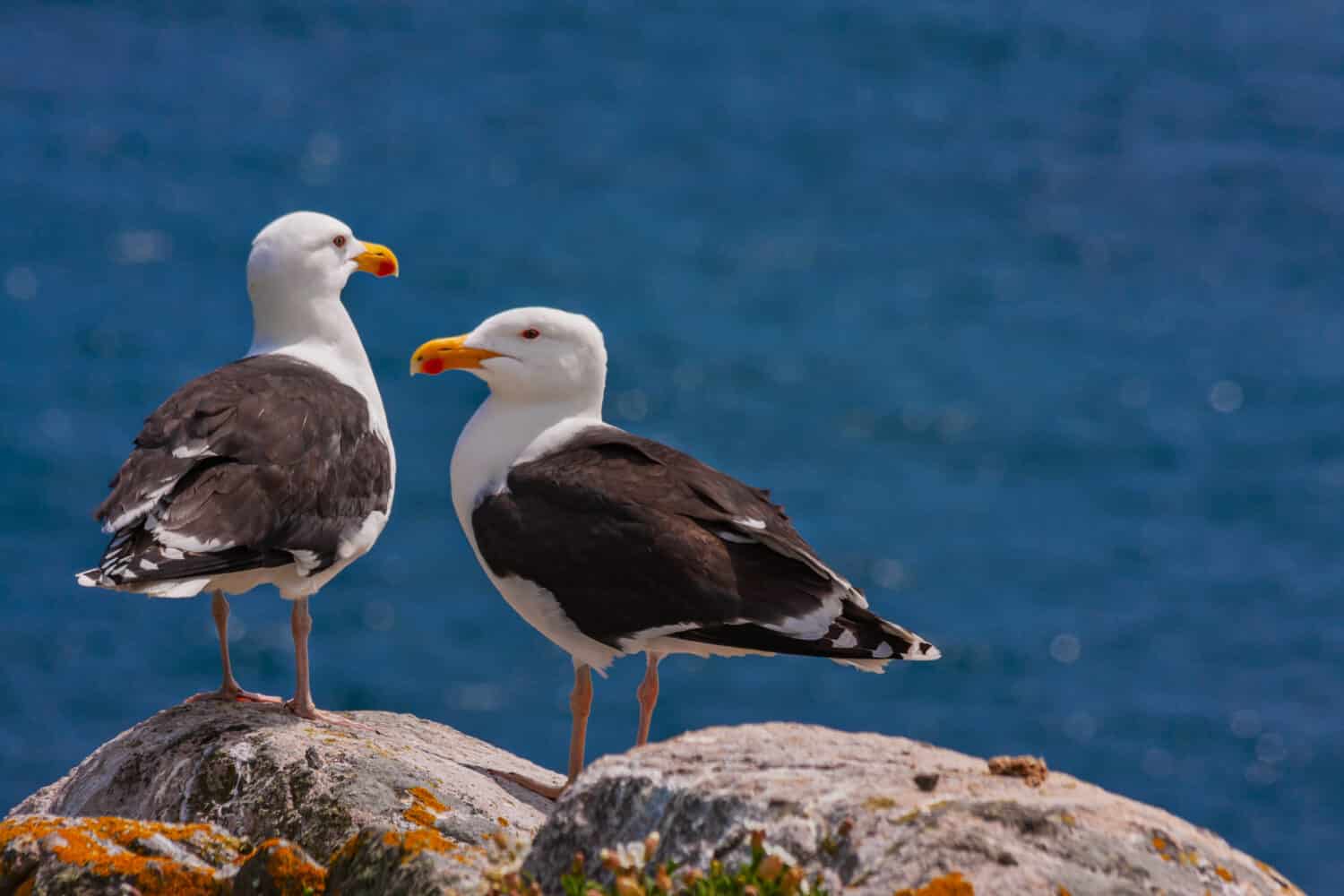
These gulls are a bit larger than other gulls one might come across.
©Nicola_K_photos/Shutterstock.com
The great black-backed gull (Larus marinus) is considered to be the largest gull in the world. They harass other birds and steal their food. While most gulls are rather small, this species makes it onto the list of the largest flying birds in Florida.
- Wingspan: 57-63 inches
- Length: 28-31 inches
- Weight: 2.8-4.3 pounds
- Lifespan: 10-25 years
- Range: Along the Northeastern Coast of Florida
14. Flamingo
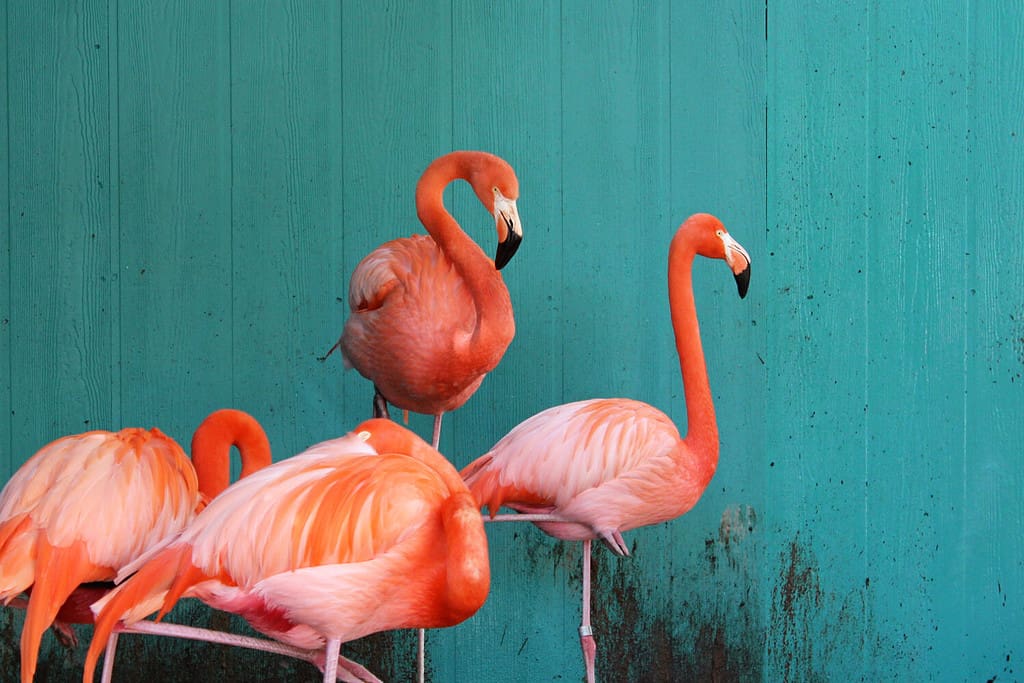
©Jckfreder/Shutterstock.com
The American Flamingo (Phoenicopterus ruber) is the only species of flamingo found in Florida. It is considered a native species, though it was nearly extirpated by the early 20th century. These large, pink-hued birds can be found primarily in the Everglades, Biscayne Bay, and the Florida Keys.
- Wingspan: 55-65 inches
- Length: 47-57 inches
- Weight: 4-8 pounds
- Lifespan: 25-44 years
- Range: Southern Florida
13. Canada Goose
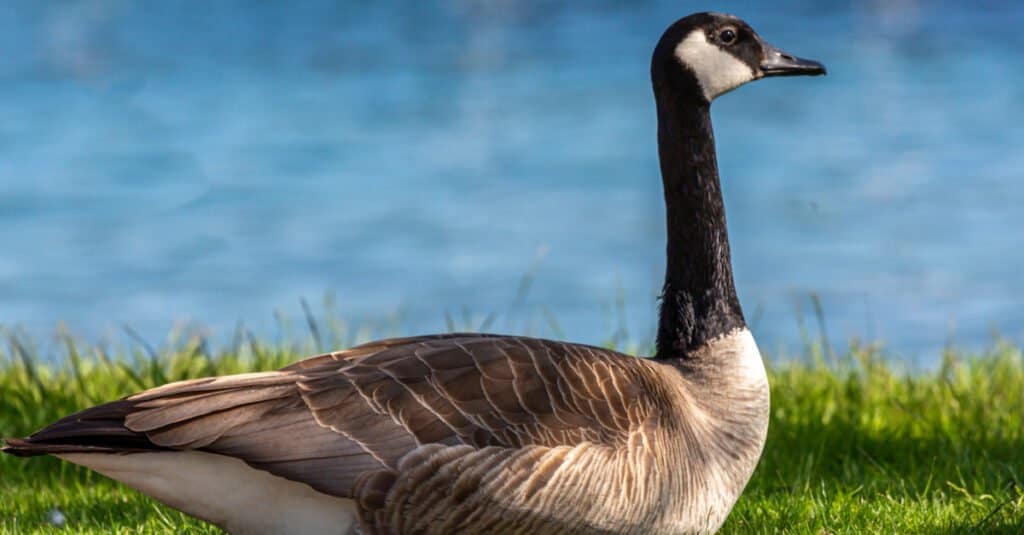
The Canada goose eats the blade, stem, and roots of the grass.
©David McIntosh/Shutterstock.com
Canada geese (Branta canadensis) are large, North American waterfowl easily identified by their black heads and necks with distinctive white cheek patches. They are terrestrial grazers that prefer short grassy areas near water. Canada geese are primarily winter visitors in Florida, though a few small, localized non-migratory populations exist in the state.
- Wingspan: 50-67 inches
- Length: 30-43 inches
- Weight: 6.5-19.8 pounds
- Lifespan: 10-24 years
- Range: North-Central Florida
12. Wood Stork
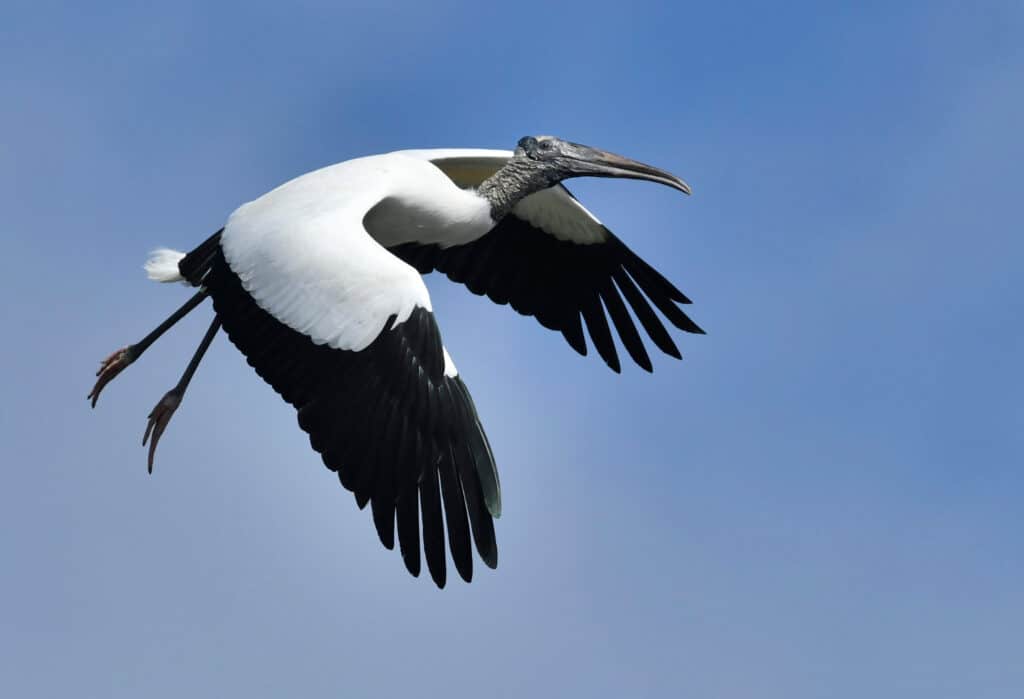
Wood storks are huge birds with an impressive wingspan.
©Breck P Kent/Shutterstock.com
The wood stork (Mycteria americana), North America’s only native stork, is a large, long-legged, white wading bird with black wingtips and a distinctive bald, gray head and thick, black bill. These wading birds use their bill for a specialized feeding method called groping, which involves fishing in shallow wetlands. They are colonial nesters, forming large rookeries in cypress swamps and mangroves.
- Wingspan: 59-69 inches
- Length: 33-45 inches
- Weight: 4.5-7.3 pounds
- Lifespan: Up to 22 years
- Range: All of Florida at various times of the year
11. Turkey Vulture
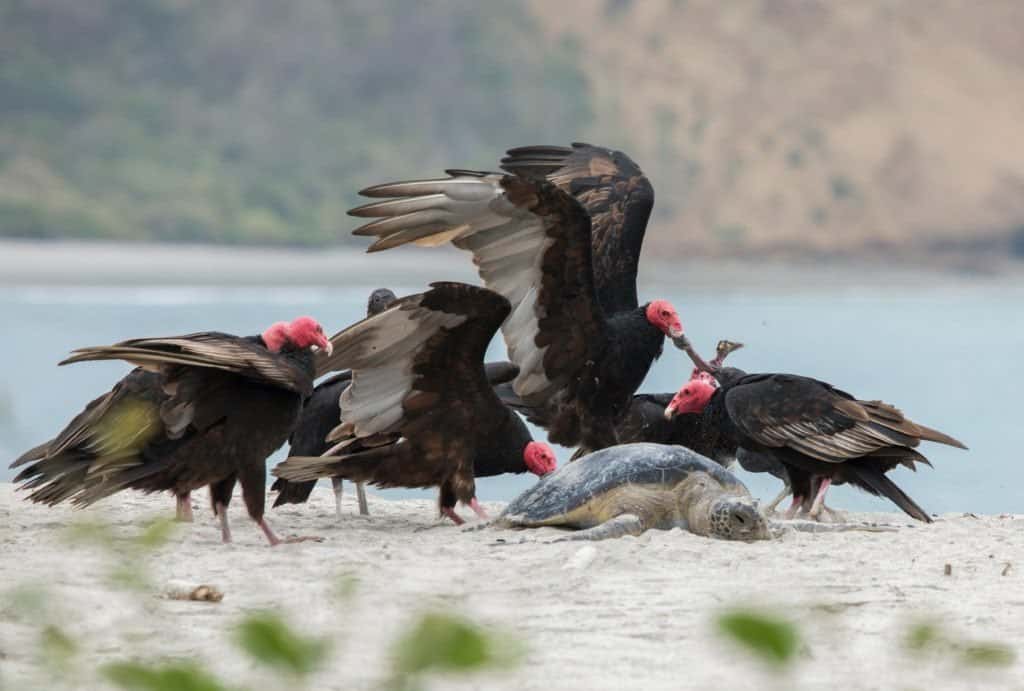
Because of their bright red heads, turkey vultures are easily recognizable.
©Ana Dracaena/Shutterstock.com
Turkey vultures (Cathartes aura) are scavengers that are easily identified by their red heads, soaring V-shaped wings, and black body feathers with grayish undersides. They are typically found in open and semi-open habitats, including forests, wetlands, and urban areas. Turkey vultures are social birds that gather in groups, called committees, at communal roosts and feeding sites like landfills.
- Wingspan: 67-70 inches
- Length: 24-32 inches
- Weight: 4.3 pounds
- Lifespan: Up to 16 years
- Range: Year-round throughout all of Florida
10. Northern Gannet
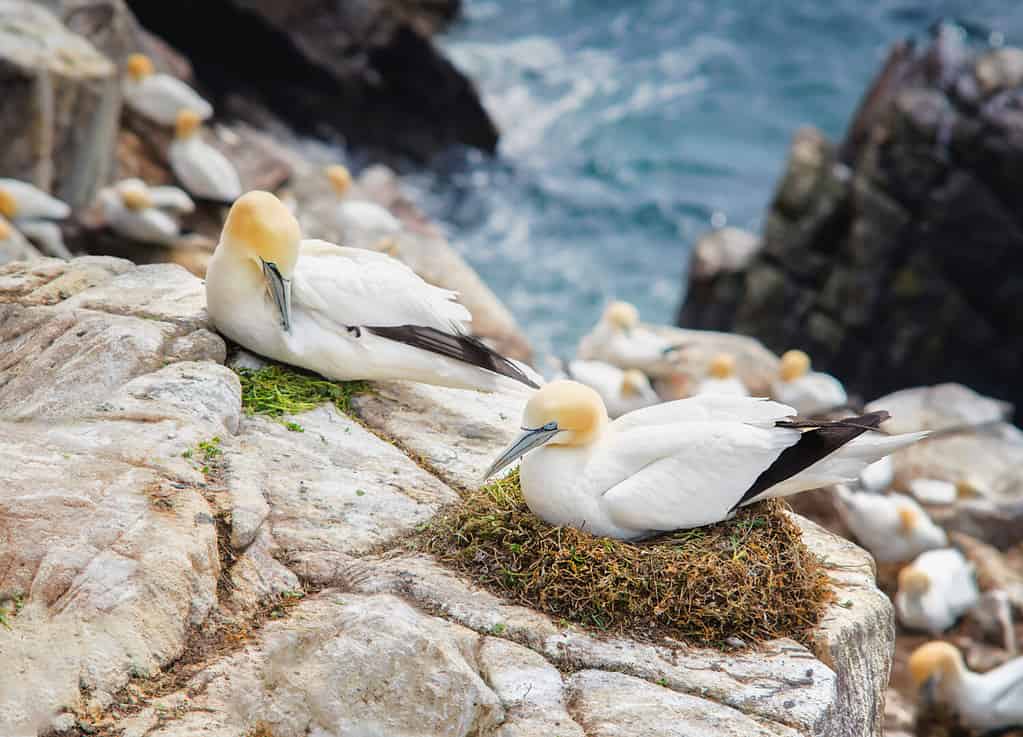
The Northern gannet has excellent vision.
©Algirdas Gelazius/Shutterstock.com
Gannets (Morus bassanus) are primarily winter visitors to Florida’s Atlantic and Gulf waters, especially offshore and near the panhandle. These birds are long-distance migrants, traveling from their North Atlantic breeding grounds to the warm waters of Florida and the Gulf for the winter. Gannets are large, powerful seabirds that hunt by high-speed, streamlined plunge-diving for fish and squid.
- Wingspan: 71 inches
- Length: 36-43 inches
- Weight: 5.4-7.9 pounds
- Lifespan: 17-37 years old
- Range: All along the coast of Florida
9. Osprey
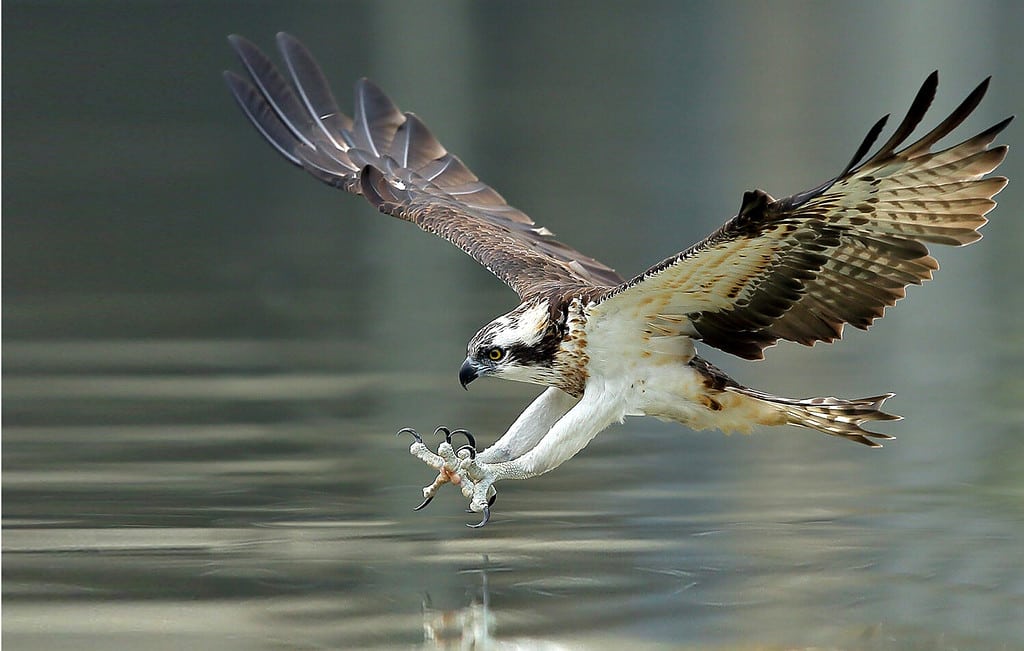
The osprey is an accurate and elegant hunter.
©Wang LiQiang/Shutterstock.com
Osprey (Pandion haliaetus), also called fish hawks, are year-round residents in Florida. They have a dark brown upper body, white underside, and distinctive black eye band. They are exceptional fish-catchers, using sharp talons to grab prey from shallow waters, and they build large stick nests in trees or on man-made structures near water. he rebound of the osprey population is a conservation success story; they once suffered declines due to DDT pollution, which thinned their eggshells, resulting in failed breeding.
- Wingspan: 59-71 inches
- Length: 21-22 inches
- Weight: 3-4.3 pounds
- Lifespan: 15-20 years
- Range: Almost all of Florida
8. Sandhill Cranes
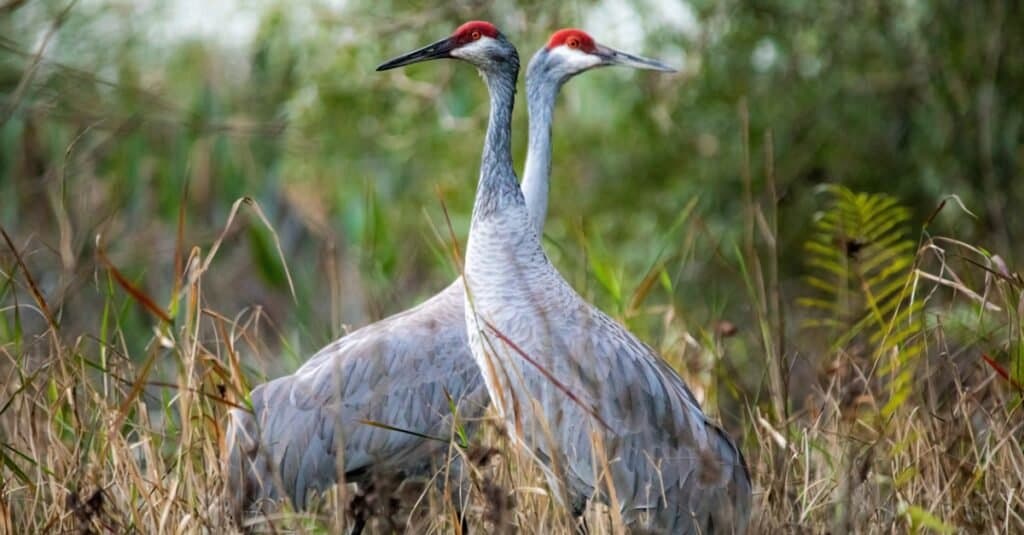
Sandhill cranes are often seen wandering through people’s yards in Florida..
©iStock.com/GummyBone
Sandhill cranes (Antigone canadensis) are a non-migratory subspecies inhabiting Florida’s freshwater marshes, prairies, and pastures. They are known for their long legs, gray bodies, and rattling calls. Sandhill cranes are omnivores, foraging on plants and animals. They nest in shallow water, mate for life, and raise one brood per year.
- Wingspan: 78 inches
- Length: 47 inches
- Weight: 7.5-10.75 pounds
- Lifespan: 20-30 years
- Range: All of Florida except the panhandle
7. Brown Pelican
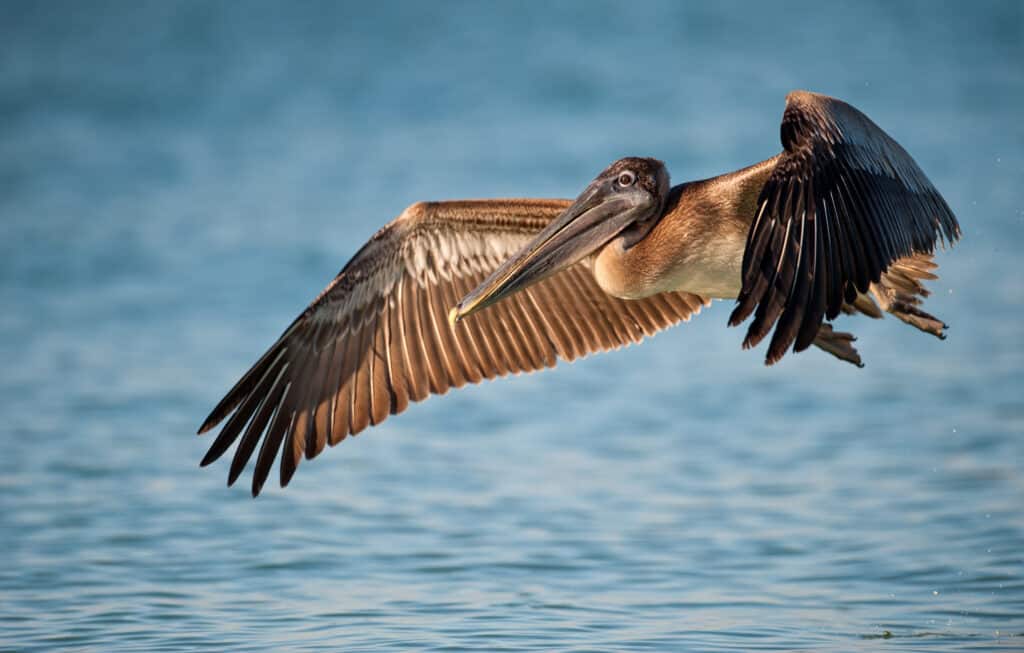
Even though they only rank 8th on the list, brown pelicans have a wide wingspan.
©Nagel Photography/Shutterstock.com
Brown pelicans (Pelecanus occidentalis) are year-round residents along Florida’s coastlines, identifiable by their large size, long bills with a throat pouch, and distinctive plunge-diving hunting technique for fish. Once endangered by pesticide pollution, their populations have recovered, although they continue to face threats from entanglement in fishing gear.
- Wingspan: 78 inches
- Length: 39-54 inches
- Weight: 4.3-11 pounds
- Lifespan: Over 20 years
- Range: Found year-round along the coasts of Florida
6. Great Blue Heron
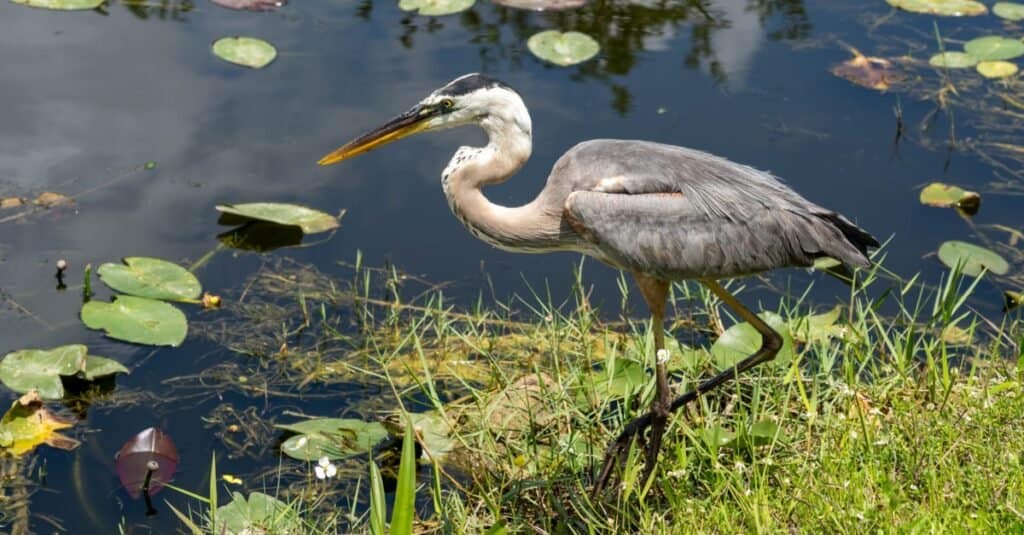
A great blue heron fishing in the Everglades.
©ttomasek15/Shutterstock.com
Great blue herons (Ardea herodias) are beautiful and elegant birds with a blue hue, as the name suggests. These wading birds are found throughout Florida in various aquatic habitats, including freshwater and saltwater marshes, swamps, rivers, estuaries, lakes, and coastal areas, as well as grasslands and fields. There is a white variation of this species, known as the great white heron, found in Southern Florida.
- Wingspan: 65-79 inches
- Length: 38-54 inches
- Weight: 4.4-5.5 pounds
- Lifespan: 15-23 years
- Range: All of Florida, year-round
5. Bald Eagle
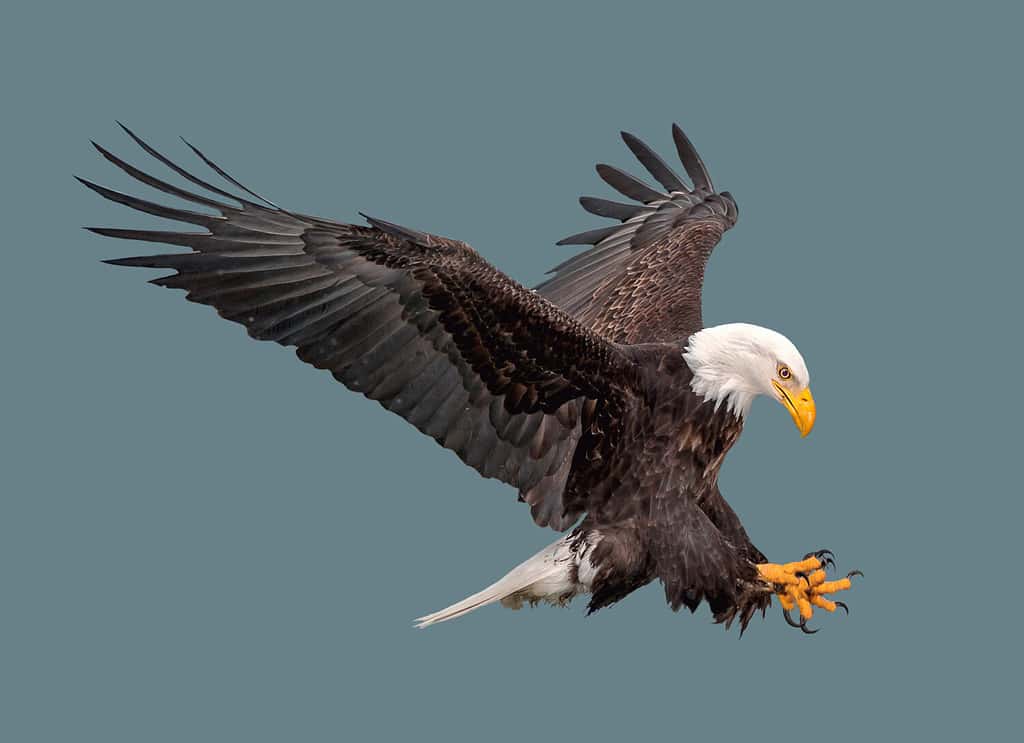
Bald eagles are an iconic symbol of the United States.
©PHOTOOBJECT/Shutterstock.com
The bald eagle (Haliaeetus leucocephalus) is the national bird of the United States. These majestic birds also have a long history as spiritual creatures, regarded by Indigenous Americans as divine messengers.
- Wingspan: 80 inches
- Length: 28-37 inches
- Weight: 6.5-13.8 pounds
- Lifespan: 15-25 years
- Range: Found year-round in all parts of Florida
4. Golden Eagle
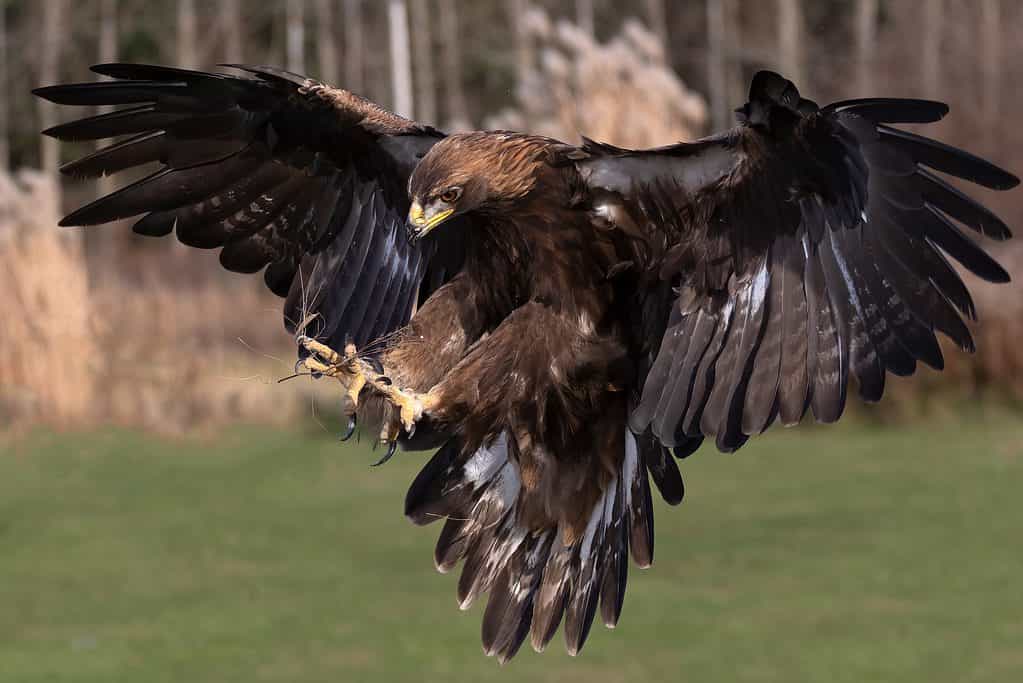
The national bird of many countries, golden eagles are migratory visitors to Florida’s panhandle.
©Touched by light images/Shutterstock.com
Golden eagles (Aquila chrysaetos) are very rare in Florida, appearing primarily during the winter months along the Northern Panhandle as migratory visitors rather than residents. Key features for identification include dark brown plumage, a golden nape, feathered legs extending to the toes, and a larger, black-tipped beak.
- Wingspan: 72-86 inches
- Length: 27-33 inches
- Weight: 6.5-13.5 pounds
- Lifespan: 30 years or more
- Range: The panhandle during non-breeding season
3. Magnificent Frigatebird
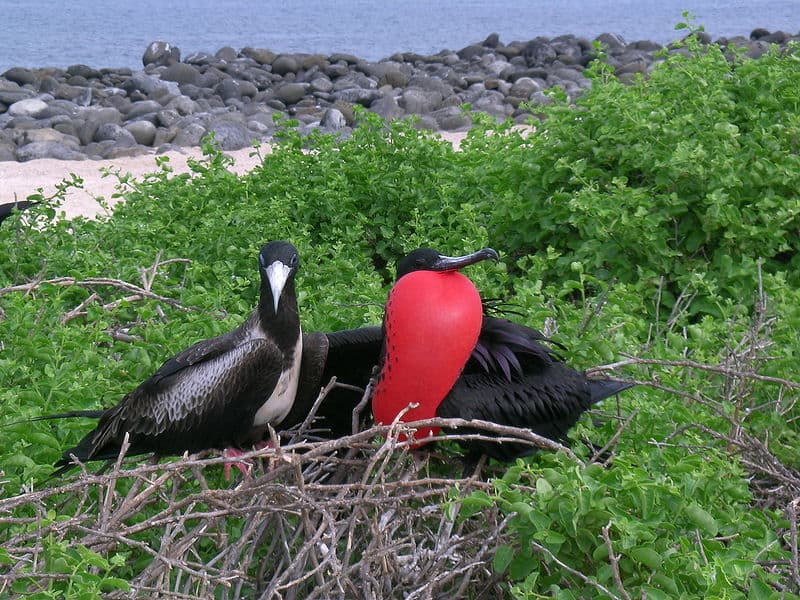 These birds live up to their name with their bright red throats.
The magnificent frigatebird (Fregata magnificens) is often spotted at Florida beaches, especially during the summer. Sightings are most common in the Florida Keys, particularly around the Dry Tortugas, which is where their U.S. breeding colonies are located.
- Wingspan: 85-88 inches
- Length: 35-45 inches
- Weight: 2-4 pounds
- Lifespan: Up to 34 years
- Range: The tip of Florida and around the coasts
2. Whooping Crane
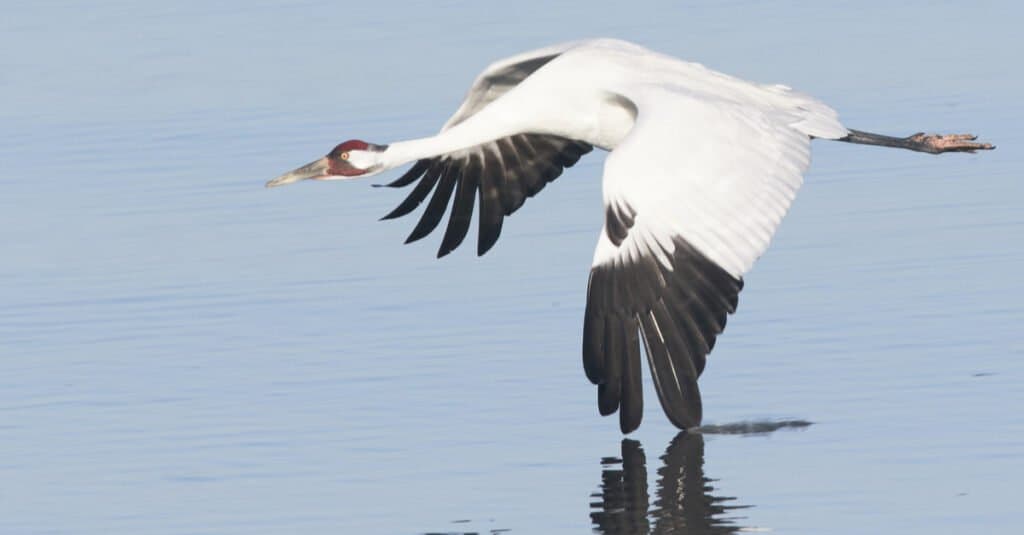
Whooping cranes are among the largest bird in Florida.
©Kent Ellington/Shutterstock.com
The whooping crane (Grus americana) is an amazing story of survival. Back in the 1940s, there were only 20 members of the species left. Thanks to various captive breeding and wetland management initiatives, the number is over 600 today.
- Wingspan: 90 inches
- Length: 59 inches
- Weight: 13-17 pounds
- Lifespan: 22-40 years
- Range: Central and Northern Florida
1. American White Pelican
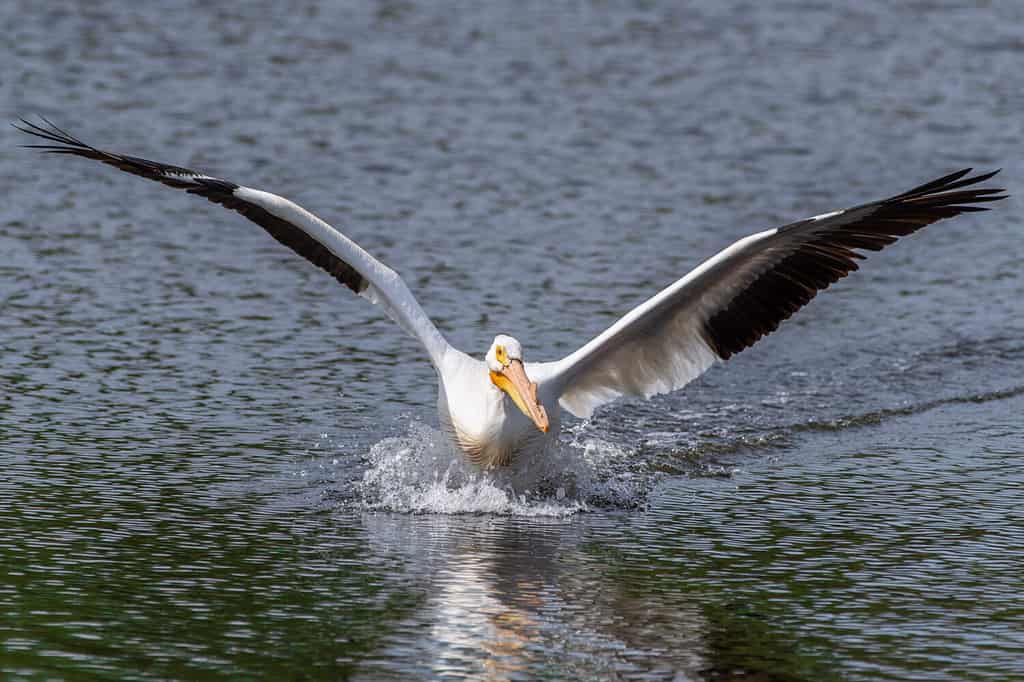
The American white pelican is certainly a sight to see on the water.
©Mike Lynds/Shutterstock.com
The American white pelican (Pelecanus erythrorhynchos) is the largest flying bird in Florida, with a wingspan that can reach over 100 inches. It is a common winter visitor, easily spotted in large flocks on freshwater lakes and ponds from November to January. These birds migrate from their northern breeding grounds to Florida’s Gulf Coast for the winter, feeding cooperatively by scooping fish from the water’s surface with their large bills and pouches.
- Wingspan: 96-114 inches
- Length: 50-65 inches
- Weight: 9.8-19.8 pounds
- Lifespan: 16-30 years
- Range: All of Florida in the winter months