
Quick Take
- The 'howdy' method zoos use to introduce strange animals sounds casual, but a closer look at the details reveals just how precisely controlled and high-stakes it actually is. See the howdy process →
- Eve keeps clinging to Romina for comfort, even though Romina is far too young to fill the role Eve needs. The reason why exposes something heartbreaking about the spider monkeys' childhoods. Understand Eve's attachment →
- Being rescued doesn't mean these monkeys can ever return to the wild, and the explanation for why reveals how much a spider monkey's survival depends on one irreplaceable teacher. Why they can't return →
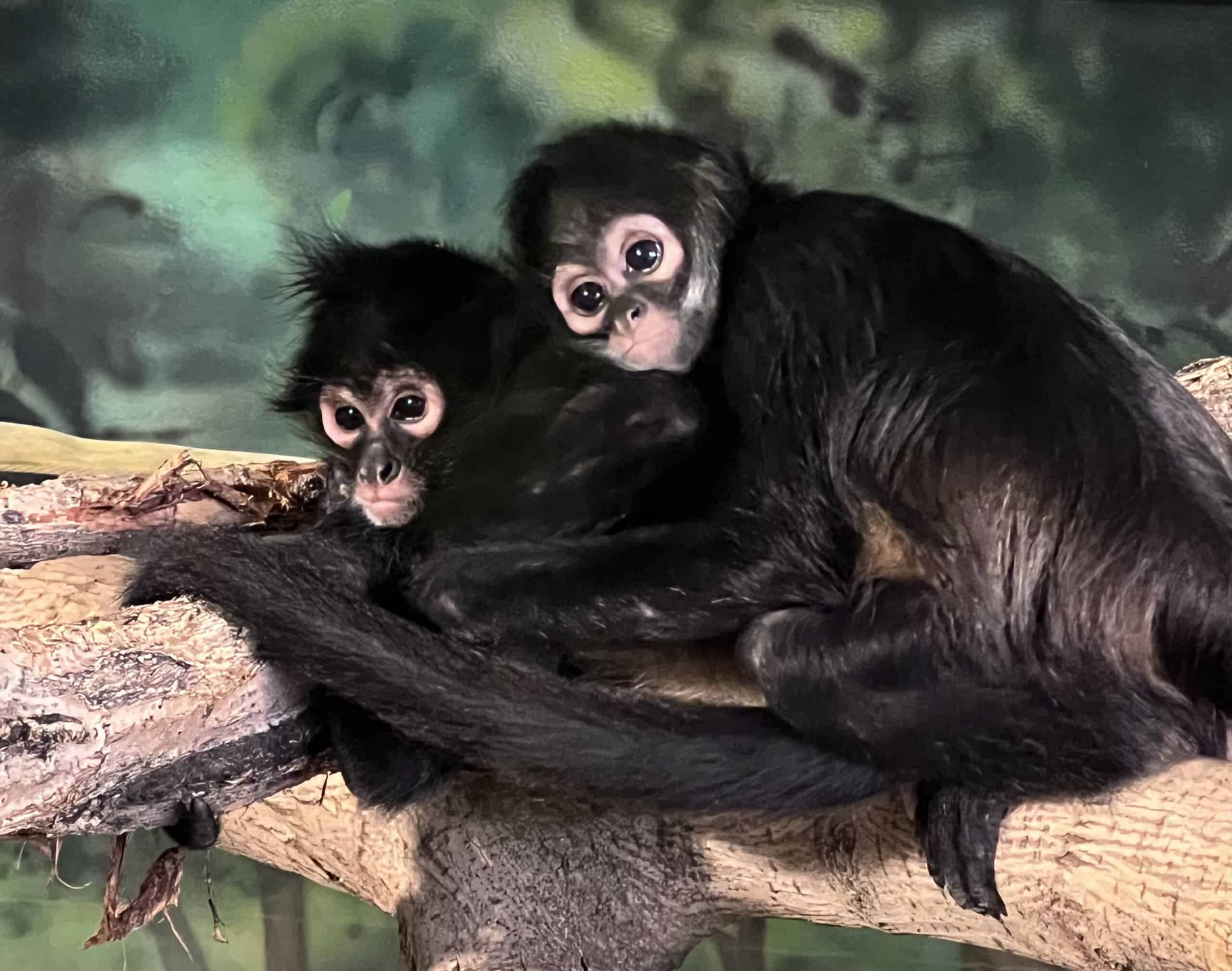
Utah’s Hogle Zoo is providing a home to two young female spider monkeys rescued from wildlife trafficking. Named Romina and Eve, the confiscated animals require specialized care. Only one and two years old, the monkeys cannot survive in the wild on their own without their mothers.
Thankfully, Romina and Eve are settling into their new home at Hogle Zoo. We spoke with Hannah Comstock, Animal Care Supervisor at Utah’s Hogle Zoo, about the special rescue mission. Learn all about the monkeys’ forever home and acclimation to their new space.
Hogle Zoo’s Spider Monkey Rescue Mission
According to Comstock, the United States Fish and Wildlife Service law enforcement confiscated Eve and Romina at the border. The monkeys were initially taken from their natural habitat as part of wildlife trafficking. Unfortunately, the growing demand for young spider monkeys makes them especially vulnerable.
“Romina and Eve moved to Salt Lake from Gladys Porter Zoo in Brownsville, Texas, through the Association of Zoos and Aquariums (AZA) Spider Monkey Species Survival Plan (SSP) and the Wildlife Confiscation Network, which helps place confiscated animals with organizations that can meet their specialized care needs,” Comstock explains.
Once the monkeys arrived at Hogle Zoo, their care team quarantined them in the zoo’s animal hospital before moving them to their Primate Forest building. Eventually, they were gradually introduced to the zoo’s existing monkeys, Ebony and Lemon.
“Throughout their quarantine, they were learning the habitats, and they could see, smell, and hear Lemon and Ebony (Hogle Zoo’s resident spider monkeys),” says Comstock. “During this time, their care team saw some mild interest from both groups towards each other, but mostly neutral responses to one another, which is considered a good sign.”
Spider Monkey Acclimation and Integration
According to Comstock, the process of acclimation and integration depends on the individual animal. However, it’s important for care teams to ensure the animals understand their environment and habitat before meeting resident animals. In the case of Romina and Eve, this involved interpreting the monkeys’ reactions to windows, guests, and other physical elements of their environment.
“The entire process is all about very detailed observations and information sharing with the team, so everyone knows how to accurately interpret behavior,” Comstock says. “Once they acclimated to the area, the keepers were able to move forward with acclimation into the existing group of monkeys: Lemon and Ebony. “
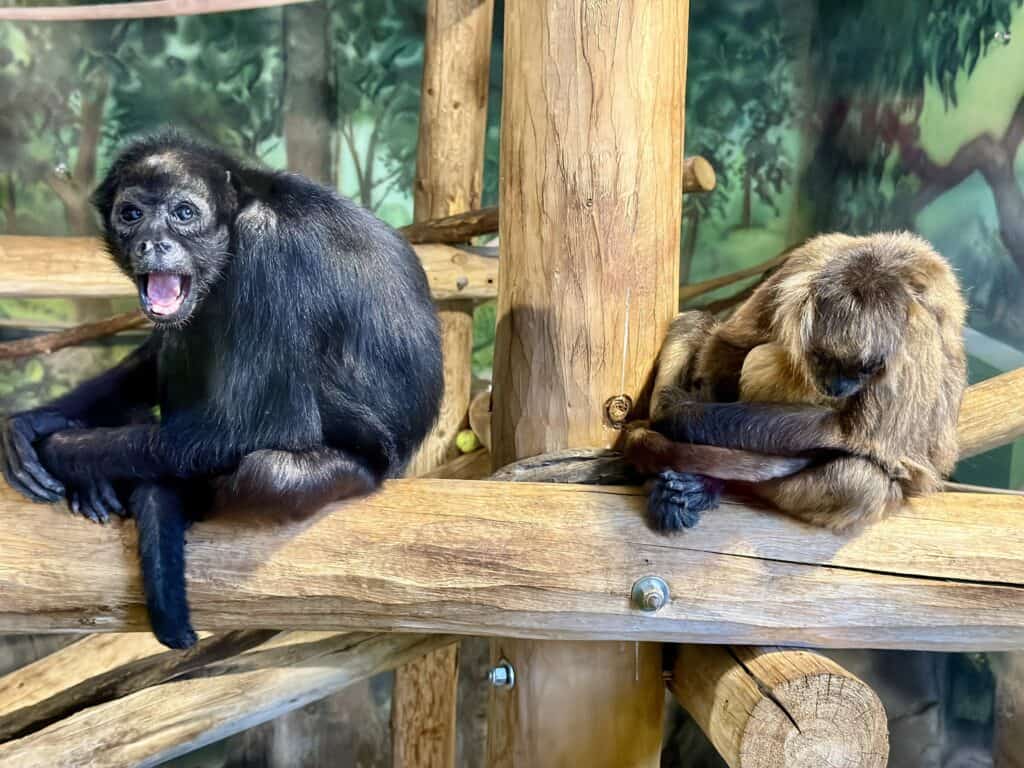
Ebony and Lemon were the existing resident monkeys at Hogle Zoo.
©Hogle Zoo
The care team introduced Romina and Eve to Lemon and Ebony through a process called a “howdy.”
“During these introductions, the monkeys occupy neighboring spaces separated by mesh,” Comstock explains. “At this point, they can not only see, smell, and hear each other, but they can also have physical contact through the mesh with one another while their care team monitors them.”
Thankfully, this introduction process was successful for the monkeys, all of whom showed positive behavior signs.
“More recently, the four monkeys began sharing indoor spaces and have been interacting positively,” Comstock shares. “Their care team will continue to let the monkeys’ behavior and social cues guide the next steps as the group gets to know one another.”
More recently, the four monkeys began sharing indoor spaces and have been interacting positively.
Hannah Comstock, Animal Care Supervisor at Utah’s Hogle Zoo
Challenges of Separating Infant Primates from Their Mothers
Unfortunately, both Romina and Eve were separated from their mothers at a young age. This greatly impacts their ability—or lack thereof—to survive in the wild.
“Spider monkeys have long childhoods where they learn everything they need to know by watching their mothers and other members of their troop,” says Comstock. “If Eve and Romina had not been trafficked, they would still be very dependent on their mothers. Without them, they are experiencing new things alone without the guidance and comfort they need.”
This is likely why care team members have witnessed Eve cling to Romina, the older of the two. However, spider monkeys often remain with their mothers until they’re up to four years old. Since Romina is still only around two years old, she cannot step in as a substitute for Eve’s mother.
“While Romina is pretty tolerant of Eve clinging to her, she struggles to move around well with Eve and oftentimes just wants to go play and explore,” says Comstock. “It’s at these moments where it is very apparent they should be with their mothers still.”
The Spider Monkeys’ Forever Home at Hogle Zoo
From their mothers, spider monkeys learn what foods to eat/avoid, how to be part of a troop, how to navigate their environment, how to avoid predators, and other important survival lessons, Comstock explains. Romina and Eve’s separation from their mothers has impacted their ability to survive in the wild. As a result, they’ll spend their lives at Hogle Zoo.
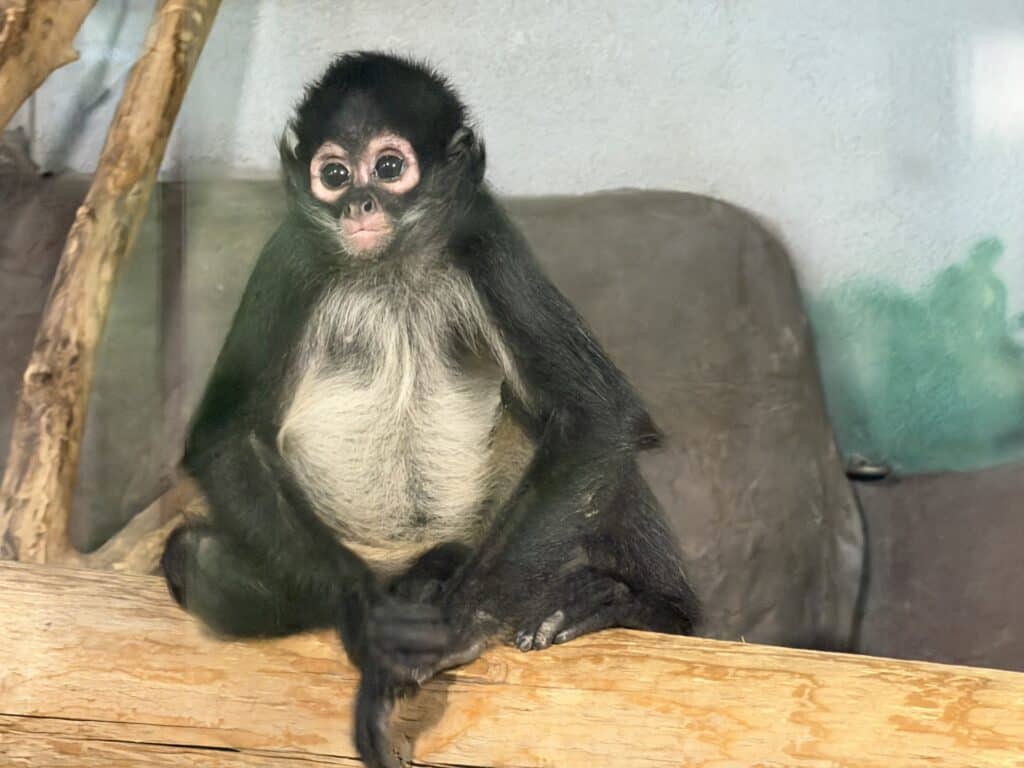
Eve (along with Romina, the other rescued spider monkey) has found a forever home at Hogle Zoo.
©Hogle Zoo
“By removing an infant from their mother, they lose that opportunity to learn from others and have to figure out how to survive on their own,” says Comstock. “For primates that end up in the US after being trafficked, this usually means they will never go back to their natural habitat again. They do not have the knowledge to survive on their own.”
Thankfully, Romina and Eve now have a fresh start and a forever home at Hogle Zoo.