
Quick Take
- Killing raptors is illegal in Georgia, yet thousands die every single migration season. See the scale of illegal kills →
- The same migration route that draws a million raptors is quietly destroying the villages built around watching them. Explore the economic impact →
- One species dominates the 'Batumi bottleneck' so completely that it skews the entire count, and it's probably not what you'd expect. Discover the dominant species →
- Conservation groups say stopping the illegal hunting is achievable, though the timeline will surprise you. See the 20-year plan →
Between August and October, raptors migrate en masse across Europe. As with all migrations, the birds face threats they must overcome to reach their final destination. But nothing quite compares to the treacherous sky corridor where one million raptors risk their lives annually.
One Million Migrating Raptors Risk Their Lives to Fly Through the “Batumi Bottleneck”
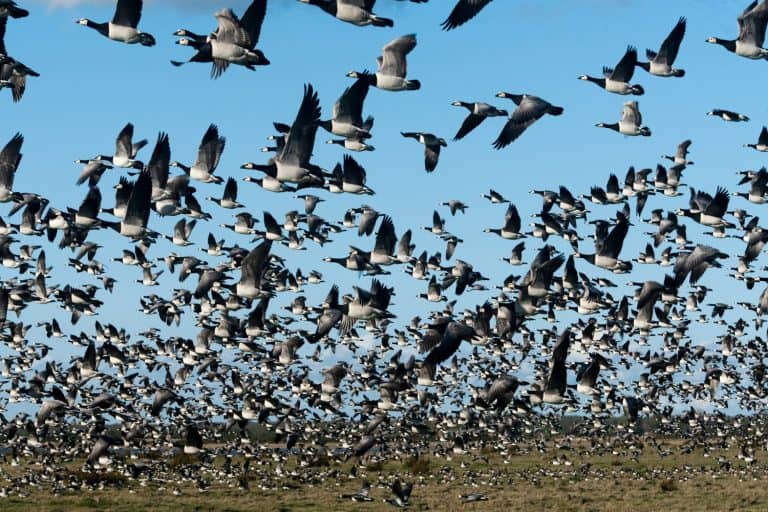
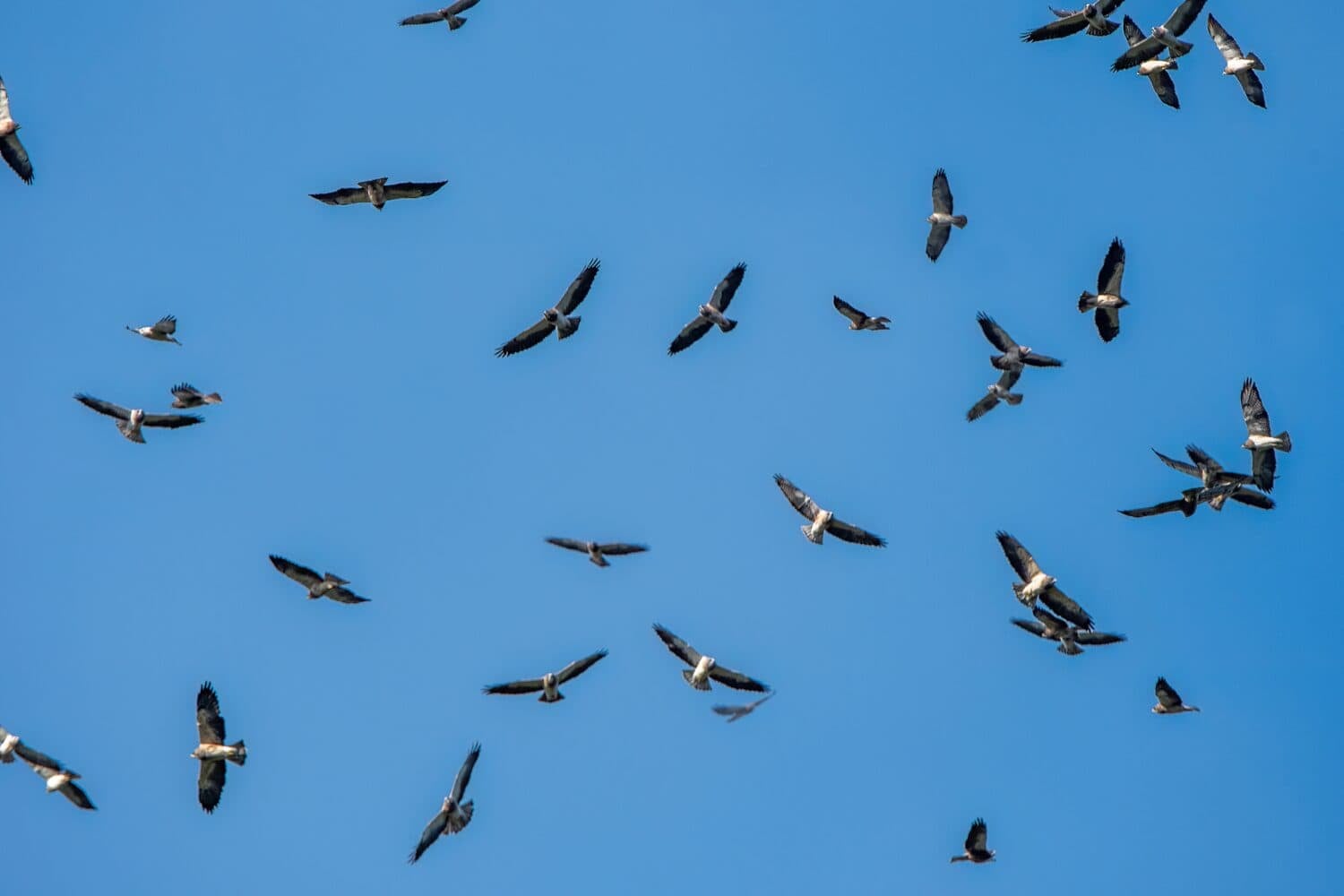
Between the Black Sea and the Caucasus Mountains, an epic migration occurs every fall. More than one million raptors fly through this region of Georgia, blanketing the sky with birds of prey as far as the eye can see.
The welcoming, warm air provides a breeze the raptors can glide on to conserve energy. This is why so many choose this route as their migration thoroughfare and why so many ecotourists visit the region to see the raptors in flight.
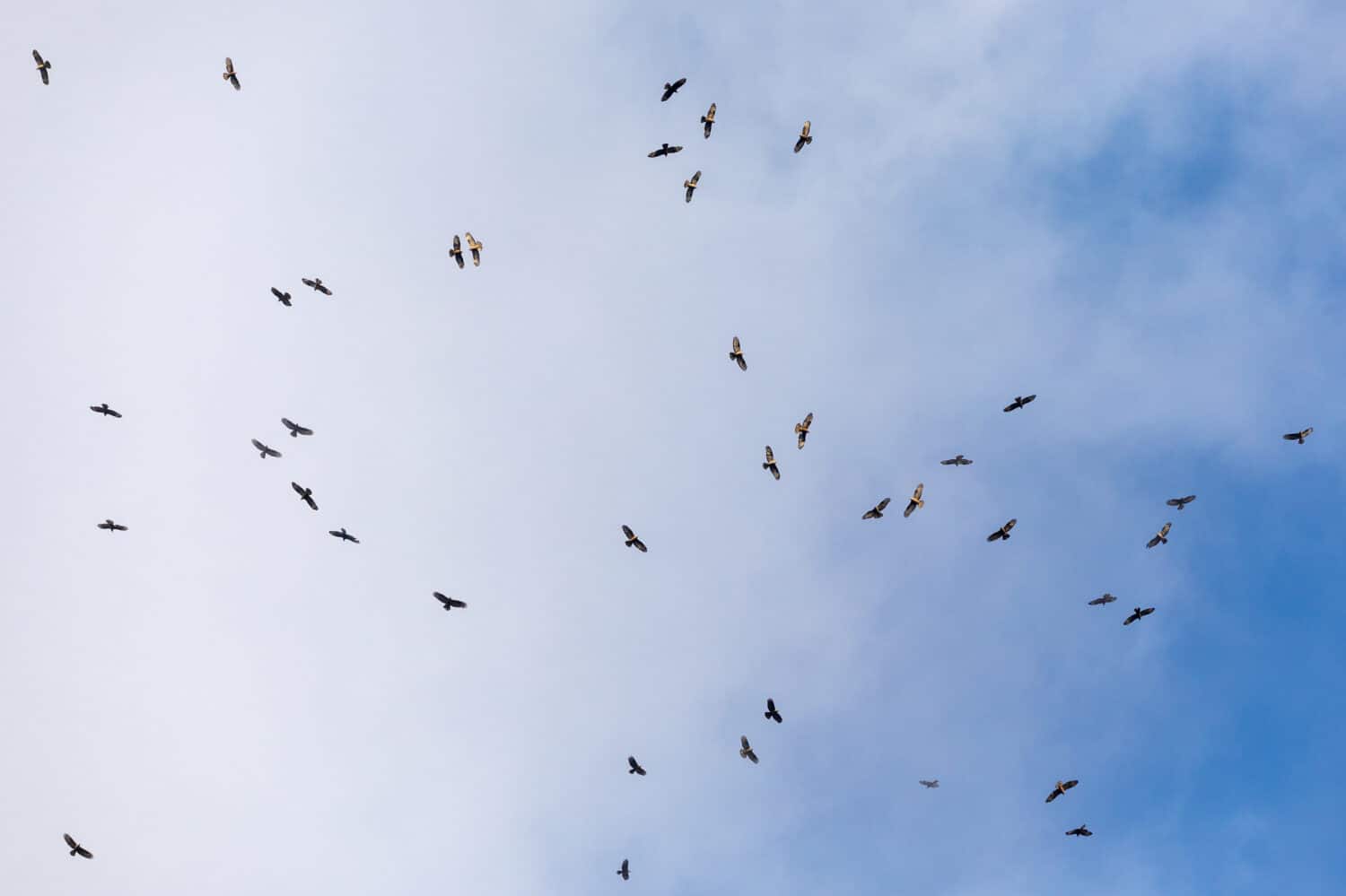
One million raptors will risk their lives as they fly through the “Batumi bottleneck.”
©Karin de Jonge-Fotografie/Shutterstock.com
The number of raptors flying at low elevations through what has been dubbed the “Batumi bottleneck” has become a massive draw for birdwatchers in the region. Unfortunately, it also draws hunters who can easily pick off the raptors in flight.
While hunting raptors is illegal, it still persists. As a result, more than 9,000 raptors are killed for sport each migration season, leaving conservationists concerned about the future of some raptor species, whose populations are already struggling.
Types of Raptors That Migrate Through Georgia
One million raptors migrate through the “Batumi bottleneck.” However, it is not just one species that passes through Georgia between August and October. There are several species that fly through the region, although one dominates them all.
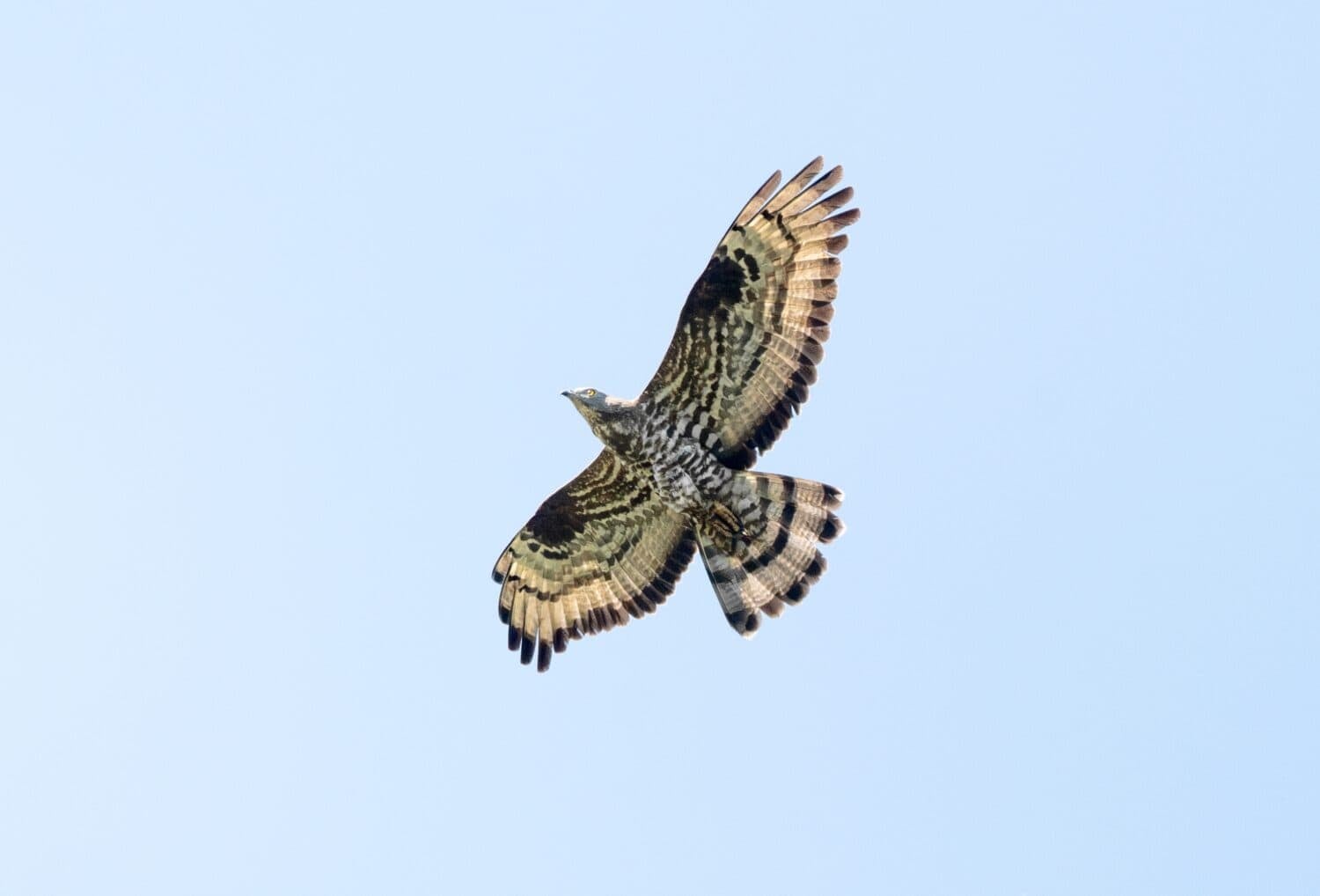
European honey buzzards are the most common raptors to migrate through Georgia.
©T.Vyc/Shutterstock.com
The species that is most often noted in the Batumi Raptor Count is the European honey buzzard. This species makes up more than 90% of the overall raptors that migrate through Georgia. The other species counted annually include:
- Steppe buzzard
- Black kite
- Booted eagle
- Marsh harrier
- Montagu’s harrier
- Lesser spotted eagle
- Pallid harrier
- Levant sparrowhawk
- European bee-eater
- Crested honey buzzard
Even more species fly through the massive migration zone, albeit in smaller numbers. This variety of species is why so many people make their way to Georgia to birdwatch during migration.
Why Illegal Hunting Continues in Georgia
If there was one answer as to why illegal hunting continues in Georgia, it would be significantly easier to curtail. Unfortunately, there are multiple reasons as to why raptor killing is a constant each year, despite consequences to these actions.
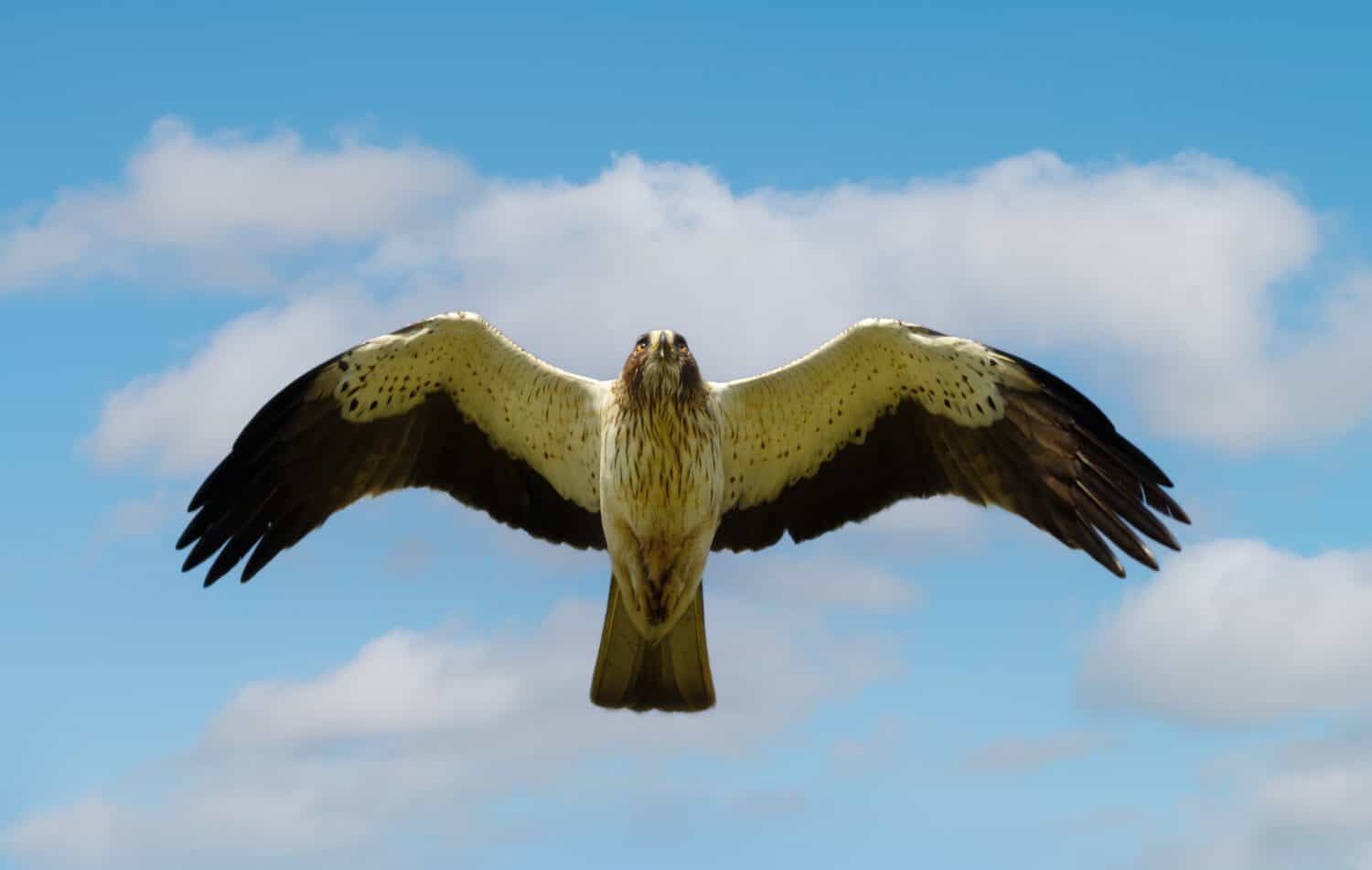
Raptors are hunted because it is part of the Georgian culture, it is done for fun, it is easy, and there is a lack of enforcement to stop hunters from doing so.
©Giedriius/Shutterstock.com
The main reasons why raptor killing occurs in Georgia include:
- Hunting is part of the culture: Hunting has been part of the culture for decades. 89% of those surveyed admitted to hunting for fun.
- Hunting is done for recreational purposes: Of those that kill the raptors, only 50% consume what they hunt. Therefore, hunting is for fun and sport rather than to sustain those hunting the raptors.
- Hunting raptors is easy: With one million raptors coming through the “Batumi bottleneck” each year, the raptors make easy targets.
- Lack of law enforcement: While laws exist to help prevent illegal hunting, there are far too few enforcement officers available to trek through difficult terrain to catch those shooting the raptors.
- Lack of consensus on preferred solutions: Negotiations have stalled among conservationists, hunters, and enforcement officials because no one agrees on what will satisfy all parties.
Without addressing these issues, raptor hunting will continue each year as raptors migrate. When too many have been killed for populations to sustain themselves, they may eventually go extinct.
How Do the Migrating Raptors Help the Local Economy?
Migrating raptors has been nothing short of a lifeline for smaller villages across the country of Georgia. Without the raptors, many of the villages would likely cease to exist.
In the region where the raptors migrate, there are no other tourist activities. Consequently, in villages such as Sakhalvasho and Shuamtam, the hotels and guesthouses would no longer have business without the flyover. With no ecotourism dollars coming in, the way of life for locals would change dramatically.
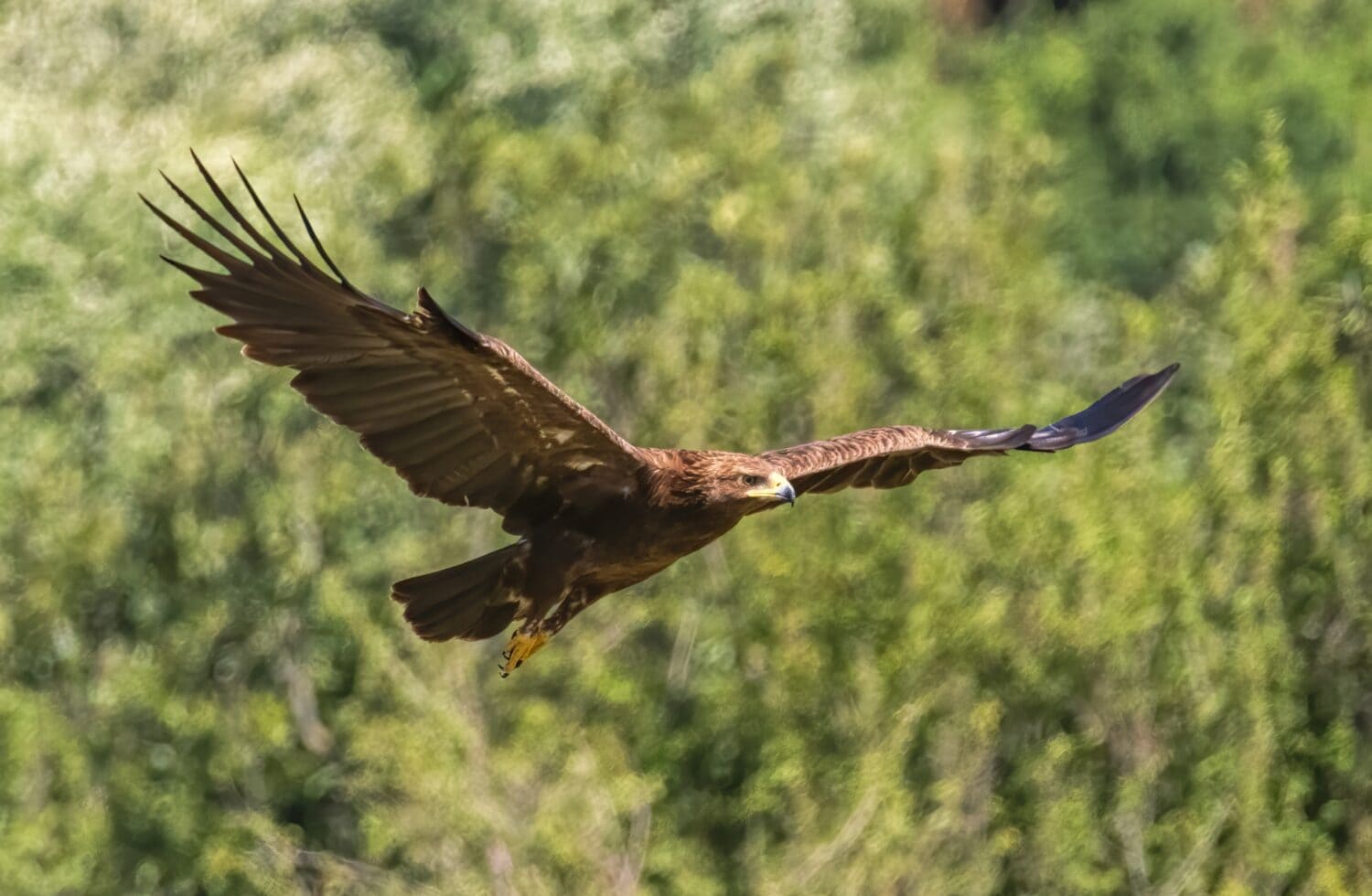
The migrating raptors have turned sleepy villages into ecotourism destinations.
©Gerdzhikov/Shutterstock.com
Unfortunately, those interested in birdwatching have not been visiting in as large numbers as in the past. According to Ruslan Lomadze, a Sakhalvasho guesthouse owner, it is because raptors are being killed rather than watched.
“Now there is less of it, and ecotourism has had an impact,” Lomadze explained to Phys.org.
This is why villagers like Lomadze are paying close attention to conservation efforts being put in place to protect the raptors. He hopes that those who show up for the mass migration focus on viewing the birds in their natural habitat rather than ending thousands of their lives annually.
What Is Being Done to Stop the Illegal Hunting
Because hunting continues while birdwatchers observe raptors move along their migration paths, it is obvious that current tactics to curb illegal hunting are not working. Much of this is because of the rugged terrain hunters use to access raptors. However, it also has to do with the need for more education in local communities about the benefits raptors provide to the ecosystems they are part of.
According to the Nando and Elsa Peretti Foundation, ending illegal hunting in and around the “Batumi bottleneck” is possible, but it will take time. The current projected timeline is 20 years.
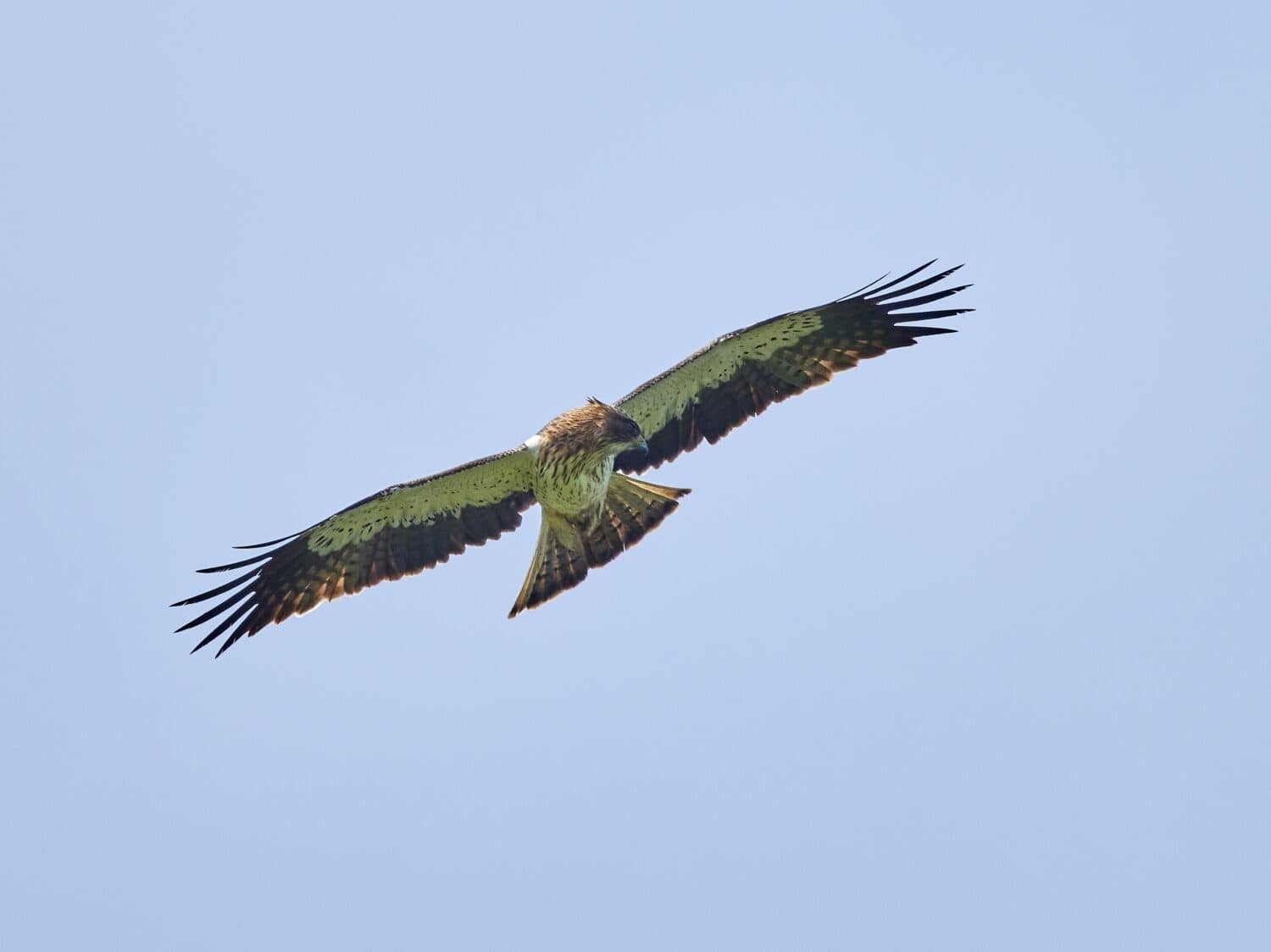
Conserving migrating raptors is a slow process estimated to take 20 years to achieve.
©aaltair/Shutterstock.com
“The next steps in conserving Georgia’s raptors are to ensure that the animals can access migratory flyway zones without the risk of being hunted, and to protect bird hotspots in the country so that the animals can thrive,” the organization’s website stated. “It’s a long-term project that will take approximately 20 years to realize.”
According to the Nando and Elia Peretti Foundation, the following steps are needed to ensure the safety of raptors in Georgia:
- Reduce the illegal hunting of raptors and other migratory birds while in flight or when in resting flyover locations
- Increased patrols within Inter-Georgian regional departments to stop illegal trafficking of the raptors
- Establish rescue and rehabilitation centers to house illegally trafficked raptors while defendants are awaiting litigation
- Educate and build trust within local communities as to why raptors are a crucial part of the local habitats and economy
Clearly, these things will not happen overnight, and the deadline for reaching such goals is years away. It will take changing hunters’ beliefs and helping them understand that if raptors are eliminated from the environment, not only will the ecosystem suffer, but the local economy will too. Only then will migrating raptors truly be safe as they take to the skies on a massive scale each year.