
Quick Take
- Two mosasaurs could be the same size yet hunt in completely opposite ways, a difference that comes down to one body part. See how tails differ →
- Researchers had to borrow anatomy from a living animal to reconstruct how a 15-meter sea predator attacked its prey. Explore the modeling method →
- The slowest lunger in the study wasn't actually the slowest swimmer, a distinction that changed everything about how it hunted. Discover the surprising findings →
- This is the first study to quantitatively measure how dinosaur-era marine reptiles actually performed in the water, and the results surprised even the researchers. See how performance was measured →
It’s a dog-eat-dog world, and there is always a bigger fish. This was perhaps especially true for the creatures that lived hundreds of millions of years ago. The world was full of untamed wilderness, alien-looking plants, and creatures that were both massive and surreal. The Late Cretaceous period began around 100 million years ago and was dominated by the oceans. Sea levels were high, and ancestors of modern reptiles, called mosasaurs, dominated the waterways.
At the same time that dinosaurs like Tyrannosaurus rex ruled the land, the mosasaurs ruled the seas. However, their hunting strategies might have been more varied than previously thought. A research team led by a professor at Rutgers School of Environmental and Biological Sciences recently published a paper investigating the hunting strategies of mosasaurs. By reconstructing the bodies of four types of mosasaurs and applying physics principles, the researchers found that different physiologies produced different pursuit methods. Let’s explore these ancient reptiles, how researchers reconstructed their bodies, and what the experiments revealed about hunting in prehistoric oceans.
Mighty Mosasaurs
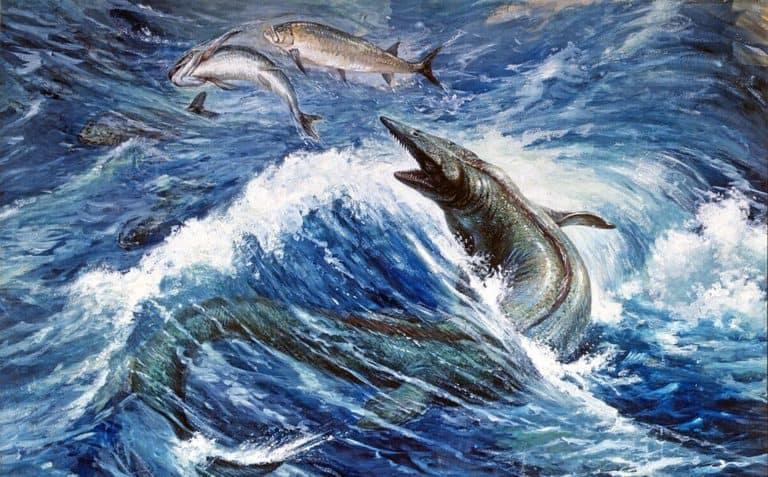
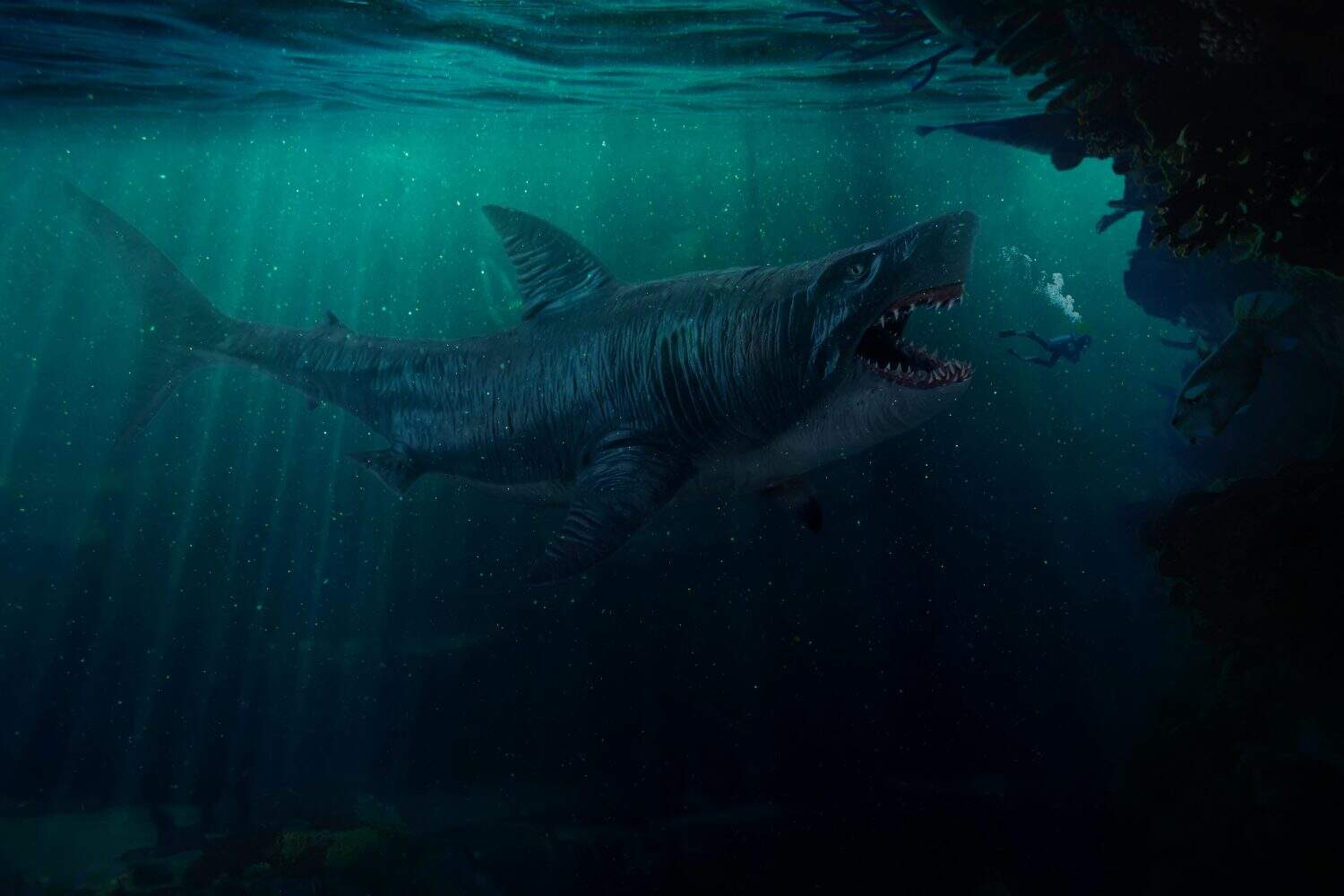
Mosasaurs were scaled reptiles that lived in the late Cretaceous Period, breathed air, and gave birth to live young.
©Creative Endeavors/Shutterstock.com
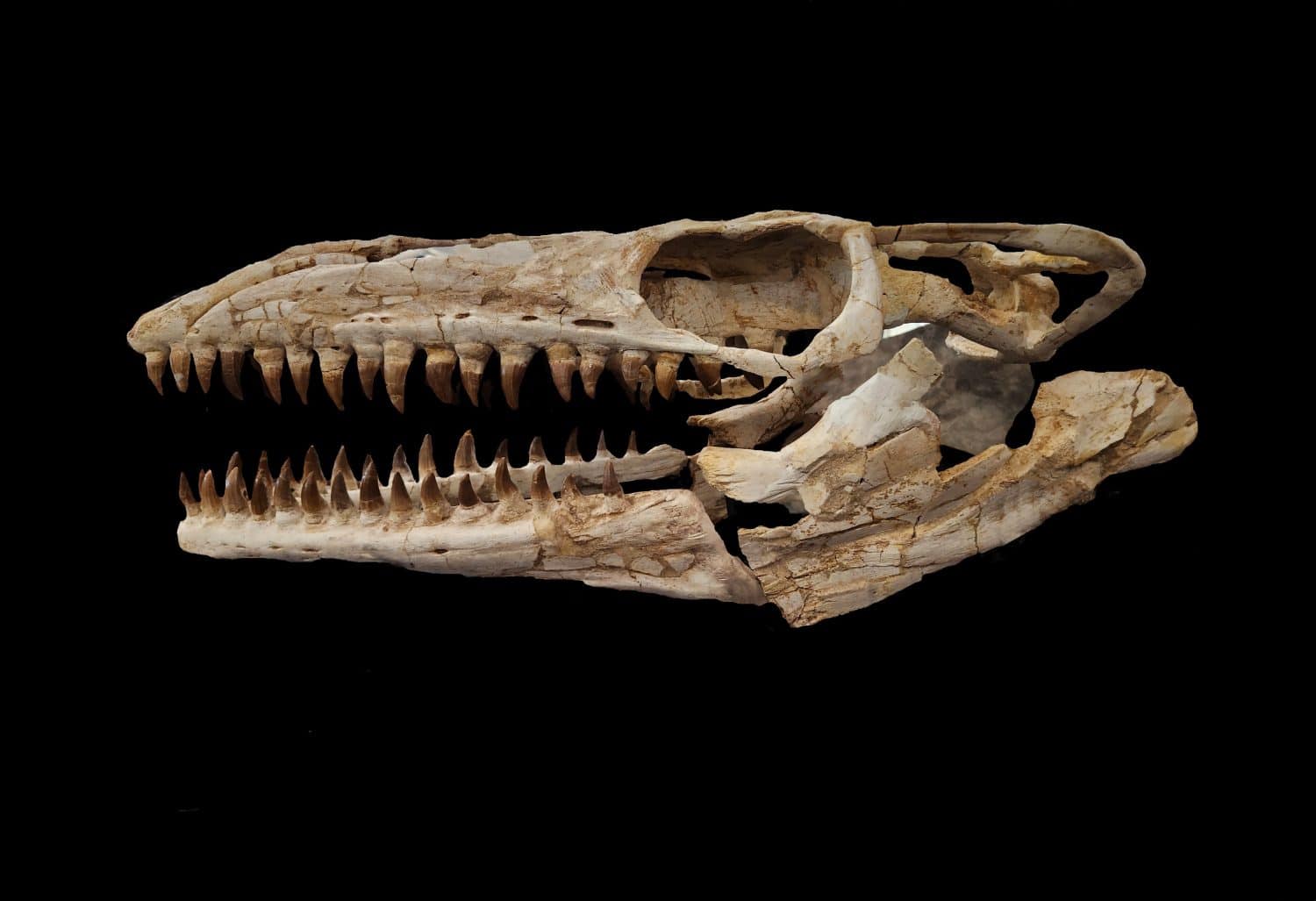
The geography of the late Cretaceous period was dominated by water. Land was plentiful, to be sure, but warm, shallow seas extended farther into landmasses than they do in the modern world. They were also rich in biodiversity. One type of creature, the mosasaur, evolved to dominate this niche. Though they originally evolved from smaller, scaled reptiles related to modern snakes, mosasaurs grew much larger. Some mosasaurs were comparatively small, like the four-meter-long Clidastes that ranged along coasts. Others, however, like Tylosaurus and Mosasaurus, may have grown to lengths approaching or exceeding 15 meters, though confirmed fossil evidence for such sizes remains limited.
Carnivores by nature, mosasaurs were strong, versatile, and aggressive. Even more remarkable was their biological makeup. Though they spent most of their time in the water, they breathed air and likely gave birth to live young. Some had sharp teeth suited for hunting fish and squid, while others had more rounded teeth to crack open shellfish and crustaceans. Physiologically streamlined, mosasaurs had flippers for navigation and tail fins for impressive propulsion.
The predation capabilities of mosasaurs have long been theorized, but the exact way different mosasaurs went about hunting remained unknown. Previous research in this area focused on swimming techniques like cruising. A team of researchers, however, wanted to learn more about how sudden burst movements could help mosasaurs ensure they caught prey.
Movement and Prowess
You might recognize mosasaurs from the Jurassic World films and the Apple TV series Prehistoric Planet. The accuracy of the depictions from the latter was thanks in part to Kiersten Formoso, an assistant professor at Rutgers University in the Department of Ecology, Evolution, and Natural Resources. She consulted on the program to ensure that mosasaurs moved and acted the way they would have nearly a hundred million years ago. Formoso and her team’s latest findings started with a question: two major branches of the mosasaur family had differently proportioned tails, so how did those differences affect the velocity of their attacks?
Previous research focused on cruise-style swimming, so Formoso examined sudden burst movements in mosasaur swimming. The researchers modeled what they called “slam-starts” (quick, bursting lunge movements) to calculate the speeds of four mosasaur species from the Late Cretaceous period. To produce a “slam-start,” these creatures would curl their tails to one side before sweeping back forcefully, driving their bodies forward in the process. While the team had nearly complete fossils to reconstruct bodies, they filled in the gaps of tail musculature by drawing on the anatomy of contemporary lizards like Komodo dragons.
From there, the researchers experimented with a range of potential capabilities. They made assumptions about tail flexibility, resistance, and muscle power to see whether “slam-starts” remained applicable under different conditions.
The Results
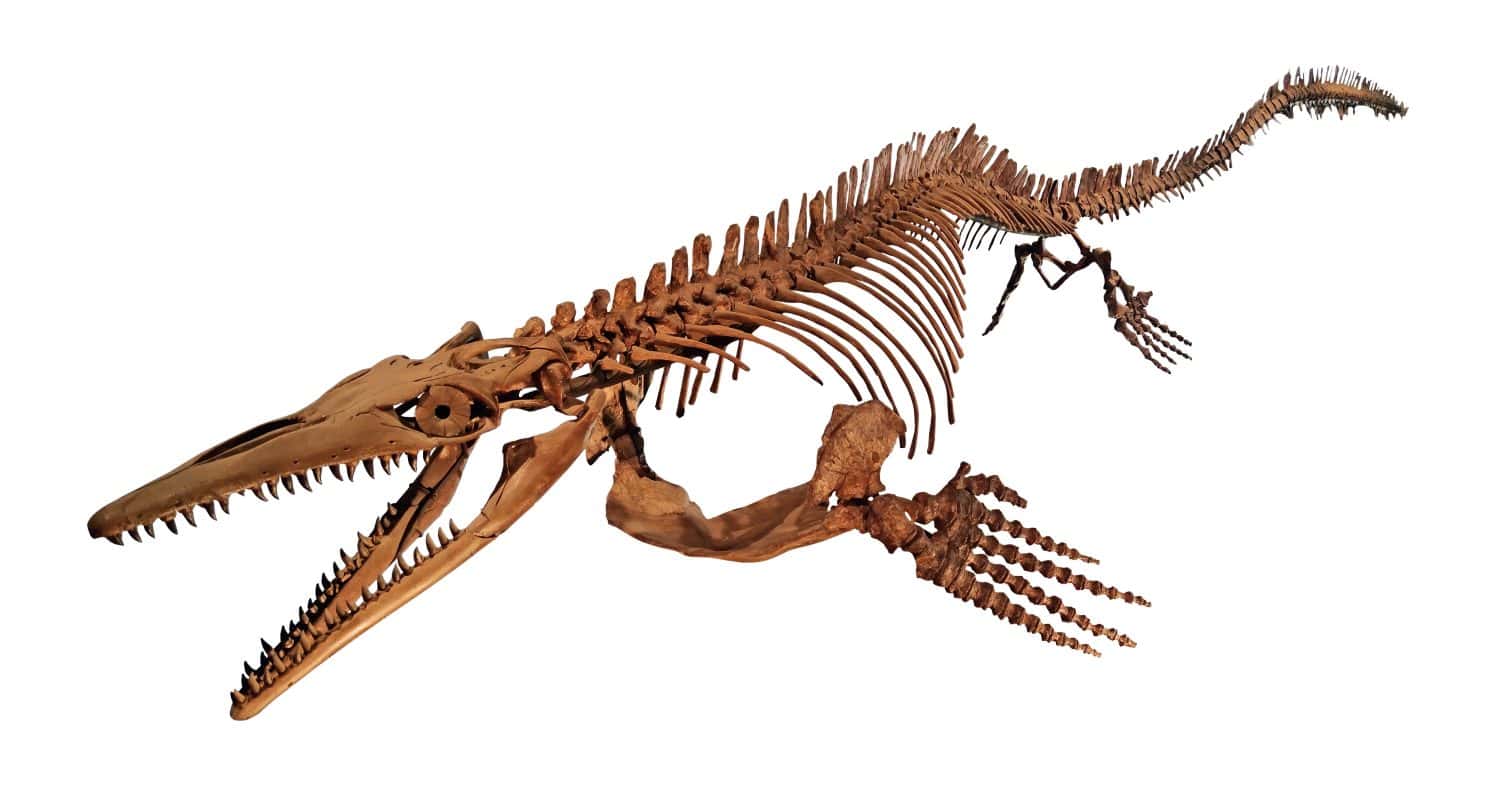
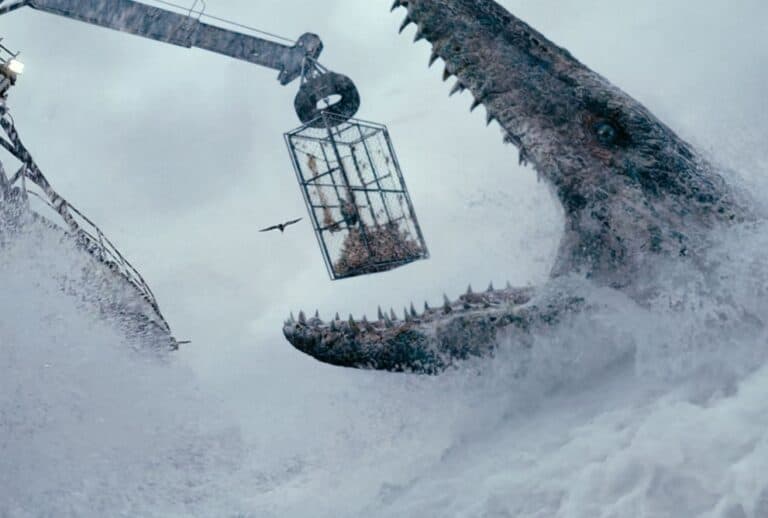
Researchers found that the shape of different mosasaur species’ tails had a significant influence on their striking capabilities.
©Ruslan Harutyunov/Shutterstock.com
The team found that mosasaurs lunged quickly when they swung their tails farther or used more muscles. In these scenarios, water resistance had a minor to negligible impact on speed. Of the four tested species, Platecarpus and Tylosaurus showed much faster lunges relative to body size than Mosasaurus and Plotosaurus. Of all four, Platecarpus was the fastest.
Russellosaurines like Platecarpus and Tylosaurus had tail shapes that moved more water, therefore allowing them to lunge with noticeable ferocity. This suggests they used such moves to capture prey. Meanwhile, mosasaurines like the Plotosaurus had slower burst lunges, making them the equivalent of long-distance swimmers. This speaks to adaptation, as Mosasaurus and Plotosaurus seemed capable of pursuing prey in open waters. Ambush hunting used by Platecarpus and Tylosaurus worked better for shallow, tighter bodies of water.
As Kiersten Formoso explained to Eureka Alert, these movements don’t necessarily limit speed. She said, “[These findings don’t] mean Plotosaurus was slow. Its tail was built for sustained, tuna-like swimming rather than sudden bursts.”
At least to the research team’s knowledge, their study, published in the journal Current Biology, is the first to quantitatively measure swimming performance in dinosaur-era marine reptiles. It also confirms that the physics governing swimming today held true tens of millions of years ago.