
Quick Take
- An 8-foot python looks slow and easy to avoid, but that changes the moment it decides to move. See how powerful they are →
- The mammal population collapse happening right now in the Everglades is far worse than most people realize. See the ecological damage →
- Burmese pythons ended up in Florida for a reason that still hasn't been fully solved, and therein lies the real problem. Explore how they got here →
- If you spot one of these snakes in Florida, what you do next matters more than you'd think. Find out what to do →
Florida drivers are accustomed to seeing unusual wildlife along the roadside, but an eight-foot snake stretched across the pavement is enough to make almost anyone stop and stare. That’s exactly the kind of encounter captured in this remarkable footage of a massive Burmese python crossing a Florida roadway. The enormous reptile initially appears to be taking its time, but when people approach, it demonstrates just how quickly a snake of this size can move. What happens next offers a fascinating look at one of Florida’s most troublesome invasive predators.
Watch the Giant Python Attempt to Escape
In the video, the approximately eight-foot Burmese python makes its way across a Florida road, earning the unofficial nickname of a “Florida speed bump.” Unlike an ordinary road hazard, however, this one can move surprisingly fast.
As people move in to capture the snake, it attempts to escape. Despite its size and strength, the python is eventually caught, preventing this particular invasive reptile from continuing to roam the surrounding area.
Although the encounter makes for compelling footage, the underlying problem is much more serious. Burmese pythons have established breeding populations in southern Florida, where their appetite for native wildlife has dramatically altered parts of the Everglades ecosystem.
Why Are Burmese Pythons Living in Florida?
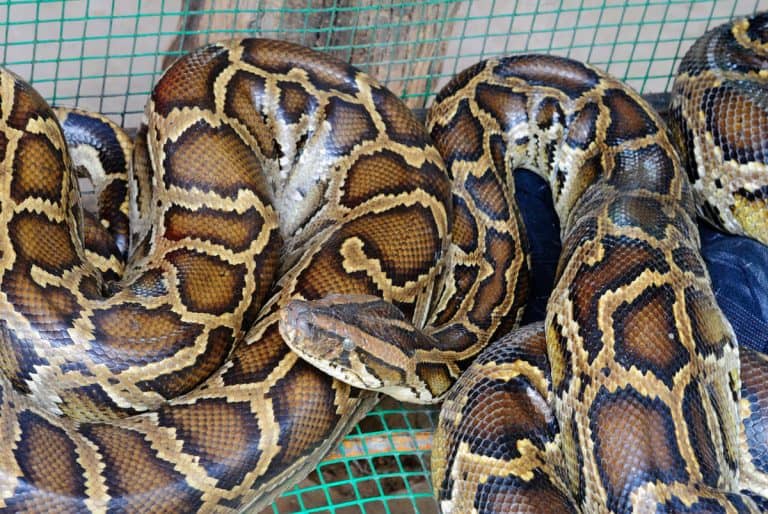
Burmese pythons are native to parts of South and Southeast Asia, where they inhabit forests, wetlands, grasslands, and other environments. They are powerful constrictors, capable swimmers, and skilled predators that feed on a wide variety of animals.
They don’t belong in Florida’s native ecosystem. Their presence in the state is largely connected to the exotic pet trade, including snakes that escaped captivity or were intentionally released. Over time, enough pythons survived and reproduced to establish a self-sustaining population.
South Florida’s warm climate, extensive wetlands, and abundance of potential prey provide favorable conditions for these enormous reptiles. Unfortunately, the same conditions make the snakes extremely difficult to locate and remove.
How Much Damage Are Pythons Causing in the Everglades?

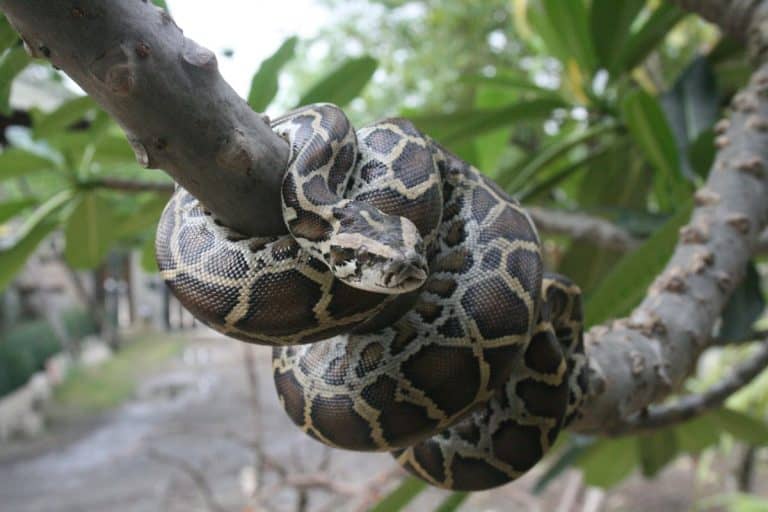
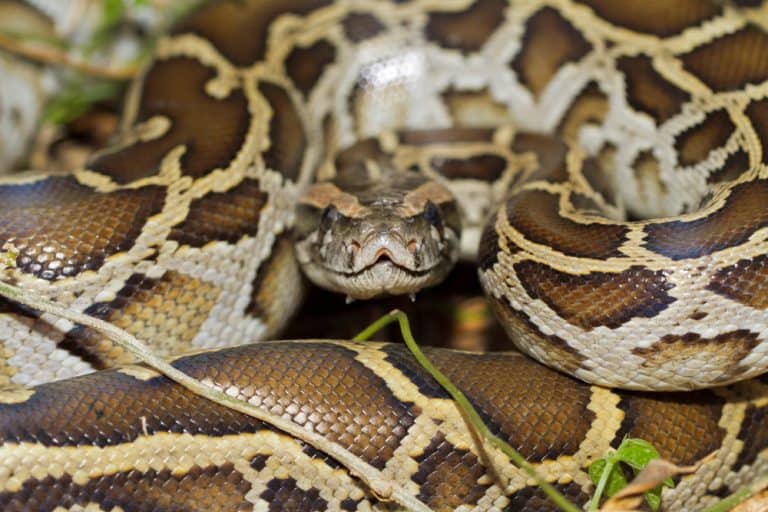
Burmese pythons are invasive predators in southern Florida, where they threaten native mammals, birds, and reptiles.
©Irina oxilixo Danilova/Shutterstock.com
The impact of invasive Burmese pythons extends far beyond the occasional surprise encounter on a road. These enormous snakes prey on native mammals, birds, and reptiles, including animals that play important roles in maintaining the Everglades food web.
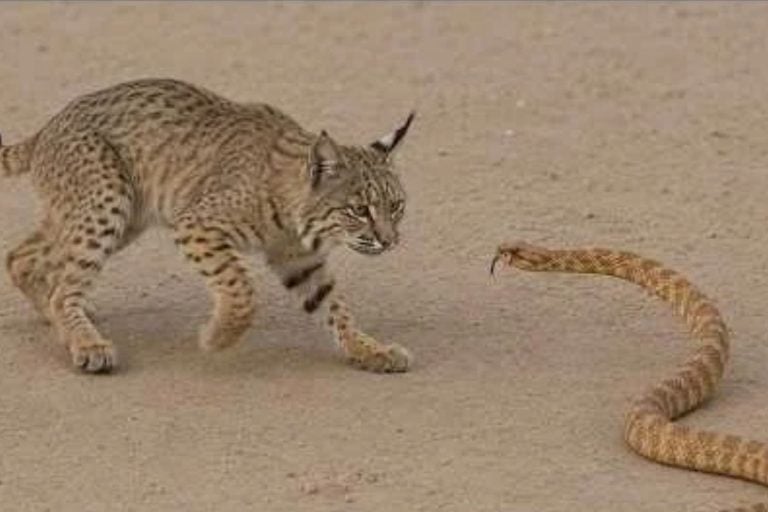
A landmark 2012 study published by researchers working with the U.S. Geological Survey documented extraordinary declines in mammal sightings along roads in Everglades National Park. Compared with earlier surveys, researchers recorded 99.3% fewer raccoon observations, 98.9% fewer opossum observations, and 87.5% fewer bobcat observations.
Those figures represent changes in observation rates rather than exact population counts. However, subsequent research has provided additional evidence that python predation is a major contributor to the disappearance of native mammals in affected areas.
The Florida Fish and Wildlife Conservation Commission (FWC) reported in August 2026 that nearly 28,000 wild Burmese pythons had been removed from Florida and reported to the agency since 2000. The true number still living in the wild remains uncertain because these snakes are exceptionally difficult to detect.
Are Burmese Pythons Dangerous to People?
Despite their intimidating appearance, wild Burmese pythons generally try to avoid people. They are nonvenomous, relying on their muscular bodies to constrict prey rather than injecting venom through a bite.
According to a U.S. Geological Survey assessment, the risk of an unprovoked attack on a person in Everglades National Park is low. Nevertheless, these are powerful wild animals, and attempting to capture or handle one can result in serious injuries.
Their greatest documented threat in Florida is to native wildlife, although small pets may also be vulnerable. Large pythons are capable of swallowing surprisingly substantial prey, including deer and alligators.
What Should You Do if You Encounter One?
If you spot a Burmese python in Florida, the safest approach is to keep your distance and avoid attempting to handle it without appropriate training. The FWC encourages the public to document sightings and report them through its invasive species reporting system.
Reports can be submitted through IveGot1.org or by calling 888-IVE-GOT1 (888-483-4681). Providing an accurate location and photograph, when it is safe to do so, can help wildlife officials respond.
Florida also permits authorized removal of invasive pythons under specific rules, including removal from private property with the landowner’s permission. However, handling a large constrictor is not something inexperienced bystanders should attempt.
The python in this footage might look like an unusually large obstacle in the road, but the encounter represents a much bigger environmental challenge. Every invasive python removed can help reduce pressure on Florida’s native wildlife, making encounters like this one important beyond their initial surprise.