
Quick Take
- One popular nut that seems harmless can trigger kidney and bladder damage in dogs, a danger that most owners never see coming. See the kidney risks →
- Scientists still can't explain why one specific nut is toxic to dogs, though they know even a single piece can cause serious symptoms. Explore the mystery toxicity →
- The same nut can be either safe or dangerous for your dog depending on one key difference you'd likely overlook at the store. Spot the key difference →
- Your dog's favorite nut-based spread may contain a quietly toxic ingredient that hides in plain sight on the label. Check your peanut butter →
- Some farm-fresh nuts that are otherwise safe for dogs can become dangerous based on what grows nearby during harvest. Learn about farm-fresh dangers →
Drop a nut on the floor, and there’s a good chance your dog will snap it up before you can even bend down. Nuts are crunchy, rich, and interesting to dogs, but that does not mean they are always a smart treat.
Nuts are naturally high in protein, fat, and fiber. Some are easier for dogs to digest than others, but dogs do not need nuts as part of a healthy diet. Too many can lead to problems such as dehydration, weight gain, or more serious health concerns.
Before you smear nut butter on a lick mat or toss your dog a leftover snack, it is worth knowing which nuts are safer, which are risky, and which should stay completely out of reach.
Nuts Dogs Can Eat in Small Amounts
Some nuts can be offered as an occasional treat, but moderation matters. Any nut given to a dog should be plain, unsalted, and unseasoned.
Peanuts
Peanuts are one of the more dog-friendly options. Many dogs love them, and they can provide protein and vitamins. In healthy amounts, peanuts may also help support a shiny coat.
Peanuts contain arginine, which supports nitric oxide production. Nitric oxide helps widen blood vessels, which can support circulation and lower the risk of high blood pressure and tissue damage.
Plain, unsalted peanuts are the safest choice. Peanut butter, however, requires more caution. Many peanut butter brands contain xylitol, which is toxic to dogs. Dogs should only eat peanut butter that has no harmful additives or preservatives. Peanut butter specially formulated for dogs is the safest option.
Key takeaway: Plain peanuts can be a safe occasional treat, but always check peanut butter labels carefully.
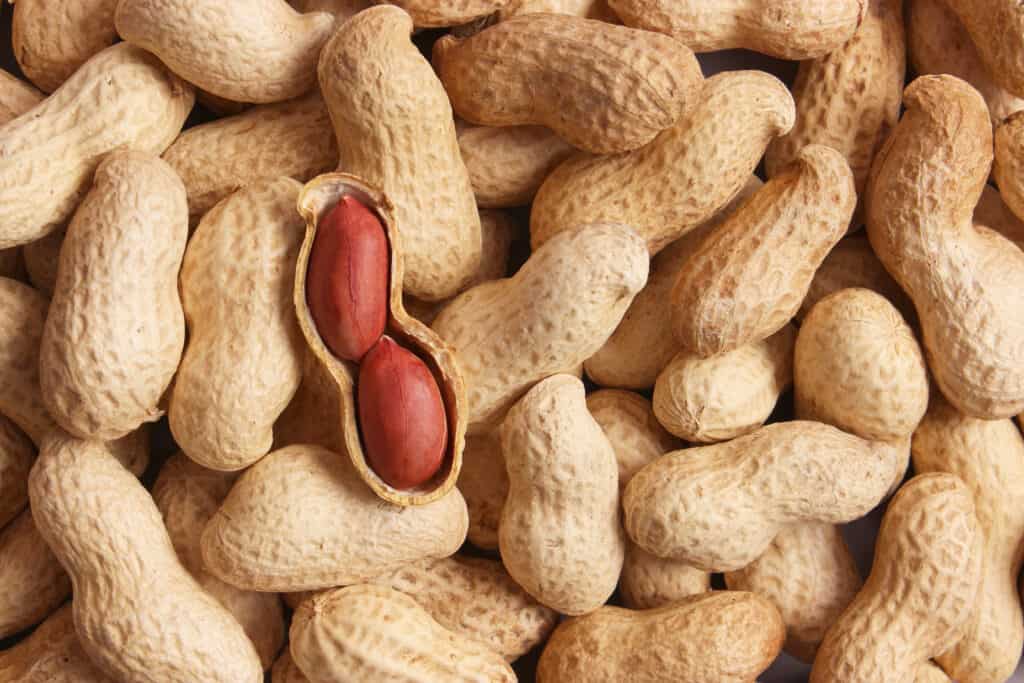
Plain, unsalted peanuts are the safest choice.
©iStock.com/White Bear Studio
Cashews
Cashews contain healthy fats that are known to support the human heart. Dogs do not need these fats in their diet, but one or two plain cashews are not likely to hurt.
The best rule to follow is the 10% rule: treats should make up no more than 10% of your dog’s daily calories. Since cashews contain nearly 10 calories per nut, even a few can add up quickly. For most dogs, one to three cashews in a day is plenty.
Cashews should always be unsalted and unseasoned. It is also important to be careful with mixed-nut products, since cashews may be processed alongside nuts that are unsafe for dogs.
Key takeaway: Cashews are not toxic in small amounts, but they are calorie-dense and should only be offered sparingly.
Chestnuts
Chestnuts contain fiber and vitamins, including vitamins B1, B2, and C. They also provide potassium and iron. A few chestnuts may help with constipation, though they are not the best nutrient source for dogs.
Compared with some other nuts, chestnuts are lower in fat. Still, they contain too many calories to be a regular snack. If you offer them, choose chestnuts that are roasted without oil, salt, or spices.
Small dogs should skip chestnuts altogether. These nuts can create a choking risk, especially for smaller breeds.
Key takeaway: Chestnuts contain fiber and vitamins, but they can be a choking hazard and should not be a go-to treat.
Pistachios
Pistachios are not poisonous to dogs, but they are not an ideal treat. They contain potassium, which helps with blood circulation, and monounsaturated fats, which support heart function by helping lower bad cholesterol.
The problem is their calorie content. A single pistachio contains about four calories, and dogs can gain weight quickly if they eat too many. Extra weight can increase the risk of joint disease and other weight-related complications.
There is another concern with pistachios straight from the farm. Pistachios may grow near poisonous plants such as poison ivy and Aspergillus, whose byproducts can be toxic to dogs. For that reason, dogs should not eat farm-fresh pistachios.
Plain, processed pistachios that are unsalted and unseasoned are the safest form, but they should still be treated as a rare snack.
Key takeaway: Pistachios are not poisonous, but their high calories and contamination risks make them a poor everyday choice.
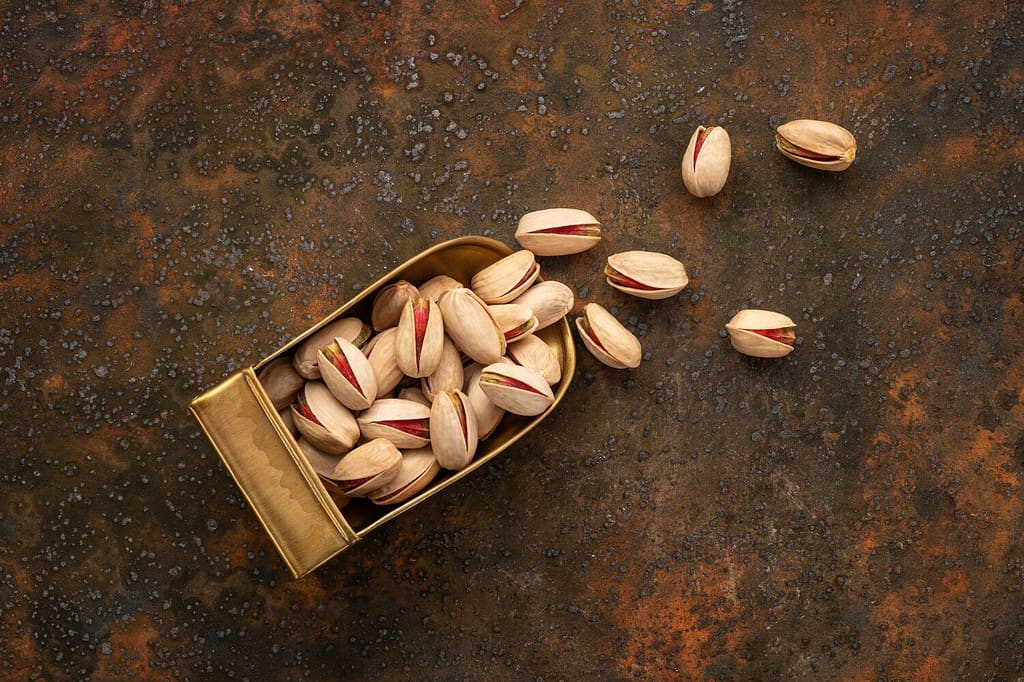
Pistachios are high in calories and are not an ideal treat for dogs.
©Mephobia.Food/Shutterstock.com
Nuts Dogs Should Not Eat
Some nuts are not worth the risk. Even if they offer small nutritional benefits, the dangers are far greater.
Almonds
Almonds are not a safe choice for dogs. Dogs do not chew as thoroughly as humans, and almonds are hard for them to break down. That makes them a choking risk.
Even if a dog swallows an almond, it can still cause trouble. Almonds may lead to intestinal blockage because a dog’s digestive tract is not well suited to such hard nuts.
Almonds also contain high levels of phosphorus, which may injure a dog’s kidneys and bladder. Their high-calorie content may also contribute to inflammation of the pancreas.
Key takeaway: Almonds are too hard for dogs to chew and digest safely, and they may cause choking, blockages, or organ-related problems.
Hazelnuts
Dogs should not eat hazelnuts, especially small breeds. Hazelnuts are tough and difficult to digest. Because dogs may not chew them properly, they can cause intestinal blockage.
Their size and shape make the problem worse. Hazelnuts can be too small to chew well but too large to move easily through the intestines. If a dog tries to force the nut out, it may cause intestinal or anal tears.
Hazelnuts also offer poor nutritional value for dogs. Many hazelnut butters and spreads contain chocolate, which dogs should never eat.
Key takeaway: Hazelnuts are a choking and blockage risk, and hazelnut spreads may contain chocolate.
Macadamia Nuts
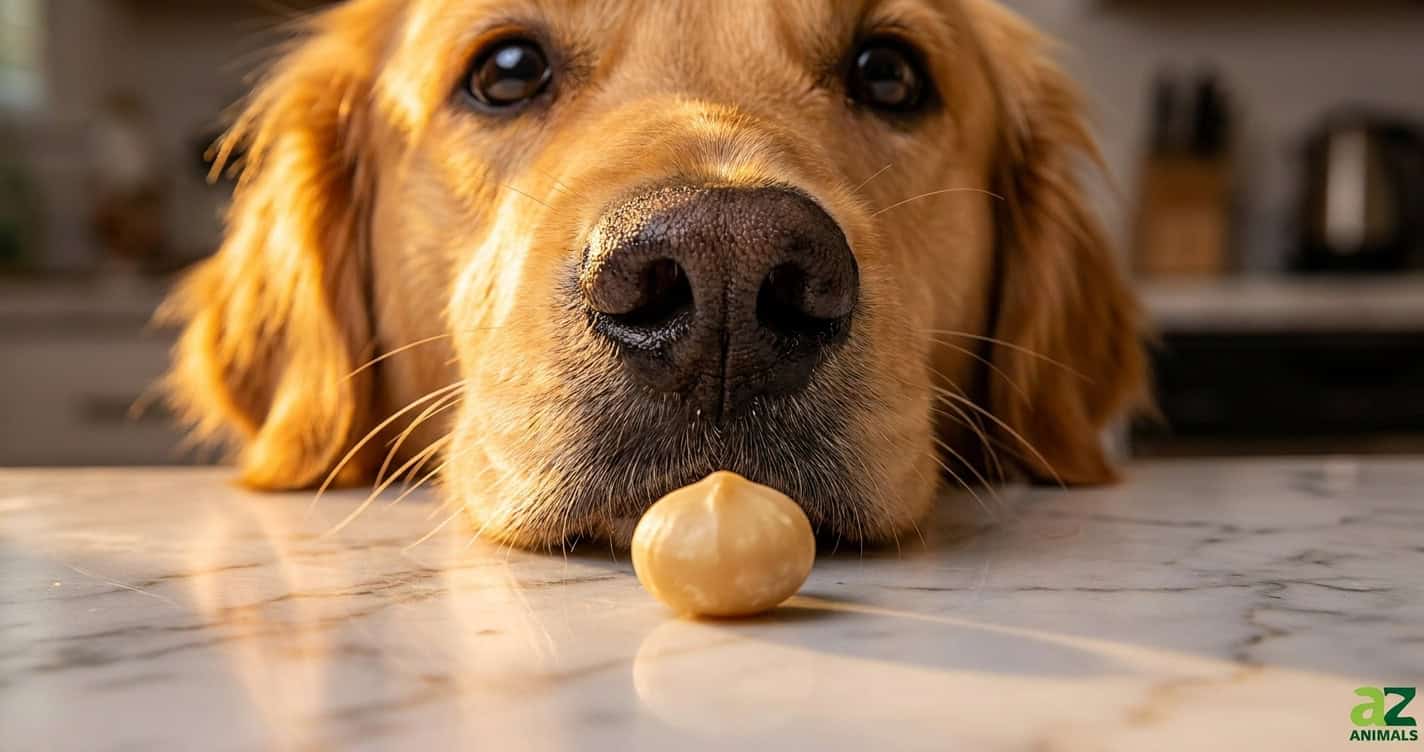
Macadamia nuts belong near the top of the “do not feed” list. They are toxic to dogs, though researchers are not exactly sure what causes the toxicity.
Even one macadamia nut can cause symptoms of poisoning. Signs may include weakness in the hind legs, diarrhea, vomiting, tremors, lethargy, and fever.
Macadamia poisoning is usually not lethal, and dogs may recover at home. Still, the experience can be miserable for both you and your dog. These nuts should be kept out of dog treats entirely.
Key takeaway: Macadamia nuts are toxic to dogs and should never be offered, even in small amounts.
Walnuts
Walnuts are complicated because some types are safer than others. English walnuts are relatively safe once peeled, although they are high in fat. Black walnuts, however, are dangerous for dogs.
Black walnuts contain unsafe levels of juglone, a chemical that can cause seizures and convulsions in dogs. They also contain a lot of moisture, which makes them a good place for mold to grow. Mold byproducts, called mycotoxins, are poisonous to dogs.
English walnuts have a soft shell, while black walnuts have a tough, black cover. If you cannot tell which type of walnut is in a snack, it is safest to avoid giving it to your dog altogether.
Key takeaway: English walnuts may be relatively safe when peeled, but black walnuts can cause serious symptoms and should be avoided completely.
Pecans
Pecans share several risks with black walnuts. They contain juglone, a compound that can cause severe vomiting and gastrointestinal problems in dogs.
Pecans are also more likely than many nuts to support mold growth. Some molds produce mycotoxins, which are toxic to dogs and may cause seizures and tremors.
Key takeaway: Pecans can cause vomiting, digestive issues, tremors, and seizures, making them unsafe for dogs.
What Should You Do If Your Dog Eats the Wrong Nut?
If your dog eats a nut that is known to be dangerous, call your veterinarian right away. You should also contact your vet if your dog eats too many nuts of any kind or swallows the shell of a nut that is otherwise considered non-toxic.
The Animal Poison Control Center can also provide guidance if you are worried about what your dog ate.
And if you are looking for a healthier, more interesting treat for your dog, fruits and vegetables may be a better option. Just choose carefully as some fruits can be toxic to dogs, too.