
The holidays are upon us, and it’s a wonderful time of year filled with family, fun, and most of all, food. It’s not uncommon to go to a holiday gathering and enjoy countless different savory and sweet dishes before washing them all down with any number of holiday beverages. We tend to take for granted what we eat during this time of year, but if you have dogs, you must be careful. Many of the treats we consume can be toxic to pets, leading many owners to halt their festivities and rush their dogs to the emergency vet.
Before your next family gathering, consult this list of dangerous holiday foods so you can keep your four-legged friends healthy throughout the season.
Cooked Bones
Despite what you may have seen in Christmas movies over the years, giving your furry friends bones during this time of the year is one of the quickest ways to send dogs to the emergency vet. The reason is that cooked bones are dangerous.
While raw bones are typically fine, bones from the turkey or otherwise used in a cooked dish are much more fragile. As a result, these bones lose their moisture and become brittle. When the dog chews on it, the bone can easily splinter and become lodged in the pup’s throat (or the digestive system, if swallowed). If this happens, emergency care will be required. If you’re new to dog ownership, it’s recommended to speak to your vet to learn which bones are acceptable for your particular pup.
Nuts
It’s not uncommon to see pistachios, pecans, walnuts, and almonds in various dishes and desserts during the holidays. However, while some cooked nuts, such as cashews and hazelnuts, are okay in moderation (though they can be choking hazards), other nuts can be very dangerous.
- Pistachios – The small size makes them a more likely choking hazard.
- Macadamia Nuts – They’re completely toxic to dogs, capable of causing tremors, vomiting, and weakness.
- Brazil nuts – They are high in fat and can disrupt your dog’s digestive system.
- Older nuts – Even when feeding your dog appropriate nuts, only provide newer nuts. Older nuts can harbor toxic mold that can hurt your dog.
Keep in mind that every dog can have a different reaction to nuts, so speak to your veterinarian for more information.
Onions
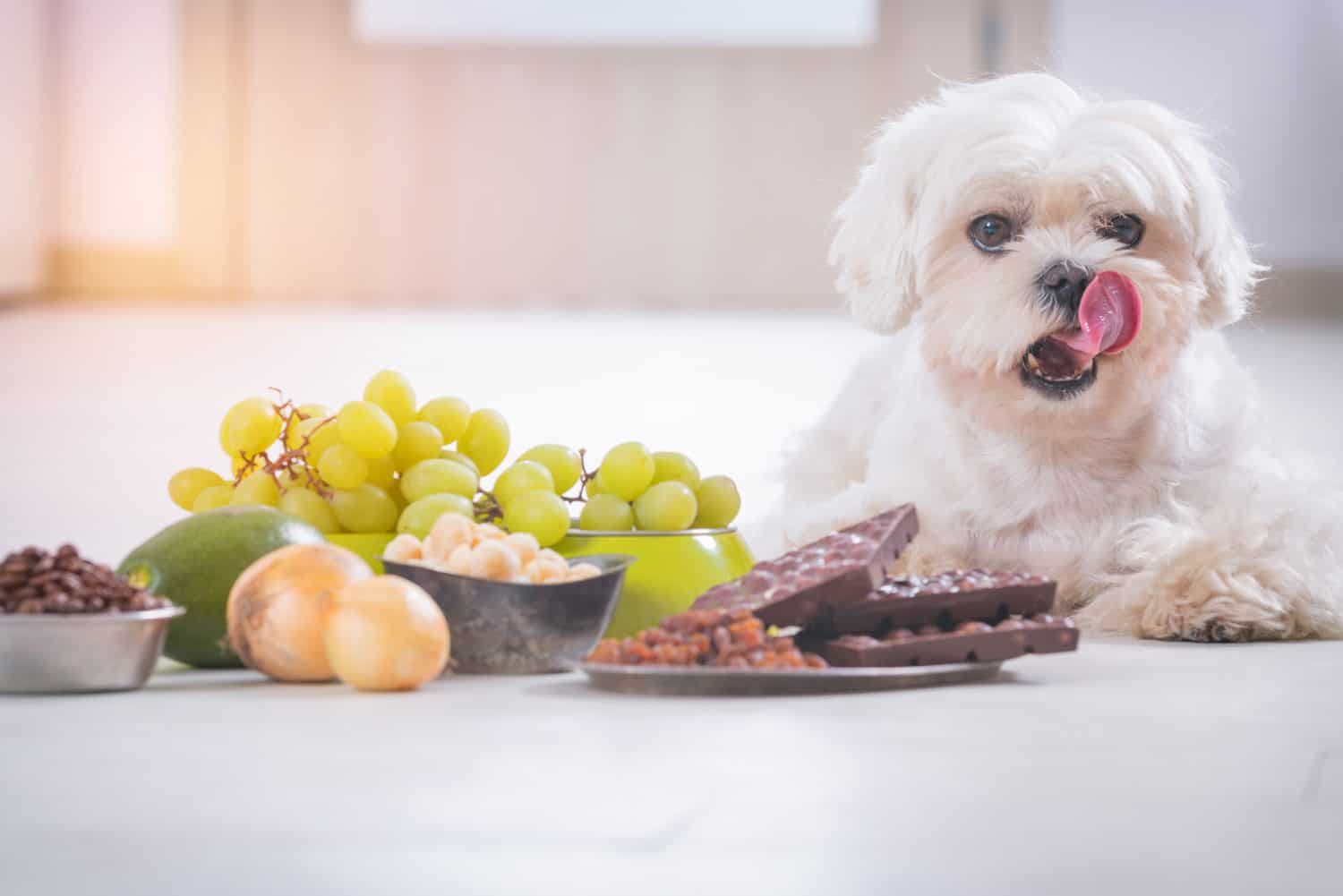
Many of your favorite holiday dishes should be avoided if you have pets, including onions and many types of nuts.
©Monika Wisniewska/Shutterstock.com
Onions can add a nice level of flavor to many Thanksgiving dishes but be cautious if you’re eating them around dogs. If your dog happens to eat a tiny piece of onion, they may experience some queasiness, but they’ll be okay. However, if dogs consume more than 0.5% of their body weight in onions, they may experience severe onion toxicity. The compounds in an onion can affect your pet’s red blood cells and cause them to break down faster than they can be replaced.
The level of toxicity depends on your dog’s size, and small breeds can be affected after ingesting as little as a teaspoon. If not treated, dogs may start to show symptoms within a day or two, including weakness, dark urine, and fatigue. Avoid throwing onions in the trash where your dog can reach them.
Fatty Foods
It’s not unusual for many people to overeat during the holidays because the food is just so good. However, part of the reason why much of it is so tasty is that it’s loaded with fat. It may be okay for humans, but allowing pups to consume fat is one of the quickest ways to send them to the emergency vet.
Some of the holiday culprits with the most fat include chicken skin, turkey skin, and gravy. The more fat a food contains, the harder it is for dogs to digest, and as a result, pets can experience vomiting or diarrhea. Allowing dogs to eat fatty foods over the long term can cause inflammation of the pancreas, which is a vital part of the digestive system. Talk to your vet if you’re unsure of what to include in your dog’s diet.
Chocolate
Whether it’s Easter, Christmas, or anything in between, there’s a good chance that chocolate will be involved. Dogs should avoid consuming chocolate at all costs. The issue with the dessert is that it contains theobromine, a toxic chemical to canines. The darker the chocolate, the more toxic it can be.
The symptoms of eating chocolate will vary depending on the weight of your dog, but they can include vomiting, diarrhea, tremors, heart problems, and even death. If you believe your dog consumed chocolate, head to the vet immediately.
When you’re indulging in some candy or chocolate, also be cautious of the wrappers. Dogs may try to chew on them, and if swallowed, they can become choking hazards. Be especially cautious around Halloween; kids often leave chocolate wrappers in the street, and your dog may try to lick them while being walked or playing outside.
Raisins
Many holiday desserts contain raisins, which are very toxic to dogs. While the exact harmful substance within them is still unknown, they definitely cause negative reactions within canines, with the most common result being kidney failure.
Dogs are unable to digest raisins, which is why, after eating them, your dog may experience vomiting, increased urination, lethargy, and dehydration. Grapes can cause a similar, though less extreme, reaction in dogs. It’s best to keep both ingredients out of the equation completely when cooking your holiday dinner.
Alcoholic Beverages
If your holiday celebrations often include alcohol, then you must be extra careful around your pets. Dogs won’t go out of their way to drink alcohol, but the beverages tend to be sweet, and your pet may lap it up out of curiosity. If they do, you must act immediately. Alcohol contains ethanol, and the more your pet consumes, the worse it can be. Ethanol is also found in other liquids that may be around your house, including mouthwash, aftershave, and hand sanitizers, so caution is always necessary.
Alcohol can intoxicate dogs like it does humans. However, other side effects can include depression, excessive drooling, weakness, collapse, and issues with low blood pressure. Dogs should avoid any alcohol, including beer, which can contain other harmful substances, such as chocolate, coffee, and spices. Don’t leave any beverages unattended this time of year.
Tips For Keeping Dogs Safe Around Holiday Meals
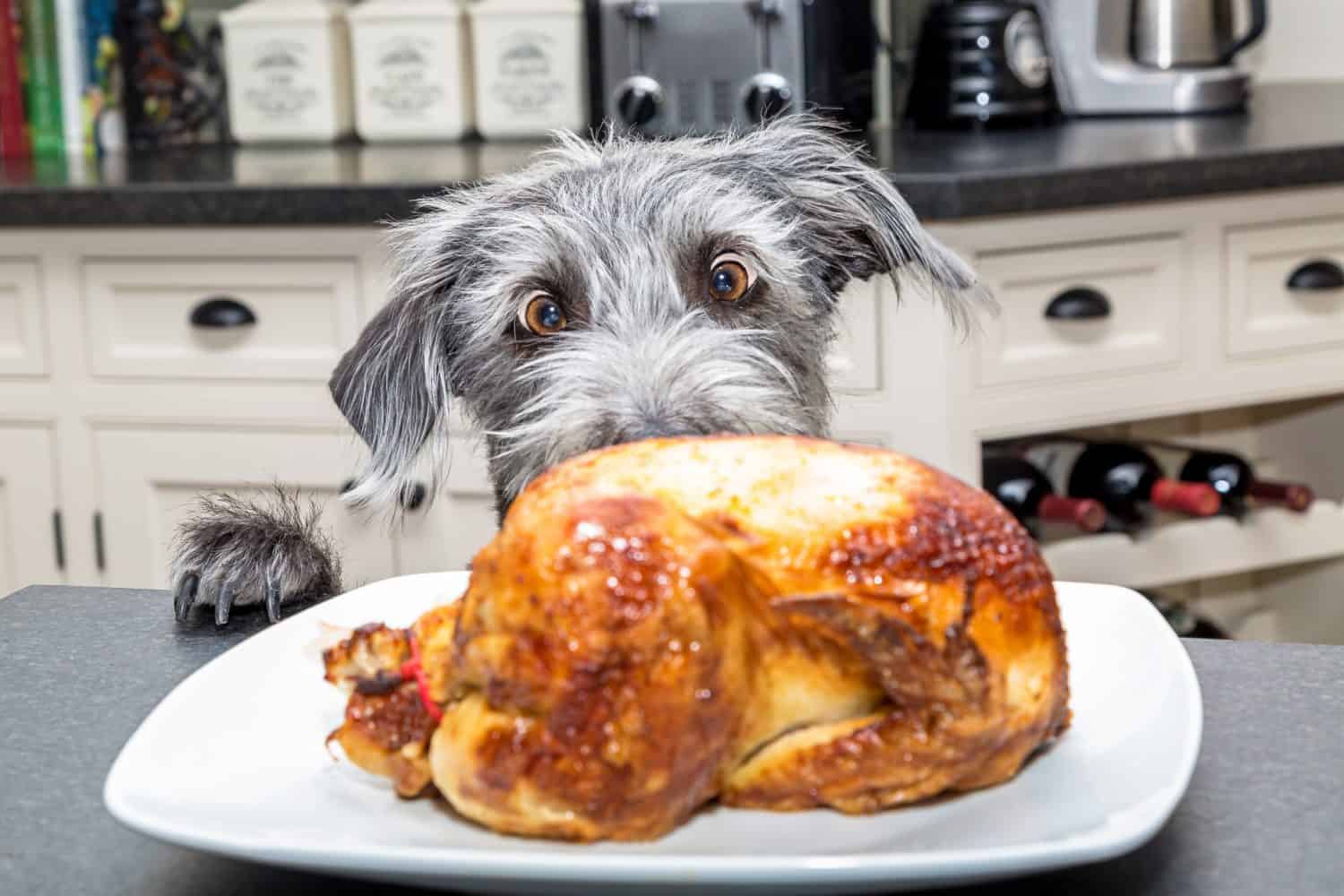
When it comes to keeping your dogs safe around holiday meals, follow common sense guidelines, like keeping the food out of reach.
©GoodFocused/Shutterstock.com
There are several ways to ensure that your dog doesn’t take a trip to the emergency vet over the holidays.
For starters, do your best to keep the feast on the table. It may be tempting to want to involve your pets in the festivities by handing them some table scraps, but many foods, including several not listed here (like sauces and dressings), can be hard for pets to digest. That rule goes for desserts as well. Many baked treats can include a sweetener called xylitol, which can be deadly if consumed by pets. If they eat uncooked, yeast-based dessert ingredients, they may experience bloating or painful gas.
The best way to keep pets at bay is to keep them in their own room or space during meals, so they’re less inclined to beg or get near toxic food. If you really want your pup to be a part of the festivities, then provide pet-friendly food options. Suggestions include safe bones from the pet store, plain pumpkin puree, or even a few bites of unseasoned turkey. Just don’t let them go overboard.
Be aware that many of your centerpieces and decorations can also be harmful to dogs, especially if they involve plants. Many holiday-themed plants, including baby’s breath, gourds, and pinecones, are toxic to dogs and can pose a choking hazard.
Discarding Trash
When you’re done with the holiday meal, put all discarded food in the trash and put the trash out of reach. When you bring the trash outside, put it in a tightly sealed trash bag or can so no pets can get to it.
Advise your guests of the rules for your pets and ensure that they follow your guidance. You should be the only one who feeds your dog during the festivities. Ensure that all guests also close any exterior doors they walk through so your dog doesn’t get the urge to escape, possibly posing yet another danger to your fur buddy. Keep everyone on the same page, and you and your pets can stay healthy throughout the holiday season.