
Myrtillocactus geometrizans fukurokuryuzinboku (mur-till-oh-KAK-tus–gee-oh-MET-rih-zanz–fu-ku-ru-ku-ryu-jin-bo-ku) is more commonly known by the much easier to pronounce name boobie cactus or booby cactus. The name boobie is derived from the resemblance of its unique growth patterns to the shape of a breast, particularly in certain mature specimens where the stems develop bulges or protrusions. Myrtillocactus geometrizans fukurokuryuzinboku is a cultivar of the species Myrtillocactus geometrizans. It is a nursery-produced cultivar that is rare and collectible. Keep reading to learn more about the boobie cactus, its varieties, how to propagate, and more!
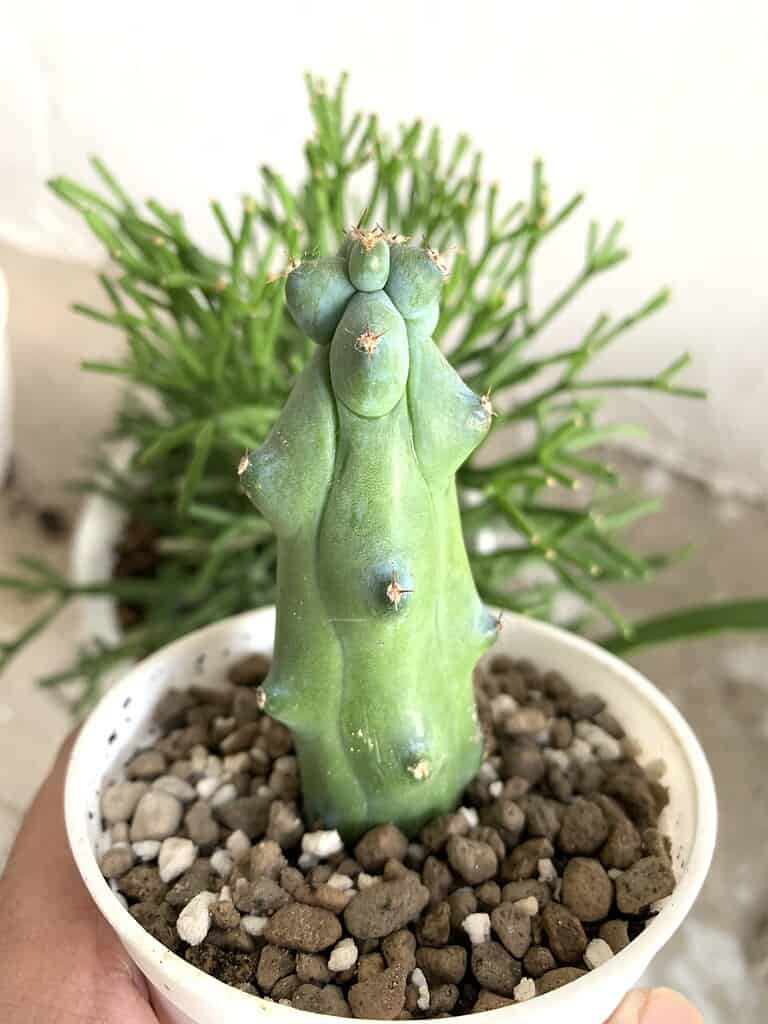
The name boobie is derived from the resemblance of its unique growth patterns to the shape of a breast.
©Jessica Doza/Shutterstock.com
Boobie Cactus: Appearance
The boobie cactus is a columnar cactus with a single upright stem. It can reach heights of up to 10 feet (3 meters) or more. What distinguishes this cultivar are its intriguing patterns. The stems display irregular, wavy, and undulating lines or ridges that create a striking visual effect. The coloration ranges from light green to dark green. Fukurokuryuzinboku is a relatively fast-growing cactus that rarely branches. The stem is columnar in and has a ribbed or fluted appearance. They can grow thick and have a cylindrical or slightly angular profile.
Distribution of Myrtillocactus geometrizans
As a nursery-developed cultivar, Myrtillocactus geometrizans fukurokuryuzinboku has no natural distribution. However, its parent Myrtillocactus geometrizans, the plant from which it was cultivated does. Commonly known as the Whortleberry cactus or Blue Myrtle cactus, Myrtillocactus geometrizans is native to Mexico. It is found in arid regions in the states of Puebla, Oaxaca, and Veracruz. It has also been introduced and cultivated in various other regions worldwide due to its ornamental value. The natural habitat of Myrtillocactus geometrizans consists of dry, desert-like environments, at elevations ranging from sea level up to 6,500 feet (2,000 m). It thrives in areas with warm to hot temperatures and very little rainfall. Myrtillocactus geometrizans can survive prolonged droughts.
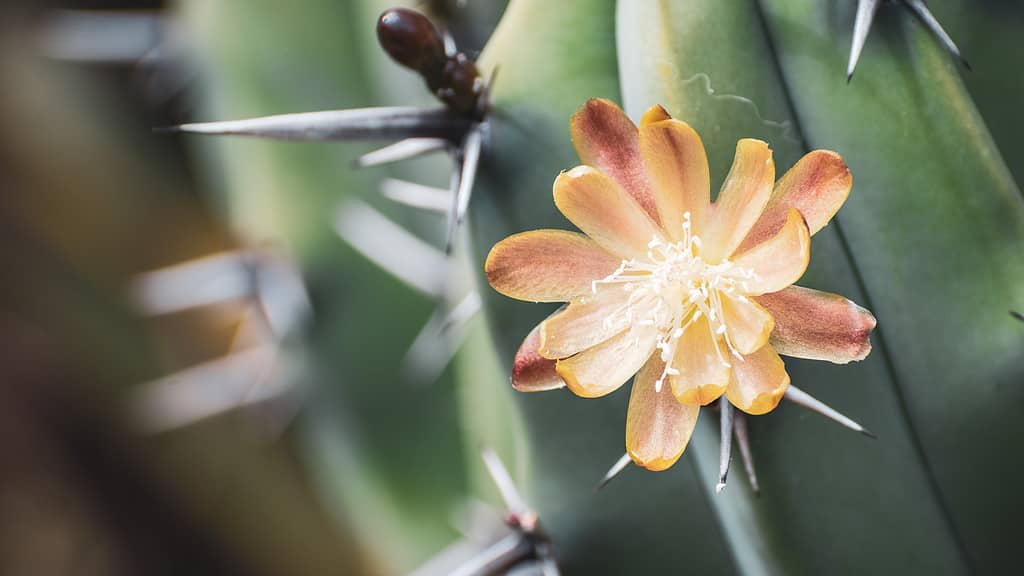
Myrtillocactus geometrizans thrives in areas with warm to hot temperatures and very little rainfall.
©Sundry Photography/Shutterstock.com
Boobie Cactus: Varieties
Myrtillocactus geometrizans Fukurokuryuzinboku, has only one recognized variety. Fukurokuryuzinboku is a specific selection or variation of the Myrtillocactus geometrizans species, specifically bred for its unique characteristics. As a cultivated variety, there is only one recognized and commercially available cultivar under the name Fukurokuryuzinboku.
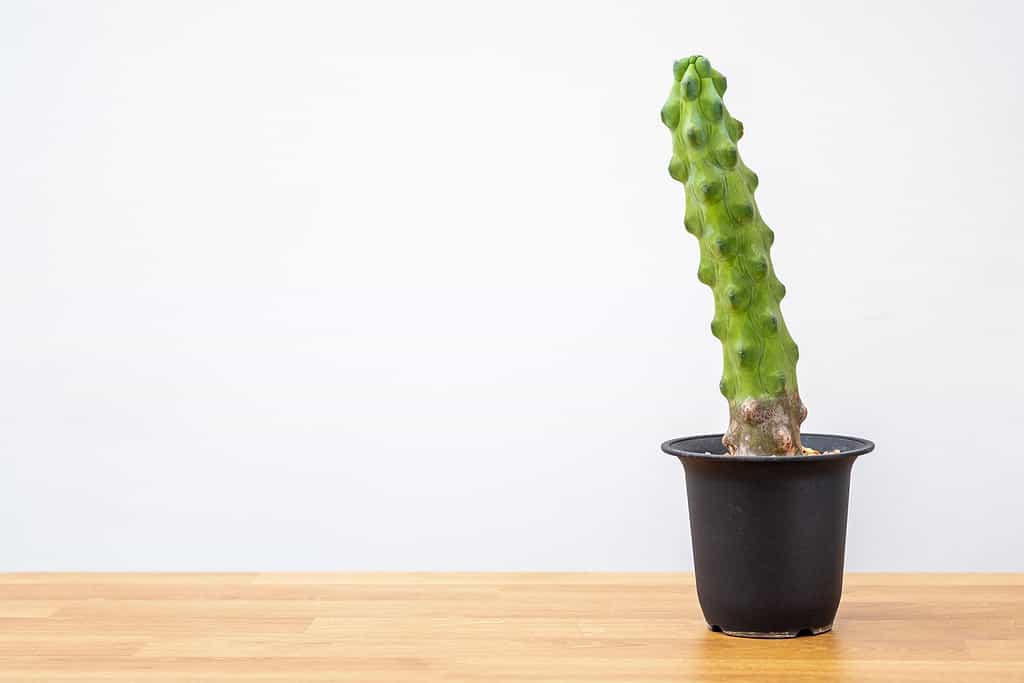
As a cultivated variety, there is only one recognized and commercially available cultivar under the name Fukurokuryuzinboku.
©chakkraphong jinthawet/Shutterstock.com
Boobie Cactus: How to Propagate
As a cultivated variety, Myrtillocactus geometrizans Fukurokuryuzinboku cannot be propagated from seed. Plants propagated from seed will revert to the original type. Therefore to ensure that you will have the ornamental cactus you desire, the most straightforward and successful method of propagation is by cuttings. This can be as simple as snipping the top 2-3 inches (5-8 cm) off the top of the existing plant. Allow the wound to dry out and form a callus. Once the callus has formed, the cutting can be placed in well-draining potting soil. Water sparingly. An excellent resource for learning the ins and outs of propagating Fukurokuryuzinboku can be found here.