
Caring for roses can be a labor of love, but the efforts are well worth the reward. Creating a routine and understanding when and how to care for your beautiful blooms is a must for a thriving display come spring — and pruning is an essential step in that routine.
In this article, we’ll discuss how to prune roses for winter, when to prune roses, and top tips for a beautiful blooming season.
Let’s dig in!
When to Prune Roses for Winter
Before discussing how to prune roses for winter, it’s important to understand when to prune roses for the winter.
Timing is everything, and starting too early could damage your prized petals.
The best time to prune your roses for the winter is shortly after the first or second hard frost. This frost will kill off lingering leaves and tell the plant to redirect nutrients to the crown and roots.
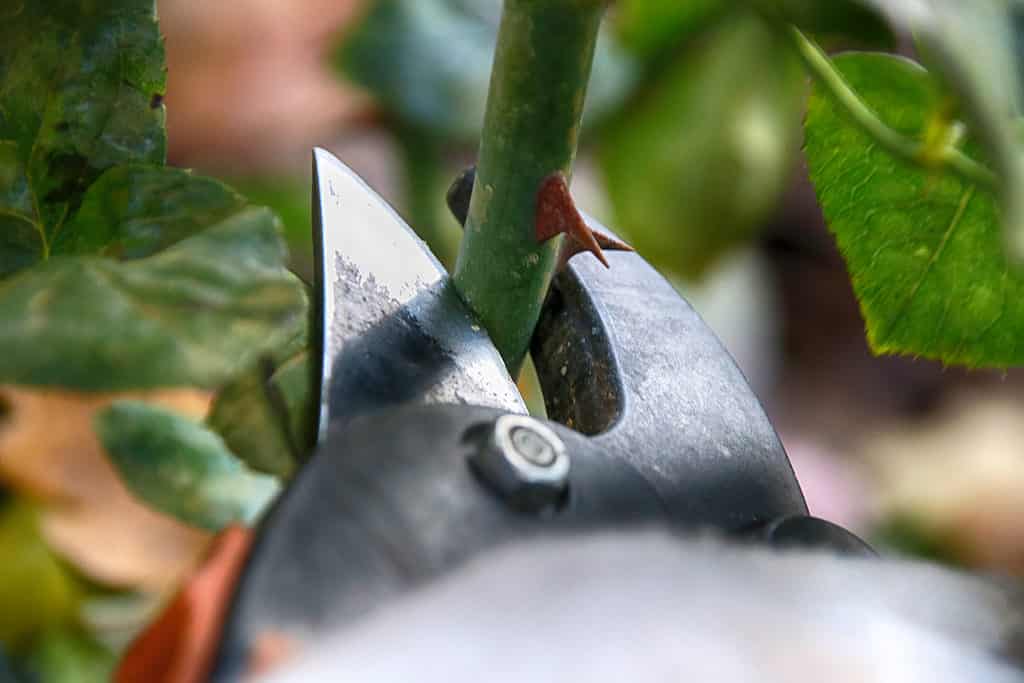
Prune your roses after the first or second hard frost and never in the spring or summer.
©photowind/Shutterstock.com
Can You Prune Roses in the Summer?
You can prune your roses at any time during the early winter or late winter to early spring. However, it’s crucial that you do it between growing seasons; never prune your roses in the summer!
Pruning your roses in the summer or late spring when buds have started forming could drain your roses of their precious sap. During the active growing season, roses produce sap in their stems to circulate nutrients; it’s literally the lifeblood of your plant.
If too much sap leaks, your roses will become nutrient-deprived and more disease-prone. The roses will also redirect valuable nutrients to healing rather than blooming, meaning fewer blossoms for you to enjoy.

Roses grow actively during the summer. Pruning then could cause irreparable damage.
©Maria Rzeszotarska/iStock via Getty Images
How to Prune Roses for Winter: A Step-By-Step Guide
Pruning roses isn’t difficult, but it does require a bit of preparation and attentiveness.
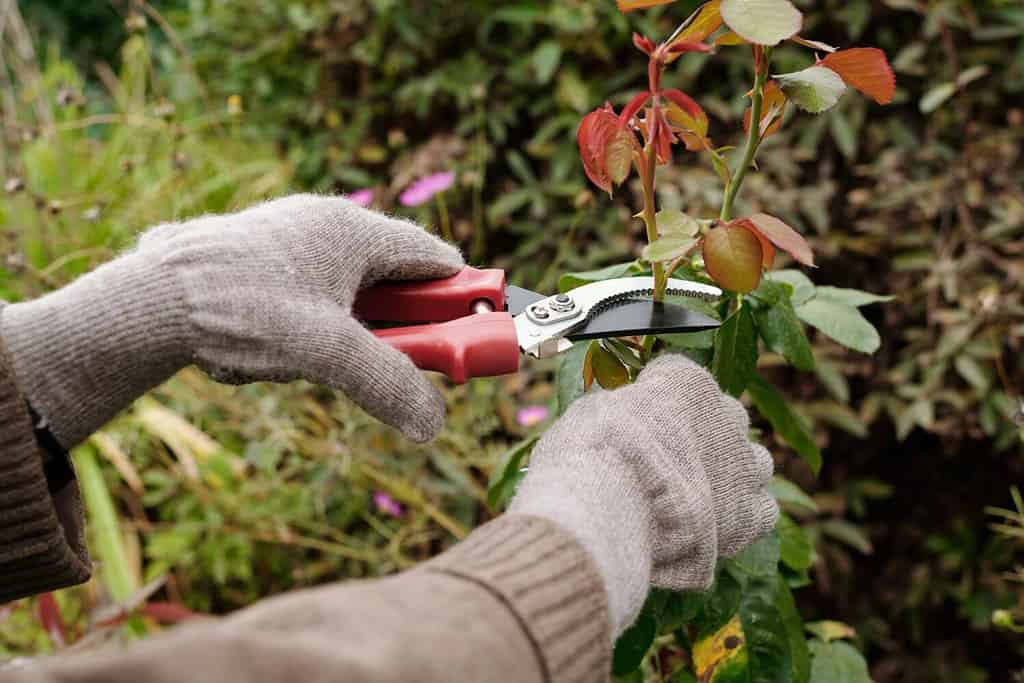
Take your time when pruning roses.
©Pressmaster/Shutterstock.com
1. Gather the Materials
To prune your roses, you will need:
- Sharp, clean pruning shears
- Long-handled loppers
- A pruning saw
- Safety glasses
- Gardening gloves
- A bin or wheelbarrow
- Disinfectant
Depending on the type and age of your roses, you may not need all of the cutting tools listed here. However, being prepared will prevent extra trips to the hardware store for more supplies.
2. Choose Your Timing
As mentioned previously, it’s best to wait until one or two hard frosts have affected your area, but before the winter truly sets in. Cutting frozen rose stems could cause splintering and breakage.
If you miss your window in the fall, you can do your winter pruning when the top inch of ground is thawed and spring is on the horizon. The exact timing will depend on your USDA zone and climate.
3. Remove Dead or Diseased Canes
When the time comes, take a look at your roses. Note any dead or diseased canes, as these will be the top priority for removal. Snip at an angle, cutting back until you see signs of green in the cane.
Remove these and transport them away from your other plants to reduce the risk of transmission.
4. Remove Weak or Spindly Growth
Next, clear out weak or spindly canes. Trim on an angle back to the base of the plant or larger branch.
Thinning out weak canes that are unlikely to produce blossoms will help redirect nutrients to healthier canes in the spring.
5. Shape Your Roses
If you prefer a well-manicured rose bush, consider pruning and shaping the canes to your liking. Allow plenty of room for sunlight penetration and airflow.
6. Dispose of Remaining Cuttings
When you’re done, dispose of the rest of your cuttings. Remove as much debris from around your rose bush as possible to prevent bacteria growth when spring comes.
7. Fertilize and Mulch
Consider adding a layer of fertilizer or organic matter and a layer of mulch to nourish and protect your rose’s roots. Straw is a great mulch option for most roses.
8. Clean Your Tools
Clean and disinfect your tools after each pruning session to remove any diseased or infected wood remnants. This process will also help prevent rust over the winter.
Depending on the state of your roses, you may choose to disinfect your tools after removing diseased wood. This is recommended if the disease is significant.
How to Protect Pruned Roses From Frost
If you have a cold-sensitive rose cultivar, you may decide to add extra protection during the winter months.
Adding a layer of straw or mulch will help protect the roots. However, if you have a climbing variety, you may want to cover it with burlap for the winter.
You can also use chicken wire and stakes to wrap your rose bushes and fill the “wrap” with leaves for extra protection from the bitter winter winds.