
When most people picture a cactus, they imagine a small, globular cactus like the golden barrel or the tall saguaro, standing proud in the desert with its “arms” outstretched.
They don’t picture the peanut cactus: a unique blooming cactus that droops and trails like a vine.
In this article, we’ll cover the unique features of the peanut cactus and how to grow and care for it at home.
Let’s dig in!
Peanut Cactus: Origins
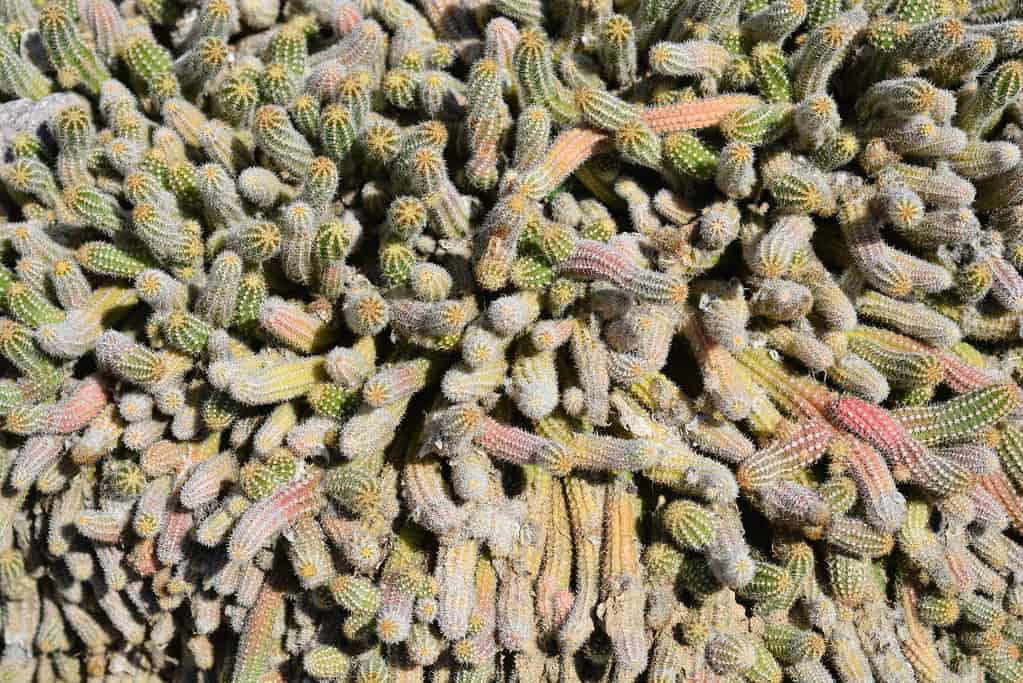
Echinopsis chamaecereus in its natural environment.
©iStock.com/Nahhan
The peanut cactus, Echinopsis chamaecereus, is native to Argentina. It was discovered in the late 1800s and thought to be endemic to the region at the time.
Famed Argentinian botanist and mycologist Carlos Spegazzini discovered this peculiar cactus during his travels. Spegazzini classified the plant as Chamaecereus silvestrii, which is still an accepted synonym of Echinopsis chamaecereus, despite its reclassification.
The peanut cactus earned its colloquial name from its appearance to peanuts during its early stages of growth—a distinction that’s lost as it grows and becomes more tubular.
Peanut Cactus: Appearance
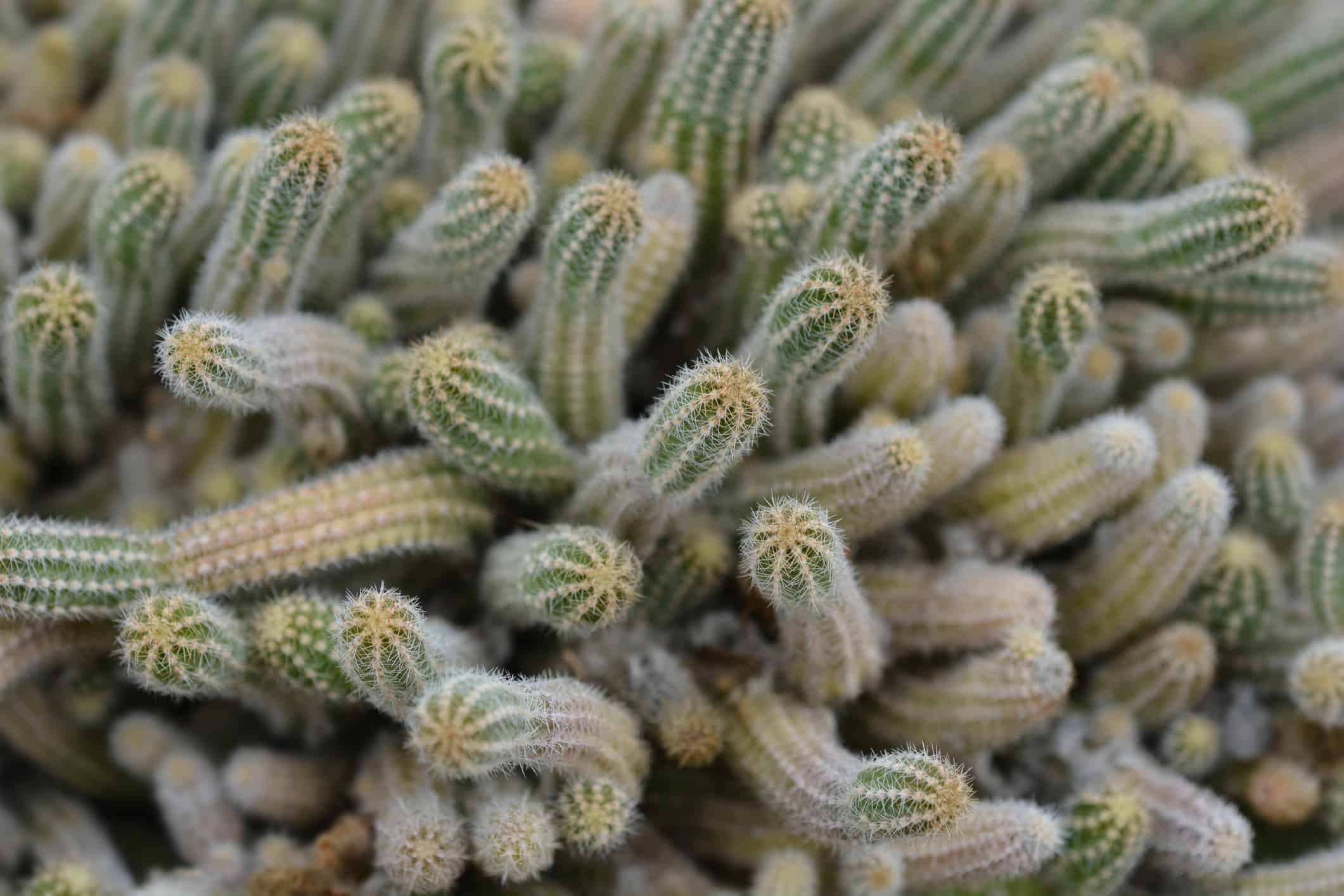
The peanut cactus is comprised of narrow, tubular formations that grow in tight clusters. The vibrant green exterior is covered by soft (but sharp) off-white follicles.
While this cactus starts with a vertical growth pattern, it will soon tip and trail over the sides of its pot. It almost appears as though the cactus is wilting or got too tired to continue holding itself upright—this is natural and not cause for alarm.
Peanut cacti have stunning orange-red flowers that pop up sporadically throughout the cluster, adding a vibrant burst of color.
It’s a common misconception that peanut cacti will only grow six inches tall. While they may only reach six inches high while upright, their trailing fingers can grow significantly longer. Like many cacti, this species is a slow grower—time and care are essential to see significant growth.
Popular Peanut Cactus Cultivars
Botanists and horticulturalists have developed several cultivars of this unique cactus over the years. Some of the most popular types include:
Echinopsis chamaecereus ‘Annie’
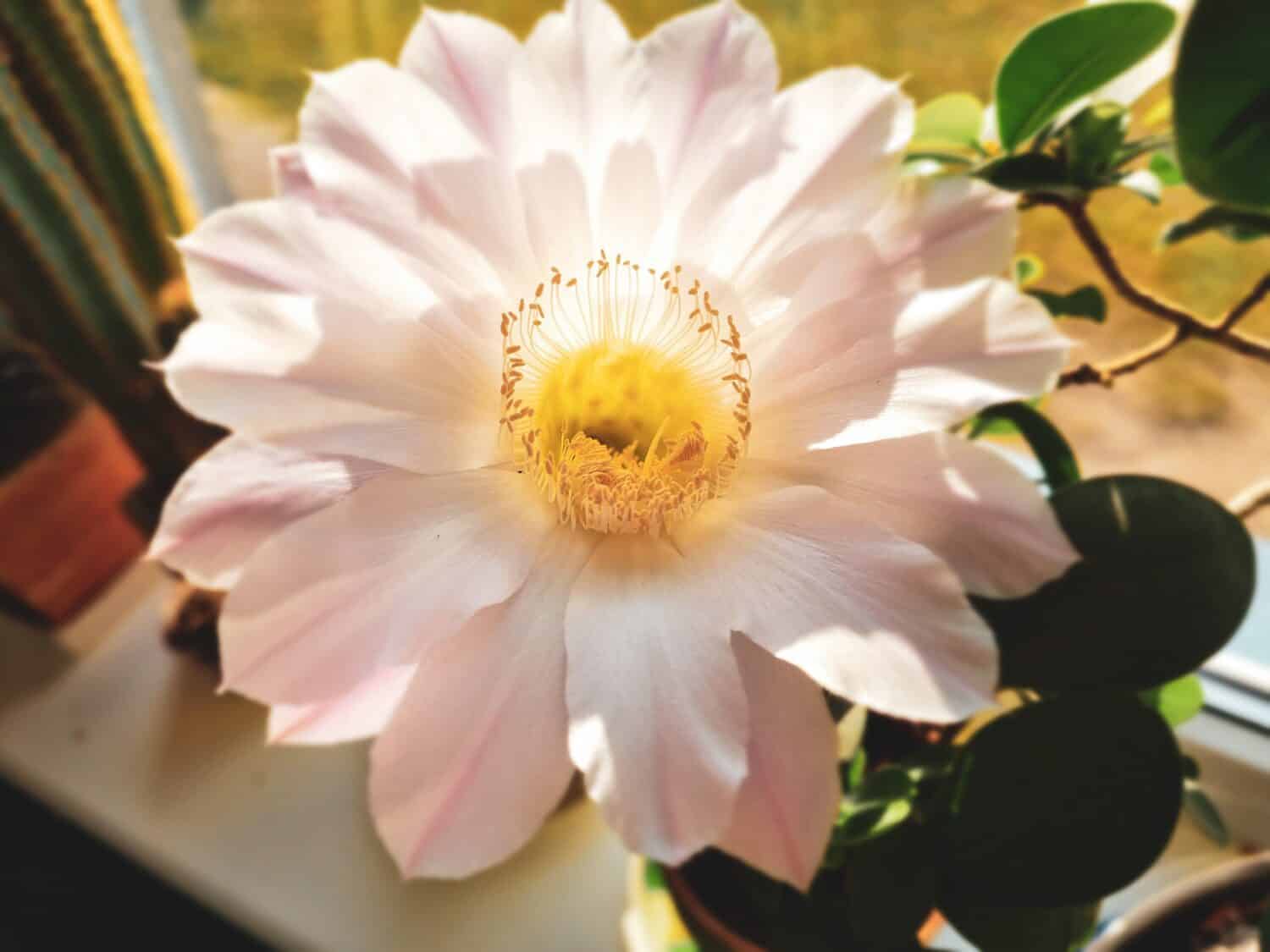
‘Annie’ has yellow-pinkish flowers.
©Aija Freiberga/Shutterstock.com
This cultivar is similar to its parent plant, with a few notable differences. Rather than a consistent green shade, Annie darkens to a purplish red at the tips. Yet, the most notable difference is the blooms.
While the original peanut has vibrant red-orange blooms, Annie has delicate yellow and pink flowers that plant collectors love.
Echinopsis chamaecereus ‘Rot Violet’
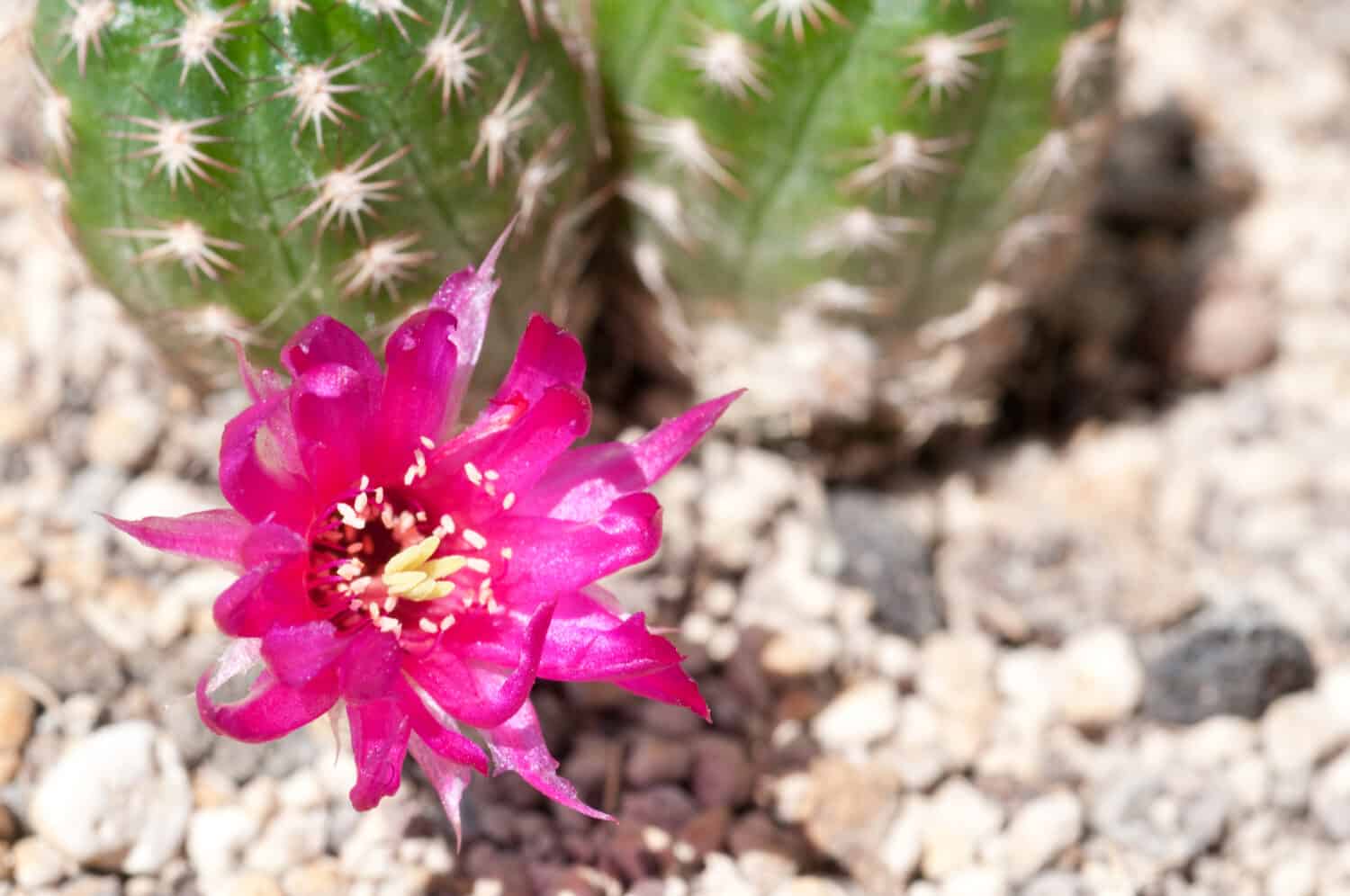
Echinopsis chamaecereus ‘Violet’ has stunning fuschia blooms.
©Bernd Schmidt/Shutterstock.com
The Rot Violet is similar in appearance to the original peanut cactus. However, this variety has thicker stems and deep crimson flowers. Cactus collectors also love the Echinopsis chamaecereus ‘Violet’ cultivar, which boasts vibrant fuschia blooms.
Echinopsis chamaecereus ‘Cristata’

Echinopsis chamaecereus ‘Cristata’ is often confused for Mammillaria elongata ‘Cristata’ (pictured here).
©finchfocus/Shutterstock.com
This unique cultivar has a whimsical, wobbly growth pattern similar to a brain cactus (Mammillaria elongata ‘Cristata’). It’s a rare cultivar and is considered a valuable collector’s item.
While the Echinopsis chamaecereus ‘Cristata’ doesn’t typically bloom, it will occasionally grow a vertical stem like a traditional peanut cactus that will produce flowers. In the winter, when this cultivar is dormant, it deepens into a reddish purple.
Echinopsis chamaecereus ‘Lutea’

Lutea will only survive when grafted to another cactus.
©siraphat/Shutterstock.com
Also called the yellow peanut, Echinopsis chamaecereus ‘Lutea’ has otherwordly bright yellow stems. It, too, is incredibly rare. Lutea doesn’t produce chlorophyll (which is why it’s yellow instead of green) and will die unless grafted to an established cactus.
Echinopsis chamaecereus ‘Captain Jessop’
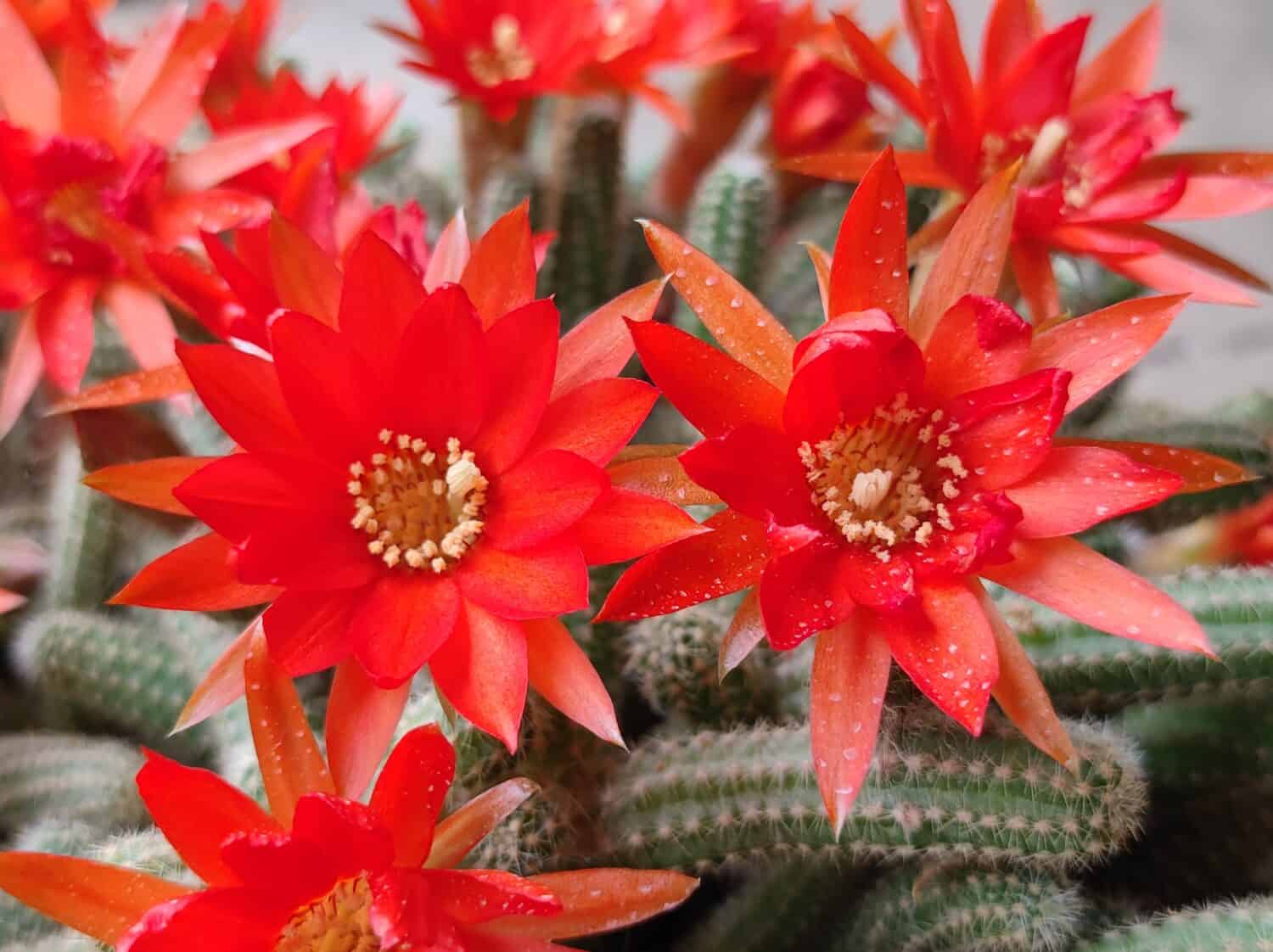
‘Captain Jessop’ produces a lot of blooms.
©Jana Milin/Shutterstock.com
Captain Jessop is a hybrid peanut that tends to be more stunted and vertical than its parent plant. However, these features don’t limit its proclivity for blooming with stunning orange-red blossoms.
If you’re looking for a peanut cactus with limited trailing habits and plenty of flowers, this is the one for you.
Echinopsis chamaecereus ‘Westfield Alba’
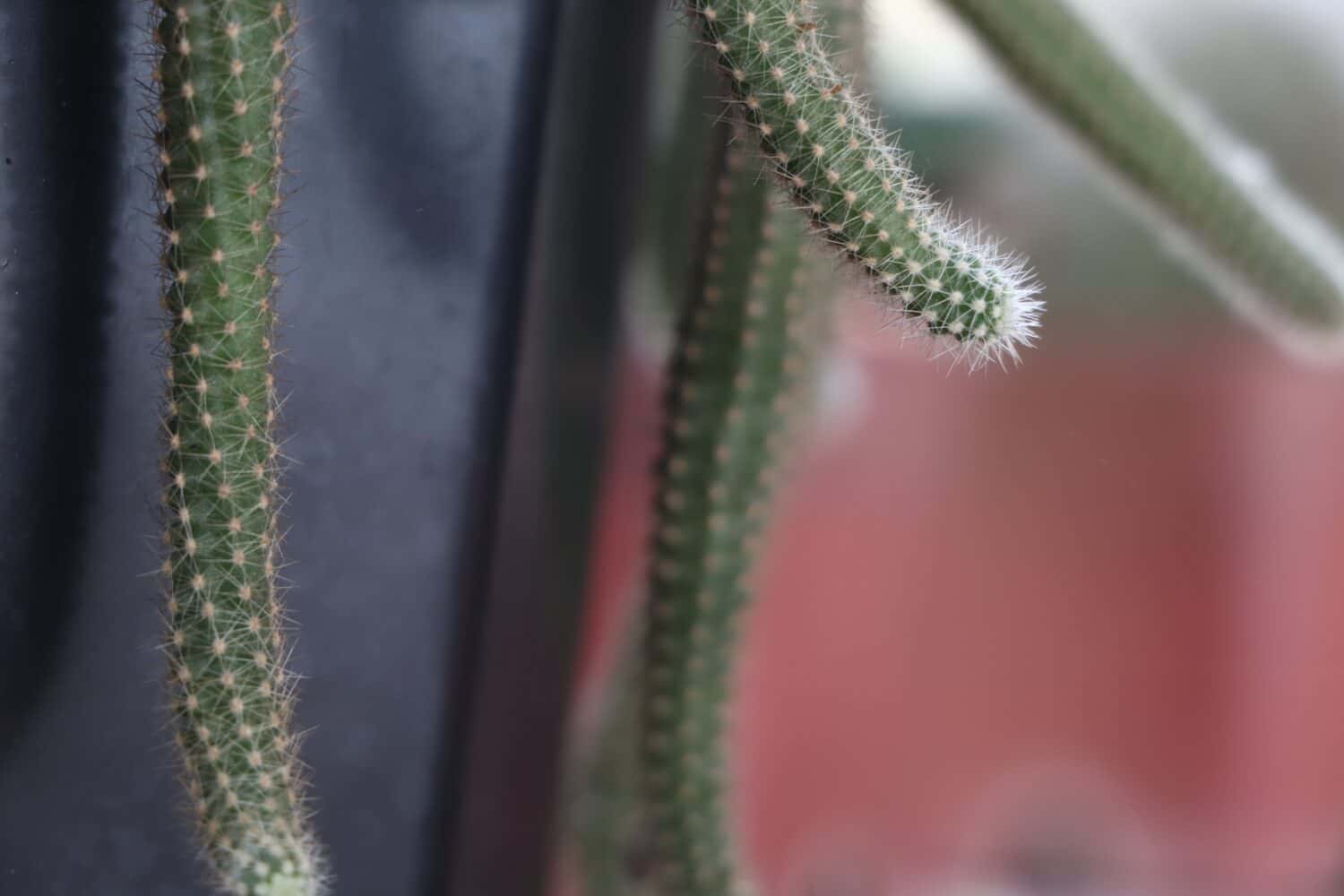
‘Westfield Alba’ has crisp white spines and blossoms.
©Horman Manolo/Shutterstock.com
This incredible cultivar has similar growth patterns to its parent plant. However, the spines are whiter—just like the blooms.
With proper care, Westfield Alba will produce glorious daisy-like white blossoms that set it apart from other cultivars and hybrids.
How to Care for a Peanut Cactus
Peanut cacti are perfect for beginners as they are low-maintenance indoor plants, although they can also be planted outdoors in USDA zones 10-11.
1. Soil Selection
Opt for well-draining cactus soil to nurture your peanut cactus. While succulent soil can suffice, cactus soil— which is less absorbent— better mimics its natural habitat. Avoid regular potting soil and select a pot with proper drainage to prevent root rot.
2. Watering
This cactus is a favorite among beginners and those who struggle to keep plants alive. During the growing season in spring and summer, water it once a month, ensuring the soil dries completely between waterings. In drought conditions, increase watering frequency to every three weeks.
During its winter dormancy, reduce watering to every six weeks. If the cactus appears shriveled, it may need more water.
3. Sun Exposure
Ample sunlight is crucial for your peanut cactus’s well-being. Place it near a sunny window, ensuring it receives at least six hours of daily light. In winter, consider supplementing natural sunlight with a grow light.
One key thing that sets the peanut cactus apart from others is its need for cooler temperatures during the winter. While this cactus isn’t cold hardy by any means, a lower ambient temperature is essential to promote blooming during the spring. Keep it away from vents, and consider moving it to a cooler, temperature-controlled room in your house.
4. Maintenance and Care
Like most cacti, the peanut’s sharp bristles keep pests at bay. However, scale insects or mealy bugs may invade.
If you notice pests, spray with a diluted, succulent-friendly pesticide. While these pests are susceptible to dish soap and a cloth, the traditional succulent care approaches don’t work when your plant has a spiny shield.
5. Repotting and Fertilization
Your peanut cactus doesn’t need fertilizer to thrive. However, introducing a cactus-friendly fertilizer monthly during the active growing season can encourage blooming.
Repot your cactus every two to three years to help with crowding and replenish the soil nutrients.
How to Propagate a Peanut Cactus
Peanut cacti are incredibly simple to propagate. The easiest method is to divide them, removing the pups from the parent plant’s pot. Each pup will have its own root system and will easily adapt to a new planter. Gently remove the pups using tongs or tweezers and repot.
You can also propagate this cactus with a stem cutting. Use a clean knife to slice through an established stem, taking 2-3 inches. Leave the cutting in a dry place to callous over for a couple of days. Dip the cutting in rooting hormone and plant in cactus soil, misting it slightly. Wait until the roots are established to give it a good watering.
How Do I Get My Peanut Cactus to Bloom?
Unlike most cactus species, the peanut blooms quite readily. The key is to place it in a cool place for the winter to let it vernalize, similar to a tulip bulb. Introducing fertilizer at the start of the growing season (the spring) can also help give it the energy it needs to flourish.
Is the Peanut Cactus Toxic to Pets?
This cactus is not toxic to pets. While its spines are softer and more delicate than other types of cacti, they can still be harmful to pets and children. Keep this cactus out of reach.
Are Peanut Cacti Edible?
There’s a common misconception that peanut cacti have earned their name due to their similarity in taste to peanuts. This is not the case. While this cactus is non-toxic, it’s not recommended to eat your house plants.
Why is My Peanut Cactus Turning Purple?
Cacti tend to turn purple if they’re experiencing stress, such as too much sun exposure, temperature changes, or frequent repotting.
Before taking any drastic measures, check your cactus cultivar. Some hybrids, like Echinopsis chamaecereus ‘Cristata,’ darkens during the winter dormancy period.
Why is My Peanut Cactus Getting Leggy?
Like any succulent, the peanut will get leggy with insufficient lighting. You may notice it getting skinny toward the tip. While you can’t fix a leggy cactus, you can move it to a sunnier area or use a grow light to prevent further malformations.