
So, you’ve decided that you want to build a chicken coop. Congratulations! Having chickens on your property is beneficial for various reasons, as these feathered friends can exponentially increase their value over time. Whether you’re looking to source more organic eggs or create a small profit by providing a service to your community, rearing chickens can quickly become a worthwhile investment. But you can’t just have your chickens wandering around willy-nilly. One must follow a particular structure to create a safe chicken coop for your birds.
In this article, we’ll detail exactly what elements are necessary for building the ideal chicken coop, including a few tips and tricks you may not have initially considered. Without further cockadoodle-adieu, let’s get into some essential components to keep your chicken coop safe.
Preparing Your Chicken Coop For Success
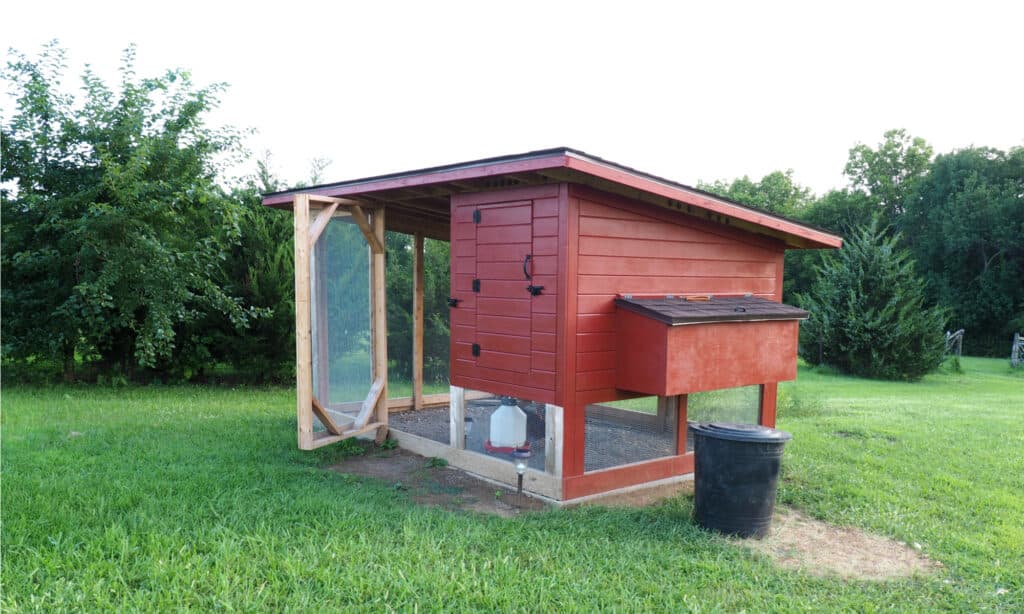
A chicken coop of true quality isn’t fanciful- it’s functional!
©Cynthia Farmer/Shutterstock.com
Before we begin listing the criteria for creating a quality chicken coop, it’s important to state that building such a coop doesn’t have to be difficult; it just needs to be safe. Don’t worry about the bells and whistles, like having the most up-to-date technology or eccentric and aesthetic designs. The most important thing is that your coop is a haven for your chickens, the creatures that are, from here on out, in your care. If you don’t build a space that makes your chickens feel secure and comfortable, that indicates that there was no job well done. It doesn’t matter if it’s the best-looking on the block so long as it’s the most efficient and safe chicken coop. Here are the elements it takes to get it to that standard.
1. Consider The Sizing
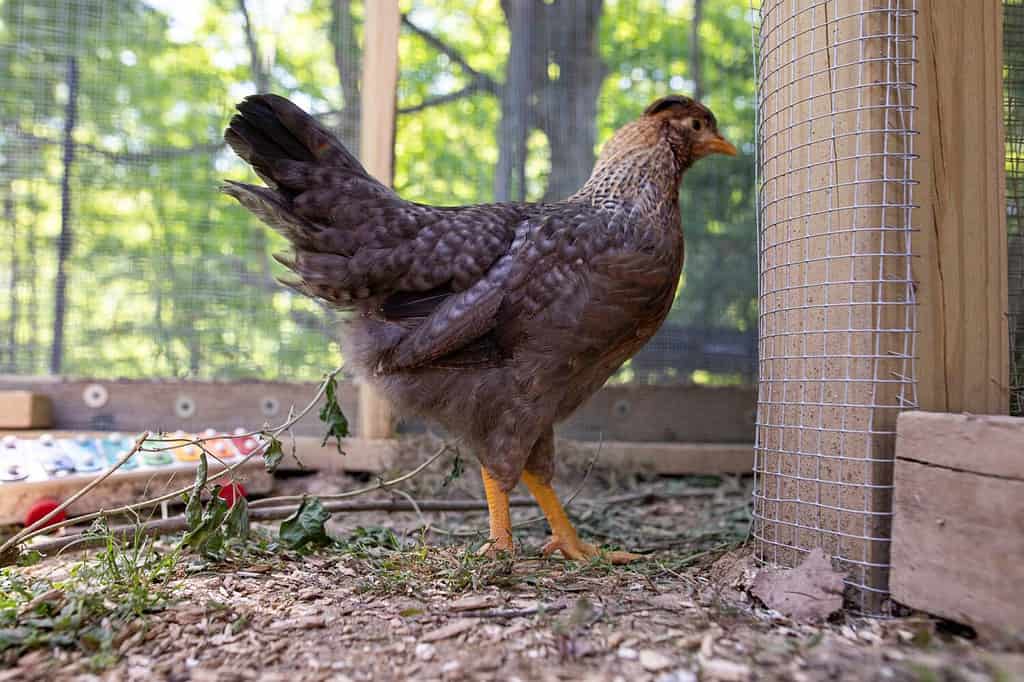
A chicken “run” is a large roaming area located directly outside the walls of the chicken coop.
©Allison McAdams/Shutterstock.com
The first component, which impacts several things, is the size of the coop. This is important not only for ease of maintenance but also for your bird’s health. If there’s not enough space, it can lead to some unfortunate issues. These concerns include illness outbreaks, feather pecking, and general chicken stress. To avoid this, there are some general rules of thumb to follow.
Firstly, roughly 2-3 square feet of space should be inside the coop multiplied by the number of chickens it’s intended to store. Smaller breeds might need less space, and larger ones may need more. If you aren’t sure how many chickens you’d like yet, then it’s always a good idea to build it a bit larger than you think you’d need to accommodate for the future.
Here are some practical questions to ask yourself regarding the size of the chicken coop:
- Will this coop be easy to clean?
- Is there enough space for each chicken to feed?
- Will the size of this coop make egg collection simple or difficult?
The indoor space is necessary, as it’s essential for keeping the chickens secure in the nighttime. Your chicken coop also needs a fenced-in outdoor area. This area is often known as a “run,” where your chickens forage, take dust baths, and get some much-needed exercise. This area should be about 8-10 square feet per chicken. Don’t skip out on it, either- lacking a roaming space can cause strong behavioral issues in your birds!
2. Ventilation is Key
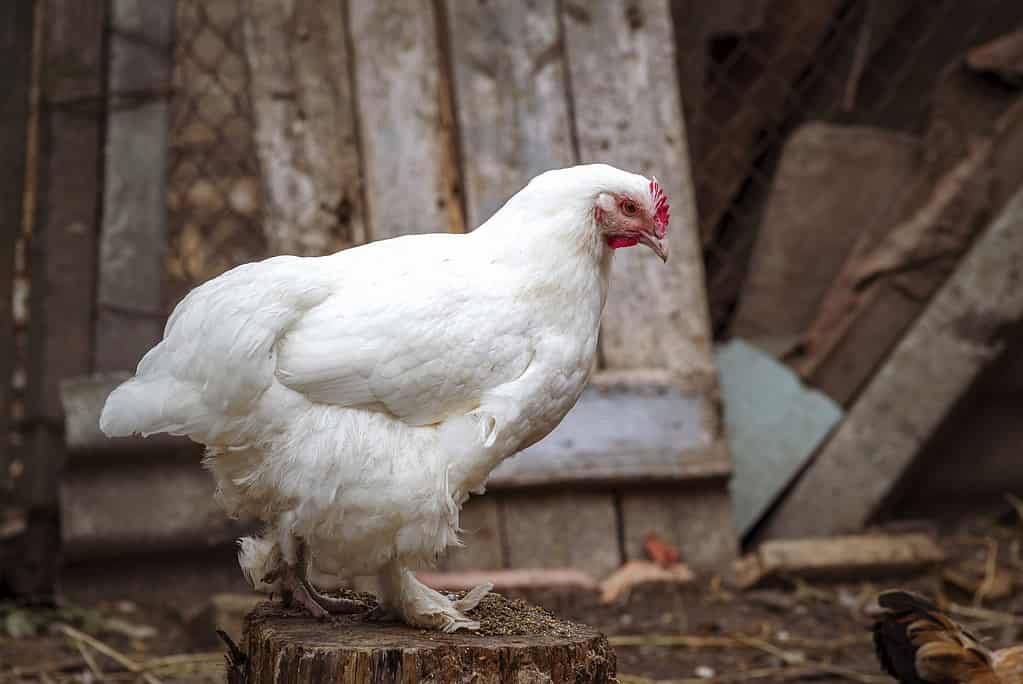
It’s imperative that your chicken coop is ventilated, and there are plenty of ways to set up this ventilation.
©Victoria Moloman/iStock via Getty Images
The next factor to consider is how your chicken coop will be ventilated. Though you might not know it yet, you’ll quickly realize that chicken coops do not smell fantastic. These birds defecate much more than you’d initially assume, which can accumulate into a gnarly smell very fast. Also, the ammonia gas from said bathroom breaks can harm the chickens’ respiratory system and eyes (yours, too)!
In a chicken coop lacking ventilation, there can also be an accumulation of moisture. This is also bad for the chickens, as this dampness can contribute to mold growth. A moldy chicken coop is, simply put, a recipe for a bad day. Luckily, there are three ways that you can choose from to ventilate your chicken coop and avoid these issues properly.
Natural Ventilation
Natural ventilation is the most basic and most common of the three types. This relies on the natural flow of air through windows or vents or even gaps under the roof. As the warm, moist, smelly air rises, it exists through these top openings. Then, the fresh air creeps in through the bottom ones. If you go with this method, you’ll want to orient the chicken coop in a way that catches the wind correctly. It might be cost-effective and requires no electricity, but its efficiency can be questioned during unfortunate weather conditions.
Wind Turbine Ventilation
The use of wind turbine vents, which are sometimes referred to as whirlybirds, is also popular. These vents get installed on the chicken coop’s roof. They have fins that catch the wins, making the turbine rotate. The old air gets drawn out from the inside through the subsequent suction effect. The main advantage of this method is that, while it’s more efficient than natural ventilation, it still doesn’t need any electricity to operate. But, on days when the wind is calm, you might have to deal with limited amounts of ventilation.
Mechanical Ventilation
The last ventilation type, mechanical ventilation, uses electric fans to control the air circulation. These are usually used in larger commercial settings, so you likely won’t opt for these. They are pretty advanced, though, and can be combined with sensors and controllers to help you maintain precise temperature and humidity settings. It’s certainly consistent, but it’s also expensive. It also relies on a power source, so there’s the potential for mechanical failure.
3. Add Interior Elements
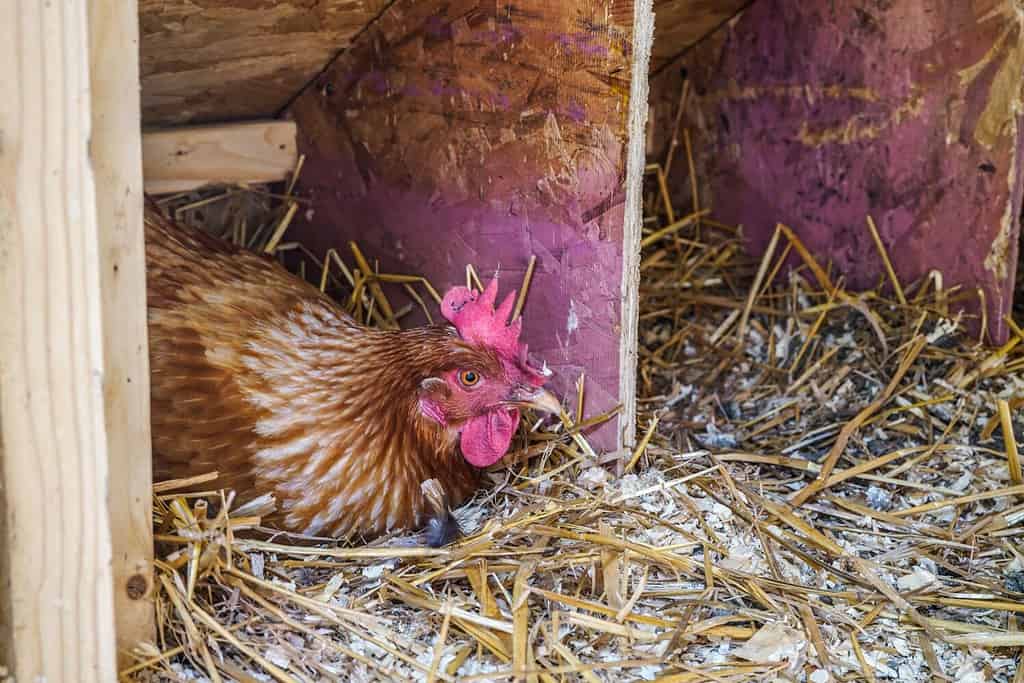
Interior elements like nesting boxes are essential for egg production and general chicken happiness!
©Kathy D. Reasor/Shutterstock.com
Now that you’re certain that the chicken coop is the right size and well-ventilated, the next topic is the coop’s interior elements. These are key to the chicken coop’s functionality, so include all three important parts listed below.
Nesting Boxes
If you want your hens to lay eggs, which is a safe assumption, you must ensure a quiet, clean, safe place for them. This is where nesting boxes come in. These confined boxes make egg collection and egg-laying for the chickens much easier.
One nesting box should be provided for every 3 or 4 hens. If the boxes are overcrowded, there’s a risk of competition. This can, unfortunately, result in broken eggs or hens laying in random areas. Fill these boxes with a material that the chickens find comfortable, like straw or wood shavings. Then, regularly clean the boxes to remain inviting for your hens to lay their eggs!
Roosting Bars (Perches)
Interestingly enough, chickens have the instinct to roost off of the ground during the night hours. Roosting bars, also called perches, are a space for the chickens to sleep and feel safe from ground-dwelling predators on the prowl. You should provide at least 10 inches of roosting space for each bird and make the perches about 2-4 inches wide. To prevent foot injuries and keep your chicken coop safe for your birds, it’s also important that the roosting bars are smooth. Ensure these bars are placed high above the nesting boxes so the chickens don’t sleep inside those boxes and soil the eggs.
Dust Boxes
Chickens use dust boxes or baths to clean themselves from parasites like mites and lice. It’s also a generally enjoyable time for the chickens to roll around in the dust and sand (or potentially diatomaceous earth), their form of hygienic care. Regularly cleaning these dust boxes would be best, as you’d be surprised by how dirty these birds can be.
4. Balanced Sunshine
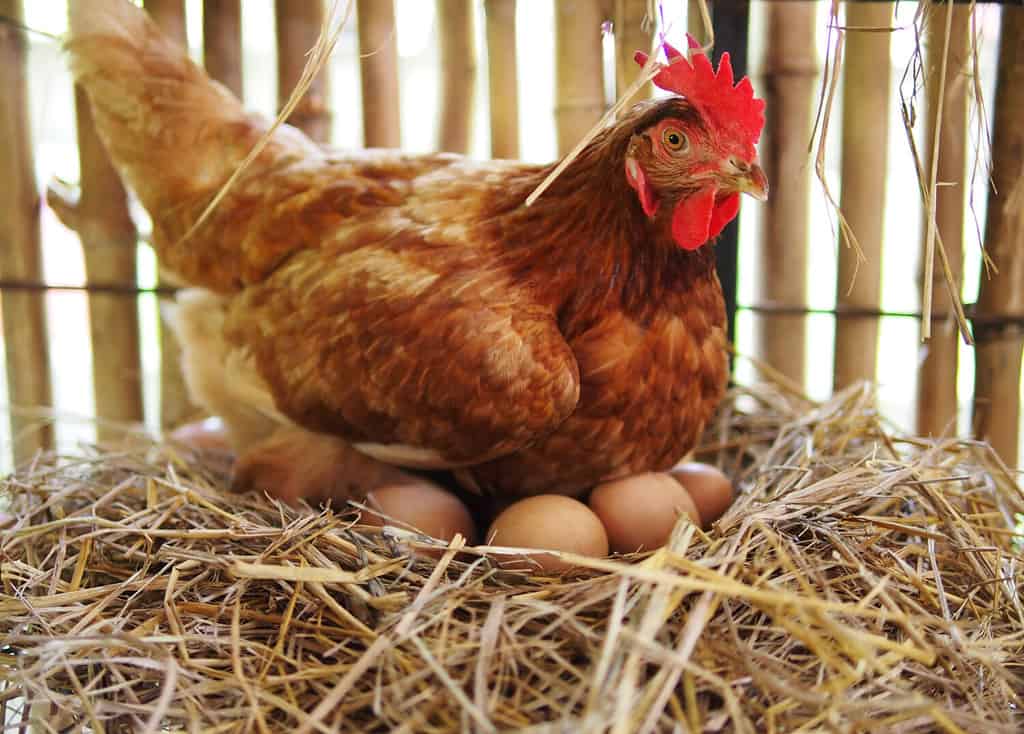
If you want peak egg production from your hens, they need at least 14 hours of sunlight daily.
©PhotoSongserm/Shutterstock.com
Chickens need sunlight exposure in a balanced manner for a number of reasons. For starters, it’s beneficial in their efforts to synthesize vitamin D, leading to stronger eggs and healthy bone development. Chickens are also naturally more active during the day. Exposing them to the sun lets their internal clock know the time. Be aware that too much heat can reduce their egg production.
Hens usually need at least fourteen hours of light daily to maintain their peak egg production levels. In wintertime, it might even be necessary to use artificial light sources. That being said, don’t suddenly increase the light duration of the hens. The stress can induce things like molting and add to their general stress. Instead, gradually increase their light levels as necessary.
5. Make Sure It’s Secure
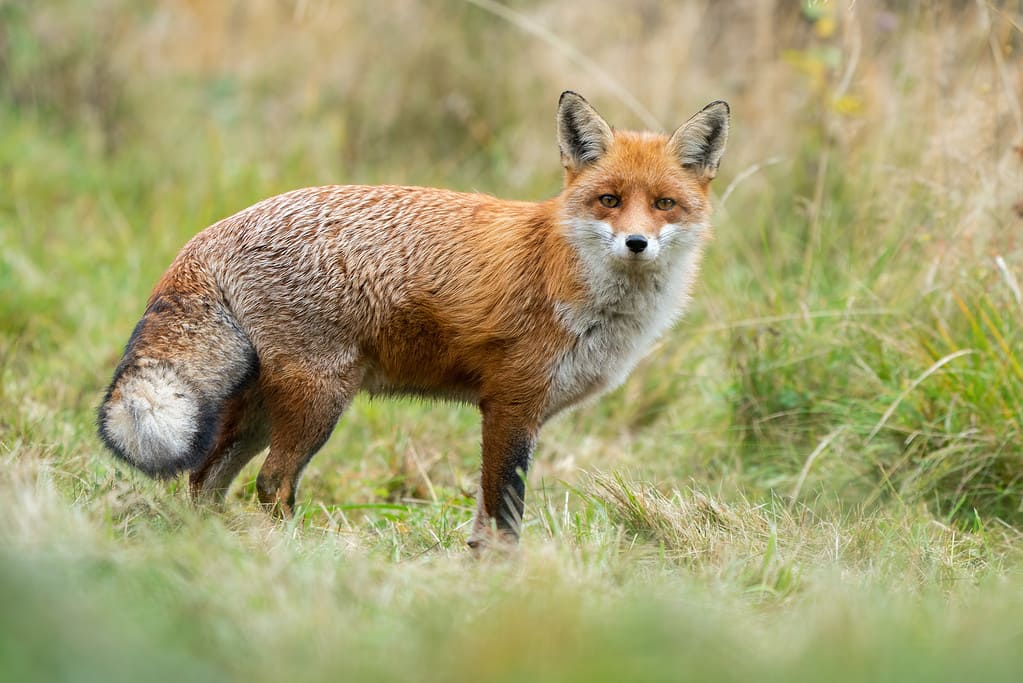
You might enjoy the sight of a red fox in the distance, but your chickens certainly don’t, so keep your chicken coop safe!
©JMrocek/ via Getty Images
Securing a proper chicken coop is the final and perhaps most essential part of building it. Keeping your chicken coop safe is as much your responsibility as any pet would be. Here are some tips for each of the potentially harmful things that you might need to protect your chickens from, plus ways to make chicken coops safer:
Predators
If predators like foxes or raccoons are lurking about, try to dig a trench around the chicken coop’s perimeter and fill it with hardware cloth or chicken wire. You can also use the hardware cloth to create stronger fencing on the coop. Adding such deterrents is a good way to improve chicken coop safety.
Raccoons, in particular, are notorious for their cunning ability to open the doors to chicken coops with simple latch locks. Instead of those, try implementing a two-step locking mechanism. Don’t forget air predators regarding chicken coop safety. Owls and hawks come from above, so make sure that the coop has secure and sturdy roofing.
Severe Weather
Just as dangerous as predators is severe weather. Make sure that your chicken coop is reinforced as needed with things like additional brackets. It’s also a good idea to waterproof the coop by sealing roofing gaps and using weather-resistant paint. Also, be on the lookout for waterlogging and try to improve drainage when necessary.
If your area gets particularly cold during winter, consider insulating your coop to keep the chickens nice and toasty. However, be careful not to make it too airtight because ventilation is still important and shouldn’t be compromised.