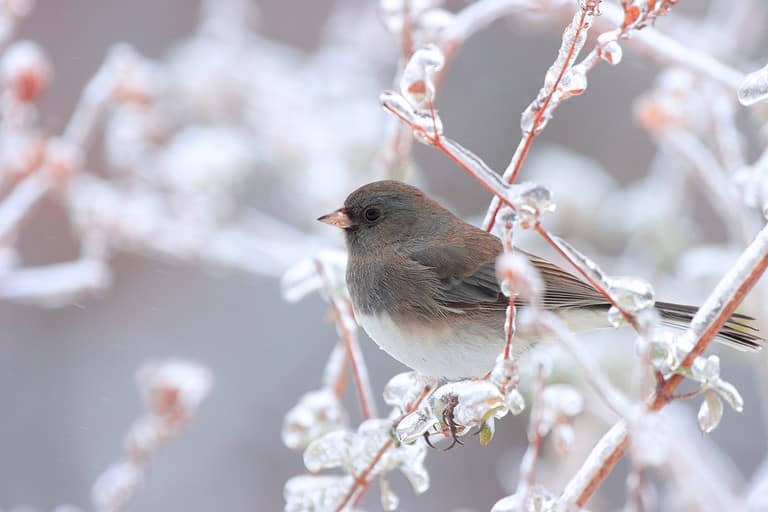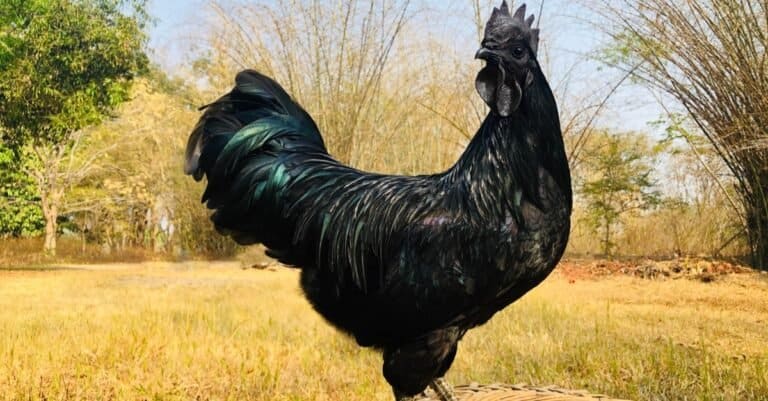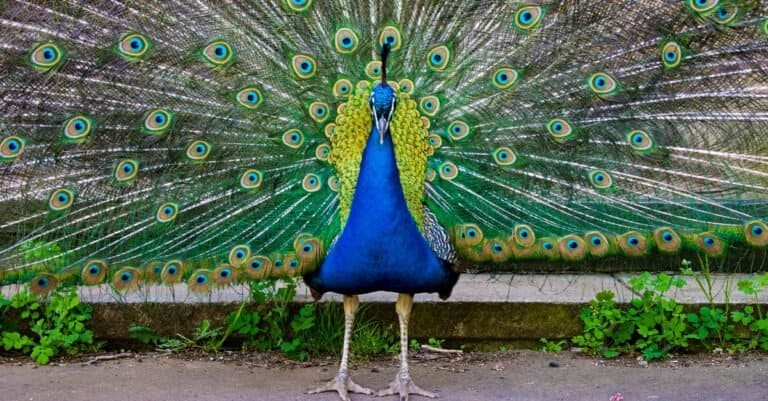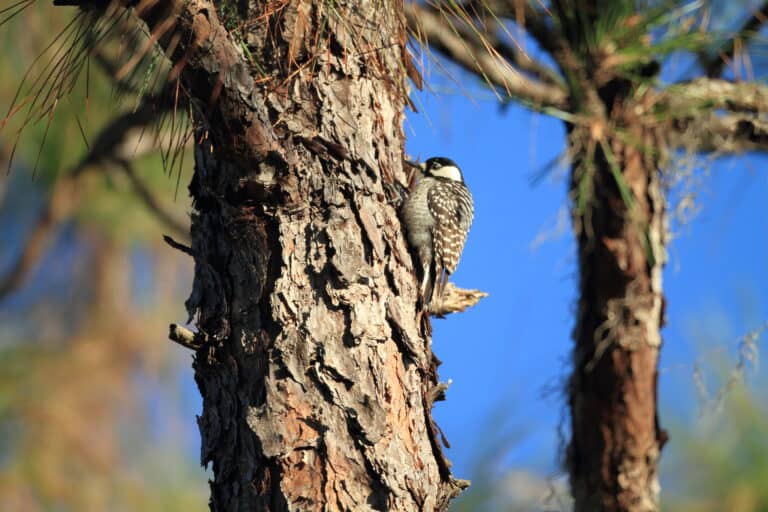

Animal appearances are shaped by biological, environmental, and social factors. Typically, animals with drab or muted appearances evolved that way to help them evade predators. Animals with more eye-catching or flamboyant appearances evolved these features to attract mates or identify each other. Among birds, some species have unique adaptations, like the peacock’s brightly colored tail, which helps the male attract a mate. Some birds sport unique-looking crowns, crests, or mohawks. Continue reading to learn more about these birds.
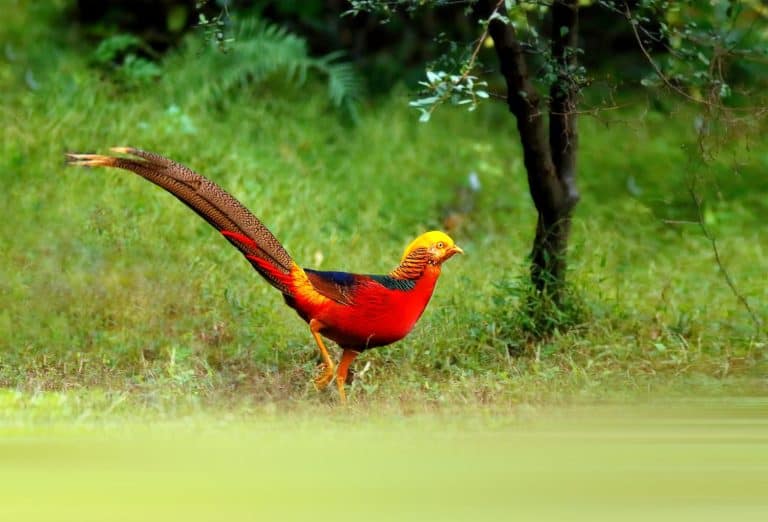
9. Golden Pheasant
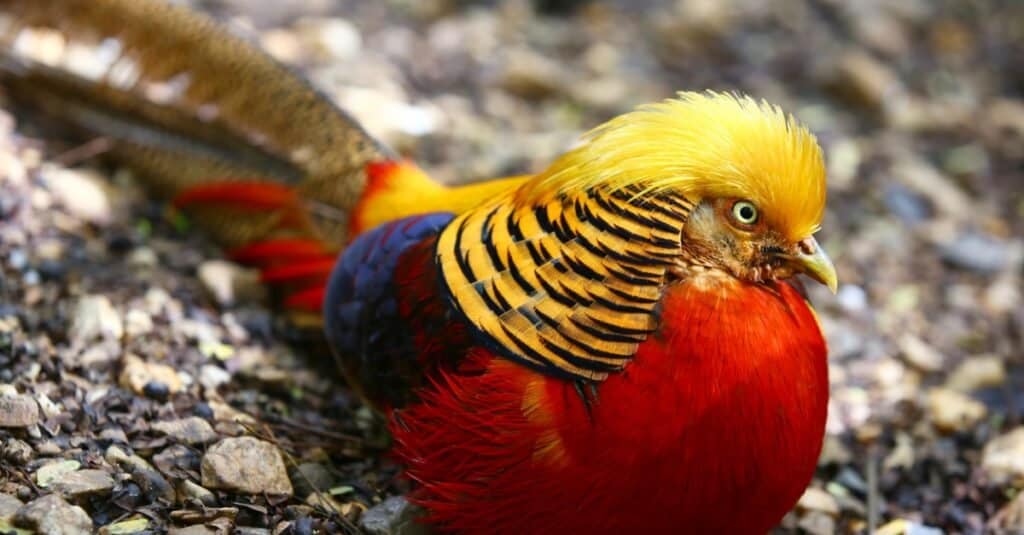
The golden pheasant’s scientific name translates to ‘painted with a golden crest’.
©iStock.com/luamduan
Also known as the Chinese pheasant (Chrysolophus pictus), this bird rocks a yellow mohawk. While native to Western China, they are also found throughout North America, South America, Australia, and parts of Europe in zoos and aviaries. They prefer dense forest habitats. They are 35 to 51 inches long and sport an extremely long tail. Golden pheasants feature a black and orange-striped cape that they fan in elegant displays.
8. Andean Cock-of-the-Rock
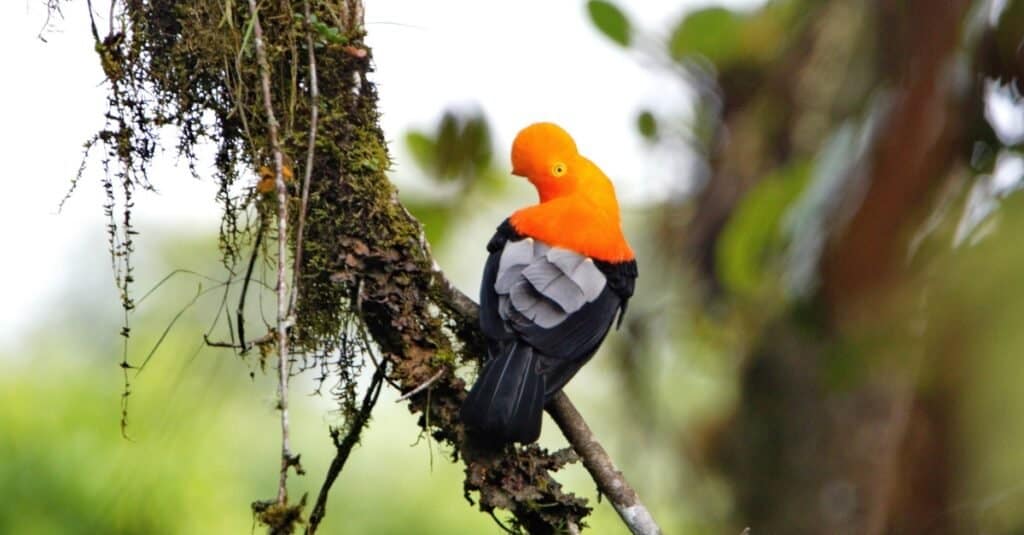
The Andean cock-of-the-rock sports a bright orange crest that makes this bird with crazy hair hard to miss.
©iStock.com/ANPerryman
The Andean cock-of-the-rock (Rupicola peruvianus) ranges throughout the Andean cloud forests of South America and is the national bird of Peru. Generally, these songbirds measure 13 inches long and can weigh up to 0.66 pounds. Males sport a black belly and tail, black and gray wings, and a bright orange chest, head, and shoulders. Their most distinguishing feature is their orange disk-shaped crest on their forehead. Their diet consists of fruit, insects, small reptiles, frogs, and mice. During the mating season, males engage in elaborate dances and puff out their feathers to attract females. Upon mating, females will then build a nest under a rocky overhang and incubate the eggs by themselves.
7. Demoiselle Crane
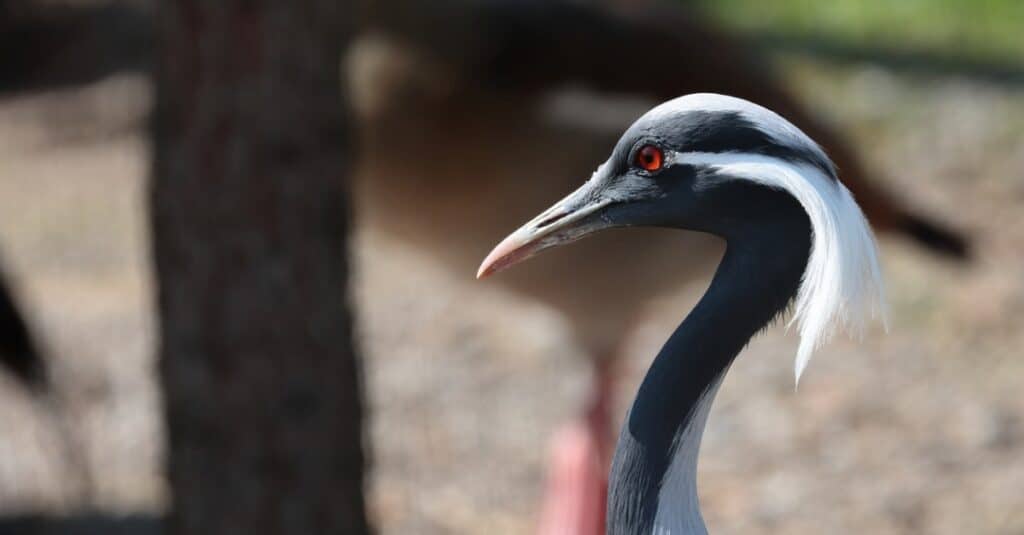
Queen Marie Antoinette of France named the demoiselle crane due to its maidenlike appearance.
©iStock.com/Robert Nieznanski
The demoiselle crane (Grus virgo) is the world’s smallest crane. Demoiselle cranes range throughout Central Asia as well as parts of North Africa. Their breeding range extends from Turkey in the west to China in the east, and they migrate south to Egypt or the Indian subcontinent during the winter. They are found in diverse environments, including deserts and grasslands, although they typically are near water. They measure 33.5 to 39.5 inches long with a wingspan of 61 to 71 inches. Queen Marie Antoinette gave the cranes the name, demoiselle, due to their feminine appearance. They sport white wings and a white neck, with a black foreneck that ends in a bushy plume. As for their hair, they grow two long strips of white feathers on either side of their head.
6. Polish Chicken
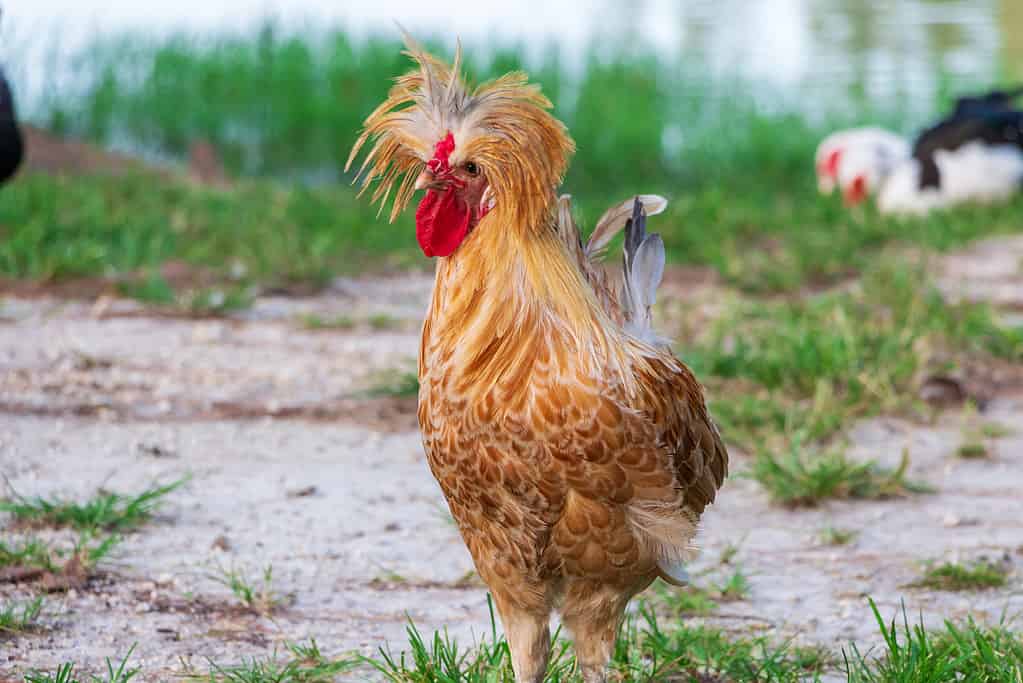
The Polish chicken is a well-known egg-laying breed and a common show bird due to its crazy hair.
©Sunshower Shots/iStock via Getty Images
The Polish or Poland chicken (Gallus gallus domesticus) is a domestic chicken breed. Despite its name, the origins of the breed remain unclear. Some believe that the breed was named after the Dutch word ‘Pol’, meaning big head, while others think the name comes from their resemblance to the crested helmets worn by Polish soldiers.
The breed was standardized in the Netherlands during the 16th century. Before then, scientists estimate that the ancestors of the breed originally came from Mongolia. Today, these birds are found globally, wherever chickens are raised. Like other chickens, they live on a diet of grains, seeds, insects, and invertebrates. Polish chickens have white earlobes, a red wattle, and comb. Their plumage appears mottled black and white, both on their bodies and tails. Their most distinguishing feature is their large, dome-shaped crest. Today, Polish chickens are primarily bred for show, though they are also kept for egg-laying.
5. Eurasian Hoopoe
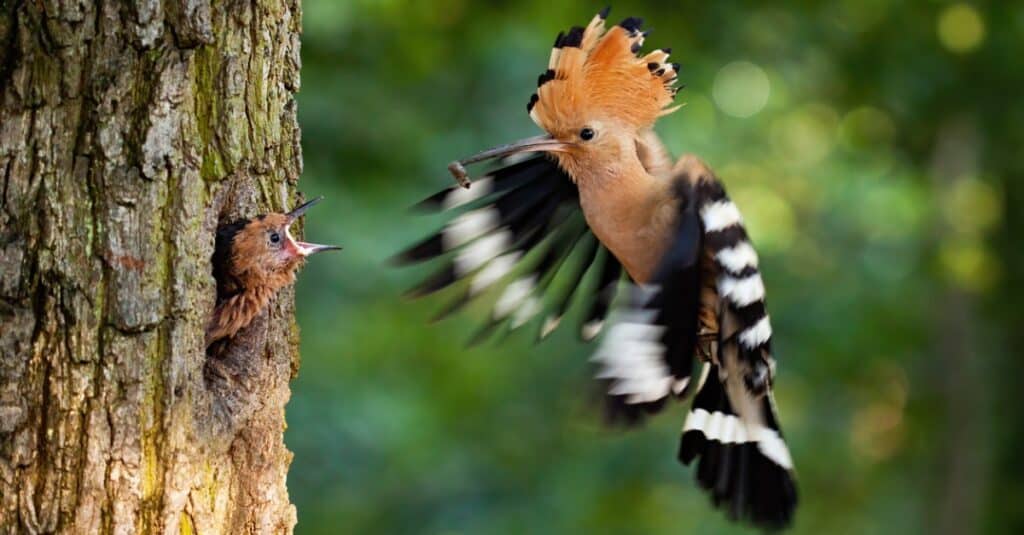
The Eurasian hoopoe sports a crazy tall mohawk despite its small frame.
©iStock.com/JMrocek
The Eurasian hoopoe (Upupa epops) is found in open grasslands throughout Europe, Asia, and North Africa. While most populations migrate during the winter, some remain in their breeding habitat year-round. Their diet consists of insects, small amphibians, and reptiles. They emit a distinctive whooping call, which is where they get their name. Most specimens measure 9.8 to 12.6 inches long with a wingspan of 17 to 19 inches. As for their plumage, they have black and white striped wings and fawn breasts and faces. Additionally, they feature large black-tipped mohawks that they extend during courtship rituals or when fighting.
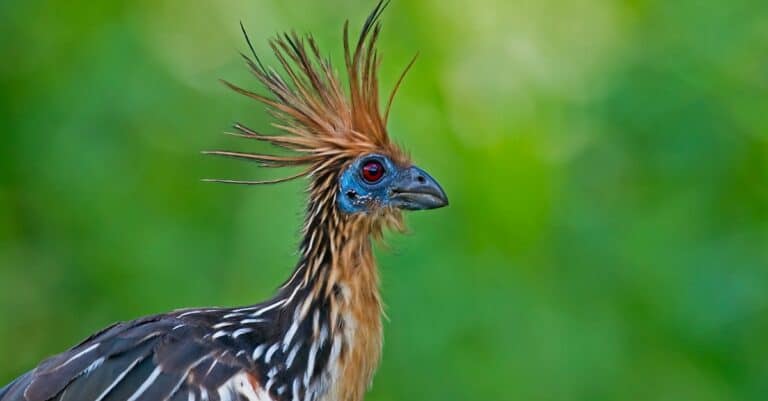
4. Hoatzin
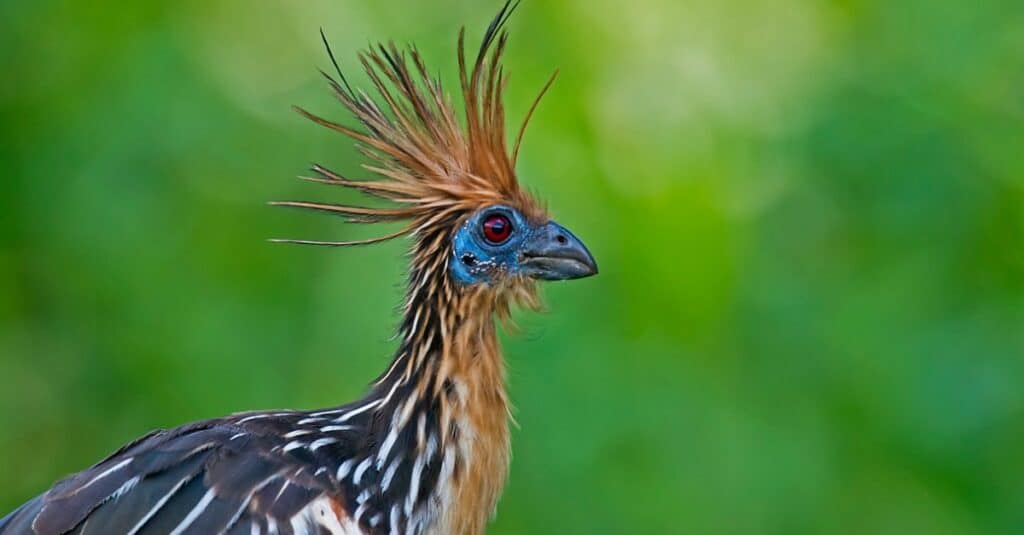
The hoatzin not only features crazy hair but also emits an incredibly foul odor.
©iStock.com/webguzs
Also known as the reptile bird, stinkbird, or skunk bird, the hoatzin (Opisthocomus hoazin) is the only extant member of the family Opisthocomidae. The hoatzin lives in the tropical swamps and mangroves of South America. As folivores, hoatzins eat only leaves, fruits, and flowers, and rely on bacterial fermentation to break down their food. This process leaves them smelling rather foul, hence their nickname, stinkbird. Hoatzins resemble colorful pheasants and measure around 26 inches in length. They feature a small head on a long neck and do not grow feathers on their blue face. Their eyes are dark red, and they sport a brown tail, white breast, dark brown back, and rufous underwings. They grow a spiky, rufous clump of feathers on the top of their head.
3. Crested Duck
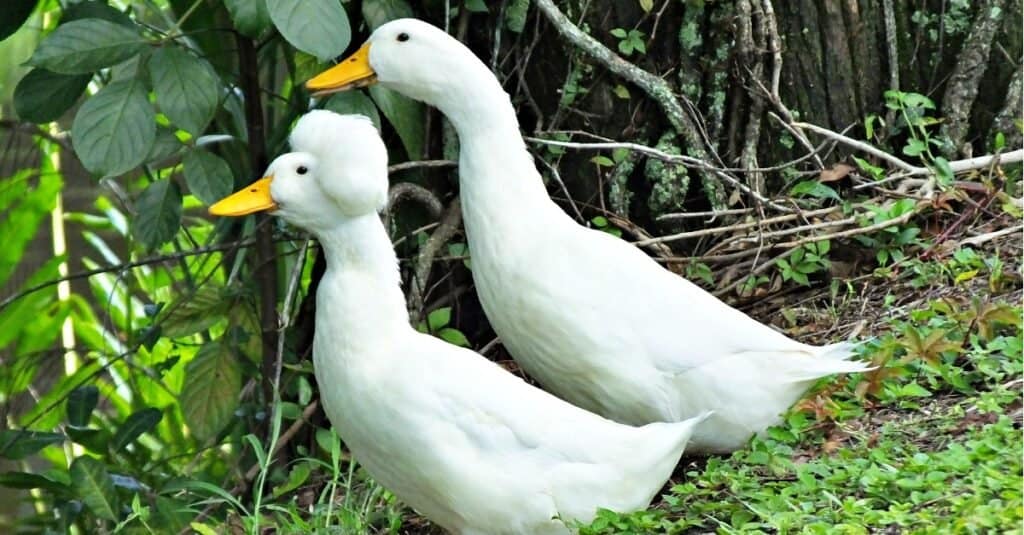
Crested ducks develop a genetic mutation that causes a deformity of the skull.
©iStock.com/passion4nature
The domestic crested duck is a breed of domesticated mallard (Anas platyrhynchos domesticus) known for its distinctive feather crest. Its exact origins are unclear, but it became popular in Europe by the 17th century. Their diet includes a variety of plants, grasses, and seeds, insects, and invertebrates. On average, they measure between 6 and 7 pounds. Most crested ducks feature white or off-white plumage, but any color variation is possible. They sport a long neck and full body, and feature a yellow or off-yellow, flat bill. Unlike other birds on this list, the Crested duck’s crazy hair is caused by a genetic mutation. The genetic mutation causes a deformity of the skull, which causes a large, domed cap on the top of the duck’s skull.
2. Himalayan Monal
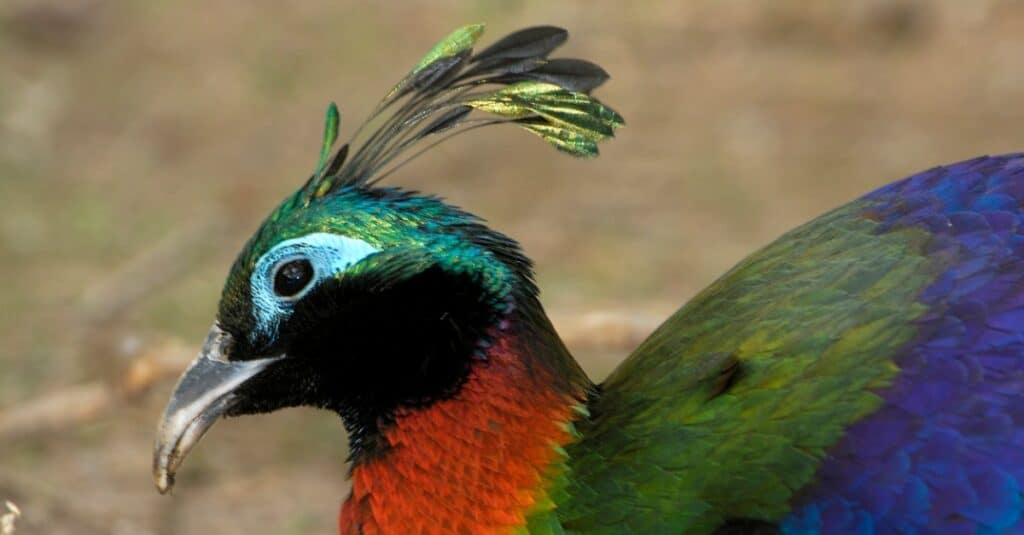
The Himalayan monal gets its name from its appearance and proximity to the Himalayan mountains.
©iStock.com/Michel VIARD
Also known as the Impeyan monal, the Himalayan monal (Lophophorus impejanus) is a type of pheasant in the family Phasianidae. The term monal originates from India, where it is known as the danphe or danfe in Nepal. Himalayan monals are native to the forests and grasslands surrounding the Himalayan mountains. In particular, they are found in the highlands of Afghanistan, Pakistan, Nepal, and India. Their diet consists of plants, insects, and invertebrates. Himalayan monals measure around 28 inches in length and weigh up to 5.25 pounds. The males sport brightly colored, metallic plumage. Their coloration ranges from blue on the wings and back, light green on the shoulders, red on the neck, and green on the head. Male Himalayan monals have a crest of thin, metallic green feathers on top of their head.
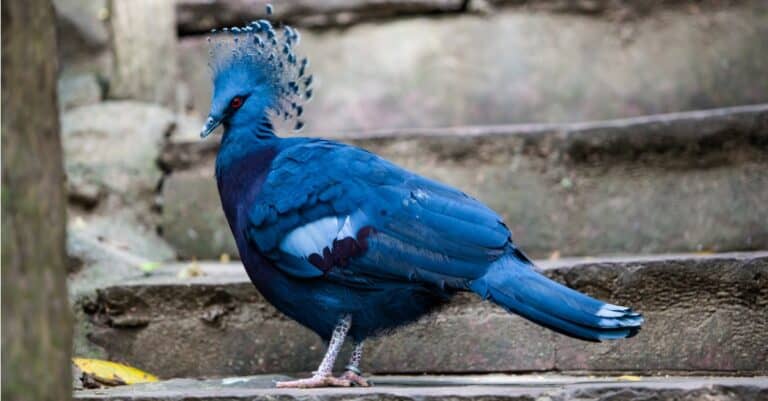
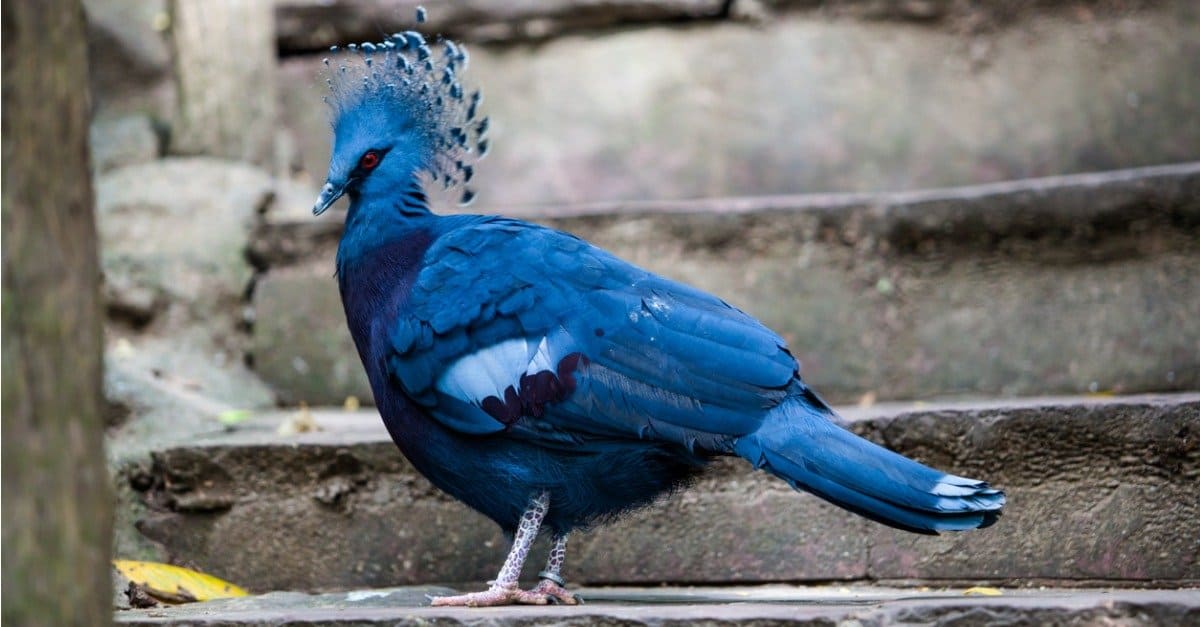
1. Victoria Crowned Pigeon
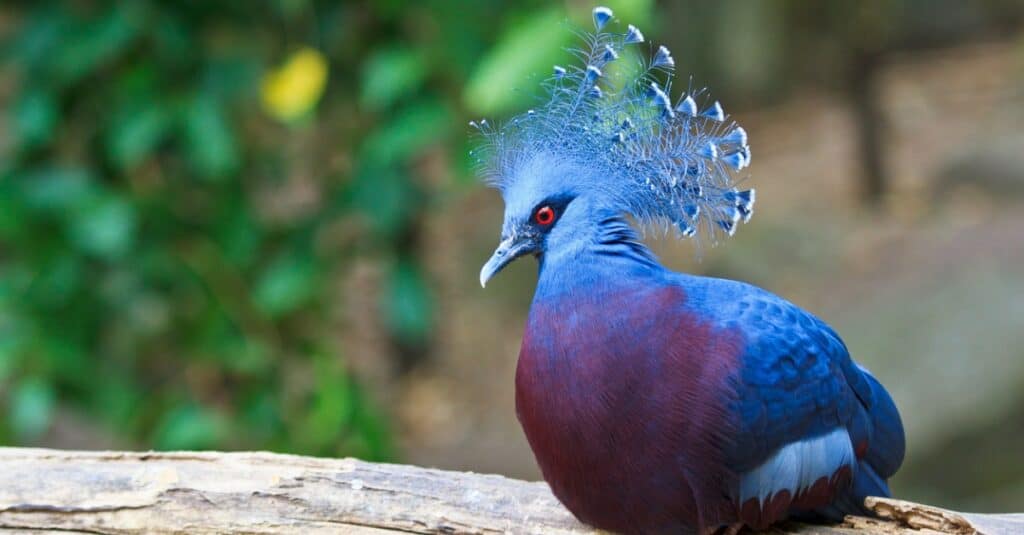
The Victoria crowned pigeons forage in packs in the forests of New Guinea.
©iStock.com/pigphoto
The Victoria crowned pigeon (Goura victoria) is a member of the pigeon and dove family, Columbidae. Named after Queen Victoria of England, these striking birds live only in the swampy forests of New Guinea. Known for their gregariousness, they forage in packs for food, including fruits, seeds, worms, and insects. They measure 29 to 30 inches long and can weigh up to 7.7 pounds. The plumage on their back is a rich blue-gray color, with maroon chests. They sport a beautiful blue-feathered crest resembling the feathers of a peacock’s tail. Habitat loss and hunting have led the IUCN to list the Victoria crowned pigeon as a Near Threatened species.