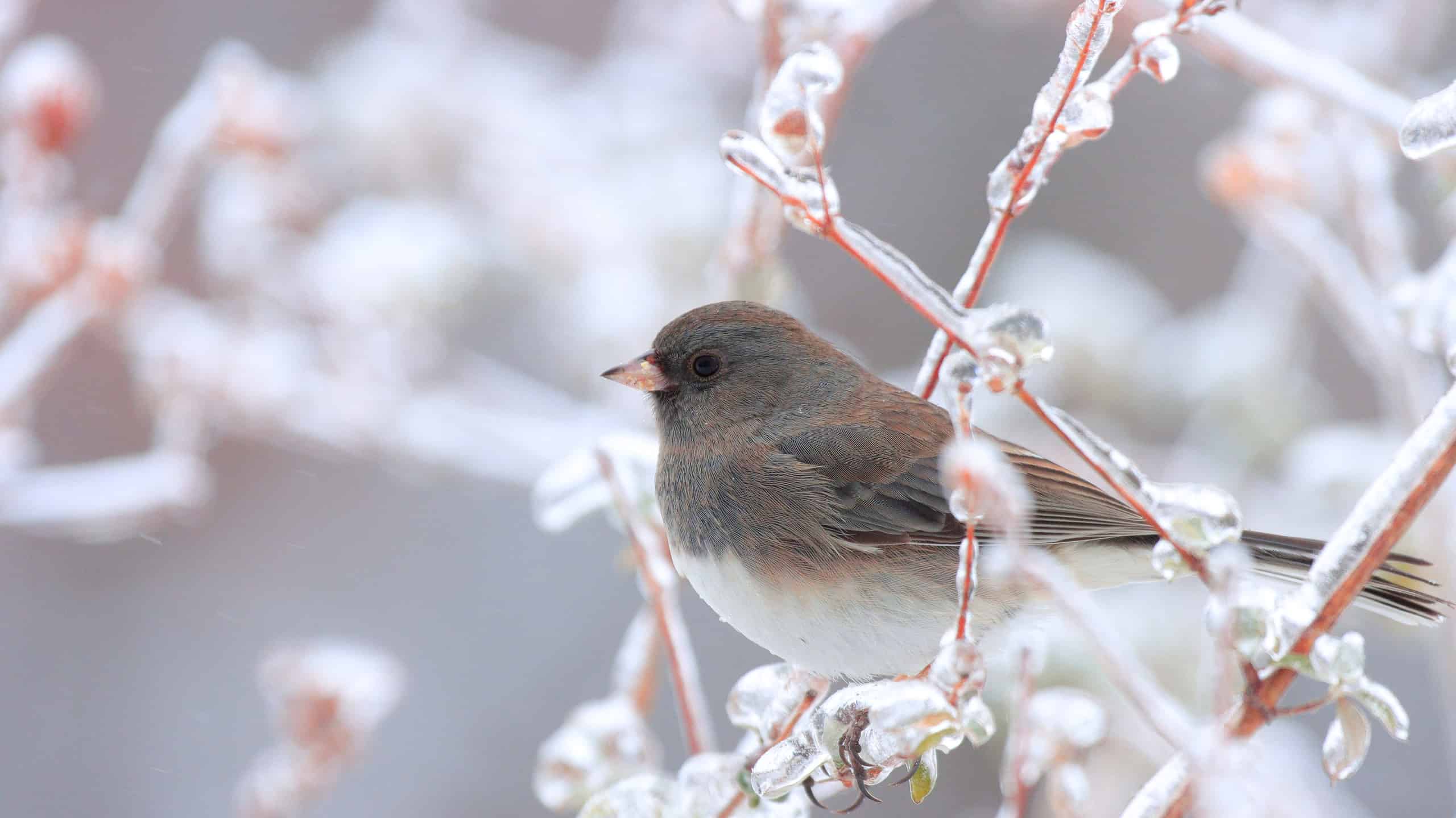

Quick Take
- Michigan winter birds that visit backyard feeders include chickadees, juncos, cardinals, woodpeckers, goldfinches, and blue jays.
- Variety attracts more species; nyjer or sunflower hearts in tube feeders bring finches, while hopper and suet feeders support other winter guests.
- Keep feeders clean and safe; wash with mild bleach, discard moldy seed, and place feeders with open sightlines to reduce window collisions.
Michigan winters are no joke. The cold settles in, the snow sticks around forever, and the world gets quiet in that deep, frozen way unique to the Great Lakes region. But even in the middle of that long chill, the season brings a surprising upside: an entire lineup of feathered visitors showing up at backyard feeders across the state. When the ground freezes and food gets scarce, birds lean heavily on the help people provide, and your feeder becomes a little beacon of survival and color in the snowy landscape.
Once you know who’s likely to visit and what makes each species special, winter bird-watching becomes a lot more fun. No matter which part of the state you live in, there’s a whole cast of characters flying in for meals. Michigan’s winter birds are tough, and each species carries its own personality, quirks, and adaptations for surviving the cold. Here are a few of the many kinds of birds you can look for at your backyard feeder this winter.
Black-Capped Chickadee (Poecile atricapillus)
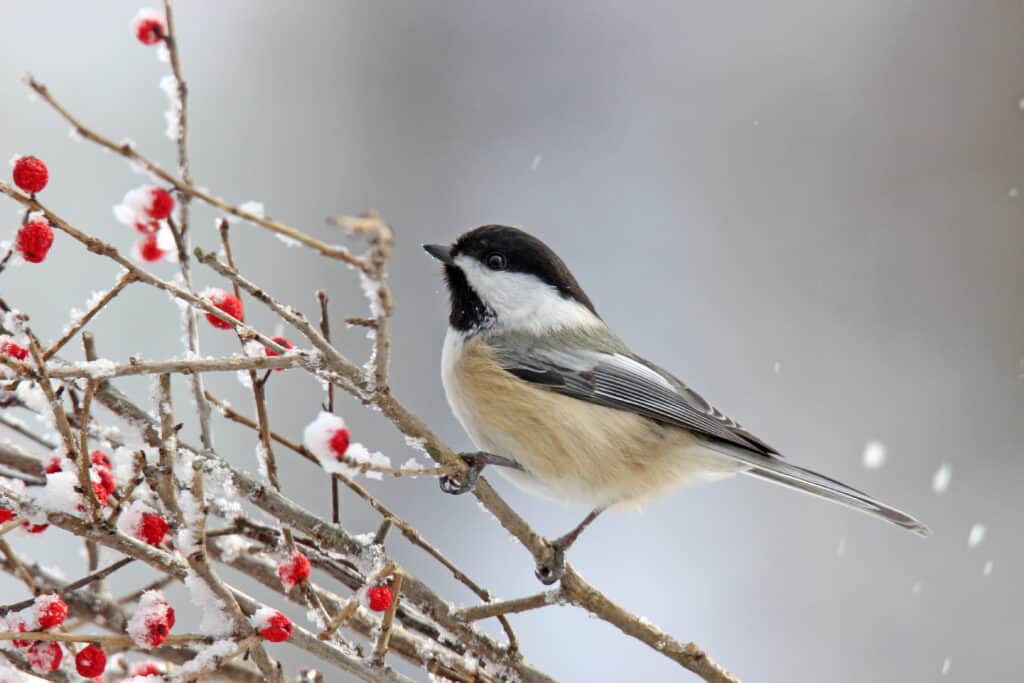
Black-capped chickadee (Poecile atricapillus)
©iStock.com/suefeldberg
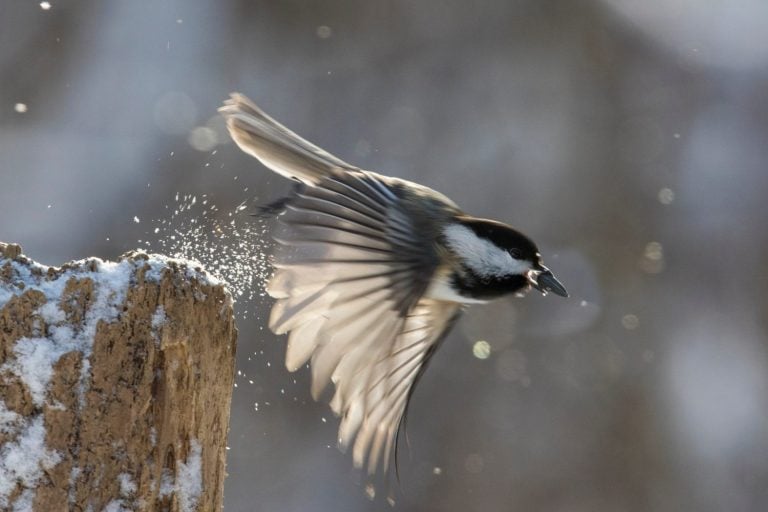
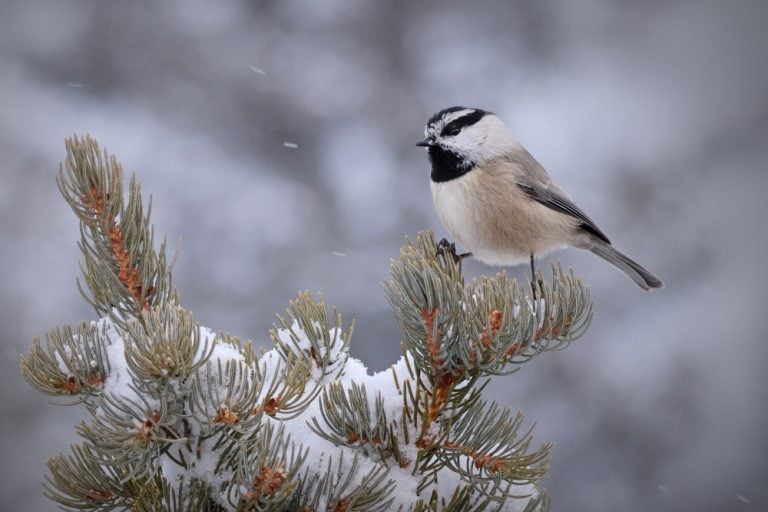
If Michigan had a mascot for winter bird feeders, it would probably be the black-capped chickadee. These little round birds are everywhere in the state year-round, and their cheerful, fearless vibe makes them instant favorites. You’ll identify them by their crisp black cap, the black bib under the chin, and those bright white cheeks framed by soft gray wings.
Chickadees don’t just visit feeders; they put on a whole show at them. They swoop in, grab one seed, and dart off to eat it in a quieter spot, then come right back for more. Sometimes they hang upside down like little gymnasts. They’re curious, bold, and surprisingly comfortable being near people compared to many other small birds.
Because they don’t migrate, chickadees rely on winter feeders more consistently than species that move in and out of the state. You’ll spot them in wooded areas, suburban backyards, and almost any place with trees. If you put out sunflower seeds or peanuts, you’ll have chickadees, guaranteed.
Dark-Eyed Junco (Junco hyemalis)
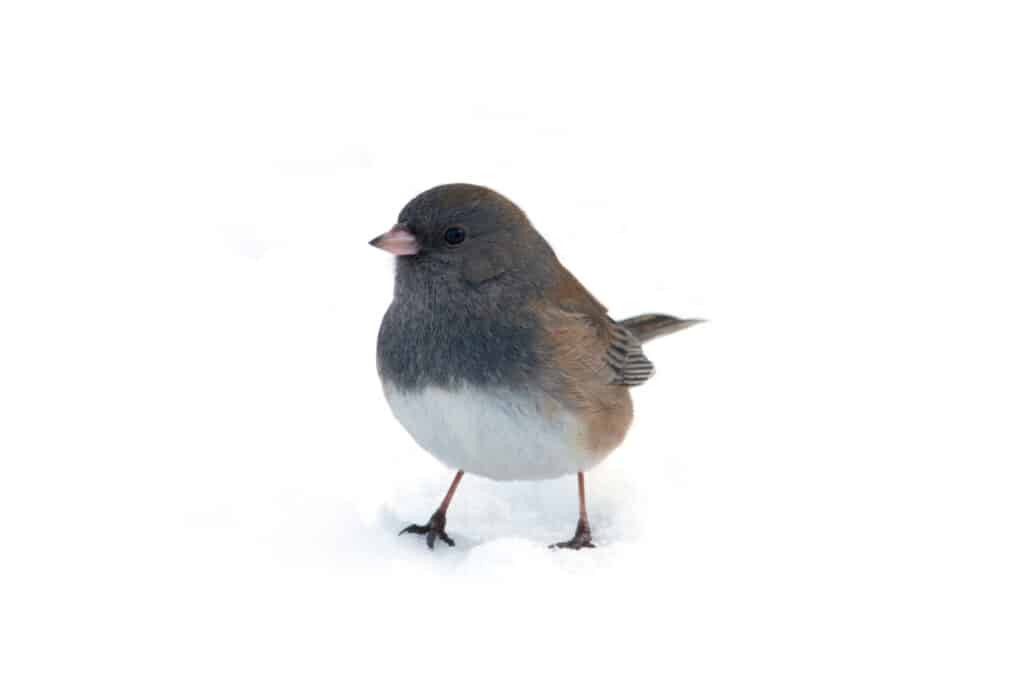
Dark-eyed junco (Junco hyemalis)
©Gerald A. DeBoer/Shutterstock.com
The dark-eyed junco is often called the “snowbird,” and that nickname fits perfectly. These birds start arriving right around Michigan’s first real snowfall, almost like they’re following a seasonal script. Many dark-eyed juncos migrate from northern Canada and arrive in Michigan from October through early spring, though some may be short-distance migrants or year-round residents in certain areas.
Juncos have a simple but elegant look: slate-gray backs and heads, crisp white undersides, and light brown coloration on their sides. You’ll also notice their quick, darting style of movement. Instead of hopping up to feeders, they prefer to forage on the ground or on low platforms. If you ever see a little bird doing a rapid double-scratch with both feet to uncover seeds under leaves, that could be a junco doing its little junco dance.
Most Michigan juncos leave by April, although a few may be observed in the Upper Peninsula during the summer. Across the Lower Peninsula and the southern UP, they’re at home in backyards, parks, and garden edges with plenty of brush. Evergreens in particular make them feel safe, so neighborhoods with pine or spruce trees get especially good winter junco traffic.
Downy Woodpecker (Dryobates pubescens)
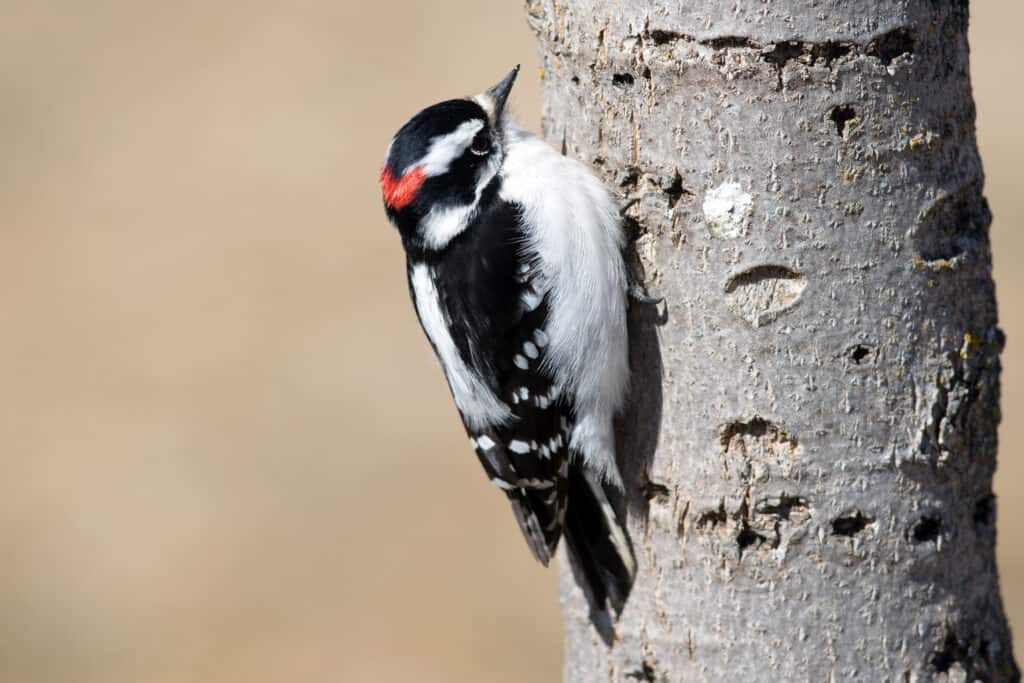
Downy woodpecker (Dryobates pubescens)
©Northernguy/Shutterstock.com
Downy woodpeckers are tiny but mighty. They’re Michigan’s smallest woodpecker and a common sight all year long, but winter brings them out into the open as they search for reliable sources of suet and seeds. Their black-and-white pattern is sharp and clean, and the males have that little red spot on the back of the head that stands out against the winter palette.
These birds are natural climbers, moving along trunks and branches with quick, efficient hops. They’ll happily cling to a suet feeder and nibble away, or visit tube feeders for seeds. Downys look similar to hairy woodpeckers, but downys are smaller with noticeably shorter bills.
Even though they visit feeders often, downy woodpeckers continue to find much of their food the old-fashioned way: prying insects and larvae from bark and dead wood. They live everywhere in Michigan: dense forests, wooded suburbs, parks, and anywhere with a decent supply of trees. In winter, you’ll probably see them more often simply because suet is such a high-energy treat when the temperatures drop.
Northern Cardinal (Cardinalis cardinalis)
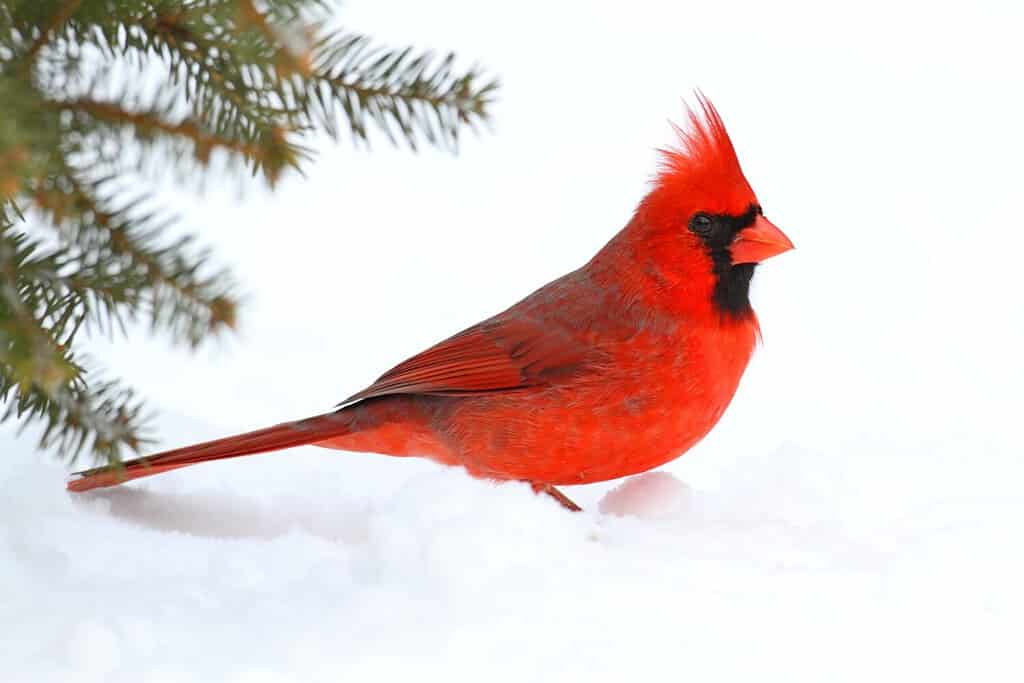
Northern cardinal (Cardinalis cardinalis)
©Steve Byland/Shutterstock.com
Few winter sights are as gorgeous as a male northern cardinal perched in fresh snow. That bright red plumage stands out like a neon sign against white snow. Females bring subtler beauty with warm tan coloring and soft red accents on the wings and tail. Both males and females sport those unmistakable crests and sturdy seed-cracking bills.
These are not migratory birds, so you can see them any season in Michigan. While you’ll see more cardinals in the Lower Peninsula, they are uncommon in the Upper Peninsula but are occasionally found there as their range has slowly expanded northward over time. In winter, you’ll often see cardinal pairs visiting feeders together. Sometimes the male even feeds the female, a sweet courtship behavior that continues through the cold months.
If you want to attract them to your yard (and who wouldn’t?), remember that cardinals prefer brushy areas for cover. They like platform feeders or hopper-style feeders, and they especially love black oil sunflower seeds.
Red-Bellied Woodpecker (Melanerpes carolinus)

Red-bellied woodpecker (Melanerpes carolinus)
©FloridaStock/Shutterstock.com
The red-bellied woodpecker is one of Michigan’s more recent winter residents. Over the last few decades, this species has slowly pushed northward, and now you’ll find them across most of the state, though they’re still less common in far-northern areas.
Their name can be confusing because the “red belly” is actually a faint reddish wash that’s easy to overlook. The real standout feature is the vivid red that runs across the head and nape of the neck, especially on males. Their backs show a beautiful black-and-white barred pattern that helps you spot them quickly when they cling to a tree trunk or feeder.
Red-bellied woodpeckers love suet, sunflower seeds, and peanuts. They use their strong bills to hammer, pry, and maneuver food with surprising agility. They often hang vertically while they feed, showing off the athletic side of woodpecker life. They prefer wooded areas, mature trees, and suburban neighborhoods with plenty of cover.
American Goldfinch (Spinus tristis)
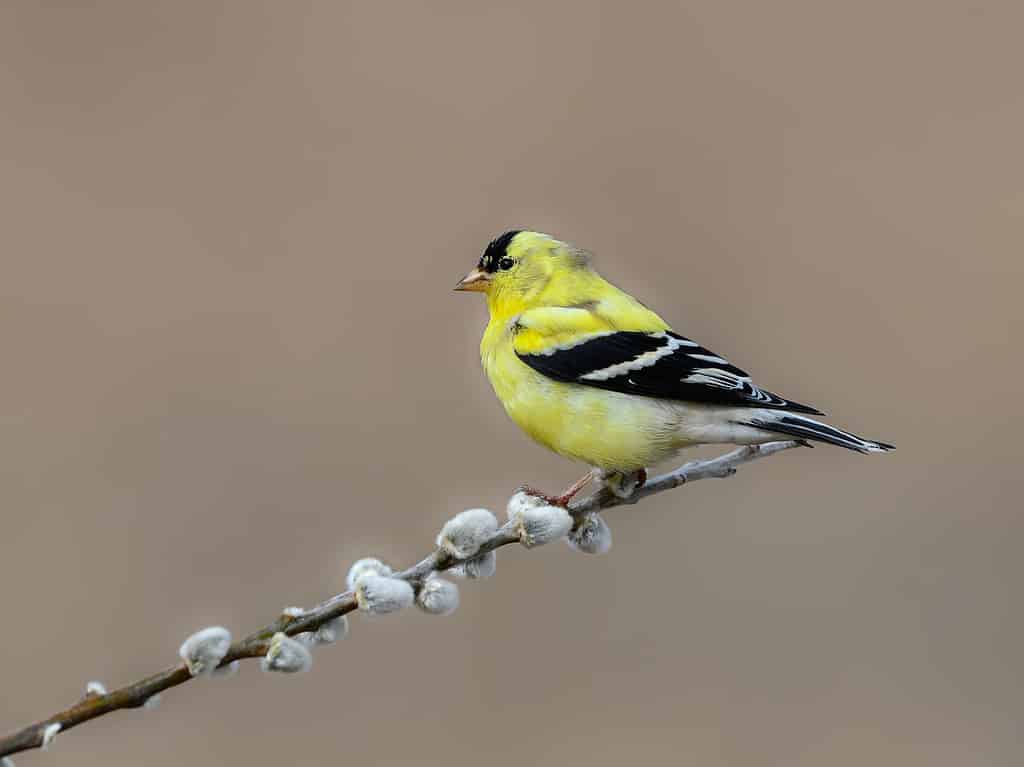
American goldfinch (Spinus tristis)
©FotoRequest/Shutterstock.com
If you only know American goldfinches by their bright summer look, winter may surprise you. Males lose their glowing yellow plumage after the breeding season and shift into a more understated olive-brown. Their wing bars stay bright, though, which helps with identification.
Goldfinches can be found year-round in Michigan, but their numbers often decrease in winter as some individuals migrate south, and local abundance depends on food availability. They are loyal fans of nyjer seed, which keeps them returning to tube feeders throughout winter. If you want a lively group at your feeder, a nyjer tube is almost guaranteed to bring them in.
These birds are social. In winter, they often gather in flocks, roosting close together at night to conserve warmth. They also nest later than many other songbirds, waiting until thistle seeds are available to feed their young. You’ll find goldfinches in fields, backyards, parks, and any area with seed-bearing native plants. In late fall and winter, they often hang around gardens with coneflowers or other plants left standing after summer. So if you like these birds, remember not to cut everything down too early in the fall.
Tufted Titmouse (Baeolophus bicolor)
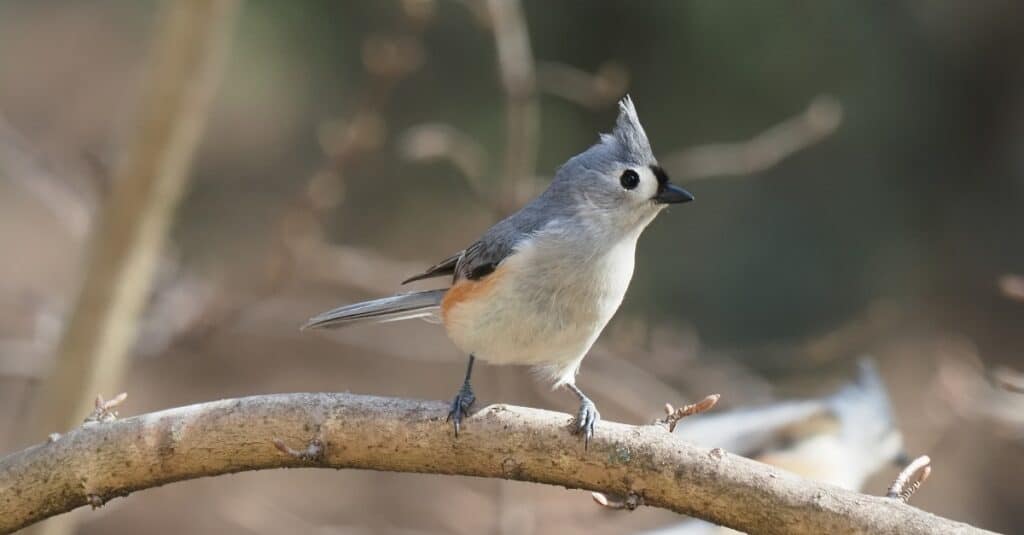
Tufted titmouse (Baeolophus bicolor)
©iStock.com/Tongtong Chen
Tufted titmice bring a lot of personality in a small package. They have soft gray backs, pale undersides, and those peachy sides that look a little bit like racing stripes. Their pointed crests are a cute and memorable way to identify them.
Titmice are curious and bold. They often travel with chickadees and nuthatches, forming little mixed-species foraging groups that flutter from feeder to tree and back again. They love sunflower seeds, peanuts, and suet, and they tend to grab food and dash away like chickadees.
These birds are more common in the southern Lower Peninsula, becoming scarcer farther north and in the UP. They prefer forests with mature hardwoods, but they’re just as comfortable in suburban neighborhoods with large shade trees. Their clear whistle often gives them away before you see them.
Blue Jay (Cyanocitta cristata)
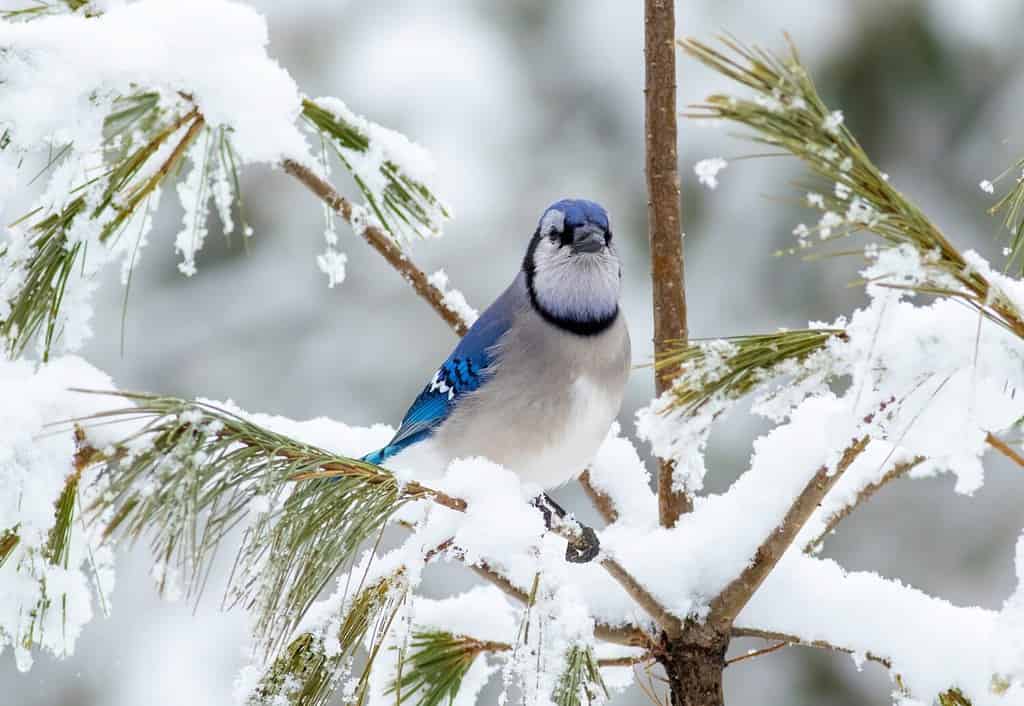
Blue jay (Cyanocitta cristata)
©Matthew Jolley/Shutterstock.com
Blue jays don’t do anything halfway. They’re loud, bold, beautiful, and packed with personality. Their bright blue coloring, white accents, and black markings make them instantly eye-catching, especially in winter. They are also strong, intelligent birds that aren’t shy about dominating a feeder when they feel like it.
Blue jays love whole peanuts and sunflower seeds. They have powerful bills that make cracking larger seeds easy work. They’re also known for caching food — burying nuts or acorns to store for later. In doing so, they unintentionally “plant” future oak trees, which is one reason they’re more helpful than they sometimes get credit for.
Jays live throughout Michigan, from thick forests to urban edges. They’re social birds, often arriving in small groups that bring a burst of sound and motion to a quiet winter yard. Some people get annoyed with how they can be noisy and bully other birds, but their gorgeous color in the white snow covers a multitude of sins, so most casual bird watchers enjoy seeing them.
Best Practices for Winter Bird Feeding
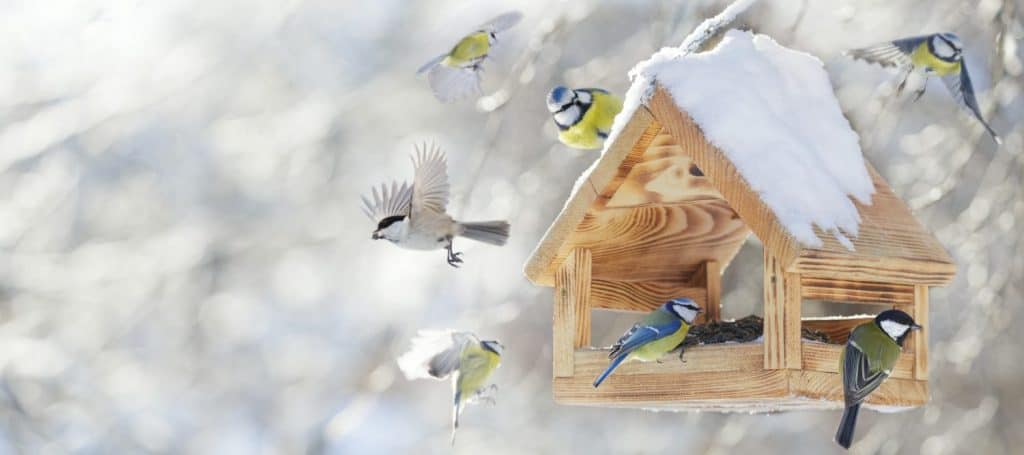
It’s important to place bird feeders strategically to keep them safe from predators.
©Nitr/Shutterstock.com
Winter feeding is simple, but a little care makes a big difference. Since birds gather closely at feeders, it’s important to keep things clean. Every so often, wash feeders with a mild bleach solution to help prevent disease. Always toss out old, wet, or moldy seed — birds won’t eat it, and it can make them sick.
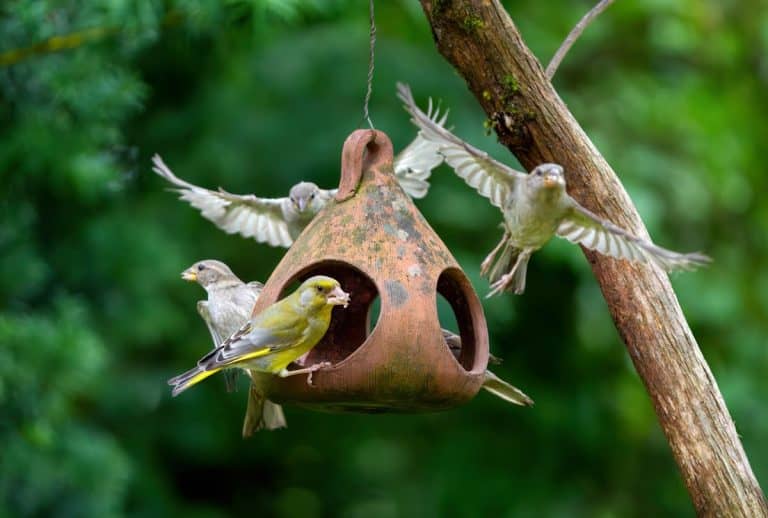
Variety helps attract more species. Tube feeders with nyjer or sunflower hearts bring in finches, while hopper feeders work well for general seed mixes. Platform feeders are perfect for cardinals and jays, and suet feeders keep woodpeckers, nuthatches, and other insect-loving birds energized.
Where you place feeders matters, too. Birds like cover, but they also need open sightlines to watch for predators. Position feeders where birds feel safe and where you can see them easily from indoors. And to reduce window collisions, add decals, patterned films, or screens so birds don’t mistake reflections for open sky. Place feeders either very close to windows (within about three feet) or far enough away (more than ten to twelve feet) to prevent birds from hitting the glass at full speed.
Winter Birds That Make Michigan Feel Alive
Whether you’ve been watching birds for years or you’re just starting to notice who’s stopping by your yard, Michigan’s winter visitors bring warmth to even the coldest mornings. These hardy birds keep going through snow, wind, and freezing nights, and by offering steady food and simple care, you play a small part in their survival.
A feeder full of chickadees, juncos, woodpeckers, jays, and other winter guests can turn the quiet months into a season of small but meaningful routines. Look out your window on a snowy day, and you might catch a moment of bright color or surprising behavior that reminds you just how much life is still moving through the cold.