
Quick Take
- Golden pheasants are one of the most vibrantly colored birds in the world.
- Male golden pheasants are a prime example of sexual selection.
- The more brilliantly colored male golden pheasants are, the better their chances of attracting a mate.
- Dancing around, fluffing feathers, and calling out to females are the ways male golden pheasants attempt to attract mates.
Birds such as the Mandarin duck, scarlet macaw, and lilac-breasted roller come in colors that seem to defy reality. Some birds have coloration that helps them blend into their habitats, while others do the opposite, ensuring they are seen. One such example is a bird with fiery and fabulous plumage that gives rainbows a run for their money. These birds are golden pheasants, and their coloration is unrivaled.
Why the Golden Pheasant Is Dancing in the Snow
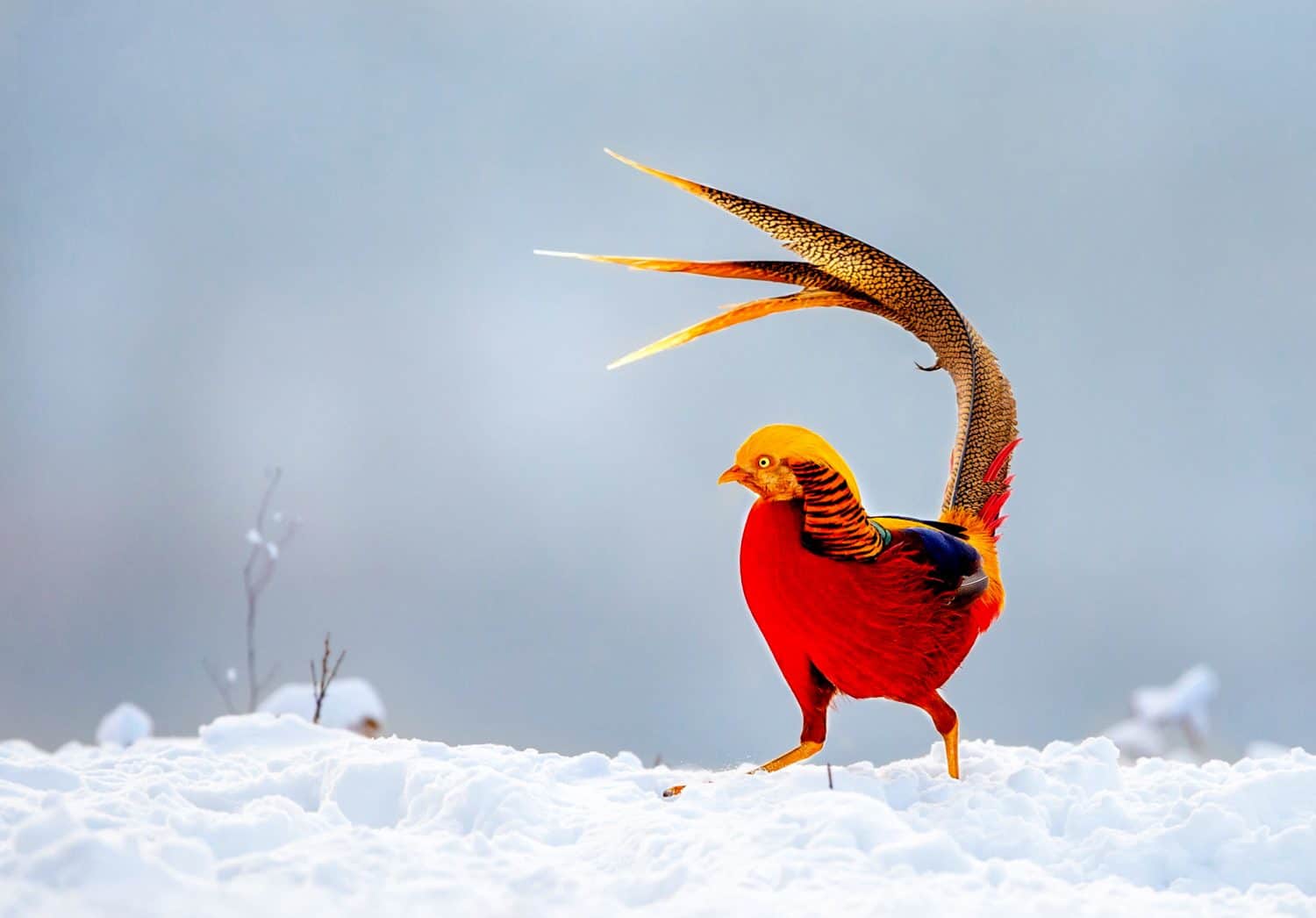
The golden pheasant is one of the most incredible-looking animals on the planet. Its bright colors, which are virtually every color of the rainbow, stand out against most landscapes the golden pheasant inhabits, as can be seen in the Instagram video in which the beautiful bird is dancing in the snow.
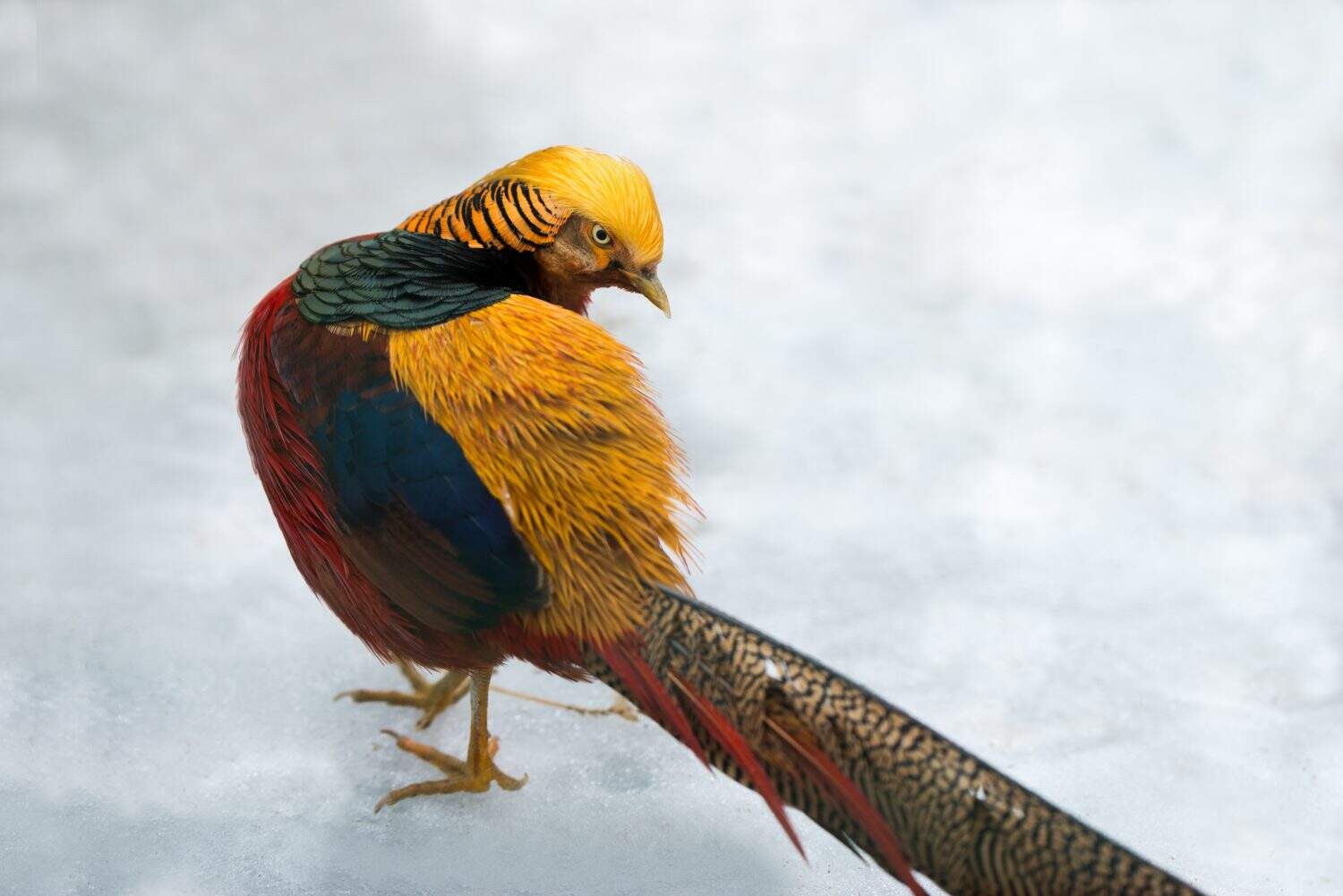
The golden pheasant puts on a show in the snow to impress potential mates.
©Mateusz Figarski/Shutterstock.com
But what is making the golden pheasant move around with flair in the snow? It is very simple: the male golden pheasant is doing his best to attract a mate with both his handsome looks and by running and skipping in a female golden pheasant’s presence. The longer his tail, the more agile he is, and the more brilliant colors he exhibits, the better the male’s chances of catching the female’s eye.
The male golden pheasant will continue this behavior, fluff his feathers, and call out to a female of interest until she is impressed enough to want to mate with him and produce the next generation of golden pheasants.
Male Golden Pheasants Are the Embodiment of Sexual Selection
Sexual selection is when one gender of a species looks significantly more ostentatious than the other. In birds such as the peacock, this means that males have long, majestic tail feathers, a regal-looking crest, and brilliant blue and green plumage. For male golden pheasants, the colors are more magnificent still.
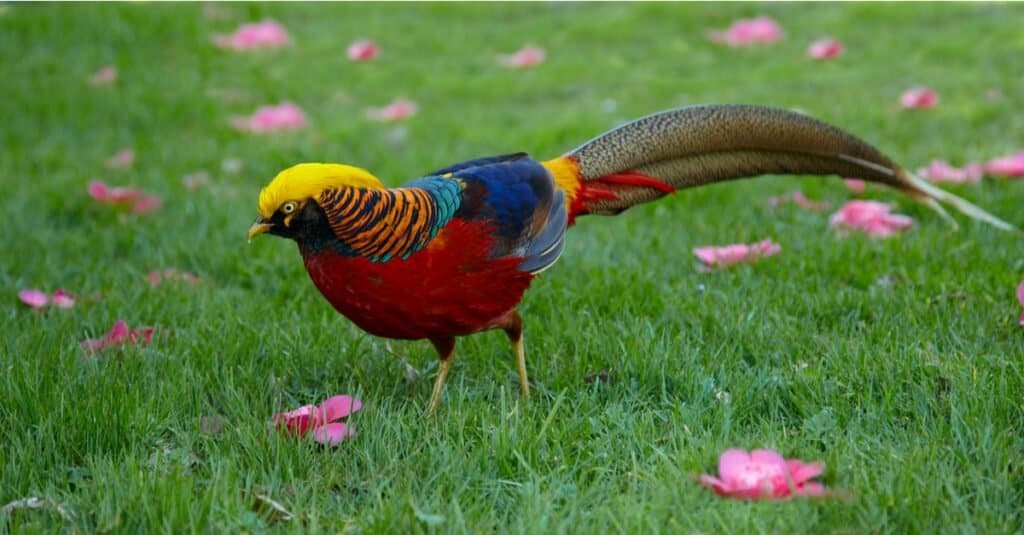
Male golden pheasants are brightly colored to show off their health and virility in hopes of finding a mate.
©Maksym Gorpenyuk/Shutterstock.com
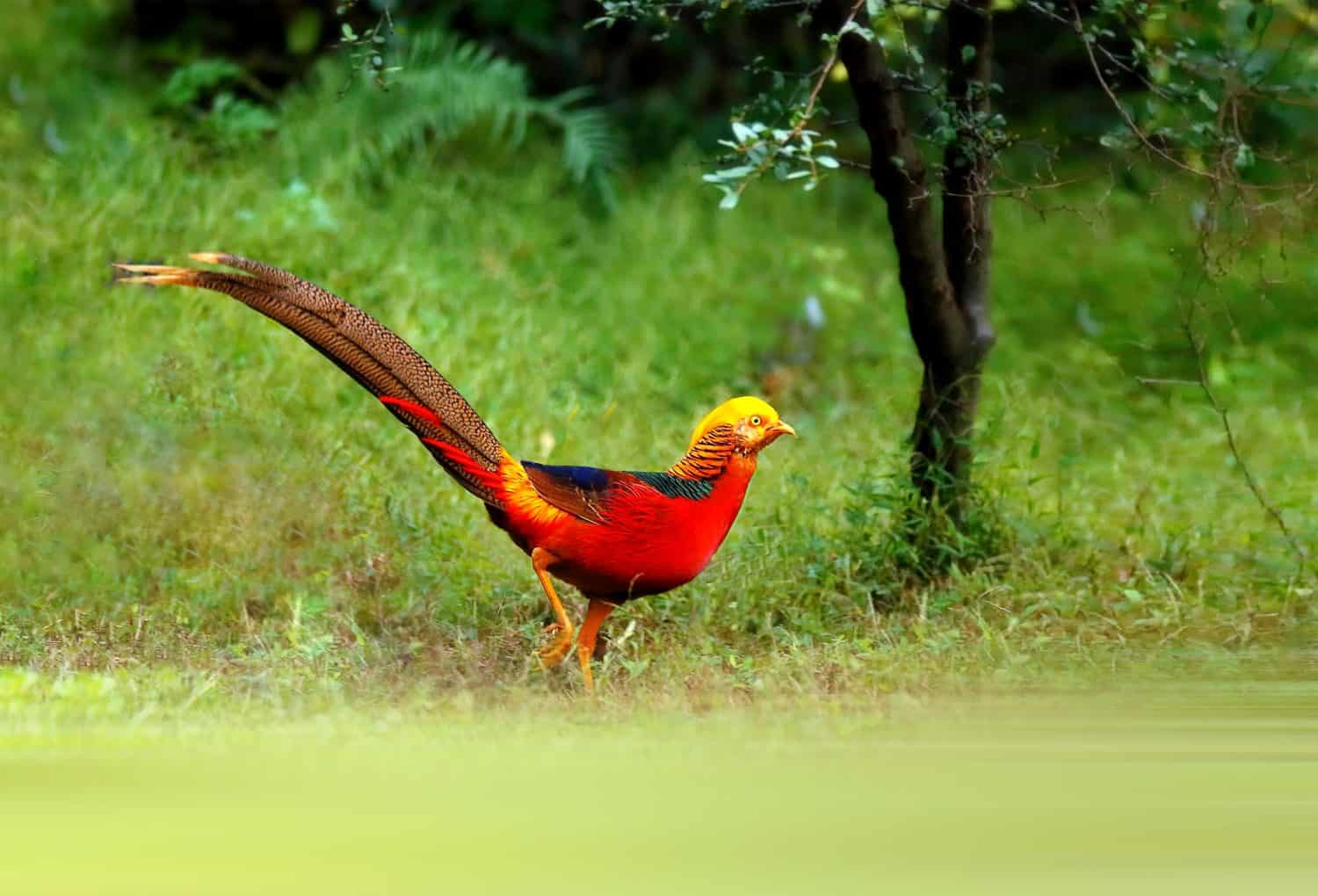
Male golden pheasants look remarkably different from their female counterparts. Where the females look subdued with their tan and black striping used for camouflage, the males shy away from blending in. With a golden crest, emerald-green back feathers, a fiery-red body, and blue wings, the male golden pheasant looks like it stepped out of a painting.
The reason males are so much more colorful than females is so that they can attract a mate. The more colorful the males are, the more readily females will be interested in them, as they are seen as both healthy and genetically superior.
Do Golden Pheasants Do Well in Cold Temperatures?
In the Instagram video, the golden pheasant was seen trying to impress a female in the snow. While the golden pheasants can handle cold temperatures for short bursts, prolonged exposure to the elements can be detrimental to the birds.
Golden pheasants will do well in both cold and hot weather, as long as there is ample shelter, food, and water.
©Wang LiQiang/Shutterstock.com
Golden pheasants prefer temperate weather. This is especially true during mating season, so that eggs do not become too cold to hatch and juvenile pheasants do not succumb to the chilly weather. With that being said, however, the pheasants are hardy animals. As long as there is sufficient ground cover to keep them out of the elements, they will generally be fine.
Hot weather can be a detriment to golden pheasants as well. If the summer becomes too hot, it can stop vegetation from growing. This means fewer places to find shade, leaving the pheasants at risk for heat exposure. Additionally, insect production is dramatically reduced when temperatures soar. This means the necessary nutrition may not be available for juvenile golden pheasants or the adults caring for them.
Once Only from China, Golden Pheasants Are Found Worldwide
The golden pheasant was originally found in the mountains and forests of western China. Given its beauty, the pheasant was brought to other countries throughout the world, the first of which was within the United Kingdom.
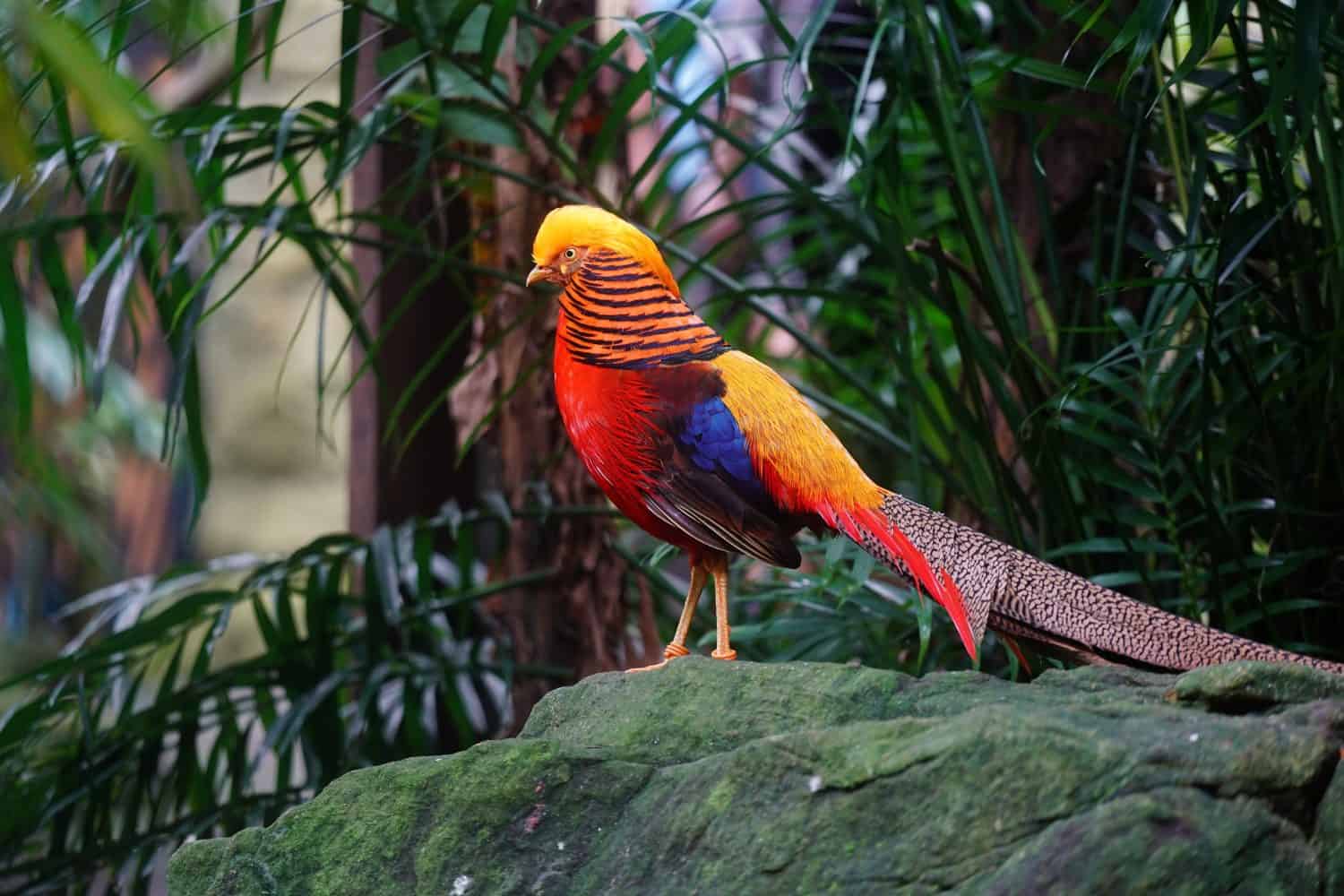
Golden pheasants are native to western China, but over the last few centuries have thrived in other countries around the world.
©Wirestock Creators/Shutterstock.com
The first wild golden pheasant seen in England was in Norfolk in 1845. For many years, small populations existed in parts of England and Scotland, but recent studies indicate that self-sustaining wild populations in the UK have effectively disappeared, with only a few individuals remaining. While captive populations exist worldwide, established wild populations outside their native range have largely declined or vanished.
What Threats Do Golden Pheasants Face?
Golden pheasants are considered a “species of least concern” by the IUCN, which notes that while the global population has not been precisely quantified, the species remains fairly common in suitable habitats. However, there is evidence of a declining trend, though the exact number of mature individuals in the wild is unknown.
The population of the golden pheasant is declining due to threats in the wild, such as:
- Habitat fragmentation
- Non-native species that are competing for resources and preying on golden pheasant eggs
- Habitat loss, which has led to fewer places to hide and increased hunting opportunities for predators
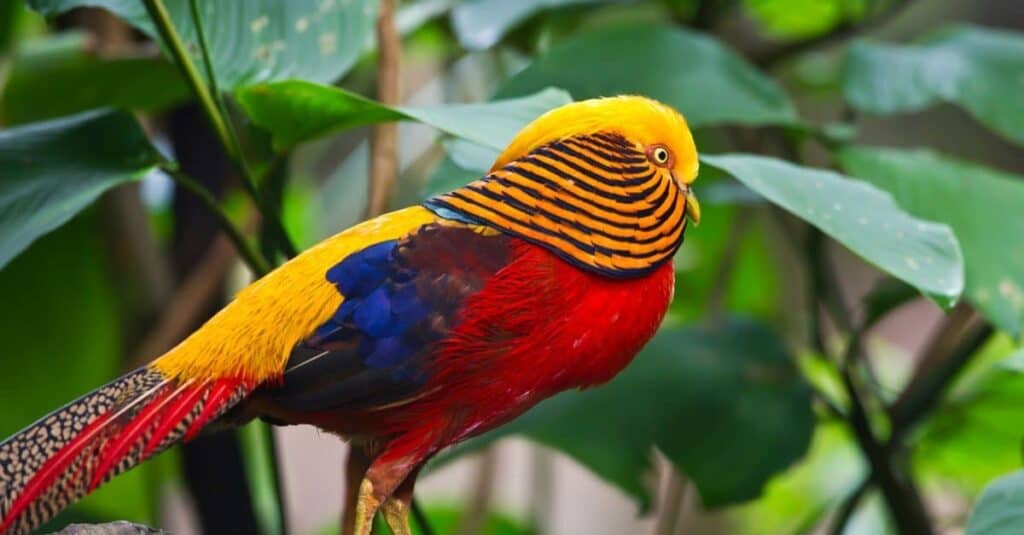
Golden pheasant populations are on the decline due to habitat loss, fragmentation, and other factors.
©mooinblack/Shutterstock.com
Wild populations of golden pheasants introduced to countries such as the United Kingdom have declined dramatically, with recent studies indicating that self-sustaining wild populations in the UK are now functionally extinct. In China, their native range, golden pheasants remain fairly common in suitable habitats, though some local declines have been reported.
To help golden pheasant populations rebound, the trends driving their decline need to be reversed. This benefits not only bird lovers but also those who hunt pheasants for sport. Therefore, if the population of golden pheasants is to rebound, efforts must be undertaken now. If they are declared threatened or endangered, it may be too late to save these fiery, fabulous birds from eventual extinction.