
Of the 29 rabbit species in the world, North America is home to 15. The American Rabbit Breeders Association (ARBA) recognizes 52 breeds. These are domesticated bunnies bred for distinct traits, such as physical characteristics, health, temperament, and size. So, how does the diet of feral rabbits compare to that of their domesticated cousins? Continue reading to discover how their diets are the same and where they diverge.
What Do Feral Rabbits Eat?
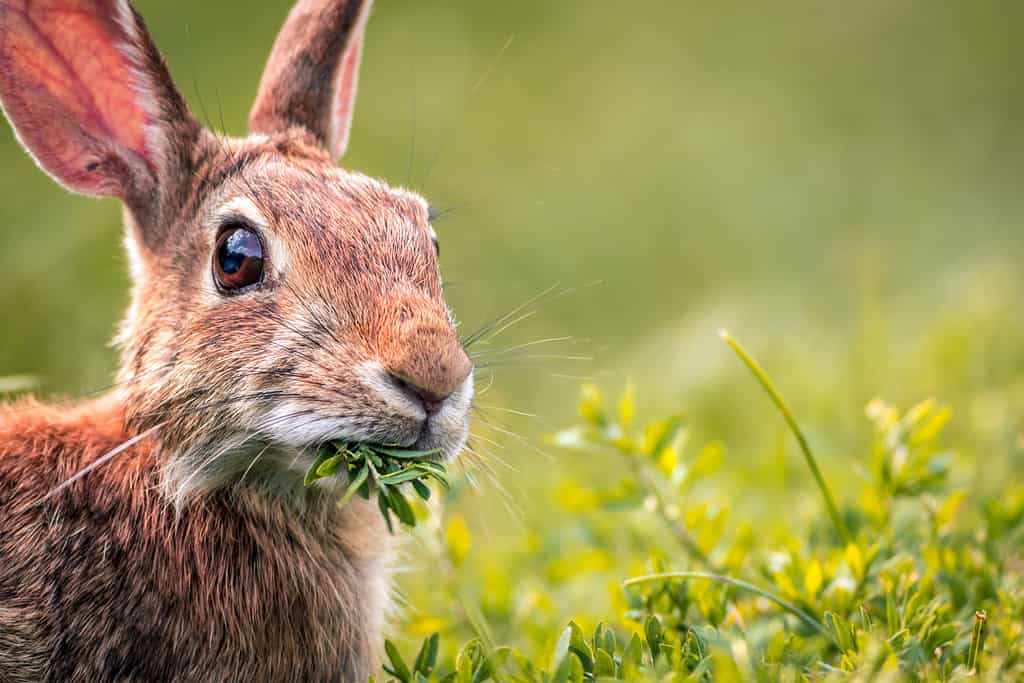
Feral rabbits subsist on plant matter.
©Rabbitti/Shutterstock.com
As herbivores, feral rabbits (Leporidae) are continuous grazers that spend most of each day eating ground-level and low-lying vegetation like hay or grass. These adorable little mammals start their lives on a diet of their mother’s milk, nursing once or twice a day. They are weaned when they are six to eight weeks old. Solid food is introduced between two and three weeks of age. These first solid foods usually consist of hay from their nest. Between weeks three and four, the bunnies are eating the same foods as their mother, while they continue to nurse. A baby bunny’s digestive system is very sensitive during this time. Therefore, young bunnies must stay with their mother, follow her lead, and nurse until they reach weaning age.
What Do Domesticated Rabbits Eat?
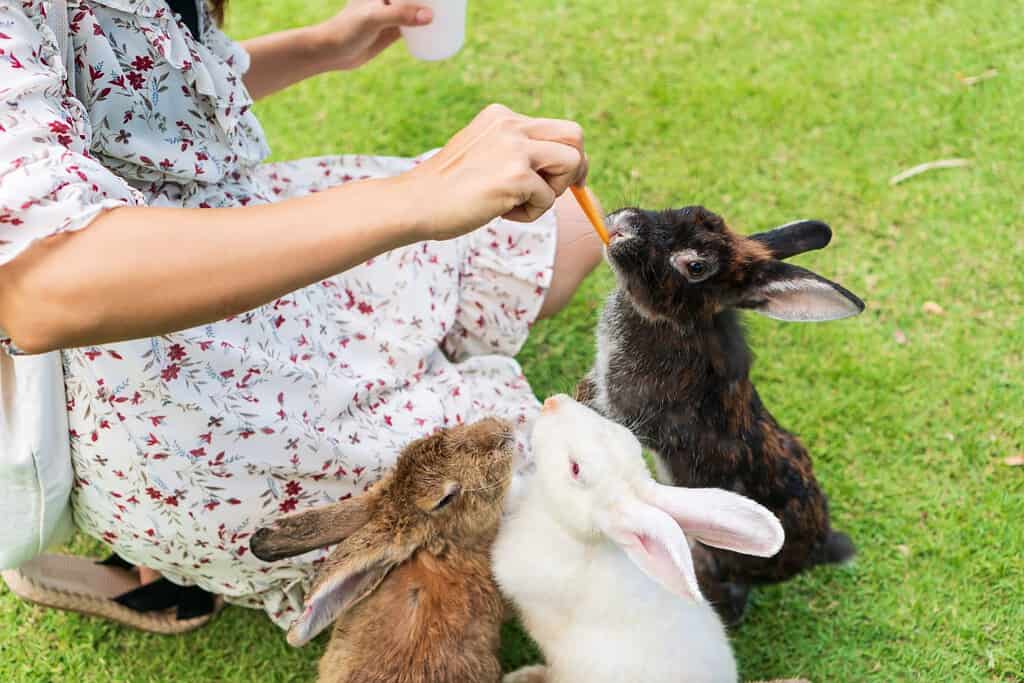
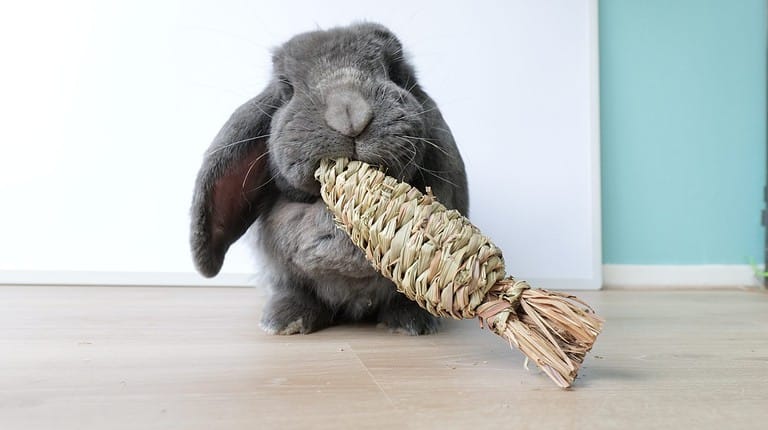
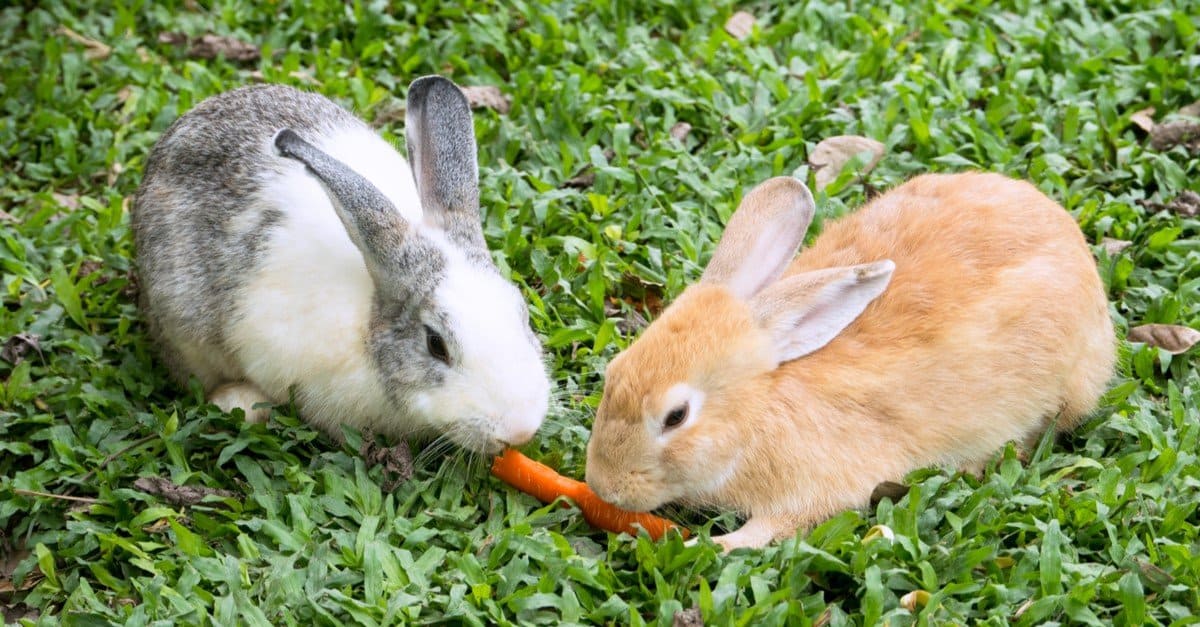
Carrots should be only occasional treats for pet rabbits.
©Opat Suvi/Shutterstock.com
Domesticated rabbits can be either pets or farm animals raised for their meat or fur. Regardless of the species, rabbits around the world eat the same basic diet of grasses and hay after weaning from their mother. The type of hay varies according to geography and availability.
Orphaned domestic rabbits under the age of 8 weeks may require a specialized formula, such as Kitten Milk Replacer (KMR) with added heavy cream, and should only be fed under the guidance of a veterinarian. This formula closely matches the mother’s milk. From two weeks of age, domestic baby bunnies should eat nutritionally balanced hay pellets made specifically for rabbits. They need these pellets along with a continuous supply of alfalfa hay to accompany their mother’s milk or substitute formula. Contrary to popular belief, feeding a rabbit a diet rich in vegetables and fruits is not advisable. These foods should be given only as occasional treats, as part of a healthy diet that primarily consists of leafy greens. Rabbits can safely eat small amounts of fruit 2 or 3 days a week as a treat.
Domesticated rabbits are often overfed, which can lead to a variety of health issues. One of the most common problems with pet rabbit diets is the overfeeding of vegetables like lettuce and carrots. Adult rabbits are also often mistakenly fed alfalfa hay, which contains too much protein and calcium for fully grown animals.
You may notice wild rabbits in your garden. While it is unhealthy to feed pet rabbits too many vegetables, wild rabbits eat only what they need. They will return to munching on grass once they have had enough of the bounty in the garden.
A List of 33 Foods Rabbits Eat
As herbivores, rabbits eat a combined diet of grasses, hay, and their mother’s milk. After they wean from milk, they live exclusively on vegetation found in the garden or in the wild, and fresh water. Ideally, hay should make up about 85% of an adult rabbit’s daily diet. This provides the fully grown rabbit with a diet of 40% fiber, 10% to 12% protein, and other nutrients.
Bunnies eat a daily diet that safely includes these 25 primary foods:
- Grasses
- Wheatgrass
- Bermuda grass
- Orchard grass
- Alfalfa grass (as a baby only)
- Oats
- Hay
- Hay pellets
- Vegetables they nibble on in the garden
- Bell peppers
- Sprouts (alfalfa, radish, and clover)
- Bok choy
- Watercress
- Carrot tops
- Zucchini
- Endive
- Radish tops
- Escarole
- Brussels sprouts
- Fennel
- Lettuces
- Okra leaves
- Cucumber
- Radicchio
- Herbs (such as parsley, cilantro, and basil)
Rabbits eat fruit in limited amounts once or twice per week without any digestive problems.
Eight other foods a rabbit eats only once or twice per week as a treat include:
- Carrots
- Collard greens
- Broccoli (only stems and leaves)
- Chard
- Clover
- Dandelion greens (pesticide-free)
- Spinach
- Kale
Dried corn, nuts, and seeds are foods a rabbit should not eat, along with any foods made specifically for humans to eat.