
Quick Take
- One black chicken breed is so thoroughly black that even its internal organs share the color, and its price tag reflects this remarkable trait.
- A beloved black chicken once triggered a full-blown economic bubble that rattled European nobility, only to crash just as fast.
- Some of these breeds carry lethal genes that kill a quarter of their own offspring before they ever hatch.
- One French breed nearly vanished forever, and the cause was not disease or neglect but a military invasion and hungry soldiers.
Breeders have developed many types of black chickens (Gallus gallus domesticus), including some with gorgeous green or purple metallic sheens. From some of the heaviest chickens in the world to some of the tiniest, black chickens are a splendid addition to any backyard flock. The following selections represent just a portion of 46 specific black-feathered chicken varieties recognized by the American Poultry Association (APA), comprised of 20 standard breeds and 26 bantam varieties. Continue reading to find just the right black chicken breed to add to your own flock.
Araucana Chicken
The Araucana chicken originated in South America and was named for the Araucania region of Chile. Chicken breeds that lay blue eggs all trace back to the Araucana. The rumpless Araucana chicken has no tail.
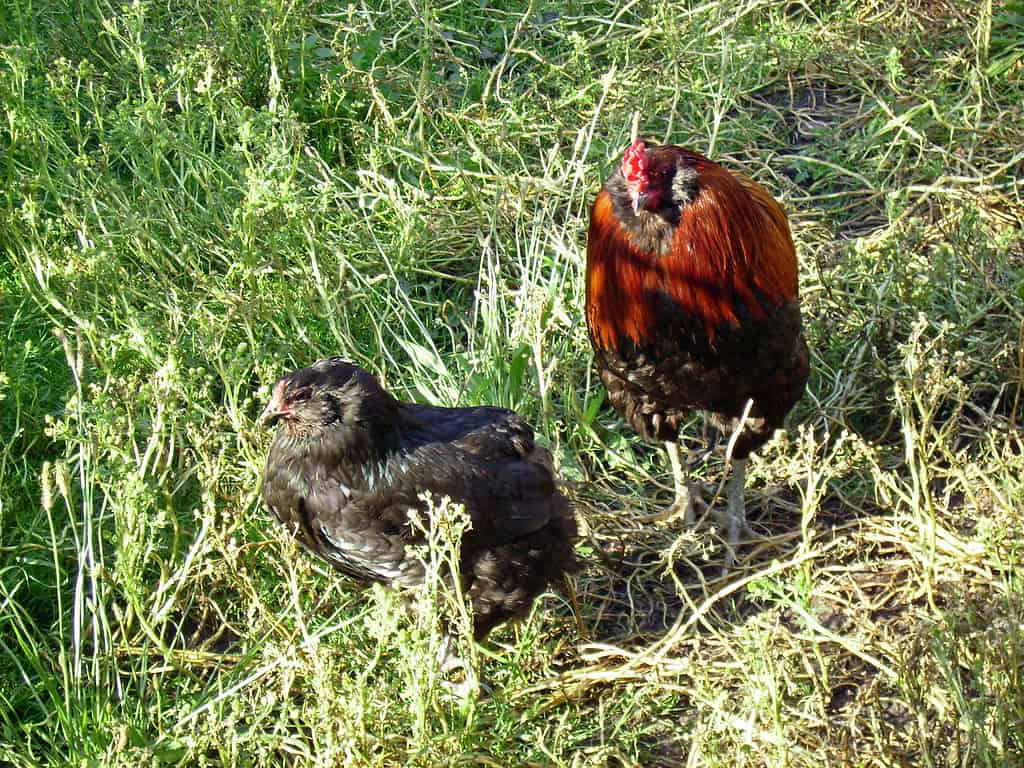
Araucana chickens, which lay beautiful blue eggs, have ear tufts and no tails.
The breed also has a lethal autosomal dominant gene linked to their prominent ear tufts. Chicks with two copies of this gene die before hatching or just shortly after. Although European authorities recognize up to 20 colors, the APA recognizes only five varieties in both bantam and large size.
Ameraucana Chicken
The Ameraucana chicken, which originated in the United States in the 1970s, descended from the Araucana chicken. Ameraucana chickens have muffs and beards, along with relatively short, curved tails. They produce desirable blue eggs similar to the Araucana, but without the risk of that breed’s lethal genes.
The American Poultry Association (APA) recognized the Ameraucana chicken in 1984. They currently list nine colors in the Standard of Perfection, including black.
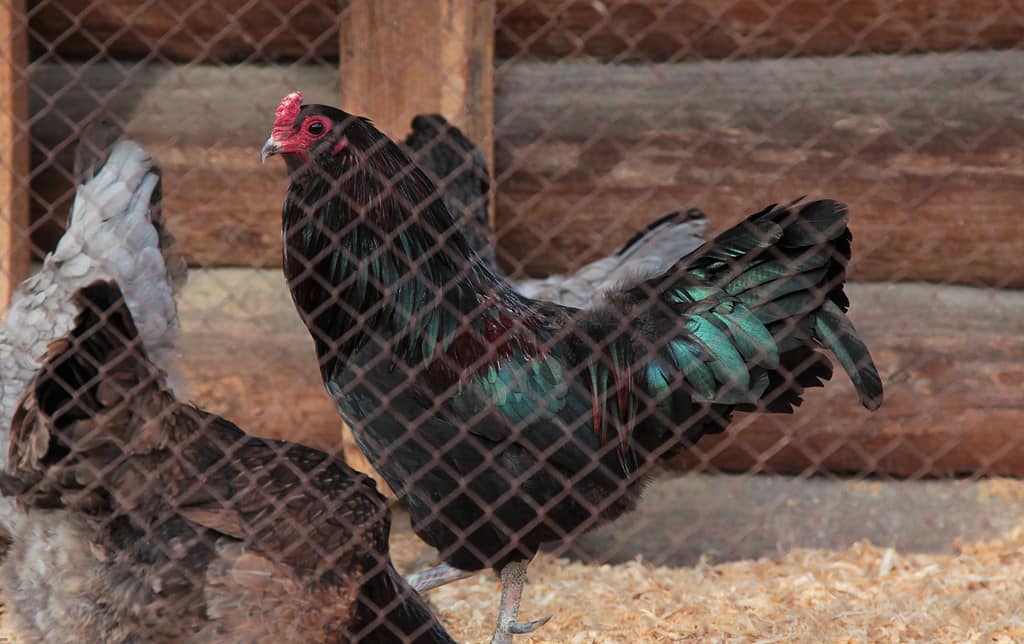
Ameraucana chickens lay blueish to greenish eggs and have muffs and beards.
©Chocolife/iStock via Getty Images
Australorp Chicken
The Australorp chicken, a primarily black chicken breed developed in Australia, descended directly from black Orpington chickens which originated in England.
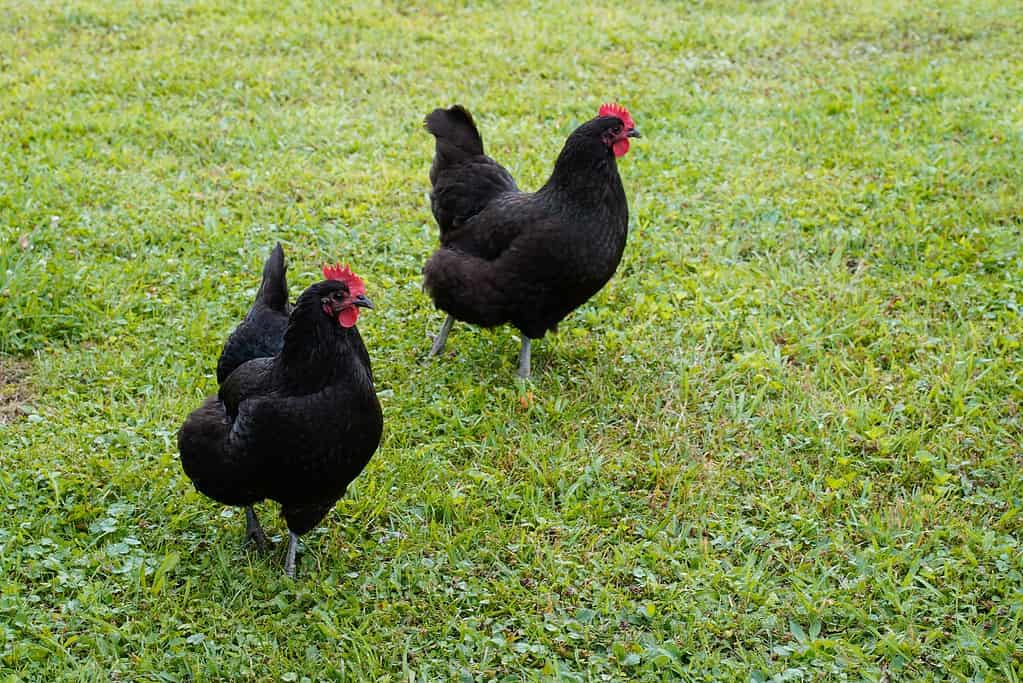
Australorp chickens were named for Australia, their place of origin, and Orpington chickens from which they descended.
©Kathy D. Reasor/Shutterstock.com
Australorps are among the most popular chicken breeds in Australia and many other parts of the world, due to their hardy constitution and their friendly nature.
But their egg-producing capabilities really make them stars. Australorp chickens lay between 250 and 300 eggs per year, and individual Australorps once held world records for egg-laying. One hen laid 364 eggs in a single year! The APA recognizes the Australorp in large and bantam sizes, but only in the black variety.
Ayam Cemani Chicken
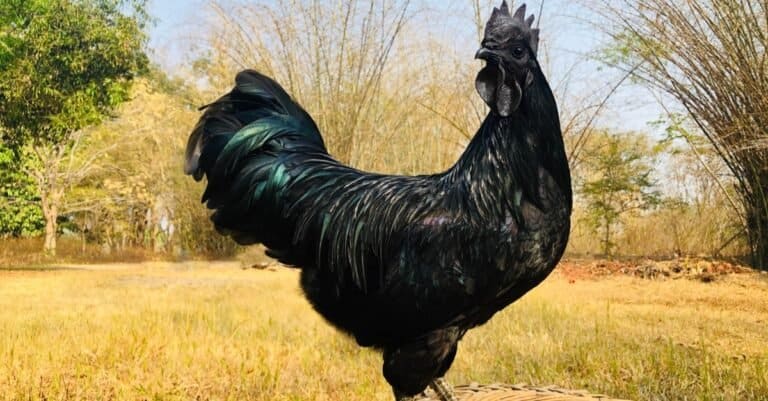
You would have a hard time finding a blacker chicken breed than the Ayam Cemani from Indonesia. This breed has a dominant gene that causes a condition called fibromelanosis. This condition causes hyperpigmentation in the birds. Excess melanin, or dark pigment, accumulates in the skin, meat, and other tissues of the chicken.
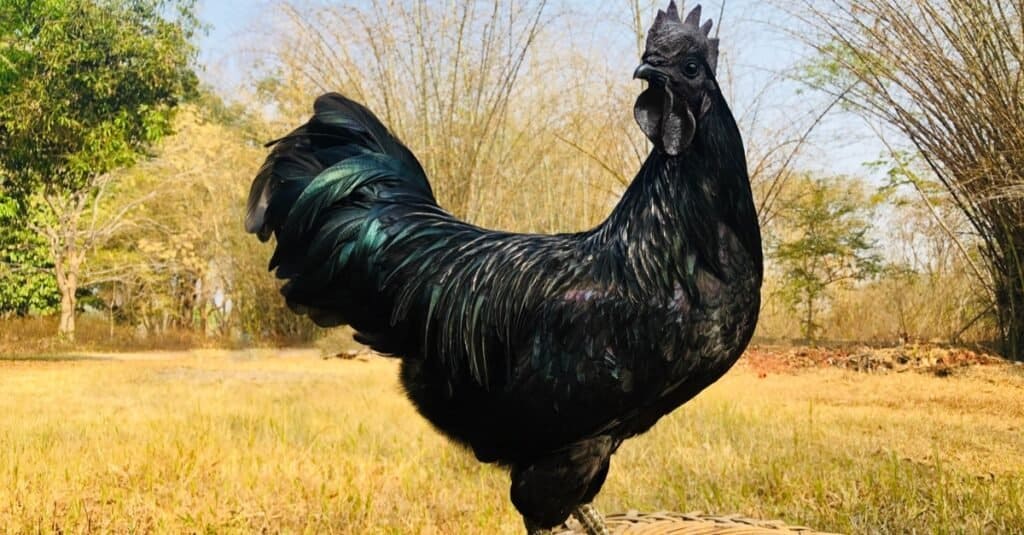
The Ayam Cemani chicken is extremely expensive because of its genetic condition that causes it to be entirely black, inside and out.
©Bass001/Shutterstock.com
In the Ayam Cemani chicken, the gene is expressed so strongly that virtually every part of the bird is black.
Ayam Cemani chickens have solid black feathers with a green, metallic sheen. These birds are so dark, they may seem uncanny, but if you want one, be prepared to pay a high price. The Ayam Cemani is one of the most expensive chickens in the world.
Cochin Chicken
Massive, fluffy Cochin chickens, which originated in China, look like heart-shaped balls with feathers all the way down to their feet. Queen Victoria adored this breed, and after receiving a small flock as a gift she built a special aviary where she could spend time with them.
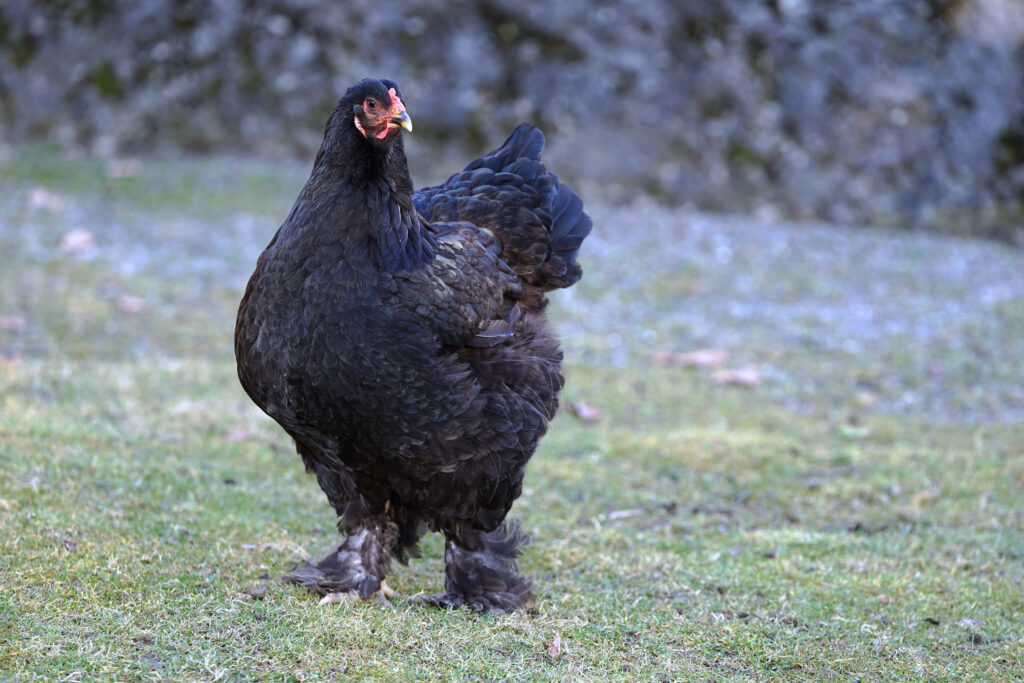
Cochin chickens, originally from China, are recognized in 17 different colors, including the black variety.
©Dewi Cahyaningrum/Shutterstock.com
Cochin chickens sparked the phenomenon known as hen fever, which drove up the price of ornamental chickens exponentially as the nobility rushed to follow Queen Victoria’s influence.
The price continued to rise until the bubble burst, and many breeds such as the Cochin chicken suddenly fell out of favor. Today, Cochin chickens are again quite popular as exhibition birds.
Crèvecoeur Chicken
The Crèvecoeur chicken, possibly the oldest chicken to have originated in France, was named for the town of Crève-Coeur en Ange. These glossy black chickens come in only one color. Crèvecoeur chickens have shaggy crests and beards that give them a bit of a disheveled look.
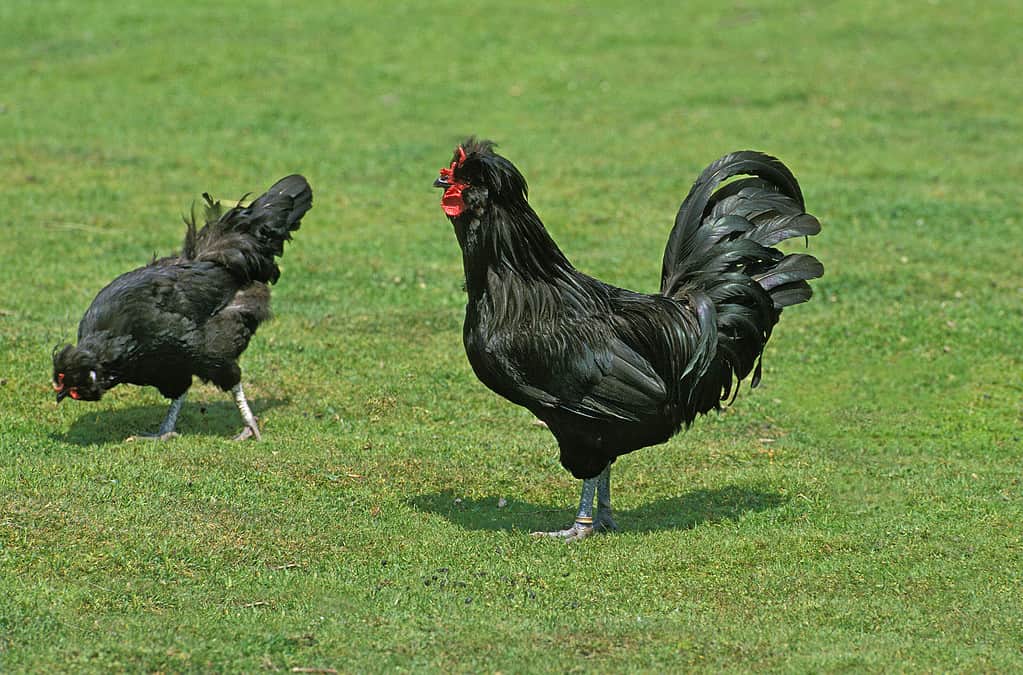
Crèvecoeur chickens, named for the town of Crève-Coeur en Ange, may be the oldest French breed.
©slowmotiongli/iStock via Getty Images
They hold their tails upright with their long, curved sickle feathers showing a deep, greenish sheen in the light. Crèvecoeur chickens were nearly wiped out during World War II when Germany invaded France and the German soldiers nearly ate them all up.
Fortunately, some farmers managed to hide a few birds away, so the Crèvecoeur chicken survived. Since then, breeders in France, Australia, and the United States have worked at rebuilding the breed, and it is slowly recovering.
Japanese Bantam Chicken
The Japanese Bantam chicken is a true bantam chicken, in that it has no large counterpart. This breed has always been small, and it was not selectively bred like many bantams for a miniature size. Japanese Bantam chickens have a tough time making it to maturity.
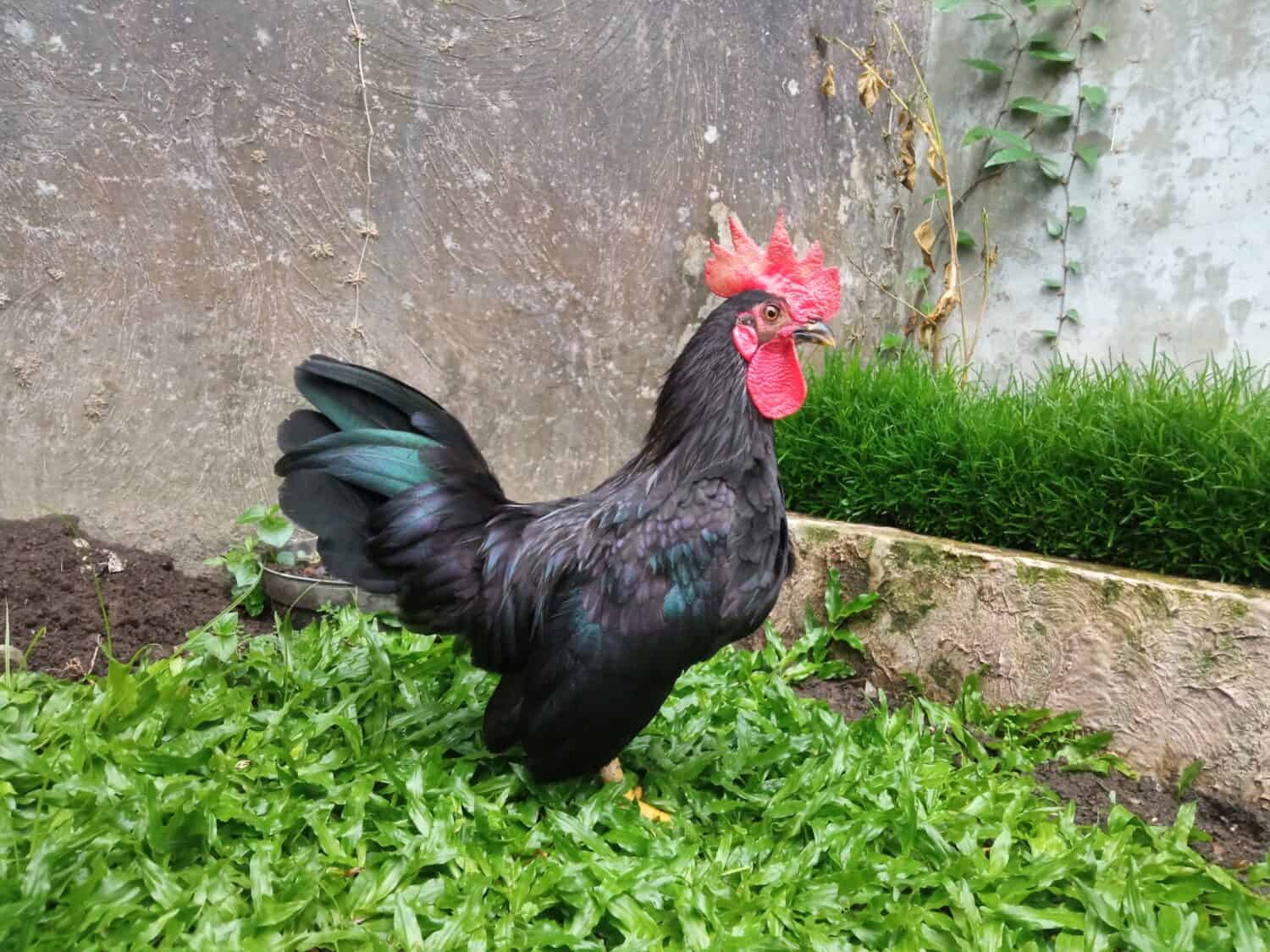
Japanese Bantam chickens are a true Bantam breed developed hundreds of years ago.
©icalrizal/Shutterstock.com
About 25 percent of these birds have a gene that causes them to die before hatching. Another 25 percent hatch with long legs, a trait so undesirable owners cull them before they can breed. Only around half the offspring survive to become adults. The APA recognizes this breed in nine colors, including black.
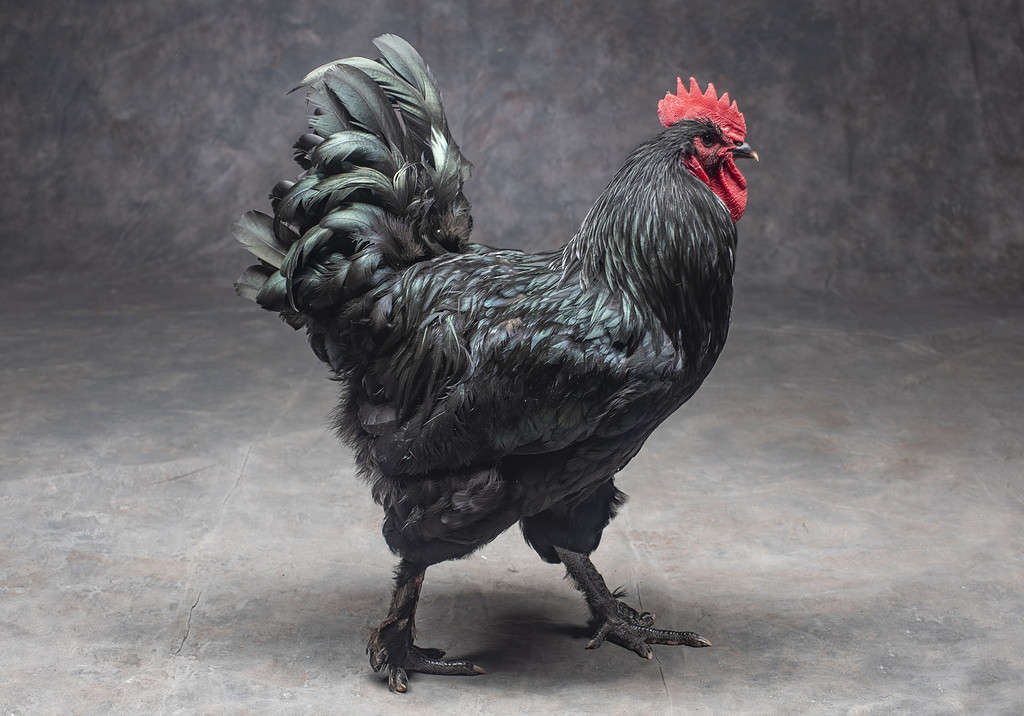
Jersey Giant Chicken
The Jersey Giant chicken was developed with only size in mind. John and Thomas Black of New Jersey combined several large chicken breeds to create these giant birds in the latter part of the 19th century.
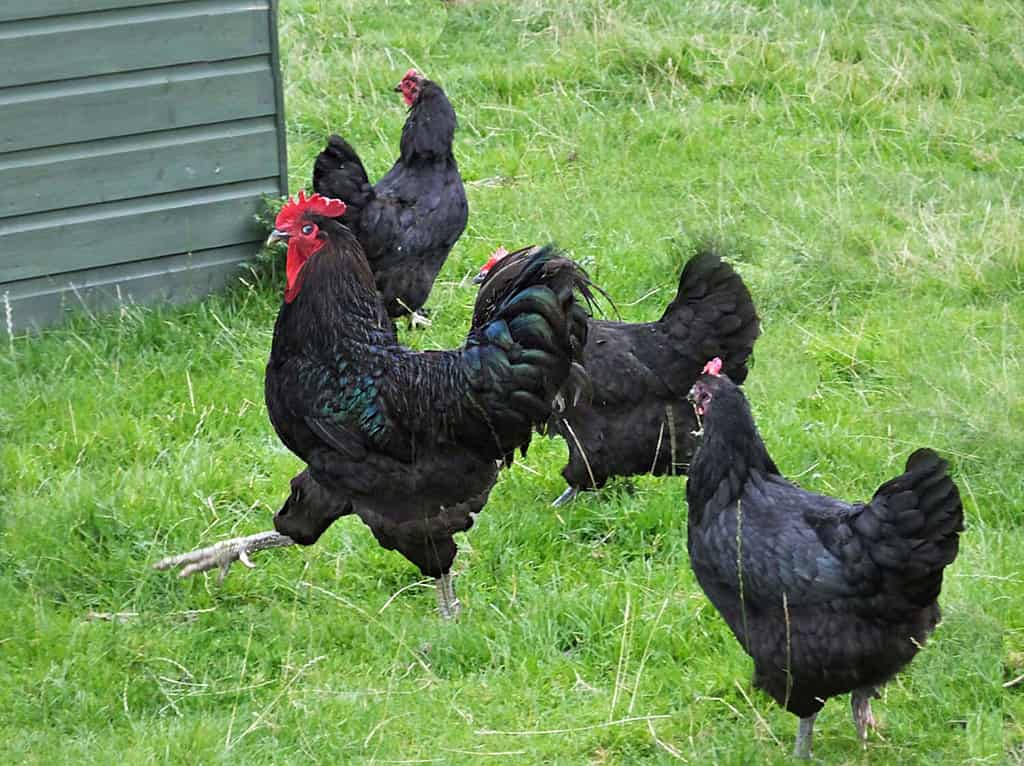
Jersey Giant chickens, developed in New Jersey, are among the largest chickens in the world.
©Ballygally View Images/Shutterstock.com
Jersey Giant chickens live up to their name with ease. The roosters average between 13 and 15 pounds, while hens weigh 10 to 11 pounds. The hens outweigh most roosters of other breeds.
The APA recognized the black variety of Jersey Giant chickens first, in 1922, and recognized the white variety later, in 1947. The blue variety only gained recognition recently, in 2003.
Kadaknath Chicken
The Kadaknath chicken, native to India, likely originated in the jungle. Like the Ayam Cemani of Indonesia, the Kadaknath chicken has a gene that causes fibromelanosis, or melanin hyperpigmentation. This causes excess deposits of dark pigment that turn the bird’s skin and connective tissues black.
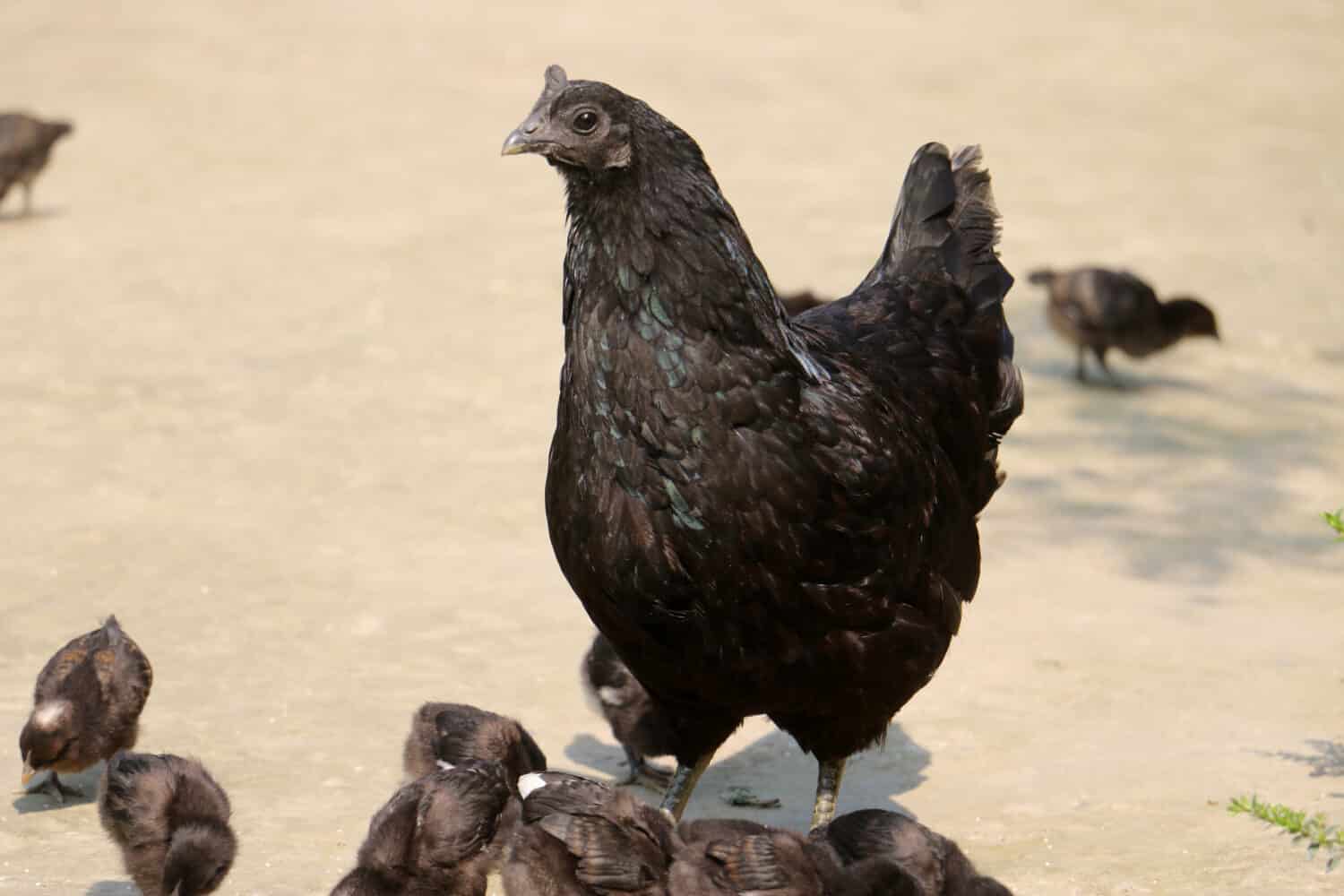
The Kadaknath chicken from India, also known as Kali Masi, is completely black, inside and out.
©ASSAMINFOCUS/Shutterstock.com
The Kadaknath chicken, although not currently recognized by the APA, comes in three recognized colors in India, including jet black, penciled, and golden. The jet-black variety has all-black feathers, so it is completely black, both inside and out.
The Kadaknath chicken nearly faced extinction due to overconsumption of its desirable black meat, but government officials have worked to help the breed recover through a compensated breeding program.
La Fleche Chicken
The much-maligned La Fleche chicken, sometimes called Satan’s fowl or the devil bird, originated near the town of La Fleche in France. It has shiny black feathers and a bright red, arrow-shaped comb.
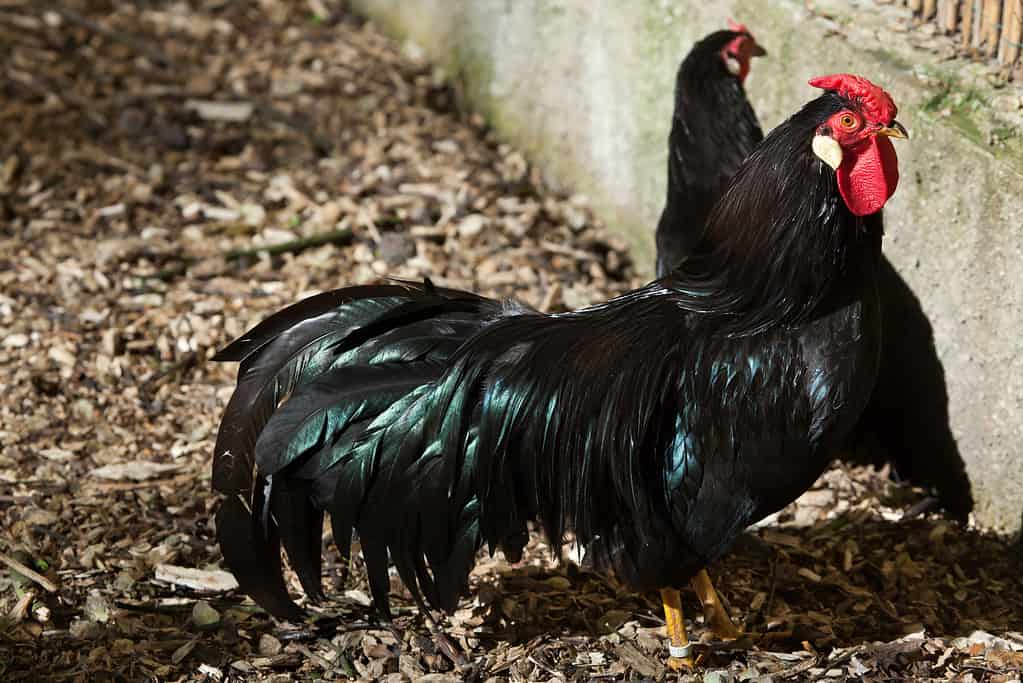
La Fleche chickens, which originated in France, are sometimes called Satan’s Fowl or the devil bird.
©wrangel/iStock via Getty Images
La Fleche chickens are excellent dual-purpose birds, reaching weights of up to 8.5 pounds. They produce tender and succulent meat, and hens lay as many as 200 eggs per year, mostly from March through October.
Unfortunately, this breed has no love for humans. La Fleche chickens are flighty and aloof, and generally unfriendly.
La Fleche chickens were never as hardy as other breeds, either. As such, most breeders simply do not choose to raise La Fleche chickens. The Livestock Conservancy currently lists this breed on its critical list.
Langshan Chicken
The Langshan chicken, a large bird that originated in the Langshan area of China, was exported to England in 1872. Major F. T. Croad, an English officer, originally exported the Langshan chicken, sometimes referred to as the Croad Langshan.
Langshan chickens are best known for laying deep, brown eggs with a beautiful purple tint.
©John Touscany/iStock via Getty Images
The breed, which lays unique large, brown eggs with a purple tint, quickly spread across Europe and to Australia. They made their way to the United States in 1878. Langshan chickens have lightly feathered legs and outer toes. The APA recognizes Langshan chickens in large and bantam varieties in three colors, including black, white, and blue.
Leghorn Chicken
When most people think of Leghorn chickens, they picture the white industrial variety. However, the APA currently recognizes several different colors of non-industrial Leghorn chickens, including black.
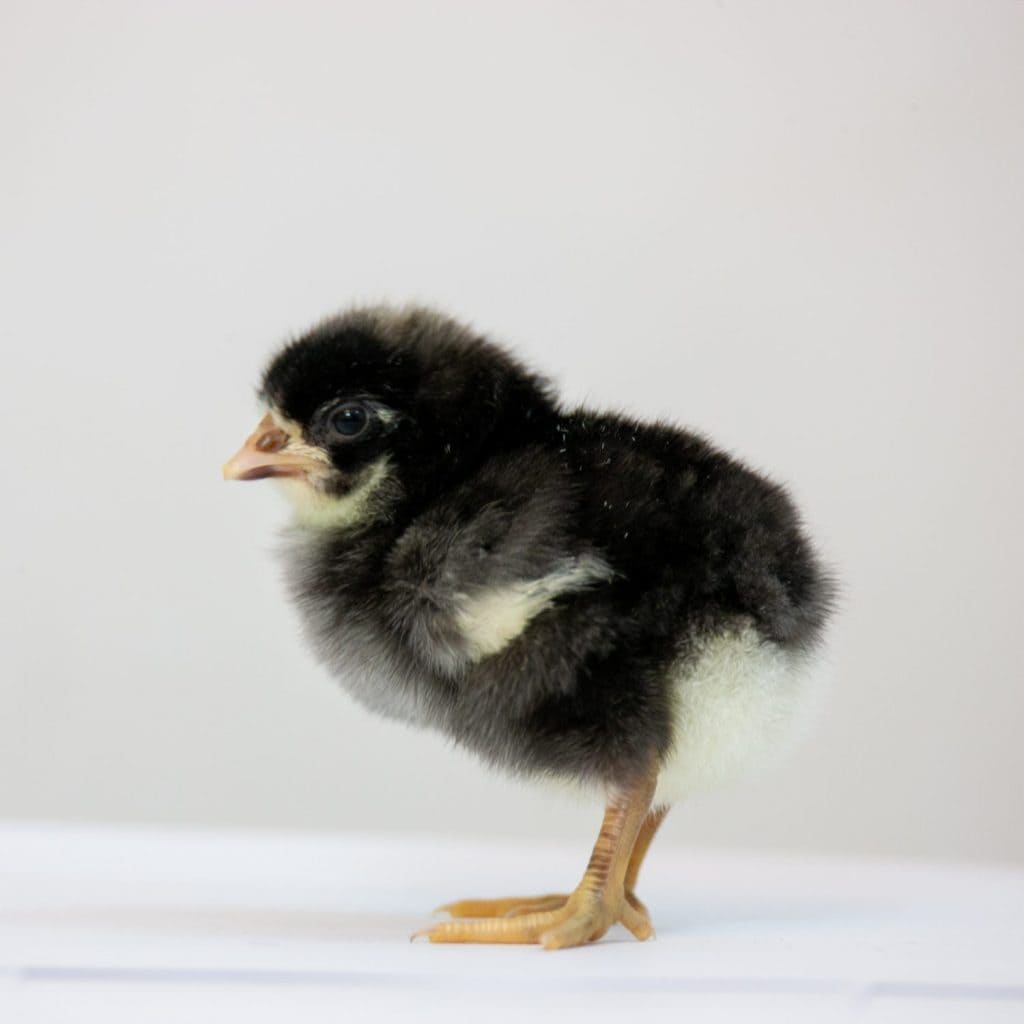
Image of a black Leghorn chick.
©Amir.hosseinphoto/Shutterstock.com
The APA lists six colors of Leghorn chickens in the large variety, and 11 different colors in the bantam variety. The Leghorn chicken originated in the Tuscany region in Italy. This breed can produce up to 320 white eggs per year. The industrial-type Leghorn is the backbone of the commercial egg industry in the United States. They produce most of the white eggs that you see in grocery stores. Heritage-type Leghorn chickens are more likely to be found in backyard flocks.
Malay Chicken
The Malay chicken, among the tallest in the world, can grow up to 36 inches tall. Malay chickens, which originated in India or southeast Asia long ago, have served as predecessors to many modern breeds.
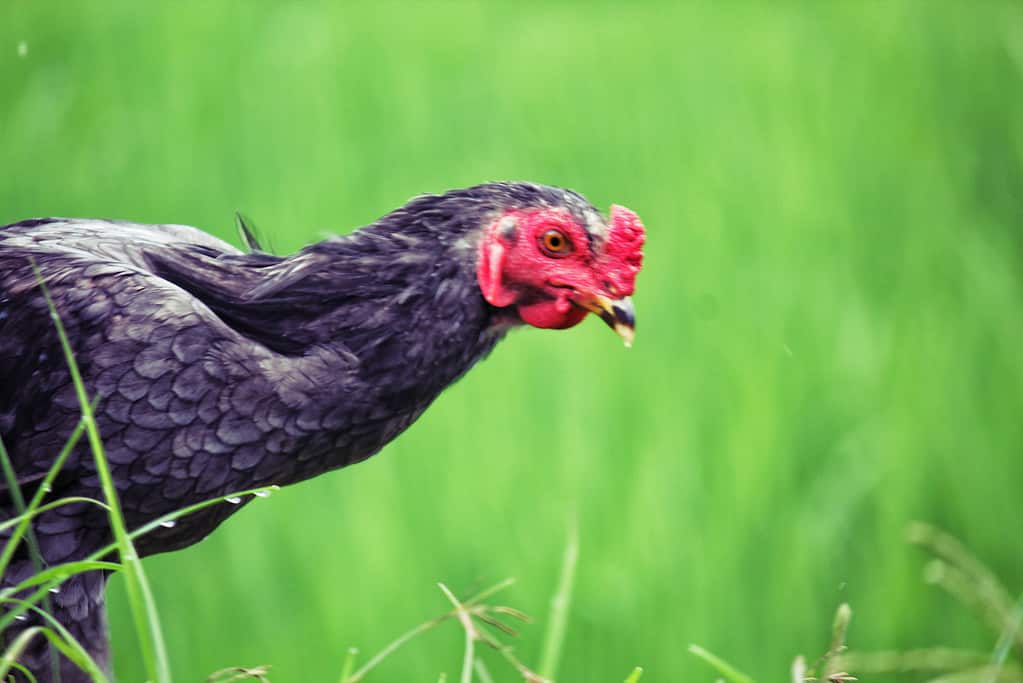
Malay chickens originated as fighting birds in India and southeast Asia.
©Make It Heappen Art/iStock via Getty Images
European breeders imported Malay chickens by the early 1800s. The breed made it to the United States around 1846. The APA added this large, fighting breed to their Standard of Perfection in 1883. They eventually recognized six colors, including black. The Livestock Conservancy currently lists the Malay chicken as critical. Only a few flocks exist, and no breeders currently offer chicks for purchase.
Marans Chicken
The Marans chicken, which originated near the town of Marans in France, is best known for its eggs. Marans chickens lay some of the darkest, richest, chocolatey brown eggs of any known fowl.
Ian Fleming made the eggs of the Marans chicken famous in his book, From Russia with Love. He described them as the only eggs James Bond preferred.
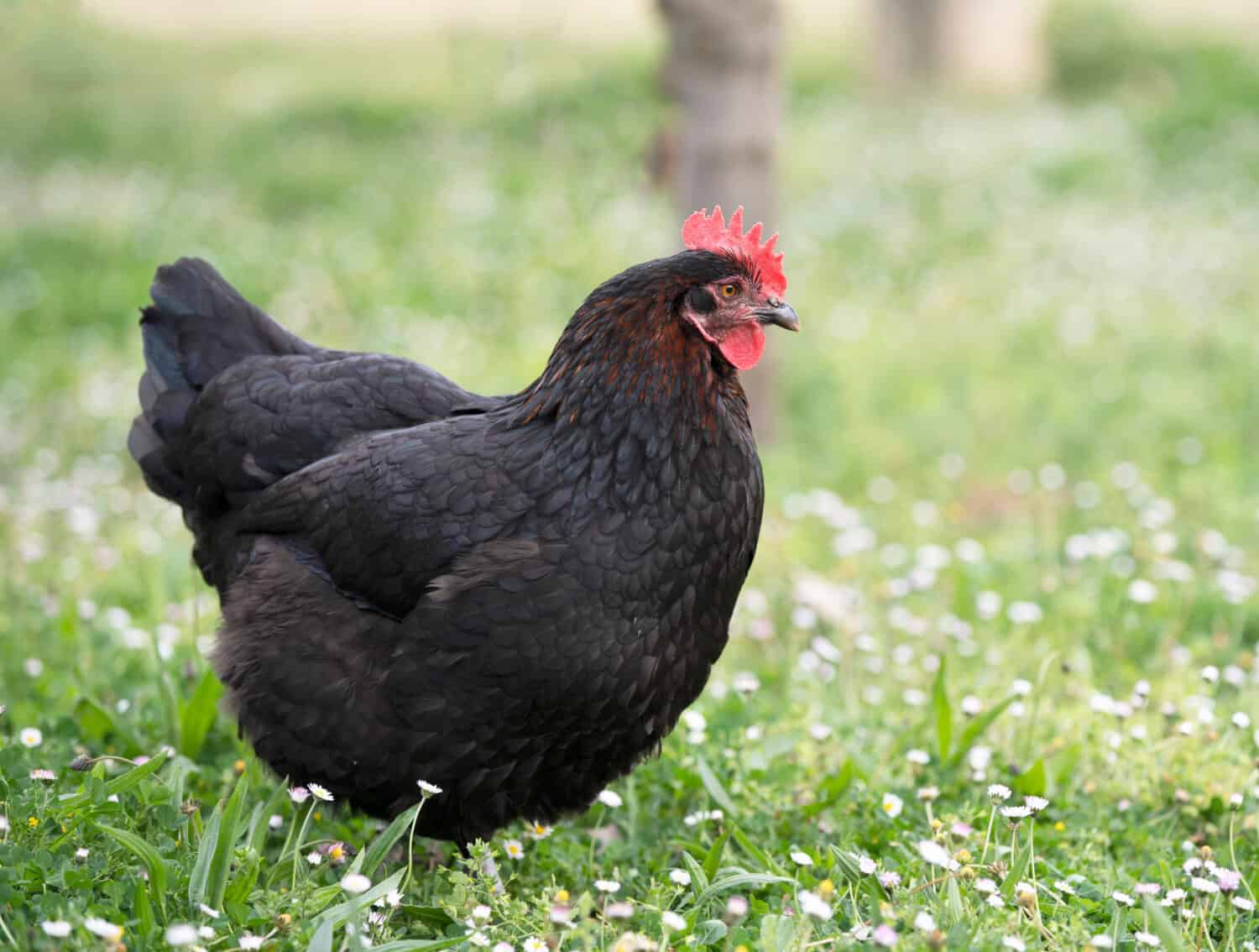
Marans chickens, which came from France, are best known for laying rich, dark, chocolatey brown eggs.
©cynoclub/Shutterstock.com
Marans chickens were first officially shown in France in 1914. However, the American Poultry Association did not recognize Marans chickens until 2011, when they accepted the black copper variety. The APA added the white, wheaten, and black varieties very recently, in 2021.
Minorca Chicken
The origins of the Minorca chicken remain a mystery. We do know that the breed once had a large population on the Island of Minorca off the coast of Spain. Minorca chickens arrived in England by sometime in the late 18th century.
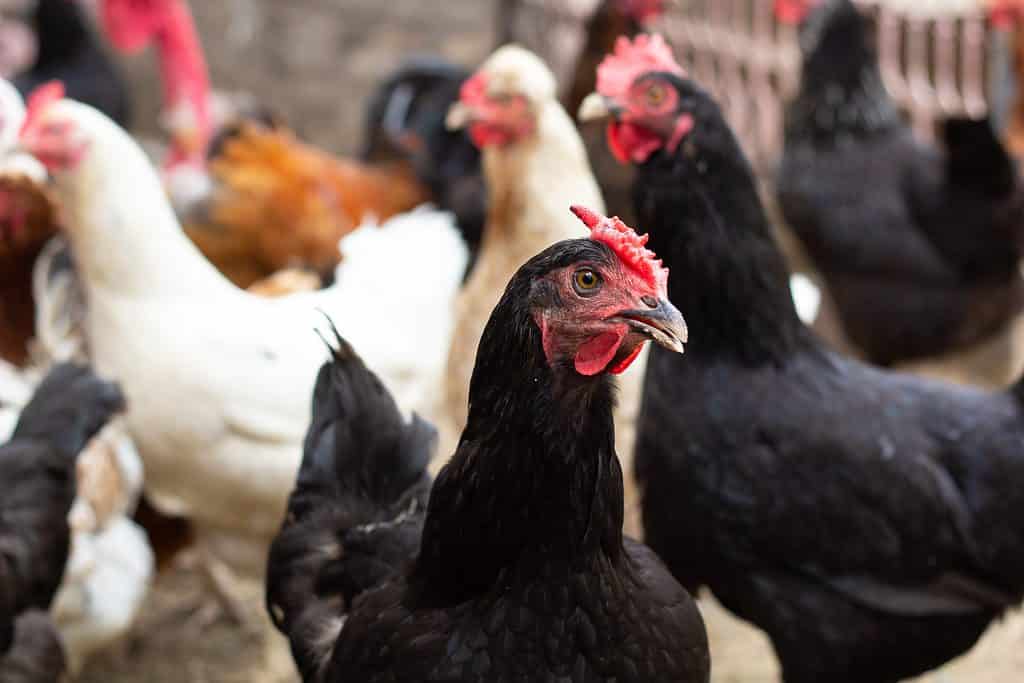
Minorca chickens, which were developed in Spain, come in rose comb and single comb varieties.
©Jane Nadezhina/Shutterstock.com
They made the journey to the United States almost a century later, in 1884. Minorca chickens are large, hardy birds that lay extra-large, white eggs. They also provide a good amount of meat. The APA recognizes straight-comb Minorca chickens in black, white, and buff, and the rose comb variety in black and white.
Naked Neck Chicken
The Naked Neck chicken, named for its bare, featherless neck, is an unusual-looking chicken that likely originated in Asia. This breed, also known as the Transylvanian Naked Neck, grew in popularity after its introduction in Romania sometime in the late 1800s.
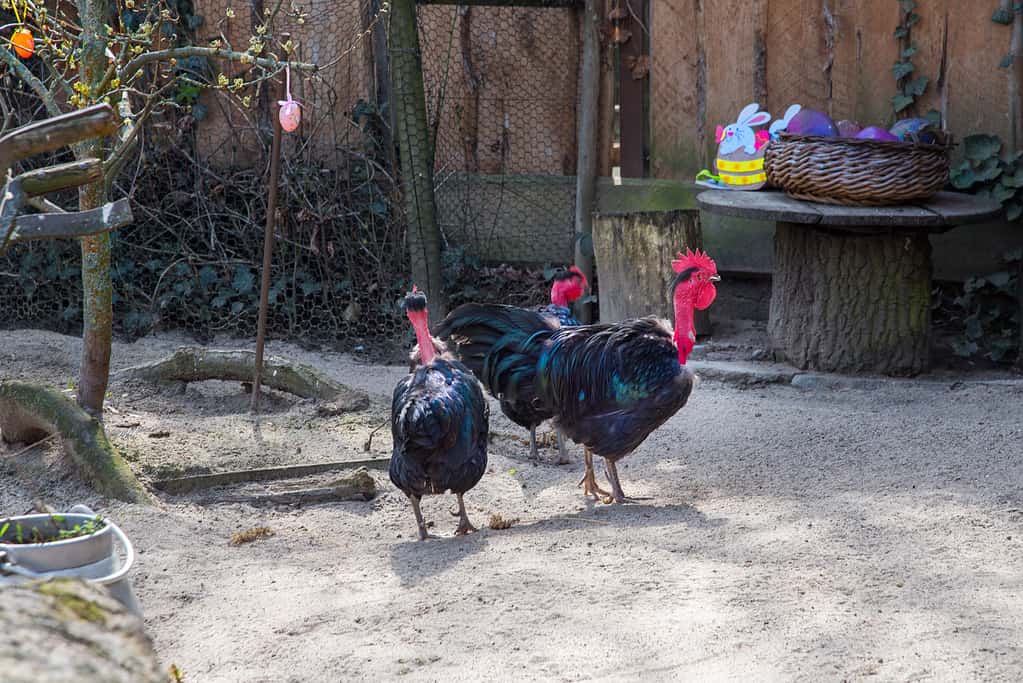
Transylvanian Naked Neck chickens are not hybrids with domestic turkeys. They are simply chickens with bare necks.
©NataliaVo/iStock via Getty Images
Naked Neck chickens do not just have bare necks. They also have sparse feathers all over their bodies, and therefore cannot fly well at all. Their odd feathering results from a single gene. Through selective breeding, the trait can be introduced to other breeds. The APA recognizes four colors of Naked Neck chickens, including black, white, buff, and red.
Orpington Chicken
The extremely fluffy Orpington chicken originated in 1886 in the town of Orpington in England. Breeders crossed Plymouth Rock chickens from the United States, Langshan chickens from Asia, and Minorca chickens from Spain to create the Orpington chicken.
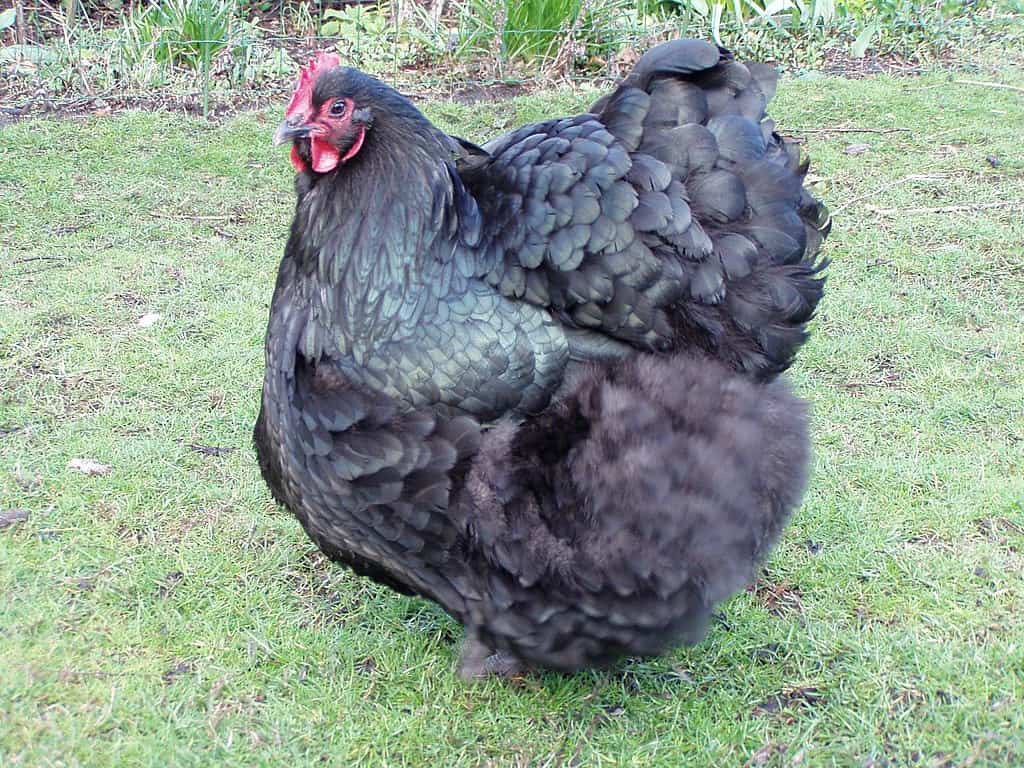
Orpington chickens, which originated in England, are extremely fluffy birds that look like huge, feathery orbs.
This breed once ranked among the world’s best egg layers. Orpington hens sometimes produce up to 340 eggs per year. However, because breeders chose to select for show quality over production, Orpingtons now average fewer than 200 eggs per year. The APA recognizes large and bantam sizes in four colors, including black, white, blue, and the most popular variety, buff.
Shamo Chicken
Shamo chickens, like many other game birds, have a large and lanky form. These vicious fighting birds reach heights of up to 30 inches and have strong, lean, muscular bodies.
Shamo chickens were developed in India and Pakistan, then exported to the land of Siam, now known as Thailand, before arriving in Japan roughly 400 years ago.
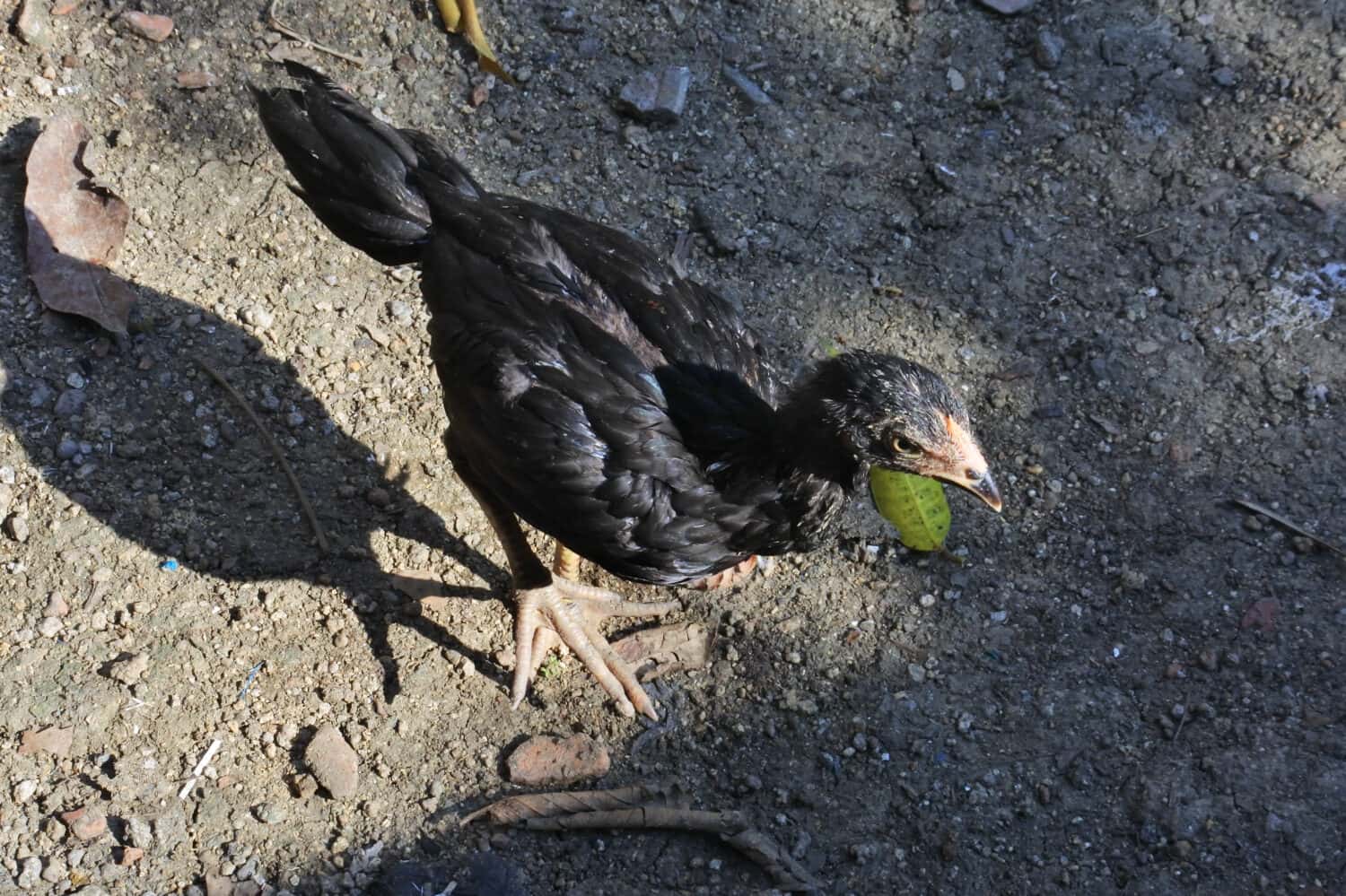
Young Shamo chickens begin fighting with one another almost immediately after they hatch.
©Wirestock Creators/Shutterstock.com
The name Shamo derives from the Japanese pronunciation of Siam at the time the breed first arrived. This breed ranks among the worst for egg production, but as game birds that was never their intended purpose.
The APA recognized the Shamo chicken as a distinct breed and added it to the Standard of Perfection in 1981. They currently recognize four colors, including black, black-breasted red, dark, and wheaten.
Silkie Chicken
The Silkie chicken, known for its unusual silky feathers, is an ancient bantam-sized, Asian breed. The Silkie chicken’s feathers have barbs without any barbicels. Barbicels hook together to keep feathers neat and tidy, but the barbs on the feathers of Silkie chickens float freely. This gives the breed a fluffy, airy quality, but also prevents them from flying because their feathers cannot hold air without barbicels to bind them together.
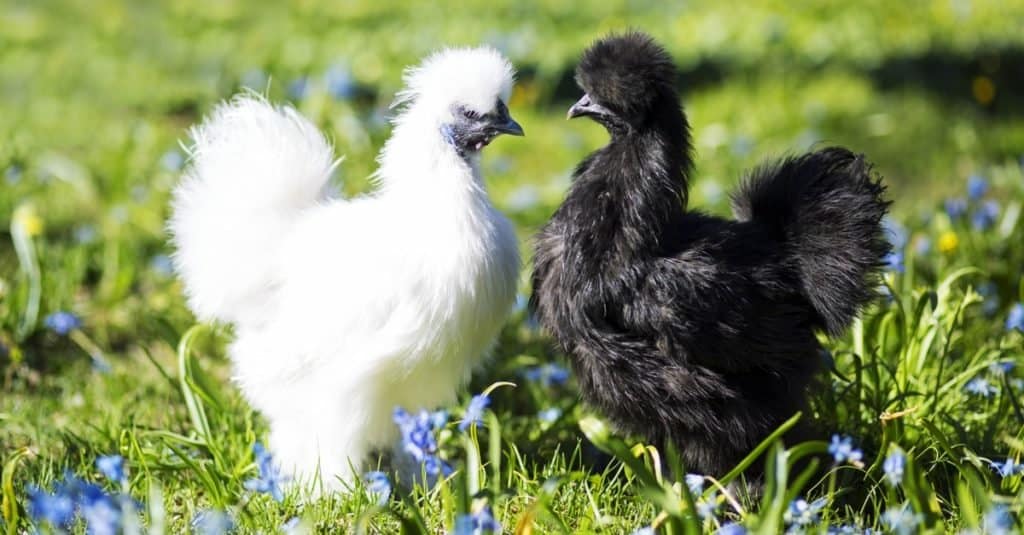
Silkie chickens, popular in both black and white plumage, have distinctively silky feathers and black skin.
©Einar Muoni/Shutterstock.com
In addition to their unusual feathers, Silkie chickens have a lot of other strange attributes. They have black skin and bright turquoise earlobes. Their combs and wattles are mulberry-colored instead of red. They have a puffy crest, and five toes on each foot instead of the usual four. The APA recognizes eight colors of Silkie chickens, including black.
Sumatra Chicken
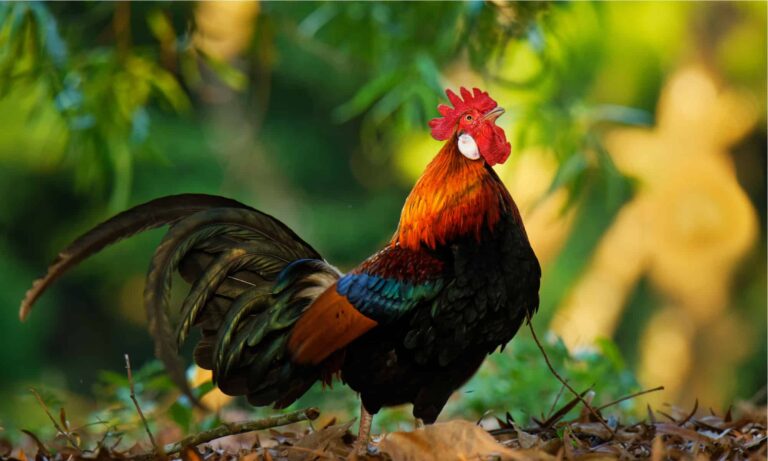
The graceful and flighty Sumatra chicken originated in the wild on the islands of Sumatra, Java, and Borneo in Indonesia. It closely resembles the ancient jungle fowl native to Southeast Asia.
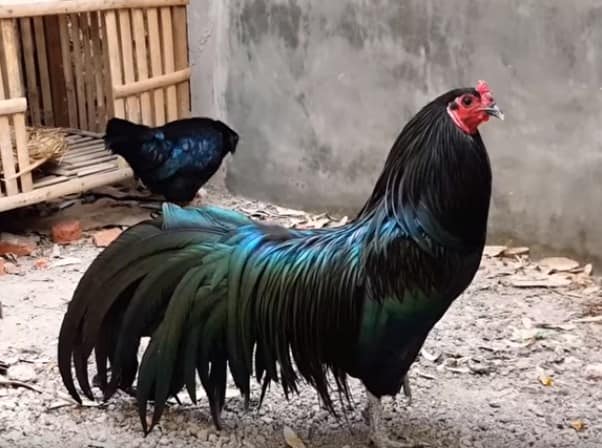
Sumatra chickens originated on the islads of Sumatra, Java, and Borneo in Indonesia.
This small breed reaches weights of only about five pounds, with hens averaging just four pounds. Black Sumatra chickens have plumage that shines with a metallic, green sheen. Their tail feathers grow very long and flow gracefully behind their sleek bodies.
Sumatra chickens were exported to the United States in 1847, and later to Europe. Producing very little meat and fewer than 100 eggs per year, the Sumatra chicken has always been raised as an ornamental bird.
Svarthöna Chicken
The Svarthöna chicken, also known as the Svart Hona chicken or the Swedish Black chicken, originated in Sweden. This breed is yet another black chicken that has a gene that causes fibromelanosis. Historians believe the Svarthöna chicken descended from Ayam Cemani or Kadaknath chickens that were brought to Scandinavia as early as the 17th century.
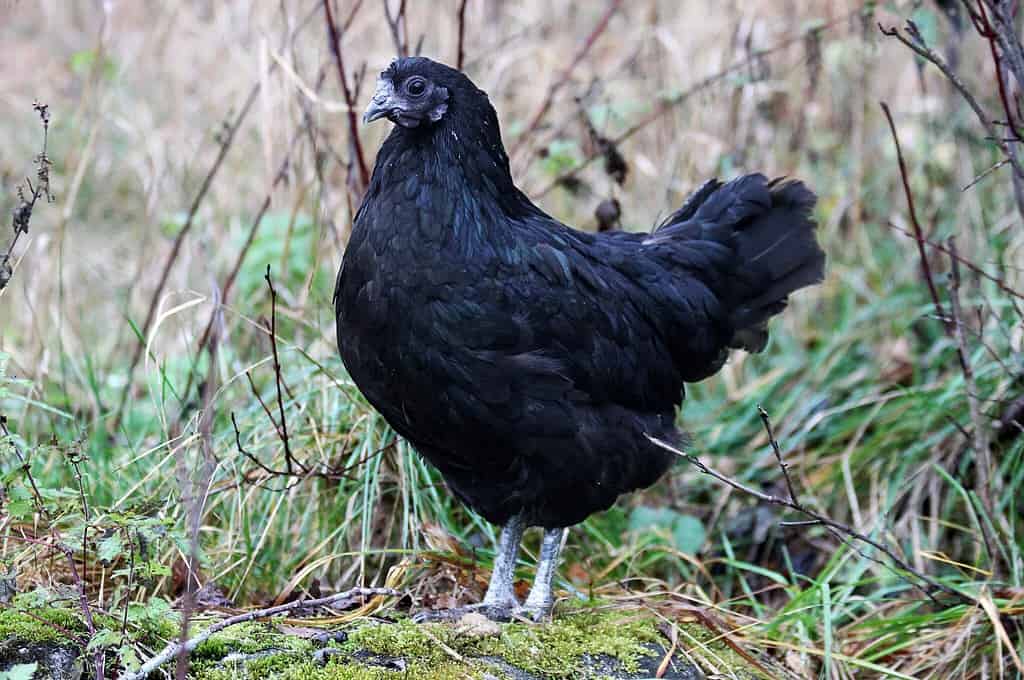
The Svarthöna, or Svart Hona chicken, is also known as the Swedish Black chicken.
©Freyja Imsland, CC BY 3.0, via Wikimedia Commons – Original / License
Svarthöna chickens have black skin and connective tissue, as well as black feathers, making them black inside and out. They have adapted well to the cold climate of Sweden. Svarthöna chickens are very small, with roosters rarely exceeding 4.5 pounds and hens weighing just 3.3 pounds. Their short, single, black combs and short, black wattles also seem to be resistant to frostbite. The APA does not yet recognize this rare breed.